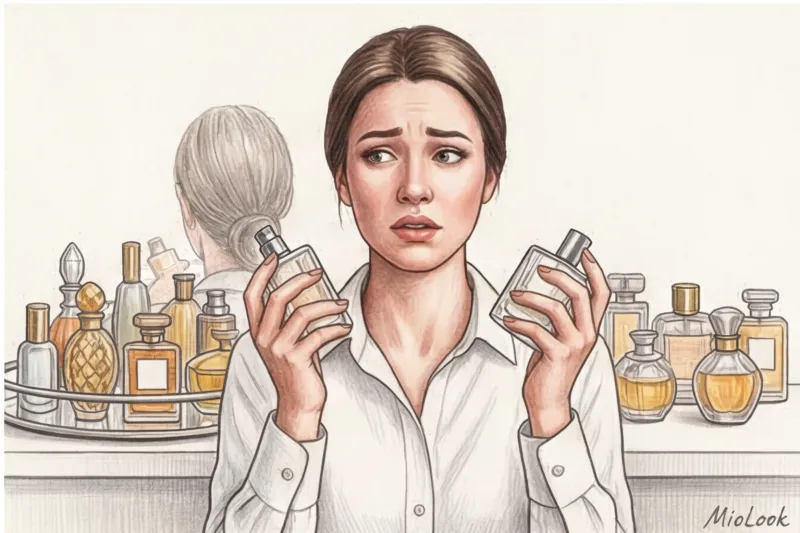
Have you ever mixed two of your favorite, most expensive perfumes, expecting a masterpiece, only to end up smelling like wet wool or stagnant water? If so, you're not alone. As a colorist and image consultant, I constantly see the same mistake: women try to wear "the best of everything at once," forgetting that fragrances are subject to the same strict laws of physics and chemistry as color.
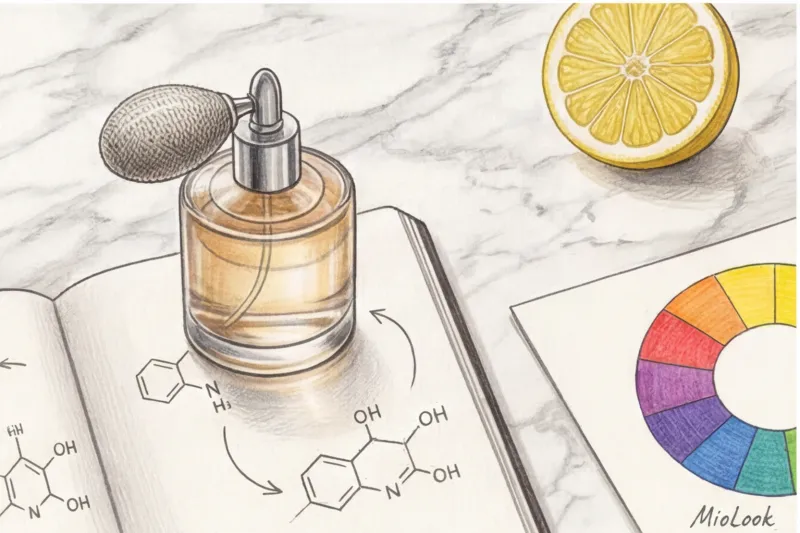
In our complete guide Blending Perfume on Skin: The Art of Layering I've already talked about the basic principles of creating a custom scent. But today we'll take a different approach. We'll explore the darkest side of perfume experimentation and find out... What notes in perfumery should not be mixed? under no circumstances, so as not to turn your image into an olfactory disaster.
Why Some Fragrances Become "Dirty": The Coloristics and Chemistry of Layering
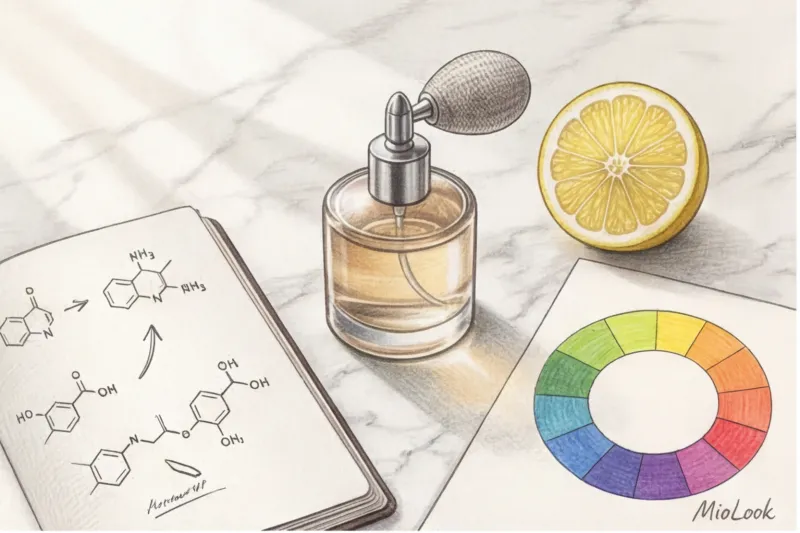
Let's draw a parallel with my favorite color theory. What happens if you generously mix pure red, deep blue, and vibrant yellow on a palette? Will you get a rainbow? No. You'll get a muddy, dirty gray-brown that artists call "mud." The exact same process happens on your skin when you mindlessly layer complex perfume compositions.
The great perfumer Jean-Claude Ellena, the former "nose" of the house of Hermès and an adherent of perfumery minimalism, often emphasized that modern perfumery is the art of stripping away the superfluous. When you apply one perfume over another, their molecules don't simply layer on top of each other. They react chemically on the warm skin.
It is important to distinguish between two concepts here:
- Aesthetic dissonance: when the combination simply seems ugly or inappropriate to you (for example, a formal office suit and the smell of strawberry gum).
- Chemical conflict: When molecules literally distort each other, they begin to compete for receptors in the nose, creating a physiologically repulsive odor—the aforementioned "olfactory dirt."
The Main Mistakes in Layering: Which Perfume Notes Shouldn't Be Mixed
The popular glossy magazine advice, "mix anything, perfume is a matter of taste," is a dangerous myth. About 80% of modern niche perfumes are already complex, self-contained compositions. Trying to improve them with another complex scent is like trying to add a mustache to the Mona Lisa.
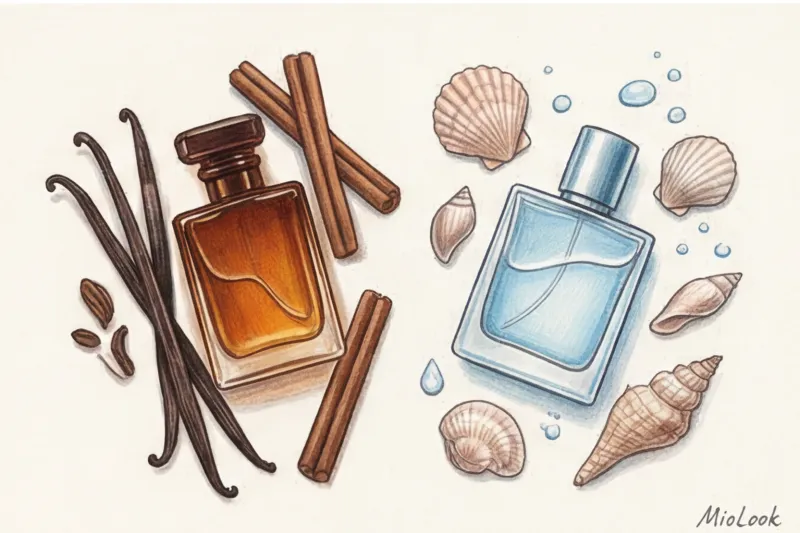
The rule of “like with like” (mixing two floral or two woody scents) does not always work, and playing on contrasts requires knowledge of chemistry, and not just courage.
Access to MioLook for €0.99 — one-time payment
A smart AI stylist will select the perfect look based on your color type and style.
Get access — €0.99 onceAquatica and Heavy Gourmet (Sea and Syrup)
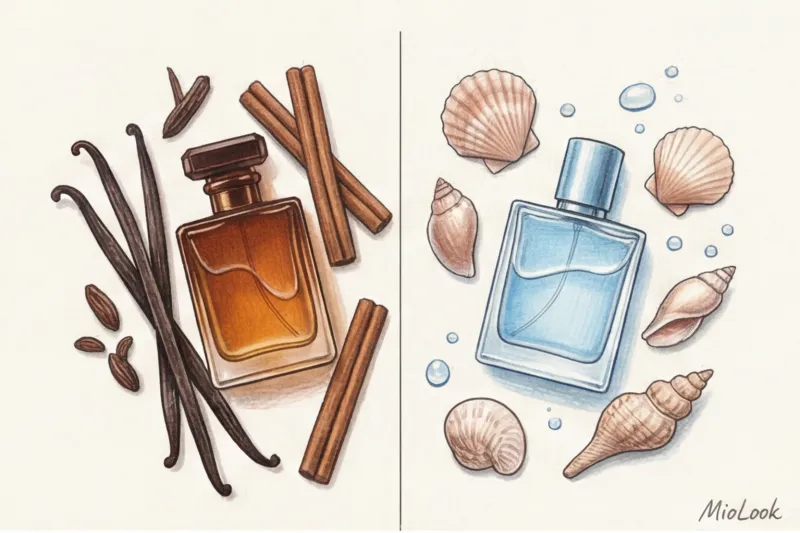
This is a classic example of chemical conflict. Aquatic fragrances are often built on a molecule. calone , which gives a feeling of sea breeze, ozone, and watermelon freshness. Gourmandica, on the other hand, relies on ethyl maltol — a powerful molecule that smells like cotton candy, burnt sugar and praline.
One of my clients decided to "warm up" her favorite fresh marine scent before a romantic date by layering a rich vanilla-caramel layer over it. The result? The combination of ozone and burnt sugar created a distinct scent on her skin, like stagnant water in a vase of wilted flowers. If you're looking to sweeten the aquatic scent, use notes of fig or sweet citrus (mandarin, blood orange)—they have a naturally watery texture and won't clash.
Animalistic notes and ringing aldehydes
Animalics (civet, castoreum, heavy, fleshy musks) are designed to impart intimacy, warmth, and a "living skin" effect to the perfume. Aldehydes (the same ones that made Chanel No. 5 famous) act as a perfumery spotlight: they create the effect of squeaky cleanliness, starched linen, frosty air, or cold metal.
Mixing these two extremes is a fatal mistake. Instead of a complex contrast, you'll get the effect of "an unwashed body generously sprayed with cheap deodorant." These notes should absolutely not be mixed, as the cold aldehydes only accentuate the dirty, animalic nuances of the musks, making them unbearable to others.
Two complex chypres or two thick ouds (Clash of the Titans)
Chypre fragrances (based on oakmoss, patchouli, bergamot, and labdanum) already have a rigid, almost architectural structure. Oud (agarwood) is a heavy, resinous, overwhelming note.
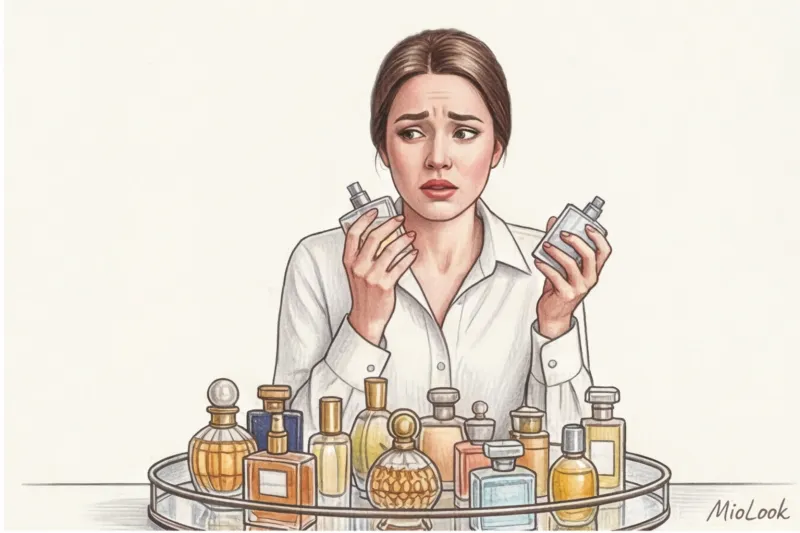
Layering two of these bases creates a dense, impenetrable wall of scent. This disrupts any business dress code for women , as the perfume begins to move ahead of you, triggering migraines in your colleagues. In a closed office space, such a mixture is perceived as aggressive.
The Olfactory Noise Effect: When More Isn't Better
Have you ever noticed that after a while you can't smell even the most intense perfume? This doesn't mean it's worn off. It means your brain has activated a defense mechanism.
According to research, olfactory fatigue (temporary anosmia) sets in after just 15-20 minutes if your mix contains more than three heavy base notes. Your receptors simply shut down from the overload, but those around you continue to feel the storm.
I had a particularly revealing case. Before an important IT conference (which, by the way, was a relaxed, casual affair), a client decided she wanted to "make a mark." She mixed Baccarat Rouge 540 with Tom Ford Oud Wood. She truly made a mark. But people in the conference room physically moved half a meter away from her because the olfactory noise was drowning out the speakers. It's the perfume equivalent of wearing all the season's trends at once: leopard-print tights, a neon top, and chunky gold chains.
Your perfect look starts here
Join thousands of users who look flawless every day with MioLook.
Get access — €0.99 oncePerfume Mixing Myths You Should Stop Believing
The beauty industry is full of marketing gimmicks designed to get you to buy more bottles. Let's debunk the main stereotypes using chemistry.
"Molecular perfumes (based on Iso E Super or Ambroxan) can be added to any perfume for longevity."
Is it true: Yes, these molecules act as enhancers. But this doesn't work for all fragrances! If you add harsh ambroxan to the delicate, crystalline scent of lily of the valley or freesia, it won't make it last longer—it will simply crush the fragile floral notes, turning the composition into a flat, synthetic musk.
"Niche perfumes are made to be mixed and matched, so you can express your individuality."
Is it true: Data from the renowned Osmothèque perfume archive (Versailles) shows that modern formulas contain dozens of complex synthetic compounds. Most niche fragrances are complete creations. It's better to mix linear, mono-fragrances (for example, the Jo Malone brand was originally built on this concept of simple, two- or three-note compositions).
"If you put one scent on your neck and another on your wrists, they won't mix and there won't be any mess."
Is it true: At the point of application, yes. But perfume doesn't just exist on the skin; it forms a diffuse cloud—a trail. In the air around you, these scents will still merge into a single accord. And if they're incompatible, those around you will sense a dissonance.
How to Save a Failed Mix: Emergency Help
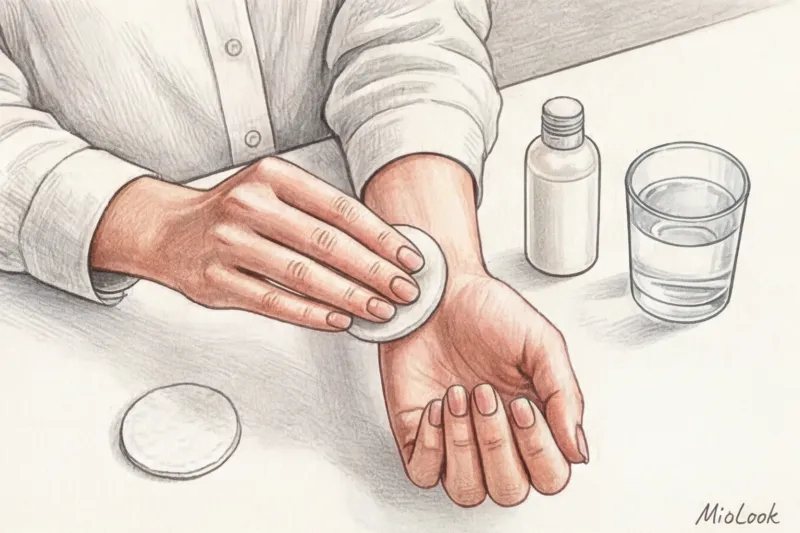
What should you do if you've been experimenting before going out, realized you made a mistake, and there's no time to shower? As a stylist working on shoots, where we often have to quickly change not only makeup for performance , but also the models' fragrances, I have developed a clear rescue protocol.
- Do not use wet wipes. Regular baby wipes or cosmetic wipes don't dissolve perfume oils. They simply spread them over a larger area of skin, increasing evaporation.
- Alcohol or micellar water. You'll need a solvent. Alcohol wipes (from your first aid kit) or a cotton pad soaked generously in micellar water, followed by unscented lotion, work perfectly.
- Forget about coffee beans. Perfume shops still stock jars of coffee, but this is an outdated myth. Coffee is another strong olfactory irritant that will only overwhelm your tired senses. To clear your senses after a bad mix, drink a glass of clean water and step outside into the fresh, cool air for five minutes.
Checklist: A Safe Layering Algorithm for Beginners
If you still want to create your own unique fragrance, approach it not as an amateur alchemist, but as a wardrobe architect. Just like we put together a functional clothing capsule in the app. MioLook , your perfume capsule should be logical and structured.
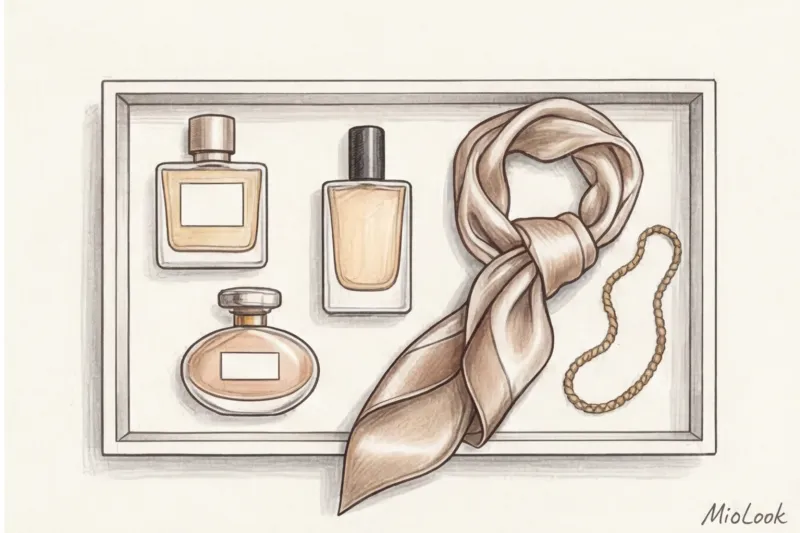
Here are 3 rules that work without fail:
- Capsule principle (1+1): Choose one complex, dense scent (your base, like a classic trench coat) and one completely linear mono-fragrance (your accent, like a bright silk scarf). For example, a sandalwood base + a pure, mono-grapefruit accent.
- Time rule (10 minute break): Never spray one perfume directly over a wet stain from another. Apply a heavier, woody, or resinous scent first. Let it sit on your skin for 10-15 minutes, allowing the alcohol to evaporate. Only then apply a light citrus or floral accent.
- Spatial separation: To ensure a clean fragrance experience, distribute them across different textures. Apply a heavy base to the back of your neck (under your hair), and a light, ethereal scent to your collarbones or the lining of your jacket.
Layering fragrances is a wonderful way to personalize your style, but it's not a way to throw away a fragrance that doesn't suit you. If a scent itself irritates you, no other fragrance will "fix" it—it will only exacerbate the problem. Choose wisely, combine them wisely, and your scent will always evoke admiration, not a desire to open the window.