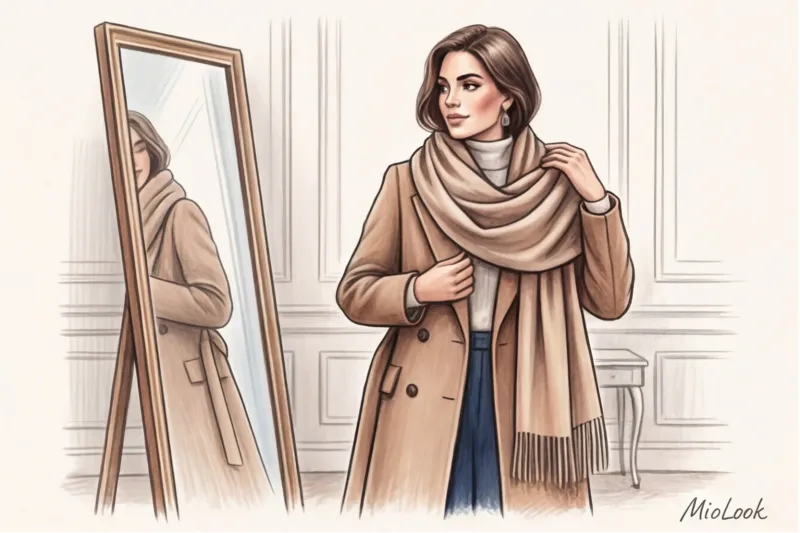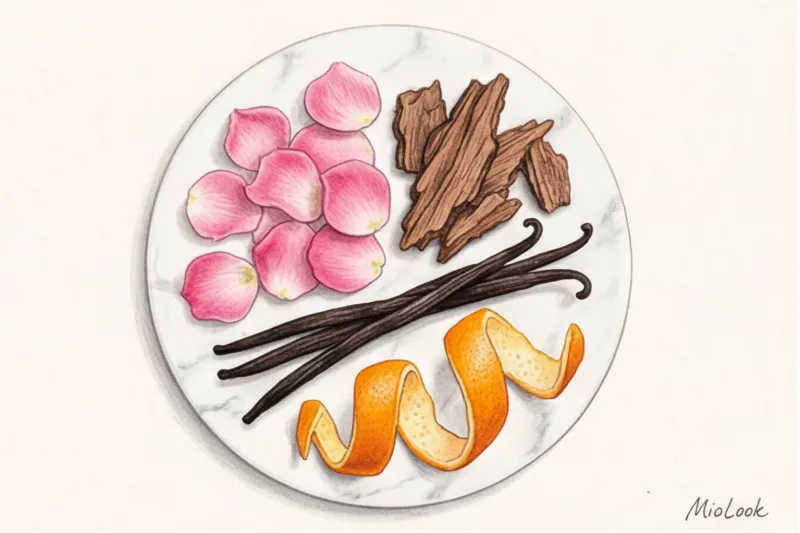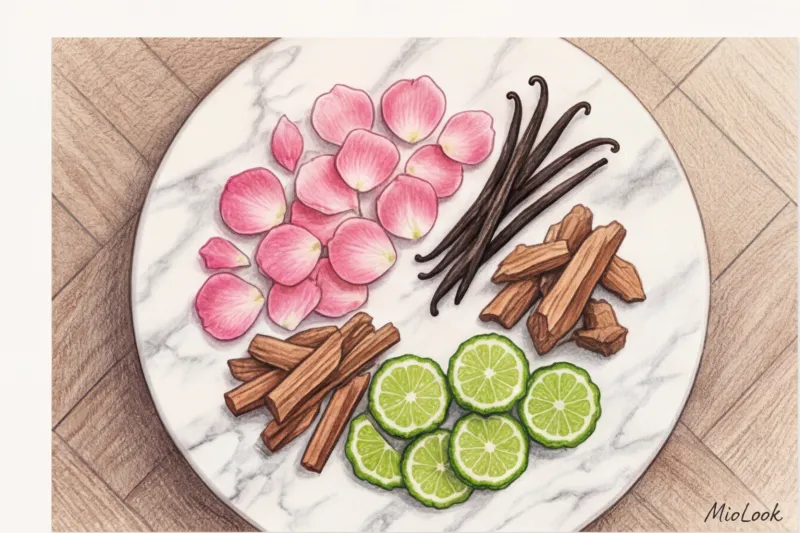
In 2018, at the Esxence perfume fair in Milan, a leading independent perfumer told me something that forever changed my approach to styling: "You can wear a flawless Saint Laurent tuxedo, but if you're trailing a frivolous strawberry scent, you've lost the conversation before you even opened your mouth." Fragrance isn't just a "nice smell." It's an invisible yet powerful element of your personal brand, one that's perceived by others on a subconscious level.
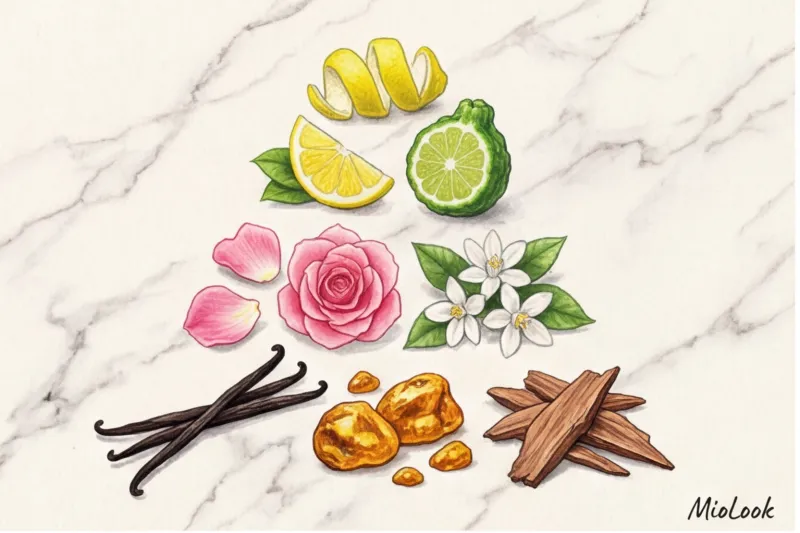
In 12 years of working as a fashion journalist and stylist, I've realized one thing: most women choose perfume intuitively, based on a momentary emotion at the store display. The result? The shelf is filled with beautiful bottles, but there's nothing to wear with a formal cashmere sweater or silk slip. To manage impressions, you need to understand how perfume works. groups of perfume aromas We've written more about finding your unique olfactory signature in our a complete guide to the perfume "I" , and today we will analyze the anatomy of the main perfume families.
What are perfume fragrance groups and why should you understand them?
The industry standard for odor classification, used today by perfumers worldwide, was created in 1992 by Michael Edwards. His famous "Fragrance Wheel" distilled the chaos of thousands of compositions into logical segmentations. Why should you, and not just chemists in labs, need this knowledge?
Firstly, it's physics, not magic. Belonging to a particular group directly dictates longevity. According to the International Fragrance Association (IFRA), molecules in different olfactory families have different weights and evaporation rates. Light citrus notes last only 15–30 minutes on hot skin, after which they disappear without a trace. But heavier molecules of woody and amber accords can last from eight hours to several days. Expecting a fresh green perfume to last for 24 hours is like expecting a linen suit to be perfectly smooth by evening.
Secondly, understanding fragrance groups allows you to buy perfumes blindly. If you know that white florals give you headaches and chypres sound too retro, you can save tens of thousands of euro by simply reading the fragrance pyramid before ordering.
Floral fragrances: from delicate classics to bold avant-garde
The floral family is the largest and most commercially successful in history. But if you think "floral" automatically means "sweet, girly, and simple," modern niche perfumery might disagree.
The Osmothèque in Versailles, the main archive of perfume history, contains hundreds of floral standards, and they are divided into two fundamentally different categories. The first is soliflores , compositions built around the scent of a single flower (for example, only lily of the valley or only lilac). The second are complex floral bouquets, where notes intertwine to form an abstract pattern. A stylistically well-chosen floral perfume is the ideal tool for networking, daytime events, and smart-casual dress codes. It bridges the gap without intruding on the personal boundaries of the interlocutor.
White vs. Pink Profiles: How They Change the Look
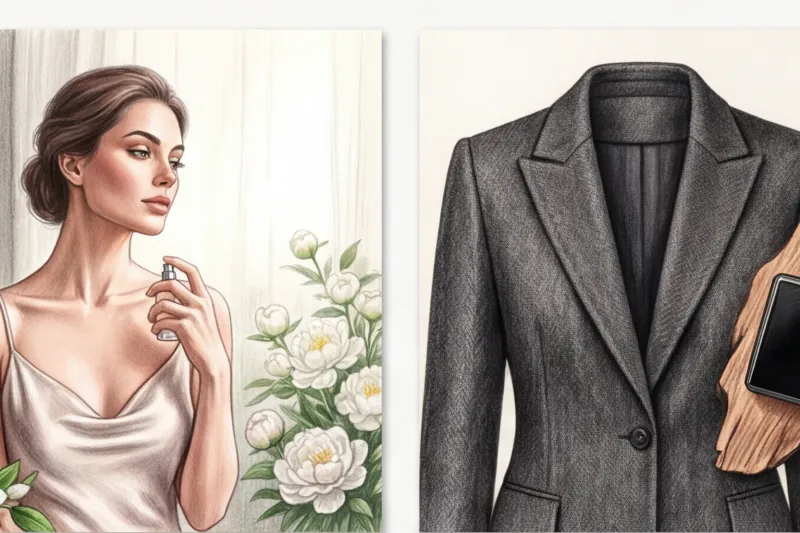
At Milan exhibitions in recent years, I've noticed a persistent trend: white flowers no longer try to be romantic. Jasmine, tuberose, and gardenia, in modern interpretations, sound predatory, animalistic, and prestigious. The white floral profile conveys confidence, sensuality, and even a touch of dominance. It's the scent of a woman who walks into a room and steals the show.
Rose and peony, however, work differently. A particularly cool, morning rose, paired with patchouli, creates an aura of elegant distance around its wearer. It's a classic that says, "I'm flawless, but approaching me isn't easy."
Your perfect look starts here
Join thousands of users who look flawless every day with MioLook. The smart algorithm will help you pair your perfume wardrobe with your clothing capsule.
Get access — €0.99 onceWoody notes: the olfactory equivalent of a suit
For a long time, the woody family was considered a strictly male domain. Today, this gender stereotype has been completely shattered. Woody fragrances are the core, the foundation, and an absolute must-have for a business wardrobe.
The main players here have completely different characters. Sandalwood imparts a creamy, enveloping softness. Cedar has a dry, pencil-like shavings, conveying maximum austerity. Vetiver (formally a herb, but olfactorily related to wood) adds an earthy, smoky coolness.
One of my clients, the CFO of a large IT company, complained that her ideas were often interrupted at board meetings (which were mostly attended by men). We analyzed her image. She was wearing a beautifully structured jacket, but her perfume—a thick, sweet gourmand vanilla—was subconsciously associated with comfort, cafes, and baked goods, not strict KPIs. We replaced her scent with a dry, austere vetiver with cedar. A month later, she admitted, "I started feeling different. My back straightened, my voice became firmer." Woody notes are an anchor that grounds your image and emphasizes your expertise.
Oriental (Amber) Fragrances: The Art of Seduction and Status
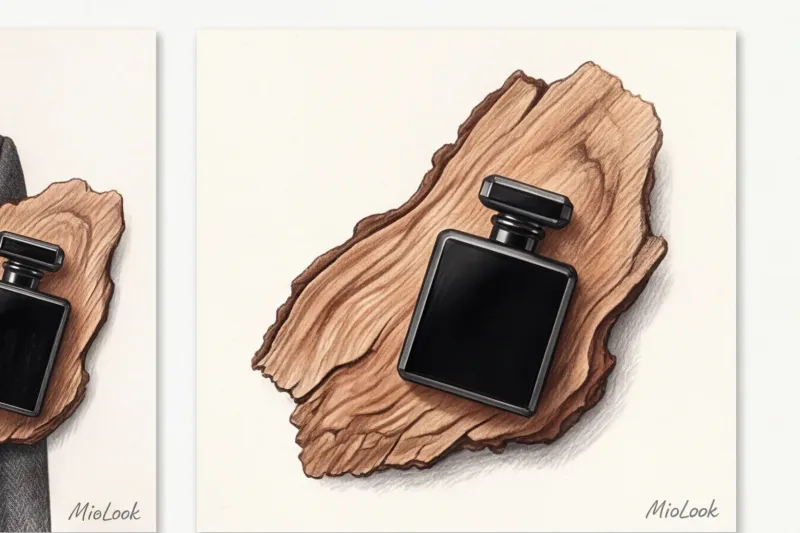
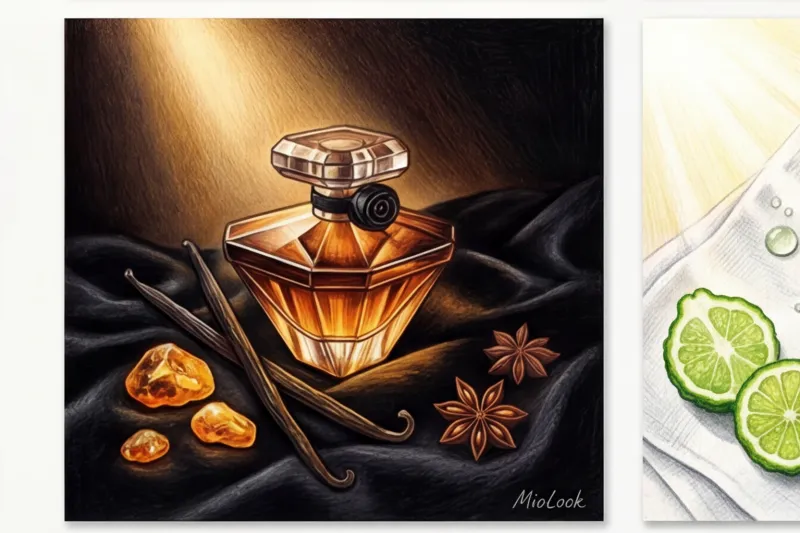
The anatomy of a classic oriental accord is built on heavy, dense components: sweet vanilla, viscous resins, incense, tonka bean, and hot spices. These are cocoon-like scents, statement scents.
An important industry insight: in 2021, Michael Edwards officially updated his "Fragrance Wheel," replacing the historical term "Oriental" with "Amber/Spicy." This reflects the global trend toward inclusivity, which is why you'll increasingly see the "Amber" label in modern boutiques.
Ambery compositions require a corresponding texture. They work phenomenally with heavy silk, velvet, cashmere, or a perfect wool tuxedo worn over a bare skin. However, this group has a strict limitation: wearing ambery scents in the office from 9 a.m. to 5 p.m. is a gross violation of business etiquette. Their density physically fills the space, depriving colleagues of oxygen. Save resins and spices for evenings and dates.
Fresh and citrusy: energy, dynamism and sport
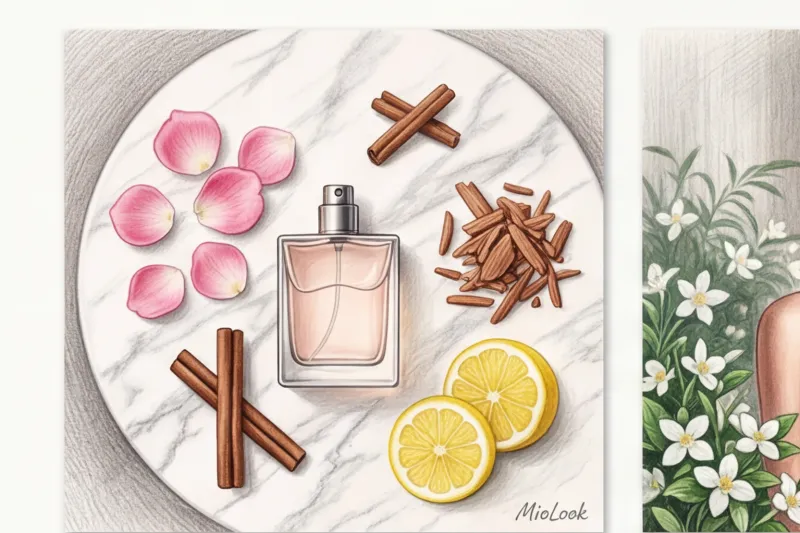
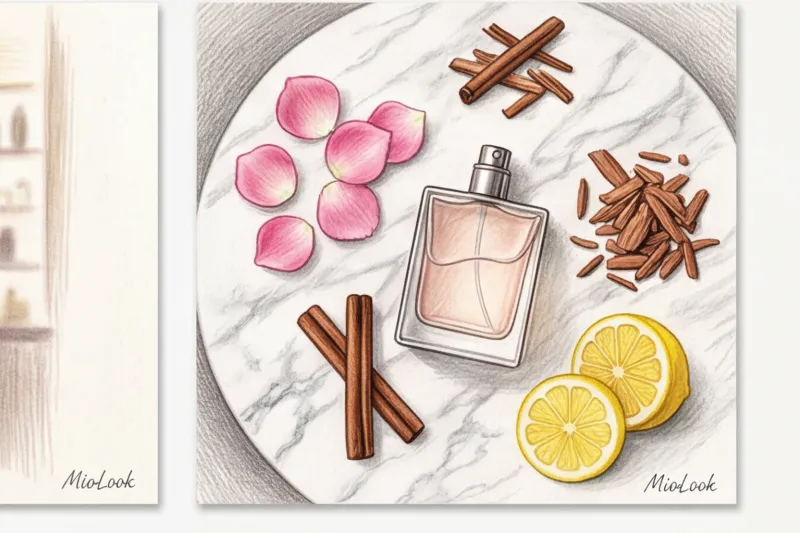
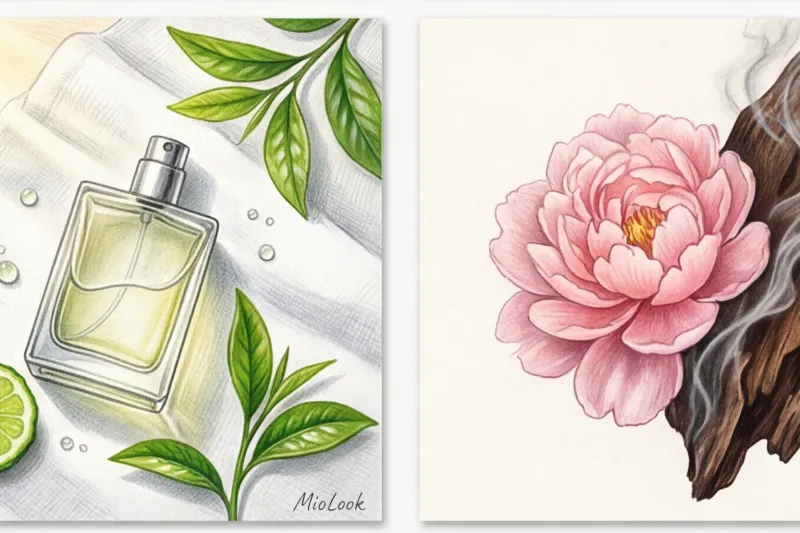
Bergamot, bitter lemon, seawater, freshly cut grass—this family is responsible for the illusion of absolute purity. The fresh scents of this perfume work like a crisp, oversized white shirt paired with perfect jeans. They convey dynamism, youth, and athletic energy.
The main drawback of this group, as we've already established, is its catastrophically short lifespan on skin. But over the years as a stylist, I've discovered a useful life hack. If you want to prolong the life of your favorite citrus cologne, use a layered application method on fabric. Spray the fragrance not on your wrists, but on the inside lapel of a wool jacket or the lining of a trench coat. The fibers of the dense fabric "capture" the volatile bergamot molecules and prevent them from evaporating from your body heat, prolonging the scent for several hours.
Perfume hybrids: floral and woody-musky compositions
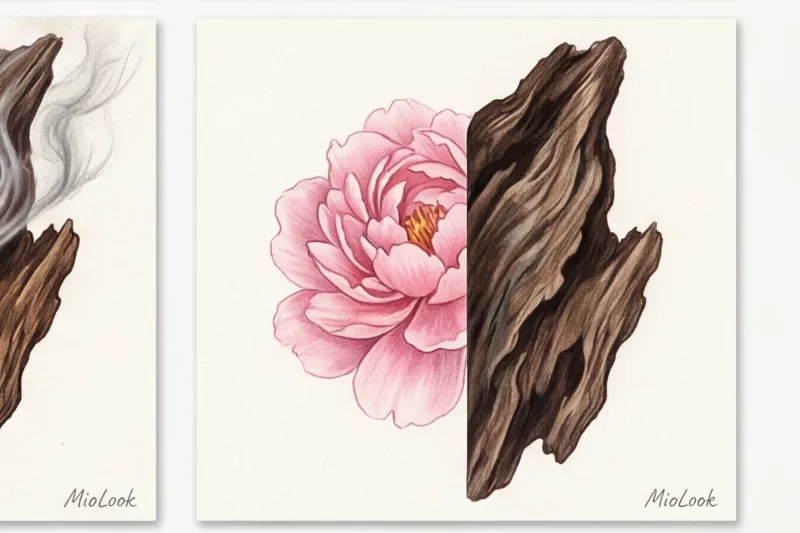
It's time to dispel a popular myth: "pure" floral or woody scents are almost nonexistent in modern perfumery. Market research (such as WGSN's 2023 reports) shows that over 60% of modern women's fragrance launches fall into the "floriental" category—floral-oriental hybrids.
When a client tells me, "I love simple florals," and then shows me her favorite bottle, 80% of the time the base of that fragrance reveals a powerful woody-musky or patchouli note. It's the base that gives the florals longevity and sillage.
Chypres are a separate class of hybrids. These aristocrats of the perfume world are built on the contrast of crisp citrus at the top, a floral heart, and a dark, rough base of oakmoss and patchouli. Chypre is a fragrance with a complex character, the perfect companion for architectural design and minimalism.
Access to MioLook for €0.99 — one-time payment
A smart AI stylist will create the perfect look for you. Analyze your wardrobe and create capsule collections that perfectly pair with your favorite fragrances.
Get access — €0.99 onceHow to Organize Your Perfume Wardrobe by Fragrance Groups (Checklist)
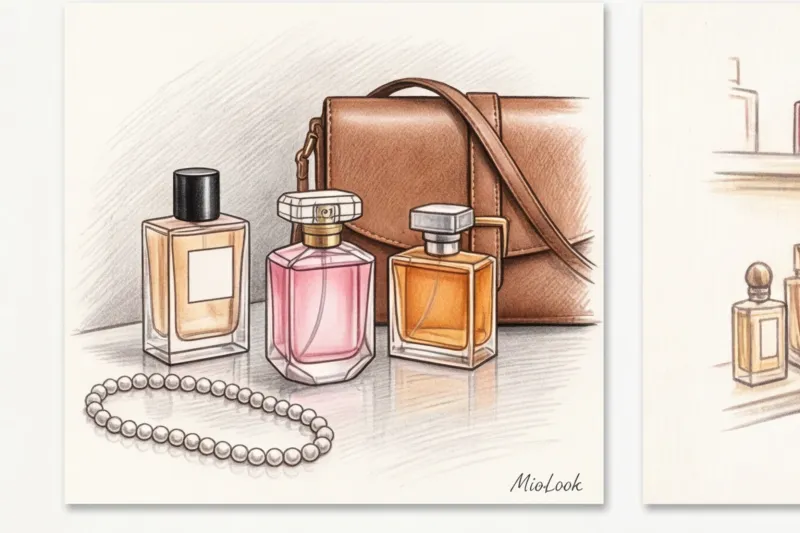
Just as you wouldn't wear pumps to the gym, you shouldn't wear the same perfume for your morning run and the opera. A good fragrance wardrobe requires at least three fragrances from different families.
Here is the basic algorithm that I use when analyzing the style of clients (by the way, this concept is very convenient to visualize through the "smart wardrobe" feature in MioLook ):
- Scent #1: Fresh/Citrus. Mornings, the gym, weekends out of town, flights. It doesn't tire the taste buds and gives you a boost of energy.
- Fragrance No. 2: Woody / Floral-woody. Your workhorse. Office, business meetings, smart-casual. Conveys composure and professionalism.
- Fragrance #3: Amber / Complex Chypre. Evenings, dates, theater. A fragrance-adornment to wear with silk and red lipstick.
Don't forget the rule of seasonality: heavy resins and spices literally "suffocate" those around you in the summer heat (due to the high temperature, molecules evaporate more aggressively), while light citrus fruits shrink in the cold and sound flat, like cheap soap.
Common Mistakes: Why Your Favorite Brand's Fragrance Suddenly Disappoints You
Even if you've mastered the theory perfectly, you may encounter pitfalls in practice. The most common mistake is buying a fragrance based on an online note description without considering your skin chemistry. On "hot" skin with active circulation, sweet oriental notes unfold instantly and vividly, while on "cool" skin, they can sound prickly and distorted, revealing medicinal nuances.
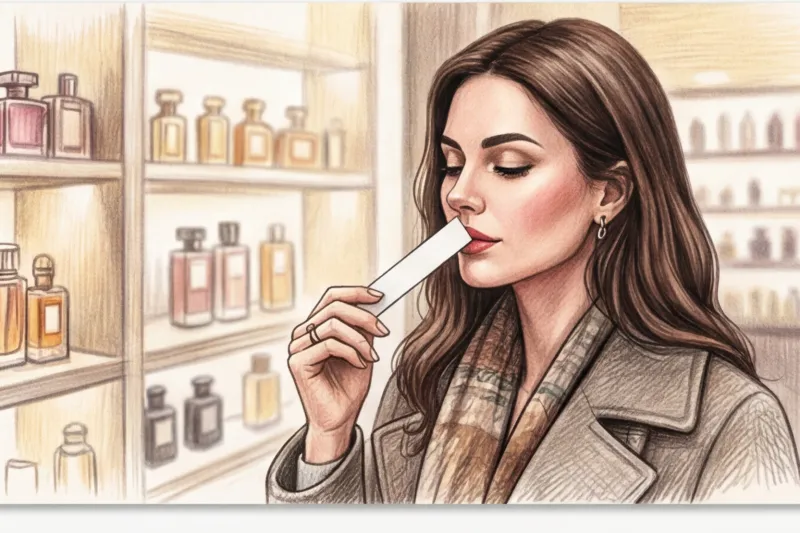
The second problem is olfactory fatigue. Never test more than three or four fragrances from different groups at a time in a boutique. After the fifth blotter, your senses will simply shut down, and you'll buy the one you think is the "brightest," only to discover an unbearably heavy sillage when you get home.
And finally, ignoring context. This is something I constantly struggle with as a stylist. A mismatch between the density of a fragrance and the texture of a fabric ruins the look. A heavy, animalic oud paired with a light summer linen sundress creates cognitive dissonance. A fragrance should be a logical extension of your outfit.
Finding the perfect fragrance isn't about finding "the one." It's about assembling a palette of tools with which you tell the world a new story about yourself every day. Explore fragrance families, test contrasts, and let your olfactory wardrobe be as flawless as your visual one.