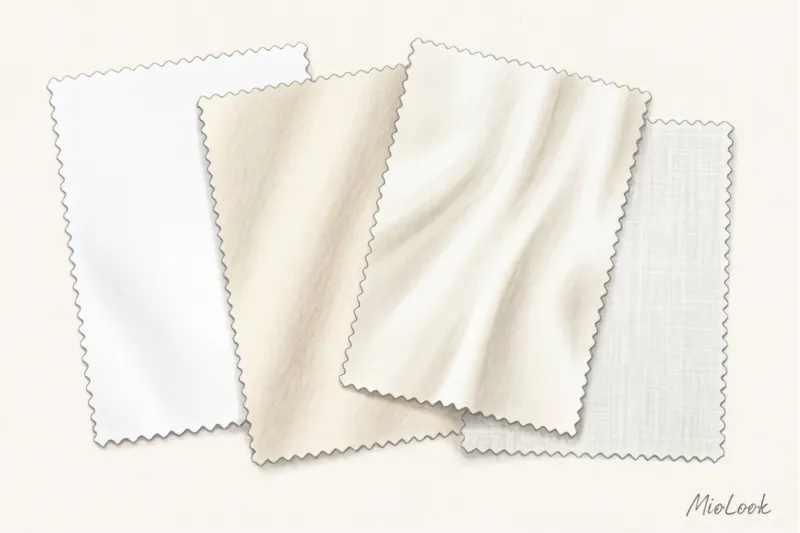
Have you ever walked into a fitting room with two stunning white items, only to discover an unpleasant surprise in the mirror? One item suddenly appears yellowed, the other grayish. You're trying to create a total white look, but instead of classy elegance, you end up with the effect of a washed-out uniform. In 12 years of working as a colorist and image consultant, I've seen this scene hundreds of times. White is a tricky color. It doesn't forgive mistakes in texture, temperature, or cut.
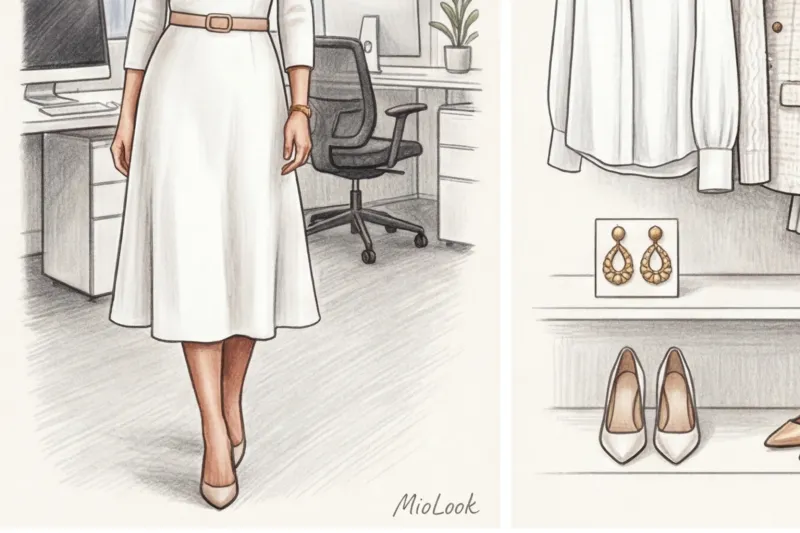
Most advice on wearing white boils down to the banal "be careful with coffee and red wine." But the real magic happens outside the dry cleaners. We'll cover the basic rules of these looks in more detail in our complete guide: Monochrome Wardrobe: How to Create a Stylish Capsule In this article, we'll go a step further: we'll explore the coloristic physics of white, debunk myths about extra pounds, and learn how to combine shades to make your look look at least a thousand euros.
The Anatomy of White: Why Your Total White Look Might Look Dirty
According to Albert Munsell's color theory, white has a unique reflective power. Optical (pristine white) acts as a powerful reflector, reflecting up to 90% of incident light directly onto your face. The problem is, white in clothing is almost never completely pure. Fabric manufacturers add pigments: a drop of yellow for a warm, milky white, gray for a cool, alabaster white, and brown for an ivory color.
The main rule of a colorist: Never mix warm and cool white in one monochrome look. One of my clients once bought a stunning silk blouse in a warm, milky shade for €250 and decided to wear it with perfectly tailored wool trousers in an optical white. The result? Against the cold, icy wool, the expensive silk blouse looked dirty, as if it had been washed with rusty clothes.
If you choose a warm undertone (ecru, cream, vanilla) as a base, all other elements of the look should support this temperature. Cool whites (snow, arctic, paper) only work with cool spectrums.
The Biggest Myth: "White Makes You Look Fat." How to Manage Your Proportions
"I don't wear white because it makes me two sizes bigger" is the most common objection I hear. Let's turn to physics and the laws of optical illusions in fashion design. White has no physical weight. It's not the pigment that adds volume, but flimsy texture.
Cheap viscose and thin knitwear from the budget segment (under €30–€40) are fattening because they don't hold their shape. These fabrics cling to the body, highlighting even the slightest unevenness of the skin, the seams of underwear, and every wrinkle. In white, this effect is doubled, as shadows against a light background become more contrasting.
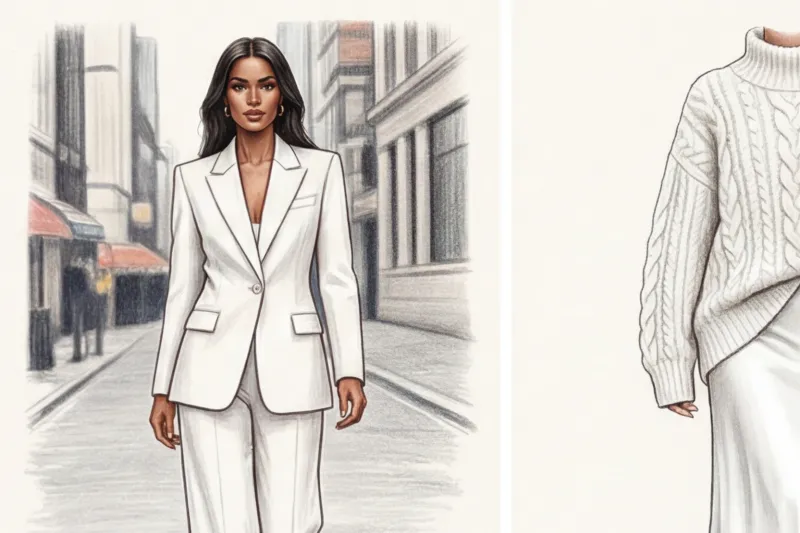
The secret to a slim figure lies in the architecture of the cut and density. Heavyweight cotton (from 200 g/m²), suiting wool, and heavyweight denim (12-14 oz) in white perfectly elongate the silhouette. A crisp pantsuit with a defined shoulder line and well-defined darts will create a continuous monochrome vertical line, visually slimming you down more than any shapeless black sack dress.
Your perfect look starts here
Join thousands of users who look flawless every day with MioLook. Artificial intelligence will help you choose textures and shades.
Get access — €0.99 onceMonochrome architecture: the rule of contrasting textures
If you wear a smooth, matte white shirt with equally smooth, matte white trousers, you'll look like a chef at a fine restaurant or a doctor at a private clinic. It's a professional distortion of the fabric that the brain interprets as a uniform.
My experience working on film sets shows that the camera "kills" monochrome if it lacks relief. The human eye works the same way. The formula for a truly luxurious total white look is based on the rule of three textures: matte + shiny + embossed.
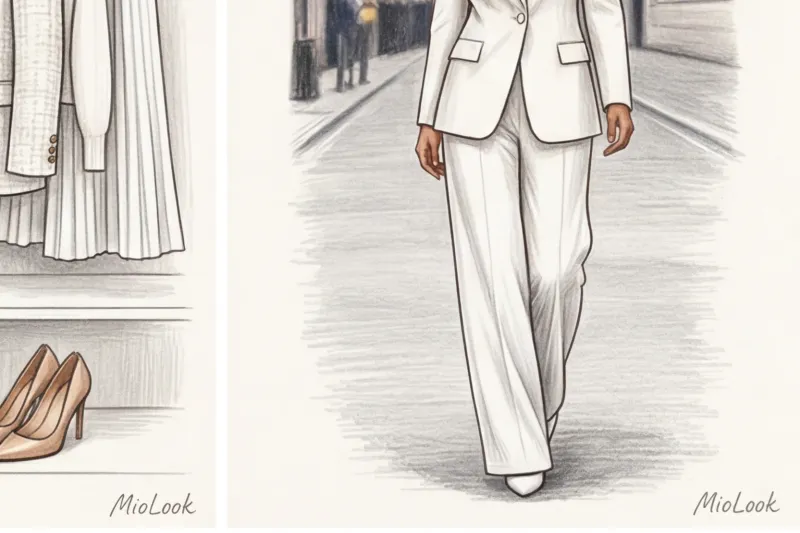
- Base: smooth leather or thick matte suit fabric.
- Light: liquid flowing silk, satin or satin.
- Volume: chunky knit, boucle, cashmere or tweed.
Pair a heavy, chunky knit sweater with a lightweight silk slip skirt. Add a touch of sheerness to the look, such as an organza or chiffon blouse. The difference in light refraction will create that perfect optical depth that draws attention to your outfit.
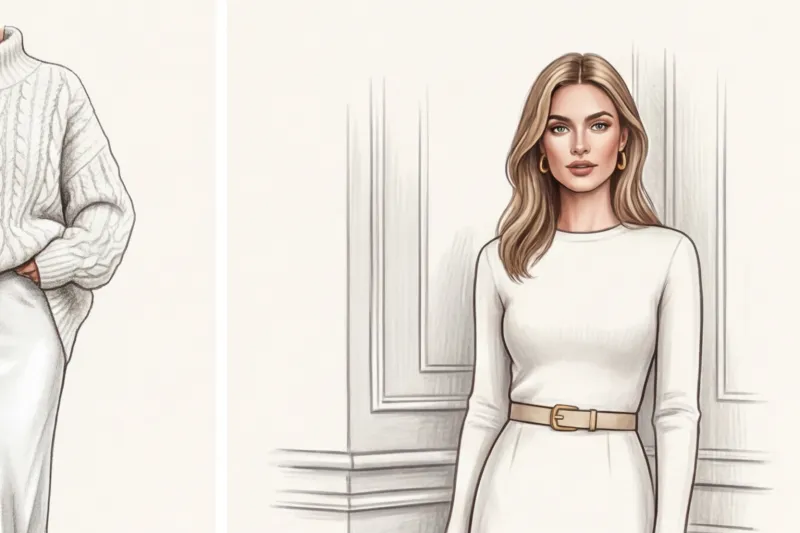
Total white looks for different color types: finding your perfect shade
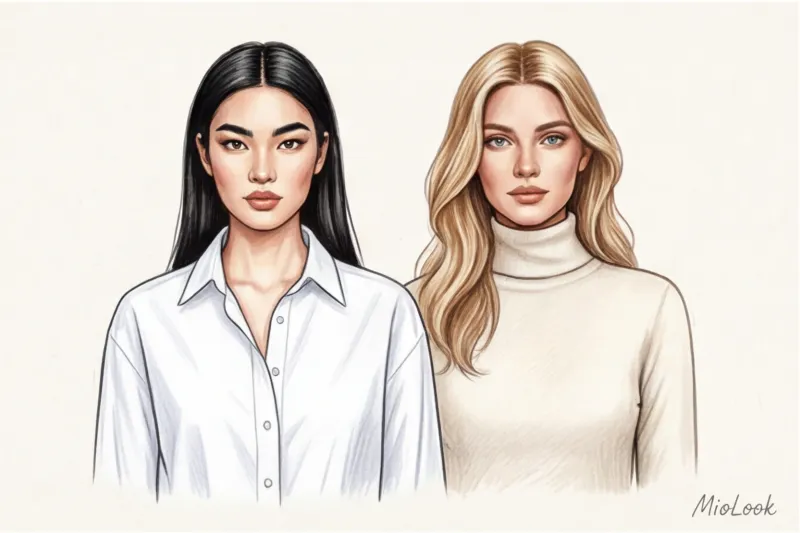
According to statistics I gather from my color tests, about 80% of women of European and Slavic appearance literally "wipe out" against a pure white background. Optical white is an extremely contrasting shade. It requires equally high contrast from the face (bright whites of the eyes, dark hair, and pronounced eyebrows—the classic "Winter" color type).
If you have a soft or warm undertone (light brown hair, freckles, olive skin), a crisp white will highlight any imperfections: redness will be more pronounced, and under-eye circles will be deeper. Your safest bet is cream, ivory, champagne, and buttermilk.
"But what if I've already bought the perfect optically white trousers, and I'm a warm color type?"
— Portrait Zone Rule Keep the unflattering shade away from your face. Wear crisp white pants or skirts (below), and position a top in your ideal warm cream shade near your face. Just add a belt or a separating jacket to prevent the colors from clashing directly at the seam.
White monochrome in the office: status or provocation?
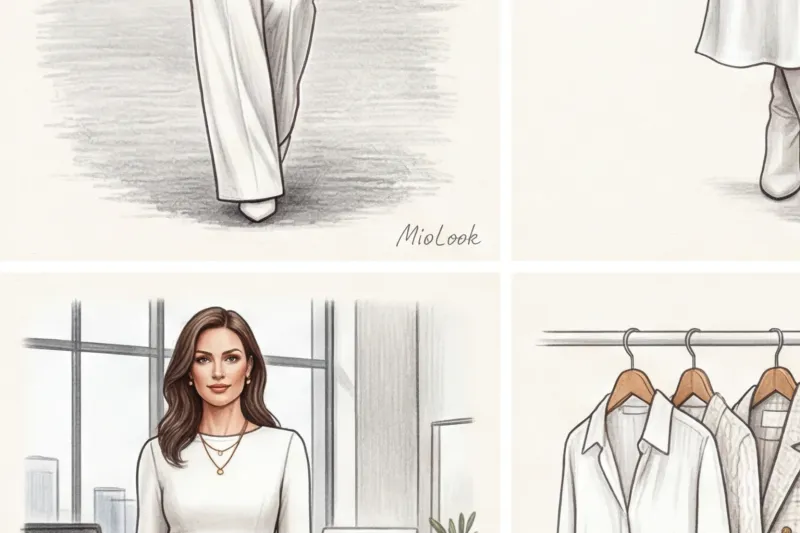
In business dress codes, white has a distinct seasonal psychology. Summer white (linen, lightweight cotton) is perceived as a relaxed base. But winter white (cashmere, heavy crepe, wool) is an absolute marker of power and high status.
Historically, only those who drive their own car and aren't afraid of getting dirty can afford light-colored clothing in harsh climates or dirty cities. By wearing a white wool midi suit to important meetings, you send a silent message: "I'm in control."
However, the all-white office look hides a trap: tights. No nude tights with lycra (shine)! They'll instantly transform a €300 outfit into a dated 2000s suit. Choose either completely opaque sheer tights (8-10 den, for a "bare skin" effect), or create a deliberate contrast by wearing black opaque tights and holding them up with black shoes and a belt.
Access to MioLook for €0.99 — one-time payment
A smart AI stylist will select the perfect look for the office, taking into account your dress code and texture preferences.
Get access — €0.99 onceChecklist: 5 Steps to an Expensive White Monochrome
Before you leave the house in an all-white outfit, check yourself against this short list. When my clients pack a capsule, I advise them to load their items into the "smart wardrobe" feature in MioLook to visually assess how the elements work together before trying them on.
- Determine the base temperature. Choose which white color is the star today: warm (milky) or cool (icy). Don't mix them.
- Collect 2-3 different textures. Make sure your look includes a matte piece (pants), a shiny piece (silk top), and a textured piece (boucle jacket).
- Choose the right metal. Gold hardware and embellishments warm up the look, adding a bohemian flair. Silver and platinum enhance the cool, austere character of architectural white.
- Solve the shoe issue. White or beige shoes will visually lengthen your legs, extending the vertical line. Contrasting colors (black, burgundy, emerald) will create a focal point but can cut into your height.
- Check the seams. White mercilessly highlights crooked stitching and loose threads. Cheap sewing on white is impossible to hide.
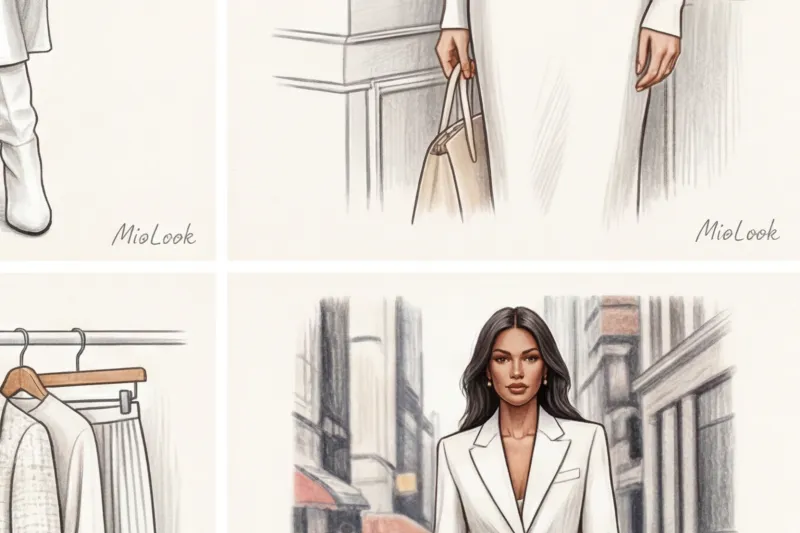
The Underbelly of Perfection: The Invisible Details of the Perfect Look
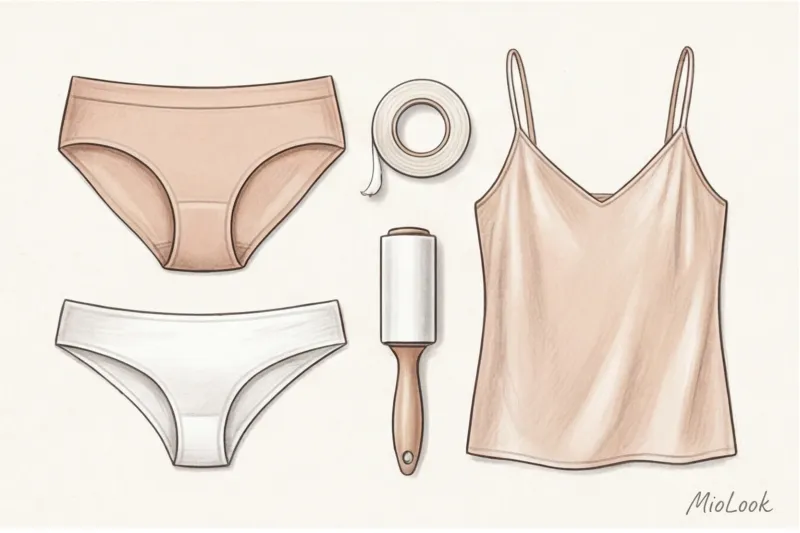
I've saved the biggest insider secret for last, the one that burns 9 out of 10 newbies. Never, under any circumstances, wear white underwear under white clothes. A white bra under a white shirt will glow like a neon sign, cutting through your silhouette.
The only right choice is smooth seamless nude underwear , a shade that blends perfectly with your skin tone (and not just an abstract "beige"). Any professional stylist's arsenal always includes nude thongs, shorts, and tops.
Pay attention to the lining when buying. Expensive brands (and high-end mass-market brands like COS or Massimo Dutti) always make white trousers and skirts with a nude or white lining that extends to the knee, or they even include special inner shorts. If you pick up linen trousers in the store and see your fingers through them, return them to the hanger. No amount of underwear will save such a garment from the hustle and bustle of a city day.
Assembling the perfect light-toned look requires a little more attention to fabric and aesthetics than a typical all-black look. But the results are worth the effort. A well-chosen white monochrome is more than just clothing. It's a tool for impression management that communicates to others: you're a confident woman who doesn't compromise on her style.