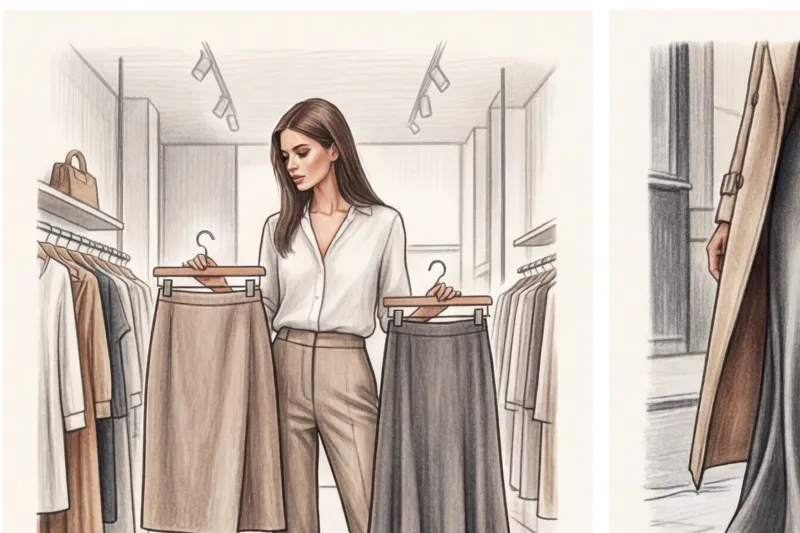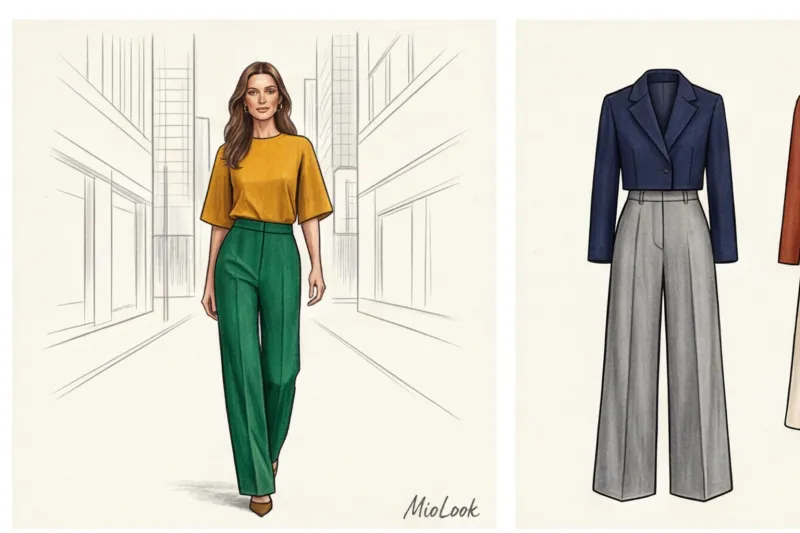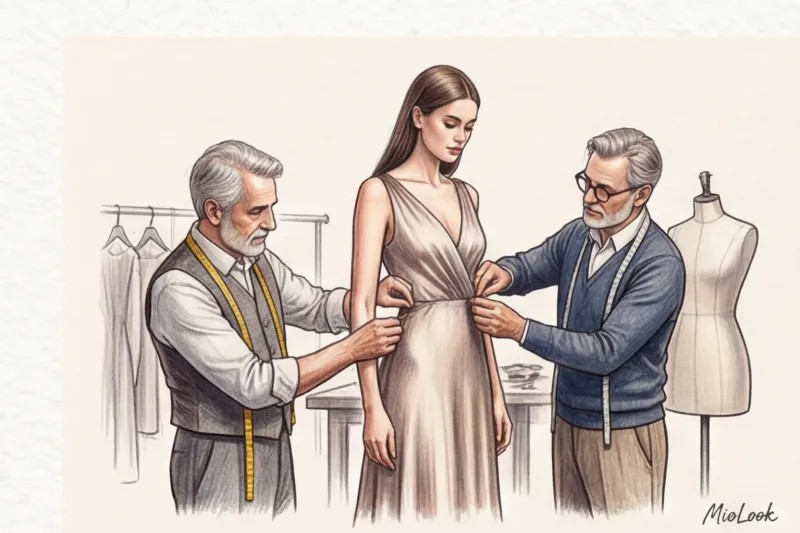
How many times have you heard the categorical advice: "With your height, you should only wear maxis, and forget about minis"? In ten years of working as a fashion journalist and stylist at European fashion weeks, I realized one thing: the industry is full of lazy stereotypes. Properly chosen dresses for tall girls — it's not just about adding fabric to the hem. It's about the complex architecture of the cut, the balance of volumes, and an understanding of the geometry of your own body.
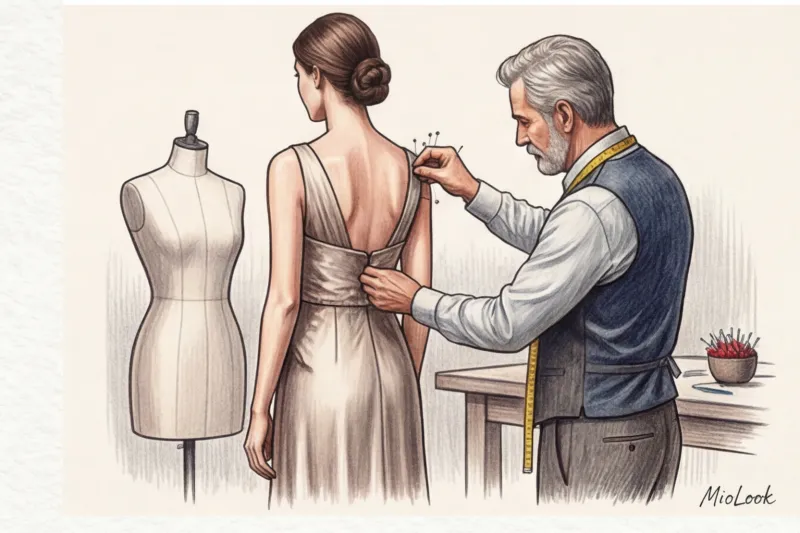
If you constantly feel like your dress's waistline is "slipping" under your ribs, and your sleeves look like you borrowed your little sister's, the problem is definitely not your figure. We've covered the basic principles of creating a harmonious silhouette in more detail in our The complete guide to perfect clothing for tall girls Today, we'll put aside the generalities and explore pure mathematics: how to find that perfect length that will make your height your main asset.
The Architecture of Cut: Why Dresses for Tall Girls Are More Than Just a Hem Addition
The biggest mistake mass-market fashion makes is scaling patterns without taking anatomy into account. When a brand takes a standard dress for a height of 165 cm and simply lengthens the hem by 10 centimeters, it creates a disaster for tall women. For women over 175 cm tall, not only the legs but also the torso become longer.
I remember backstage at the Milan fashion show in 2019. The tailors literally ripped open standard samples right on the models (whose average height was 178-182 cm) to adjust the waistline. They didn't touch the hem—they adjusted the darts. The anatomy of the ideal dress for tall women requires the waistline to be 2-4 cm lower than the standard. Furthermore, a longer back and 1.5-2 cm more armhole depth are essential, otherwise the fabric will painfully dig into the armpits.
"Buying a size up just for the sake of length is a crime against your silhouette. You get baggy shoulders and chest, but your waist still feels out of place," is a rule I repeat to every client.
How to recognize the right patterns in the store
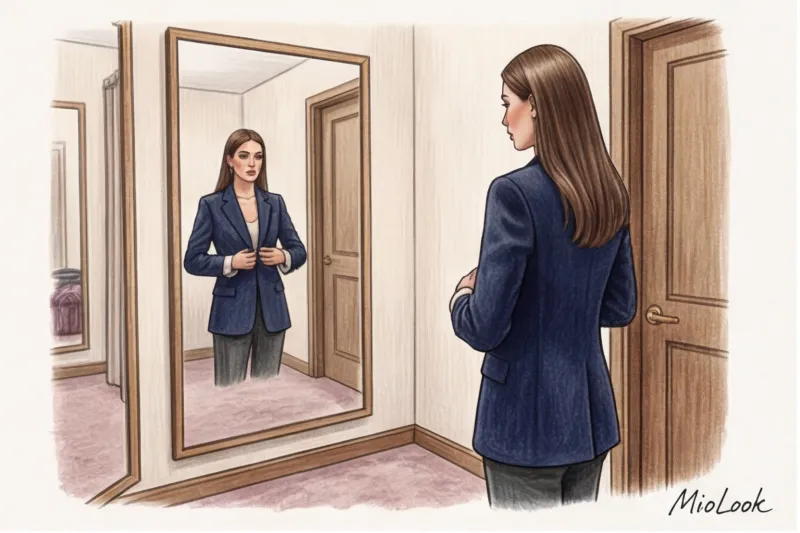
Don't trust labels, trust the fitting room tests. I always have my clients do the "arms-up test." Put on the dress and raise your arms up, as if you were reaching for the top shelf. If your waistline rises up to your bust, turning the dress into an empire waist, and doesn't return when you lower your arms, the bodice is hopelessly short.
The second indicator is bust darts. In a properly tailored dress, the apex of the dart should point directly to the fullest part of the bust. If it's 3-4 centimeters higher, the dress is tailored for a shorter woman.
Access to MioLook for €0.99 — one-time payment
A smart AI stylist will select the perfect look based on your proportions.
Get access — €0.99 onceMini Skirts: How to Wear Short Skirts with Parisian Chic
There's a steadfast stereotype: tall people shouldn't wear miniskirts because they risk looking vulgar. This is a myth that needs to be debunked. A well-cut miniskirt looks much more natural on tall legs than an ill-fitting midi. Consider the historical context: Mary Quant and the Mod aesthetic of the 1960s created a cult of the miniskirt thanks to long-legged style icons like Twiggy and Veruschka.
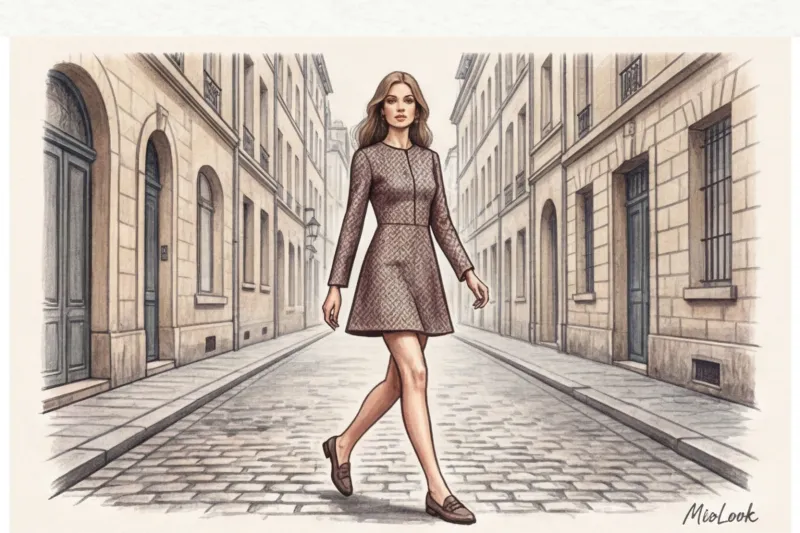
The secret lies in the "compensation rule." When we expose our legs, we completely cover our décolletage. Choose dresses with an architectural cut: long sleeves, a stand-up collar, and dense fabrics that hold their shape (for example, cotton with a weight of at least 180 g/m² or structured wool). Avoid flimsy viscose and excessive ruffles—they will ruin the look.
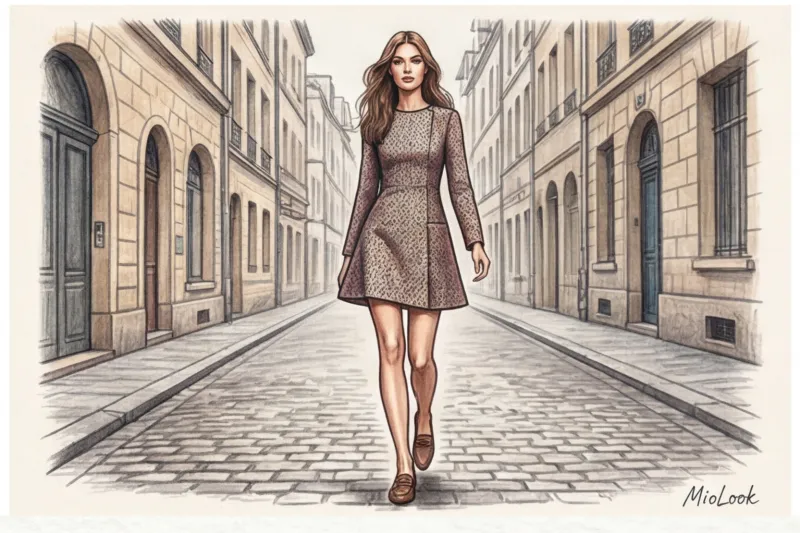
Of course, there's a fair limitation: this rule does NOT apply to a strict corporate dress code. Even the most architectural mini will look out of place in a conservative office. In such cases, it's better to opt for a midi.
Shoes as a balancer of proportions
What you wear with a mini is everything. A stiletto heel paired with a short skirt for a height of 175 cm or over often conveys an aggressive, outdated message from the 2000s. Ideal combinations for a mini today include loafers with chunky soles, classic brogues, flat tube boots, or a neat square heel no higher than 3-4 cm. You can read more about how to put together such modern outfits in our article about creation of a capsule and online fitting of images.
The Insidious Midi: The Mathematics of the Golden Mean
Paradoxically, the popular advice that "tall women should only wear midi dresses" is extremely dangerous. The wrong midi dress is the most insidious length in a wardrobe. If the hem ends exactly at the middle of the knee or, even worse, at the widest part of the calf, you visually "cut" your leg in half. As a result, your calves appear massive, and your dress looks like you've outgrown it.
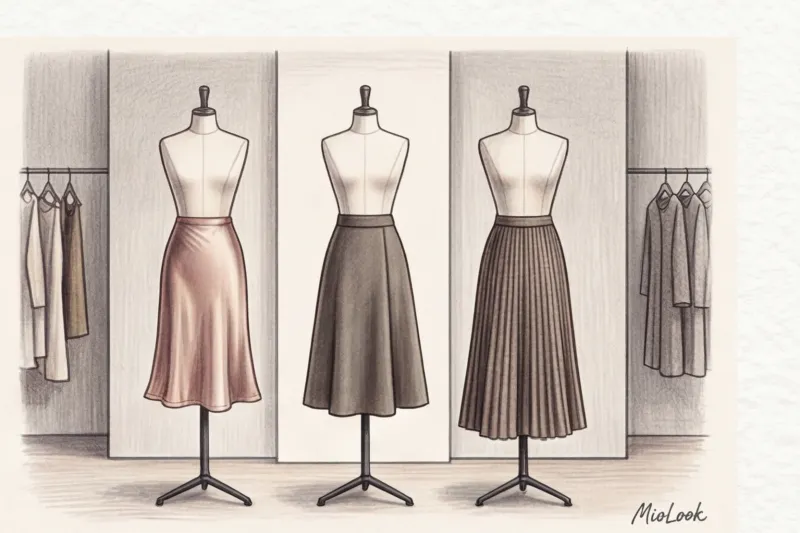
When Christian Dior created his famous New Look silhouette in 1947, the skirt length was calculated with mathematical precision to accentuate the thinnest part of the leg—the graceful ankle. The secret rule of stylists is that the hem should always end where the leg narrows.
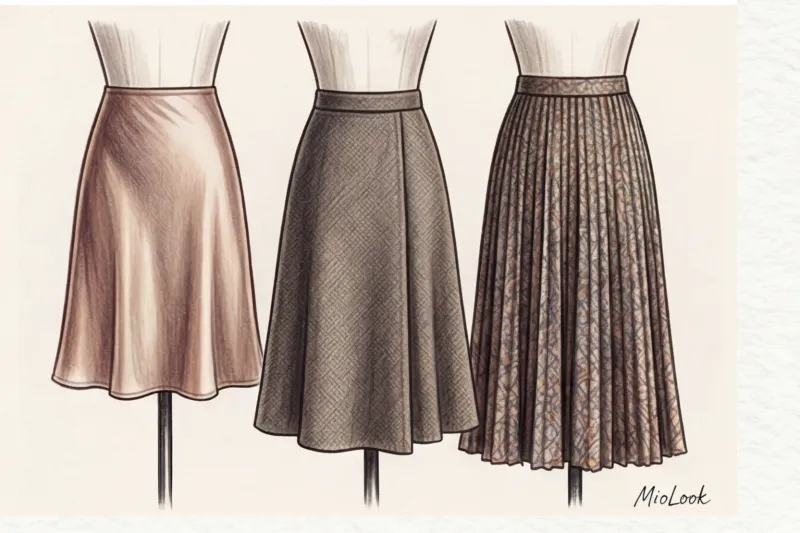
How do you find this point? Stand in front of a mirror. Your ideal midi length is 2-3 fingers below or above the widest part of your calf muscle. No compromises. If you have trouble determining these proportions yourself, try the "smart wardrobe" feature in MioLook — the app helps you visualize how different styles fit specifically on your figure.
Your perfect look starts here
Join thousands of users who look flawless every day with MioLook.
Get access — €0.99 onceMaxi and floor-length: how to avoid looking like a column
The maxi length is originally designed for taller women—it looks most impressive on women over 170 cm tall. However, there's another pitfall: a solid, floor-length monochrome in a thick fabric can create a monumental effect. You risk looking like a massive architectural column.
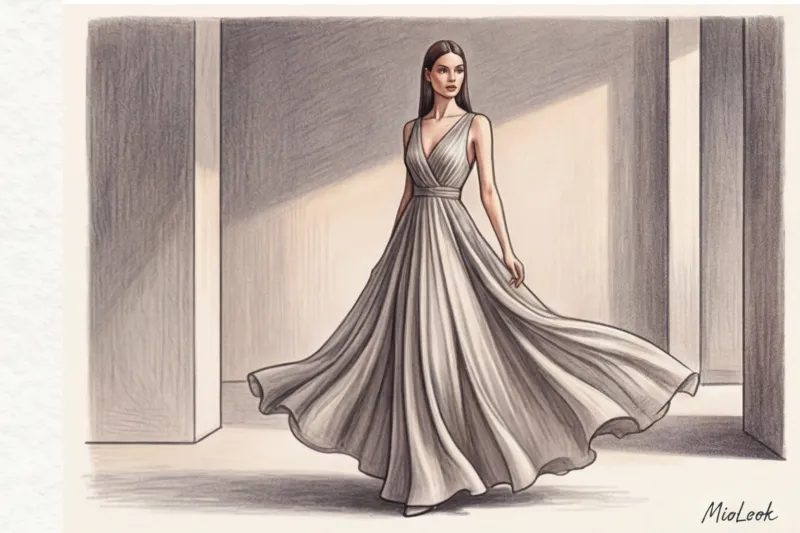
Take a look at the latest collections from The Row or Saint Laurent (2024): designers use maxis to create a sense of status, but never forget about airiness. To break up the rigid vertical line, use color blocking, delicate prints, or deep V-necklines. Fabrics should flow (heavy silk, fine wool with elastane), not be stiff. By the way, we've covered the correct combination of long dresses and outerwear in detail in our guide. How to choose shoes to match your outerwear - this is critically important for maintaining proportions during the cold season.
Asymmetry and slits: the secret weapon for tall women
If I were asked to name one absolute must-have for tall women, I would choose asymmetry. A diagonal hem (mule hem) is your best friend.
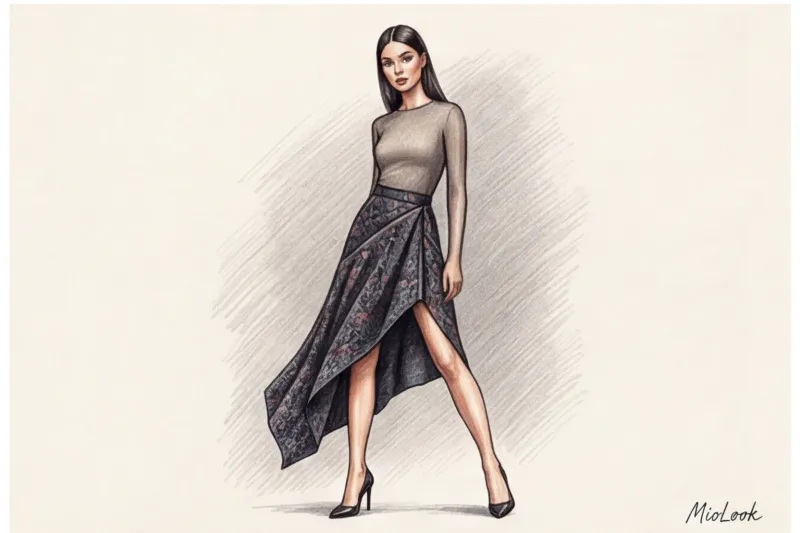
Why does this work? The human eye perceives horizontal lines as reference points. A standard, straight hem immediately forces the brain to evaluate: "Is this short? Or is it long?" Asymmetry breaks these horizontal lines. The eye simply has nothing to latch onto, making the silhouette incredibly light and dynamic.
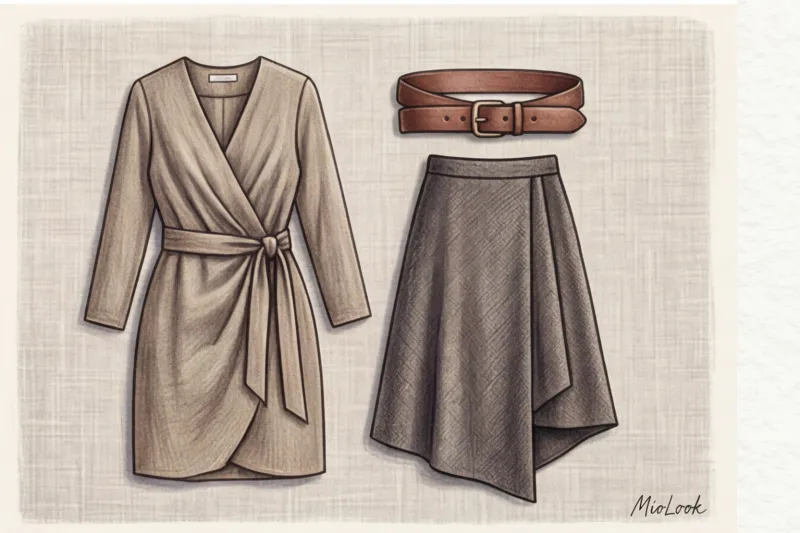
Also, don't be afraid of high slits. They not only add a touch of daring to your look, but also physically lighten heavy fabrics like denim or tweed. By the way, you can find some great examples of how slits work with heavy materials in the article about modern women's denim total look Wrap skirts are also ingeniously adaptable to any leg length, allowing you to adjust the degree of openness in your step.
Checklist: Checking the fit of dresses and skirts before buying
Knowing the theory is half the battle. Let's move on to practice. Here's my personal checklist, which I use to test every item when shopping with high-end clients:
- Study the tags (but wisely). Many brands (ASOS, Gap, Next) offer Tall (T) lines. This typically means +5 cm to the length of the garment and +2 cm to the bodice length. However, in low-cost mass-market clothing, the Tall label often means only Long hem. Always check the waist.
- Test the step. Tall = long strides. A slim midi dress without a vent or back slit will make you dart like a penguin. Take a few long strides right in the fitting room. If the fabric is tight and restricts your movement, the dress will hang in the closet.
- The golden ratio rule. Step back two meters from the mirror and assess your proportions. Your silhouette should be divided into a ratio of 1/3 (top) to 2/3 (bottom) or 1/4 to 3/4. If the dress divides you exactly in half (1/2 to 1/2), it visually reduces your height and makes your figure appear squat.
Ready to get started?
Try the MioLook free plan—no commitments and maximum benefits for your style.
Get access — €0.99 onceTo summarize, I want to emphasize the main point: you don't have to conform to the average fashion industry template. Clothes should suit your proportions, not the other way around. Ditch the calf-splitting midi in favor of a bold, architectural flat-bottom mini or a luxurious asymmetrical maxi. When you learn to master horizontal lines and waist points, your height will cease to be a "dressing challenge" and become what it should be—your most luxurious accessory.