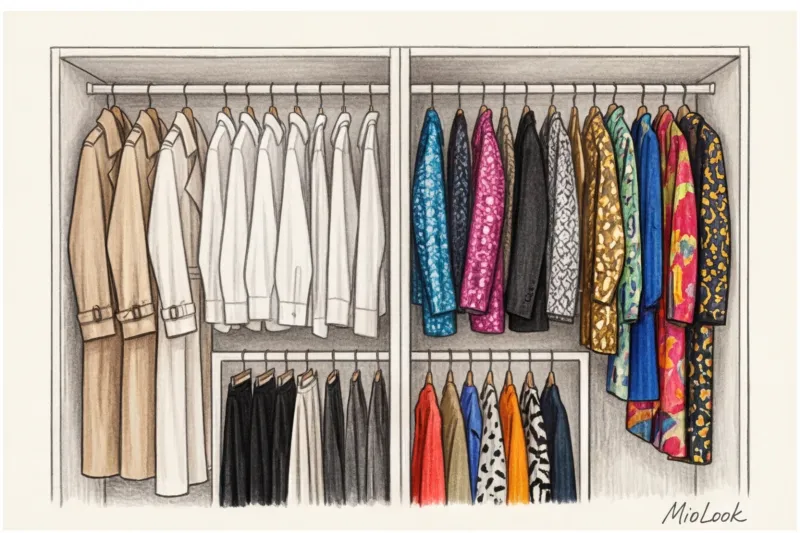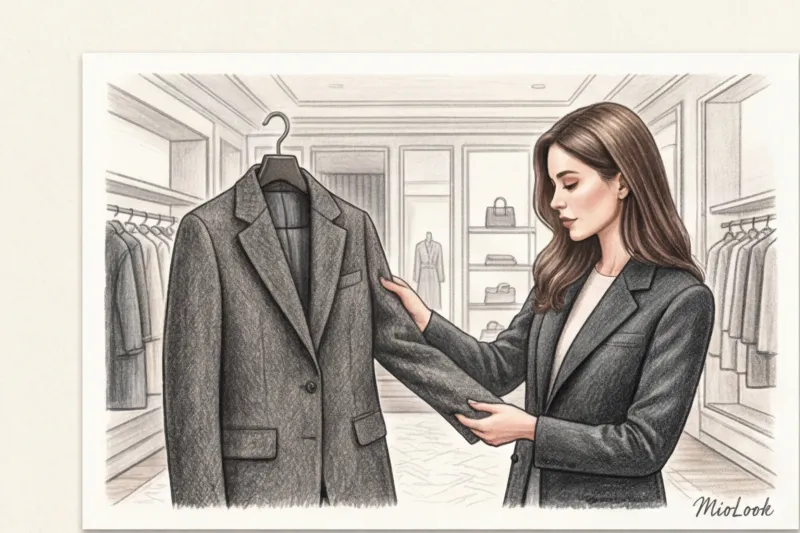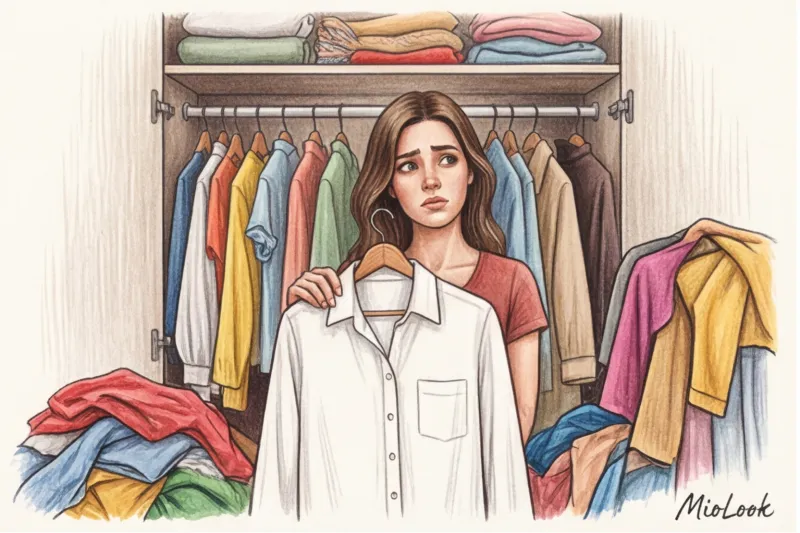
On Tuesday morning, my client Anna, the CFO of an IT company, texted me a message full of despair: "Olena, my walk-in closet is three meters long, and I'm going to a board meeting in those same black pants again. I have nothing to wear." In 14 years of working as a personal stylist, I've heard this phrase hundreds of times. My closet is so full the rods are bending, yet day after day I reach for the same pair of jeans and trusty jacket.

Sound familiar? We're used to blaming ourselves for a lack of imagination or an inability to combine items. But the problem actually lies in simple math. At the heart of this paradox lies the Pareto principle of wardrobe design. We discussed the architecture of such systems in more detail in our complete guide. Capsule Wardrobe Formulas: The Mathematics of Perfect Looks , but today I want to talk about the most painful aspect - why we wear so little while buying so much.
What is the Pareto principle in wardrobe and why intuitive shopping loses
Let me start with some hard numbers. According to a 2023 global study by the British organization WRAP, the average woman regularly wears only 20% of the contents of her closet. The other 80% of the time, these items generate 80% of all our looks. What happens to the rest of the wardrobe? It turns into a "museum of missed outings."
Intuitive shopping is our biggest enemy in this regard. When we head to the store tired after work, we buy something out of emotion: a sequin dress for a hypothetical party or a complex asymmetrical blouse. Analysis by the consulting firm McKinsey & Company (2024) shows that the lifespan of such trendy impulse purchases has shrunk to just one season. As a result, we end up bringing home soloists, forgetting to hire a choir.
The math of a smart wardrobe works differently. Clothes are functional elements of an equation. Without the basic variables, complex factors (those emotional purchases) are simply impossible to solve. We must stop buying "just pretty things" and start buying solutions.
The Anatomy of That 20%: Why Your Hand Reaches the Same Thing
Let's dissect those 20% of things you wear to the point of holes. Why have they become your favorites? It's not that you're afraid to experiment. It's about their compatibility. I call these items "communicator items."
The communicator thing has three strict characteristics:
- Perfect fit: It doesn't require you to suck in your stomach, tug at the hem, or adjust the straps.
- Complex neutrality: It's not just "gray", it's deep shades of graphite, camel, proper navy or cool beige.
- Predictable texture: fabric that holds its shape and does not conflict with other materials.
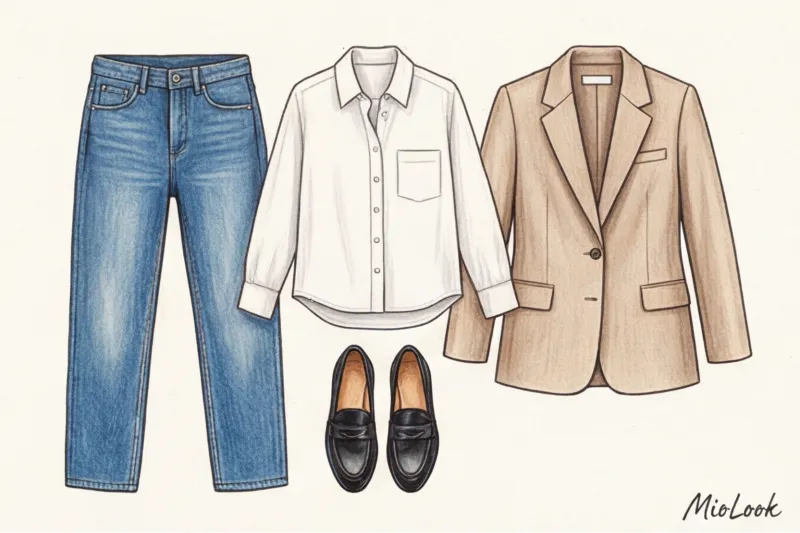
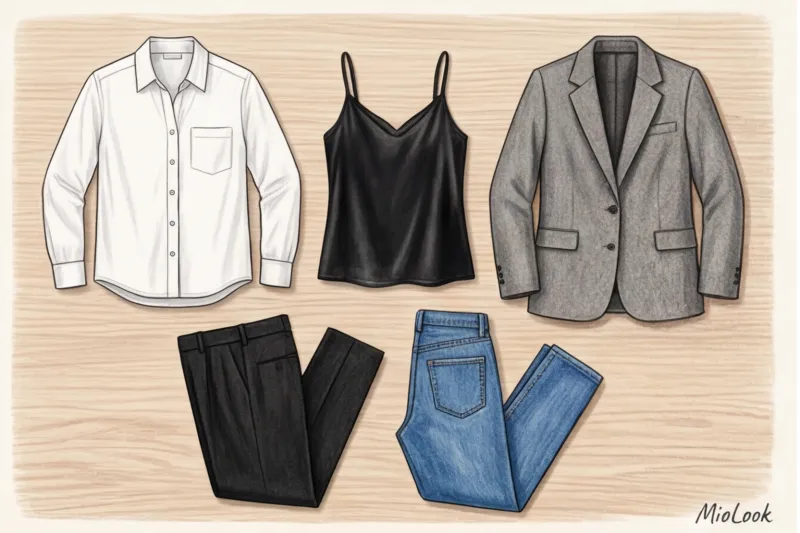
The capsule wardrobe formula in action looks like this: one high-quality, basic, straight-cut shirt can calm a leopard-print skirt, complement tailored wool trousers, or serve as a lightweight jacket over a silk slip dress on a summer evening. It's a bridge that connects the islands of your style.
The Biggest Mistake: Why Basic Things Seem Boring
"Olena, but if I just buy black pants and a white T-shirt, I'll look like a store clerk," I'm often told during my first consultations. This is one of the most harmful myths.
Basics only become boring when they're made from flimsy fabrics. A basic item's status is determined not by the print, but by the cut and density of the material. A basic white T-shirt made of heavy cotton (from 180 g/m²) from brands like COS or Arket for €35 looks many times more expensive than a thin viscose blouse with ruffles for €120. The right basics are a premium canvas. It's on this canvas that your statement accessories or sophisticated shoes really shine.
The Decluttering Myth: Why You Can't Just Throw Out the Other 80%
The internet is rife with popular challenges like Project 333: "Throw out everything, keep 33 things, and be happy." I'll express an unpopular opinion: for executives, active experts, and women with busy schedules, strict minimalist limits often don't work. Throwing out 80% of your closet is a huge mistake that will only lead to stress and a new round of impulse shopping.
The problem with these 80% isn't that the pieces are bad. Nine times out of 10, they're "orphans"—beautiful, distinctive, statement pieces that encode the DNA of your personal style. They simply have nothing else to pair with.
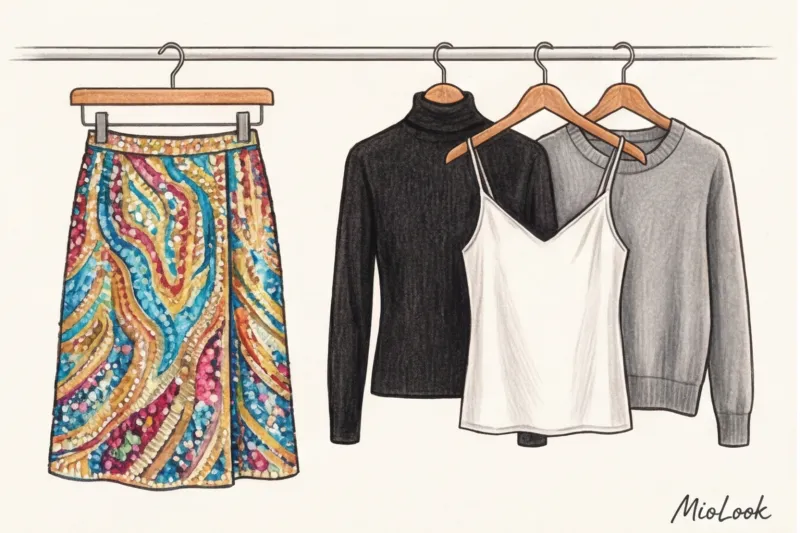
"Wardrobe paralysis doesn't arise from an excess of things, but from a lack of connections between them. Our task is not to throw away 80% of our assets, but to build bridges to them from the right 20% of our base."
We recently went through a client's closet. In a fit of decluttering, she was about to give away a stunning asymmetrical skirt from Acne Studios (which she'd bought for a hefty €350). The skirt had been hanging with the tag for two years. Why? Because the client only owned romantic blouses and oversized hoodies. Neither paired well with the skirt. We didn't throw the skirt away. We bought the perfect fitted merino wool top for €50 from Massimo Dutti. Suddenly, the skirt became a favorite for Friday nights at the office.
Pareto Inventory: How to Conduct a Closet Audit Without Tears
Forget the advice to dump your entire closet contents on your bed. That's a surefire way to have a panic attack over a mountain of textiles. A wardrobe audit is an analysis of relationships. Here's the professional three-step methodology I use.
Step 1: Isolate the winners. Physically separate those 20% of the items you've worn in the last two weeks. Look at them. What's their cut? What colors? What's the fit? This is your real, not imaginary, comfort zone.
Step 2: Finding "stuck assets". Go through the remaining 80% and fairly distribute them among three reasons for downtime:
1. No pair (those same orphans).
2. Wrong size (keeping jeans “for motivation to lose weight” is a toxic practice).
3. Outdated morally or physically (pilling, stretched knees).
By the way, things often sit idle because we don't know how to work with proportions. If you've accumulated a ton of bulky items, perhaps you should explore How to choose the right belt for your figure to restore structure to the silhouette, or to choose the right accessories - for example, bags for plus size women , which will balance out the voluminous top.
Step 3: Create a shopping list for bridges. For each accent piece, create the simplest, most minimalist background possible. This background will become your shopping list.

To prevent this process from turning into chaos, I strongly recommend digitizing your base 20%. And this is where MioLook — an app that works like your pocket AI stylist. By uploading your wardrobe to the smart wardrobe, you'll no longer have to think of hundreds of combinations. The artificial intelligence will automatically suggest what to wear with that statement skirt and show you the essential piece you're critically missing to complete a dozen looks.
The 80/20 Shopping Rule: Changing Your Investment Ratios
If you want your wardrobe to work for you, apply the Pareto principle to your budget. The stylist's golden rule: spend 80% of your budget on 20% of basic, functional pieces you wear every day.
Skimping on shoes, bags, and outerwear is absolutely essential. They are the "framework" of your look. A luxurious classic wool-blend coat for €250-€300 will elevate your look even with €30 high-street jeans. But a cheap polyester coat will ruin the impression of even the most expensive suit.

It's important to understand the concept of Cost Per Wear (CPW). Leather loafers that cost €180 and you'll wear them 90 times this fall will cost you €2 per outing. And ultra-fashionable rhinestone-studded shoes that cost €80 and are bought for a single corporate event (CPW = €80) are a poor investment.
Your perfect look starts here
Join thousands of users who look flawless every day with MioLook. Digitize your wardrobe and save time in the morning.
Get access — €0.99 onceHow to Stop Emotional Shopping
To avoid creating 80% of unused items, implement a strict "three looks" rule. Before you take that "just a really nice sweater" to the checkout, mentally (or right there in the fitting room) create three outfits with it using the items ALREADY hanging in your closet.
Still not working? Leave the item in the store. It's not worth the money, as it will require two or three more components to adapt.
I must admit: this rigorous mathematical approach has one limitation. This approach does NOT work if your weight is fluctuating rapidly (for example, after childbirth or during intensive weight loss). During such transitional periods, investing 80% of your budget in expensive basics is a mistake. Temporarily switch to budget-friendly knitwear and invest only in shoes and bags that aren't size-specific.
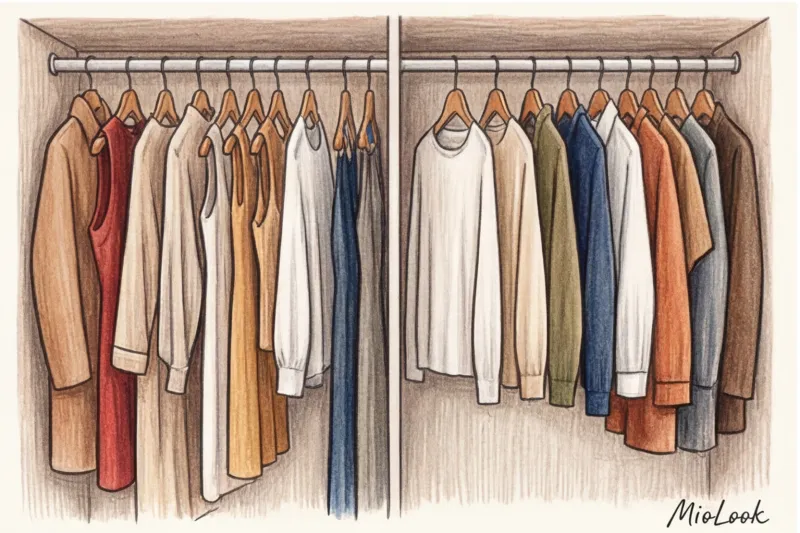
From Chaos to System: A Smart Wardrobe Checklist
Let's translate this theory into a concrete action plan. To put the Pareto principle into practice in your closet this week, follow these four steps:
- Find your "universal soldiers". Identify 5-7 basic things that make you feel confident in any situation (those same 20%).
- Buy more bridges. Analyze the statement pieces you love but have been hanging around. Make a list of essentials (tops, sleek turtlenecks, neutral pants) to incorporate them.
- Digitize the result. Take photos of the winning combinations you find. Use the app MioLook to save these formulas. When you have exactly five minutes to get ready in the morning, you simply open the app and select a pre-made look.
- Maintain financial balance. Every time you go shopping, remember: we spend 80% of our budget on quality basics (from €100 to €300 for outerwear or shoes), and only 20% of our budget is left for fast-fashion trends (bright scarves, printed T-shirts for €20–40).

Conclusion: Your predictably stylish result
The Pareto principle in wardrobe design isn't about stingy restrictions or asceticism. It's a tool for absolute freedom. When your closet is perfectly organized and has a strong foundation of 20% cohesive elements, you stop wasting your morning time wondering "what to wear."
Proper wardrobe math saves time for more important decisions in your life. Don't try to overhaul your entire closet in one weekend. Start small: find your top five pieces tonight, see what they pair best with, and let them become the foundation of your new, smart style.
", "tags": [ "capsule wardrobe", "Pareto rule", "wardrobe analysis", "smart wardrobe", "stylist tips", "basic wardrobe", "conscious consumption" ] }