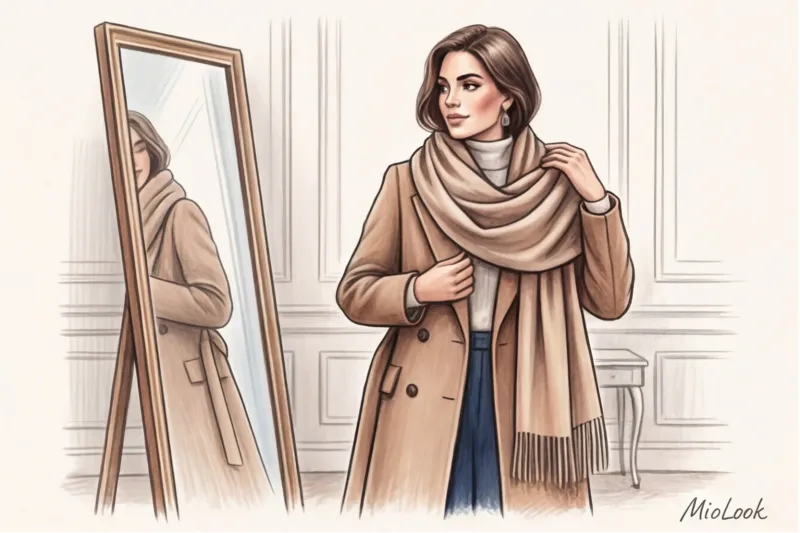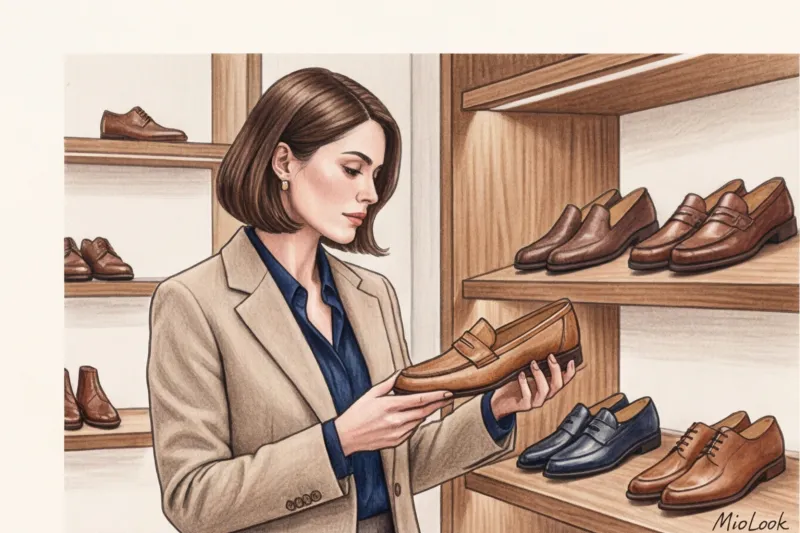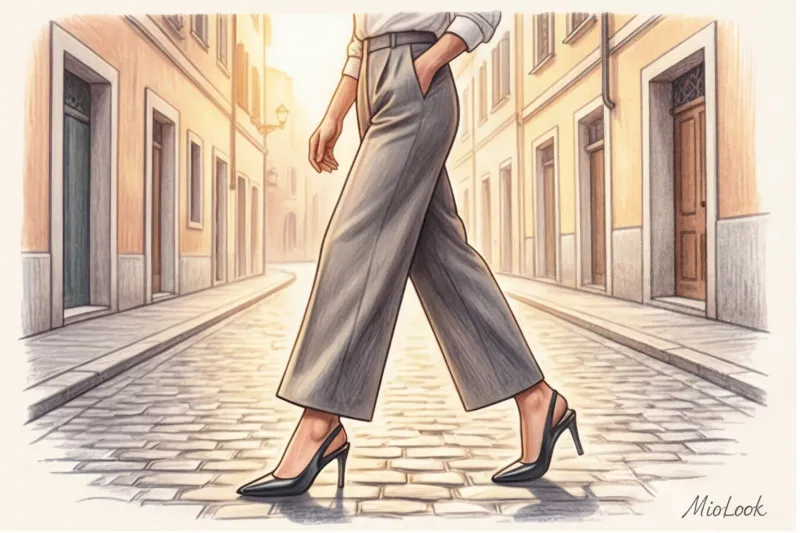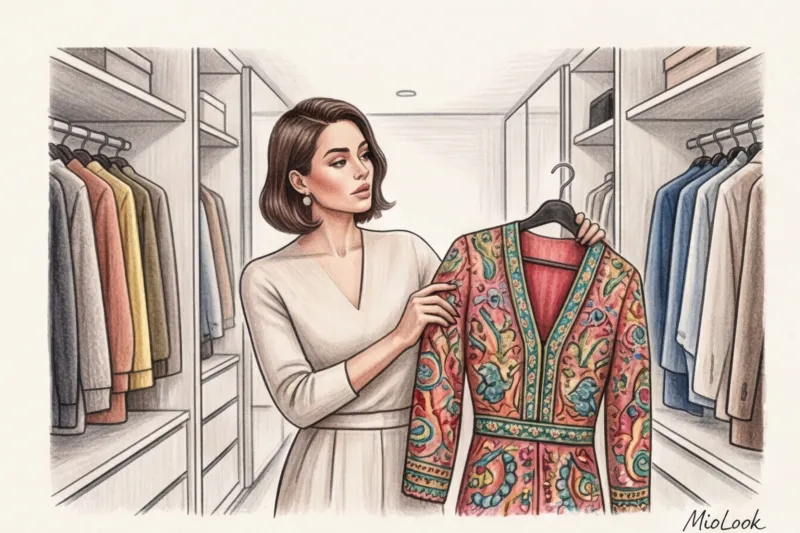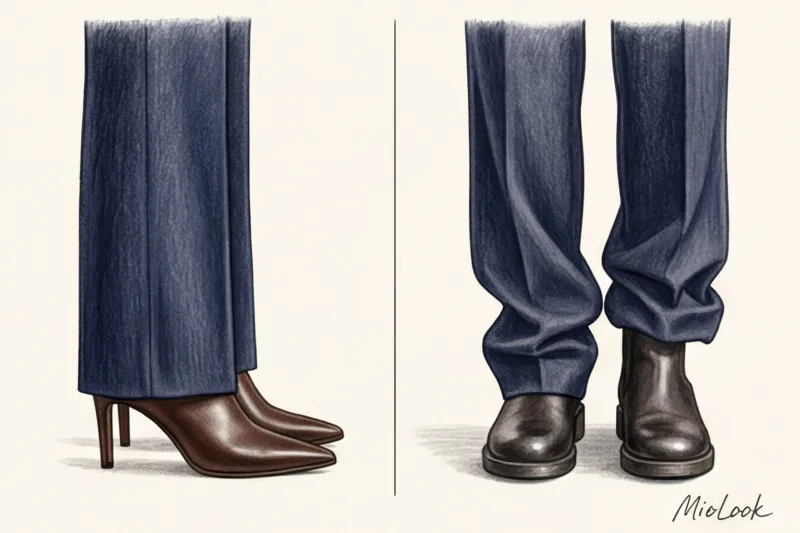
Sound familiar? You buy a gorgeous, impeccably tailored pantsuit, try it on in the morning in front of the mirror, add your usual pair of shoes—and suddenly all the glamour disappears. The look feels heavy, squat, and somehow... from a past life. You blame the cut of the pants or your own figure, but in 14 years of working as a personal stylist, I've learned one ironclad rule: in 9 out of 10 such cases, it's the shoes.
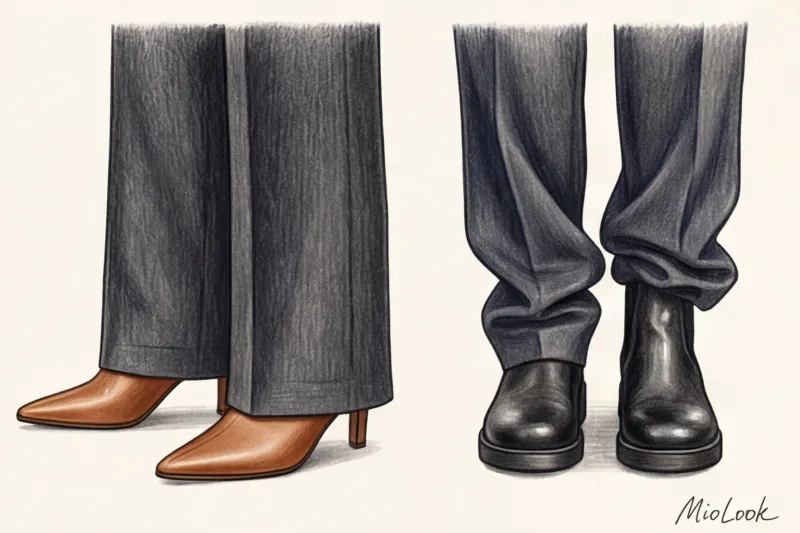
Unlike typical collections that simply shame people for “unfashionable” things, we’ll go deeper. In our A complete guide to anti-trends in clothing: what's gone out of fashion and what to replace it with We've already discussed the importance of silhouette geometry. Today we'll explore anti-trends in footwear From an architectural perspective, I'll give you a clear framework: why an outdated toe or sole shape literally ruins modern clothing proportions, which pairs can still be salvaged with clever styling, and which ones are truly time to get rid of without regret.
Silhouette anatomy: why anti-trend footwear ruins even the most expensive look
Shoes are the foundation. There's an unspoken stylistic rule called the 80/20 rule, which states that 80% of your silhouette's impact is determined by your hemline (where the edge of your pants or skirt meets your shoes). If the foundation is crooked, even a golden roof won't save the building.
A couple of years ago, a client named Anna came to see me. She'd invested a sizable sum in a luxurious three-piece suit from Massimo Dutti with trendy wide-leg palazzo pants. But she showed up to the meeting wearing high, hidden platform heels from 2014. The round, blunt toe of the heels peeked out from under the wide legs, creating the effect of "stumps" instead of legs. When we replaced those heels with simple ankle boots with an elongated square toe, Anna visually gained 5 centimeters of height, and the suit finally began to look worth its price.
"The life cycle of a macro trend in footwear—toe shape and heel architecture—is on average 5-7 years. We're currently in the midst of an active paradigm shift: we've moved from aggressive, exaggerated shapes to a simplistic aesthetic and quiet luxury."
According to the analytical agency WGSN (report for the end of 2024), consumers are massively rejecting "heavy" designs in favor of sleek, architectural lines. The main marker of outdated footwear today is its clash with modern, loose-fitting clothing. Skinny fits don't mix well with oversized fits, unless there's a deliberate irony involved.
Fall/Winter Anti-Trends in Footwear: Boots and Ankle Boots That Cut Down on Height
During the cold season, shoes take up a huge portion of your overall look. And here we encounter a major problem: poor fit. Modern footwear no longer has to feel like a "second skin" (unless they're special ankle boots). The visual illusion of slimness is created by contrasting volumes: when there's a bit of air between the edge of the boot and your foot, your calf appears thinner.
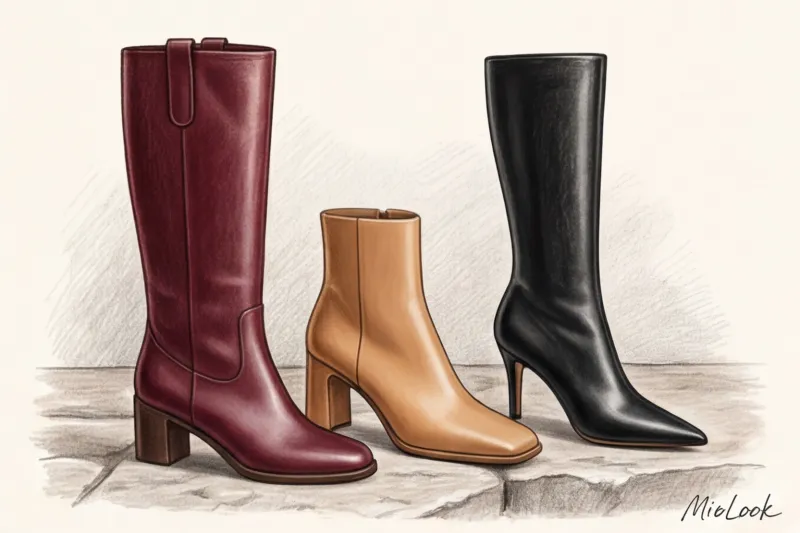
Soft thigh-high boots with thin stiletto heels
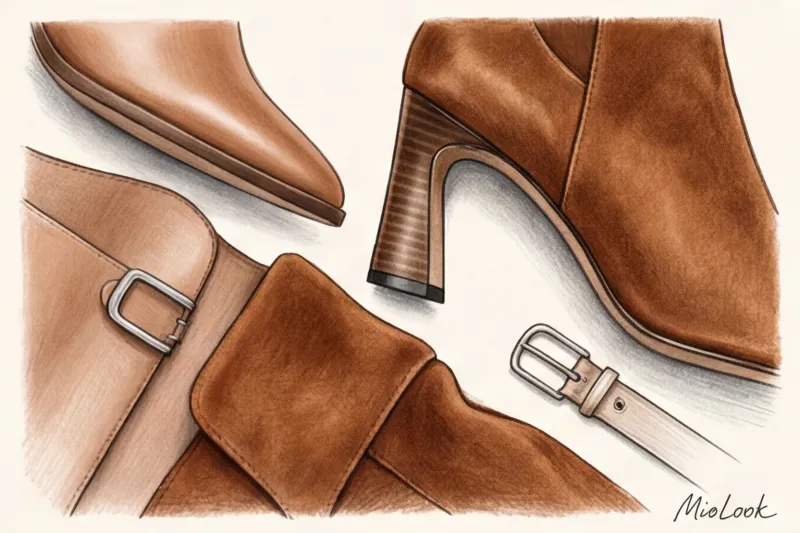
Those same suede thigh-high boots, tightly hugging the mid-thigh and sporting a 10-centimeter stiletto heel. In today's fast-paced world, they look overdone and often vulgar. They're incredibly difficult to incorporate into a casual wardrobe without looking like a role-playing costume.
Current replacement: Wide-shaft tube boots with a block heel or flat-soled jockey boots. The wide shaft makes it easy to tuck skinny jeans into them or creates a beautiful contrast with a flowing midi dress.
Short ankle boots with a round toe
The worst thing you can do to your legs is wear a midi skirt and short ankle boots whose top ends right at the widest part of your ankle. This horizontal line mercilessly cuts off your height. And a round, slightly upturned toe makes your feet appear smaller and thicker.
Alternative: Sock boots are ankle boots with a square or pointed toe that fit snugly around the foot and are strictly to the edge Skirts or wide-leg trousers. No gaps with nude tights.
Access to MioLook for €0.99 — one-time payment
A smart AI stylist will select the perfect look and help you seamlessly integrate new shoes into your current wardrobe.
Get access — €0.99 onceShoes and ballet flats: which styles have remained forever in the 2000s
The concept of femininity has evolved dramatically. We've moved away from the "beauty requires sacrifice" mentality toward elegant comfort. And the main casualty of this revolution is shoes with a hidden platform at the toe (a style long popularly known as "Louboutins," regardless of brand).
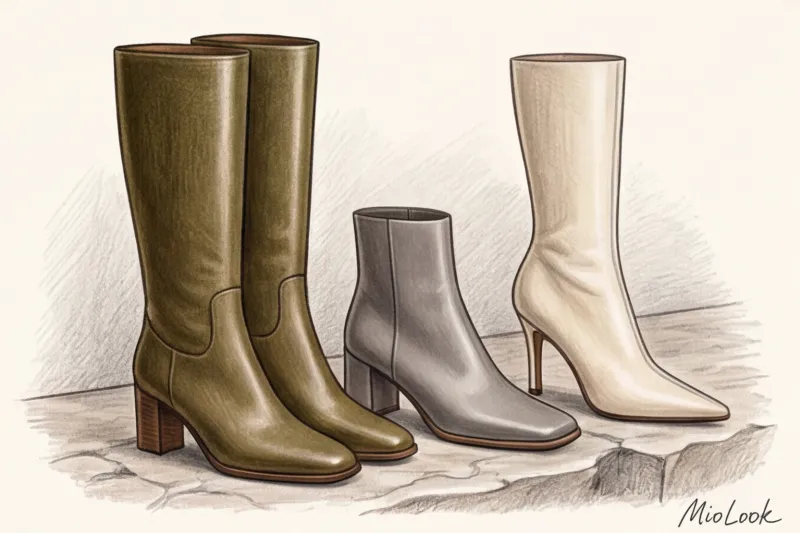
A hidden platform is a complete anti-trend for business and evening dress codes. It makes the gait heavier and disrupts the elegance of proportions. Modern fashion trends dictate a thin sole: if you want to appear taller, choose an elegant pump with a classic stiletto heel or slingback shoes (with an open heel).
Ballet flats with a round toe and a completely flat sole
Many women love round ballet flats for their comfort, but this is where doctors come in. According to the American Podiatric Medical Association (APMA), regularly wearing shoes with completely flat, cardboard-thin soles and no arch support (zero-drop) leads to plantar fasciitis and Achilles tendon problems.
Stylistically, these ballet flats are terribly unflattering, turning a grown woman into an overgrown schoolgirl. This is a case where comfort proves illusory.
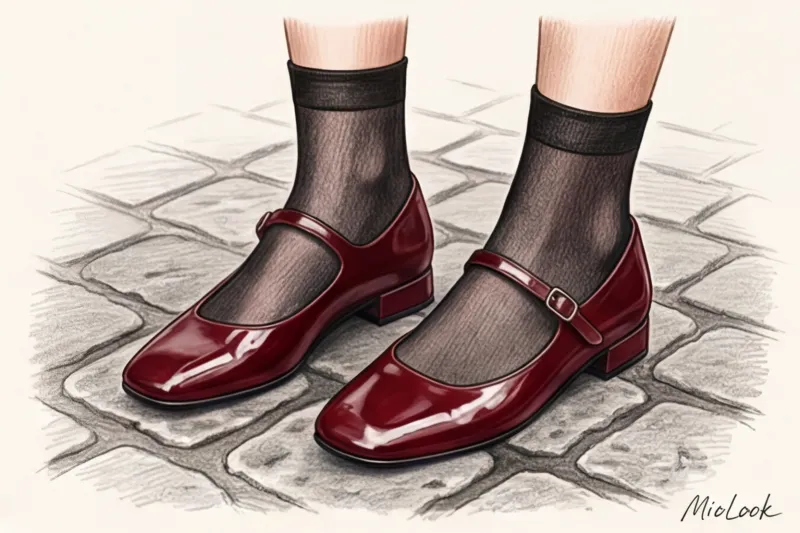
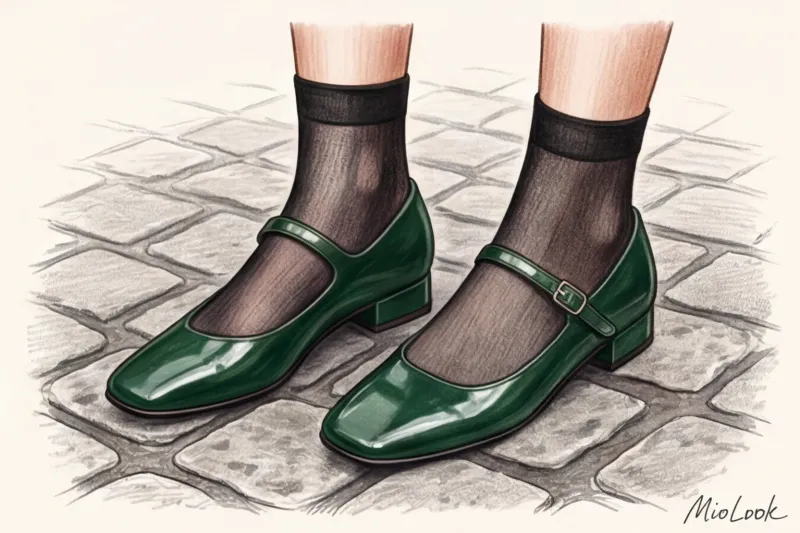
What to replace: Elegant Mary Jane ballet flats (with a strap on the instep), models with an elongated toe (almond or soft square), and the obligatory micro-heel (1-2 cm). Brands from The Row to COS and Zara are now making stunning anatomical styles that look classy.
Sneakers: Why the era of hyper-chunky 'ugly shoes' is over
We've lived through a long era of Balenciaga Triple Ss and the like. Hyper-chunky, deliberately ugly sneakers with enormous tractor soles are no longer a fashionable investment. We've become tired of aggressive design.
There's a key contrasting insight here that many people miss. Women often bought chunky sneakers (especially the popular Fila or Ash models from previous collections), believing that the contrast with the oversized shoes would make their legs appear slimmer in leggings. In practice, it works just the opposite: it creates the so-called "hoof effect." Heavy shoes pull the silhouette down, making the gait seem ponderous.
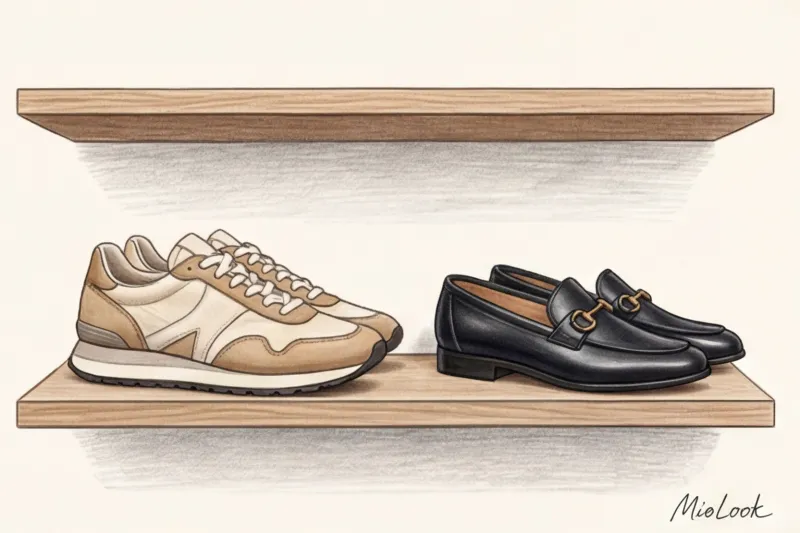
Today, the trend has shifted toward retro and minimalism. The Lyst Index for 2024 confirms that the most popular styles are neat, thin-soled models (Adidas Samba, Gazelle, Onitsuka Tiger) and classic retro running silhouettes (New Balance 530, 990).
I often observe during wardrobe reviews: as soon as a client trades in her oversized sneakers for simple retro suede sneakers, her basic smart casual look (jeans, white T-shirt, jacket) instantly becomes more put-together, "clean," and expensive.
Your perfect look starts here
Join thousands of users who look flawless every day with MioLook. Take photos of your clothes, and the AI will create stylish outfits from them.
Get access — €0.99 onceHidden anti-trends in footwear: cheap decor and fittings
Sometimes the shape of the toe and heel are absolutely perfect, but the decor ruins the pair. Accessories in the style of quiet luxury They don't tolerate excess. The rule is simple: the more complex the design of everyday shoes, the faster they will go out of style and the more difficult it is to combine them.
What you should give up right now:
- An abundance of cheap rhinestones. Unless it's a conceptual evening look (like Mach & Mach) or ironic, a scattering of glitter on autumn boots screams bad taste.
- Large gold buckles of low quality. Over time, they become scratched, oxidized, and reveal the real value of the shoes.
- Summer floral perforation On closed shoes and moccasins. This is an element of orthopedic footwear for seniors, which has no place in a modern wardrobe.
- Senseless tractor firmware (for example, contrasting white or yellow thread on elegant black Chelsea boots).
Focus on the texture of the material, not the embellishments. Smooth calfskin, thick, high-quality suede, crocodile-embossed leather, or minimalist lacquer look hundreds of times more valuable than any studs.
A stylist's checklist: should you save or get rid of your old shoes?
Let's face it: you probably have a pair in your closet that you don't want to wear and feel bad about throwing away (after all, the leather is so good!). As a stylist, I'm against mindlessly throwing things away.
There is an important exception when the anti-trend continues to work: utility The chunky, chunky moon boots or "dutik" boots that many fashion critics bury every season are perfect for country trips, dog walks in -20°C, or at a ski resort. They don't need to be elegant; they need to keep you warm.
Besides, rebel archetype and grunge style They're great for slightly worn, quirky shoes. Your old round-toe loafers can be paired with thick white socks and ripped jeans for an ironic librarian-core look (the "sexy librarian" aesthetic, a la Miu Miu).
But how do you know when to draw the line? Before taking your shoes to be recycled, I advise my clients to conduct an inventory using an app. MioLook You can take a photo of a questionable pair, upload it to your digital wardrobe, and watch as an AI stylist tries to create outfits with it from your current items. If even artificial intelligence stalls, it's time to say goodbye.
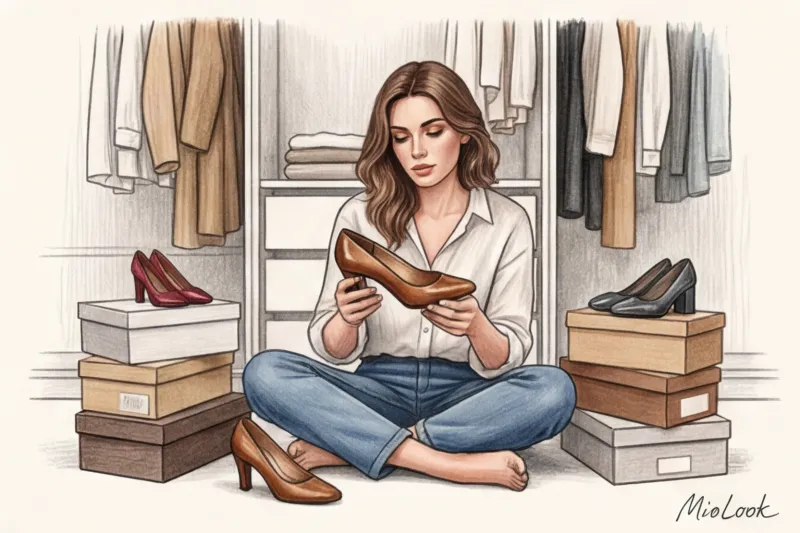
Ask yourself 3 final questions in front of the mirror:
- Do these shoes cut my proportions (do they shorten my legs, do they make my bottom heavier)?
- Can I cover up this dated toe with modern long palazzo pants, leaving only the heel showing?
- Are the shoes in pristine condition (no worn heels or toes)? Outdated designs combined with wear and tear are a style killer.
Your wardrobe isn't a museum of memories of decade-old fashion. Shoes are the frame in which your portrait is framed. And if the picture (your clothes and yourself) is modern, dynamic, and beautiful, don't let a dusty, heavy frame ruin the whole impression. Keep in your hallway only the pairs that make you feel confident from the very first step.