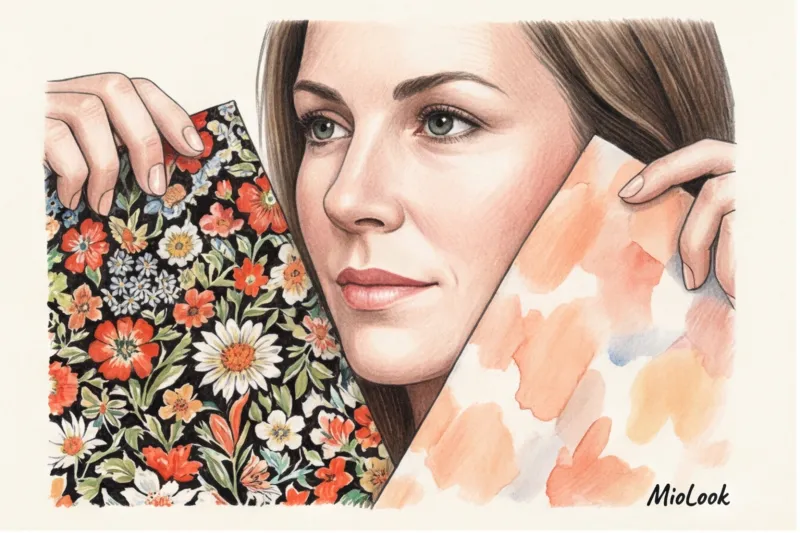
I remember a few years ago sorting through the wardrobe of one of my clients, the CFO of a large IT company. She complained that her ideas were often met with inexplicable condescension at boardroom meetings. Opening her closet, I immediately saw the reason: two-thirds of the space was taken up by thin polyester blouses with washed-out watercolor patterns. This visual noise literally destroyed her tough, expert image.
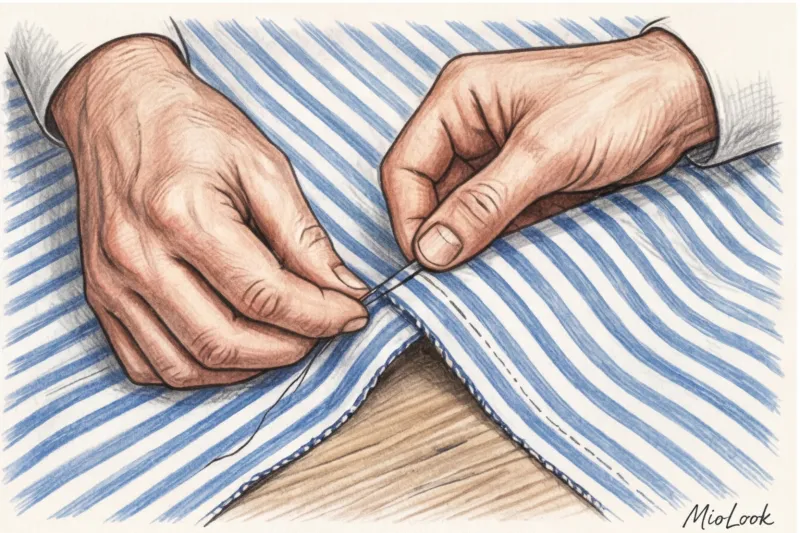
Before you run to the closet and check, What prints have gone out of fashion? , we need to get to the basics. A pattern isn't just a pretty (or not so pretty) design on fabric. It's a complex architectural element. If it disrupts the geometry of a garment, even Tom Ford patterns won't save you. We've already covered this principle in more detail in our a complete guide to anti-trends in clothing.
In this article, we won't simply list what's "fashionable" and what's "not." We'll explore the technological and visual nature of patterns so you can learn to read a garment's quality before trying it on, just like professional buyers do.
The Anatomy of Bad Taste: Why Do Some Patterns Look Classy While Others Look Cheap?
When I visit the Première Vision textile exhibitions in Paris, where macrotrends for fabrics are established for the entire world, I always pay attention to the reverse side and the pattern repeat. This is where the main secret of pricing lies.
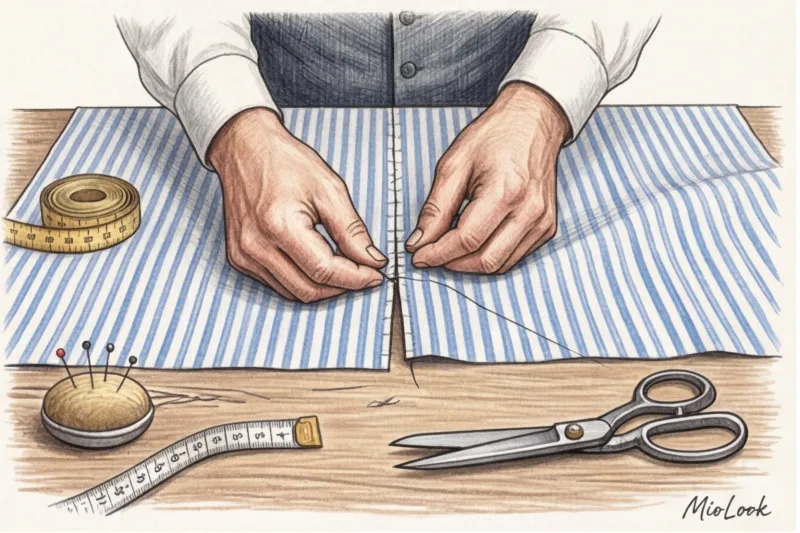
In mass production, there's an unspoken rule: a close and fine pattern repeat over a large area of fabric allows for tailoring, minimizing waste. However, combining large geometric patterns, checks, or stripes at the seams is a logistical nightmare. According to factory statistics, perfectly matching complex patterns at the side seams and armholes increases fabric consumption by 15–20%.
Mass-market clothing doesn't go for this. The result is checkered patterns that have slipped across the chest or stripes that snap at an angle on the sleeve. This instantly relegates the item to the "cheap" category, even if the tag boasts a well-known brand.
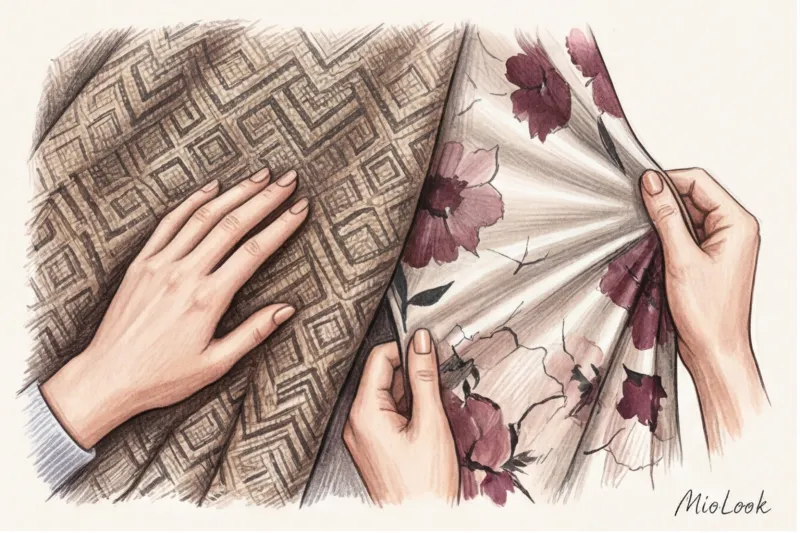
The pattern should support the architecture of your garment, not compete with it. Trying to print a complex Versace-style pattern on loose 120 gsm cotton jersey is doomed to failure due to the dissonance between the texture and the ambition of the print.
What Prints Have Gone Out of Fashion: 5 Major Anti-Trends of the Decade
The boom in low-cost sublimation and digital printing in the early 2010s gave birth to real monsters in the textile world. Technology made it possible to transfer any image onto fabric for pennies. This led to an oversaturation of the market with visual junk, which we are still trying to eliminate.
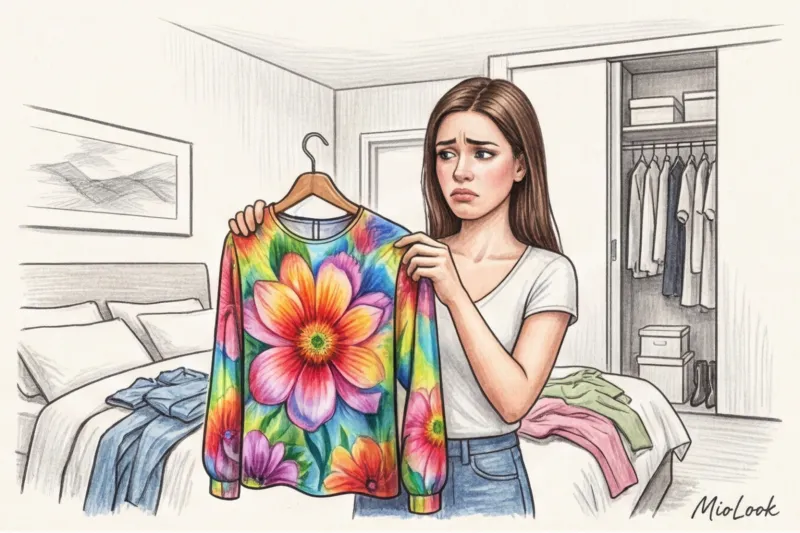
1. Hyperrealistic "photo printing" and 3D flowers
Enormous, voluminous roses with dewdrops, realistic New York nightscapes, or wolf faces on sweatshirts are the legacy of those same digital experiments. Besides the fact that such things send us back ten years, they have one fatal flaw.
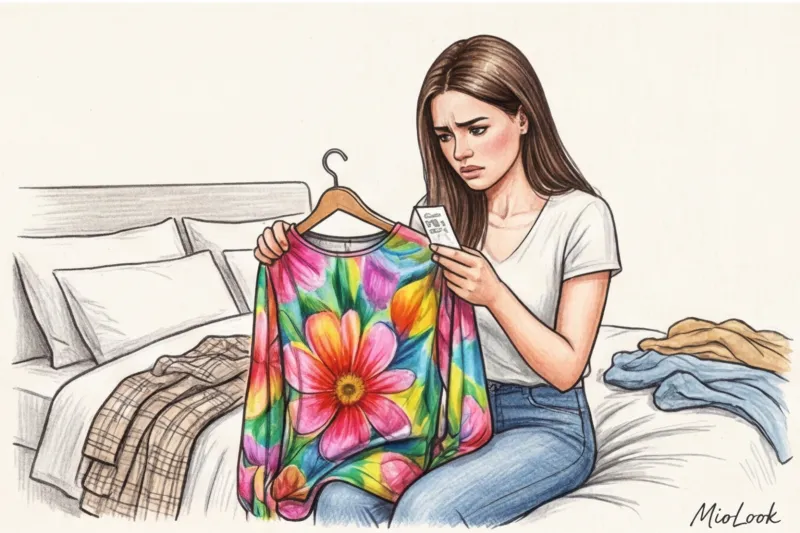
As you move, the fabric deforms, and the hyperrealistic print stretches across your chest or hips, comically distorting your figure's proportions. A modern alternative? Abstract botanical designs or stylized silhouette patterns created using classic screen printing techniques.
2. Small "chintz" flowers on thick winter fabrics
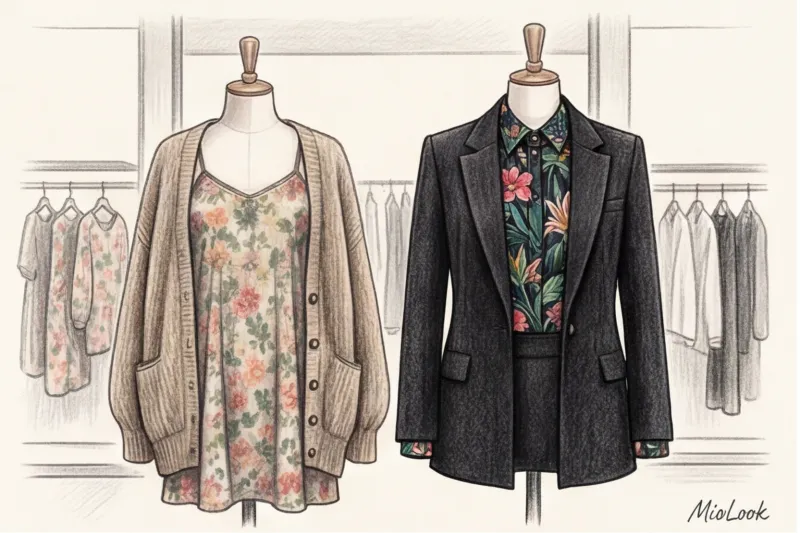
The millefleur pattern (a scattering of small flowers) is harmless in itself, but only in the right context. Its undoing is its seasonality. A childish summer print on a heavy wool suit or a thick acrylic sweater creates a harsh stylistic dissonance.
To be fair, I will note: this is Not It works for a classic wardrobe. The only exception when this technique is appropriate is a deliberate '90s grunge look with chunky boots and a biker jacket. Otherwise, save the small flower for summer viscose and flowy chiffon.
3. Distorted acid geometry and tie-dye
Oversaturated gradients and psychedelic pops of color stormed our wardrobes during the pandemic era of comfort. We longed for a splash of color while cooped up. But now that trend is dead. According to global forecaster WGSN's 2024 report, consumers are returning en masse to grounding, natural hues.
Acidic tones simply "eat away" the natural contrast of the face. Replace them with complex color blocking, a soft melange, or a gradient in muted, earthy tones.
4. Logomania and inscriptions with “deep meaning”
Glittering quotes on T-shirts and logos splattered all over a bag or coat no longer convey status. Today, they merely convey brand dependence. Data from Lyst confirms the steady rise of the "quiet luxury" aesthetic—premium shoppers seek recognition in sophisticated tailoring and premium cashmere, not in flashy lettering.
5. Infantile patterns in business wardrobe
Shirts with tiny cats, hearts, or kisses are unacceptable in the office dress code. They don't make you "cute"—they subconsciously lower your credibility in the eyes of your partners. For more information on how visual imagery impacts your career, read our article about psychology of color in business attire For the office, choose a subtle pinstripe or classic French stripe.
Are you unsure about your wardrobe?
Try MioLook for free: A smart AI stylist will analyze your clothes and suggest what to get rid of.
Get access — €0.99 onceOutdated decor: details that ruin even the most basic piece
Sometimes a manufacturer makes a decent basic shape, but at the last minute decides to "embellish" it to justify the price. The result is usually disastrous.
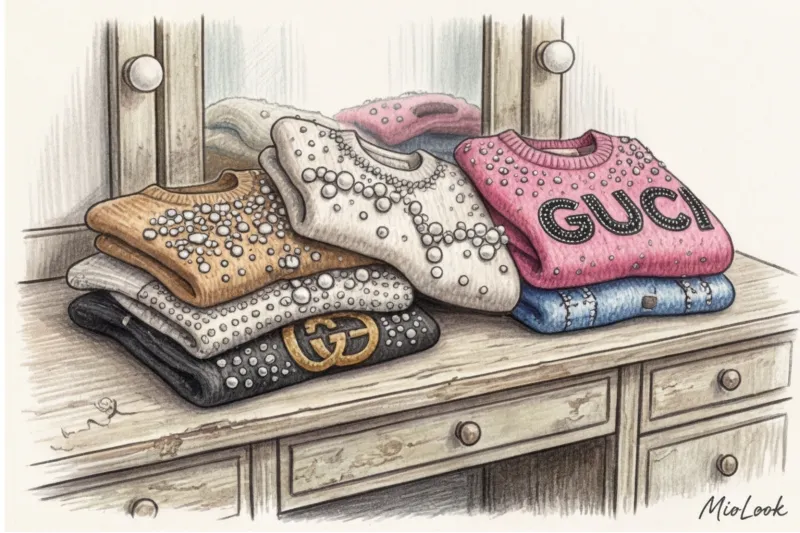
- Cheap plastic buttons with gold finish. They peel after the first wash and give away their mass-market qualities. In our experience, when we buy clients excellent basic mid-priced jackets, we immediately take them to a tailor. Replacing plastic with horn, mother-of-pearl, or cast metal visually increases the cost of the item several times over.
- Rhinestones and glitter on denim. Denim is inherently workwear and utilitarian. The sparkle of rhinestones clashes with the rough texture of 12-ounce denim, creating an effect of provincial glamour from the 2000s.
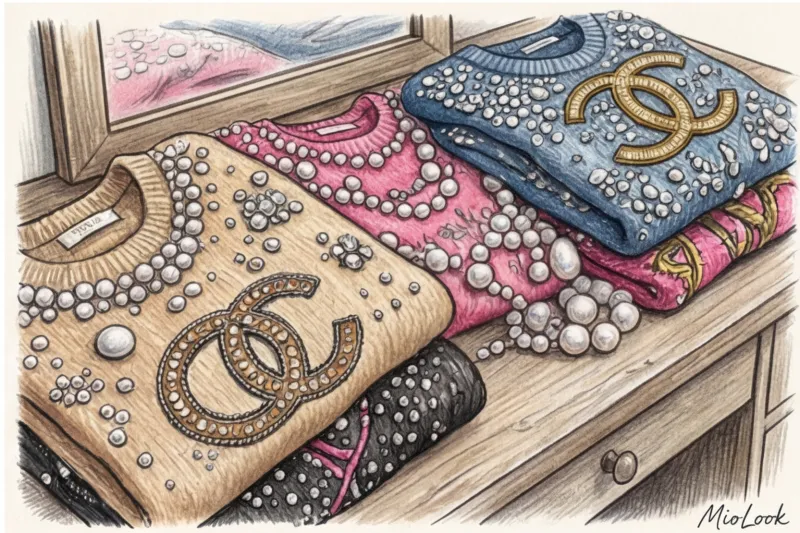
- Artificial pearls on knitwear. Beads that are firmly sewn (or worse, glued) to a sweater weigh down the fabric and make it impossible to care for.
- Fake lightning. Decorative metal zippers where they are not structurally needed (fake ones on pockets, on shoulders) are an absolute anti-trend.
The stylist's rule here is strict: if the decor isn't functional and is made of cheap materials, rip it out. If you can't rip it out, get rid of the item.
Counterintuitive: Why Animal Print Is a Litmus Test of Taste
"Leopard is out of fashion and looks vulgar" is the most persistent myth I hear from clients almost daily. In fact, classic leopard print is a macro trend and a fully-fledged part of a wardrobe staple. Christian Dior introduced it to haute couture back in 1947, proving that the animal print can be elegant.
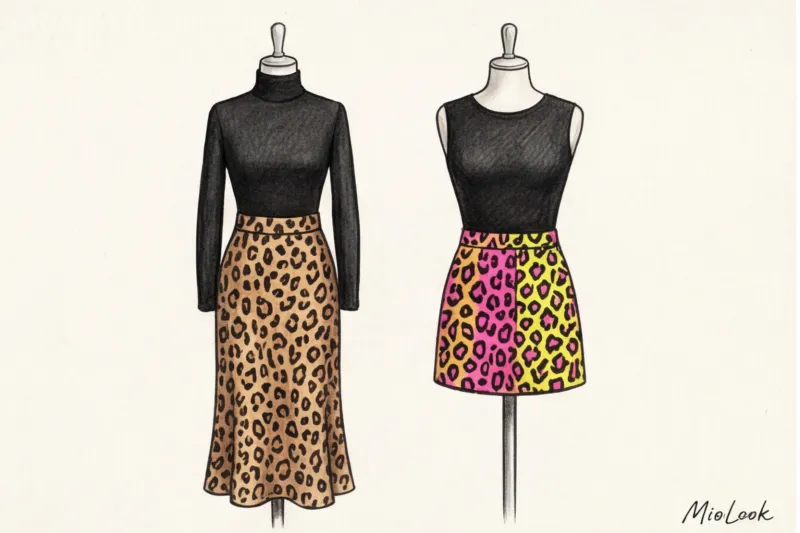
What makes it vulgar is not the fact of its existence, but quality of performance What instantly turns leopard into an anti-trend?
- Unnatural temperature range: neon pink, acid yellow or grey-blue leopard.
- Distorted scale: too small, merging spots, reminiscent of a rash.
- Cheap texture: shiny polyester, thin squeaky knitwear or leatherette.
Check out the classic coats made of thick, matte wool in the Celine collections. Leopard print looks luxurious there because the fabric has weight and the colors match the animal's natural coat. The only limitation: If you choose leopard print over a large area (for example, a maxi dress), the look should have absolutely no other accents. No red lips, complicated hairstyles, or gold chains.
A Stylist's Checklist: How to Choose a Timeless Pattern
To avoid guessing every season, What prints have gone out of fashion? , and what remains, use this algorithm the next time you go shopping.
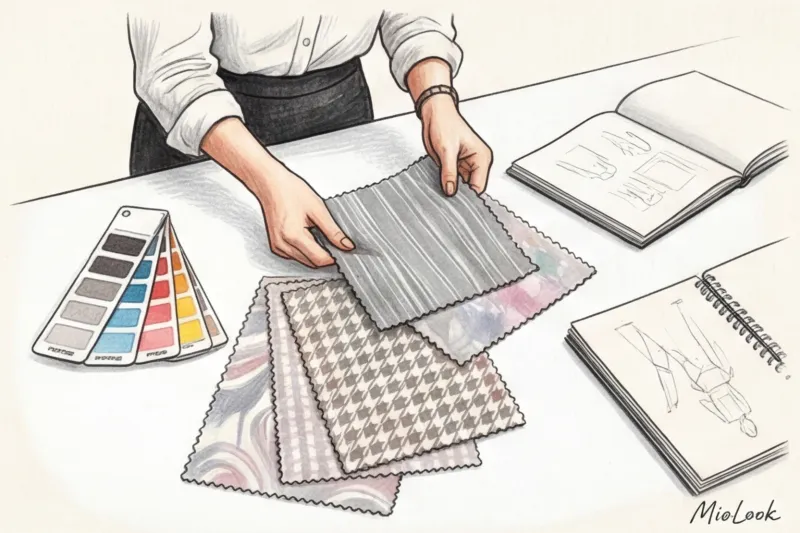
- Evaluate natural contrast. Don't let patterns overwhelm you. If you have a soft, muted complexion, stark black and white geometric patterns will wash out your face. Choose low-contrast prints, such as beige and off-white checks or soft gray melange.
- Check the seams on site. Unfold the garment and inspect the side seams, shoulder seams, and pockets. If the lines are broken or the pattern is abruptly interrupted, leave the garment on the hanger.
- The three meter rule. After putting something on, stand three meters away from the mirror and squint. If a complex, beautiful pattern up close blurs into a messy, unintelligible blob from a distance, it's bad design.
- Proportionality. The scale of the print should complement your facial features and body shape. Large flowers on a petite woman will make her look like Thumbelina, lost in a flowerbed.
Your perfect look starts here
Join thousands of users who look flawless every day with MioLook. Upload your items and create smart capsules.
Get access — €0.99 onceSummary: A Smart Approach to Wardrobe with MioLook
Developing a personal style always means rejecting disposable microtrends in favor of precise proportions and quality. Complex patterns and excessive embellishments require a masterful ability to combine them. If you're not ready to spend hours every morning on this, opt for clean lines, refined textures, and classic macrotrends.
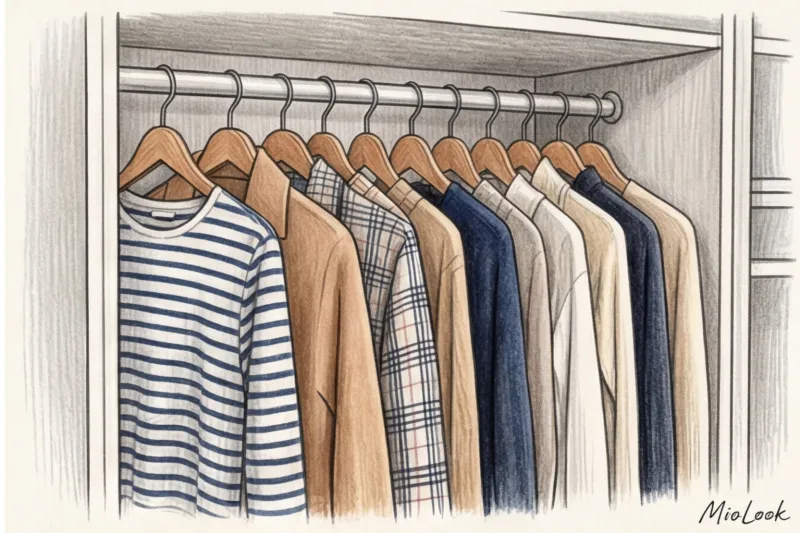
To avoid impulsive purchases of dubious quality, use technology. In the app MioLook You can digitize your wardrobe. Before buying a complex printed blouse, simply upload a photo of it to your digital closet and see if it pairs well with your basic trousers and jackets. Artificial intelligence will instantly tell you whether this item will become a beloved staple or settle on the back shelf as dead weight.