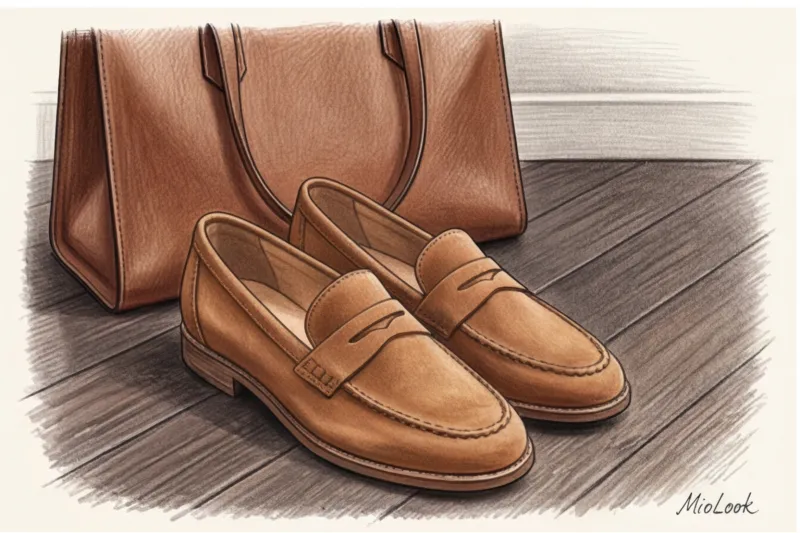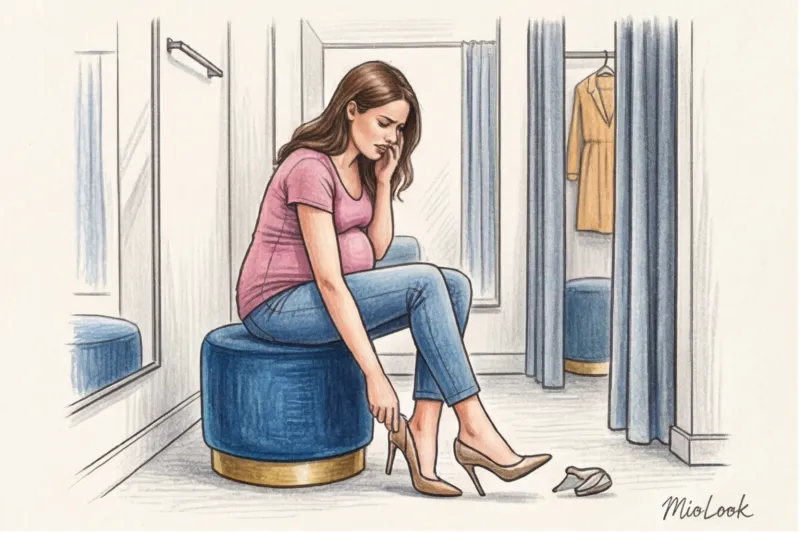
About a month ago, a client called me in tears. She was sitting on the dressing room floor with a hairdryer on, desperately trying to "steam" and stretch out her favorite €350 Tod's loafers. "Katarzyna, they've shrunk! I swear I kept them in shoe trees, but now I can't even get my heel in," she complained, seven months pregnant.
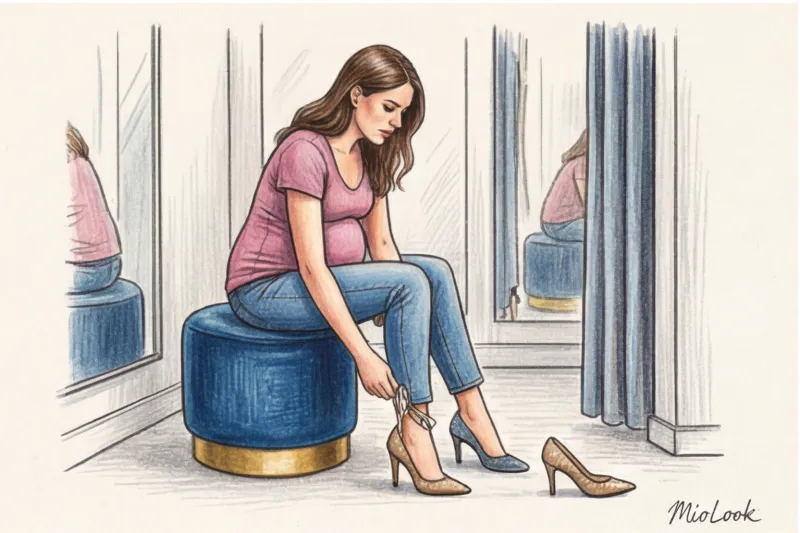
Naturally, the Italian leather didn't shrink. The problem lay elsewhere: under the influence of the hormone relaxin, which loosens the pelvic ligaments in preparation for childbirth, the ligaments in the foot also relax. The arch drops, and the foot becomes wider and longer. And this is where the main stylistic and medical mistake lies, made by 8 out of 10 women expecting a baby. We've already discussed the influence of hormones on foot size and general principles for choosing a wardrobe for feet in our The complete guide to comfortable maternity shoes.
Instead of buying shapeless "medical" boots or switching to worn-out men's sneakers, I offer a practical stylist's approach. Today we'll look at how to Orthopedic shoes for pregnant women and custom insoles can save not only the health of your feet, but also your personal style.
The "One Size Bigger" Trap: Why It's Ruining Your Feet
The most common advice pregnant women hear on forums is, "Just buy sneakers a couple sizes bigger and be done with it." As a stylist who helps women rebuild their wardrobes after giving birth, and as someone who studies biomechanics for shoe selection, I can tell you this is the worst possible strategy.
Buying shoes one or two sizes larger doesn't solve the problem; it merely masks it. The extra length in the toe box does nothing to support the collapsing arch. On the contrary, shoes that are too loose allow the foot to spread further.
According to the American Podiatric Medical Association (APMA), 70% of women develop permanent flattening of the arches during their first pregnancy due to a lack of proper support. If you wear shoes that are too loose or flat, you're literally allowing your bones to spread apart.
During this period, the biomechanics of the foot require a rigid frame rather than freedom. Proper footwear should act like a high-quality corset: it should stabilize the heel, support the longitudinal arch, and absorb shock loads, preventing the foot from expanding uncontrollably.
Access to MioLook for €0.99 — one-time payment
A smart AI stylist will create the perfect look based on your new measurements and your favorite comfortable shoes.
Get access — €0.99 onceOrthopedic Shoes for Pregnant Women: Forget About "Granny Shoes"
At the word "orthopedic," many of my clients turn pale, imagining bulky black Velcro boots that resemble medical shackles. Ten years ago, that was certainly the case. But today, fashion has made a stunning shift toward comfort.
Global trend on ugly shoes (chunky sandals, Birkenstocks, "dad" sneakers) perfectly suit the needs of pregnant women. Now you don't have to sacrifice aesthetics for health.
Many brands we're accustomed to seeing in street style magazines have officially received the Orthopedic Approval (APMA) seal of approval. For example:
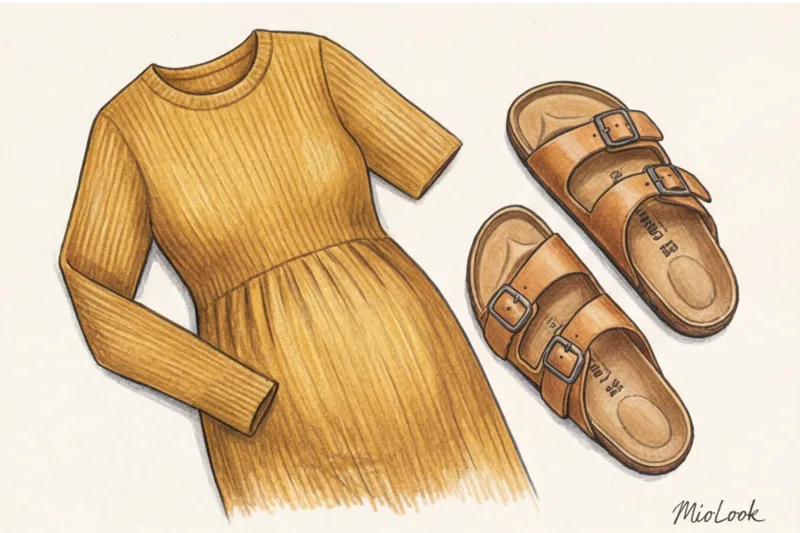
- Birkenstock: Their classic Arizona and Boston models feature a perfectly contoured cork insole that conforms to the shape of your foot and provides excellent arch support.
- ECCO: Their everyday lines use direct injection polyurethane technology (FLUIDFORM), which provides incredible cushioning without compromising the minimalist design.
- Vionic: A brand originally founded by podiatrists that now makes great basic loafers and Chelsea boots with hidden, built-in orthotics.
Let's do the math. One pair of proper, anatomically shaped shoes will cost you around €120–€160. Trying to save money, women often buy three pairs of cheap, fast-fashion fabric ballet flats (€40 each) a size too big, which wear out within a month, ruin their gait, and ultimately end up in the trash. The economics are clear: invest in one quality pair that will fit into your smart-casual wardrobe.
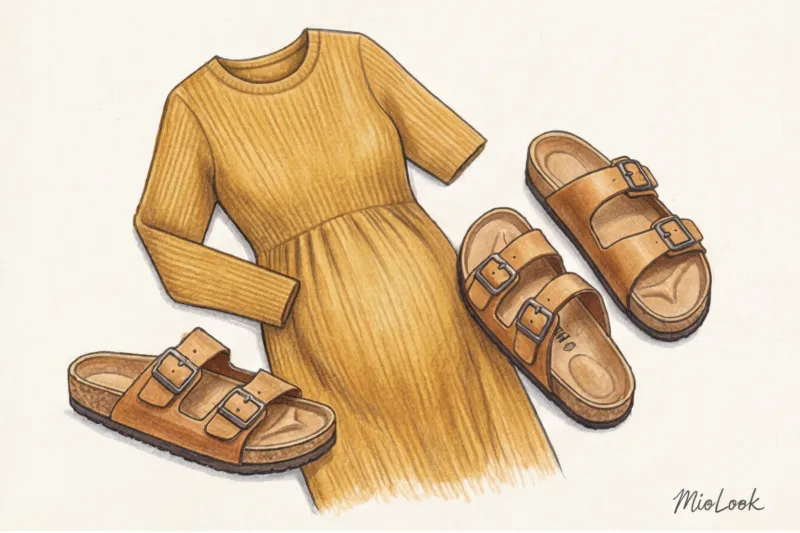
Custom Orthotics: Your Style Secret Agent
What if you don't want to buy special shoes but dream of wearing your favorite sneakers or boots? This is where my main stylistic trump card comes in: custom orthopedic insoles.
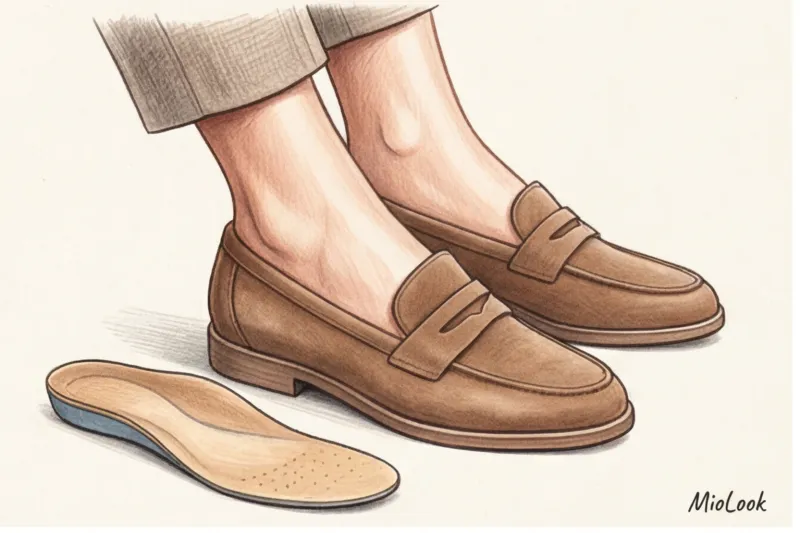
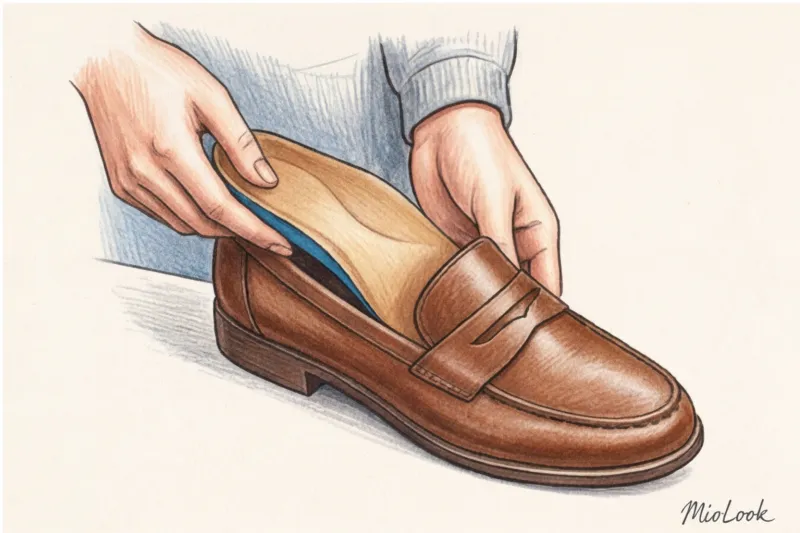
Don't confuse these with the factory-made "anatomical" inserts with a small bump you get at the pharmacy. Custom-made insoles (such as those using Formthotics technology) are heated directly by the doctor and molded precisely to your foot, keeping it in the correct position. They support both the longitudinal and transverse arches and relieve heel pressure.
The return on this investment is astounding. The average cost of custom-made insoles in Europe is €100–€150. For this price, you get a tool that transforms 80% of your current closed-toe shoes into orthopedic ones. Furthermore, the firm support prevents your feet from growing, meaning you won't have to throw out your designer shoe collection after giving birth.
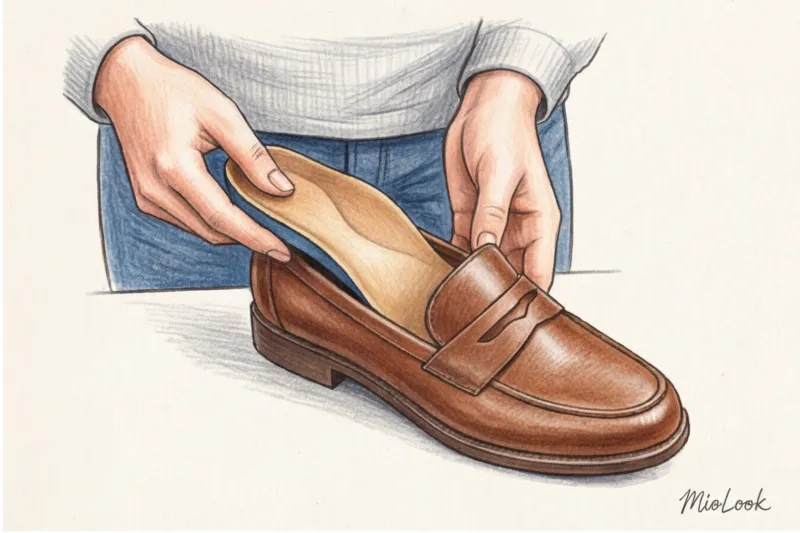
Which mass-market shoes will fit an orthopedic insole?
This method has its limitations. A custom-made insole has volume (about 3-5 mm at the heel) and eats up some of the space inside the shoe. You won't be able to fit it into elegant pumps or soft ballet flats from Zara—it will simply fall out, and your foot won't fit.
Over the years of working with clients, I've come up with three rules for shoes that will "make friends" with their insoles:
- Removable factory insole. This is critical. Before buying loafers from Massimo Dutti or sneakers from COS, try removing the original insole. If it's glued on tightly, the pair won't fit. By removing the original insole, we free up exactly the amount of space that the orthotic will take up.
- Rigid, shape-stable back. The insole slightly raises the heel. If the heel counter is soft (like slip-ons or fabric espadrilles), you'll lose the shoe with every step, causing blisters.
- Lift adjustment. Lace-up or Velcro-fastening shoes are ideal. During pregnancy, feet often swell in the evening, and lacing them will help relieve pressure on the arch.
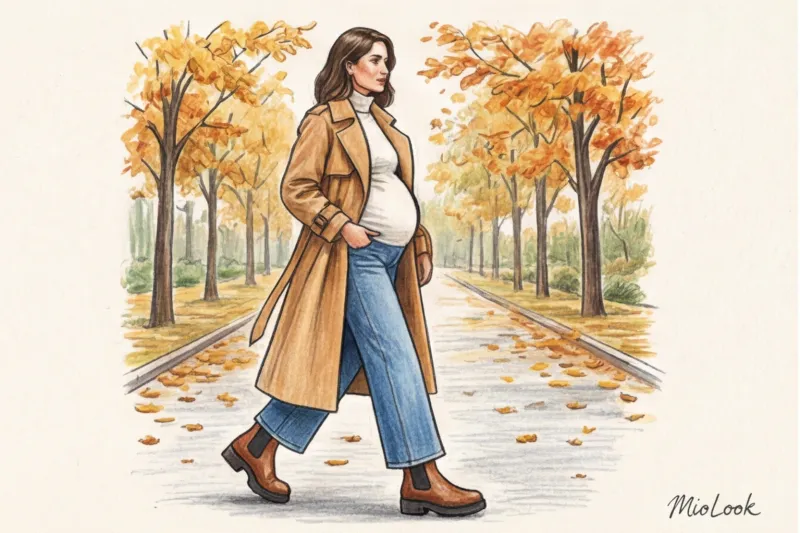
Your perfect look starts here
Join thousands of users who look flawless every day with the MioLook wardrobe organization app.
Get access — €0.99 onceThe Dangers of Home Comfort: Why Pregnant Women Shouldn't Walk Barefoot
Do you know where pregnant women most often develop flat feet? In their own kitchen. One of my clients prepared brilliantly: she bought orthopedic Chelsea boots for walking and ordered insoles for her sneakers. But a month later, she went to the doctor with severe heel pain—plantar fasciitis.
The reason turned out to be trivial. She went on maternity leave and spent 60% of her time at home, cooking and setting up the children's room barefoot on the hard porcelain and laminate floors.
A flat, hard floor is the absolute enemy of relaxed ligaments. The foot, lacking natural contours (as if we were walking on dirt or sand), flattens against the hard surface under the pressure of increasing body weight. Cute, plush slippers with flat rubber soles don't help—they only provide warmth, but they don't hold their shape.
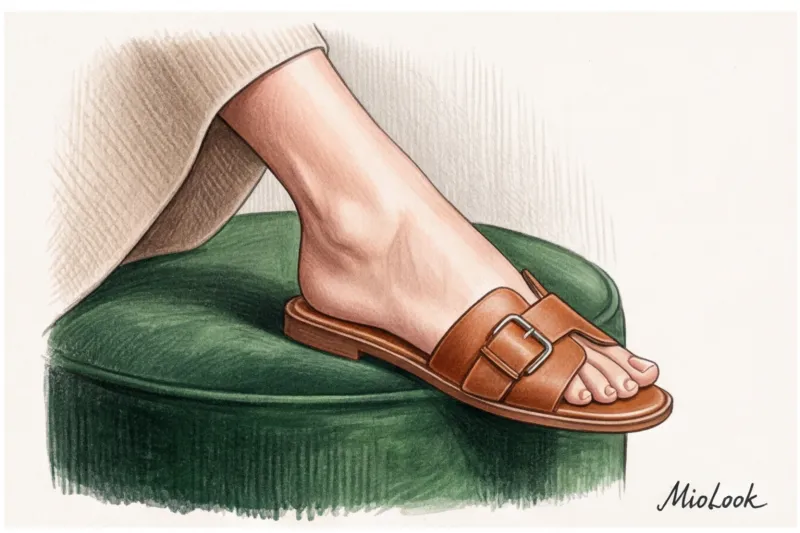
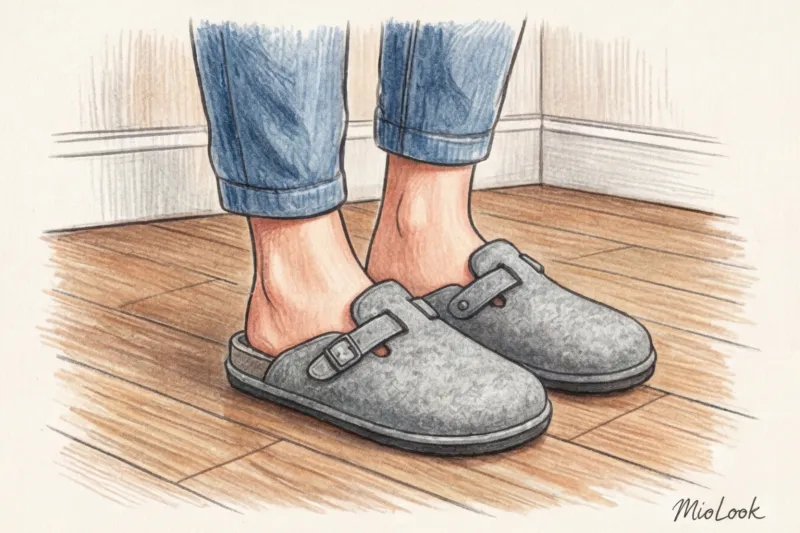
Flatfoot prevention should continue at home. Your choice: cork-soled clogs (like Birkenstocks or their mass-market equivalents) or special orthopedic slippers with pronounced arch support and a slight heel depression.
Style Checklist: Buying the Right Shoes
If you're shopping for a new pair of shoes, keep this short checklist handy. It will save you stress, money, and prevent you from making impulse purchases that you'll never wear.
- Fitting time: strictly after 16:00. In the morning, your feet are naturally smaller. Try on shoes when the swelling is at its peak. If they feel comfortable in the evening, they'll feel comfortable forever.
- Focus on materials: Hormonal changes alter thermoregulation, causing feet to sweat more. Avoid faux leather (polyurethane), unless it's high-tech membrane textile from sports brands. Look for smooth, genuine leather or suede—they can adapt slightly to the shape of your foot throughout the day.
- Heel height: 2-3 cm. Absolutely flat soles (ballet flats, Converse) are prohibited, as they put strain on the Achilles tendon. A small, wide heel or wedge will properly distribute the weight shifted by your growing belly.
- Slip-on factor: In the third trimester, tying your shoelaces becomes an acrobatic feat. Look for shoes you can easily "step into" (Chelsea boots with wide elastic bands, models with a side zipper) or use a long shoe horn (at least 50 cm).
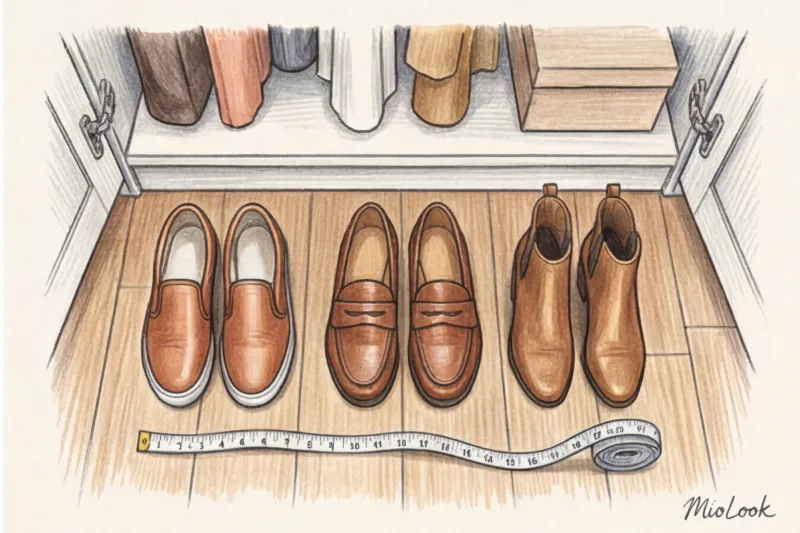
To quickly create new outfits with purchased shoes, I always recommend that clients digitize their current capsule wardrobe. You can upload photos of the items to MioLook wardrobe , and algorithms will help you create stylish looks around your new comfortable boots.
Pregnancy isn't a reason to give up style, but it's a time when your wardrobe should work for your health. An orthotic insole or the right anatomical sole is an invisible foundation. By building it correctly, you'll be able to wear your favorite style, maintain your foot size after giving birth, and save a significant amount of money on unnecessary shoe purchases.