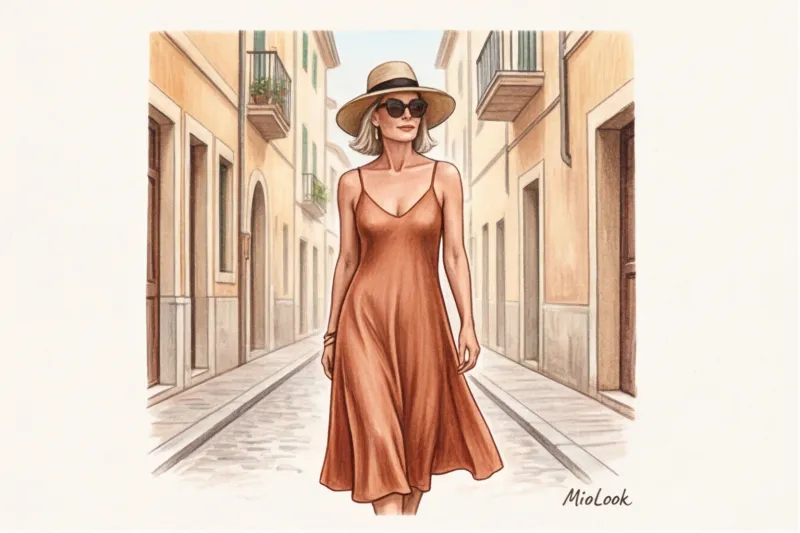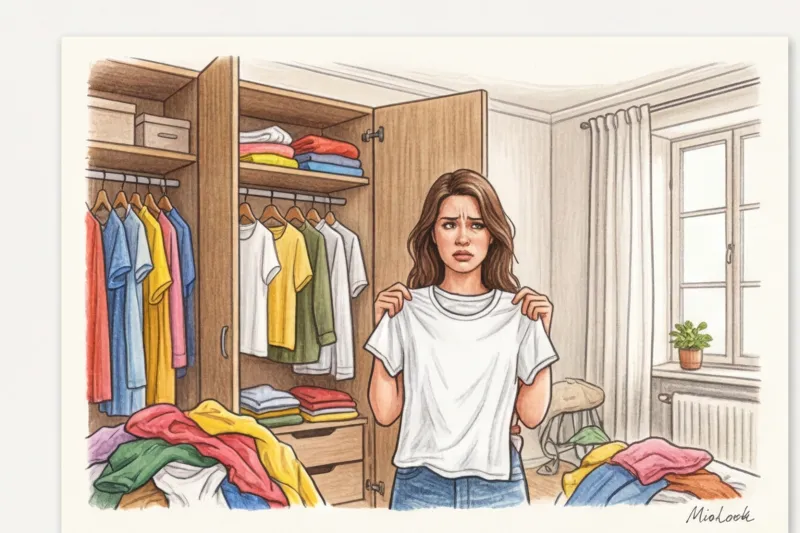
Have you ever noticed how the illusion of status and luxury instantly melts away when the temperature rises above 30°C? You can wear an impeccably tailored suit, but if the fabric doesn't breathe, your flushed face and telltale sweat marks will give away your compromised quality.
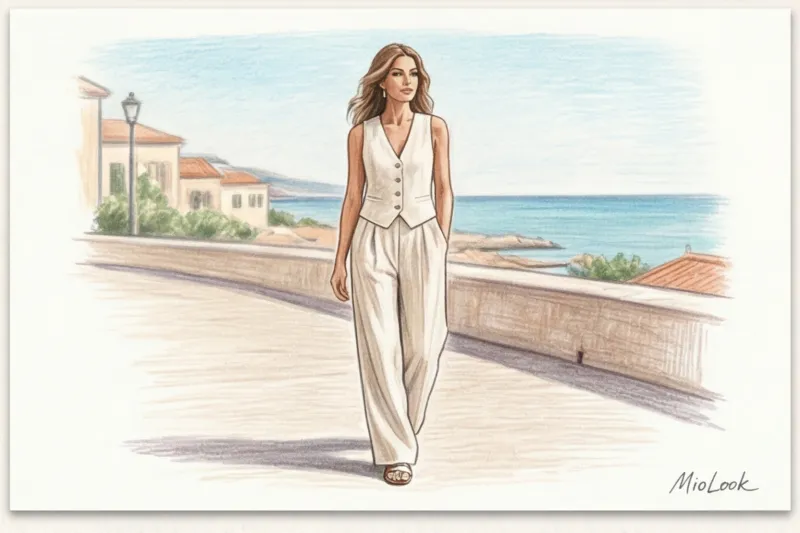
As a textile expert, I often repeat: true class is tested by heat. In winter, a cheap composition can be hidden through clever layering and dense texture. But to build Old Man Style Clothing in Summer — this is a problem with an asterisk, where the focus is not on the brand logo, but on the physics of fabrics and the geometry of the cut.
We discussed the fundamental rules of this aesthetic in more detail in our The complete guide to creating the old mane style Today, we'll explore the practical side of a summer wardrobe. I'll explain why tropical wool is better than cotton in the heat, how to read linen density by touch, and why perfectly ironed clothes in August are considered bad manners.
The Aesthetics of "Quiet Luxury" at +30°C: How Old Man Style Changes the Rules in Summer
According to McKinsey's 2024 Luxury Consumer Behavior Report, 78% of luxury buyers prioritize tactile comfort and temperature regulation over visual design. And this makes perfect sense. You physically can't project confidence, relaxation, and status if your clothes are clinging to your body and you're simply stuffy.
The summer season completely shifts the focus from visual to tactile cues. The aesthetics of quiet luxury are dominated by the microclimate that clothing creates around your body. It's an investment in your own comfort, where luxury lies in the fabric's ability to wick away heat and moisture, keeping your skin dry.
"Luxury is when the inside is as beautiful as the outside. And in summer, luxury is when the fabric acts as an air conditioner, not a greenhouse." – Gabrielle Chanel
The Anatomy of the Right Linen: How to Choose a Fabric That Truly Cools
"Buy linen, and you won't be hot" is the most popular and, at the same time, the most dangerous piece of advice from the glossy magazines. Not all linen is the same. Cheap, mass-market linen is made from short fibers (towel). It's prickly, quickly wears thin, and after the third wash, it resembles gauze.
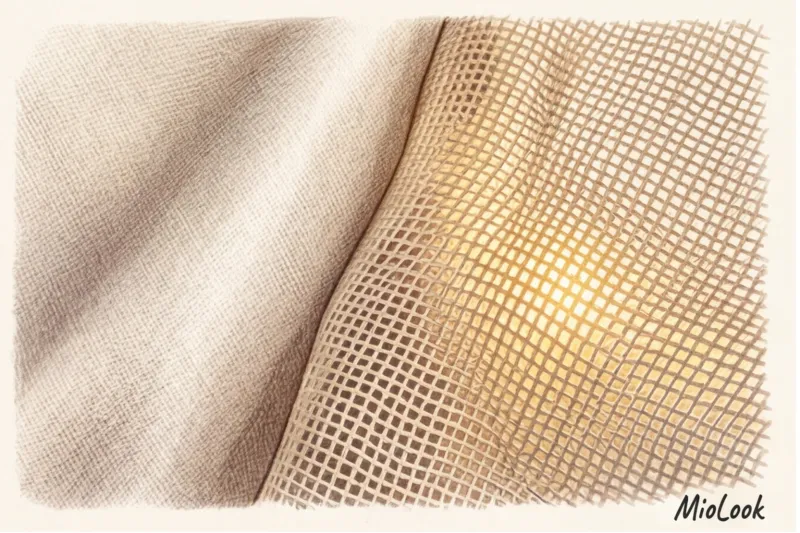
When I was studying textile manufacture in Florence, an old cutter taught me a simple test. Real premium long-staple linen should be held up to the light. You should see a uniform, tight weave of threads with sparse, natural thickenings (neps), not a loose mesh.
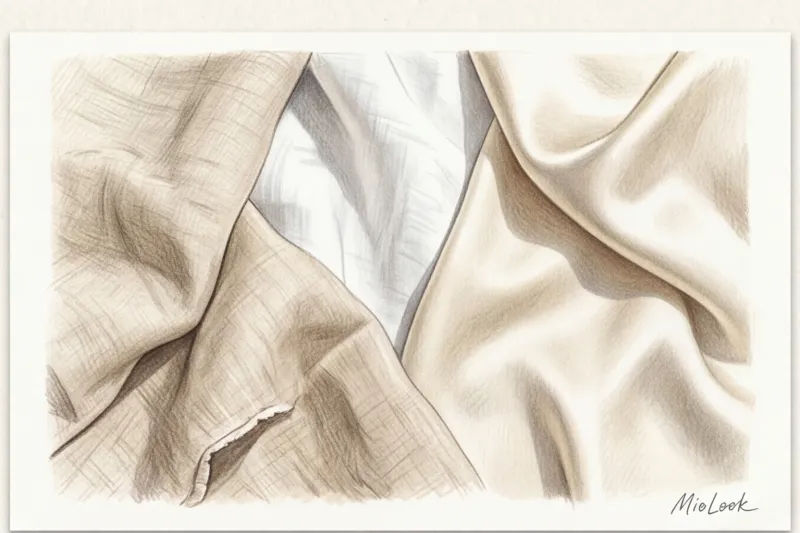
What to look for when choosing:
- GSM (fabric weight) index: For hot urban summers, look for 110 to 150 GSM on labels or in product descriptions. Anything thicker than 200 GSM is considered a suit for air-conditioned offices.
- Absorption: Textile Exchange certification confirms that high-quality organic linen can absorb up to 20% of its own weight in moisture while remaining completely dry to the touch.
- No polyester: The biggest summer wardrobe sin is buying linen with 20-30% synthetic fiber added "to reduce wrinkling." Polyester seals the pores of the fabric. You end up with a wrinkle-resistant garment that risks heatstroke.
Access to MioLook for €0.99 — one-time payment
A smart AI stylist will select the perfect look from natural fabrics for a hot summer.
Get access — €0.99 onceNoble crumpledness versus sloppiness: where is the line?
Herein lies the most powerful contradiction, which shatters the stereotypes of many women. There's a myth that the old-mane style requires perfectly, crisply ironed hair without a single wrinkle. In fact, trying to achieve perfect smoothness in the summer is a sign of insecurity.
Aristocratic relaxation accepts creases in 100% natural linen as a sign of the fabric's authenticity. Creases at natural folds (elbows, behind the knees, in the groin area) are normal and prestigious. However, a fine, chaotic network of folds throughout the garment is a sign that the item has been overdried in the washing machine.
Silk, cotton, and tropical wool: unconventional summer investments
Flax isn't the only hero of this summer's romance. Let's talk about the less obvious solutions tailors have been using for decades.
A couple of years ago, one of my clients ruined her long-awaited vacation on the Italian Riviera. She bought a stunning emerald dress for €120, which the store described as "silky satin." On the very first evening, at 28°C, the polyester dress turned into a sticky spacesuit. Since then, we only work with pure materials.
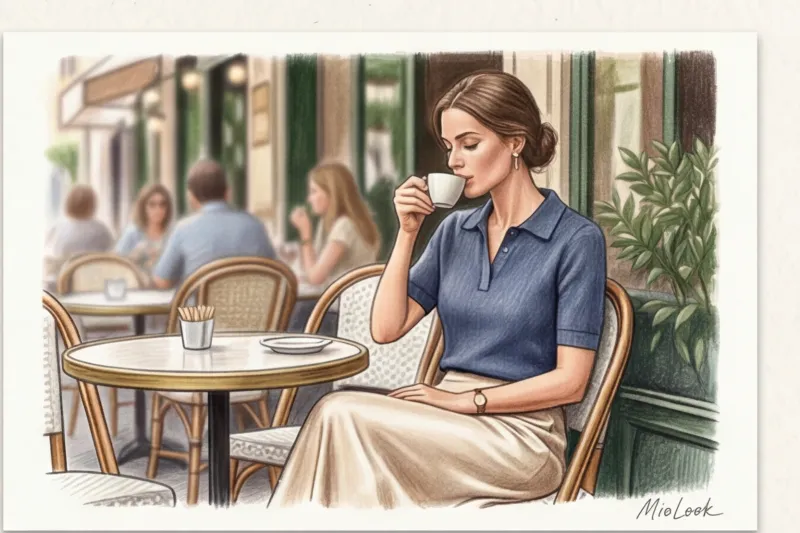
Mulberry silk (silk from the mulberry silkworm): Real premium silk shouldn't sparkle like a Christmas tree ornament. It has a muted, matte sheen. Yes, a top made of this silk will cost €150–250, but its cooling properties make it worth every penny.
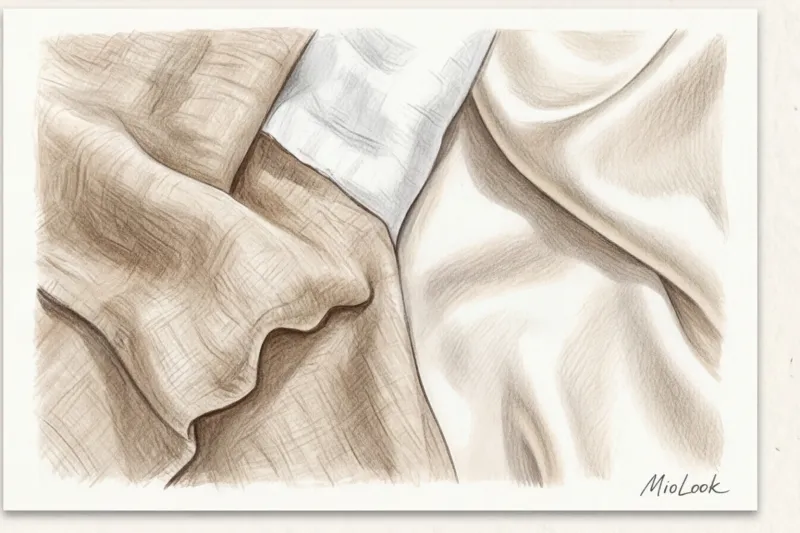
Tropical Wool (Fresco): It sounds absurd to wear wool in summer? But did you know that Fresco fabric was invented by Martin Sons & Co back in 1907 specifically for hot climates? It's a special, open-weave wool made from highly twisted yarns. It's more breathable than many types of cotton, yet maintains a perfect crease in trousers. It's an Italian man's secret weapon during the August heat.
Pima and Sea Island Cotton: Forget regular, stiff cotton. These varieties have extra-long fibers. T-shirts and polo shirts made from this cotton flow like silk and last for years without losing their shape.
Summer Silhouette Architecture: A Cut That Creates "Air"
An observation from my many years of experience as a stylist: nothing cheapens a summer look faster than damp fabric tugging at the hips or shoulders. Old Money style is built on the "air gap" principle.
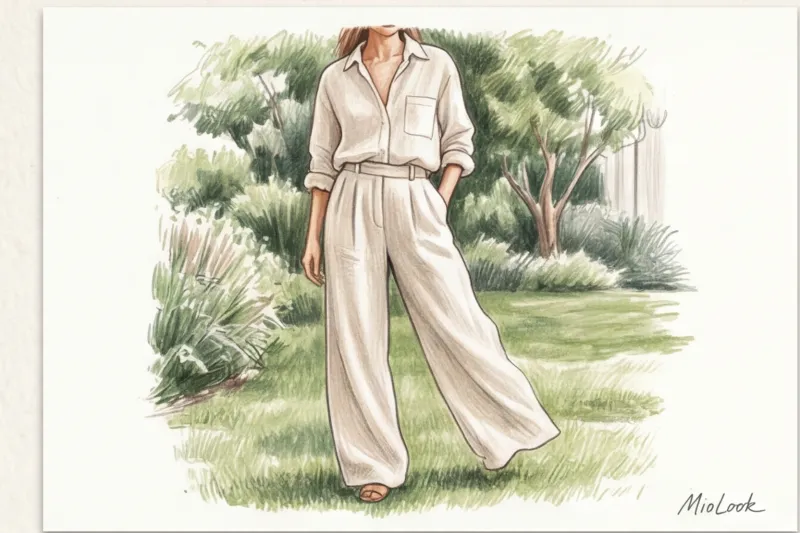
In summer, there should be at least 2-3 centimeters of air space between your skin and your clothing. This air acts as a thermal insulator. Skinny jeans, tight-fitting knit dresses, and tight shirts are a no-no.
However, there is important limitation This advice doesn't work for petite women under 160 cm tall. A total oversize will turn such a figure into a shapeless rectangle. In this case, we use a semi-fitted cut: loose shoulders and flowy pants, but with a mandatory waist cincher (for example, with a thin leather belt).
The oversized fit, in the aesthetic of quiet luxury, is radically different from street style. It's not simply three sizes too big. It's a precise fit: the shoulder seam is perfectly positioned, and the freedom of the cut is built into the width of the back and sleeves.
Color Palette: How Shades Affect Perceptions of Value and Body Temperature
Light-colored fabrics reflect light—we remember this from high school physics. But pure white (the color of printer paper) often simplifies the image. Researchers at the WGSN Institute note that complex white undertones are subconsciously perceived as more expensive because they are more difficult to produce and maintain.
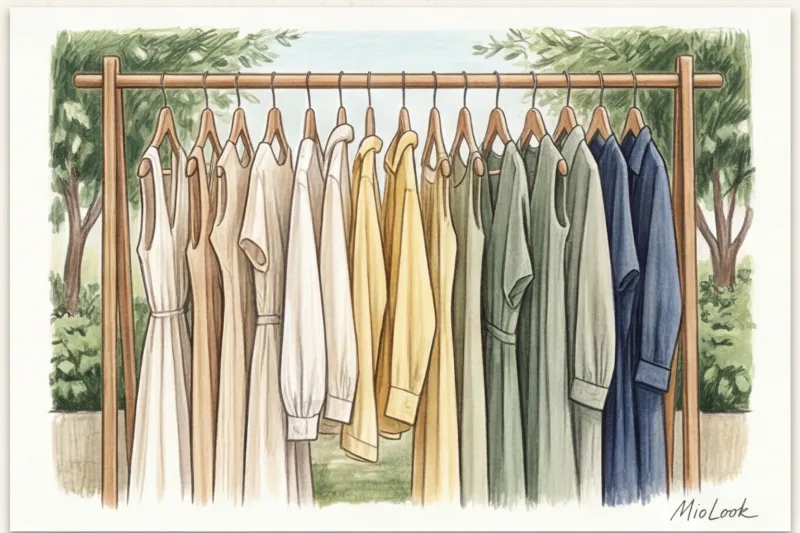
- Noble light base: Ecru, ivory, pearl, cream, oatmeal. By the way, to make these shades look flawless, it's important to know What underwear to wear under white clothes (spoiler: not white, but to match your skin tone).
- Summer dark tones: If you love a dark palette, swap out stark black for deep navy, sage, olive, or dark chocolate in the summer. They look softer and don't create a harsh contrast with the bright sun.
Your perfect look starts here
Join thousands of users who look flawless every day using personalized color palettes with MioLook.
Get access — €0.99 onceHot Accessories for the Heat: The Devil Is in the Details
A summer look consists of minimalist pieces, so the functional impact of accessories increases exponentially. The most common mistake is wearing rubber flip-flops in the city. In the old-man style, rubber shoes are only acceptable at the poolside, period.
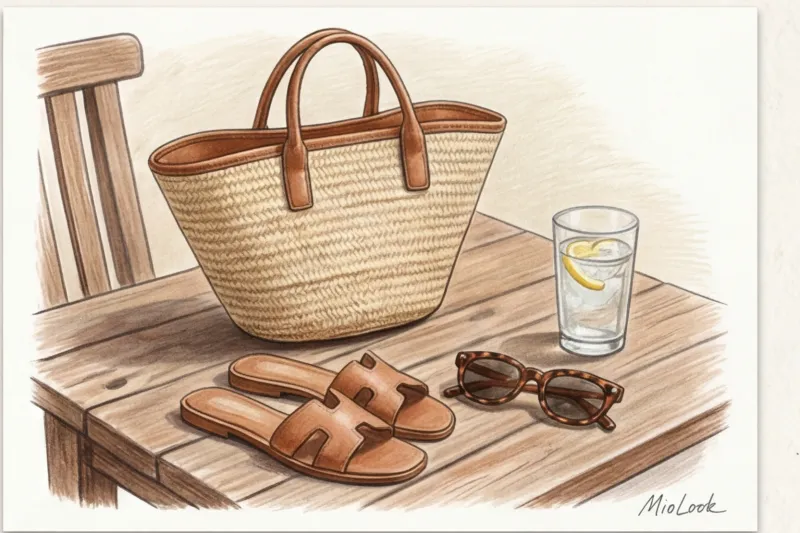
Replace them with minimalist leather sliders (good mid-market models cost €80–€150), unlined suede loafers, or traditional Spanish espadrilles.
Bags are a special form of summer art. We save shapeless beach bags for the beach. In the city, a structured bag made of raffia or thick canvas with leather handles and piping will enhance your style. Practical advice: When buying a raffia bag, be sure to run your hand over the weave—if it's stiff and prickly, it will inevitably snag your silk skirt or thin trousers.
Checklist: Building an Old Money Summer Capsule (A Practical Guide)
The perfect summer capsule doesn't require a huge budget. It does require disciplined color and obsessive attention to texture. Here's a formula of 8-10 pieces that will cover 90% of your needs—from a Friday at the office to dinner on the Como coast.
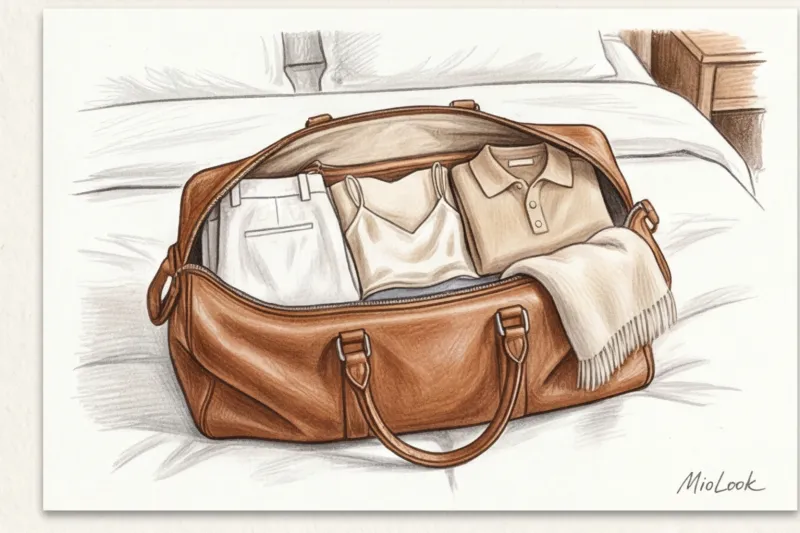
- Straight linen trousers: Pinch waist, full length, ecru color.
- Bermuda shorts with arrows: Made from a linen and viscose blend (the viscose creates a beautiful flow). Length: just above or mid-knee.
- Silk midi skirt: Bias cut. This is a versatile evening soldier.
- Cotton polo: Fine knit, short sleeves, no logos on the chest.
- Loose shirt: Made of poplin or fine linen. Can be worn on its own or layered over a T-shirt.
- Ribbed T-shirt: Made from premium Pima cotton (not underwear).
- Slip dress: Made of matte silk or thick viscose.
- Shirt dress: A win-win option for everyday city life.
Integrating these things together will help a smart approach to capsule creation If you're unsure how exactly your current items will fit with your new purchases, you can upload them to MioLook app The built-in "smart wardrobe" function will analyze your wardrobe and suggest dozens of elegant combinations in the spirit of quiet luxury in a couple of seconds, working as your personal AI stylist.
The main conclusion: Old-mane style in summer isn't about appearing richer with complicated designs. It's about respecting your own body. Stop buying compromised polyester pieces for one season. Invest in the right 120 GSM linen, give your body 3 centimeters of vital air, and you'll notice how that aristocratic self-confidence comes with physical comfort.