Over 12 years of reviewing the wardrobes of clients over forty, I've noticed the same striking paradox. Women whose closets are literally bursting with clothes experience extreme stress in the mornings and utter the proverbial "I have nothing to wear." They spend up to 80% of their budget on throwaway items, worn once and then consigned to the back of the closet forever.
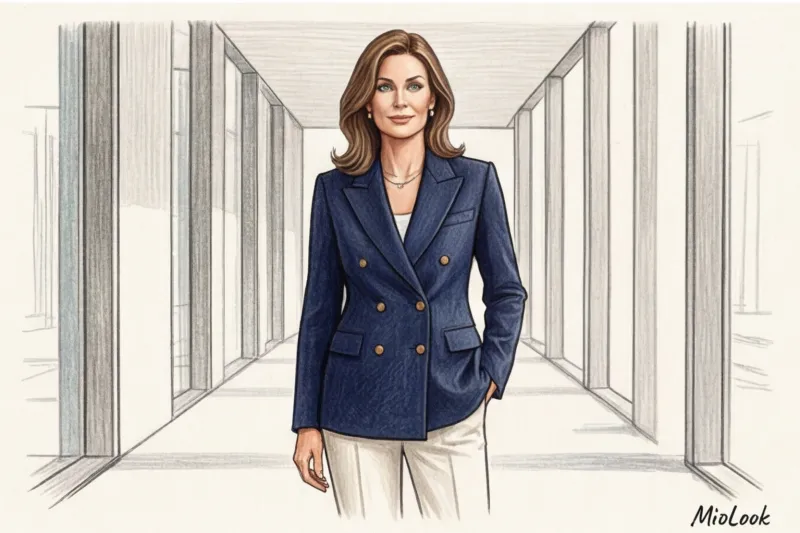
We have already discussed the philosophy of this direction in more detail in our The complete guide to creating the old mane style But today I want to offer you not just a collection of pretty pictures, but a purely mathematical, data-driven approach. Old Mane Style for Women in Their 40s It's not about yachts and family estates. It's about smart planning, architectural tailoring, and respect for your own time.
Old Mane Style for Women in Their 40s: Why It's a System, Not Just an Aesthetic
We're used to perceiving fashion as a never-ending race for trends. But after 40, this pursuit begins to feel tiresome and irrelevant. True luxury lies in renouncing fuss. Creating a personal "uniform of success" solves the main problem of a busy woman: decision fatigue (Decision fatigue). Statistically, we spend about 15 minutes each morning simply standing in front of an open cabinet. A well-organized capsule reduces this time to two minutes.
Let's turn to the numbers. In styling, there is a concept Cost Per Wear (CPW) — price for one exit.
- A high-quality cashmere sweater for €300 will be worn 150 times in five years. Its CPW is €2.
- A mass-market acrylic jumper for €40 will lose its appearance after five washes. Its CPW is €8.
The math is inexorable: cheap things cost us too much. I tracked my clients' wardrobe habits using the MioLook app for six months. Guess what the graphs showed? Women wear the same 20% of their clothes 80% of the time. These 20% should form the basis of your "quiet luxury." As McKinsey's The State of Fashion Report (2024) confirms, today's luxury consumer has finally shifted its focus from logo obsession to durability and functionality.
The Anatomy of a Status Wardrobe: The Unobvious Rules of "Quiet Luxury"
If you want to look expensive, forget about tags on the back. Status is determined at the micro level. My main rule as a stylist is this: the back should be as flawless as the outside. Closed seams (French seams), the quality of the lining (viscose or cupra instead of electrifying polyester), and molded hardware reveal a jacket's origin in a second.
"The architecture of the shoulder girdle is your visual lift. A well-fitted jacket with a defined, but not exaggerated, shoulder line automatically lifts the silhouette and makes your back look straighter," from personal styling practice.
Another important point: after 40, avoid tight, shapeless oversized clothing. It steals your status, turning an elegant woman into an overgrown teenager. The secret lies in the "right air"—there should be just enough space between your body and the fabric so that the garment doesn't feel tight, but the silhouette is discernible.
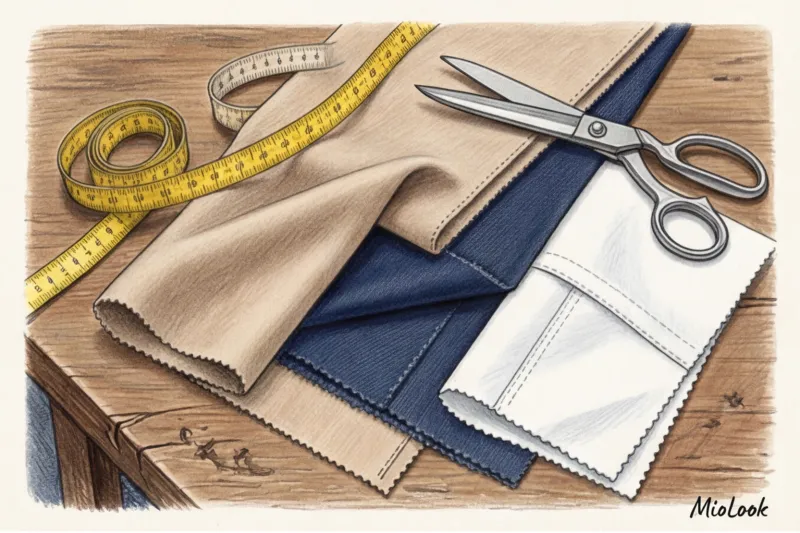
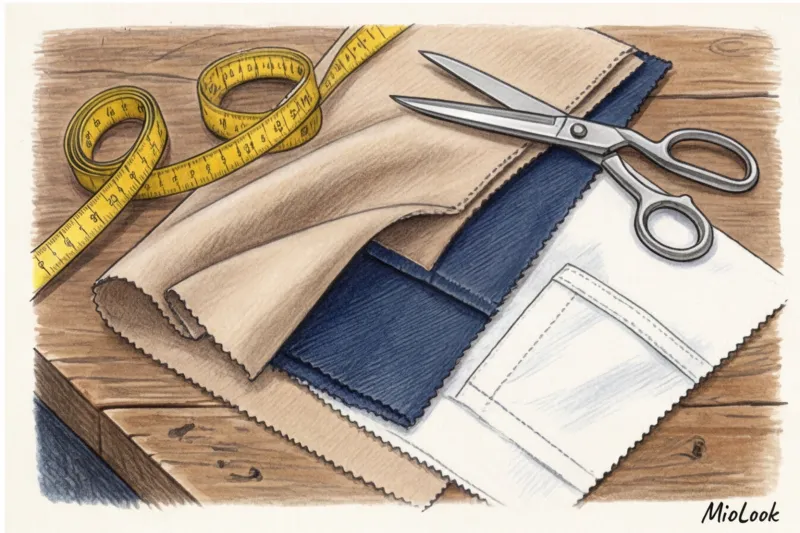
The main secret of European influencers and aristocrats? The tailor. Buying a size up (to avoid a tight shoulder or hip line) and then having it taken in at the waist is a €50 investment that will make Massimo Dutti trousers look like Loro Piana.
Debunking the myth: Why 100% natural fabrics aren't always luxury
There's a persistent myth that Old Money is made exclusively from 100% linen, silk, or cotton. This is a dangerous misconception. And yes, it doesn't work if you're an active woman: pure linen will turn into a chewed-up disaster after just an hour of sitting in an office chair.
True modern luxury lies in high-tech blends. Textile industry research (specifically, data from WGSN) shows that adding 5% elastane to premium super 120s wool or using eco-friendly Ecovero viscose instead of cheap silk makes the fabric wrinkle-resistant. These garments breathe, flow, and hold their shape for 12 hours straight. They work for you, not you for them (running around with a steamer every morning).
Access to MioLook for €0.99 — one-time payment
A smart AI stylist will select the perfect look for every day and help calculate the actual wearability of your items.
Get access — €0.99 onceOld Money Color Matrix: How to Go Beyond Beige
Search Pinterest for "quiet luxury," and you'll be met with an avalanche of beige. But total beige isn't for everyone. In my experience, six out of 10 Slavic women look tired in total beige—the shade blends with their skin tone and makes their faces pale.
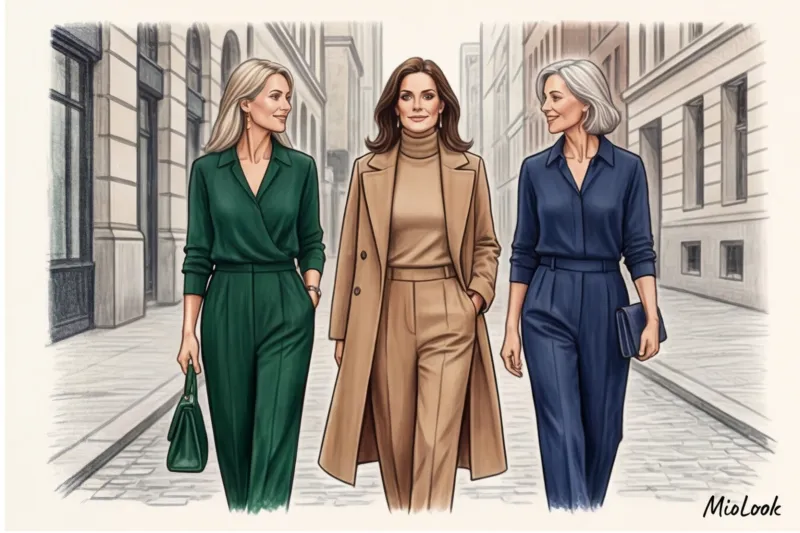
The status palette is much broader and richer. Note the deep, noble shades:
- Deep sapphire (Navy blue): An ideal alternative to black, which after 40 can emphasize shadows on the face.
- Camel color: A warm, expensive shade for outerwear and knitwear.
- Burgundy: the color of aged wine, looks luxurious on leather and silk.
- Sage green and Ecru (unbleached cotton): refreshing light tones.
Use the three-shade rule: don't mix more than three colors in one look. One should be the base (70%), the second a complementary (20%), and the third an accent (10%). This creates a complex, multidimensional look.
Digitizing Your Wardrobe: Building a Capsule Wardrobe with Technology
Paradoxically, classic style blends seamlessly with modern technology. If you want to stop buying the same things, you need to visualize your closet.
Recently, my client and I digitized her wardrobe through MioLook The process took a couple of hours, but the result amazed us both. We discovered five identical black pants and a complete lack of matching tops. This visualization saved her about €2,000 in one season, preventing impulse purchases.
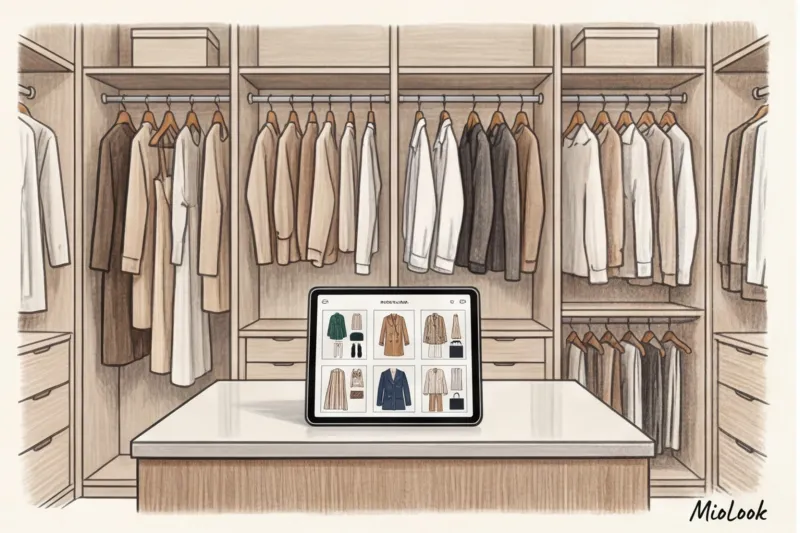
The Old Money-style mini capsule is a mathematical matrix. 12 well-chosen items (3 bottoms, 5 tops, 2 jackets, 2 pairs of shoes) yield over 30 different combinations. Tracking your wear in the app helps you understand your true style: you clearly see that you've worn a pencil skirt once a year, while straight-leg trousers with creases are worn 45 times. The conclusions are obvious.
Investment strategy: what to save on and what to overpay for
The secret to a flawless look isn't buying luxury items, but rather managing your budget wisely. I recommend the 50/30/20 formula:
- 50% of the budget goes towards accessories, shoes and outerwear. There's no room for savings here. A structured wool-blend coat, basic leather shoes, and a geometric, rigid bag form the backbone of your look.
- 30% - to the base. Perfectly fitting trousers, jackets, high-quality knitwear.
- 20% - on consumables and situational items.
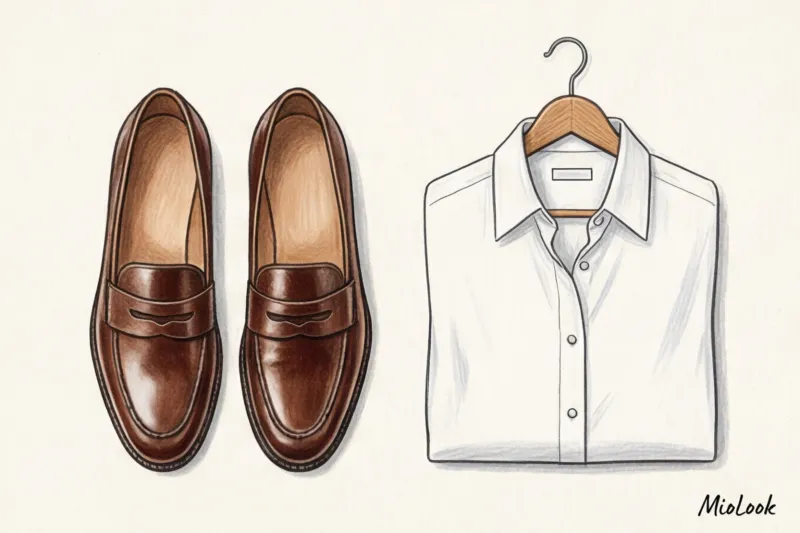
Where can and should you be clever? Basic white T-shirts, cotton shirts, and thin turtlenecks are consumables. They quickly lose their whiteness and shape. There's no point in buying a €400 The Row T-shirt when premium lines like COS, Zara (Origins series), or Massimo Dutti in the €30–€80 range will do the job perfectly. Speaking of which, What jewelry to wear with a turtleneck We wrote earlier about how to make a basic item look like a million bucks.
In styling, this is called the "framing effect." If you have a fresh, modern hairstyle, well-groomed hands without elaborate nail art, and expensive, polished loafers, others will automatically perceive your mass-market outfit as heavy luxury.
Shoes and Accessories: Silent Markers of True Status
Old Money doesn't tolerate fuss or flashy logos on buckles. Forget belts with huge H's or GG's. The choice is made in favor of texture: smooth matte leather, luxurious suede, and delicate embossing.
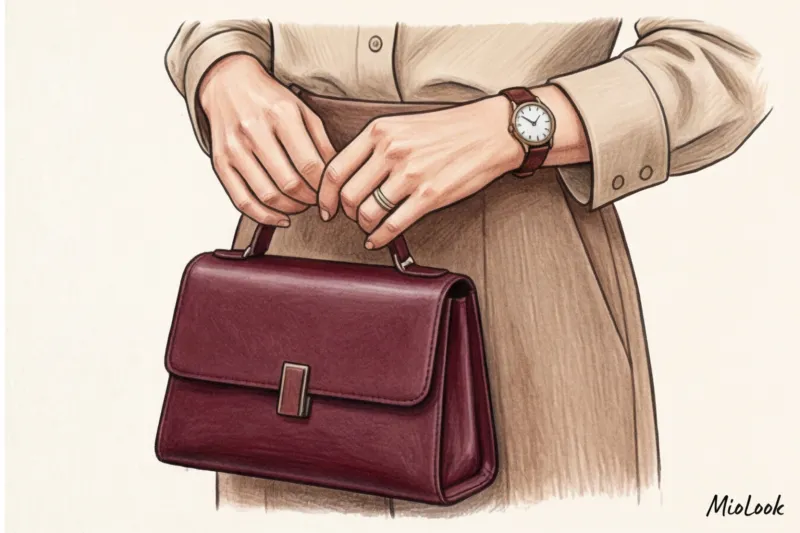
Status is hidden in micro-investments: vintage watches on leather straps, delicate silk scarves, simple pearl studs. If you're in doubt, How to wear pearls in a modern way without looking older , remember the main rule: pearls should be irregular in shape (baroque) or integrated into a modern minimalist metal.
And most importantly: the condition of a garment is always more important than the brand. Frayed toes, worn heels, and creases on €1,000 shoes instantly lose out to polished, well-maintained €150 loafers. Invest in cedar wooden shoe trees—they draw out moisture and smooth out the leather overnight. That's true old-mane style.
Your perfect look starts here
Join thousands of users who look flawless every day with the MioLook app.
Get access — €0.99 onceYour Action Plan: 5 Steps to a Quiet Luxury Wardrobe
Theory is useless without practice. Here's a concrete checklist you can start implementing this evening without spending a single euro:
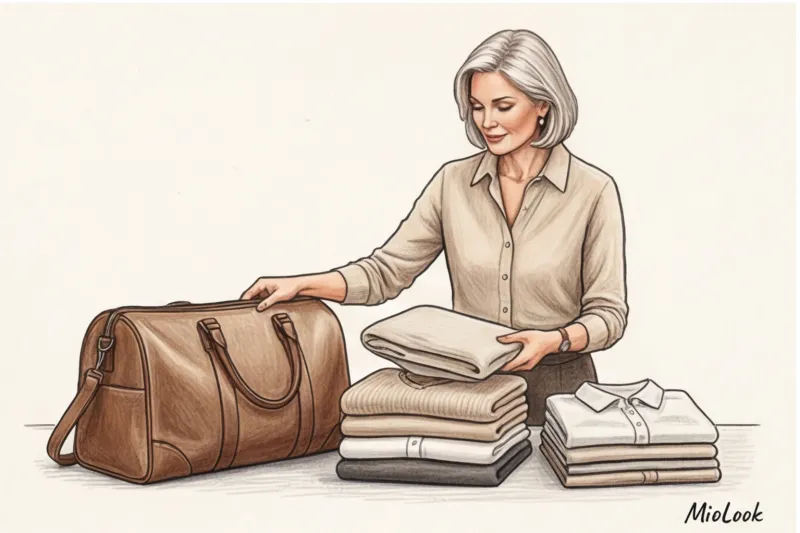
- Total audit and cleaning. Remove from sight (or better yet, from the closet altogether) all items with large logos, rhinestones, and neon prints.
- Digitization of the database. Take photos of your remaining essentials and upload them to your outfit planning app.
- Search for a tailor. Find a tailor in your area and bring him 3-4 items that you like, but “just don’t fit right.”
- Focus on care. Invest in a lint remover and a good handheld steamer. Preparing your clothes the night before will dramatically change your morning routine.
- Shopping list. Create a shopping list based on missing items (e.g., "camel structured jacket"). Before purchasing, divide the item's price by the expected number of pieces.
Style after forty isn't about trying to look younger or richer. It's about projecting the confidence of a woman who's already proven herself. Start small: take your favorite pants to a tailor for a perfect fit, and you'll see how not only your reflection in the mirror but also your posture will change.