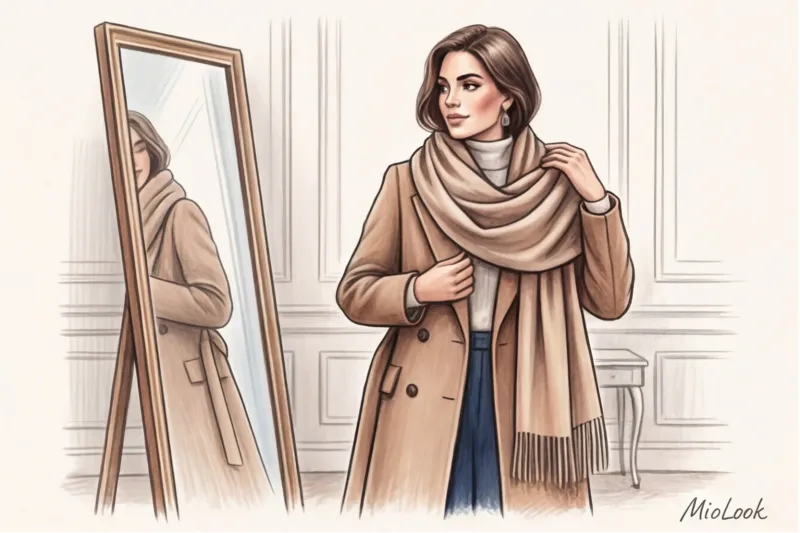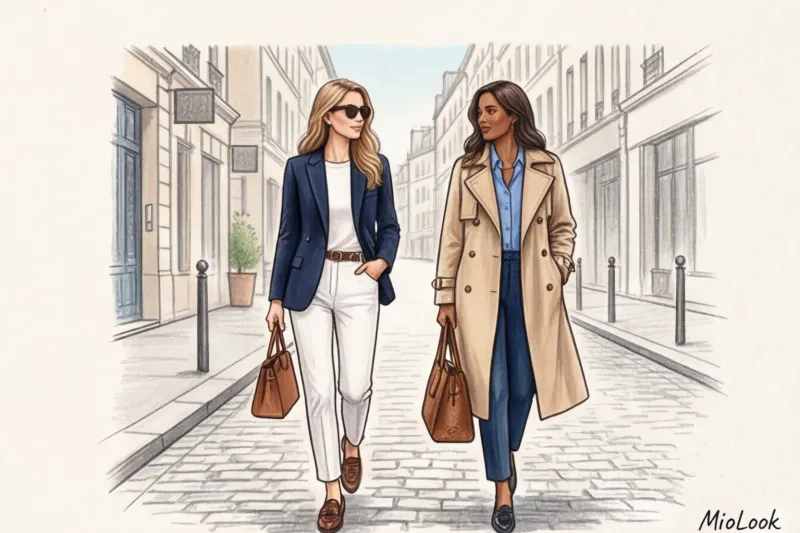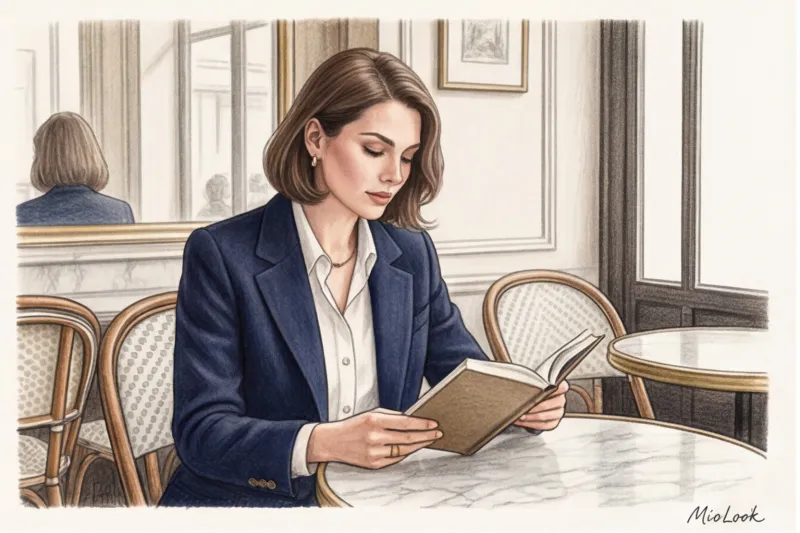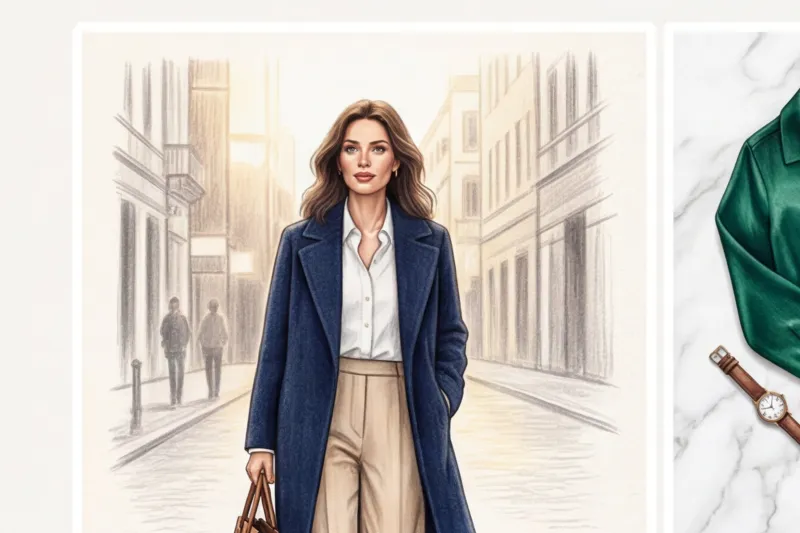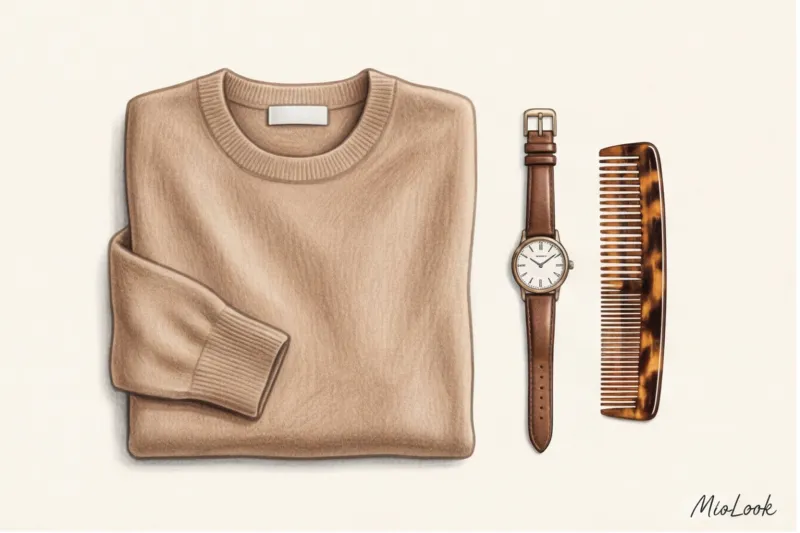
Recently, one of my clients proudly showed me her new wardrobe. She spent about €1,500 on high-street items to create her dream capsule wardrobe. It included chunky beige cardigans, pleated tennis skirts, and tweed jackets—a typical look. Old Mane style in clothing , as portrayed in short social media videos. Exactly one month later, this wardrobe turned into a disaster: the acrylic was covered in stiff pilling, the viscose trousers had lost their shape at the knees, and the gold buttons were stained.
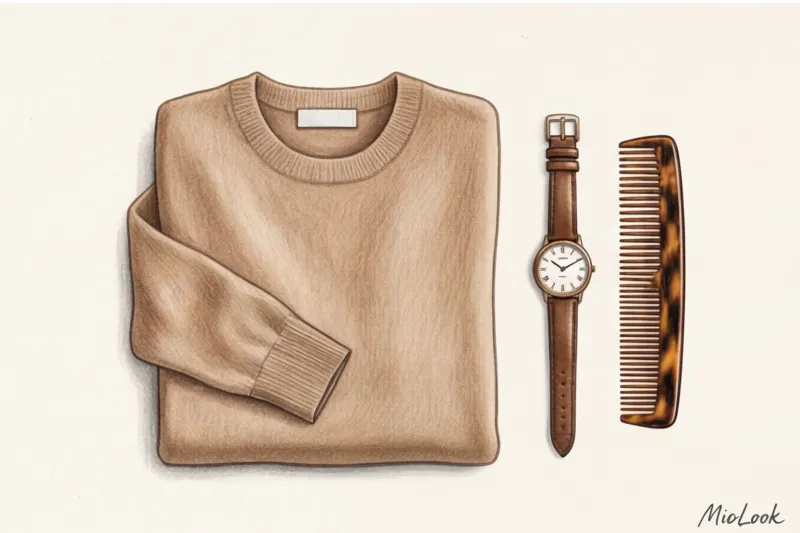
That's when we sat down to re-evaluate her closet. We tossed out two bags of "disposable luxury" and replaced them with five perfect vintage and mid-range pieces. And you know what? Now she looks truly expensive.
True "quiet luxury" isn't just about visual aesthetics. It's primarily about mathematics, quality management, and a conscious approach to consumption. We've covered why blindly following trends and cardboard templates no longer work in our a complete guide to women's clothing styles Today, I propose deconstructing the myth of the aristocratic wardrobe and looking at it through the eyes of a pragmatist.
What is old-fashioned clothing really? Deconstructing the trend
Let's be honest: true Old Money style isn't about proving anything. It's the wardrobe of people who need clothes simply as a comfortable, high-quality backdrop to their lives, not as a garish display of status. What we see in trends is often superficial cosplay: an attempt to look like an Ivy League student on vacation in the Hamptons.
According to the report Business of Fashion (2024) The global shift in consumer preferences toward "quiet luxury" is driven less by aesthetics than by economic uncertainty. People are tired of logomania and fast fashion. They want to buy things that will last ten years, not ten days.
Style Attributes vs. Approach to Consumption
It's a huge mistake to think that beige alone makes you "old mane." You can dress in cream from head to toe, but if it's squeaky polyester, the magic won't work.
"True luxury is measured by durability. The most important metric in such a wardrobe is Cost Per Wear."
When I started digitizing and tracking my wardrobe in the app, I was in for a surprise. My "cheapest" sweater, measured in CPW, is a Loro Piana cashmere jumper I bought at a resale store four years ago for €350. I've worn it over 250 times (CPW = €1.40). Meanwhile, a €40 acrylic cardigan, which I wore three times before it fell into disrepair, cost me €13.30 per wear. Math doesn't lie.
The Biggest Mistake: Why Mass Market Is Turning "Quiet Luxury" Into Cheap Counterfeits
I'll be categorical here: you can't buy Old Money in the ultra-fast fashion department. A cheap imitation of classics always looks worse than honest, affordable streetwear.
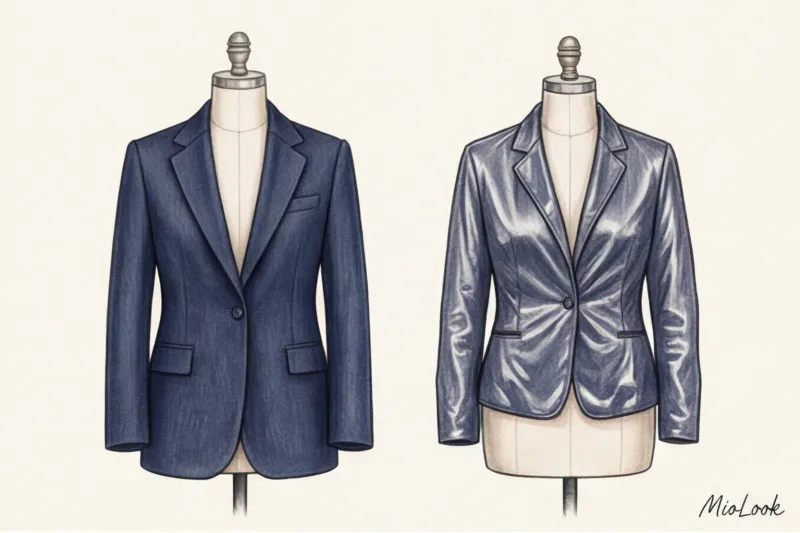
Why does this happen? It's a matter of fiber physics. Smooth yarns made from short synthetic filaments or low-quality recycled wool begin to break down from friction within the first few hours of wear. Thin polyester can't maintain the jacket's architectural shape—the seams begin to wrinkle, and the fabric takes on a cheap, plasticky sheen in the light.
Contrarian point of view: if you're on a tight budget (say, €50-€70 per outfit), you'll look far more classy in a thick cotton T-shirt and simple straight-leg jeans than in a beige polyester three-piece suit. Honest materials always beat out aristocratic counterfeiting.
Access to MioLook for €0.99 — one-time payment
A smart AI stylist will select the perfect look and calculate the Cost Per Wear for every item in your closet.
Get access — €0.99 onceStyle Formula: The 4 Pillars of Old Money Aesthetics
As a stylist, I never begin working with a client by discussing fashion shows. We begin with an audit of these four basic components. If even one is off, the entire look falls apart.
Texture and fabrics: cashmere, thick cotton, silk
The visual perception of clothing is 80% dependent on its tactile feel. Our brain interprets matte, deep textures as expensive. Shiny fabrics (with the exception of thick, natural silk) often cheapen the look.
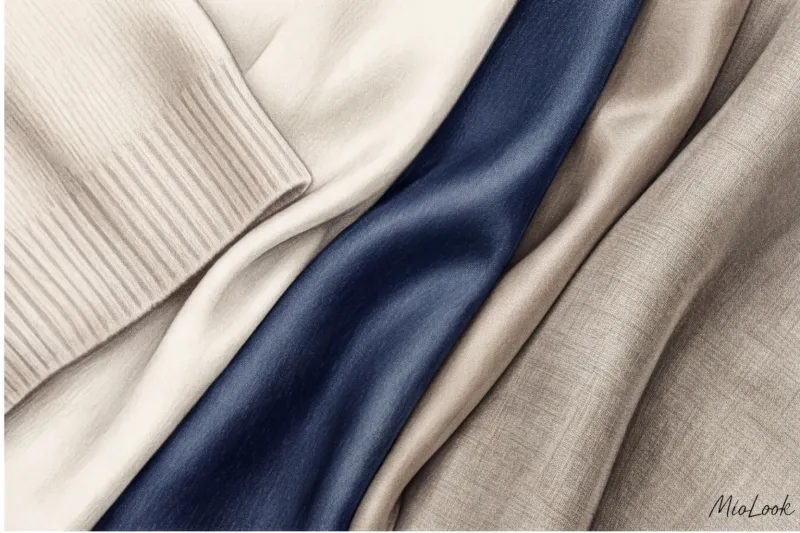
Look for cotton with a density of at least 180 g/m² (it should not be see-through), wool blends (where there is no more than 15-20% synthetics for wear resistance) and matte raw silk.
The Perfect Fit: Why the Tailor Matters More Than the Brand
This is perhaps the biggest secret of the rich. A mid-range item for €100, taken to a tailor and tailored for €30, will look like a million. A luxury jacket for €2,000, bought "off the rack" and hanging loosely on the shoulders, will look sloppy.
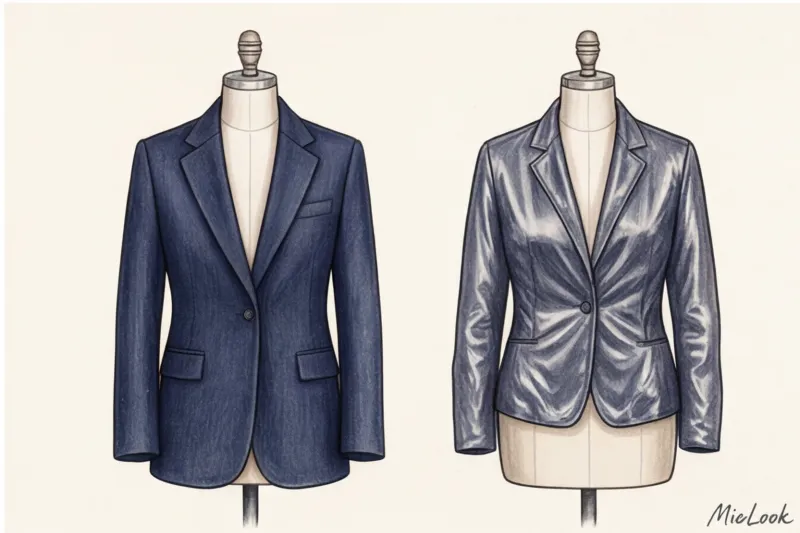
- Shoulder line: The seam must lie strictly on the anatomical point of the joint.
- Trouser length: For old-fashioned palazzos, the ideal gap is 1-1.5 cm from the floor in your usual shoes.
- Freedom of fit: There should always be air between you and the fabric. Clothes that cling to your body are the enemy of elegance.
No logos and a neutral palette
Large branding and gold buckles bearing designers' initials are the hallmarks of "new money." True luxury is anonymous. The color base of this style has remained unchanged for decades. According to the PANTONE Color Institute (2025), the palette of timeless classics is built around complex, muted tones: Camel, Navy, Ivory, and Charcoal. They blend seamlessly in any proportion.
How to Integrate Old Man Style into Modern Life (Without the Suit Effect)
There's one thing many fashion bloggers forget: style should serve a woman, not turn her into a museum exhibit.
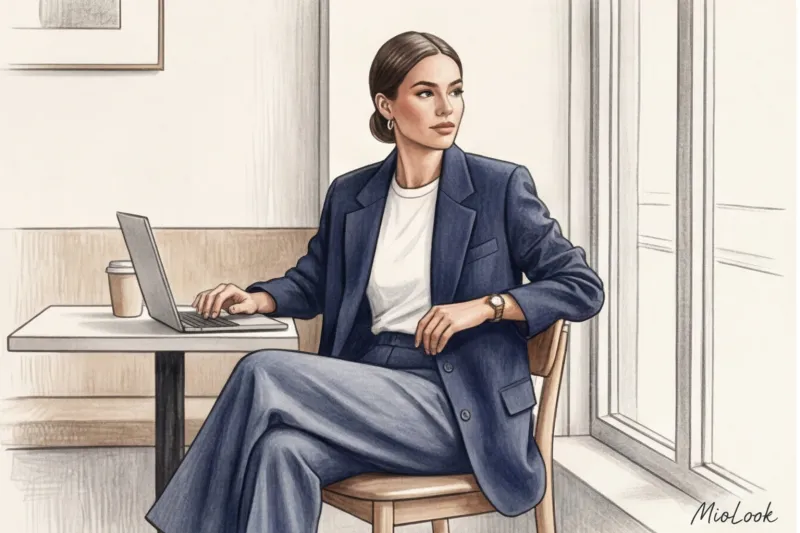
A McKinsey study (2023) found that over 60% of professionals have switched to a hybrid work format. Strict dress codes are dead. Wearing a classic Chanel tweed suit with pearls to an IT office or an informal meeting will make you look out of place, not prestigious.
To avoid the “I’ve put on all my best clothes at once” effect, use the rule of contrasts:
- Pair a crisp, structured jacket with a basic white tee (instead of a silk blouse).
- Wear a cashmere jumper with classic but relaxed jeans (make sure they are free of rips and holes).
- Old money sneakers are a reality. These retro suede runners in beige and gray tones perfectly balance out tailored pleated trousers.
Basic Wardrobe: How to Incorporate Old Man Style into Everyday Wear
To create a functional capsule, you don't need to buy half the store. Just 7-8 items will be worth every euro invested.
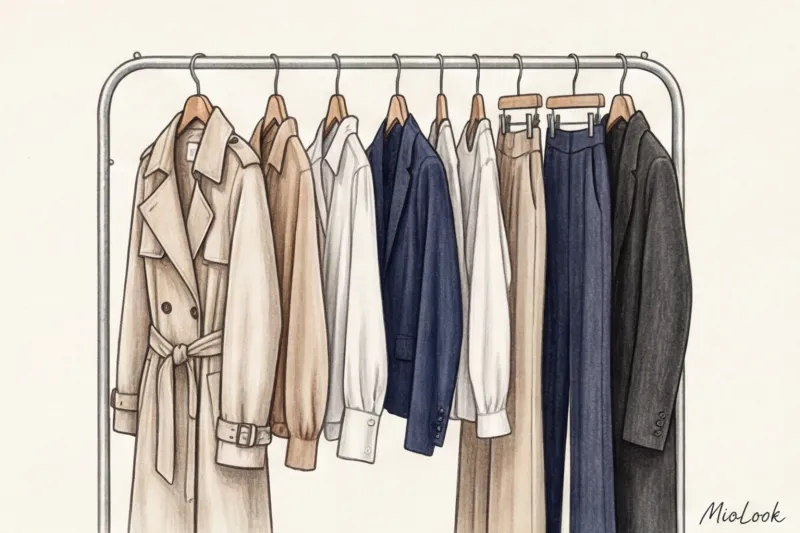
Here's a checklist of smart investments I recommend to my clients:
- Structured straight-cut jacket: Preferably made of wool or a thick cotton blend. Price range: €150–€300 in the mid-price range.
- Palazzo pants with creases or straight jeans: Deep indigo or classic blue, no elastane (or no more than 2%).
- Cashmere or wool V-neck jumper: Ideal for layering over shirts.
- Shoes: Loafers in matte leather, classic oxfords or leather jockey boots with minimal fittings.
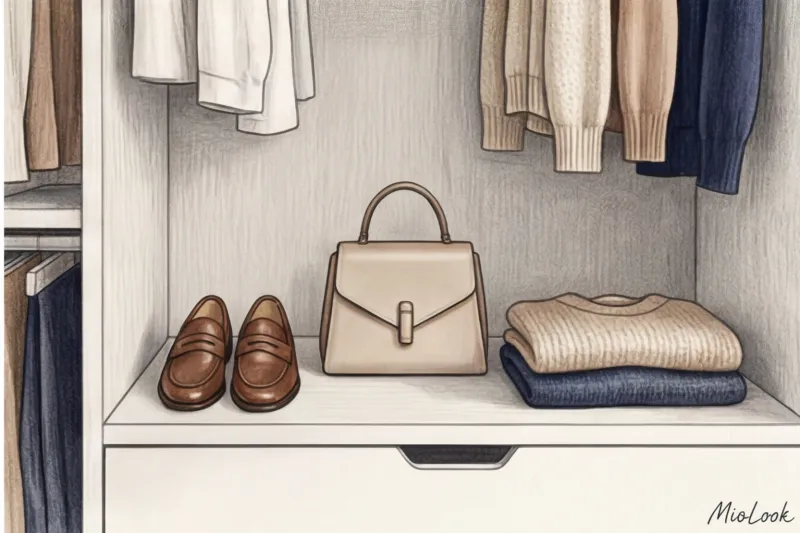
Insider tip: Where can you save? Basic cotton T-shirts and long-sleeved shirts—they'll need to be replaced once a season anyway due to their fading whiteness. Where should you invest? Shoes, geometric bags, and outerwear (coats and trench coats). These are the elements that bring the entire look together.
Your perfect look starts here
Join thousands of users who look flawless every day with MioLook, mixing and matching basics.
Get access — €0.99 onceDigitizing the Wardrobe: How Technology Helps Manage "Quiet Luxury"
The funniest thing about a minimalist wardrobe is how quickly you forget what goes with what. When you have 10 neutral basics, it can feel like you're always wearing the same thing.
This is where technology changes the game. When I digitized my capsule in the app MioLook , artificial intelligence compiled for me 40 completely different looks from just 12 high-quality items.
The digital stylist not only helps you create endless combinations but also tracks your socks. You can clearly see which investments in high-quality fabrics have paid off (they have a low Cost Per Wear), and which items are simply taking up space in your closet. This transforms shopping from an impulsive pleasure into smart personal wealth management.
Summary: The shift from fast fashion to conscious style
The main insight I want you to take away from this article is that old-fashioned clothing isn't about beige tones and tennis rackets. It's a mental shift from quantity to uncompromising quality.
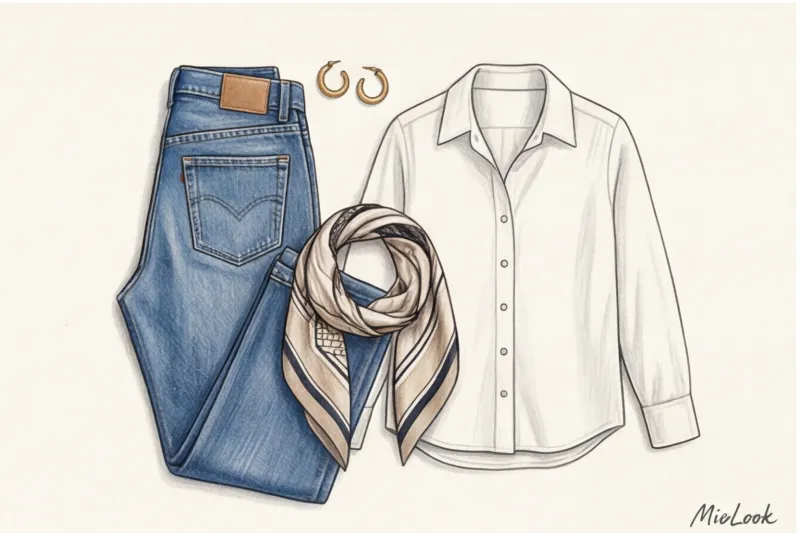
If you want to start transforming your wardrobe tomorrow, take one simple step. Open your closet, find one item that fits you perfectly, and analyze why it suits you so well (the fabric, the cut, the length). The next time you're tempted to buy five cheap, trendy items on sale, stop. Save that money. And buy just one item, made of a thick, high-quality fabric, that you'll be proud to pass down as an heirloom.