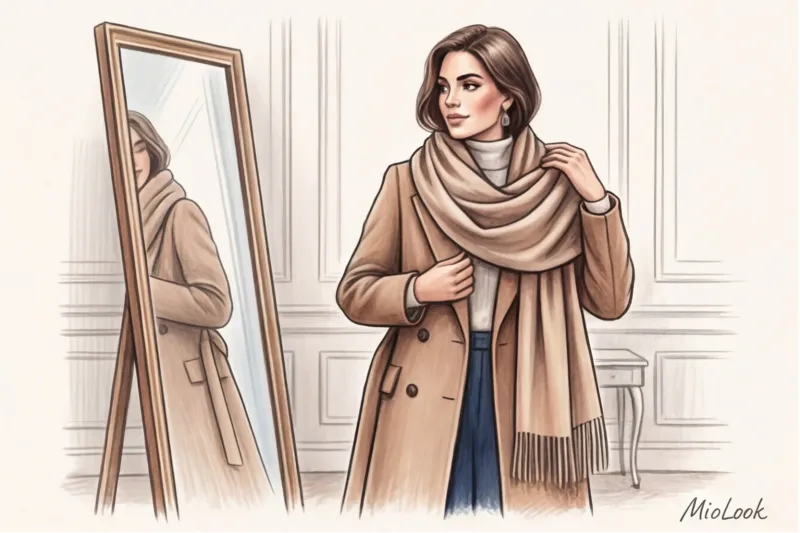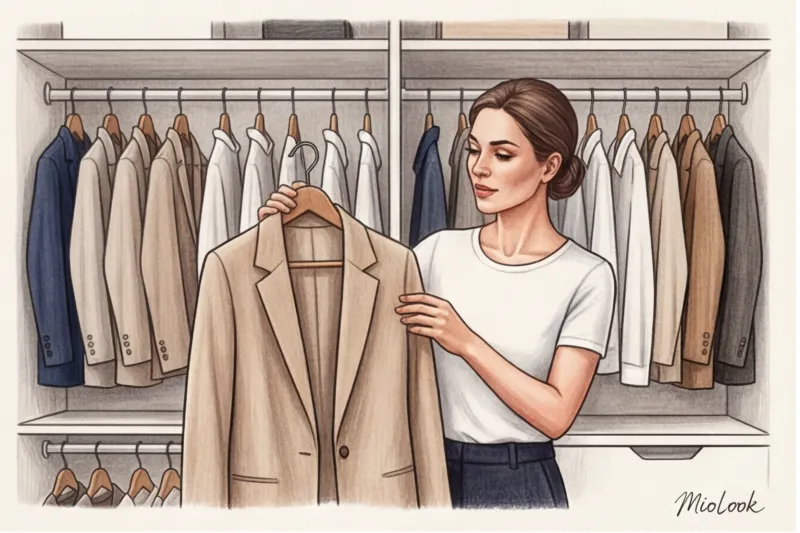
Every morning, the average woman spends about 15 minutes choosing clothes. Over the course of a year, that's more than three full days spent staring at her open closet in a state of mounting panic. It's a familiar scene: the closet is overflowing, the hangers are tightly packed together, and yet again, there's nothing to wear to that important meeting at 9:00 AM.
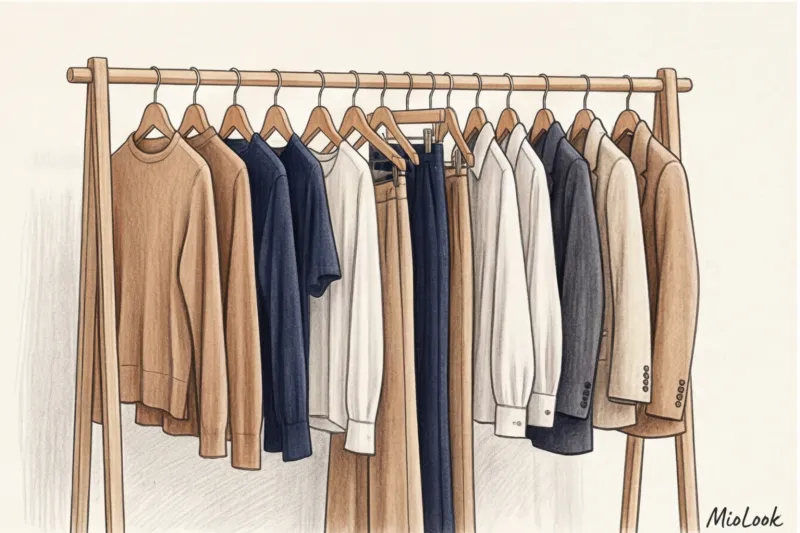
As a fashion consultant specializing in investment dressing, I constantly see this mistake: trying to solve a style problem with too many items. But a smart one capsule wardrobe for the office is built according to the laws of an investment portfolio, not a warehouse. We discussed the mechanics of smart asset management and algorithms in more detail in our The complete guide to the MioLook AI app Today, I want to talk about the philosophy of status and show how quality fabric and proper cost calculations eliminate morning stress and enhance your professional standing in the eyes of management.
Less, but better: why a capsule wardrobe for the office is an investment in your career
Buying a large variety of clothes for work doesn't make you more stylish. This is my least popular, yet most true, statement. On the contrary, an abundance of "average" quality items creates a visual clutter effect.
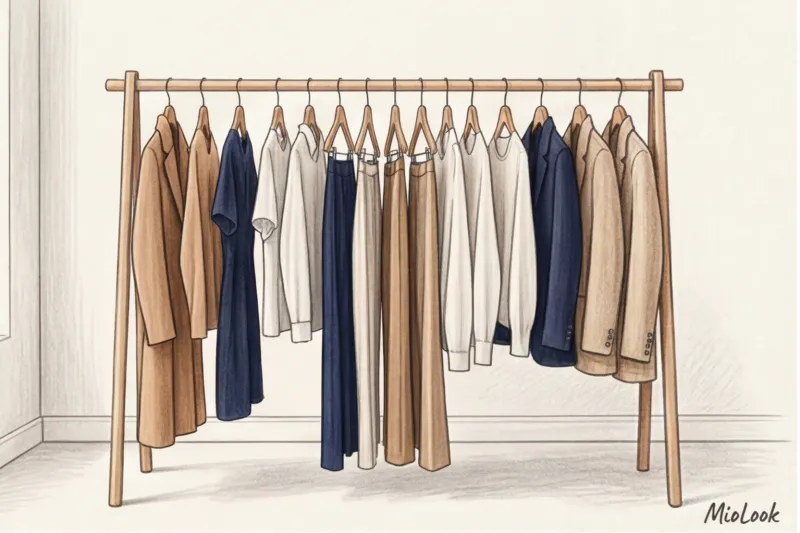
Imagine: it's 7:30 a.m. Your brain hasn't even woken up yet, and you already have to make a complex aesthetic decision out of 150 possible options. It's decision fatigue (Decision fatigue). As a result, you grab the usual, but not always flattering, pants and the first sweater you come across. A physical wardrobe of hundreds of random items always loses out to a well-thought-out capsule of 12 flawless items that covers 90% of work situations.
This is where science comes into play. In 2012, researchers from Northwestern University (Hajjo Adam and Adam Galinsky) coined the term "enclothed cognition." Their research demonstrated that clothing directly influences the wearer's cognitive processes. Putting on an impeccably tailored jacket literally makes you think more structured and confidently. Coworkers and partners unconsciously pick up on this confidence. And according to the environmental organization WRAP, about 30% of the clothes in our closets haven't been worn in the past year. Why bother with this dead weight?
Access to MioLook for €0.99 — one-time payment
A smart AI stylist will select the perfect look.
Get access — €0.99 onceThe Anatomy of a Premium Base: What You Should Never Skimp On
The difference between fast fashion and investment pieces in the office is colossal. A cheap item might look good in an Instagram photo, but in real life, under the merciless fluorescent lights of a conference room, it will give away its authenticity.
After 12 years of working as a stylist and regularly visiting textile factories in Piedmont, I've learned one rule: the quality of the backing is more important than the logo. A €50 jacket with a 100% polyester lining isn't a cost-saving measure. It's a waste of money because you'll sweat in it, it'll lose its shape after the first dry cleaning, and the fabric will pill within a month.
"The quality of fabric is read by others on a micro level: the way wool refracts light, the way silk drapes as you move, creates a subtle but powerful sense of your status."
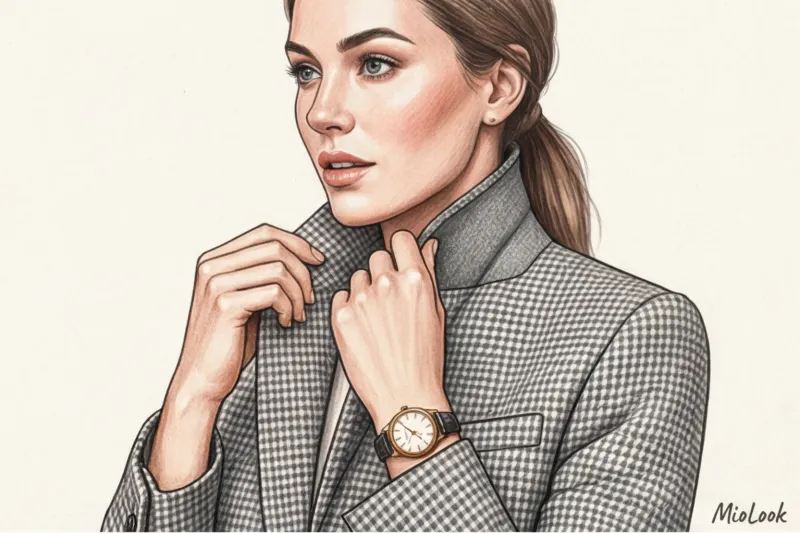
What you shouldn't skimp on:
- Suit fabric: Look for Super 100s or Super 120s wool. It breathes, wrinkles less, and will return to its original shape if hung overnight in a ventilated area.
- Silk: Save thin, translucent silk for evening wear. For the office, choose thick silk (19mm and over) or high-quality viscose/cupro.
- Tailoring: Even expensive trousers will only fit perfectly after a visit to a tailor. Getting the length, waist, and shoulders just right is the 5% that accounts for 95% of the perfect fit.
Suiting and knitwear: status markers
The architecture of a proper jacket is built on the shoulder line. It should be crisp, even if the cut is relaxed. Lapels should not be too prominent, and the hardware should be high-quality (no shiny, cheap plastic; horn or matte metal buttons are preferable).
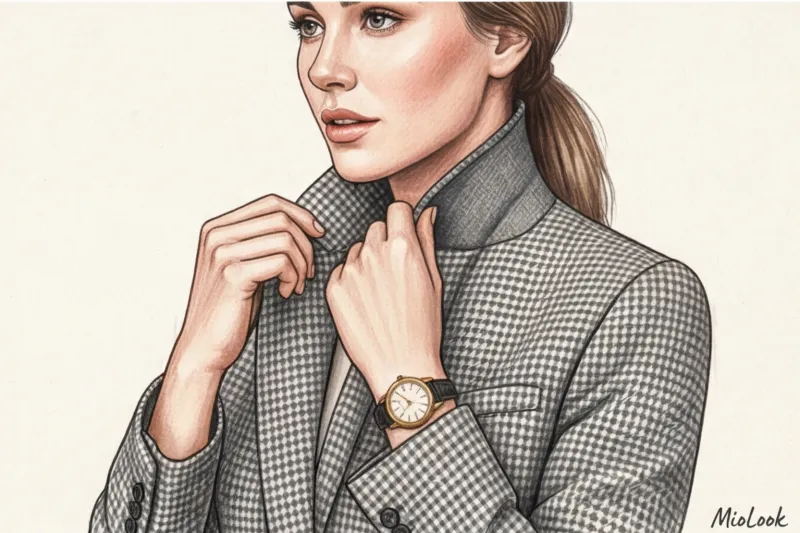
As for knitwear, it's often the one that cheapens an outfit. Thin, flimsy cotton or loose viscose highlight even the slightest details of underwear and quickly lose their shape. A high-status wardrobe requires a tightly knit. Cashmere with 2-4 thread counts or tightly twisted merino wool look ten times more expensive and last for years.
Your perfect look starts here
Join thousands of users who look flawless every day with MioLook.
Get access — €0.99 onceThe Mathematics of Style: The Cost-per-Wear Formula
It's time to shift our thinking from "expensive/cheap" to "efficiency." In my practice, we use the Cost-per-Wear (CPW) formula—the price per wear. The formula is simple: the cost of the item plus the cost of care, divided by the number of times you wear it.
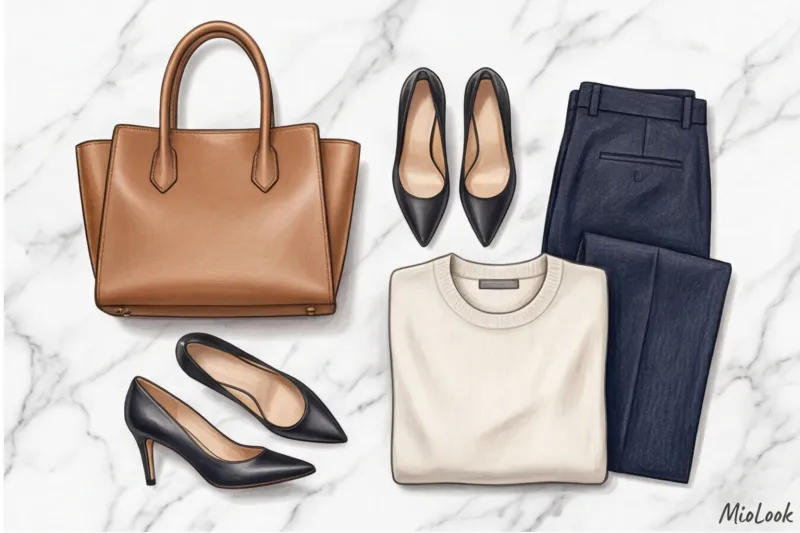
Let's do the math. You buy a pair of trousers at a mass market for €40. After five washes, they become pilled, stretch out at the knees, and you relegate them to the "cottage" category. Your CPW = €8 per wear.
Now let's take a pair of high-quality wool trousers for €300. Thanks to the perfect fit and excellent fabric, you wear them twice a week for a year (about 100 times), and they look like new. Your CPW = €3 per wear. The expensive item turns out to be almost three times cheaper.
One of my clients, a top investment fund manager, was proud of her collection of eight mediocre jackets. We ruthlessly cleared them out and bought two: a classic Max Mara and a relaxed Loro Piana. Yes, the initial investment was high. But after a month, she admitted, "Julia, I stopped thinking in the mornings, and my colleagues started asking if I'd been promoted." Her CPW on these jackets is now approaching pennies.
The golden rule of budgeting: Shoes and bags should make up the largest portion of your investment. A basic tote bag in smooth calfskin and classic loafers (like those with Goodyear welted soles) elevate even the simplest white shirt and trousers ensemble.
Style Formulas: How to Look Different Using the Same Items
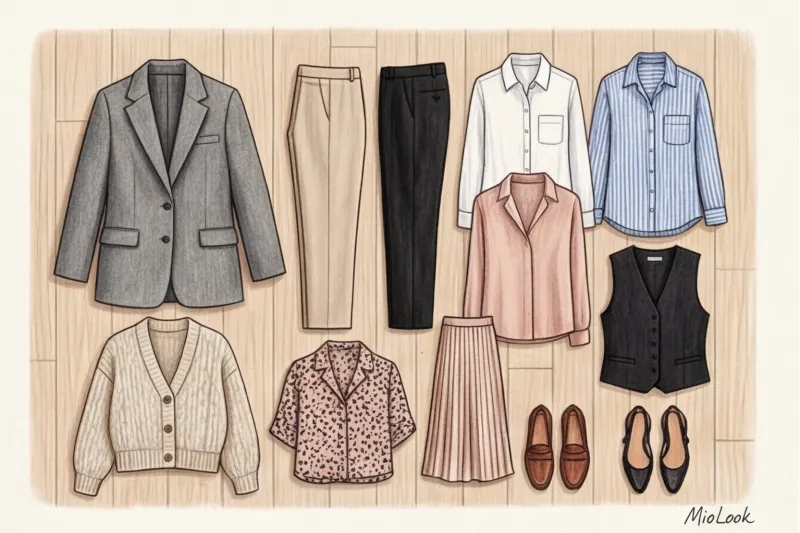
If your capsule wardrobe only contains 12-15 items, the secret to variety lies not in buying new items, but in micro-styling. Stylists use proportional changes to give the same outfit a new look every day.
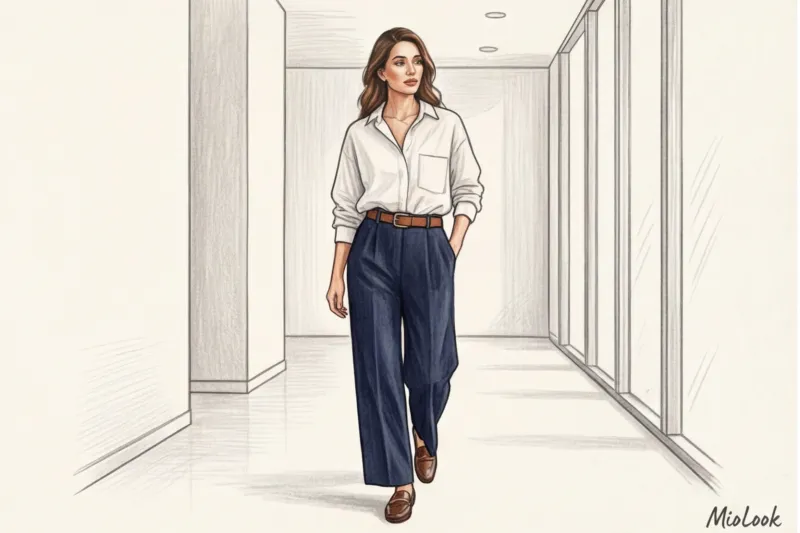
Here are three formulas that work without fail:
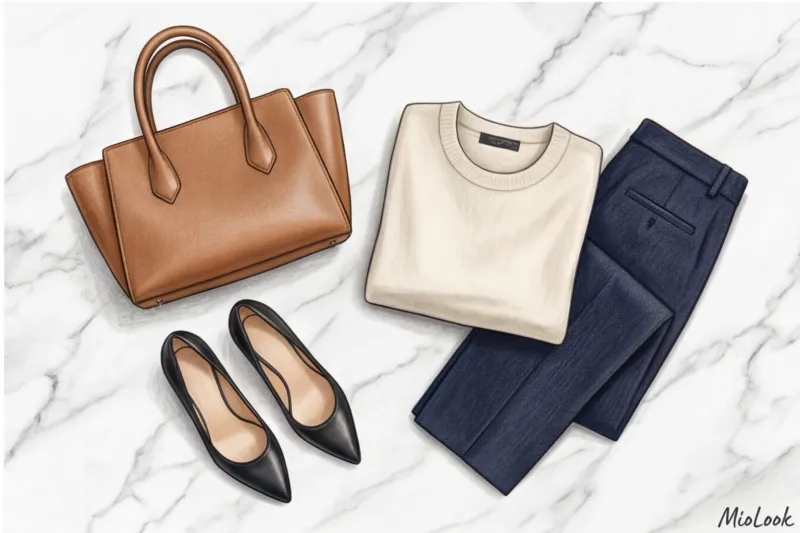
- Air Control (Micro Styling): Don't wear clothes "like a mannequin." Roll up the sleeves of your jacket, exposing your slender wrists (this visually lightens your silhouette). Pull your shirt collar up slightly. Use a "French tuck"—tuck in only the front of your blouse to define your waist, leaving the back open.
- Architectural layering: A thin cashmere turtleneck worn under a heavy shirt and a jacket over it. Or a basic sweater casually draped over a trench coat. This creates a complex texture that begs to be explored.
- Transformation with accessories: How do you go from a "boardroom" to a "business dinner" in two minutes? In the morning, you're wearing loafers and a voluminous tote bag, with a simple chain around your neck. In the evening, you swap your shoes for slingbacks, pull a soft clutch from the tote bag, and replace the chain with chunky, sculptural earrings. The basics (the suit) remain the same.
But there is a fair limitation here. Layering and casually tucked shirts are a great choice for smart casual and business casual. However, this doesn't work if you have a strict formal dress code (for example, in conservative banking, government agencies, or the courtroom). There, the rules dictate a crisp silhouette and buttoned-up shirts.
Digitizing Assets: How to Manage a Business Capsule with AI
Even the perfect capsule can become a source of stress if you're trying to remember every combination. Our memory is imperfect: we tend to forget about things on the lower shelves, falling into the trap of "blind spots."
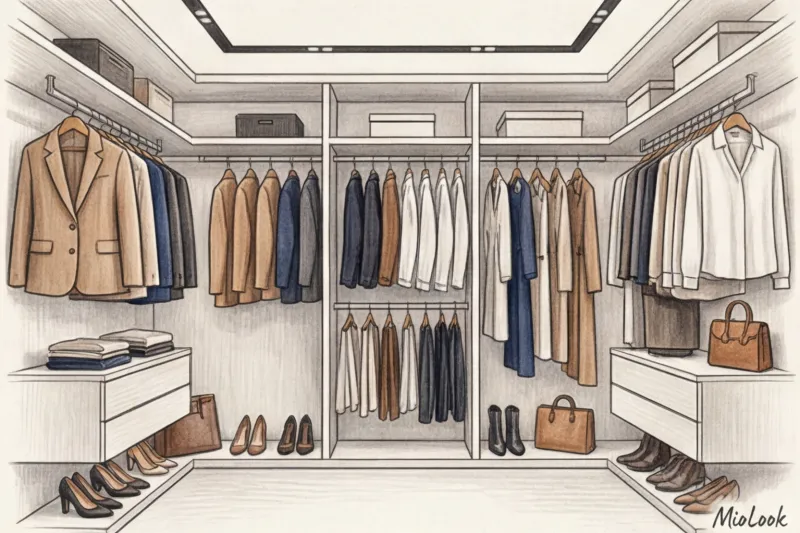
I've long ago introduced a digitalization rule for my clients. And here MioLook app becomes a real game-changer. You take photos of your base (those 12-15 items), and artificial intelligence acts as your personal assistant:
- Lookbooks for the week: On Sunday evenings, over a cup of coffee, you plan your outfits for the next five workdays in the app. In the morning, all you have to do is open your phone and put on your finished outfit.
- Wear tracking (CPW): AI analyzes how often you wear a particular skirt or jacket. You can clearly see your style math and understand which investments have paid off.
- Spot shopping: When you're in a store, you don't buy a fifth white blouse out of pure emotion. You open your virtual closet and check out what your potential purchase will pair with.
A practical checklist: building your office capsule from scratch
Reading articles about style doesn't work without concrete action. If you want to change how you're perceived at work, set aside a weekend and go through this process.
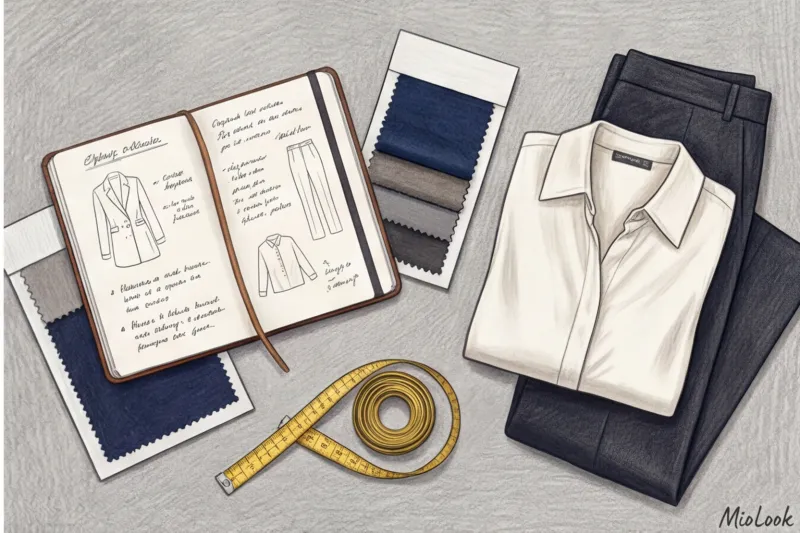
Step 1: Ruthless Elimination (Inventory)
Take out all your clothes. Remove anything with pilling, stubborn stains, creases, or shiny elbows. Remove any items that are currently too small. Only items that are 100% ready for use should remain in the capsule.
Step 2: Defining the color base
Choose two deep neutral colors as a base (for example, navy blue and camel, or graphite gray and cream). Add one accent color (deep burgundy, emerald, or muted blue). According to the PANTONE Institute, this palette ensures maximum compatibility.
Step 3: Investment Position Shopping List
What's missing from the perfect 15 items? Write down specific items. Not "buy something for fall," but "a structured camel-colored wool jacket with a minimum weight of 200 g/m²." Head to the store with just this list.
Your status at the office isn't about flashy logos. It's about impeccable fit, luxurious textures, and the peace of mind you feel in the morning. Stop buying clothes—start investing in your personal brand. And let technology help you manage those investments.