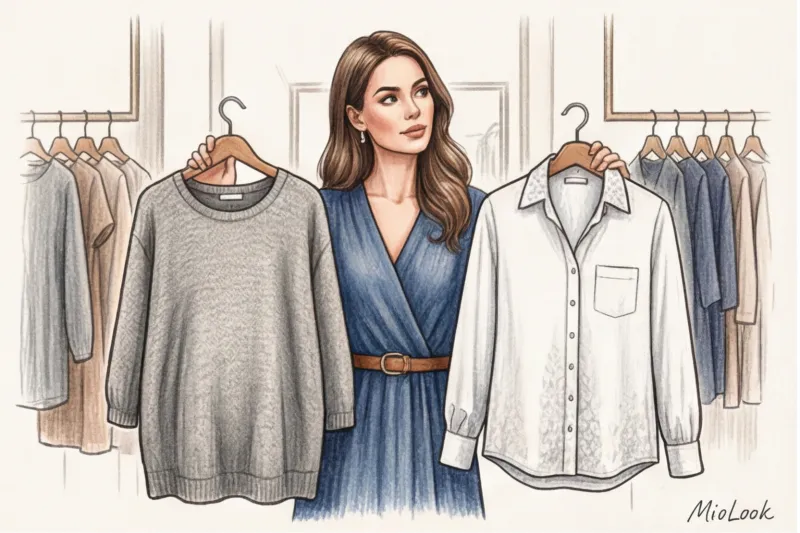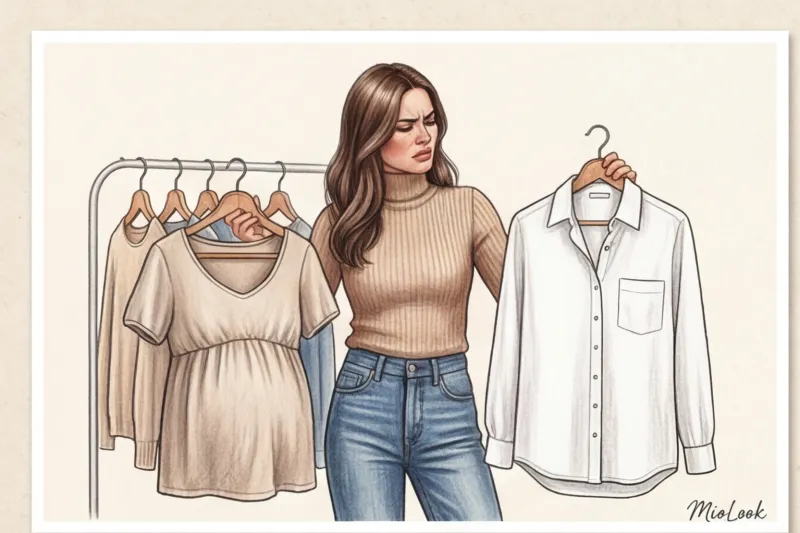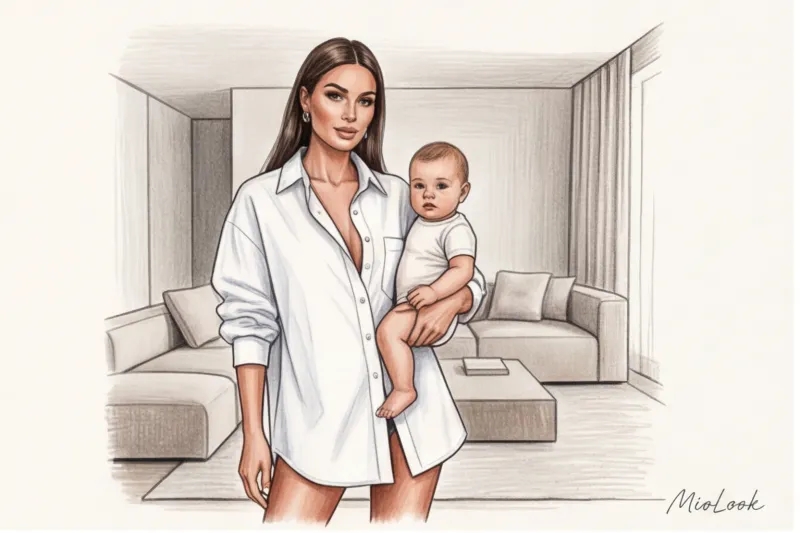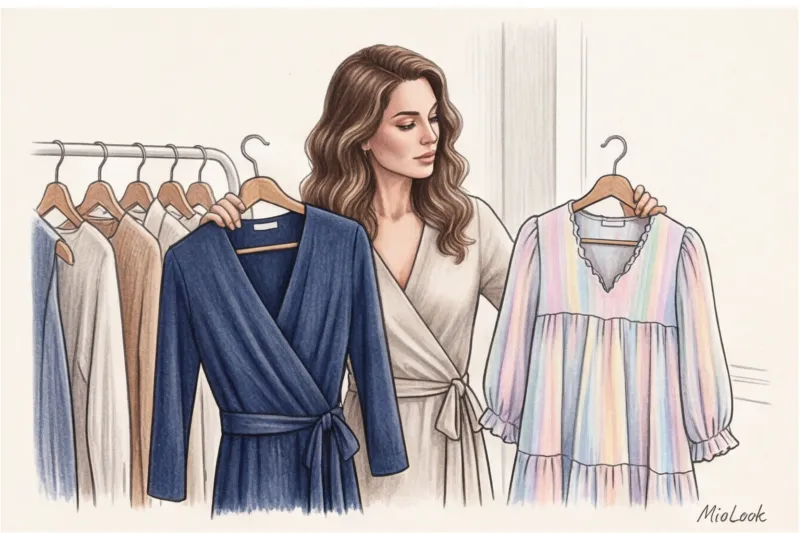
How many times will you wear a dress with hidden zippers on the chest after you've finished breastfeeding? My experience suggests the honest answer: exactly zero times. When it comes to the postpartum period, specialized clothes for nursing mothers (except for underwear) is, in most cases, a brilliant marketing myth. You don't need childish tunics with fold-over flaps. A simple oversized men's shirt or a high-quality cashmere V-neck jumper will do the job more elegantly and last for decades.
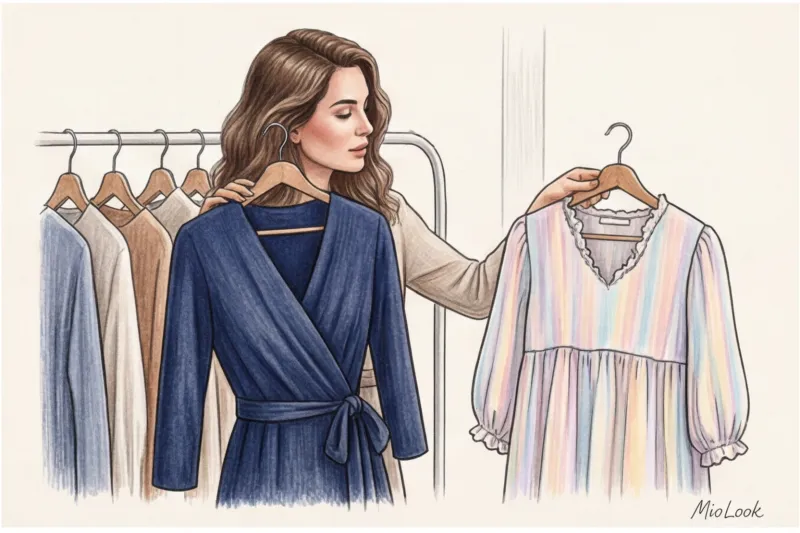
I recently put together a capsule wardrobe for a marketing client. She was transitioning to a hybrid work schedule while still breastfeeding, and she was practically crying over the maternity catalogs. We solved the problem differently: we used 80% of her pre-pregnancy wardrobe. We've already covered more about how to stay focused while expecting a baby in our A guide to stylish maternity clothes , but the lactation period requires a slightly different, more pragmatic strategy.
Nursing Clothes: Why You Should Avoid Specialty Departments
The maternity clothing industry is built on vulnerability. Brands understand that women's bodies are changing, and there's no time for shopping, so they offer "quick fixes." The problem is that these solutions are often made of cheap polyester. According to a WGSN (2024) report studying sustainable fashion, approximately 70% of specialized maternity and nursing clothing is made from low-quality synthetic blends that don't last even a single season of intensive washing.
Let's count Cost Per Wear (Price per outing). A specialized nursing dress for €90, which you'll wear 15 times over six months, will cost you €6 per outing. A thick cashmere cardigan from COS or Massimo Dutti for €150, which you'll wear with silk tops now and then with turtlenecks for the next three years (over 100 wears), costs only €1.50 per outing. Investing in casual, yet architecturally correct clothing is mathematically more cost-effective.
"Maintaining your pre-pregnancy aesthetic isn't a matter of vanity. It's a powerful psychological anchor. By returning to your familiar silhouettes, fabrics, and style, you help your psyche adapt more quickly to your new role, avoiding the postpartum blues," says Camille Durand.
Ready to get started?
Try a free plan—no commitment—and learn how to style everyday pieces in new ways.
Get access — €0.99 onceBasic underwear: the only item that requires replacement
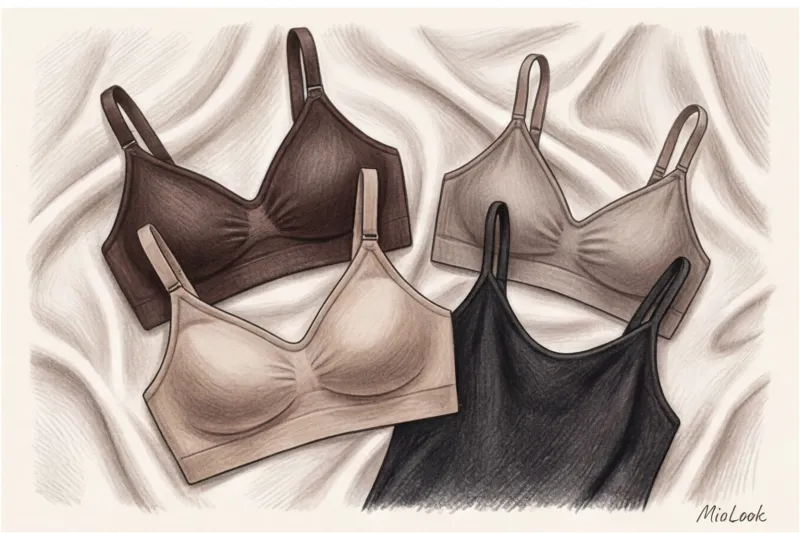
While we can adapt regular clothing, basic lingerie is one category where specialized solutions are essential. A cheap cotton top from a mass-market store won't provide the necessary support for fuller breasts and will quickly stretch out.
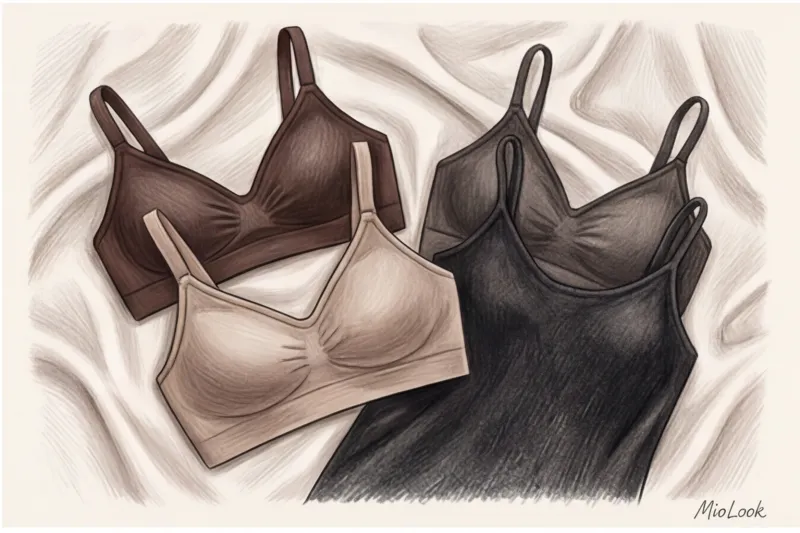
When choosing a nursing bra, avoid pure cotton. With hormonal fluctuations and milk let-down, cotton gets wet quickly and takes a long time to dry, which can lead to hypothermia. Look for it in the ingredients list. micromodal or viscose Ecovero (at least 80% of the composition). These technologically advanced fabrics wick away moisture and are gentle on sensitive skin.
As for color, I strongly advise against buying white underwear. Frequent washing at 60 degrees (and you'll have to wash it often due to milk stains or lanolin-based creams) will quickly cause whites to acquire a dull gray or yellowish undertone. Your palette should be nude, coffee, chocolate, and black.
Fair Limit: Avoid expensive bras with hard underwires in the first month after giving birth. Your breast size will fluctuate unpredictably, and underwires can cause engorgement. Seamless, soft tops are your only choice for the first few weeks.
T-shirts with nutrition secrets as an architectural base for the image
A nursing tank with thin straps and detachable cups is your secret agent. I always use them as a base layer underneath regular sweaters, sweatshirts, and silk blouses.
The mechanics are simple: when you need to feed your baby in a cafe or park, simply lift up your favorite cashmere sweater and unfasten the strap of your tank top. This keeps your stomach and lower back covered. This technique instantly alleviates anxiety about feeding in public and allows you to wear any "regular" top, even the shortest and most voluminous.
Wardrobe Architecture: How to Adapt Your Favorite Items
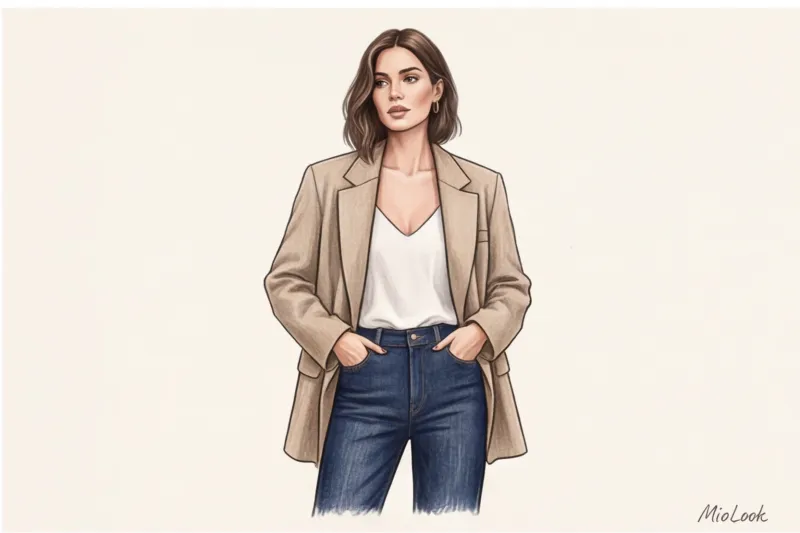
When working as a stylist on fashion shoots with new mothers, I often use the two-layer rule. A basic fitted tank top (or a low-cut bodysuit) plus a voluminous top: an unbuttoned menswear shirt, a tailored jacket, or a long cardigan. Layering creates vertical lines that visually elongate the silhouette and camouflage any lingering bumps.
A special nod to the iconic silhouette created by Diane von Furstenberg (DVF) in 1974. Wrap dress — is a brilliant engineering solution for a woman's changing figure. It adapts to you if you've gained 5 kg, and will fit just as perfectly once you've lost them. The V-neckline is easily adjustable, making access to your bust a snap.
Take stock of your closet. These might be suitable for you:
- Any shirt dresses with buttons (unbuttoned to the waist).
- Jumpers with a deep V-neck (worn over a nursing top).
- Loose chunky knit cardigans.
Access to MioLook for €0.99 — one-time payment
A smart AI stylist will select the perfect look from your own clothes, taking into account your need for comfort.
Get access — €0.99 onceFabrics and textures: practicality that conceals stains
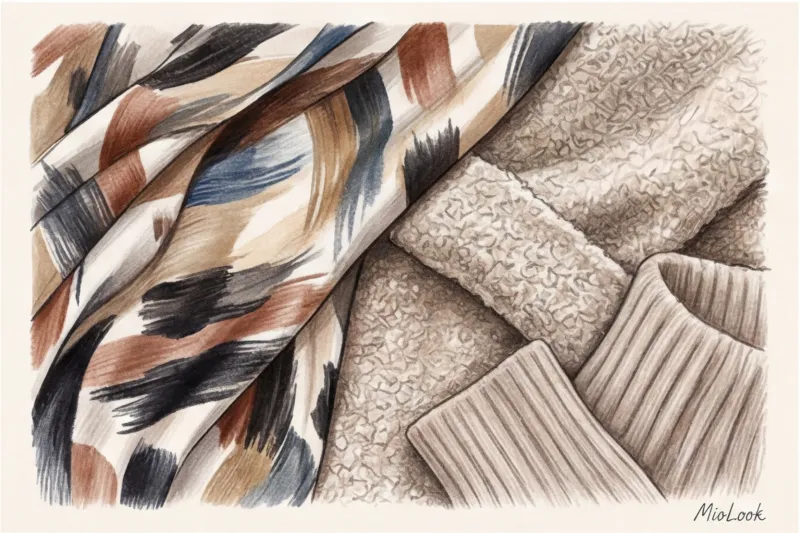
Motherhood is a time when fabric is everything. Smooth, solid-color silk or thin, pastel-colored viscose are your worst enemies right now. Every drop of milk, water, or spit-up leaves a noticeable mark, transforming a classy look into a sloppy one.
Your natural camouflage is all about complex patterns and the right textures. A subtle print (houndstooth, ripples, abstract, leopard in muted tones) visually breaks up a stain, making it completely invisible. If you spill a little tea on yourself at breakfast, an abstract print will cover it up until the evening.
When it comes to textures, consider bouclé, tweed, and thick ribbed knits. They require no ironing, are easy to clean (just a damp cloth), and, most importantly, hold their shape. When you're only getting three hours of sleep a night, the structured fabric of a jacket or cardigan can pull together a relaxed look and make it look classy.
Life Scenarios: From Home Aesthetics to Returning to the Office
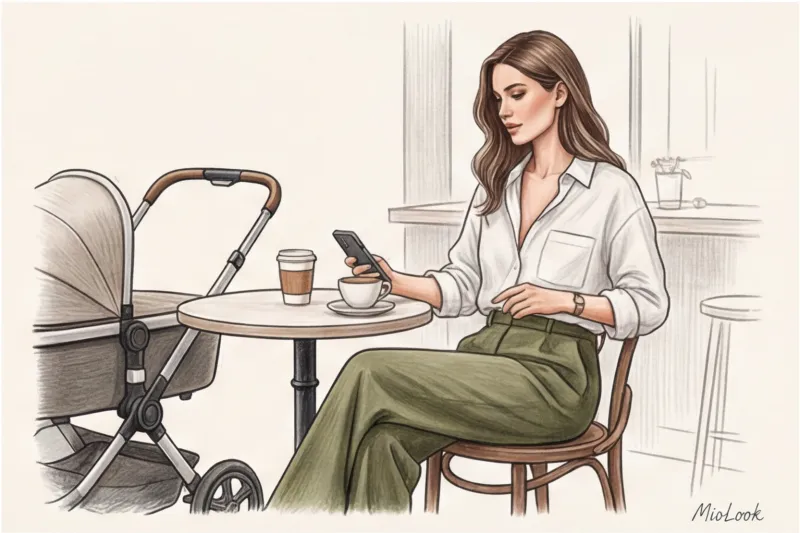
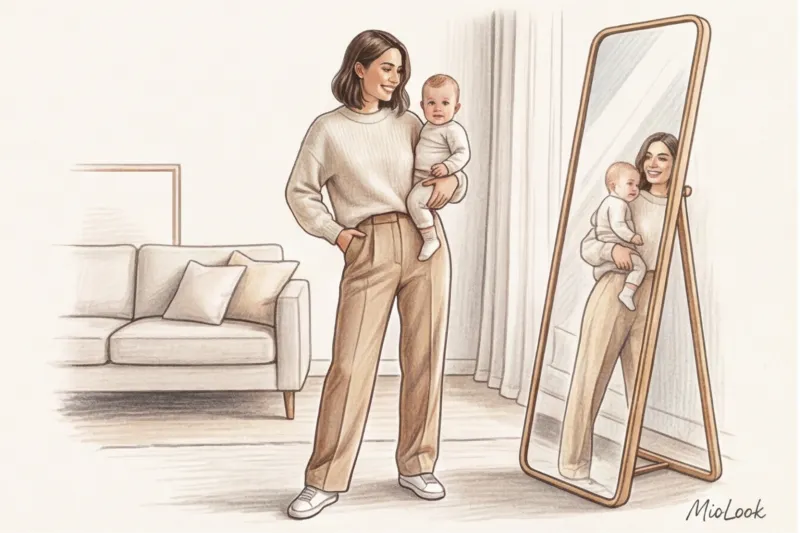
Style is always contextual. Swap your husband's stretched-out T-shirts for quality loungewear. Menswear-inspired silk or viscose pajamas (with a button-down shirt) or thick knit two-piece suits instantly transform your self-image. You look in the mirror and see a well-groomed woman, not a tired, functional worker.
For long strolls with a stroller, contrasting volumes are ideal. Wear a comfortable tracksuit with a zip-up hoodie (the zipper allows for quick access for feeding in the park), and layer a classic oversized trench coat or structured coat over it. The athletic base layer provides comfort, while the classic top layer adds a touch of class.
Whether you're returning to a hybrid office or attending business meetings, a business casual dress code can easily be tailored to your needs. Wear wide, high-waisted palazzo pants, a tucked-in silk button-down, and a relaxed blazer. This outfit makes it easy to pump during a break or feed your baby if your nanny drops them off for lunch.
Checklist: 5 Things to Make a Smooth Transition That Will Last for Years
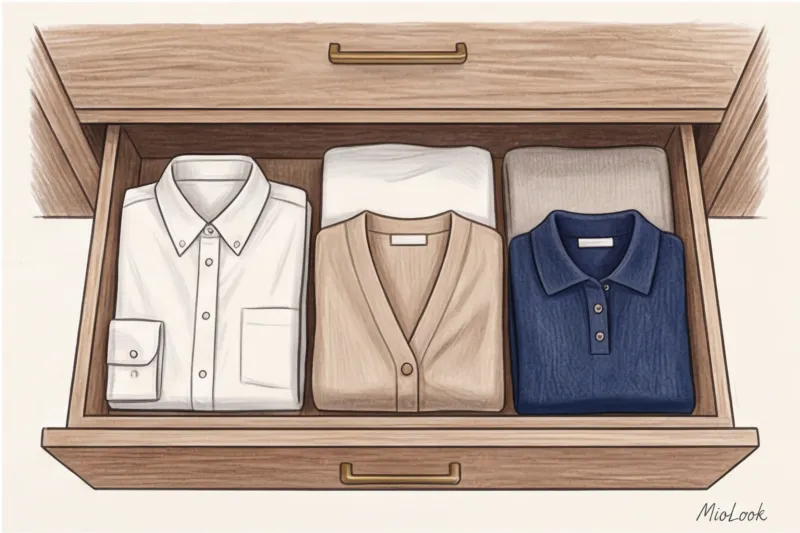
To assemble a functional capsule, you don't need to buy half the store's worth. Here are 5 basic elements that will pay for themselves many times over and stay with you after you finish breastfeeding:
- A voluminous shirt made of thick cotton. Look for a weight of 180 g/m² or higher; it's not see-through and keeps your collar in place. Basic shirts are typically priced at a budget price of around €40–€70.
- Cashmere or merino cardigan. Button-down, slightly loose fit. A great investment in the €100–€250 range.
- Wrap midi dress. Made of thick, flowing viscose. Don't confuse it with fine knitwear, which will highlight every crease.
- Knitted suit with polo top. A sweater with a 1/4 zip collar is a trend of recent seasons, which is ideal for nursing mothers.
- Oversized straight cut jacket. Conceals changes in figure, structures shoulders. But attention: If you're shorter than 160 cm and have an apple-shaped figure, a stiff, oversized jacket immediately after giving birth can make you look boxy. In this case, replace it with a thick cardigan coat.
How MioLook helps organize a nursing mother's wardrobe
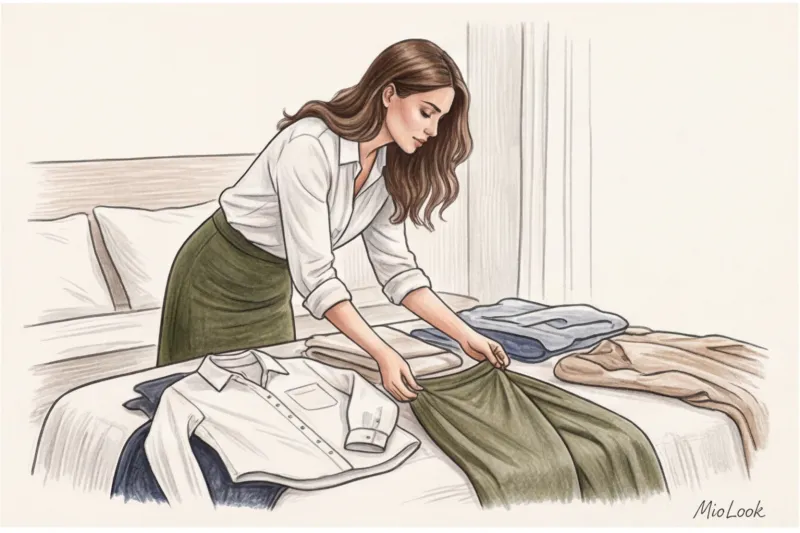
When you're holding a baby, the last thing you want to do is stand in front of an open cabinet trying to remember which items are best for feeding. This is where technology comes in.
Instead of buying new things, digitize what you already have. With the smart wardrobe feature in MioLook You can add tags like "buttons," "plunging neckline," and "wrap." The app will filter out all clothing that allows easy access to the breasts.
What's more, an AI stylist can help you create layered outfits (like the nursing top + sweater + jacket principle) on your phone screen while you're breastfeeding. You don't have to physically try on dozens of combinations, wasting precious energy. You can head to your closet for a ready-made, tried-and-true solution.
Invest in quality, wear your favorite pieces, and don't let marketing gimmicks deprive you of the joy of being stylish.