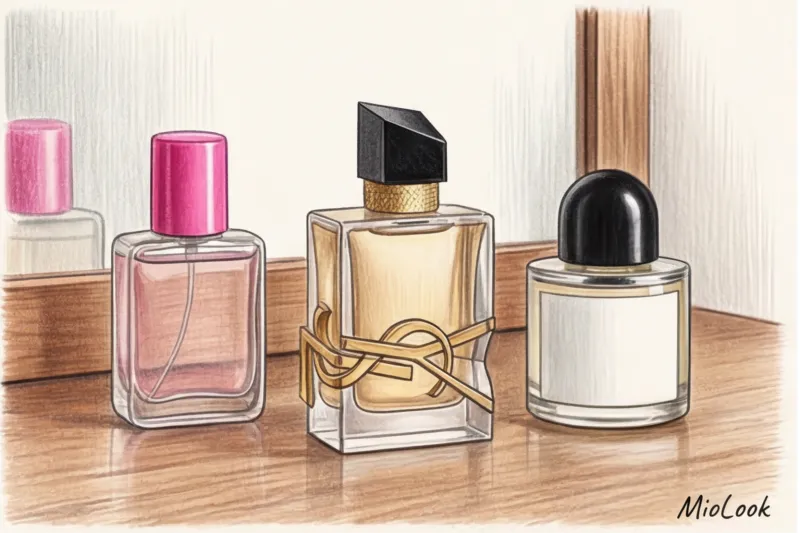
Imagine this: you walk into a meeting room in an impeccably tailored heavy wool suit, sit down at the table, ready to negotiate a major contract... and the whole impression is ruined by the suffocating cloud of sweet vanilla caramel you've brought with you. Your visual appearance conveys sternness and distance, while your scent screams frivolity and a desire to please.
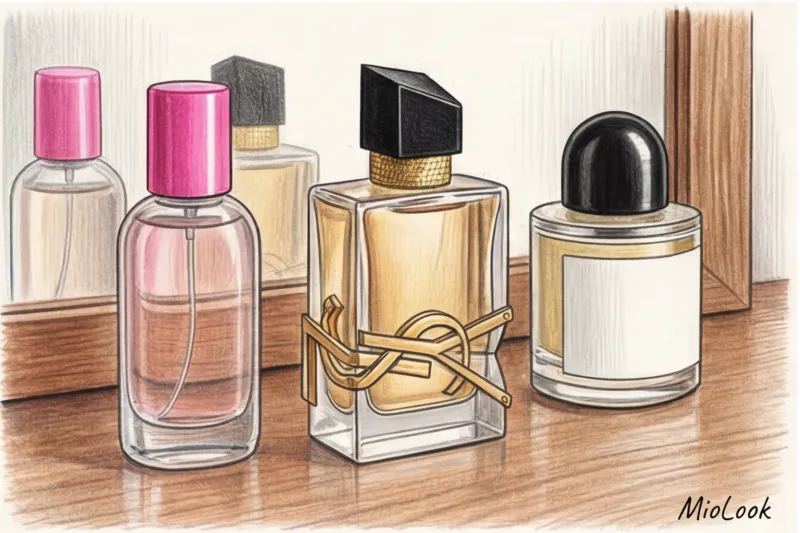
Fragrance is the invisible architecture of your style. Over 12 years of working as an image consultant and colorist, I've learned one thing: perfume can elevate a mediocre image or completely destroy a status symbol. One of my clients, a brilliant corporate lawyer, wore a recognizable luxury floral for a long time. During negotiations, she often complained that her opponents subconsciously insubordinated her. As soon as we switched her perfume to a niche woody-mineral scent with notes of ozone and metal, the distance was restored. She began to feel more confident, and her image acquired the missing toughness.
Today we'll explore the differences between niche and luxury perfumes, not just in terms of scents, but as a tool for impression management in business and everyday life. I've already covered the basic steps in more detail in the article. Niche Perfumery: Where to Start , and now we'll dig into the very essence of the industry.
The Fragrance Triangle: Mass Market, Luxury, and Niche
The perfume market can be represented as a pyramid, with each level serving its own purpose. The difference between them lies not only in price but also in what you pay for at the checkout.
According to The Fragrance Foundation's analytical reports over the past few years, the economics of a bottle vary dramatically across different segments. In luxury, you're buying a dream, a celebrity's face, and a heavy glass bottle. In niche, you're paying for the perfumer's vision and rare ingredients. The quantities speak for themselves: while luxury hits are produced in millions of bottles, niche brands often limit their production to runs of 100 to 5,000 bottles worldwide.
Mass market: accessibility and understandable emotions
The goal of mass-market fragrances is to sell quickly and appeal to as many people as possible from the first sniff. There's no time for a long development. The scent you smell in the tester in the first five seconds is how it will smell on you all day (or for the few hours it lasts). To reduce production costs, universal, inexpensive bases are used. Mass-market fragrances rarely create trends—they quickly copy them, adapting complex niche or luxury hits to the average taste.
Luxury Perfumes: Status, Focus Groups, and Gloss
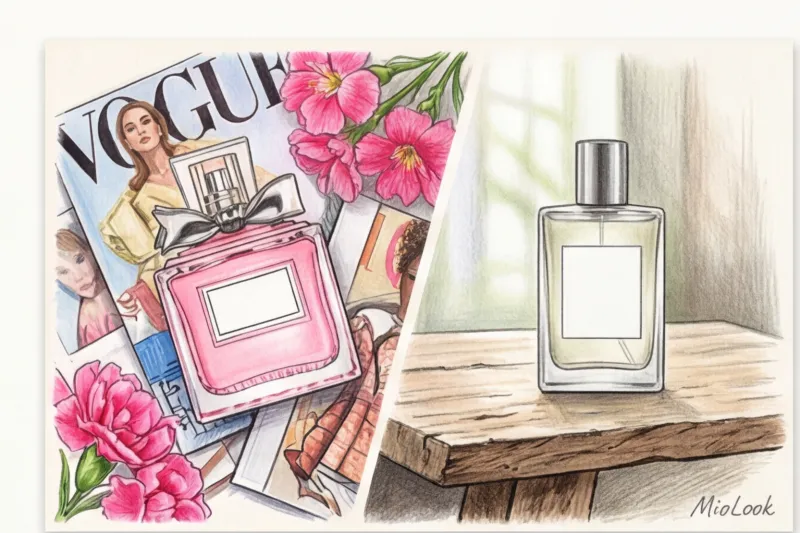
Chanel, Dior, Yves Saint Laurent—these are fragrances created by great fashion houses. Their main problem, and simultaneously their strength, is the total control of focus groups. Before a fragrance hits the shelves, it is tested on thousands of people. The focus group's verdict is harsh: the perfume must not be rejected by anyone.
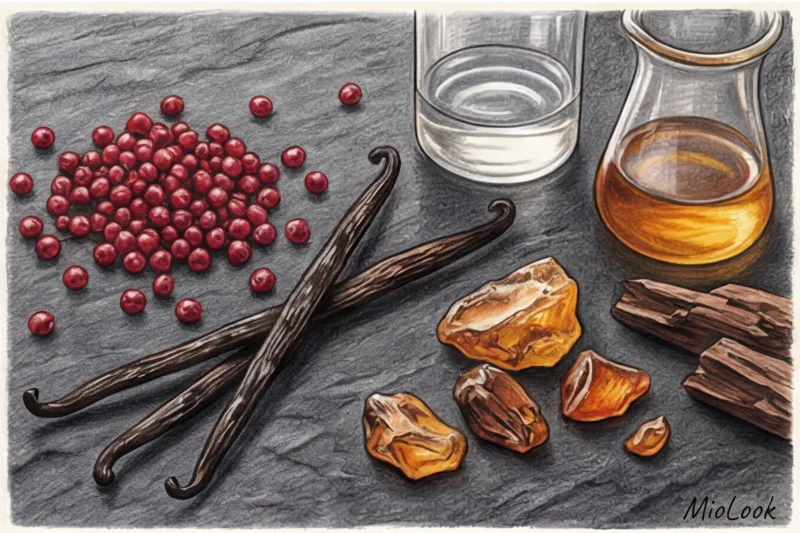
This is why luxury often seems "recognizable" to us. And herein lies the trap for the expert's personal brand. When you show up to a meeting wearing a popular luxury fragrance, your conversation partner may subconsciously recall their ex-wife, strict teacher, or obsessive colleague, all of whom wore the same perfume. A recognizable scent deprives you of individuality.
Access to MioLook for €0.99 — one-time payment
A smart AI stylist will select the perfect look to complement your perfume wardrobe.
Get access — €0.99 onceThe Main Difference Between Niche and Luxury Perfumes: Debunking the Myths
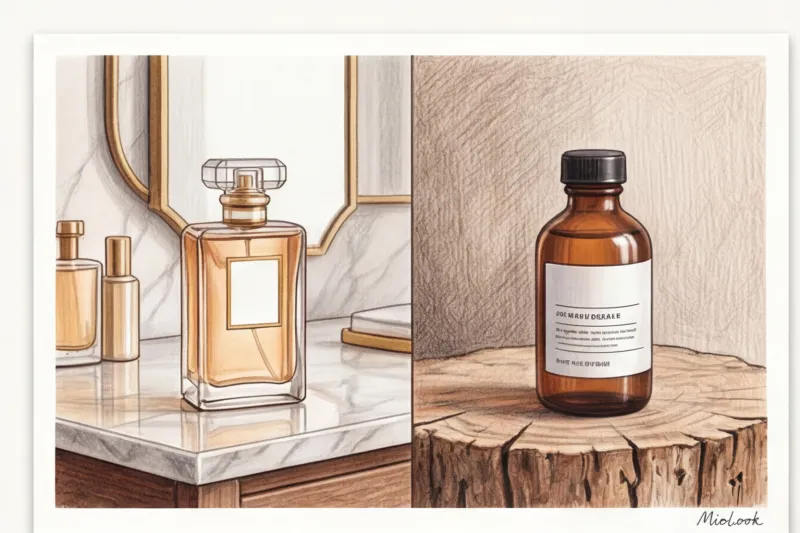
A niche (or selective) perfume begins where marketing briefs end. A perfumer has complete creative freedom. They don't need to please millions. If a creator wants to convey the atmosphere of a Catholic church on a damp November day, they'll mix incense, damp earth, and wet stone. If they want to recreate the scent of a freshly ironed cotton shirt, they'll use aldehydes and musk.
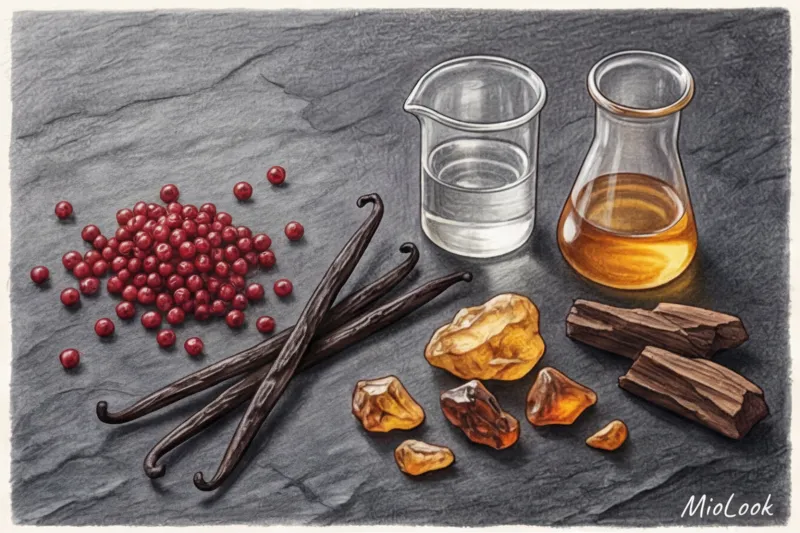
Nisha tells a story. It can smell strange: like iodine, bandages, a hot iron, sea salt on tanned skin, or asphalt after rain. It's art in a bottle that requires a trained nose.
Myth: Selective contains only natural ingredients
It's time to dispel the biggest stereotype I constantly hear from my clients: "Mass-market products are all about chemicals, and niche products are expensive because they only use natural essential oils." This is absolutely not true!
“Without synthetics, there is no modern perfumery, there is only aromatherapy,” as Jean-Claude Ellena, former in-house perfumer for Hermès, aptly noted.
The most conceptual, sillage-laden, and expensive fragrances of our time are built on cutting-edge synthetic molecules. Ambroxan, Iso E Super, Cashmeran—these substances don't exist in nature. It is precisely this high-tech chemistry (which costs an exorbitant amount of money to develop) that gives fragrances their diffusivity, incredible longevity, and abstract notes. Furthermore, the International Fragrance Association (IFRA) strictly restricts the use of many natural ingredients (for example, natural oakmoss or rose absolute) due to their high allergenicity. Therefore, the modern niche is a triumph of science, not just a bunch of herbs steeped in alcohol.
Pyramid, sillage, and longevity: how they actually work
We're accustomed to the classic olfactory pyramid: top notes (citrus), heart notes (florals), and base notes (woods, musk). Luxe fragrances typically adhere strictly to this rule. Niche, however, often breaks this structure. A fragrance can unfold linearly, with a single, powerful note, or chaotically, shifting from base to top notes and back again throughout the day.
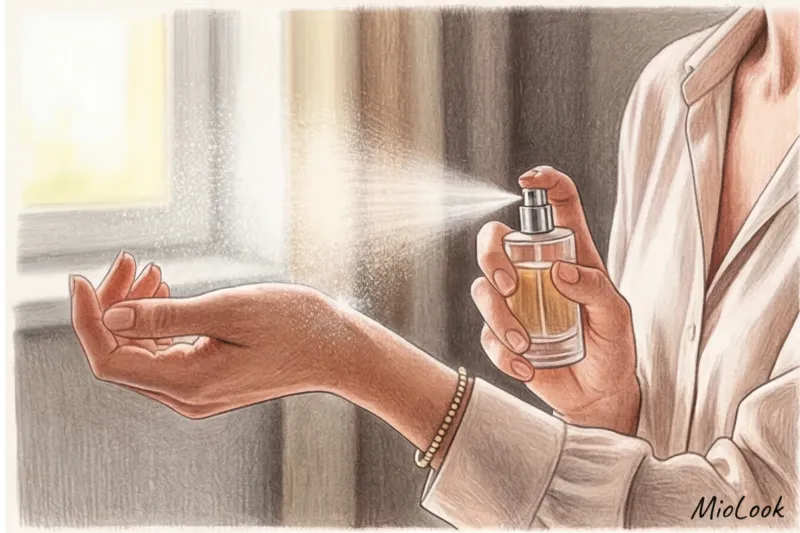
Another myth is equating longevity with quality. A fragrance doesn't have to last 24 hours! The physics of molecular volatility is inflexible: natural citrus notes (bergamot, lemon) evaporate from the skin within 1-2 hours. If your "fresh lemon" perfume smells like that for 24 hours, it's because of the heavy synthetic fixatives, which often distort the original intent.
In my practice, when selecting fragrances for clients, we always consider their skin chemistry. On people with "hot" skin (those with close-lying blood vessels and easily flushed skin), fragrances develop rapidly, absorbing the top notes in minutes and immediately sinking into a dense base. On "cool" skin, a perfume can sound harsh and monotonous for hours, never revealing its warm base notes. That's why buying a niche "blindly" based on reviews is always a gamble.
Your perfect look starts here
Join thousands of users who look flawless every day with MioLook, choosing clothes to match their mood and scent.
Get access — €0.99 oncePerfume wardrobe: fragrance as part of image and color type
As a certified colorist, I've developed my own method for linking visual and olfactory imagery. The scent should complement the lines of your appearance and the texture of your clothing.
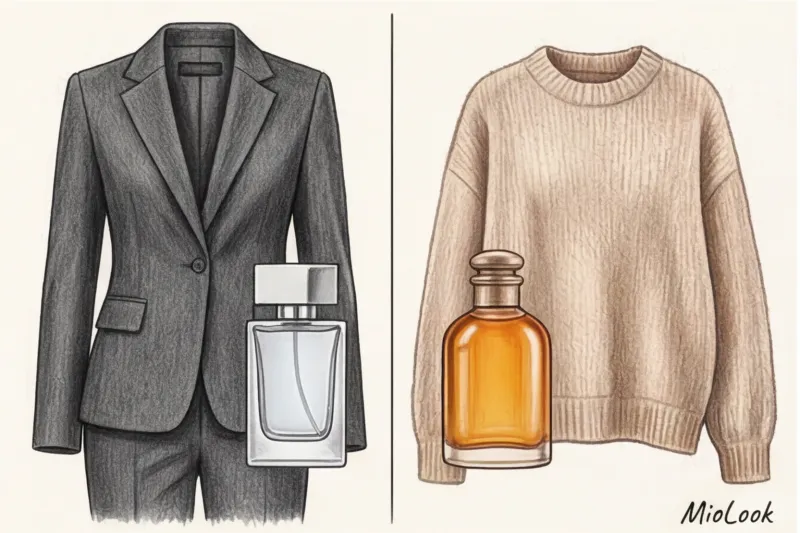
For example, contrasting "winter" types with a striking appearance and graphic features are perfectly suited to cool aldehydes, crisp white flowers (tuberose, jasmine), and piquant chypres. They emphasize stateliness and distance. Meanwhile, soft "autumn" types with warm skin tones are more comfortable wearing viscous resins, amber, spices, and dry woods.
I personally experimented with the development of the same fragrance on different fabrics. If you spray a rich amber perfume on a cashmere sweater, the fabric will "grab" the base notes and leave them like a warm, cozy cocoon for days. But if you spray the same perfume on smooth, cool silk, the scent will become more tart and detached, with the volatile top notes taking center stage. If you're using a smart wardrobe, MioLook To plan your weekly capsule wardrobe, try adding a note about the perfume you're wearing to each outfit—you'll be surprised how much scent changes the way you perceive the same white shirt.
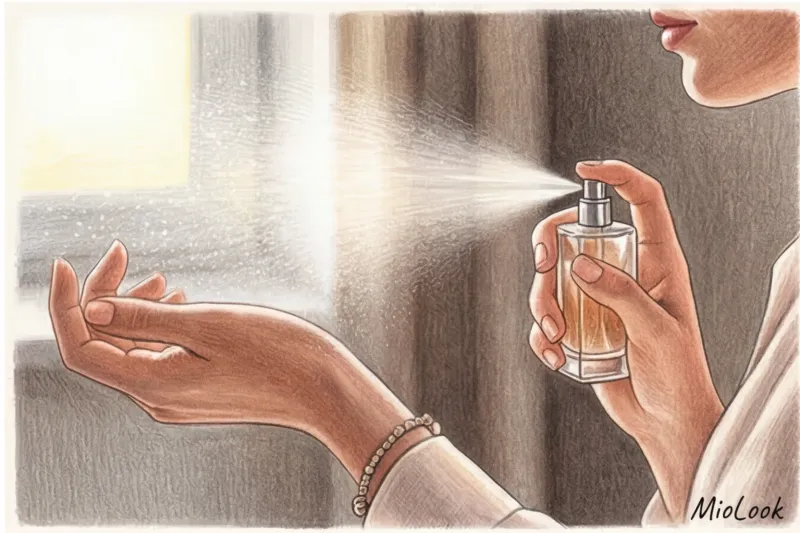
Of course, this method of matching based on color type isn't a strict rule. It's more of a harmonizing tool when you're unsure where to start searching for "your" perfume.
How to Choose Your First Selective Fragrance: A Checklist
If you've decided to move from luxury to niche, forget all about your previous perfume buying habits. No impulse buys at the checkout.
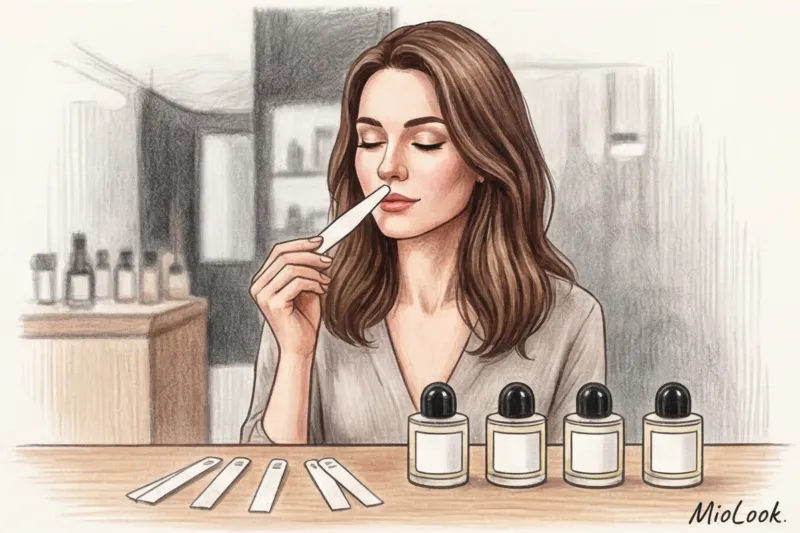
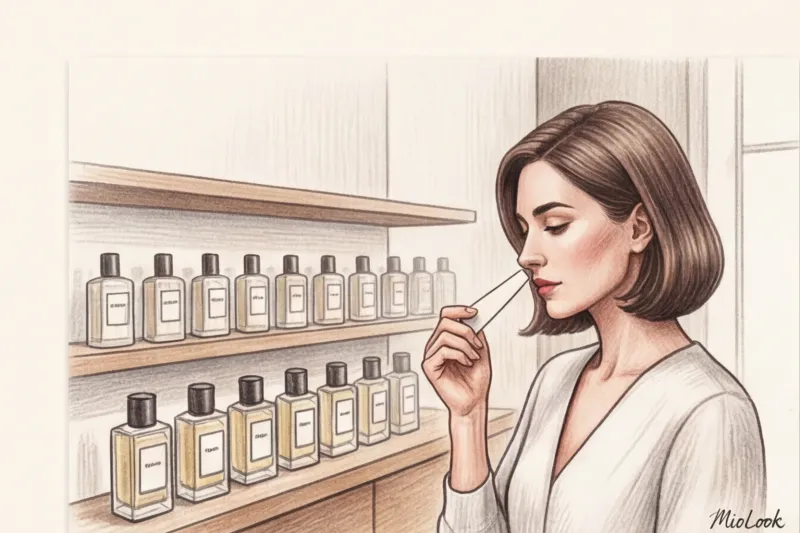
- Start with decanters (samples). Buy 3-4 2ml samples. This will last for several days of full wear.
- The 24-hour rule. In the store, spray the fragrance on your skin (not on a blotter!) and leave. You should live with it for a day, take a shower, and go to bed. Only then will you know if the base is causing a headache. Dozens of my clients have made this mistake: they bought an expensive bottle, impressed by the first 15 minutes of scent, only to have the scent transform into an unwashed body odor an hour later due to its musky undertones.
- Test in different weather conditions. Humidity and temperature critically affect the development of fragrances. Chypres are wonderful in damp autumn weather, while heavy oriental fragrances, paradoxically, develop stunningly beautifully and dryly in 30-degree heat.
Ready to get started?
Try the MioLook free plan—no commitments. Organize your style in one app.
Get access — €0.99 onceRookie Mistakes: Perfume Etiquette in the Office
The most dangerous pitfall of niche perfumery is overdose. Due to the high concentration of fragrances, our brain quickly activates a protective mechanism called olfactory blindness. You stop smelling your perfume after 20 minutes and take "one more spray." Meanwhile, your colleagues in the open-plan office are quietly suffocating.
One case from the practice of a colleague of mine, a clinical psychologist, became a textbook example for me. A new client arrived, generously doused with the ultra-popular Baccarat Rouge 540 (a fragrance known for its aggressive iodine-candy trail). The scent was so thick that it filled the entire small office, physically violating the therapist's boundaries. The trusting atmosphere was shattered—the psychologist was struggling with her migraine rather than listening to her client.
In enclosed spaces (offices, study rooms, cars), it's strictly recommended to avoid using dense ouds, pronounced animalic (animal musks), and cloying gourmand fragrances. Mineral, subtle woody, green, or fougere compositions are ideal for a business environment.
Where to apply perfume for a delicate trail?
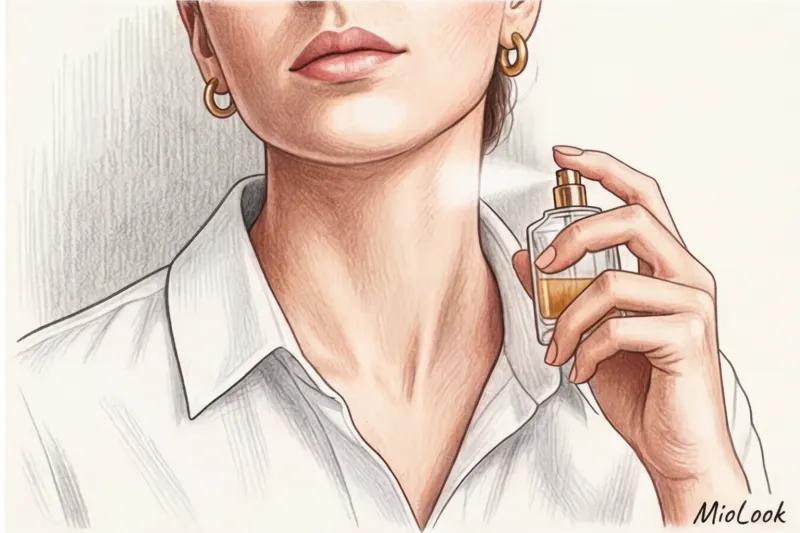
Forget about spraying generously on your chest and neck—that'll send the scent straight into your nose. Apply microdoses to the back of your neck (under your hair), the nape of your neck, or the lining of your jacket. This way, the scent will gently linger only as you move, creating an aura rather than a gassy attack.
Perfume is your invisible message to the world. Mass-market says, "I'm like everyone else." Luxury declares, "I'm successful and follow the rules." Niche, on the other hand, intrigues: "I know who I am, and I don't need to prove anything to anyone." Choose your scent consciously, because it will remain in people's memories far longer than the color of your suit.