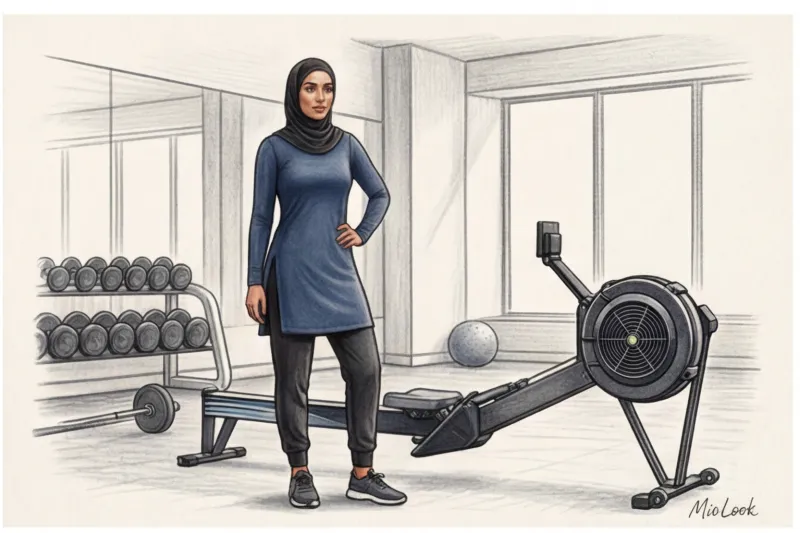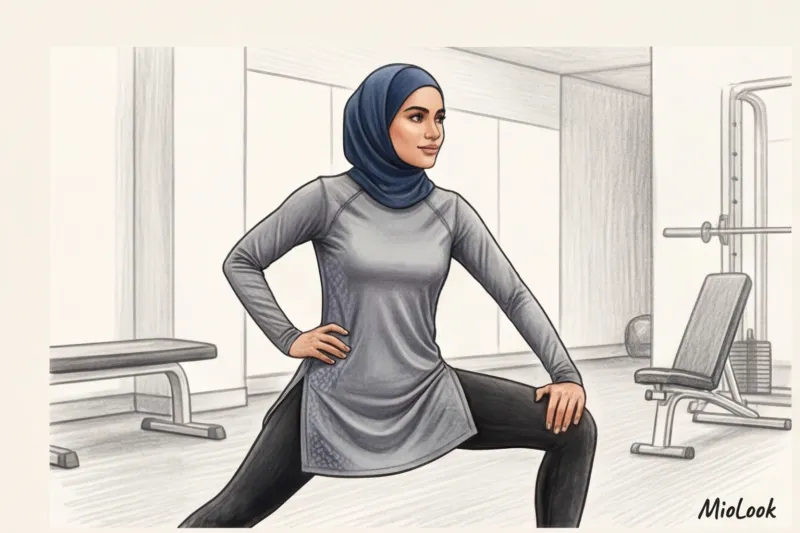
The longer and looser your activewear, the more modest you look. This is perhaps the most dangerous fitness fashion misconception I encounter in my styling practice. Modest activewear today isn't just a piece of fabric that conceals your figure. It's high-tech gear with complex architecture.
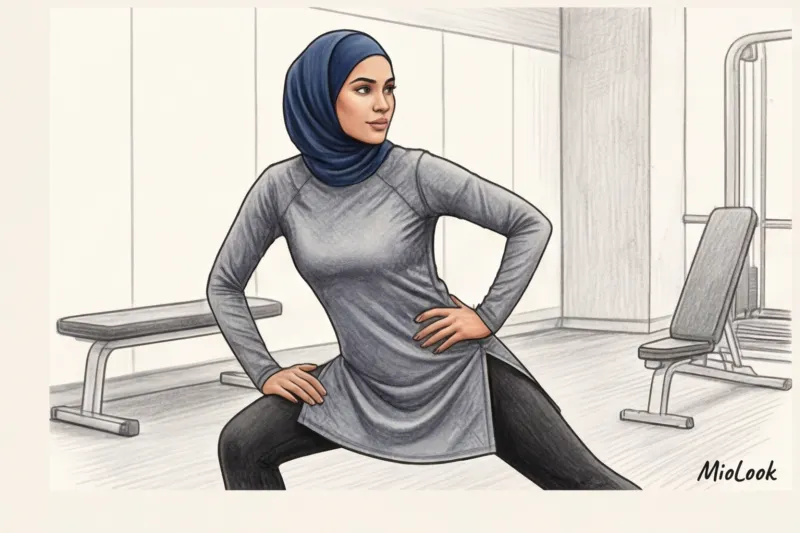
When we talk about training, sports tunic for Muslim women should be considered through the prism of biomechanics. The wrong length or the lack of proper cuts not only create discomfort—they can lead to injury on the treadmill and, paradoxically, undermine the very modesty for which they were purchased. We've covered the basic principles of creating such a wardrobe in more detail in our The complete guide to sportswear for Muslim women , and today I propose to take a detailed look at one of the main elements - the ideal tunic.
A Sports Tunic for Muslim Women: Why a Regular Long T-Shirt Is a Fitness Failure
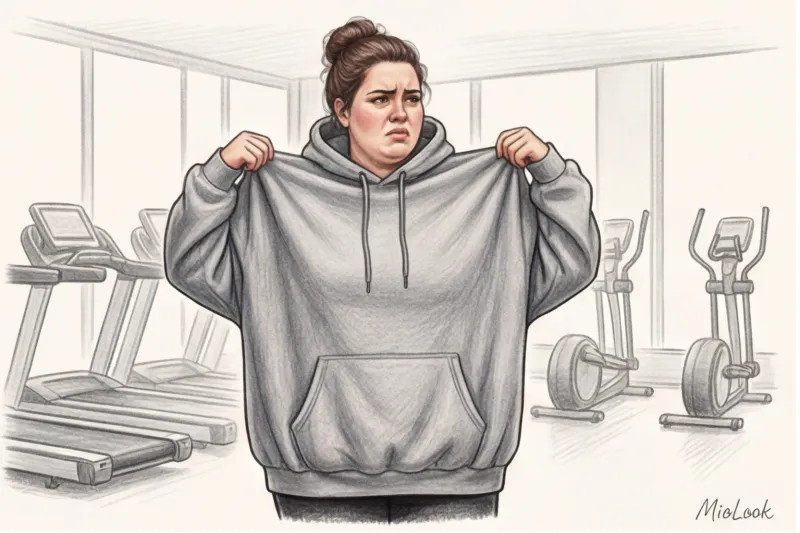
My client, Leyla, once confessed that she hated running. The reason was simple: she was training in a men's hoodie three sizes too big. As she moved, the thick fabric would ride up, gathering like a huge "life preserver" at her waist. Instead of hiding her hips, this voluminous roll of fabric created a powerful accent. Furthermore, Leyla had to tug the hem down every 100 meters, disrupting her breathing and her pace.
The design of a proper sports tunic is radically different from a basic long-sleeve top. In everyday wear, the shoulder seam is often dropped (drop shoulder), and the hem is cut straight. In the gym, baggy clothing with this cut is your enemy. When working out on an elliptical or rowing machine, excess fabric can get caught in the moving parts. A specialized cut takes into account the tension vectors of the fabric as the joints bend, leaving air between the body and the material without creating a parachute effect.
Access to MioLook for €0.99 — one-time payment
A smart AI stylist will find the perfect look for your workouts.
Get access — €0.99 onceThe Anatomy of the Ideal Length: How to Find the Balance Between Modesty and Biomechanics
Let's break the cardinal rule that mass-market brands try to force upon us: maximum length doesn't equal maximum modesty. According to the principles of sports biomechanics, the stride range of motion during running or lunges requires a certain amount of space. If the hem of your tunic falls to your knees and has no slits, the fabric will stretch over your hips with every step, outlining them down to the millimeter.
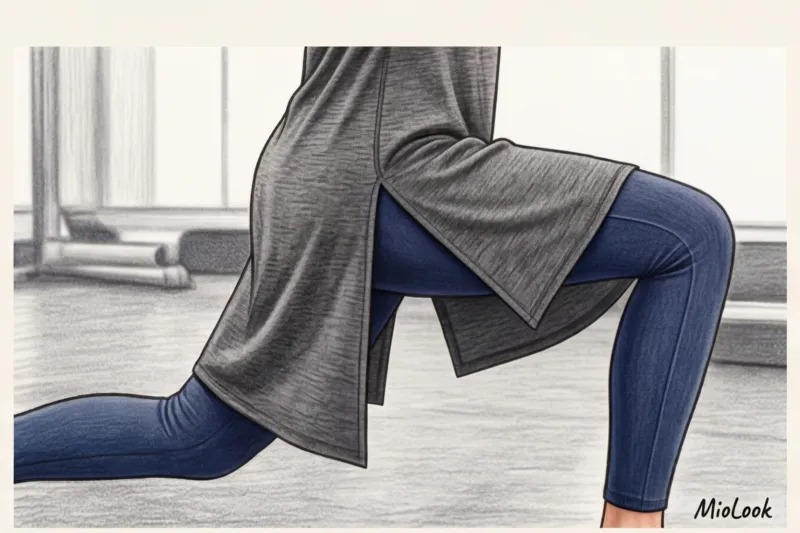
The golden ratio for length, which I've developed over years of working with modest wardrobes, is that the hem should end exactly 10–15 cm below the widest line of the hip. This is the exact point where the fabric reliably covers the curves but doesn't yet block the knee joint.
Asymmetrical cuts and side slits: a stylist's secret weapon
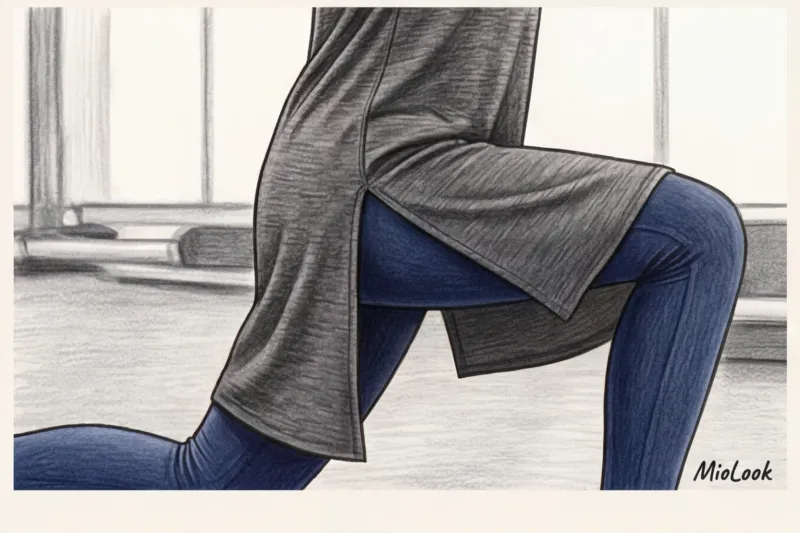
A longer back hem (known professionally as a drop-tail hem) is essential if you're doing squats or bending. When you lower your hips, the back of any shirt inevitably rises. A drop-tail hem compensates for this rise.
Side slits, 15–20 cm high, aren't decorative, but rather an engineering necessity. They relieve tension from the front of the tunic, preventing the "tight pencil" effect, where the fabric rips at the seams with every deep squat.
Technological fabrics protect your boundaries: say no to the wet-shirt effect
A few years ago, I took a personal test drive: I wore a thick cotton tunic to a high-intensity cycling session. After just 20 minutes, the cotton had absorbed sweat, felt heavy, and clung to my body like a second skin. Every contour of the underwear became apparent. Cotton is the worst material for modest sportswear.
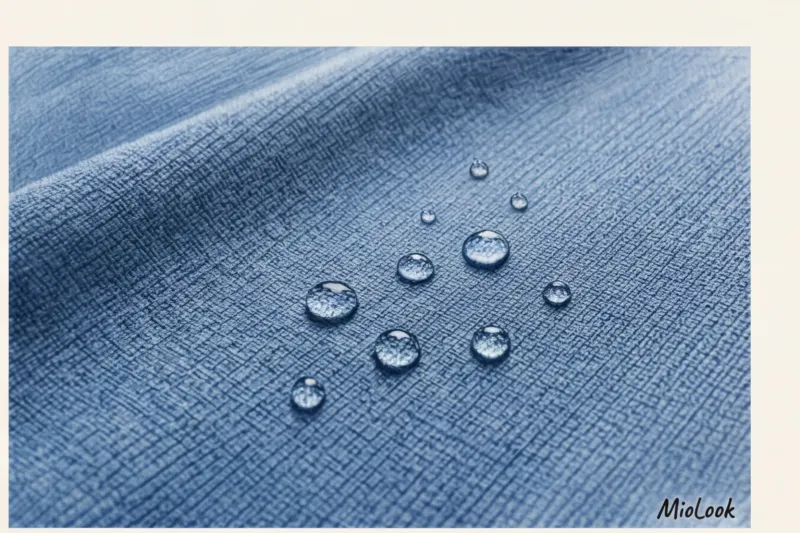
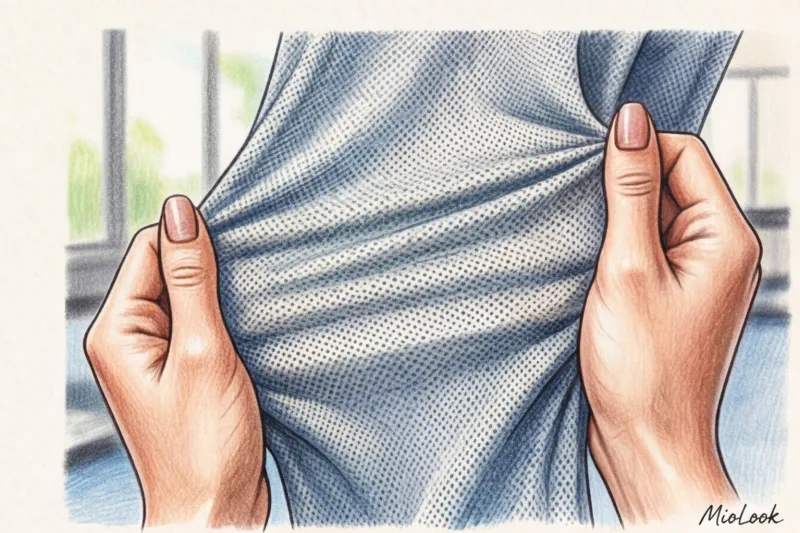
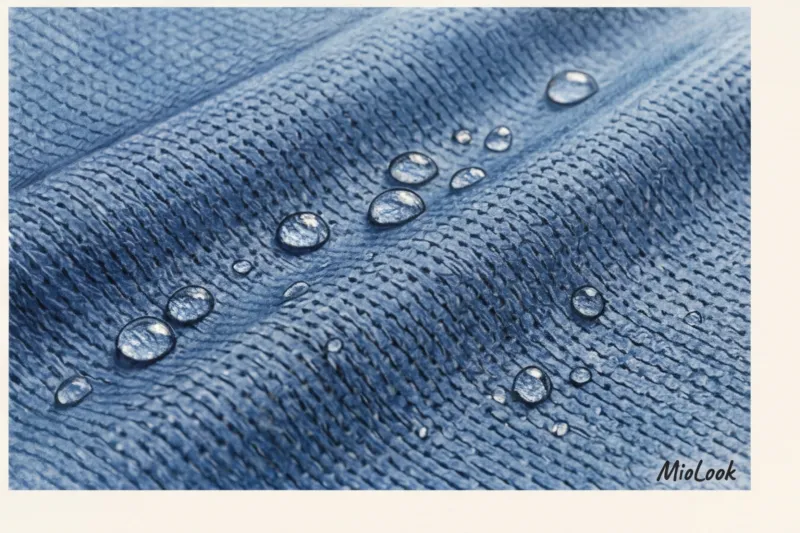
According to the WGSN (2024) sportswear market report, the future belongs to moisture-wicking fabrics. The magic of the right blend (nylon, polyester, and spandex) lies in the capillary action: moisture is instantly drawn to the surface and evaporates, leaving the core dry and the fabric itself matte and opaque.
- Elastane percentage: Look for a fabric that contains between 12% and 20% elastane (spandex). This ensures the tunic won't stretch out at the knees or elbows and will maintain its A-line shape even after hundreds of washes.
- Fabric density (GSM): To prevent the item from being see-through when pulled tightly, the density should be at least 220–250 g/m².
Your perfect look starts here
Join thousands of users who look flawless every day with MioLook. Digitize your workout wardrobe in just a few clicks.
Get access — €0.99 onceStyles and silhouettes: choosing a tunic to suit your workout
I always tell my clients: a workout wardrobe is a highly specialized set of tools. There's no one-size-fits-all solution. What works perfectly on a stretching mat will be a nightmare on a speed bike in a cycling studio.
For intense training (running, crossfit, HIIT)
A semi-fitted silhouette is essential here. The optimal fit is 3-4 cm of air space between your body and the fabric. Look for styles with raglan sleeves (the seam runs from the neck to the armpit), as they won't restrict your shoulders during arm swings. A great bonus is hidden cuffs with thumbholes: the sleeves will never ride up, exposing your forearm during burpees or pull-ups.
For stretching and yoga (Pilates, stretching)
The A-line silhouette reigns supreme here, with a slight flare at the bottom. But there's a catch: inverted poses. In the downward-facing dog position, any tunic inevitably falls over the head, exposing the lower back.
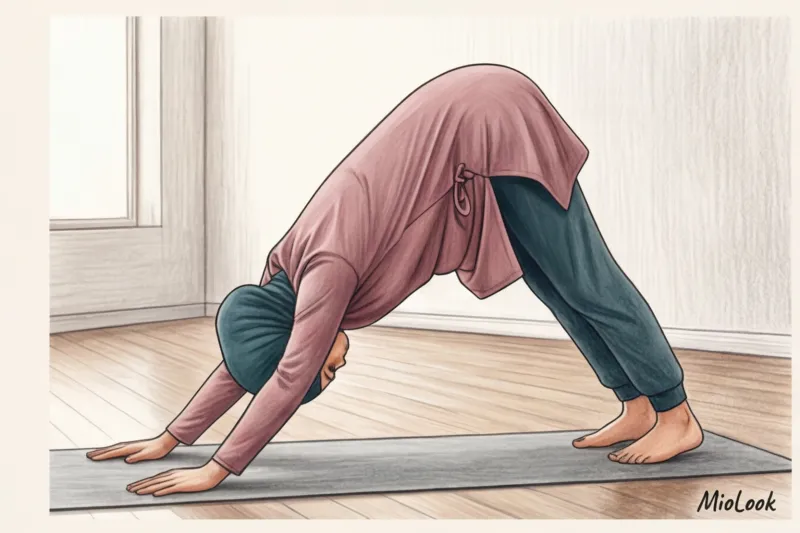
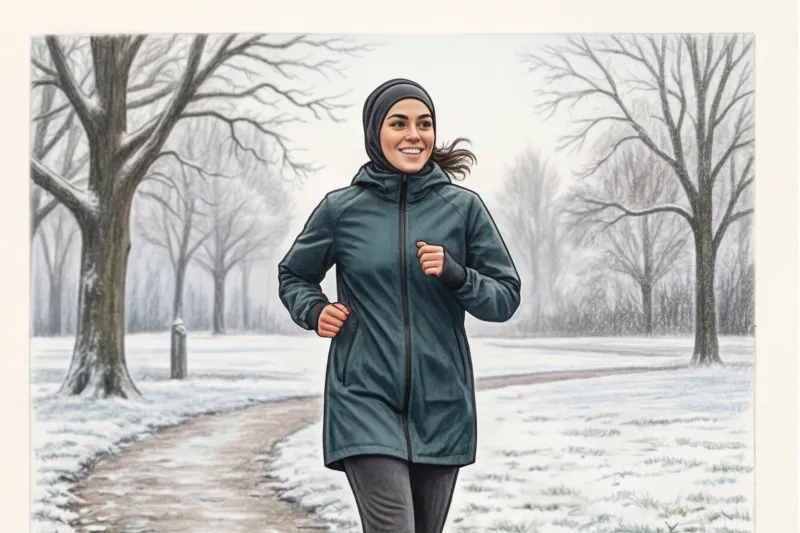
Look for modest fashion brands that use a clever detail—hidden internal drawstrings or micro-snaps along the hem. These fasten to the waistband of the leggings. The fabric stays loose but physically prevents it from falling down. Important: The A-line silhouette is completely unsuitable for running outdoors, as it creates a lot of wind resistance.
MioLook Stylistic Formulas: What to Wear with Sports Tunics
Being modest at the gym doesn't mean looking boring. The industry has come a long way, and today, brands from Lululemon to Nike offer pieces that can be combined into stunning outfits. If you're unsure how to combine items, you can always upload them to the app. MioLook , and artificial intelligence will create a harmonious look for you. In the meantime, here are my favorite tried-and-true formulas:
- Formula 1 (For Cardio): A sporty A-line tunic (with slits) + straight-leg trousers made of thin, breathable fabric + running shoes. Avoid wide joggers—paired with a voluminous tunic, they will create a bulky silhouette. This basic set will cost around €70–€120.
- Formula 2 (For strength): Asymmetrical drop-tail tunic + compression leggings + loose joggers on top. Layering gives you 100% confidence when squatting.
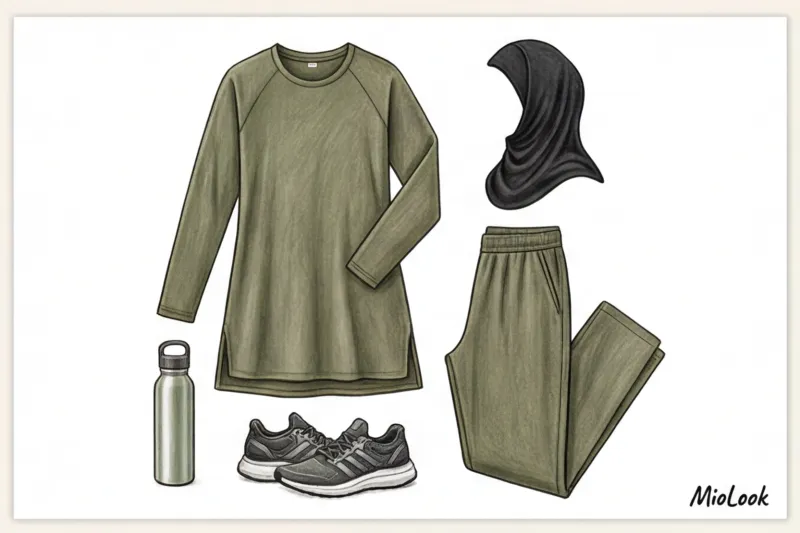
Monochrome reception: The easiest way to make a sporty look look more expensive is to combine it all in a single shade. A deep emerald, graphite, or chocolate-colored tunic, hijab, and trousers will visually elongate your silhouette. Even if you put together a €50 outfit at a high-street store, a monochrome look will make it look like it costs €250.
Pre-purchase checklist: test drive the tunic in the fitting room
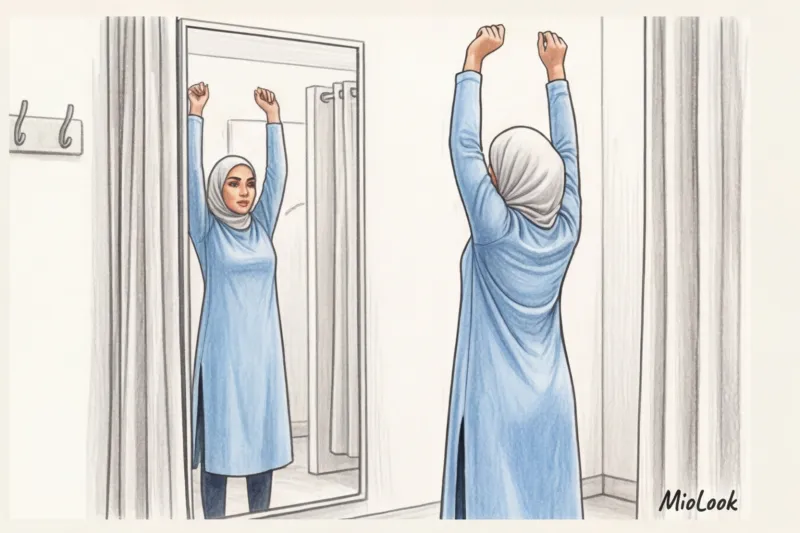
Never buy workout clothes just by looking at yourself in a static mirror. The fitting room is your testing ground. I make my clients do a mini workout right in front of the store mirror:
- Squat Test: Lower yourself into a deep squat. The tunic shouldn't be too tight on your thighs, and the seams shouldn't cut into your skin.
- The "Outstretched Arms" Test: Raise both arms sharply upward. The hem should remain below your groin. If it rises to your waist, the tunic is too short; look for a style with a longer back.
- Twist Test: Turn your torso sharply to the right and left. If the side seams twist and get caught on your hips, the fabric isn't gliding enough, and you'll be constantly adjusting it during your workout.
A sports tunic isn't just a tool for maintaining modesty; it's your armor and your companion on the path to health. Stop hiding behind oversized men's hoodies that rob you of your energy and comfort. Choose smart, technologically advanced fabrics and anatomically correct cuts, because you deserve to feel as confident in the gym as you do in every other area of your life.