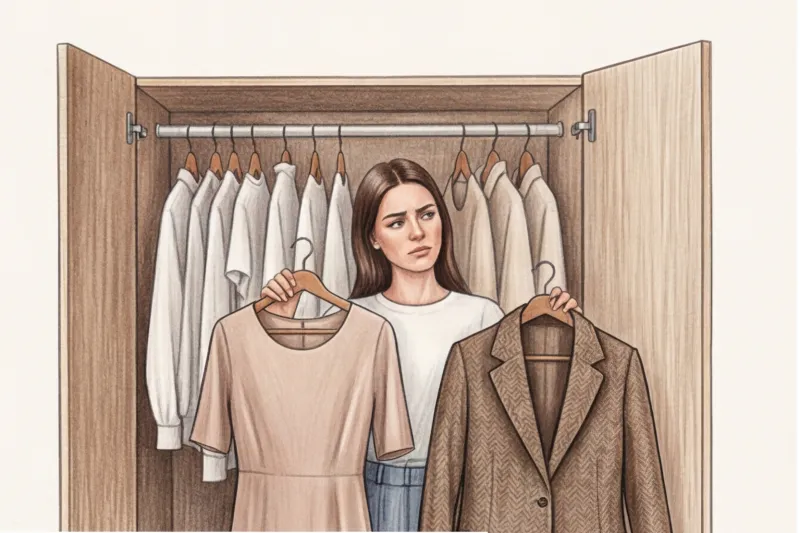
One day, a client of mine came in for a wardrobe review almost in tears. She'd spent around €800 on a luxurious basic set: wide-leg trousers and a turtleneck. Everything was perfectly coordinated, made of the same matte cashmere. "Daria, all the stylists keep saying that monochrome makes you look taller and slimmer. Why do I see this huge, shapeless beige blotch in the mirror?" she asked. And she was absolutely right.
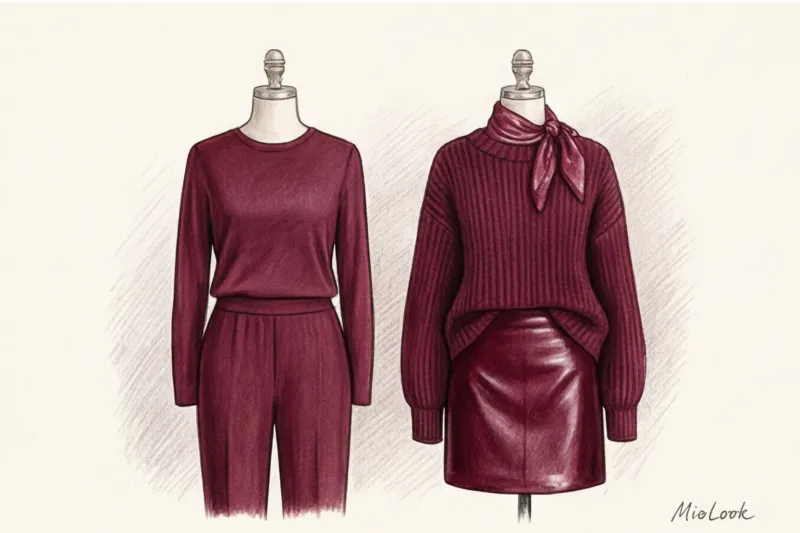
The answer lies not in color, but in the basic laws of physics. We discussed the philosophy of a single color in more detail in our The complete guide to creating a stylish monochrome capsule collection But today I want to talk about the secret weapon of stylists. Competent combination of textures in clothing — this is exactly the tool that saves the image from the “courier uniform” effect and makes it truly prestigious.
Why does monochrome without texture look flat (and make you look fat)?
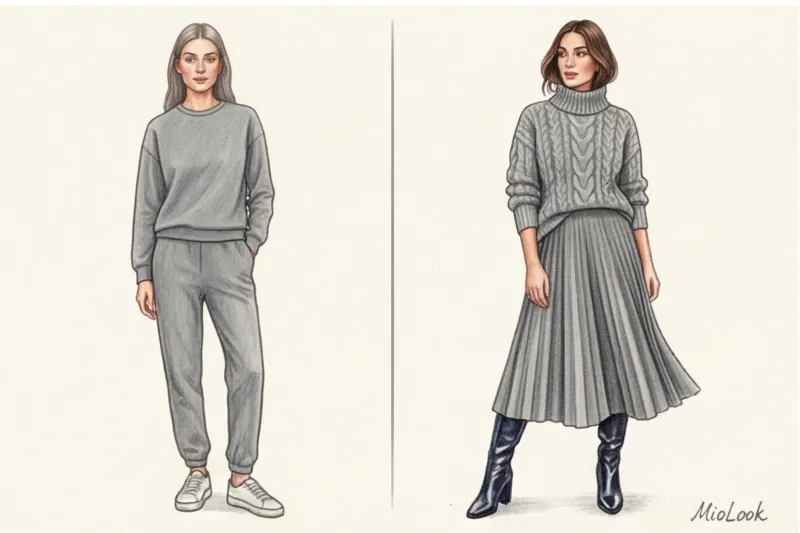
Let's dispel the biggest fashion myth once and for all: clothes of the same color Not It automatically makes you look slimmer. If you wear a tight maxi dress made of matte viscose or create a complete look from the same suit fabric, you'll get the opposite effect. There's literally nothing to catch the eye.
Think back to your school drawing lessons: to draw a sphere with volume, you need to add a highlight, a penumbra, and a shadow. If you fill a circle with a single solid color, it will remain a flat 2D pancake. The same thing happens with your body.
When light falls on a uniformly matte surface, the visual boundaries of the body disappear. Your silhouette becomes a monolithic block. To restore the figure's architecture, we need shadows and highlights, which are created solely by the difference in materials. If you buy a three-piece polyester suit at a mass market (even for a hefty €100–€150), it's the perfect match of the fabrics that makes it look cheap.
Fabric Optics: How the Right Combination of Textures in Clothing Changes Proportions
In professional settings, we often rely on Light Reflectance Value (LRV). This is an indicator of how much light a fabric reflects and absorbs. According to research by the Textile Institute (2023), to create visible 3D volume in a monochrome look, the difference in light reflectance between textures should be at least 30%.
"We use texture the way a sculptor uses clay. With matte fabrics, we relegate volumes to the shadows, and with glossy ones, we bring them to the foreground"—this principle underlies every couture collection.
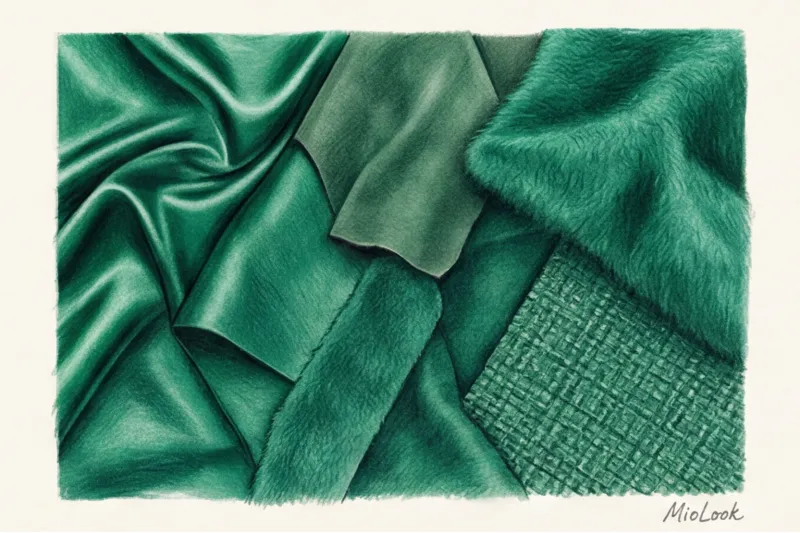
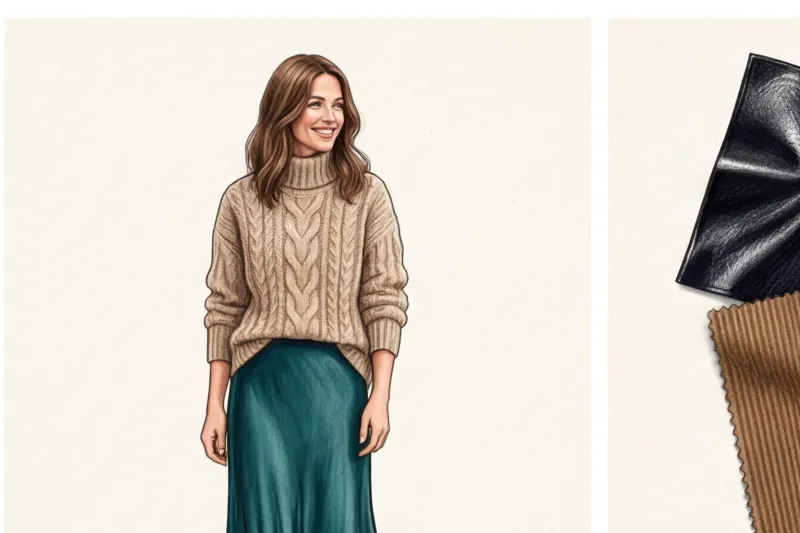
Reflective materials (Silk, satin, smooth leather)
Glossy surfaces act like mirrors. They catch any light source and create vibrant reflections. Remember the golden rule: where it glitters, there is volume Smooth fabrics with a sheen (such as liquid silk or patent leather) visually add up to 2-3 cm of volume simply through optical illusion.
Where to add them? To areas you want to highlight. A silk blouse under a matte jacket will highlight your face. However, this rule has strict limitations. Never Avoid wearing a bias-cut satin skirt if your goal is to visually conceal fullness around your hips. It will magnify every fold.
Light-absorbing materials (wool, suede, velvet)
Matte fabrics are visual "black holes." They completely absorb light without leaving any glare, making them ideal for slimming the silhouette. That's why the classic Chanel bouclé tweed jacket looks so cozy while still maintaining a firm frame.
In a monochrome look, matte fabrics (heavy cotton, suede, cashmere) should serve as a base. They form a canvas onto which you can then add highlights with accessories or top layers.
Your perfect look starts here
Join thousands of users who look flawless every day with MioLook. Digitize your wardrobe and create textured looks in seconds.
Get access — €0.99 onceThe 3D Relief Formula: A Competent Combination of Textures in Clothing Layers
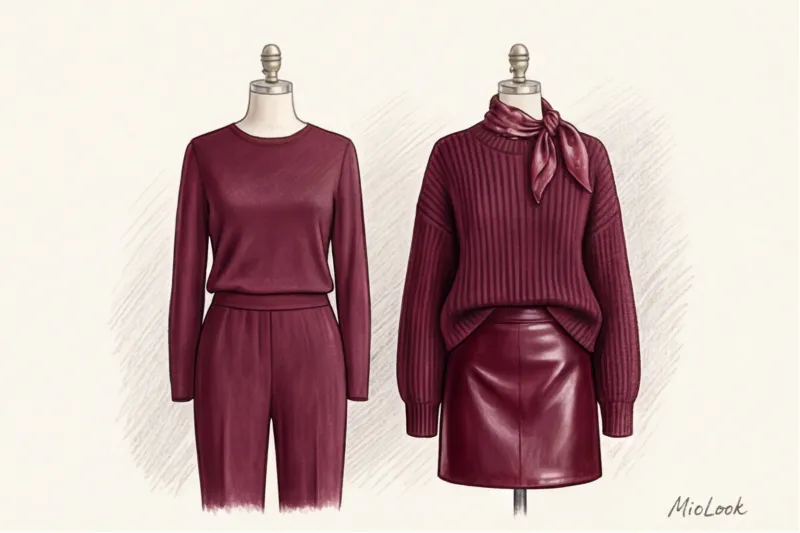
Over 12 years of working as a stylist, I've developed a simple formula for my clients to achieve the perfect texture. A look should feature at least three textures. This rule can save even the most boring gray or beige color.
3D monochrome formula:
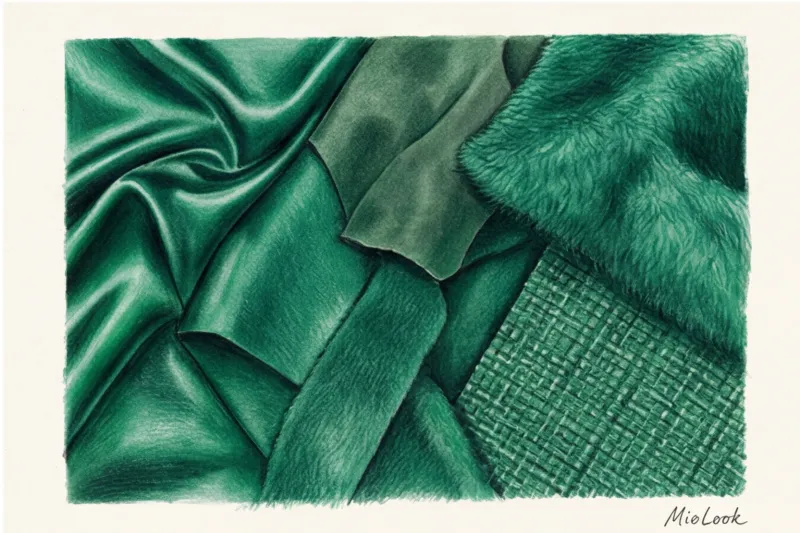
- Base (smooth or thin): A garment that fits close to the body. For example, a viscose top or a thin merino turtleneck.
- Frame (dense and matte): Layers that define the silhouette. Suit wool, heavy denim, structured cotton.
- Accent (embossed or shiny): focal point. A suede hobo bag, patent leather loafers, a silk scarf, or a fluffy cardigan.
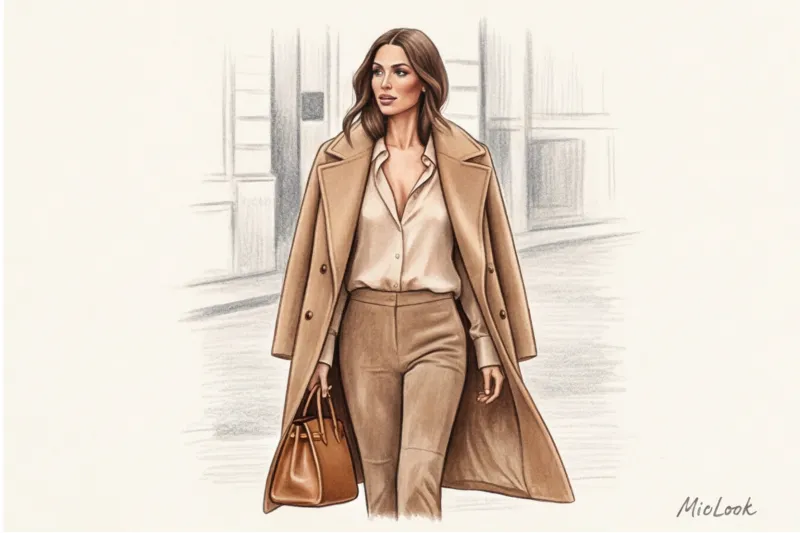
I was once putting together a camel-colored outfit with a client. We took a thin turtleneck (the base), layered it with a thick wool-blend pantsuit (the frame), and added a glossy cognac-colored leather belt (the accent). The look immediately came to life. This also works because fabrics convey color temperature differently: silk appears cooler, while wool appears warmer, creating a micro-gradient.
When it does NOT work: Never mix three shiny (satin + patent + lurex) or three fluffy (mohair + velvet + fur) textures at the same time. In the first case, you'll look like a Christmas tree ornament, in the second, like a teddy bear.
Density Contrast: The Secret to Expensive Sound
Besides the play of light, there's another powerful technique—density contrast. This is the ability to juxtapose heavy and weightless materials. A report by the analytical agency WGSN (2024) notes that tactility and complex contrast are the main markers of style today. "quiet luxury".
What does this look like in practice? Rough, stiff leather and flowing, translucent chiffon. Thick, rustic cable knits and the finest linen silk. This very principle of Italian luxury emphasizes feminine fragility.
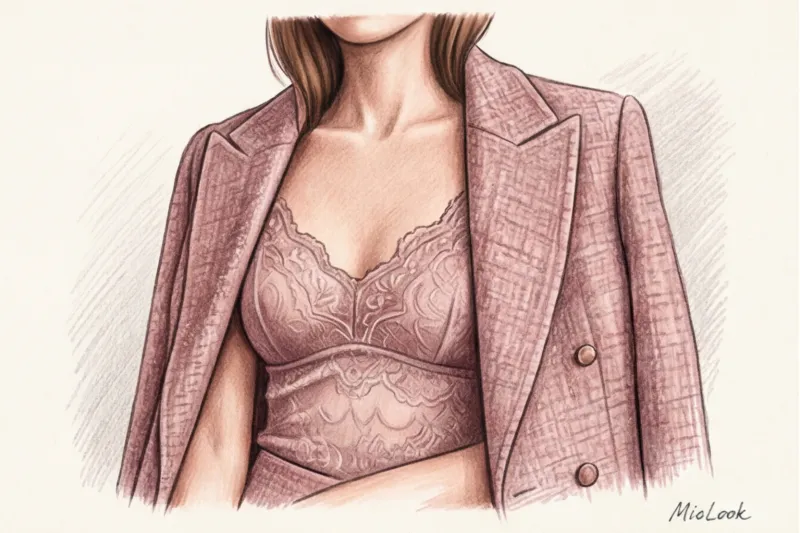
A heavy anchor fabric (like a chunky coat or stiff boots) is essential for flowing monochrome looks. Otherwise, the outfit risks looking like pajamas. However, be careful: avoid the "cabbage" effect when layering several equally thick fabrics (like a chunky knit sweater under a heavy tweed jacket). This will add at least 10 kg of visual weight.
Practice: How to Save Basic Colors with Textures
Let's adapt these rules to the most popular and seemingly safe decisions we encounter every morning.
Total black without the "mourning" effect
Have you ever noticed that black is the color that needs saving the most? Matte black cotton completely absorbs the details of the cut. If you wear black cotton pants and a black knit sweater, no one will notice the intricate draping or the interesting seams. You'll become a mere shadow.
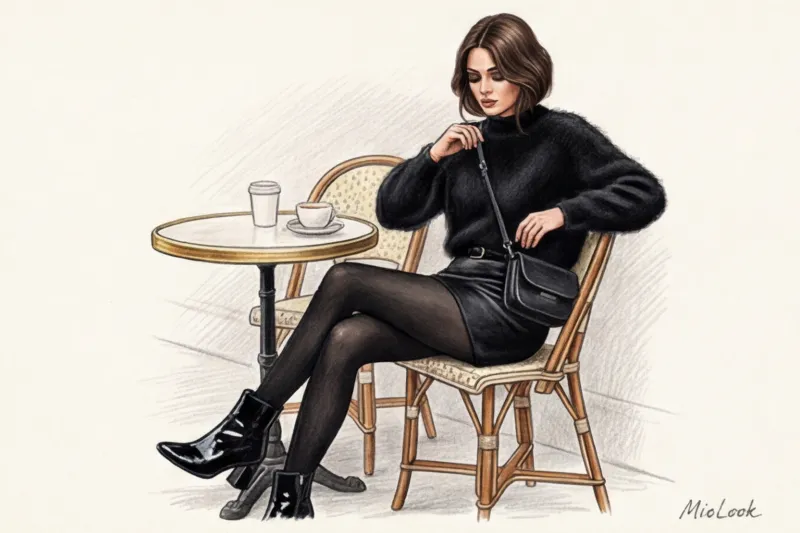
The formula for saving a total black look: patent leather shoes (reflective) + matte opaque tights in 60 denier (basic) + smooth wool skirt + fluffy mohair jumper. Compare the deep, shimmering black velvet against the flat black polyester. The difference in visual cost is thousands of euros.
Beige Monochrome: How to Blend in with Your Own Clothes
The main danger with beige is choosing a shade that perfectly matches your skin tone. Combined with a smooth texture, this creates the illusion of naked skin from a distance.
To separate clothing from the body, use the most coarse, distinctive textures possible. Beige heavy denim, loose tweed, grained leather—they scream, "This is clothing, not leather!" Also, don't forget the temperature difference: cool, gliding pearl-beige silk paired with warm, matte sand cashmere creates that complex stretch that we love in Max Mara looks.
Ready to get started?
Try the MioLook free plan—no commitments required. Artificial intelligence will help you sort through your wardrobe and create textured looks for every day.
Get access — €0.99 onceChecklist: Building a Textured Wardrobe with the MioLook App
Understanding the theory is great, but how do you apply it in the morning when you only have 15 minutes to get ready? This is where modern technology comes in. I've long recommended it to my clients. the "smart wardrobe" feature in MioLook.
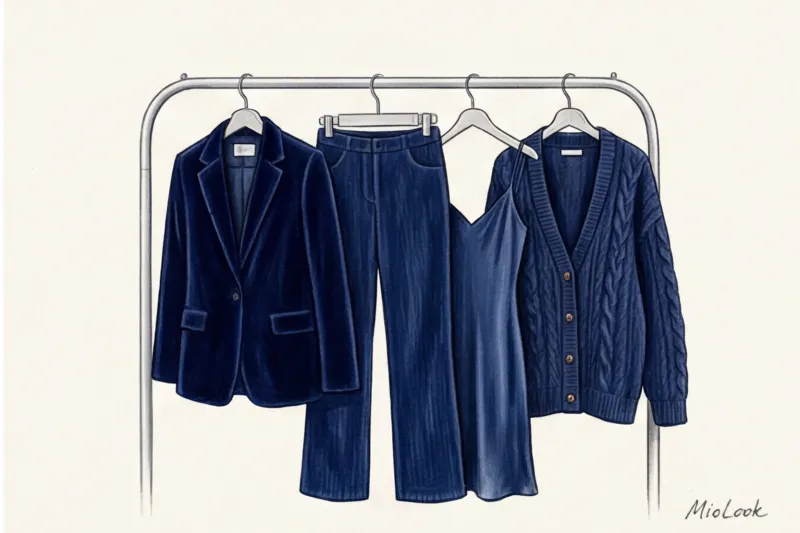
How it works in practice:
- Smart Digitization: When you upload photos of your items to the app, be sure to tag not only the color ("blue") but also the texture ("smooth," "matte," "fluffy").
- Blind Spot Search: AI analytics for your capsule collection will quickly reveal what you're missing. We often find ourselves buying our fifth matte sweater in a row. The app will tell us, "Your gray capsule is 80% matte. Add some satin or leather."
- Smart Shopping: If you already have a basic wool skirt for €80, don't buy a wool top to go with it. Ask the MioLook AI stylist for options with contrasting weights, and it will suggest silk blouses or viscose tops within the same budget.
Stylist's Resume: Your New Rules for Working with Materials
Let's be honest: aesthetics abhor fuss and monotony. A memorable monochrome isn't about color, but about the masterful interplay of light and shadow. Treat the materials in your closet like an artist's palette.
Remember the main rule of this article: when putting together an outfit in one color, use at least three different textures. Smooth, dense, and textured. Tonight, open your closet, take out three items in the same shade but made of completely different materials, and try them on together. I guarantee you'll see a completely different level of style in the mirror.