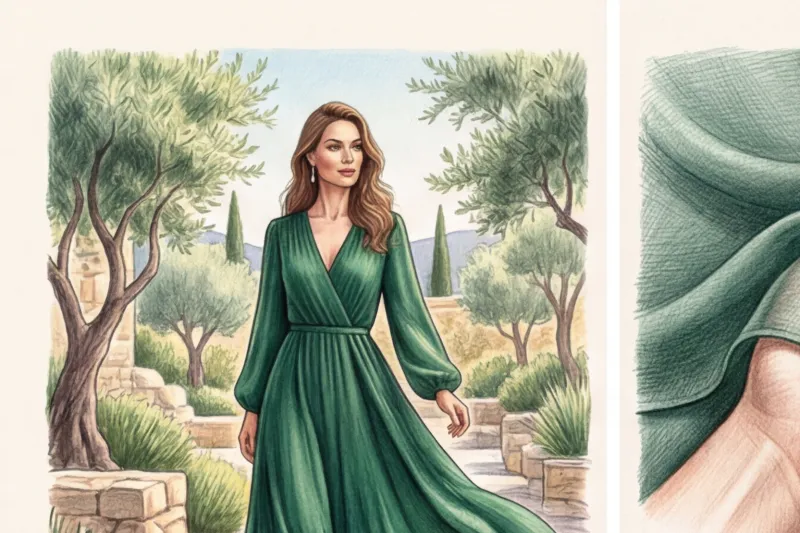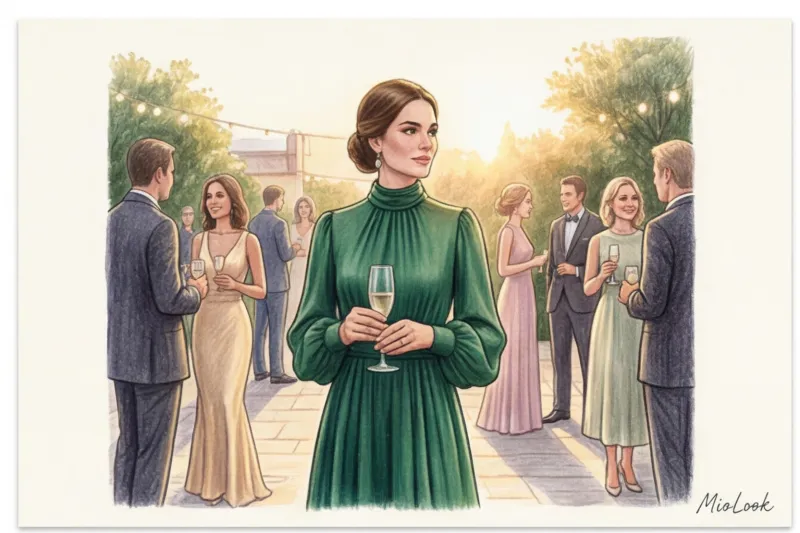
Have you ever noticed how at summer weddings, girls in revealing silk (or more often, polyester) slips with thin straps start frantically fanning themselves with programs just an hour into the ceremony? Meanwhile, a guest in a formal long-sleeved midi dress looks fresh and relaxed. Sounds counterintuitive? Only at first glance. closed evening dresses for a wedding They're chosen not because of strict dress codes, but because they're the most elegant, comfortable, and status-conscious element of a modern wardrobe. We discussed the origins of this trend in more detail in our complete guide to evening dresses as a symbol of new luxury , and now let's look at the practical side of the issue.

The Architecture of Modesty: Why High-Length Evening Dresses for Weddings Have Become a Status Symbol
According to a McKinsey report The State of Fashion 2024 The global demand for modest fashion aesthetics has finally transcended religious or cultural imperatives. It is now synonymous with "quiet luxury." The absence of plunging necklines and miniskirts shifts the focus from the body to the woman's personality, posture, and the quality of the fabric.
From a tailoring perspective, sewing a good high-necked dress is much more challenging than an open one. An open sundress is often held up by two straps and an elasticated back. But a sheath dress with long sleeves, closed shoulders, and a stand-up collar requires impeccable design. Darts, balance, and a perfect armhole fit are all crucial. That's why when a woman wears a well-tailored high-necked dress, she automatically conveys status: such a garment cannot be cheap and fit poorly.
The biggest myth busted: why long sleeves are cooler in summer
Last August, I was preparing a client for a wedding at a winery in Tuscany. The forecast called for 32°C (90°F) in the shade. When I suggested a long-sleeved, 100% cupro midi dress, she looked at me in horror: "Sofia, I'll be fried!" We took a chance. At the ceremony itself, she was the only guest who didn't get sunburned or break out in a sweat, unlike the girls in revealing chiffon sundresses.
What's the secret? It's the basic physics of textiles. Dense natural fabric protects the skin from direct UV rays, preventing overheating, and simultaneously wicks away moisture, creating a micro-conditioning effect. The key here is to pay attention to the fabric's density (GSM—grams per square meter). For a summer wedding, look for a density in the range of 80–120 g/m²; for a celebration in cooler weather, look for a density of 160–220 g/m².

But there is a strict limitation here. This does NOT work with synthetics. If you wear a 100% polyester dress, you'll create a portable greenhouse around yourself. Air exchange will be cut off, and heat stroke is guaranteed.
Fabrics worth investing in
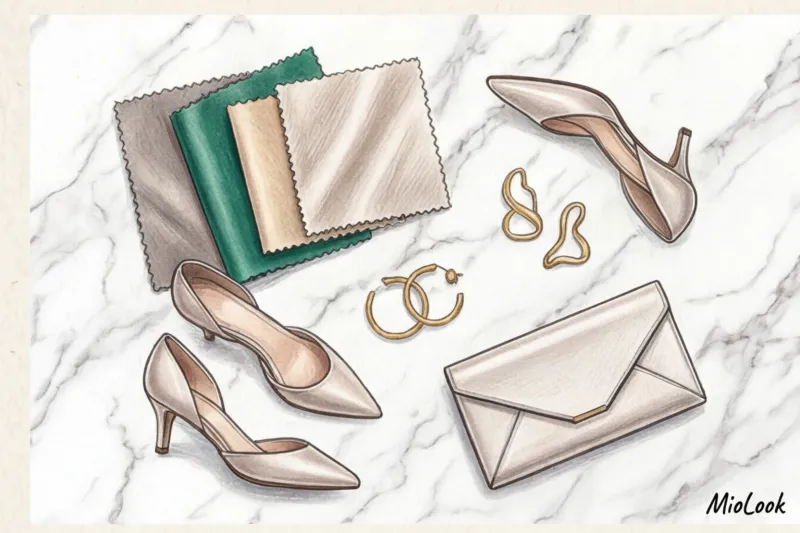
- Silk (crepe de chine and habotai): Forget the cheap sheen of fine satin. The matte, slightly grainy texture of silk looks more expensive and doesn't accentuate even the slightest imperfections.
- Cupro: So-called "vegan silk." Made from cellulose fibers that envelop the cotton seed, it's heavy, flowing, and cools the skin in hot weather.
- High twist viscose: A practical choice. Unlike linen or regular thin silk, this viscose is virtually wrinkle-free, which is crucial if you'll be sitting for long periods at a banquet.
Access to MioLook for €0.99 — one-time payment
A smart AI stylist will select the perfect look for a wedding or any other special occasion by analyzing your figure and wardrobe.
Get access — €0.99 onceStyles without the "nun effect": how to choose an elegant cut
Many people are afraid of high-necked dresses because they fear looking too conservative or boring. The secret lies in optical illusions and the right accents.

Here are 4 tricks that make the closed silhouette modern:

- Column dress. A straight, slightly fitted silhouette accentuates the defined shoulders (possibly with small shoulder pads). This visually elongates the height and makes the figure appear slimmer.
- Sculptural draperies. Asymmetrical folds of fabric around the waist or hips are much more effective than any neckline. They create movement and conceal volume.
- The correct midi length. A maxi dress often looks too formal and can restrict movement. A midi dress (length to mid-calf) reveals the most graceful part of the leg—the ankle—adding a lighter touch. Practical looks for a guest most often they are built around this length.
- Air between the body and the fabric. A high-neck dress shouldn't be a turtleneck, clinging to every inch. Leave some room in the fit—it's this airiness that creates a feeling of relaxed chic.
Dress code for the event: adaptation of a closed dress
To avoid wondering whether you'll look overdressed or underdressed, check the event format on the invitation.
If declared Black Tie Choose closed maxis made of thick silk or velvet. In this case, the lack of a neckline is compensated for by the texture of the fabric and chunky accent embellishments. The color should be deep: emerald, sapphire, dark chocolate, or burgundy (avoid black at weddings unless specifically requested).
For dress code Cocktail Midi dresses with voluminous sleeves (bishop's sleeves with a narrow cuff) are ideal. They add a touch of theatricality while remaining within the bounds of decorum.
And if you were invited to an intimate wedding (format Smart Casual ), opt for shirt dresses with complex cuts. Choose styles made of heavy modal or viscose with an asymmetrical hem. You'll look put-together without being overdone.
Your perfect look starts here
Join thousands of users who look flawless every day with MioLook. Upload your items and receive ready-made capsules.
Get access — €0.99 onceQuality Test: A Stylist's Pre-Purchase Checklist
As a textile expert, I always say: the quality of an architectural dress is determined from the inside out. Before taking the garment to the checkout, perform three simple tests in the fitting room.
Step one: inspect the seams. Turn the dress inside out. In the premium segment (even basic ones, starting at €150), the seams shouldn't stick out like shaggy threads. Look for a "French seam" (where the seam is hidden inside) or a very close, neat overlock, covered with bias binding.
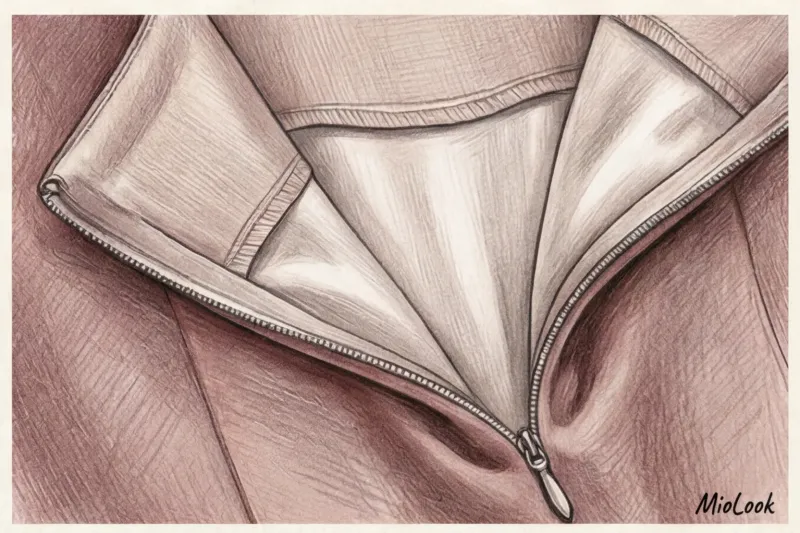
Step two: lining test. This is the most common trick brands use. You buy a dress labeled "100% silk," but the lining is made of cheap polyester. You'll sweat in such a dress just as much as in a purely synthetic one. The lining should be made of 100% viscose, high-quality acetate, or cupro.

Step three: armhole test. Put on your dress, fasten all the buttons, and quickly raise your arms up, pretending to catch the bride's bouquet. If the entire dress rises along with your arms, revealing your knees, the armholes are cut too low and incorrectly. A high-quality, full-sleeve dress should allow you to move and dance freely, while your waistline remains in place.
A Sustainable Wardrobe: The Life of an Evening Dress After the Wedding
Let's move on to wardrobe economics. Let's calculate the concept of Cost Per Wear (CPOW). Let's say you bought an ultra-fashionable but extravagant sequin dress for €150. You wore it to a wedding once, and then never wore it again. Your CPOW is €150.
Now let's take a simple, closed midi dress made of thick viscose in a deep wine shade for €250. You wear it to a wedding. Then, throwing a structured jacket over it, you head out. for a corporate event In winter, you change your stiletto heels for high pipe boots and walk in it to the theater A year later, you wear it to dinner at a restaurant. Your CPW quickly drops to €20–€25 per outing.
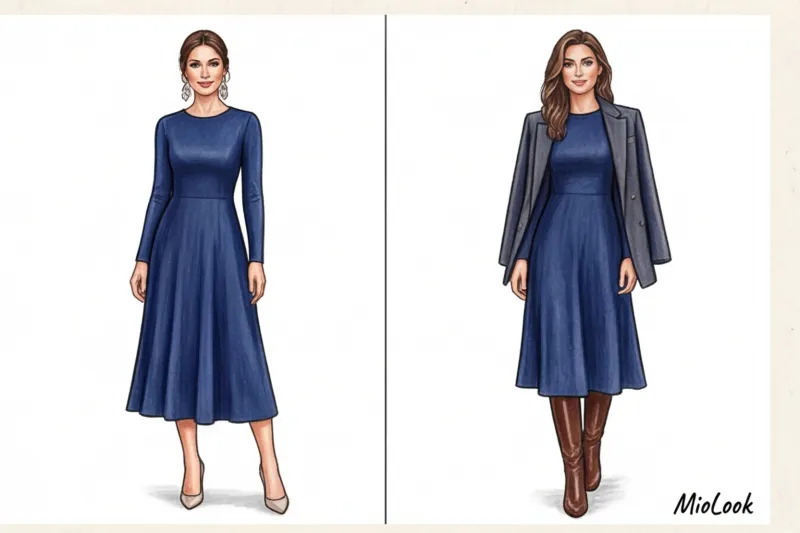
My clients often use the app. MioLook to digitize your purchase even before you try it on. A smart algorithm compares a potential new dress with your existing wardrobe staples (jackets, shoes, bags) and shows you whether you'll be able to integrate it into your everyday life. A high-quality one-piece dress almost always passes this test with flying colors because it functions as a blank canvas.
Modesty in modern fashion isn't about giving up femininity. It's about managing attention by choosing comfort, impeccable cuts, and fabrics that will care for your body throughout the evening.