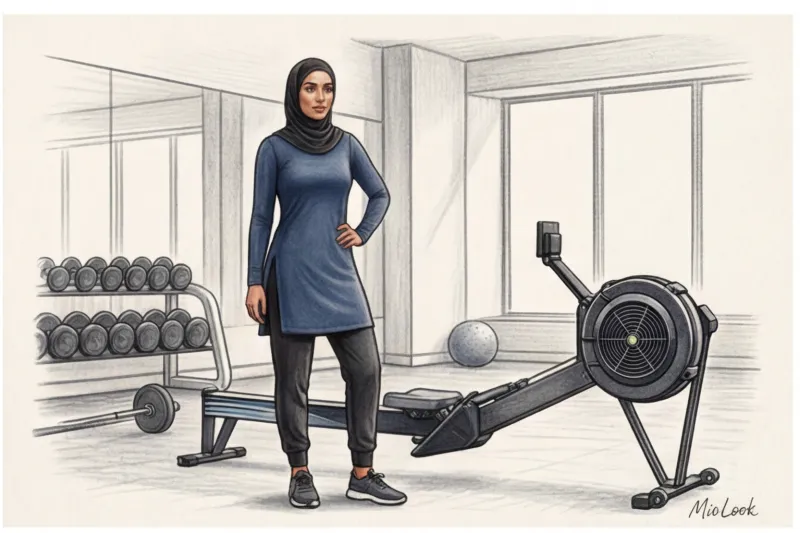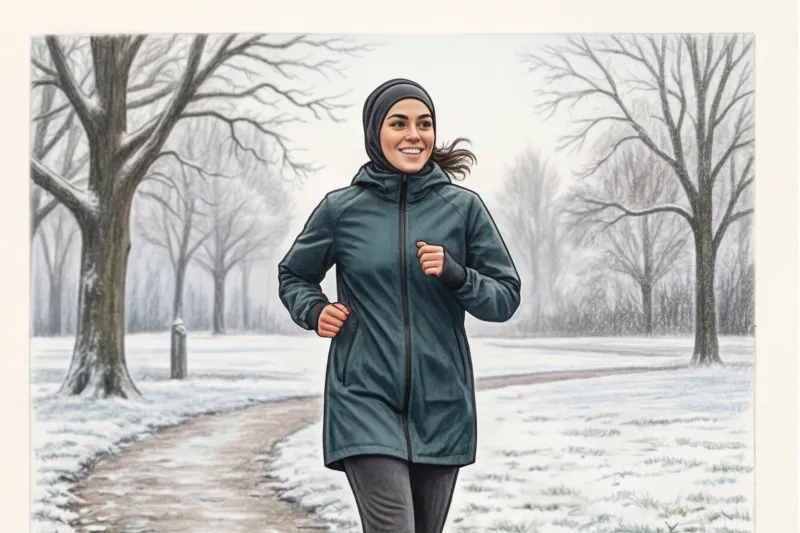
Last fall, my client Leila decided to train for her first winter race. To maintain modesty and stay warm, she donned her husband's oversized XXL cotton hoodie and baggy sweatpants. The result? By the second kilometer, she was soaking wet with sweat; by the third, the icy wind had turned the hoodie into a wet compress; and for the next two weeks, Leila spent the next two weeks nursing a nasty cold. Sound familiar?
There is a dangerous myth that women's closed-toe running wear — is a synonym for the word "oversized." As a personal stylist who has been putting together functional wardrobes for 12 years, I constantly see this mistake. Women try to hide their figures behind meters of thick fabric, forgetting the laws of physics and biomechanics. We discussed the origins of this misconception in more detail in our complete guide to sportswear for Muslim women , but today we'll talk specifically about running outdoors.
In this article, we'll examine outdoor gear through the lens of aerodynamics, fabric thermal conductivity, and proper cadence. You'll learn why modesty and high-tech sportswear are the perfect duo, and how to assemble a running capsule that will protect both your principles and your health.
The Oversized Trap: Why Women's Closed-Leg Running Wear Isn't Baggy
Let's be honest: regular, baggy sweatshirts from the mass market and outdoor running are incompatible. When you go for a run in a bulky hoodie made of thick fleece (usually cotton with a weight of 300 g/m² or more), you create a "parachute effect." The extra bulk catches the headwind, forcing you to expend 20% more energy simply to overcome air resistance. Your heart rate spikes, and your breathing becomes labored.
But the main danger lies in its composition. Cotton absorbs up to 27 times its own weight in moisture and refuses to release it. According to research by the Institute of Sports Medicine (2023), heat loss through damp cotton fabric in the wind increases 25 times! At 0°C and a wind speed of 5 m/s, the perceived temperature instantly drops to -6°C.
"The most annoying thing about wet cotton for modest-fashionistas is that the heavy, damp fabric instantly clings to the body, revealing every contour of the figure. What was supposed to conceal you begins to cling to you."
Of course, there are exceptions. If your goal is a leisurely walk with the dog in dry weather, your favorite one-size-fits-all suit will do just fine. But for running, we need a completely different approach.
Access to MioLook for €0.99 — one-time payment
A smart AI stylist will select the perfect look for workouts and everyday life based on your preferences.
Get access — €0.99 onceSmart Layering: How to Stay Modest and Warm
The three-layer rule reigns supreme in the sports world. For a closed-loop running wardrobe, we adapt it with one counterintuitive, yet crucial, caveat.
The most hidden secret of frugal fitness is this: To ensure that the top layer of clothing (tunic or jacket) looks loose and does not cling to the figure, the base layer MUST be as tight as possible Many of my clients are initially intimidated by this rule. They wear a loose T-shirt under their windbreaker, hoping for double coverage. But loose underwear underneath the jacket bunches up, creating a greenhouse effect, and doesn't wick sweat away from the skin. As a result, the outer jacket sticks to the wet T-shirt.
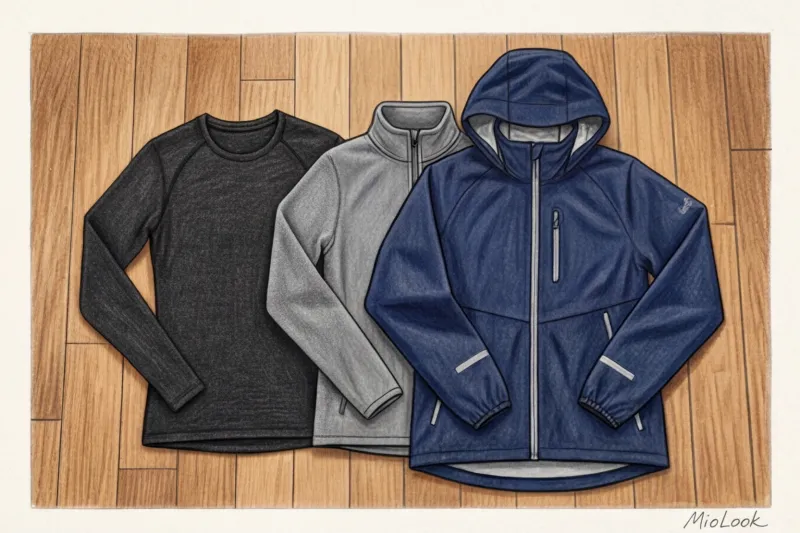
What does a correct layer pyramid look like:
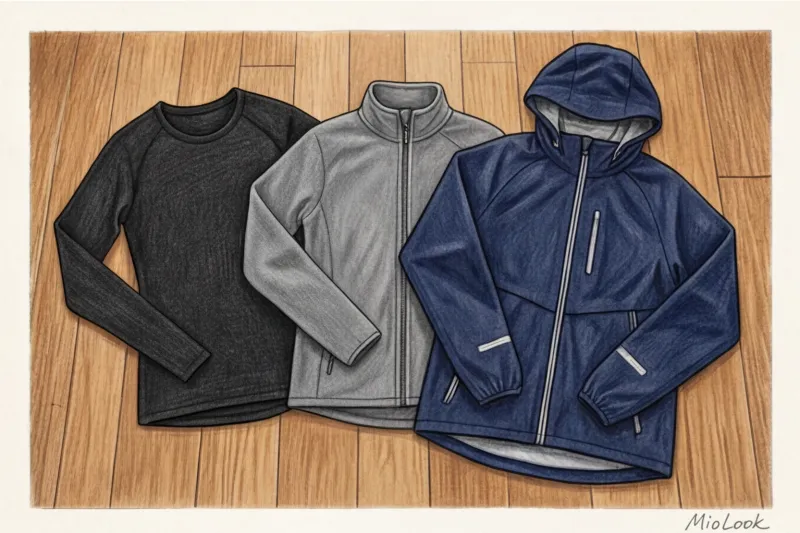
- Base layer (moisture-wicking): Close-fitting thermal underwear made of 100% polyester or merino wool (for cold weather). Excellent basic options can be found at Uniqlo (HEATTECH line) or basic sports brands in the €25–€45 range.
- Insulating layer (warming): Thin microfleece. It provides warmth without adding visual bulk to your figure.
- Protective layer (wind): A long running windbreaker. This is where we add the necessary volume. Choose models with a membrane (Gore-Tex or similar). A high-quality membrane jacket will cost around €120–€250, but it's an investment in your comfort for years to come.
Length Matters: The Biomechanics of Running in Long Jackets
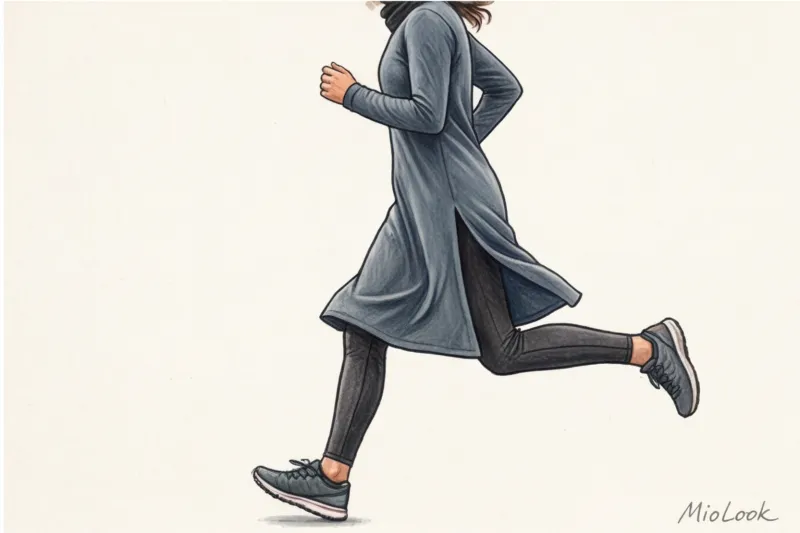
Finding the right length for a top layer is a challenge. The ideal balance is from mid-thigh to a hand's breadth above the knee. If the jacket falls below the knee, you're risking your health.
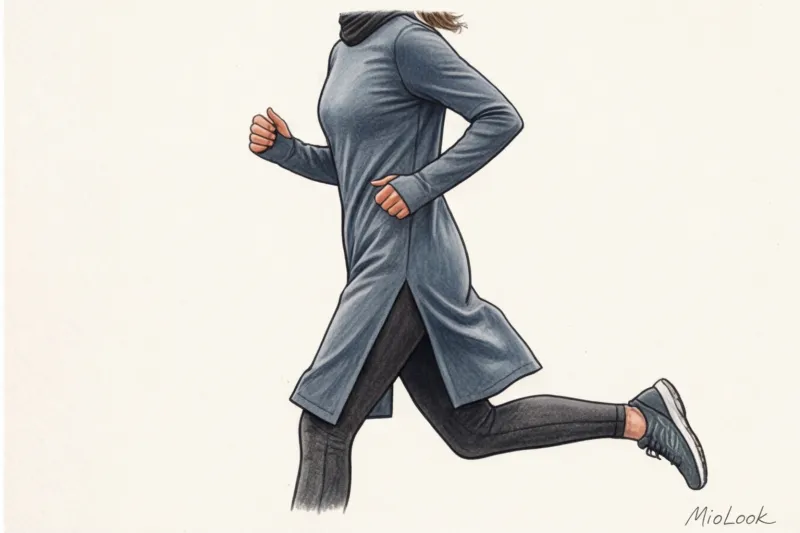
A study of gait biomechanics published in the Journal of Sports Sciences confirms that tight, non-elastic clothing below the knee reduces the natural running stride amplitude by 10-15%. To compensate for this limitation, runners unconsciously alter their foot placement, which greatly increases the impact load on the knee joints.
Stylist's advice: If you're buying a long running tunic, make sure it has deep side slits or a two-way zipper that can be unzipped from the waist down. Without these features, running on rough terrain is simply unsafe.
Running Bottoms: Safe Alternatives to Wide-Leg Pants
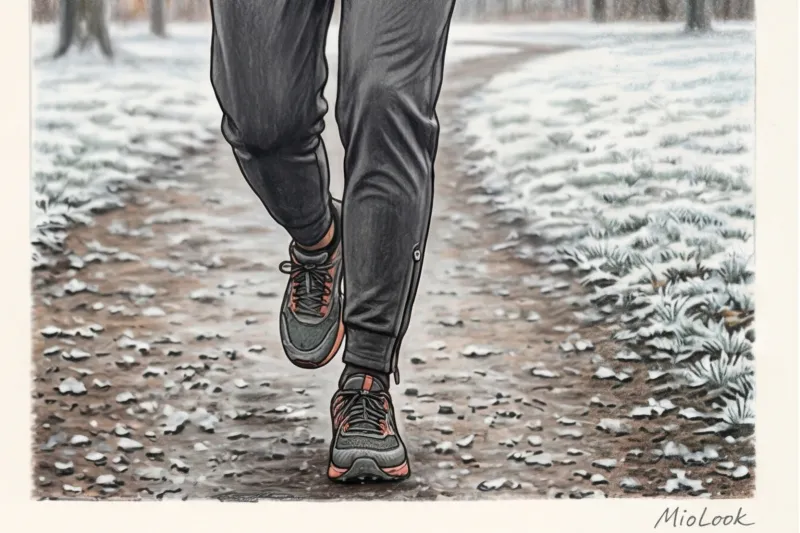
Last winter, I decided to give them a personal test drive: I donned five different styles of wide-leg sweatpants from popular high-street stores (Zara, H&M Move, Oysho) and headed out onto a dirt path in the park. The verdict was clear: classic wide palazzo pants or straight joggers are unsuitable for trail running. They get tangled around your ankles, snag on low branches, and the hem collects all the dirty water, becoming noticeably heavier.
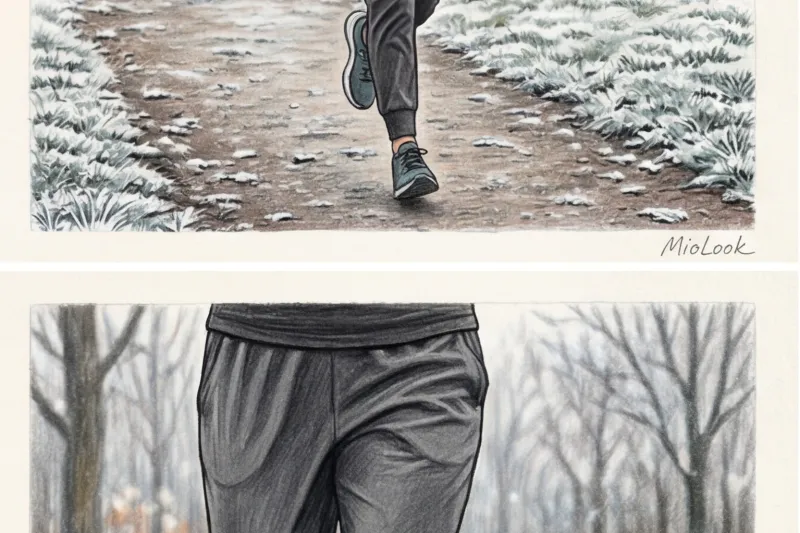
What can I replace it with to save it? warm in winter and not violate the dress code?
- Tapered pants: This is the perfect compromise. They have a loose fit and folds at the hips (not tight around the butt), but taper toward the ankle. Wind doesn't blow in, and the fabric doesn't rub against your sneakers. Check out Nike's specialized Modest Wear line (around €60-€90).
- Tights + sports skirt / shorts: A great option for the off-season. Close-fitting, insulated tights address aerodynamics, while longer, loose shorts (just above the knee) made of thin raincoat fabric worn over them conceal the body's contours.
- Softshell pants: A lifesaver for running in sub-zero temperatures. The softshell material is dense, holds its shape well (meaning it doesn't cling to your feet as tightly as thin knits), and has a water-repellent finish. Snow simply doesn't stick to it.
Your perfect look starts here
Join thousands of users who look stylish and functional every day with MioLook's AI-powered wardrobe selection.
Get access — €0.99 onceHead and Neck Protection: Sports Hijabs and Thermal Accessories
A regular, everyday pashmina or viscose scarf is your worst enemy when jogging. It will slip down, become damp from sweat, and interfere with your body's thermoregulation. Furthermore, bulky drapes around the neck can simply make it difficult to breathe in a strong headwind.
For running, a pull-on sports hijab (pulled over the head without pins) made of high-tech, breathable fabrics with spandex is essential. According to the WGSN (2024) report on activewear trends, seamless sports hijabs with perforated ear loops have become the fastest-growing category of sports accessories.
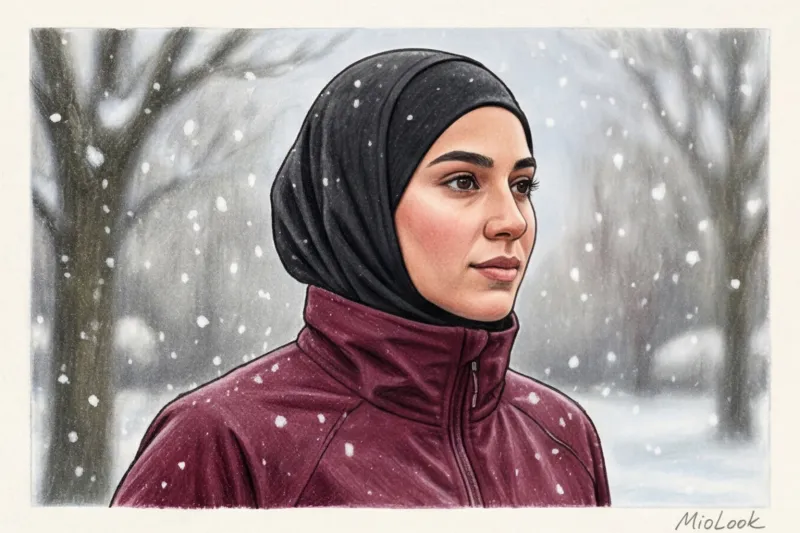
Critical safety point: A sports hijab should fit snugly around the face. If the edges are loose, the fabric may block your peripheral vision when you turn your head. When running in urban areas, where there are bicycles, scooters, and cars, limiting your peripheral vision is unacceptable.
In winter, a sports hijab easily integrates with running accessories: the ends are tucked deep under the fleece collar, and an insulated merino wool buff is worn on top (on the neck) to prevent icy air from blowing down the back of the neck.
A stylist's checklist: putting together the perfect outdoor running capsule
To help you navigate stores more easily, I've put together a concrete action plan. Take a screenshot of this list before your next sports gear purchase.
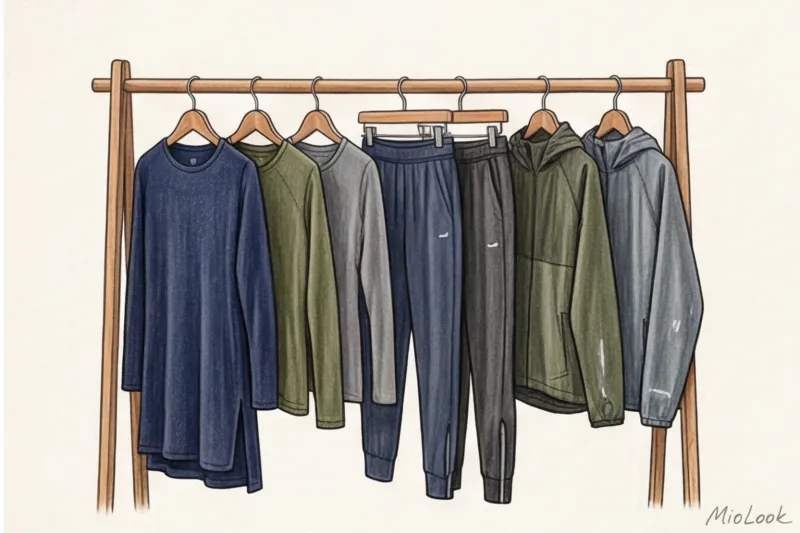
Your ideal capsule should include:
- ✅ Base layer: Thermal long-sleeved T-shirt and leggings (strictly synthetic or merino, no cotton!).
- ✅ Middle layer: Thin fleece sports jacket with a zipper.
- ✅ Top layer: Windproof or membrane long jacket with slits on the sides (length to mid-thigh).
- ✅ Bottom: Hiking or running pants that are tapered at the ankle (loose at the hips).
- ✅ Head: Sports breathable hijab in pull-on format.
And finally, a tough rule of care that 90% of beginners forget: Never wash this fabric softener capsule! Fabric conditioner leaves a waxy film on the fibers. This instantly clogs the membrane's micropores and destroys the moisture-wicking properties of polyester. An expensive, high-tech item costing €150 will turn into a non-breathable plastic bag after one wash with fabric conditioner.
Ready to get started?
Digitalize your gym kit in the MioLook app. Try the free plan—no commitments.
Get access — €0.99 onceChoosing closed-toe running apparel isn't a compromise between comfort and your values. It's simply a matter of choosing the right materials and styles. Once you swap out heavy, wet cotton for lightweight, multi-layered synthetics, you'll realize that modest gear can provide complete freedom of movement over any distance.