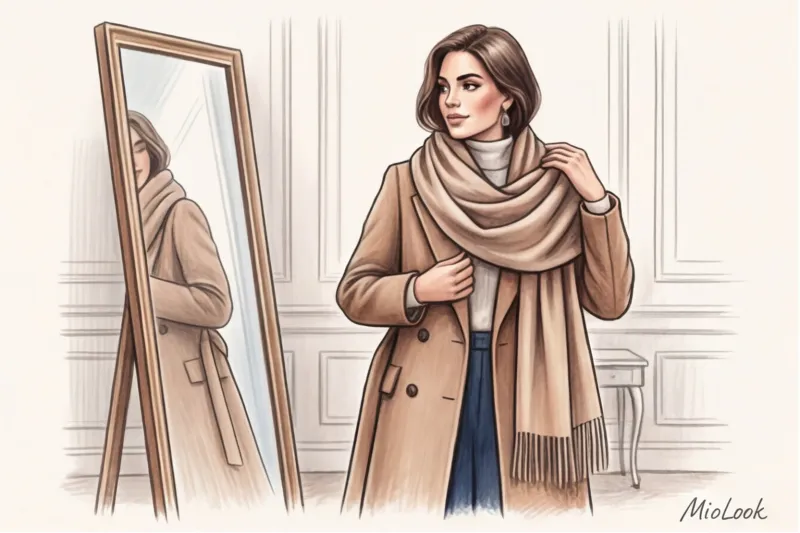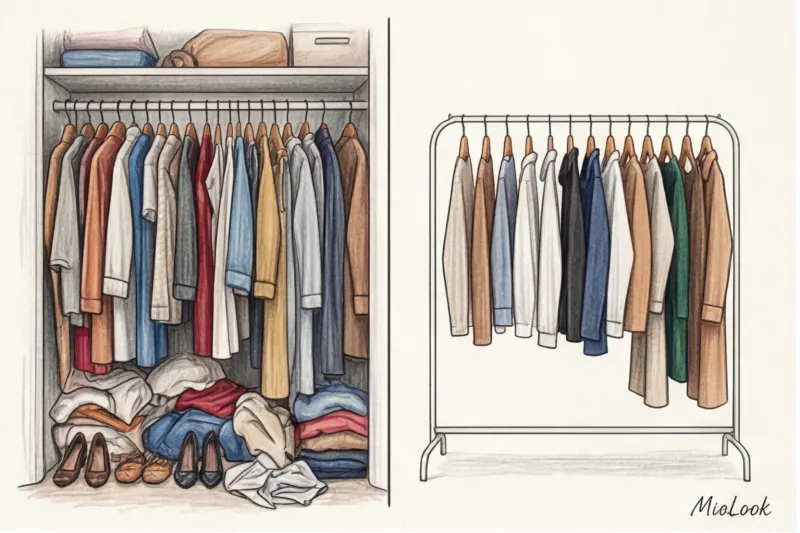

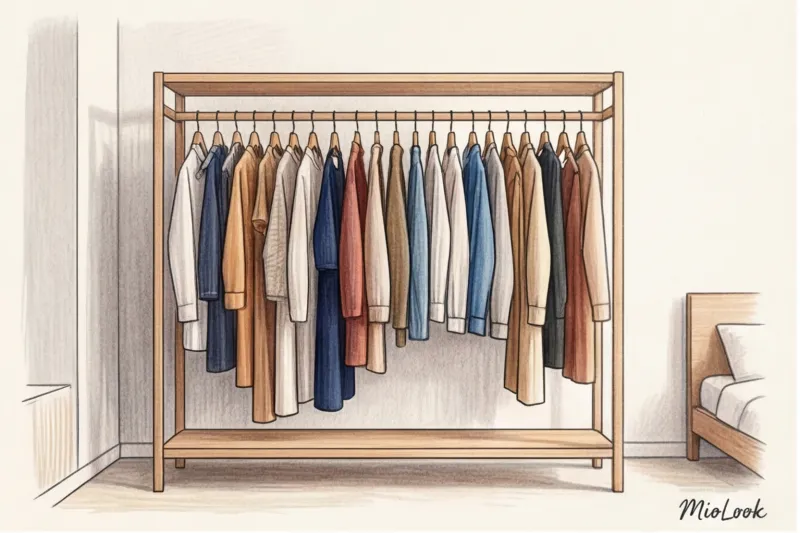
You open your closet, rummage through dozens of hangers, but your hand still reaches for the same pair of jeans and your favorite chunky sweater. Sound familiar? According to The Wall Street Journal, most of us wear only 20% of our clothes 80% of the time. The other 80% is visual noise, which sap your energy every morning and causes decision fatigue. If you're tired of this routine, minimalist wardrobe will be your salvation. We've covered more details on how to build a system from scratch in our The Complete Guide to Creating a Capsule Wardrobe But today I want to explore a radical and highly effective approach—how to get by with just 20 items for all occasions without losing your individuality.
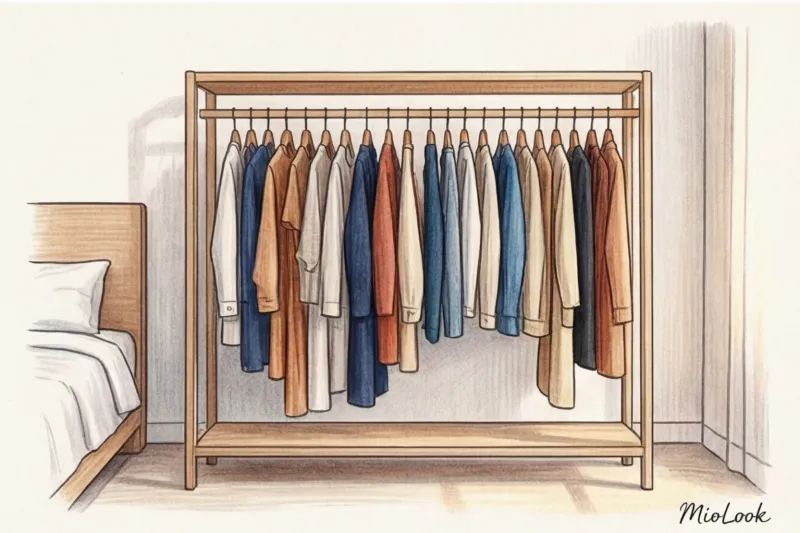
Minimalist Wardrobe: Why 20 Quality Items Work Better Than 100
The paradox of modern fast fashion is that the more clothes we have, the harder it is to get dressed. An overflowing closet creates the illusion of choice, but in reality, you're just wasting 15 minutes every morning trying on mismatched items.
Why 20? In my experience working with clients, this is the "golden ratio." Twenty perfectly coordinated items (not including underwear, sleepwear, and skimpy sportswear) can yield over 100 unique combinations. It's the mathematics of style: you get a new look every day for three months, using minimal resources.
But there's also a profound environmental message here. The British organization Wrap (Waste and Resources Action Programme) published astonishing data in its 2023 report: extending the lifespan of an item by just nine months reduces its carbon, water, and waste footprint by 20-30%. Minimalism isn't just the aesthetic appeal of empty hangers; it's a conscious choice for the planet and your wallet.
The main myth: minimalism is not only beige and black
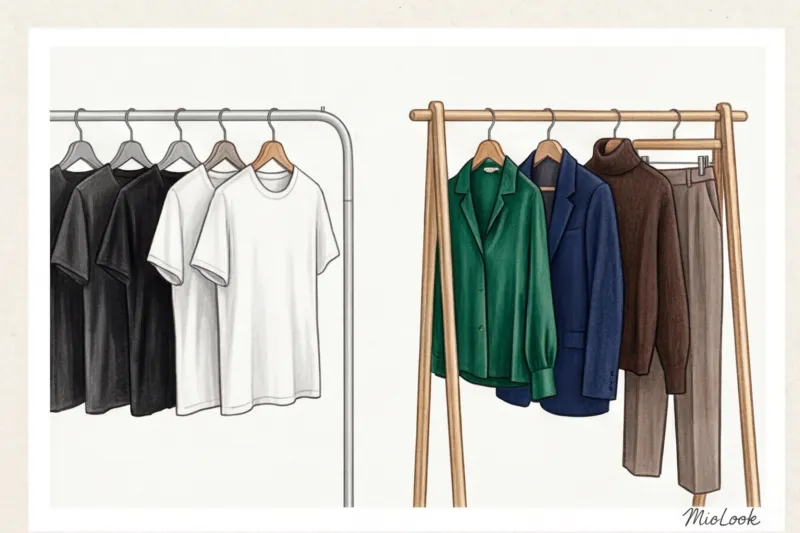
It's a common belief that a minimalist wardrobe should consist exclusively of neutral, "faceless" pieces: gray turtlenecks, black trousers, and beige trench coats. Many women abandon the capsule wardrobe idea precisely because they become unbearably bored.
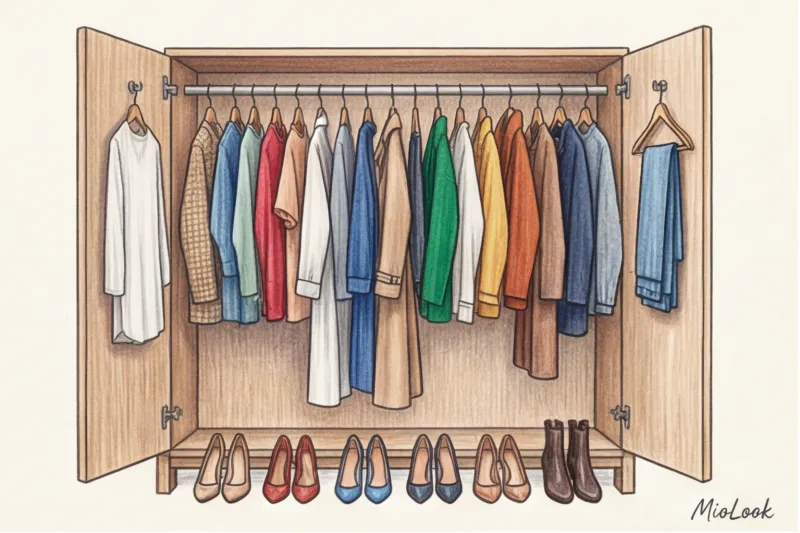
Counterintuitive fact: in a small wardrobe, color and texture play a MUCH more important role than in a large one. When you only have 20 items, complex textures and two or three deep accent colors are essential, otherwise you'll look like you're wearing a waitress uniform.
One of my clients, an art director at an IT company, tried to build a wardrobe of 20 affordable, basic pieces in a monochrome palette. After a month, she admitted she felt "invisible." We completely rethought our approach and built a new capsule wardrobe around deep burgundy, emerald, and mustard shades. We added prints: classic houndstooth and pinstripe work as a completely neutral base but add dynamism to the look.

Access to MioLook for €0.99 — one-time payment
A smart AI stylist will select the perfect look from your favorite shades.
Get access — €0.99 onceFormula 20: The anatomy of a compact capsule for all occasions
For 20 pieces to work like a Swiss watch, they must adhere to a strict structure. The main principle of interchangeability states that every bottom in your closet should perfectly match at least four tops. If you're looking for inspiration for your workday, I recommend checking out our article about a status capsule wardrobe for the office.
Here's the specific formula I use when doing wardrobe reviews:
- 3 bottoms: for example, classic wide-leg trousers, straight jeans without fraying and an A-line midi skirt.
- 7 tops: 2 basic T-shirts (thick!), 2 shirts (one silk, one cotton), 1 thin turtleneck, 2 sweaters.
- 2 dresses: one daytime knitwear, one structured evening/cocktail.
- 3 layers (outerwear/jackets): Thick wool jacket, classic trench coat, quality coat.
- 3 pairs of shoes: white leather sneakers, classic loafers, ankle boots or elegant pumps.
- 2 bags: A roomy tote bag with a rigid shape and a crossbody for the evening.
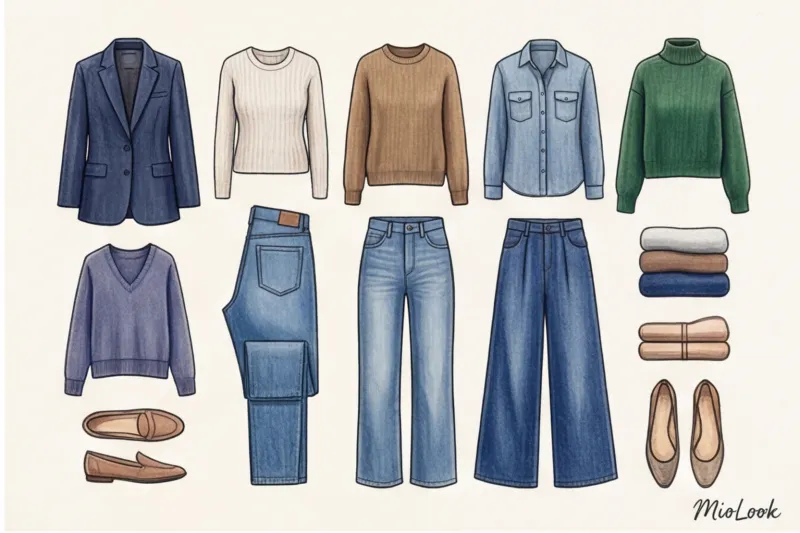
Base: Structural Elements and Workhorses
The foundation of a mini wardrobe is pieces that hold their shape. Forget shapeless, flimsy knitwear. Pants should have a perfect fit and crease (even if they're stitched in). The unbreakable rule of "structured tops" applies: a thick jacket with a defined shoulder line or a chunky knit cardigan instantly "pull together" any look, even the most relaxed, with jeans and a T-shirt, turning it into perfect smart casual.
Accents: How to Avoid Boredom in Your Looks
When clothing is limited, accessories come into play. A silk scarf, a textured leather belt with a quality buckle, or statement shoes can transform a daytime work look into an evening one in a jiffy. Keep one statement piece in your capsule wardrobe—for example, a tweed jacket or a blouse with a bold ruffle. This will give your minimalist wardrobe a truly personal feel.

Textile Filter: Fabrics for a "Worn Often" Wardrobe
Here's the hidden problem with a mini-wardrobe that fashion bloggers often gloss over: if you only have 20 items, you wear them constantly, meaning they wear out five times faster. Your clothes won't survive if they're fast fashion from the mass market.
According to research by Textile Exchange (2024), low-quality synthetic fibers are the fastest to lose their appearance. You should strictly avoid 100% acrylic (which begins to pill after three wears) and thin, "snotty" viscose.
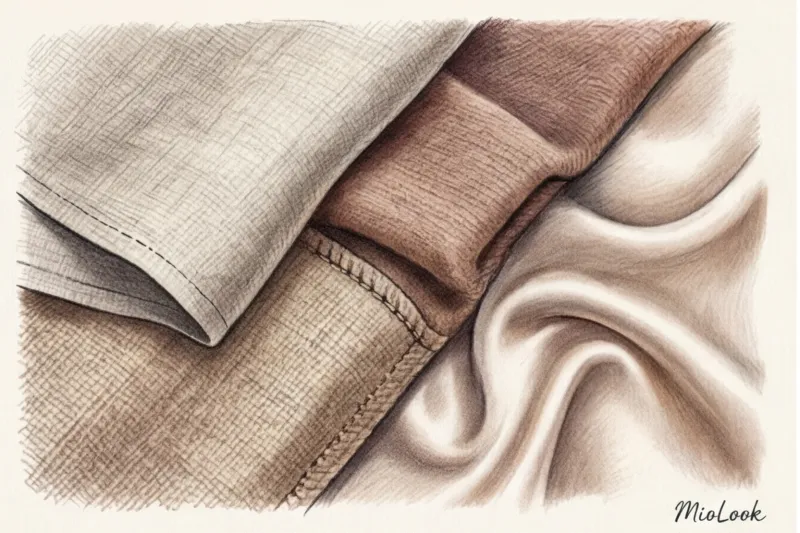
Invest in the right materials. What we look for on tags:
- Cotton: only thick (from 180 g/m²), preferably mercerized - it has a slight shine and wrinkles less.
- Wool: Twisted merino wool with long fibers. The longer the fiber, the less likely it is to pille.
- Flax: Linen blend (for example, 70% linen and 30% Tencel/lyocell). Tencel makes the linen more flowing and prevents it from settling into stiff, unsightly creases.
- Silk: A thick crepe de chine that can be hand washed, not just dry cleaned.
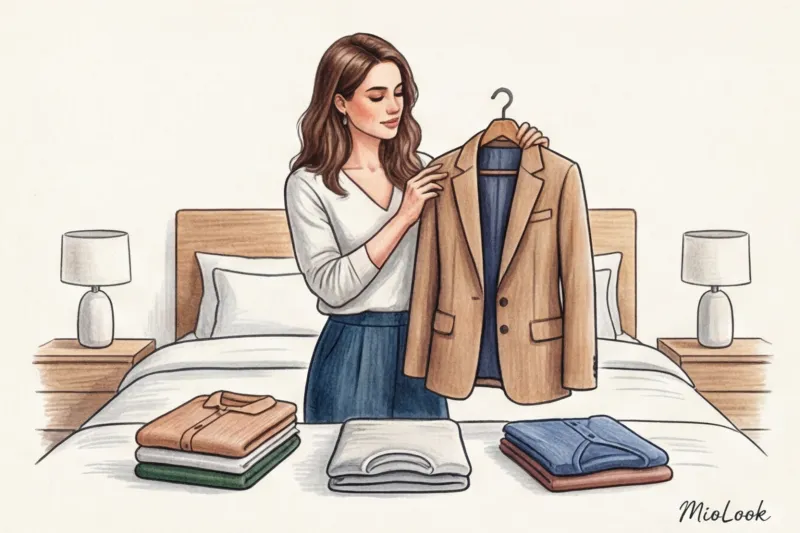
My personal stylist's checklist for quality control right in the fitting room: squeeze the fabric in your fist for 10 seconds and let go. If it feels like a crumpled sheet of paper, the garment is not suitable for active wear. Hold the seams up to a window to check them: they shouldn't be coming apart or showing through. In a mini-wardrobe, seam quality is critical.
Your perfect look starts here
Join thousands of users who have digitized their wardrobe and look flawless every day with MioLook.
Get access — €0.99 onceStep-by-step plan: building your minimalist wardrobe
The transition to 20 things can't be accomplished overnight. It's a process that requires thoughtfulness.
- Audit and "wardrobe diet". Remove anything you haven't worn in over a year from sight. Vacuum-seal it. Your brain needs to get used to the open space on the bar.
- Defining your uniform. Analyze what you feel best in. For some, it's a pantsuit, for others, jeans and a cashmere sweater. Identify two or three favorite silhouettes.
- Compiling the core. Choose the 10 best items you already own. Digitize them: add photos to the "smart wardrobe" feature in MioLook so that the program can help you see non-obvious combinations.
- Spot shopping. Purchase missing links only according to the strict list.
My signature method, the "three-look rule": never take an item to the checkout unless you can mentally create at least three looks with it right there in the fitting room, using the items ALREADY hanging in your closet.
In fairness, I must state a clear limitation: this strict method does NOT work for women who perceive shopping as psychotherapy and a source of spontaneous endorphins. Minimalism requires discipline at the outset. But the rewards for this discipline are enormous.
Caring for a mini wardrobe: so that your clothes last for years
Since you'll be wearing these 20 items constantly, your approach to care should change dramatically. The main rule: frequent machine washing will ruin your clothes faster than daily wear.
We're used to throwing sweaters in the washing machine after just one wear, but wool and heavy cotton don't require or tolerate this. Alternatives to washing are much more effective. Get into the habit of airing your clothes out in the fresh air. Invest in a good handheld steamer—hot steam kills bacteria, eliminates odors, and restores fabrics to their original appearance without the mechanical friction of a washing machine.
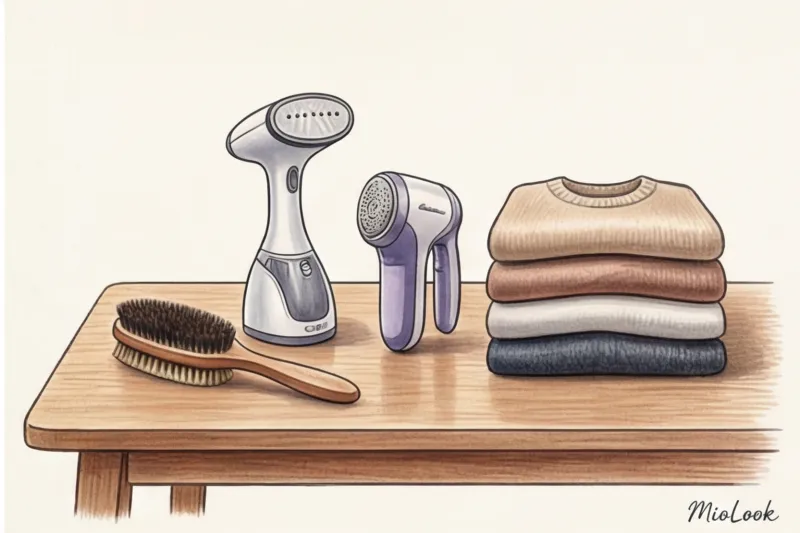
Instead of washing cashmere and wool sweaters, invest in a clothes brush made of natural boar bristles. Brushing the fabric in the evening removes dust and combs the fibers, preventing pilling. Replace flimsy plastic hangers: for wool and silk, use wide wooden hangers (ideally made of cedar, which repels moths), and store knitwear only folded on shelves to prevent it from stretching under its own weight.
From Quantity to Quality: Your New Level of Freedom
A minimalist wardrobe isn't an ascetic act of self-restraint or an attempt to punish yourself by giving up fashion. On the contrary, it's a purchase of time, peace of mind in the mornings, and absolute confidence in your appearance. When you've meticulously chosen every item in your closet, like a diamond for its setting, you no longer need to hide behind brand logos or the number of outfits you own.
Start small: try removing exactly half of your closet for one month as an experiment. Keep only the 20-30 items that make you the best version of yourself. I guarantee you won't feel short of clothes, but for the first time in a long time, you'll feel like you finally have something you love. I have something to wear.