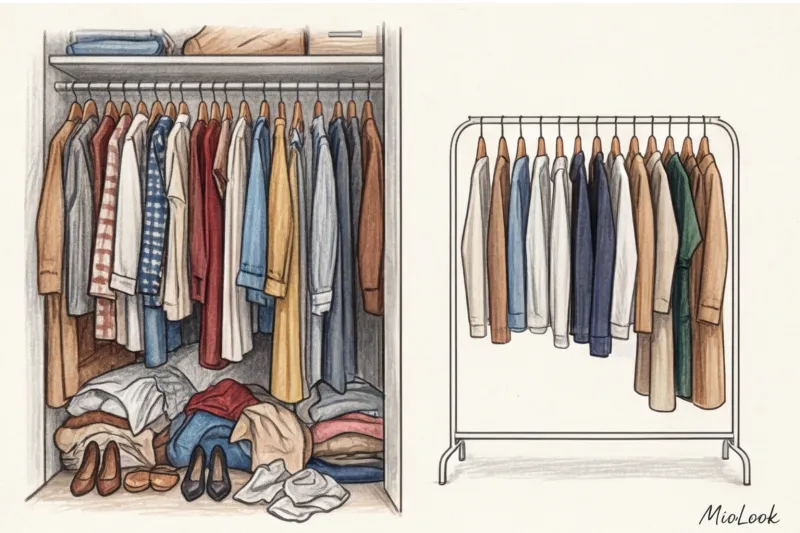
You know that dull crunch? It's the sound you hear when you try to squeeze a hanger with a freshly ironed shirt between two tightly hung jackets. I once had a client come to me whose closet contained over 200 items of clothing. Yet she wore exactly 12 of them. The rest were literally suffocating: silks were covered in unsmooth creases, the shoulders of cashmere sweaters were deformed by cheap plastic hangers, and minimalist wardrobe seemed to her like an unattainable dream from glossy magazines.
Unlike typical advice that calls for simply throwing out everything unnecessary and buying identical beige turtlenecks, I approach style differently. As a textile expert, I know: when you have few items, they should work like a Swiss watch. We talked more about a smart approach to style in our The complete guide to the MioLook AI-powered capsule wardrobe app Today, we'll explore minimalism through the lens of textile engineering—how to assemble 15 pieces that will withstand heavy rotation, stay fresh, and free you from morning choice paralysis.
The Anatomy of a Minimalist Wardrobe: Why 15 Items Isn't a Limitation, It's Freedom
According to a large-scale 2023 study by the British organization WRAP (Waste and Resources Action Programme), approximately 30% of the clothes in the average closet haven't been worn in the past year. Why is this? The answer lies in cognitive psychology.
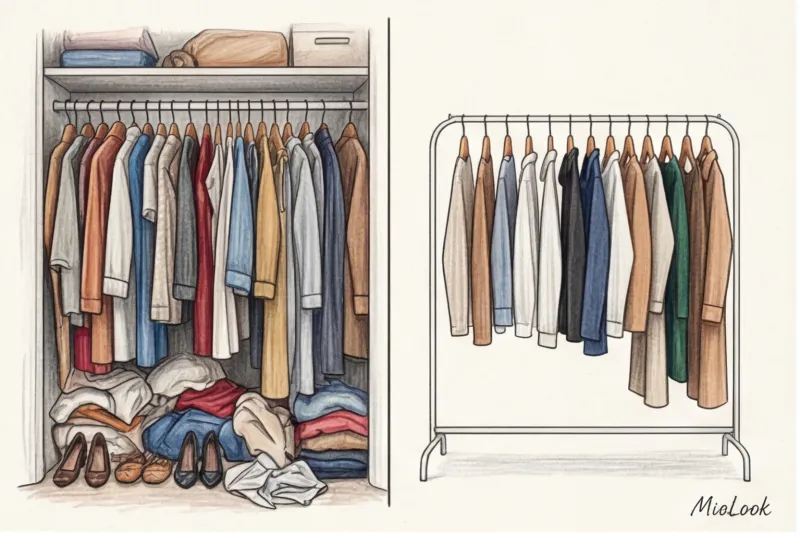
The human brain can only manage 30-40 items of clothing at a time. Anything beyond that becomes visual noise. Every morning, opening your overflowing closet is a micro-stress. Your brain simply blocks out unnecessary information, and your hand automatically reaches for your tried-and-true pair of jeans.
But the problem isn't just psychological—an overcrowded closet physically destroys your clothes. When clothes hang in layers, air circulation is disrupted. Friction destroys delicate viscose fibers, and natural wool loses its ability to recover its shape. Digitizing your wardrobe with an app is much more effective than buying another dozen thin velour hangers to cram in even more items.
The main myth: minimalism means boring beige things
If you search "minimalist wardrobe" on Pinterest, you'll be met with a sea of gray-beige melancholy. Over 12 years as a stylist, I've noticed one pattern: classic beige minimalism only looks expensive when you have a huge budget. Unless it's Loro Piana cashmere, but rather mass-market pieces, a total beige look often looks dull and cheap.
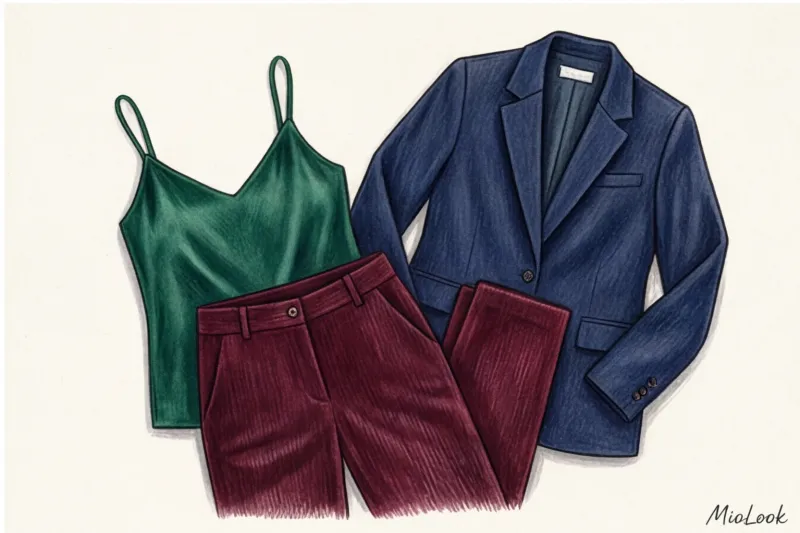
True minimalism isn't built on a lack of color, but on textured fabrics and impeccable tailoring. Your 15-piece capsule collection could be emerald, deep burgundy, or navy blue.
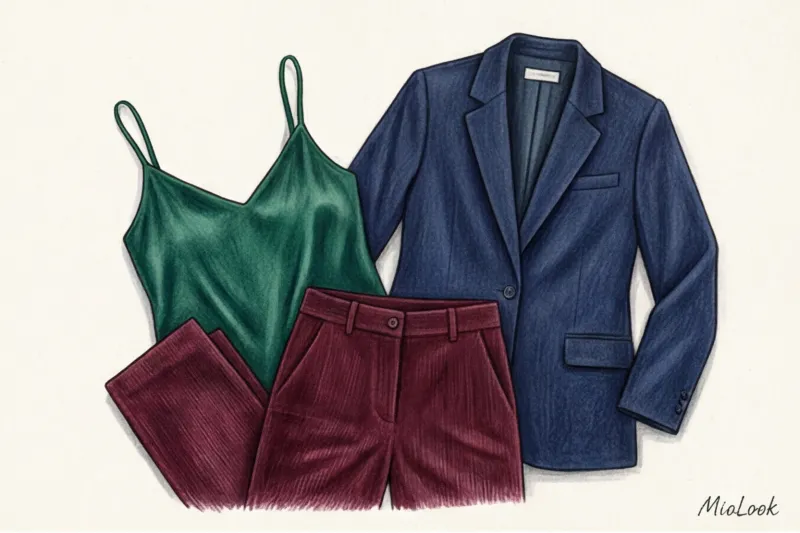
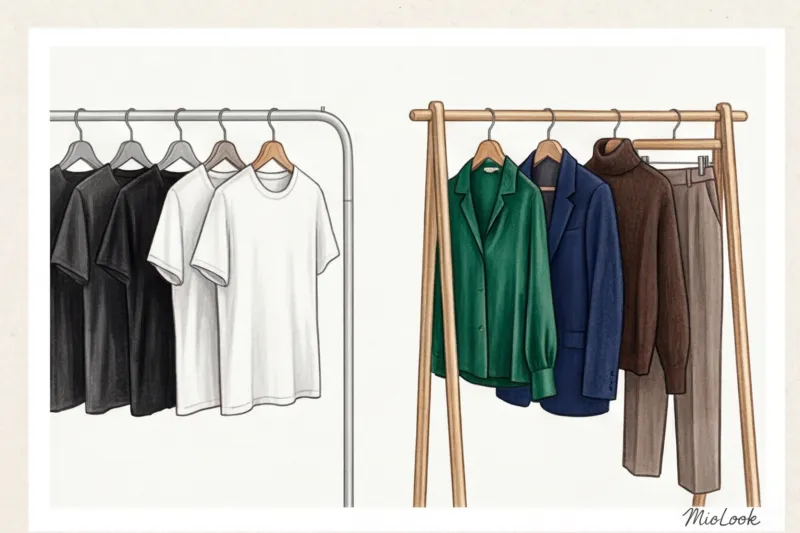
The secret lies in the rule of texture: the combination of smooth silk with textured chunky knit creates a sophisticated and appealing look, even in monochrome. Investing in one colorful blouse made of thick cupro (around €80–120) will pay for itself faster and bring more joy than buying five cheap white T-shirts made of loose cotton that will turn gray after the third wash.
Textile Mathematics: Which Fabrics Will Survive a 15-Item Rotation?
Let's do the math. If your active wardrobe only contains 15 items, each item will be worn and washed approximately five times more often than in a standard closet. A typical €10 T-shirt from H&M won't withstand this kind of wear—its seams will fray within a month.
For a minimalist capsule, you need to choose the right fibers:
- Merino wool: It has a unique self-cleaning property. Simply air the jumper on the balcony in humid weather, and it will be fresh again.
- Tencel (lyocell): It is much stronger than regular viscose, drapes well and hardly wrinkles.
- Ring-spun cotton: a spinning technology in which the thread is tightly twisted, making the fabric smooth and resistant to pilling.
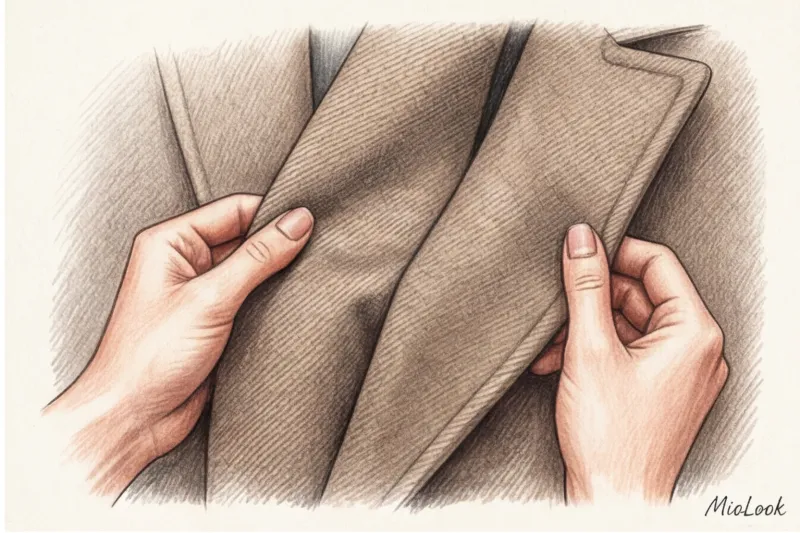
My golden rule: avoid fabrics with an elastane content greater than 5%. Items with 10-15% elastane (especially jeans) fit great in the fitting room, but with frequent wear, they stretch out at the knees and lose their shape irreversibly.
Quality Indicators: How to Read Seams and Weaves
When I do a wardrobe audit, the first thing I do is turn everything inside out. What makes a piece last for years?
- French seam: A closed seam where the edges of the fabric are hidden inside. If you see this stitch on a silk or cotton shirt instead of a standard overlock, you're looking at a quality item.
- Fabric density (GSM): Weight in grams per square meter. For a good basic T-shirt, this figure should be at least 180-200 g/m². The fabric should not be see-through.
- Fittings: Buttons made of natural corozo, mother-of-pearl, or dense metal always beat thin, loud plastic that cracks in the washing machine.
The 15-Thing Formula: Building the Perfect Construction Set
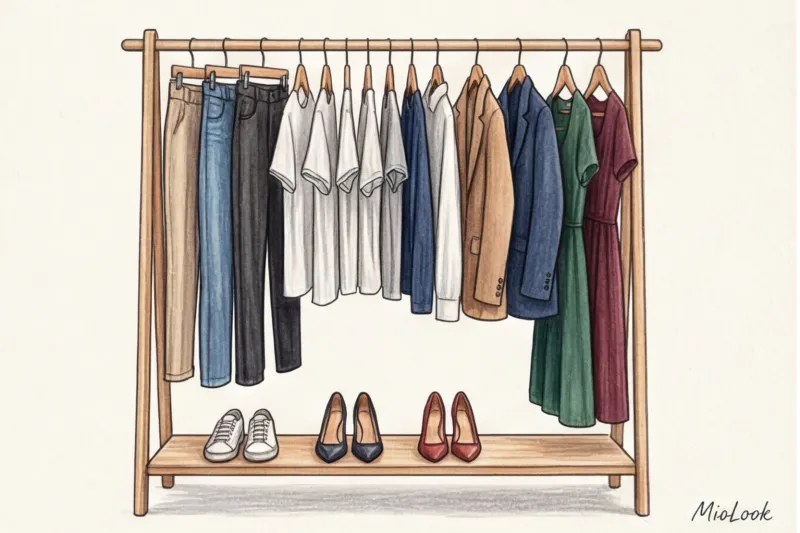
This mathematical model yields over 70 unique combinations. Let me clarify right away: this does NOT work If your lifestyle requires a strict corporate uniform five days a week, and on the weekends you are a professional cyclist, you will need two different micro-capsules to accommodate such contrasts.
But for a typical urban rhythm (working in a hybrid format, meeting with friends, exhibitions, walking) the formula is ideal:
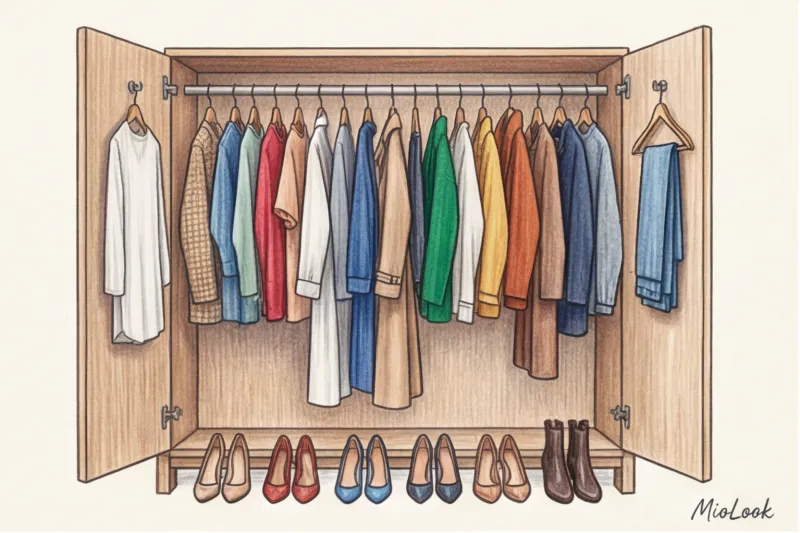
- Bottoms (3 pcs.): Perfectly tailored trousers made of thick fabric (wool or twill), structured straight-cut jeans without fraying or elastane, a versatile midi skirt (for example, a bias-cut one made of thick silk).
- Tops (5 pcs.): A structured men's-style shirt, a top made of thick cupro, two high-quality T-shirts (for example, white and dark blue) with a density of at least 200 GSM, a thin cashmere or merino jumper.
- Layers (2 pcs.): A well-cut jacket (made of wool with a minimal addition of synthetics for durability) and a thick oversized shirt or a textured knit cardigan.
- Dresses (2 pcs.): A shirt dress (which can be worn unbuttoned like a duster over jeans) and a simple A-line or straight-cut dress.
- Shoes (3 pairs): Classic loafers or brogues, simple leather sneakers without logos, ankle boots or shoes with a comfortable heel (depending on the season).
Your perfect look starts here
Join thousands of users who look flawless every day with MioLook by digitizing their capsules.
Get access — €0.99 onceGoing Green: How to Downsize Your Closet Without Sending Clothes to Landfill
As an eco-activist, I'm horrified by popular videos on social media where bloggers, in a "radical decluttering" campaign, stuff 100 perfectly good things into black trash bags and toss them to the dump. This is a true environmental crime. Minimalism shouldn't increase your carbon footprint.
Before you change anything, announce it wardrobe freeze — a strict ban on purchasing any clothing for three months. You'll be surprised how quickly the veil of consumerism lifts, and you'll begin to see the true potential of the things you already own.
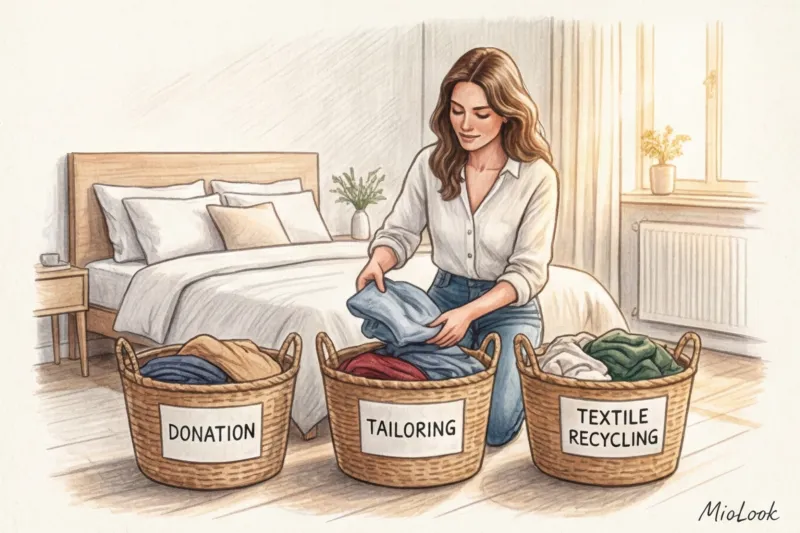
What do you do with the rest of your things once you've identified your ideal 15?
- Repair and upcycling: Take anything that needs altering to a tailor. A perfect fit can save even budget items.
- Resale platforms: Branded items (COS, Massimo Dutti, premium segment) sell well on international platforms like Vinted or Vestiaire Collective.
- Swaps (exchange parties): A great way to update your wardrobe in an eco-friendly way is by swapping items with friends or at special events.
- Textile processing: Place items with stains and holes ONLY in special textile recycling boxes, not in the regular trash bin.
Checklist: Audit Your Current Wardrobe Before Going Minimal
To figure out what exactly is your "favorite item," use the old but reliable "reverse hanger" method. Hang all your clothes on a rail with the hooks facing you. When you put an item on and return it to the closet, hang it with the hook facing away from you. After a month, you'll clearly see your true preferences.
The next step is - digitalization of the wardrobe core Choose 10-15 of your favorite things that make you feel like a million bucks. Upload photos of them to the "smart wardrobe" feature in MioLook Artificial intelligence will help analyze pairings and reveal "blind spots"—for example, you might have five great tops but only one pair of pants that go with them.
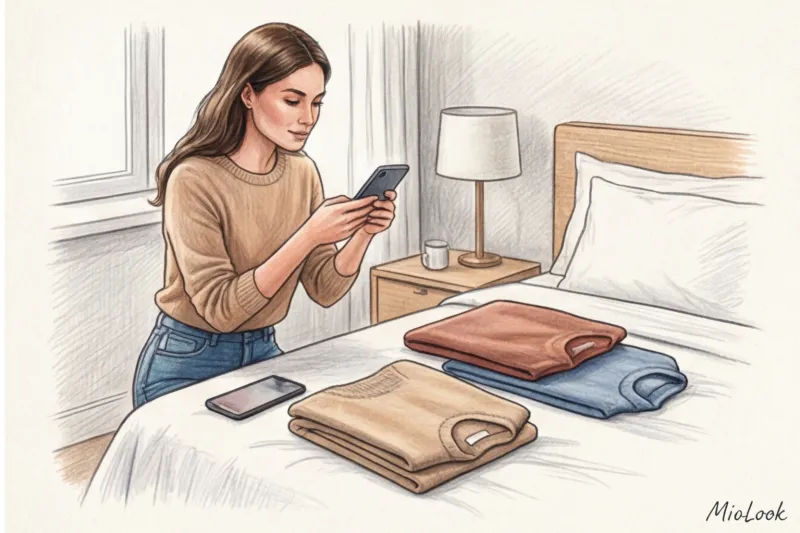
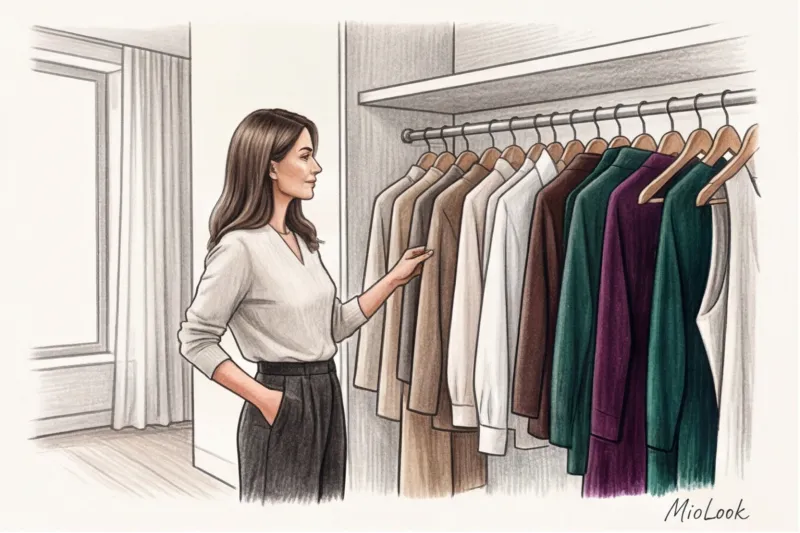
Be sure to analyze the items sitting on the back shelves with tags. Why don't you wear them? Is the fabric itchy? Is the color not your style? Can't find anything to pair them with? This analysis will prevent you from repeating the same mistakes when creating your new minimalist capsule wardrobe.
Ready for digital minimalism?
Try the MioLook free plan—no commitments. AI will find the perfect looks from your uploaded items.
Get access — €0.99 onceConclusion: From quantity to quality and durability
A minimalist wardrobe isn't a destination where you stand proudly in front of an empty closet. It's a flexible system for managing your personal style. The less visual clutter on your hangers, the better your morning routine. You stop wasting precious energy wondering "what to wear" and start your day with confidence.

I'm challenging you: don't throw anything away just yet. Simply select 15 of your best-quality, most comfortable, and most beloved items for the next week. Put everything else in boxes or on the back shelves. Live with this mini-wardrobe for 7 days. Spoiler: you'll feel incredibly light, and people will compliment you, because the things you love always look best on you.