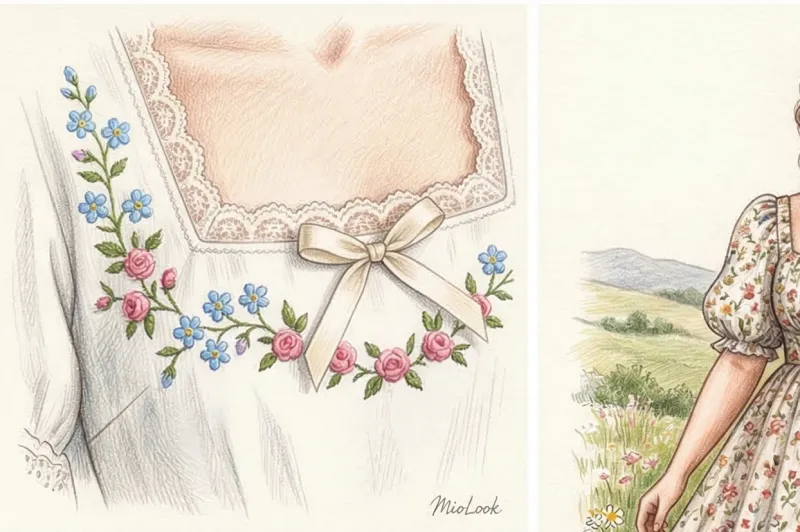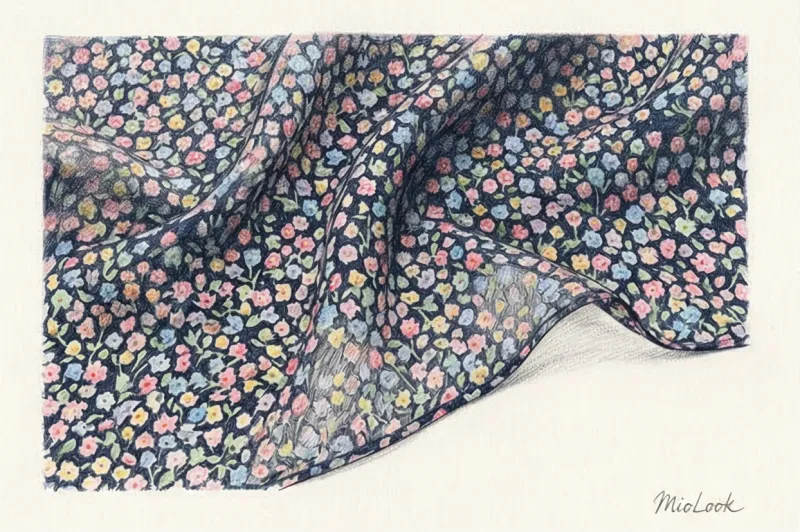
Millefleur print is a textile pattern featuring a dense scattering of miniature flowers on a plain background. The design lacks a strict geometric repeat, utilizing tiny buds that merge into a textured surface. Brands apply this motif to lightweight fabrics for romantic dresses.
What Is Millefleur Print and Where Did It Originate?
The term itself originates from the French language, translating literally to a thousand flowers. This perfectly encapsulates the visual impact of the design. Rather than featuring large, distinct blooms that draw the eye to individual elements, this pattern creates an overall texture that feels both delicate and intricate.
The technique did not begin in the garment industry. It first appeared in France during the 15th century as a prominent style in tapestry weaving. Artisans densely filled the backgrounds of large woven artworks with small, intricate floral motifs to add depth and richness to the scenes. The famous tapestry series The Lady and the Unicorn serves as a prime historical example of this method. Centuries later, as textile manufacturing evolved, this decorative technique transitioned from heavy wall hangings to wearable fabrics. Today, the pattern instantly evokes a romantic, slightly vintage mood. It remains strongly associated with the Provençal style and the modern cottagecore aesthetic, celebrating rural simplicity and natural beauty.
Distinctive Visual Features of the Pattern
The main characteristic that defines this pattern is the miniature size of the buds, leaves, and inflorescences. From a distance, the individual elements lose their distinct shapes and merge into a single, cohesive textured surface. The flowers are arranged densely and often randomly across the fabric. Unlike traditional prints that rely on a pronounced geometric repetition or a strict rapport, this design feels organic and unstructured.
A classic iteration features multicolored buds accompanied by tiny green leaves, all set against a contrasting background. Designers frequently experiment with the base color. Light bases like cream, soft blue, or pastel pink enhance the romantic, summery feel. Conversely, dark bases such as navy, burgundy, or black give the pattern a moody, transitional quality suitable for cooler months. Monochrome versions, where the flowers and background share the same color family, offer a more subdued and contemporary take on the classic floral.
Key Characteristics of Millefleur
| Feature | Description |
|---|---|
| Motif Size | Miniature buds and leaves, typically under one inch in diameter |
| Arrangement | Dense and random scattering without an obvious geometric repeat |
| Typical Fabrics | Chiffon, fine cotton, viscose, silk, and staple fiber |
| Associated Styles | Cottagecore, Provençal, vintage, romantic, bohemian |
| Best Seasons | Spring and summer for light bases; Fall for dark bases |
Best Fabrics for the Millefleur Pattern
The design is most often applied to lightweight, flowing materials that complement its delicate nature. Fine cotton is a popular choice for everyday summer dresses and casual blouses, offering breathability and crispness. Chiffon and silk elevate the print, allowing the fabric to drape beautifully and move fluidly with the body, which enhances the romantic appeal. Viscose and staple fiber are also widely used by contemporary brands, as they provide an excellent canvas for vibrant dyes while maintaining a soft, comfortable feel against the skin. These materials ensure that the dense floral arrangement does not feel heavy or stiff.
How to Style Millefleur Print Clothing
When styling garments featuring this delicate pattern, playing with contrasting textures plays a key role in achieving a balanced outfit. Because the print inherently carries a strong romantic and somewhat nostalgic energy, wearing it head-to-toe without grounding elements can result in an overly childish or theatrical look.
Playing with Contrasting Textures
To modernize the aesthetic, fashion experts recommend pairing lightweight, flowing pieces with rougher, more structured materials. For instance, a delicate chiffon blouse covered in tiny flowers looks incredibly stylish when tucked into rigid, straight-leg denim jeans. Similarly, throwing a smooth leather biker jacket or a thick, chunky knit cardigan over a flowing floral midi dress instantly tones down the sweetness. The friction between the soft, airy fabric and the heavy, durable outerwear creates a dynamic and contemporary silhouette.
Color Coordination Rules
When choosing solid-color companion pieces to wear with your floral garments, color coordination is the most effective technique. Instead of introducing entirely new colors, look closely at the print itself. Identify one of the secondary shades present in the design, such as the subtle green of the small leaves, the soft yellow of a flower center, or the specific blue of a tiny petal. Selecting a jacket, handbag, or sweater in that exact shade ties the entire look together seamlessly. This method ensures the outfit looks intentional and polished without clashing with the busy pattern.
Choosing the Right Footwear
To maintain a modern silhouette, pieces with this pattern should be paired with footwear that does not feature heavy embellishments. The print is already visually busy, so minimalist or sharply contrasting shoes work best. Basic white leather sneakers offer a clean, casual contrast that makes a floral dress perfect for weekend errands. For a more rebellious, grunge-inspired contrast, chunky lace-up combat boots or heavy Chelsea boots provide the perfect counterweight to the delicate fabric. Simple, strappy sandals are ideal for high summer, provided they remain understated and let the dress remain the focal point of the outfit.