Why do we so meticulously choose a €1,000 stroller, meticulously examining the wheel suspension and the fabric composition of the canopy, but are willing to buy a cheap cotton bra from the nearest mass market, justifying it with the thought, "Well, it's only for a couple of months." Over 12 years of working as a stylist, I've realized one thing: it's precisely during pregnancy that women tend to skimp on themselves the most. And that's a huge mistake.
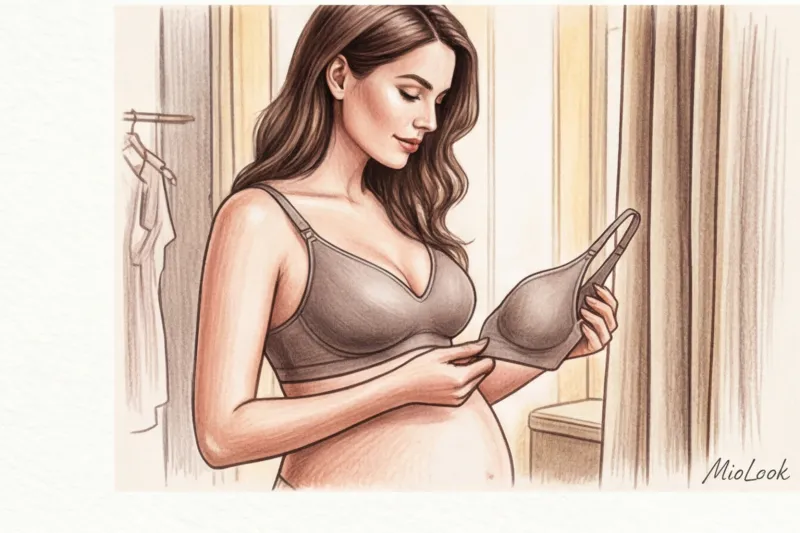
Correctly selected maternity underwear It's not unsightly, but it's a necessary temporary measure. It's a high-tech foundation that will preserve your health, the perfect fit of your favorite clothes, and, most importantly, your self-confidence. I discussed the "invisible foundation" philosophy in more detail in our The complete guide to creating a basic lingerie wardrobe Today, we'll explore this issue through the lens of investment: how to put together a premium lingerie capsule for the expectant mother that will recoup every cent of the investment.
The "Temporary Wardrobe" Myth: Why Maternity Lingerie Is Your Most Important Investment
One of my clients, a top manager at an IT company, once came to me in tears. She'd bought a stunning €400 silk Max Mara blouse for an important presentation, but in the mirror she saw a "sloppy woman." The problem wasn't the blouse or her changed figure (she was six months pregnant). The problem was hidden beneath the silk: a textured, mass-market nursing bra with rough plastic clips was mercilessly ruining her silhouette, and the cutting elastic was creating lumps on her back.
Cheap underwear ruins expensive clothes. Period. During pregnancy, breasts become heavy and skin becomes incredibly sensitive. That's where my favorite rule comes into play. Cost-Per-Wear (CPW) — cost per wear.
"A premium bra from Anita Maternity or the French brand Cache Coeur for €100, which you'll wear for at least 200 days, will cost you €0.50 per outing. That's cheaper than a cup of espresso. Three cheap sets for €20, which will lose their shape after the third wash and will chafe, will end up costing you more—both financially and emotionally."
You're not investing in a piece of fabric, but in a support architecture that will keep your back from falling apart by the end of the workday.
Access to MioLook for €0.99 — one-time payment
A smart AI stylist will select the perfect look based on your new parameters.
Get access — €0.99 onceSupport architecture: how the body changes and what structures are needed
Let's turn to physiology. According to mammologists, by the third trimester, breast weight increases by an average of 1–1.5 kg. At the same time, the rib cage expands (up to 5–7 cm in circumference) as the diaphragm rises due to the growing baby.
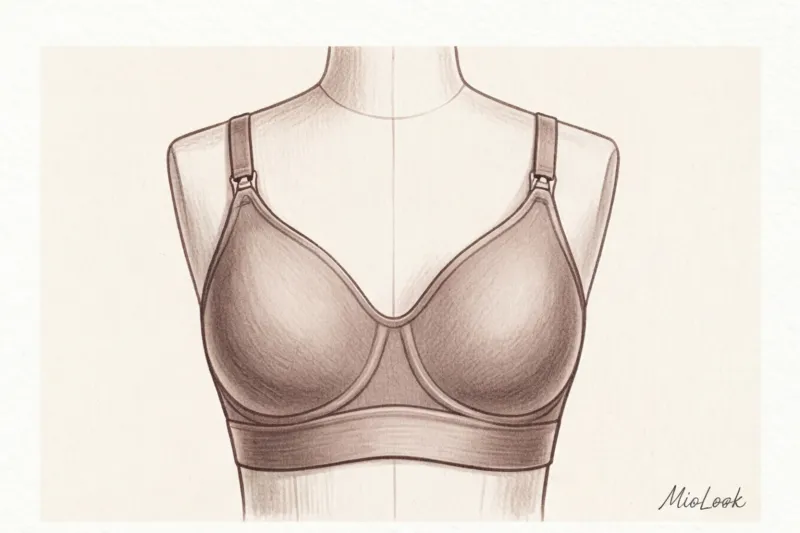
A regular plus-size bra won't work here. The engineered cut of specialized bras is radically different:
- Refusal of metal bones. Rigid frames can compress milk ducts. Premium brands provide lifting not through metal, but through a wide, anatomically shaped waistband (under the breasts) and a special, tight knit.
- U-shaped back. While a regular bra's straps are often sewn almost straight, this bra's back is shaped like a U. This effectively redistributes the extra 1.5 kg of weight from the shoulders to the back, eliminating migraines.
- Adaptability. A good bra has 4 to 6 rows of hooks on the closure (instead of the standard 2-3) and memory foam cups that can expand and contract one size throughout the day to accommodate your milk let-down.
Panties: under the belly or on the belly?
In my experience, women are divided into two camps, but it's worth having both options in the capsule:
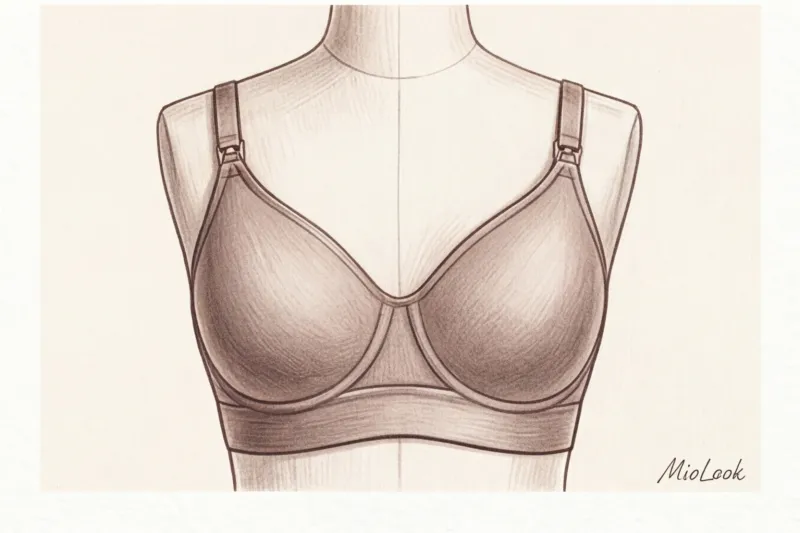
- V-neck under the belly. The perfect fit for the first two trimesters and an absolute must-have after a cesarean section, as the elastic line runs directly under the incision without touching it.
- High culottes with bandage support. A lifesaver for 8-9 months. The wide elastic panel gently hugs the belly, relieving some of the strain on the lower back.
The main rule for any bottom: laser edge processing No tight elastic bands on the thighs. Firstly, they cut off blood flow (hello, leg swelling). Secondly, the seamless edges make the underwear invisible even under the form-fitting knit dresses popular with brands like COS or Massimo Dutti.
The formula for the perfect capsule: how much and what kind of underwear do you really need?
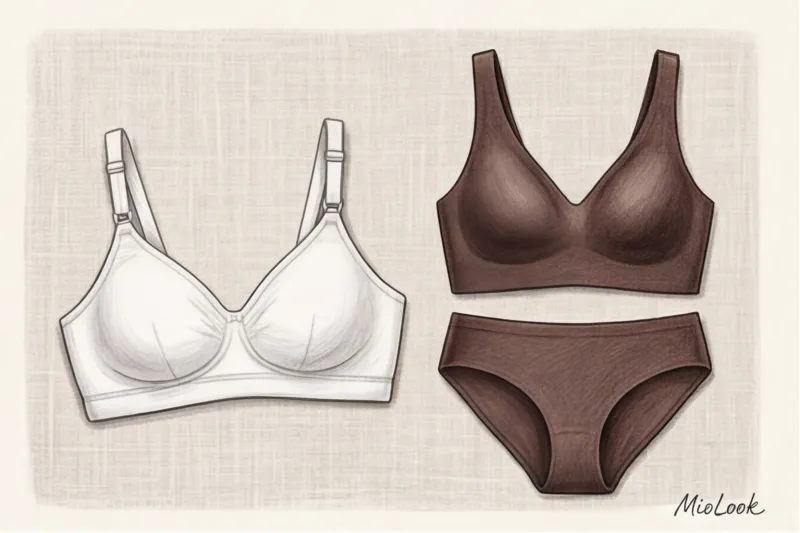
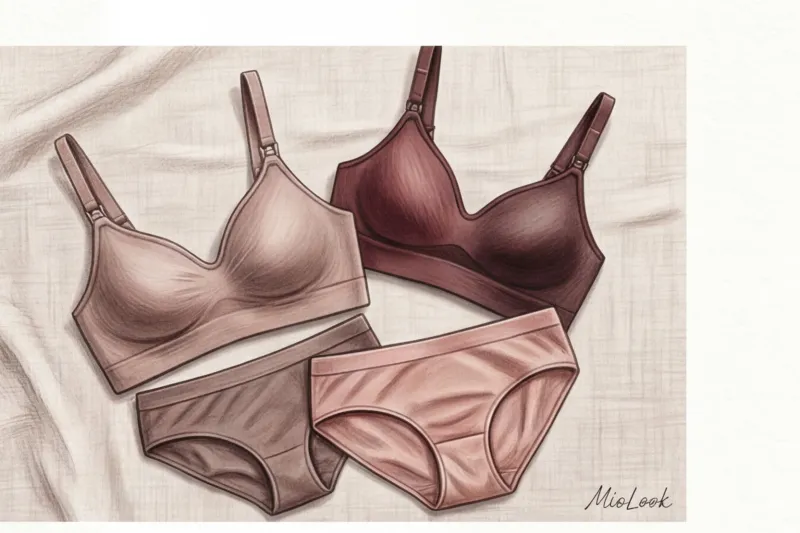
Forget the outdated formula of "black, white, nude." Pure white under a white shirt glows like a neon sign. In 2024, according to the PANTONE Color Institute, lingerie brands will finally embrace a sophisticated nude palette. Look for shades that literally blend with your skin: rosewood (dusty rose), mocha, taupe, powder.
Here's my proven formula for a lingerie capsule that will cover 100% of your needs for the next year and a half:
- 3-4 day bras: One for you, one in the wash, one drying, one spare. Ideally, two should be completely smooth (for T-shirts and thin cashmere), and one with soft, flat lace for a more playful feel.
- 2 tops for sleeping: Soft, frameless cross-body styles (wrap around the chest). Breasts also need light support at night, especially during lactation.
- 5-7 pairs of seamless panties: a mix of high and low landings.
By the way, to avoid buying too much, I recommend my clients to use smart wardrobe feature in MioLook You can take a photo of your clothes, and the app will suggest which basic items (and what colors) you're missing for the perfect combination.
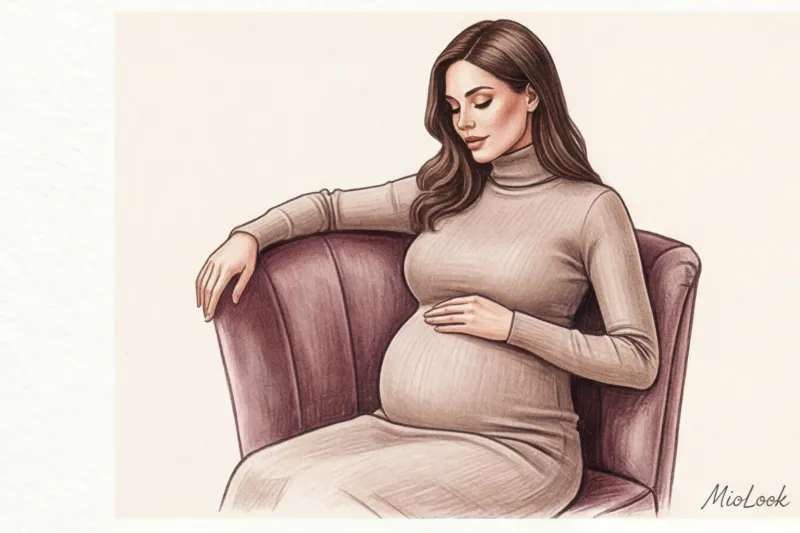
Shopping Timeline: Smart Shopping from the First Trimester to Breastfeeding
Do you know what the most common mistake expectant mothers make? Going to the store at 12 weeks pregnant and excitedly buying nursing bras. I always strongly advise against this. Your breasts and the size underneath will change at least twice more. Nursing bras bought in the third month simply won't fit you after birth.
Here is the correct investment timeline:
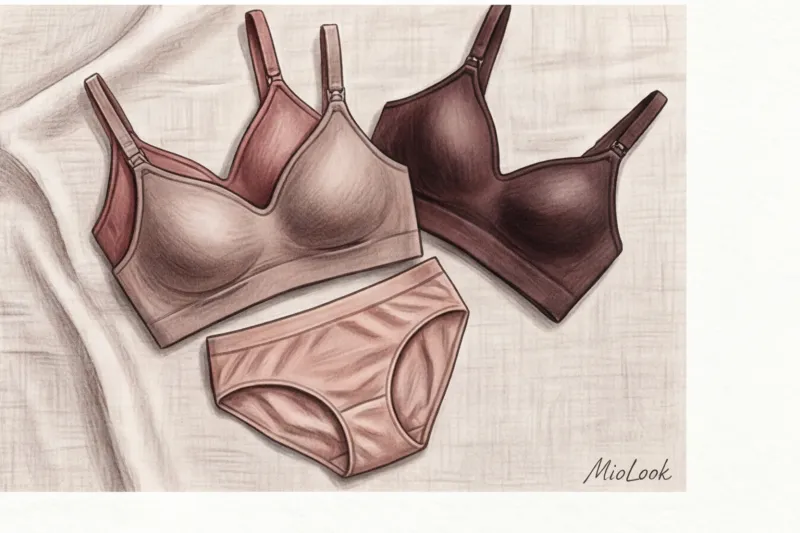
1st trimester: Your regular clothes still fit, but your breasts are already feeling hypersensitive. Put your push-ups on the back burner. Switch to stretchy bralettes and seamless microfiber tops. They'll adjust to your breasts' initial growth.
2nd trimester (14–26 weeks): It's time to buy your first maternity bra. Your underbust is starting to expand. Buy a bra that fits at the very top. tight Hooks. As your belly grows and your ribcage expands, you'll be able to move it to looser rows.
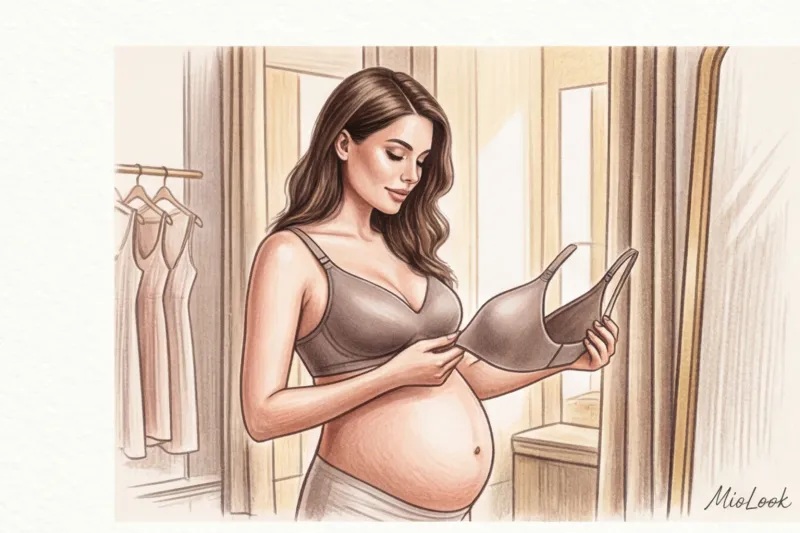
End of 3rd trimester (36–38 weeks): We're only now buying nursing bras with clips. The rule of thumb is to choose your current underbust measurement and go up 1-2 cup sizes. This extra cup size will be crucial once your milk comes in.
Your perfect look starts here
Join thousands of users who look flawless every day with the MioLook AI stylist.
Get access — €0.99 onceMaterial quality: what you absolutely mustn't skimp on
There's a myth, fueled by grandmothers' advice: "Underwear should only be 100% cotton." I'm going to say something unpopular, but pure cotton is a poor choice for maternity underwear. It stretches quickly, loses its shape, becomes stiff after washing, and, worst of all, takes a long time to dry (meaning your breasts will be in a damp, cold environment if you leak).
Invest in modern, high-tech fabrics. The best factories in Switzerland and Italy (such as Eurojersey) have long been creating materials that surpass cotton in every respect:
- Micromodal and Tencel: Beech and eucalyptus wood fibers are twice as soft as cotton, have antibacterial properties, and drape luxuriously without adding bulk.
- Spacer Technology: This is a breakthrough in the lingerie industry. According to research by the Swiss Textile Testing Institute (TESTEX, 2023), the 3D Spacer fabric consists of two layers of ultra-fine fabric connected by microthreads. This creates an air cushion inside. This cup allows the skin to breathe, instantly wicks away moisture, does not yellow over time, and perfectly conceals breast pads (something impossible with thin cotton).
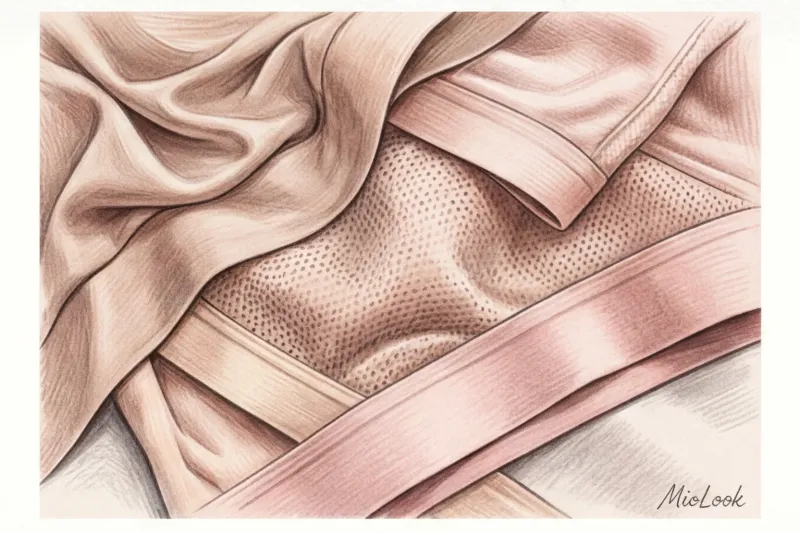
Stylist Checklist: Checking Lingerie Fit Before Buying
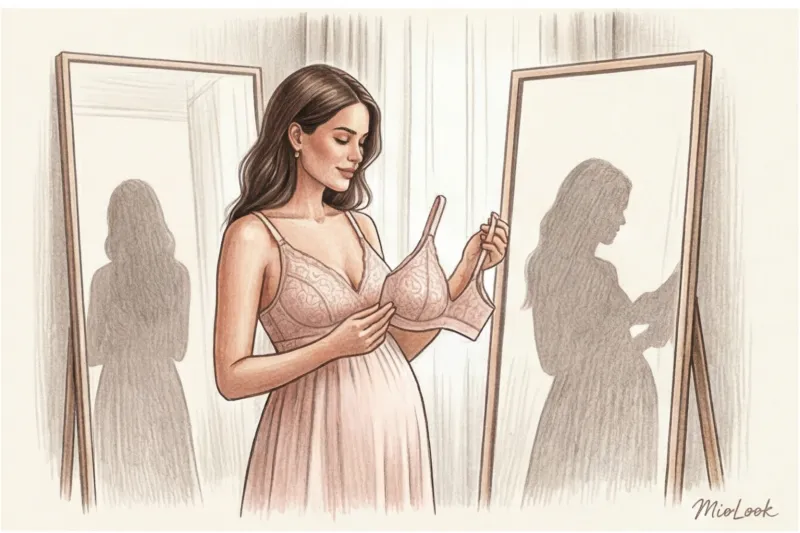
Buying premium lingerie requires thoughtful fitting. Save this checklist I use when working with clients in fitting rooms:
- Two-finger test. Two fingers should fit snugly, but without painful force, under the band of a fastened bra (at the back). If your entire palm fits, the band is too big, and the full weight of your breasts will hang on the straps.
- Strap width. It's pure physics. The larger the cup, the wider the strap should be. For a D cup and above, look for straps at least 1.5–2 cm wide. Narrow "macaroni" straps will cut into your shoulders, leaving bloody marks.
- Smooth relief (turtleneck test). I always ask my clients to bring a thin, fitted turtleneck into the fitting room. Put it on over the bra they've chosen. Can you see the seams? Are the cup edges or the clips sticking out? If so, take it off and move on. The base should be invisible.
- One-handed clip test. Try unfastening and fastening the nursing clip with one hand (alternating between your left and right). The clasp should release easily and with a soft click. Trust me, when you're holding a crying baby in one arm, struggling with a tight plastic clasp with your other hand is the last thing you want.
Fair clarification: This checklist doesn't apply to nighttime sleep tops. They have different rules: zero compression, no back fastenings, and the softest fabric possible.
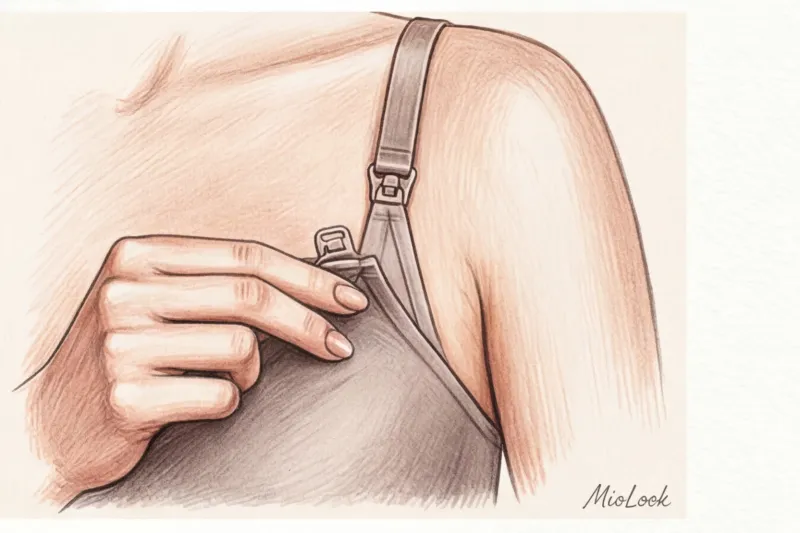
Building a lingerie wardrobe during pregnancy isn't just about shopping. It's an act of self-care while your body is going through its paces. Don't compromise on cheap fabrics and poor fits. Invest in a single, flawless capsule wardrobe, and you'll see how even simple jeans and a white shirt will look sleek and chic.