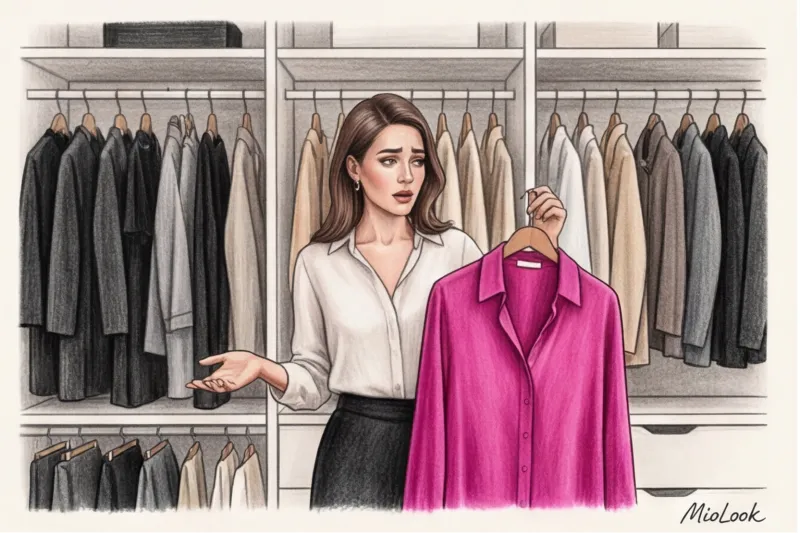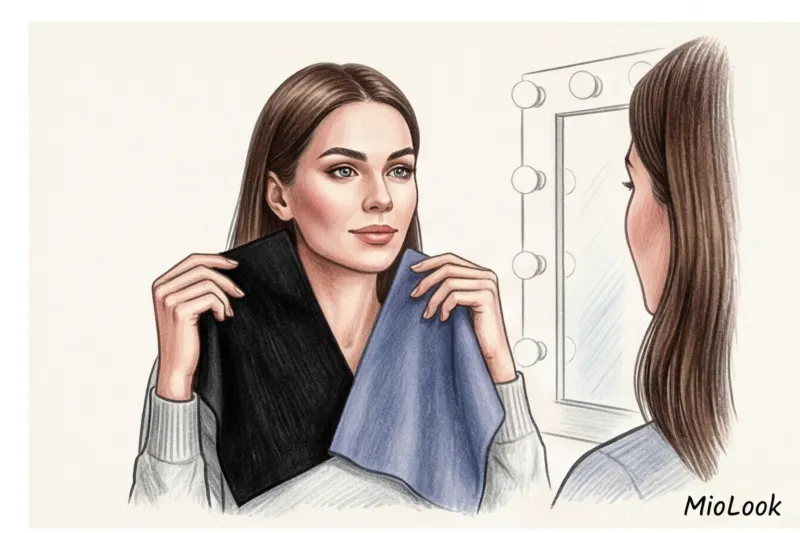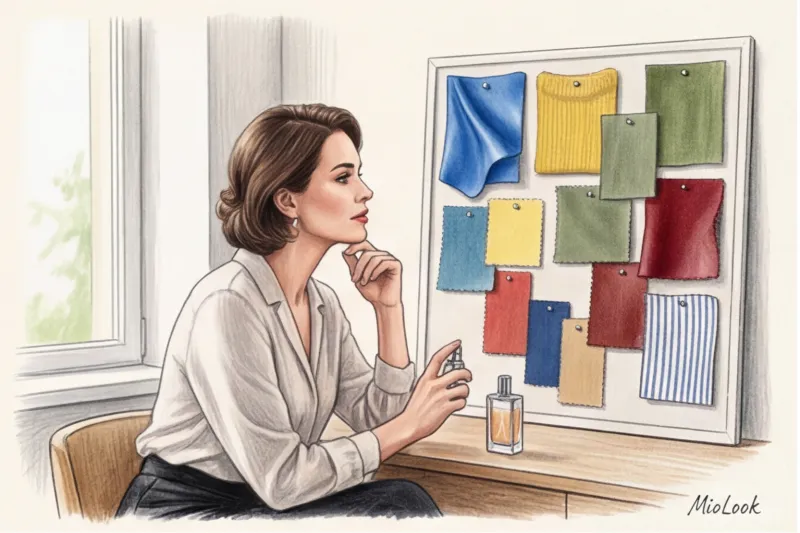
Imagine this: a woman in a flawless, flowing mint-colored silk dress walks past you. She looks like a million bucks. But as she approaches, you're overwhelmed by a heavy, suffocating wave of rich amber and oud. The visual magic is shattered instantly—your brain refuses to believe the image, because the scent screams something completely different.
In 14 years of working as a personal stylist, I've learned one thing: perfume can elevate a basic mass-market look to the level of heavy luxury, or it can mercilessly "kill" the most expensive designer piece. Today, we'll take a closer look. How to choose perfume to match your clothes , using the principle of olfactory contrast. I've already discussed the basic rules of a perfume wardrobe in more detail in our A complete guide to choosing a perfume to match your clothing style , and now we'll delve into the neurobiology of color.
What is color olfactory analysis and why does it work?
We rarely consider that our senses of smell and sight work in a tightly coupled manner. This phenomenon is called cross-modal perception. Oxford University professor Charles Spence has spent years studying how our brain subconsciously connects colors and smells. According to his data, over 70% of people automatically associate citrus notes with light shades of yellow and green, and heavy woody accords with brown, black, and burgundy.
When the visual (your clothes) clashes with the olfactory (your perfume), people around you experience a subconscious dissonance. They may not understand what's going on, but the image seems "cheap" or "out of place." And vice versa: a study published in Journal of Cognitive Neuroscience In 2023, a study revealed a striking fact: with a correct visual-olfactory match, subjects estimated the value of the image to be 40% higher than its actual price.
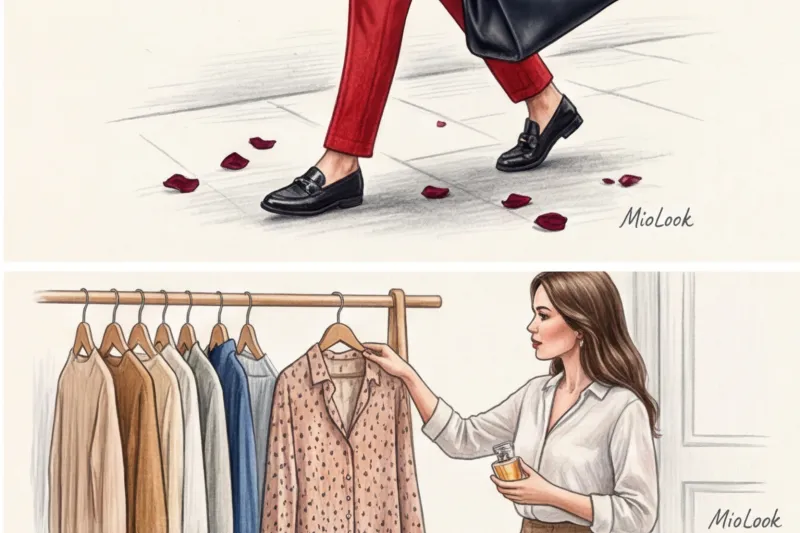
Have you ever noticed how your mood changes when you wear a formal suit with a lighthearted fruity spray? Your body literally resists the combination.
Access to MioLook for €0.99 — one-time payment
A smart AI stylist will select the perfect look.
Get access — €0.99 onceThe main rule of a stylist: how to match perfume to your clothes
The basic principle I teach my clients at the very first consultation is simple: look for a match in "temperature" and density. Warm shades require warming notes, cool shades require crisp and cool ones.
Color saturation directly dictates the acceptable sillage length. Pastel tones (soft blue, dusty rose, lavender) suggest a watercolor-like quality. Neon or deep, saturated colors (emerald, cobalt, fuchsia) can support a dense, almost tangible fragrance composition.
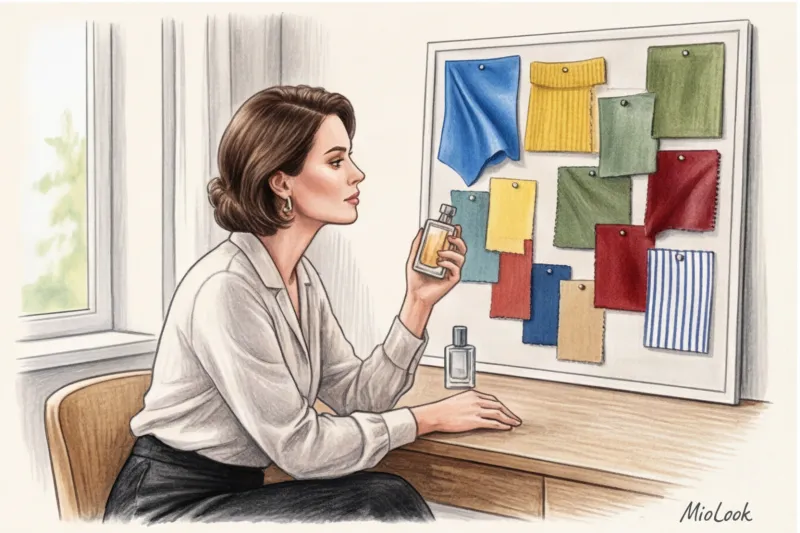
How do you determine the temperature of a fragrance before purchasing it? I always recommend a simple test: close your eyes and inhale the scent from a blotter. What physical sensation does it evoke? Does it warm you, like a sip of hot spiced tea, or cool you, like an ice cube on hot skin?
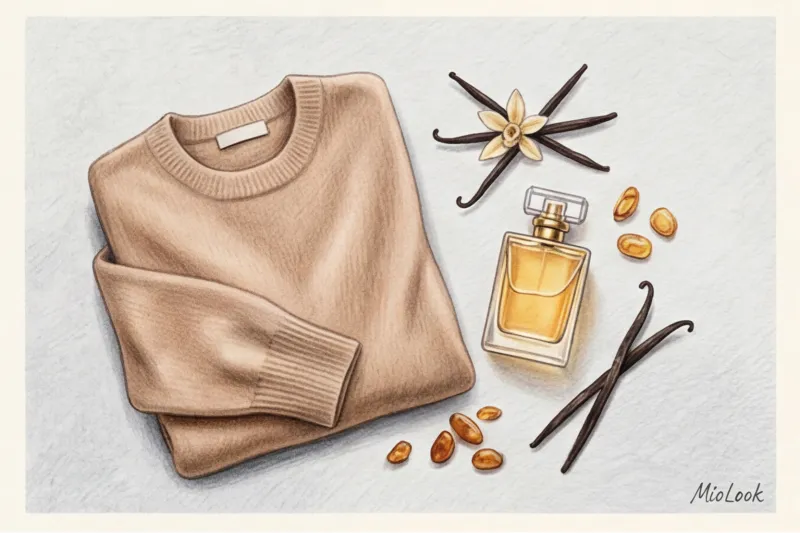
Color temperature: warm and cool combinations
- Warm colors (terracotta, mustard, warm beige, camel) blend perfectly with notes of Madagascar vanilla, viscous amber, cinnamon, cardamom and tonka beans.
- Cool colors (icy blue, emerald, fuchsia, snow-white) require notes of aldehydes, white musk, ozone, neroli and bitter citrus.
Olfactory Palette: Organizing Your Wardrobe by Color
Let's get down to specifics. How exactly can you tie your closet palette to your fragrance shelf to ensure every outing is flawless?
White, cream and pastel. These colors convey purity, innocence, and lightness. Powdery, lactonic (milky), and transparent floral scents (freesia, peony, lily of the valley) complement them perfectly. The biggest mistake is wearing a white cotton shirtdress and a heavy oriental perfume. This will instantly ruin the fragility of the look.
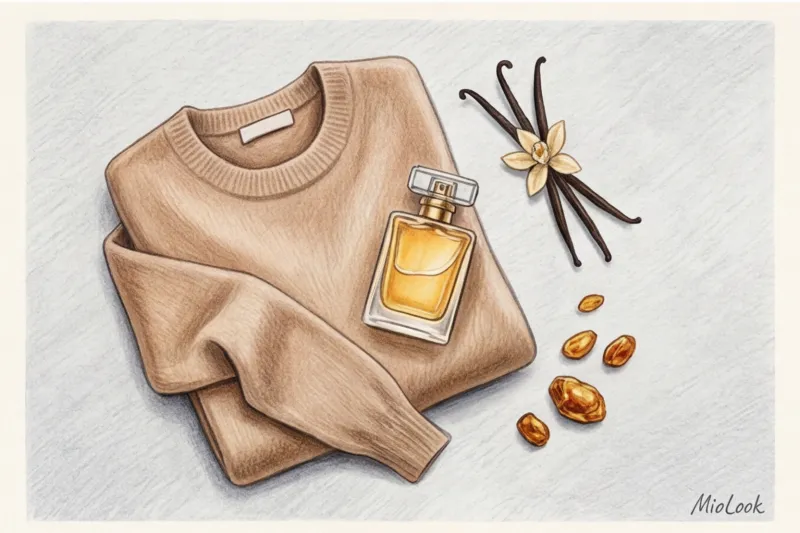
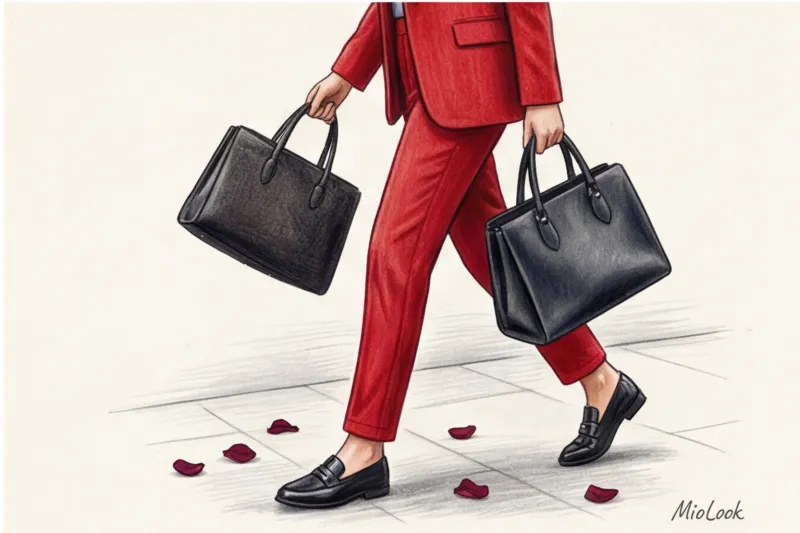
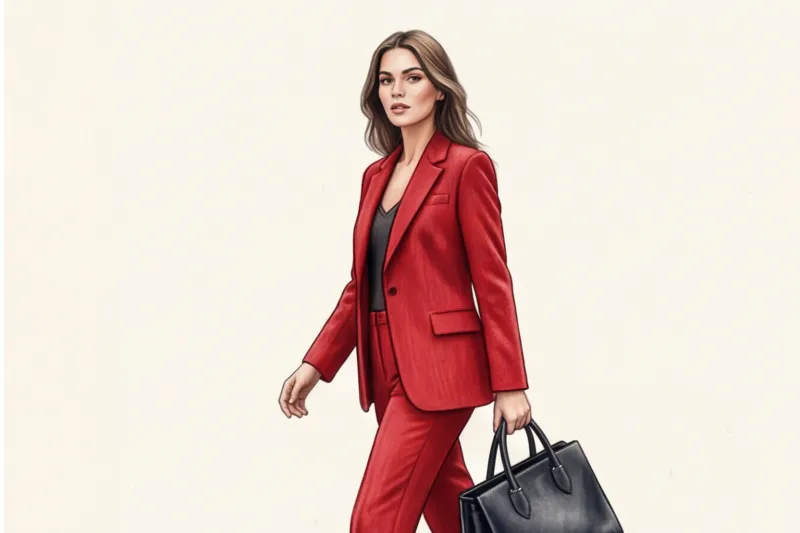
Red, burgundy and wine. The color of passion, energy, and aggression. Spices, thorny rose (with pink pepper or an oud base), patchouli, and dry woody notes are appropriate here. But be extremely careful: if your red outfit is provocative on its own, an overly sweet gourmand perfume will make the look overtly vulgar. Choose dry, austere scents for balance.
Green and blue. Shades of nature, intellect, and tranquility. They call for notes of fig leaf, vetiver, aquatic, and freshly cut grass. Incidentally, I wrote more about how these colors influence how you are perceived in a business environment in an article about the psychology of business attire colors.
Brown and beige. The colors of comfort and status. This is the best canvas for expensive gourmands: coffee, tobacco, sandalwood, rum.
One of my clients loved wearing delicate mint and peach suits by Massimo Dutti, but complemented them with the ultra-popular and heavy Baccarat Rouge 540. As a result, she looked like a spring fairy but smelled like a casino owner. The dissonance was colossal. As soon as we switched to a transparent molecular fragrance with notes of pear and ambroxan, her style took on a completely different tone.
The Myth of Black: Why Heavy Perfumes Are No Longer in Fashion
Many women still hold the stereotype that "a black dress = heavy evening perfume." Let's dispel this myth once and for all. All-black paired with a thick, oud-based, or rich oriental fragrance is a surefire way to visually add 10 years to your age. This combination makes the look retrograde, heavy, and downright boring.
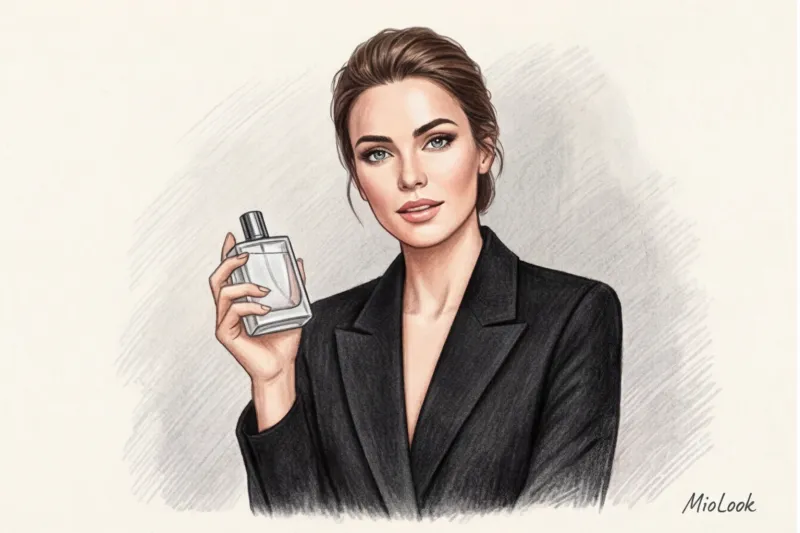
Modern luxury is built on contrasts. Want to achieve an "old money" effect? Wear a tailored, relaxed black suit and apply a crisp, absolutely cool, mineral scent. Notes of iris, juniper, gin, or pure molecular synthetics (such as Escentric Molecules or Byredo) are all suitable.
Over 14 years of practice, I've learned that nothing cheapens a black jacket from Zara or even Saint Laurent like a suffocating evening train during the day. Conversely, the contrast between the somber fabric and the crystal-clear train creates an intrigue that begs to be unraveled.
Your perfect look starts here
Join thousands of users who look flawless every day with MioLook.
Get access — €0.99 onceTexture is more important than color: how fabric changes sound
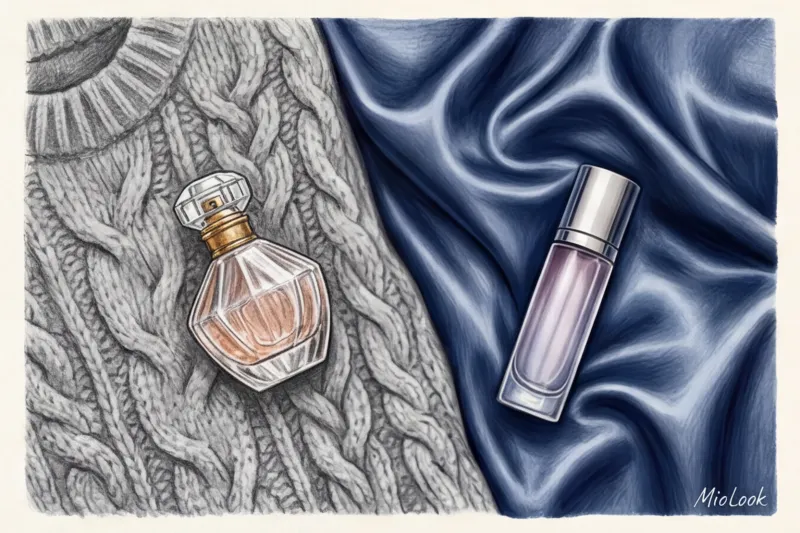
Color is only half the story. Few people realize that fabric textures hold and release fragrance formulas differently. You can choose the perfect color for your perfume, but be wrong about the material.
Silk and satin. Hunger