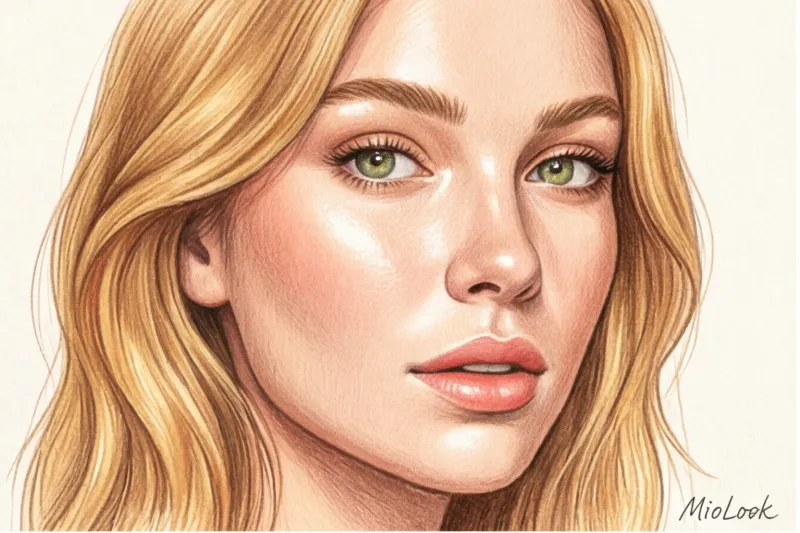
Just last week, a stunning woman came into my studio. She genuinely considered herself a "Summer" due to her slightly sun-kissed blonde hair, so she diligently contoured her cheekbones with a cool, taupe-toned contouring powder and dusted her face with a mattifying powder. The result? At 28, she looked a tired 35. We simply washed away that heavy layer, applied a drop of radiant fluid, warm, peachy cream blush, and bronzer. She looked seven years younger in ten minutes.
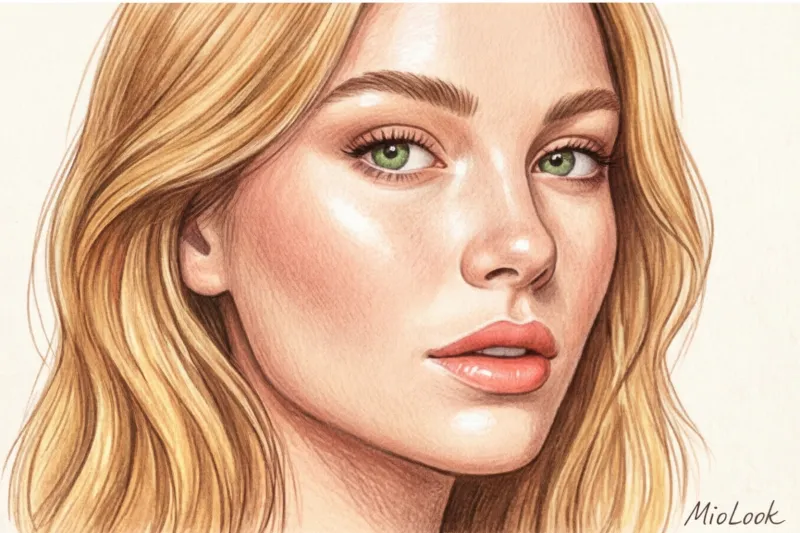
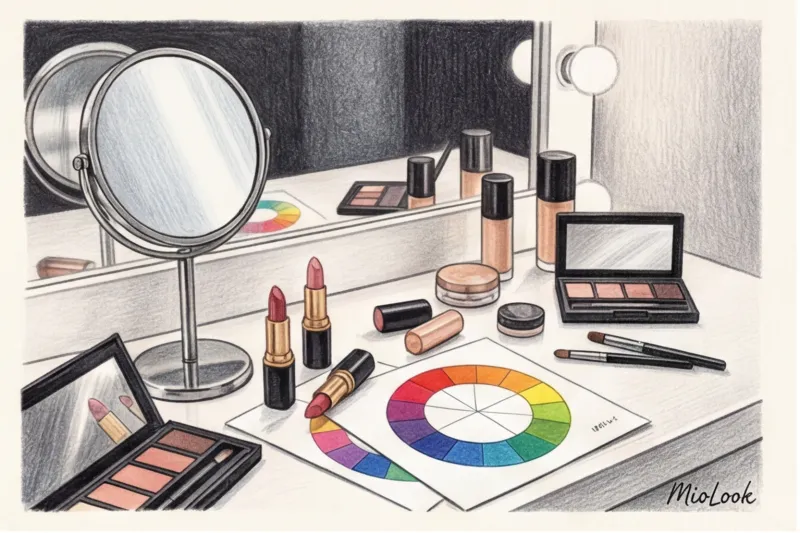
This is exactly how properly selected makeup for the spring color type works. It's not a rigid framework that prohibits you from experimenting, but a clear beauty compass. We discussed the basic principles of working with natural contrast in more detail in our a complete guide to perfect makeup based on your color type Today, we'll explore the chemistry and physics of spring palettes so you can forget about that "mask" effect on your face forever.
Anatomy of the Spring Color Type: The Physics of Color and Natural Radiance
Remember Johannes Itten's color theory? It contains the crucial rule of pure, unclouded color. Spring skin is a perfect illustration of this principle in real life. Anatomically, the skin of those with this color type is typically thin, often prone to localized redness (rosacea), but most importantly, it always has a warm, golden or peachy base.
It's all about how light reflects off your face. In the epidermis of spring skin, melanin is distributed in such a way that the skin seems to glow from within. This is why heavy, dense, "luxury" makeup often looks out of place in spring, like theatrical makeup. At the same time, light, translucent textures, even from the budget segment, can look incredibly expensive and elegant because they transmit light and allow your natural base to work to your advantage.
To create harmony, "pure" color types, which include Spring, require cosmetics with a minimal gray pigment content—ideally less than 5%. Any "dirt" in the shade instantly makes the face look sallow.
The main secret: makeup for the Spring color type is hidden in textures
You've probably been told hundreds of times, "Spring calls for peaches and greens." As a practicing colorist, I want to debunk this myth. Color is only 30% of success. The remaining 70% is choosing the right texture.
Let's turn to cosmetic chemistry. Matte, long-lasting foundations (the full-coverage category) contain high concentrations of titanium dioxide. This is a covering pigment that makes the coverage completely opaque. For thin spring skin, this is a death sentence. Statistics show that 90% of women with this skin tone look older than their age when using dull matte textures.
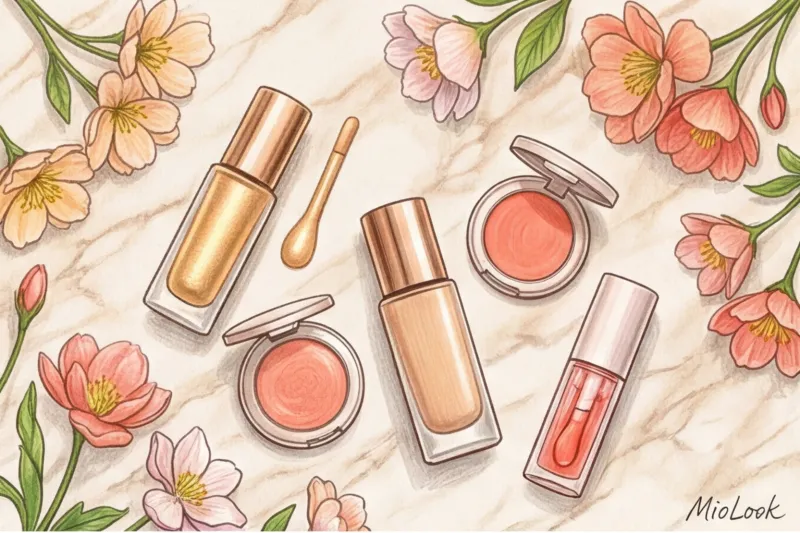
Your choice is glazing (semi-transparent) pigments. They work like stained glass: they add color without covering up your skin's texture. Swap out the heavy foundation for a lightweight BB cream, tinted serum, or cushion. Our goal is to create that perfect finish. Amalfi glow , the effect of an expensive face, as if it had been rested on the Italian coast, which is achieved only thanks to the dewy finish.
Your perfect look starts here
Join thousands of users who look flawless every day with the smart AI stylist MioLook.
Get access — €0.99 onceThree facets of one palette: Light, Warm and Pure Spring
Spring isn't just about classic blondes. Your color type can manifest itself in three different levels of contrast. Determine yours to ensure you're choosing the right makeup intensity:
- Light Spring: This is delicate and watercolor-like. You have very fair skin, light eyes, and light hair. Your makeup should resemble a pastel painting. Avoid harsh black lines, opting for warm beige, soft coral, and peach tones.
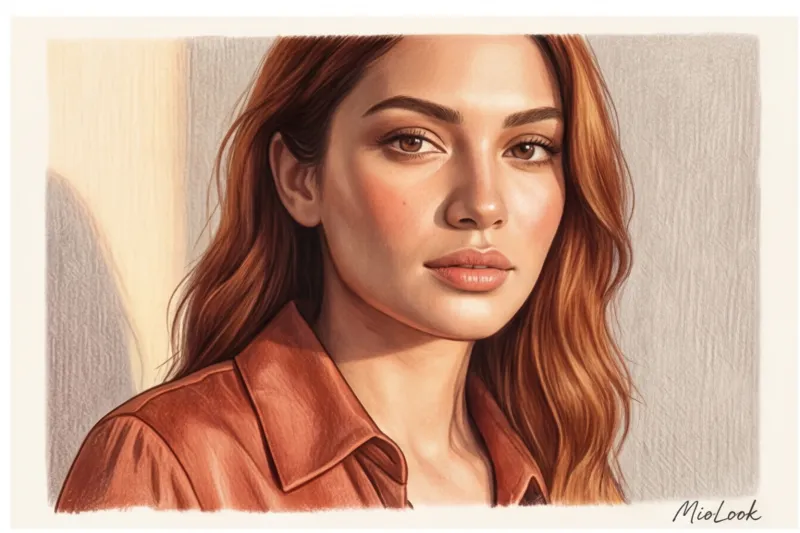
- Warm Spring: The absolute embodiment of gold. You can have reddish, copper, or chestnut hair with warm undertones. Your palette is more saturated: terracotta, warm caramel, rust, olive, and rich salmon.
- Clear/Bright Spring: The most contrasting subtype. Dark (but warm) hair against fair, radiant skin. You are the only Spring who effortlessly and naturally pulls off bright, almost neon coral accents and turquoise eyeliner without looking overdone.
The Perfect Beauty Capsule: Building Your Makeup Bag Step by Step
Treat your makeup bag like a capsule wardrobe. Each jar should coordinate with the next in temperature and texture. Investing in the right products will save you time in the morning and protect you from unsuccessful experiments.
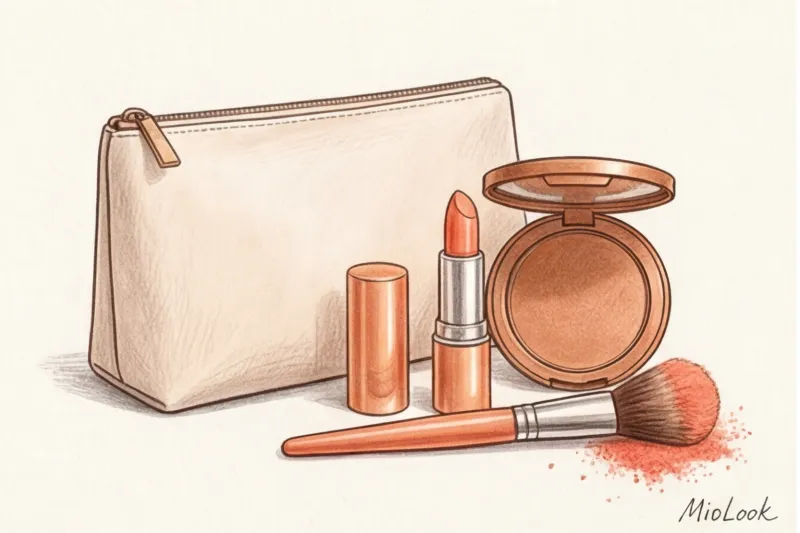
Tone and Sculpting: No Gray
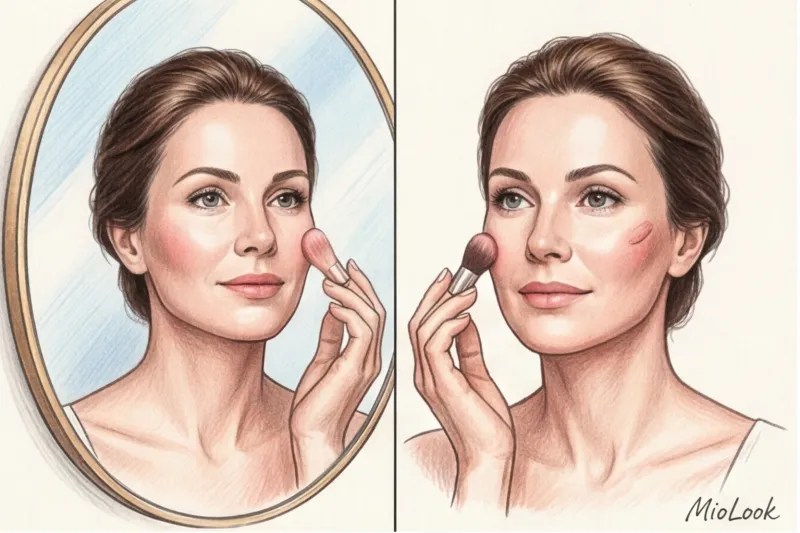
Forever ditch the taupe-colored highlighters that everyone used to create "sharp cheekbones" a couple of years ago. For Spring, they create the effect of bruises or dirty spots on the face. Replace the highlighter with a warm, radiant bronzer. Apply it with a fluffy brush to the high points of the face (cheekbones, bridge of the nose, forehead)—where the skin naturally tans.
If you have redness, don't try to cover it up with a thick layer of beige concealer. Use a color-correcting primer: a lightweight primer with a greenish or yellow undertone will locally neutralize redness, leaving skin looking vibrant and vibrant.
Eye Makeup: From Basics to Evening Glam
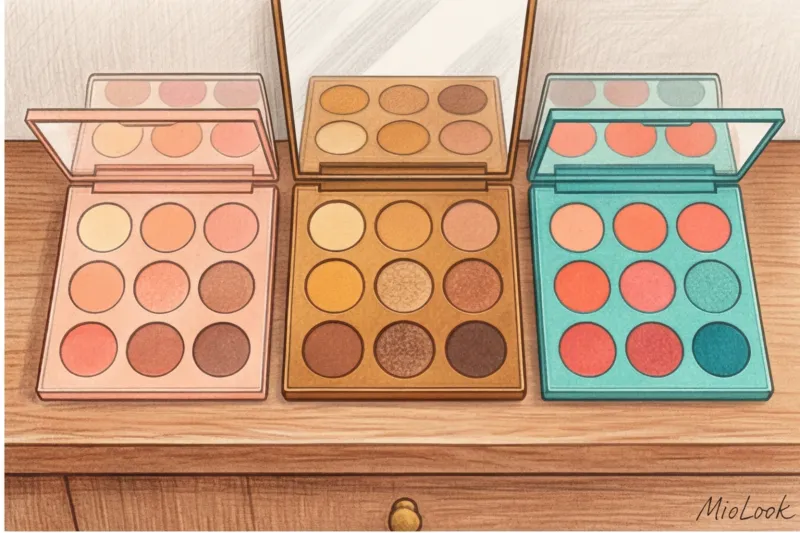
Your basic eyeshadow palette includes shades of champagne, warm beige, light caramel, and peach. The main rule: replace black kohl on the lid with brown, khaki, warm plum, or bronze. Black is too harsh for Spring; it visually makes the eyes appear smaller and heavier.
When choosing eyeshadow textures, opt for satin and fine shimmer formulas. Chalky matte eyeshadows can make spring eyelids look flat and tired. If you're looking for stylish makeup for work in the office Simply apply a drop of liquid satin eyeshadow in a bronze shade to your lid and blend with your finger—it takes 30 seconds, but it will create a deep, expressive look.
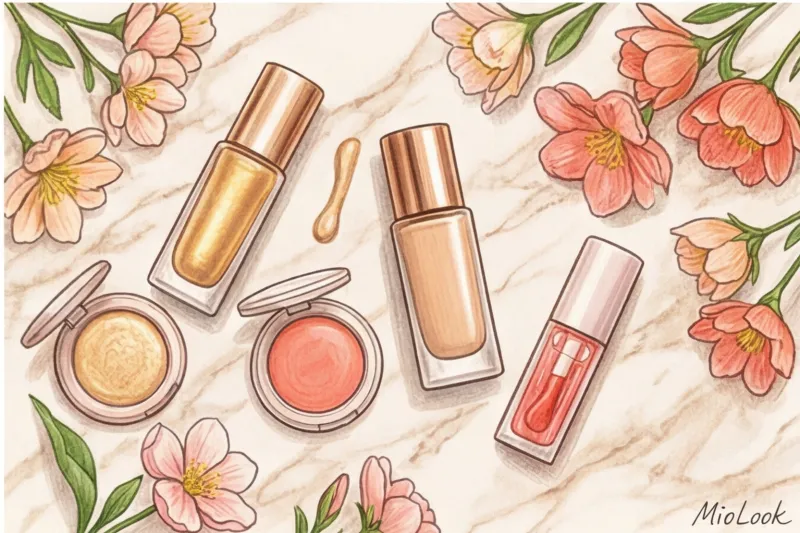
Lips and blush: peach, coral and tomato red
For Spring, the mono-makeup rule works perfectly: use the same creamy product (lipstick or tint) on your lips and the apples of your cheeks. This instantly ties the entire look together.
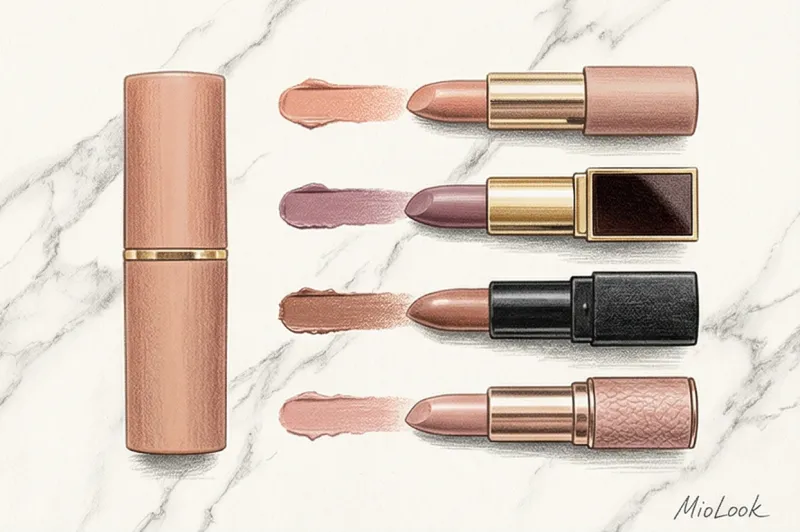
There's a pernicious myth that bright red lipstick is off-limits in Spring. In fact, it's perfectly acceptable! The key is in the shade and finish. Avoid rich, matte, cool burgundies. Your ideal red is the color of ripe tomato or poppy seeds: warm, with a subtle orange undertone, and a dewy, glossy finish.
Status business makeup for the Spring color type: how to look authoritative?
In my experience, top managers with a spring color type often complain, "My appearance is too soft; during negotiations, I'm perceived as a sweet girl, not a tough leader." The temptation arises to wear brighter makeup, create bold black eyebrows, and put on a stern mask.
But this is a mistake. By creating business makeup for executives We add contrast but maintain warmth. How do we do this?
- Graphic lines, but in warm tones: Draw eyeliner, not with a black marker, but with a long-lasting gel eyeliner in a dark chocolate shade. This will give your eyes the desired sharpness without looking too dramatic.
- Clear lip contour: Instead of a smudged tint, use a pencil that matches your lips or is slightly darker (a warm berry shade) and fill in your lips with a satin lipstick.
- Adaptation to light: If you're performing on stage or attending a Zoom conference with a ring light, remember that bright light can remove up to 40% of your makeup. Apply a slightly warm bronzer to the contours of your face to prevent it from appearing flat.

Ready to get started?
Organize your beauty wardrobe and find the perfect looks with a smart AI app.
Get access — €0.99 onceAnti-rating: 5 mistakes that kill the beauty of Spring
Let's be honest. There are some things that absolutely don't work on a spring look due to chemical pigment conflicts. Here are the top 5 no-nos:
- Cool pink lipsticks (Barbie pink). When combined with golden skin, they look cheap and make teeth look yellower.
- Too dark, grey eyebrows. Using a graphite pencil on your eyebrows instantly creates a stern, frowning expression. Opt for taupe shades with warm undertones or light brown gels.
- Dense matte powdering. Kills the natural glow of the skin, emphasizes the smallest expression wrinkles.
- Cool silver highlighters. On warm Spring skin, silver creates a sweaty or metallic effect rather than a sleek look. Champagne-colored or liquid gold highlighters are your best bet.
- Jet black smoky eyes. If you're looking for drama, try smoky eyes in shades of warm chocolate, bronze, or deep copper. Black will make your eyes look small and tired.
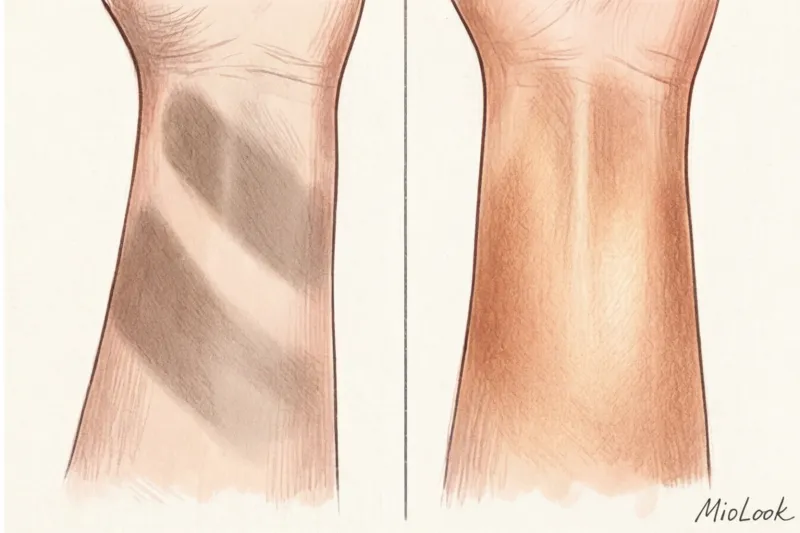
A stylist's checklist: revisit your makeup bag right now
You can check your makeup bag today, right from home. I give this checklist to every client during their first consultation:
- Blush Temperature Test (White Sheet Method). Apply your favorite blush in a thick layer onto a white sheet of paper in daylight. If the spot appears muddy, blue, or purple next to a flawless white, it's a cool pigment and should be discarded. If the color remains clear, salmon, coral, or golden pink, it's yours.
- Tone density test. Apply a drop of your foundation to the back of your hand and blend. If after 30 seconds you can't see your skin's texture (creases, pores, micro-relief) through the foundation, it will make Spring look older. Dilute it 1:1 with a hydrating serum or buy a lighter fluid.
To ensure your updated beauty capsule perfectly harmonizes with your wardrobe, I recommend digitizing your basic items with MioLook A smart algorithm will help you see how warm tones in clothing enhance your natural glow, so you'll never have to puzzle over color combinations in the morning again.
Remember the main thing: Spring is a color type that needs less to look more expensive Don't try to paint someone else's face on yourself. Use sheer, warm, radiant textures, and your skin will thank you, reflecting the light and attracting admiring glances.