
In 14 years of working as a stylist, I've learned one hard and fast rule: what made you stunning at 25 can quietly add five years to your appearance after 40. Heavy foundation, defined, bold brows, and dark matte lipstick—these are the three horsemen of the beauty apocalypse for an adult face. But have you ever noticed how sometimes, after an hour in front of the mirror, the result looks more tired than your "before" face?
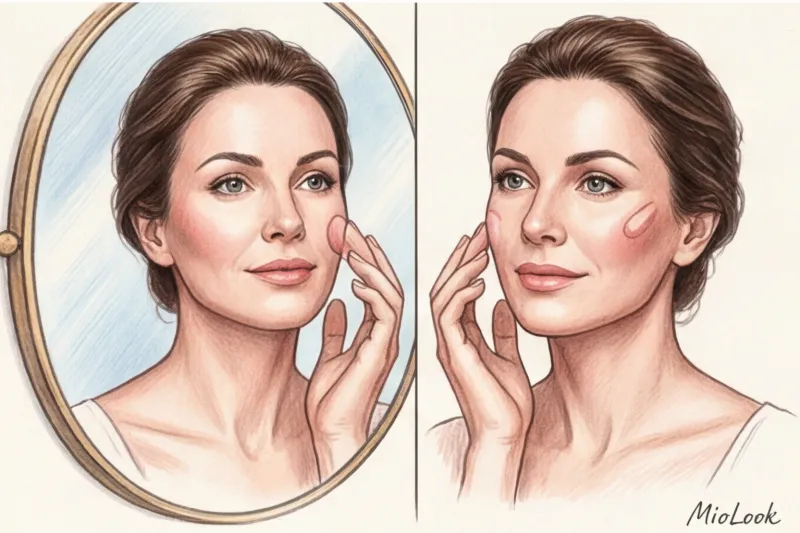
Literate age-appropriate makeup according to color type — this isn't an attempt to paint a new face over the old one. It's pure optical physics: working with color temperature and saturation to simulate lost volume. We've already discussed the basic rules of coloristics in more detail in our a complete guide to perfect makeup based on your color type Today, we'll narrow our focus and explore how to restore skin contrast without falling into extremes and popular myths.
Why the "20-Year Rule" No Longer Works: The Physics of Skin Color in the 40s
Let's face it, based on anatomy. According to medical data, after age 20, skin loses about 1% of its collagen annually. By age 40, this loss of turgor creates so-called "microshadows" on the face—in the nasolabial folds, corners of the mouth, and orbital area. It is these shadows, not the wrinkles themselves, that give the face a tired appearance.
This is where Johannes Itten's coloristic principles come into play. Dark, sunken areas shouldn't be covered with a thick layer of concealer (it'll just settle into the creases within an hour), but rather optically brought to the surface with color and light. Furthermore, our natural contrast changes with age: the iris fades slightly, the lips lose their natural pigment, and the skin tone becomes duller.
"The goal of lifting makeup is not to hide age, but to redirect the focus from the falling lines to the rising ones, using the right shades from your natural palette" - this principle from celebrity makeup artist Lisa Eldridge is one I constantly quote to my clients.
Access to MioLook for €0.99 — one-time payment
A smart AI stylist will select the perfect look based on your color type and appearance.
Get access — €0.99 onceThe biggest myth of age-related makeup: "Warm peach is refreshing for everyone."
Remember the glossy magazines of the 2000s? Every second one recommended, "To freshen up your face, buy peach blush." This is the most dangerous beauty misconception, still circulating online.
One of my regular clients, financial director Anna (a vibrant "Winter" with porcelain skin and dark hair), once showed up for a wardrobe review completely exhausted. I asked if she was sick. It turned out the sales assistant had convinced her to buy a terracotta-peach palette for a "lifting effect." On Anna's cool skin, the warm red pigment created the effect of an unhealthy liver and brought out the dark circles under her eyes.
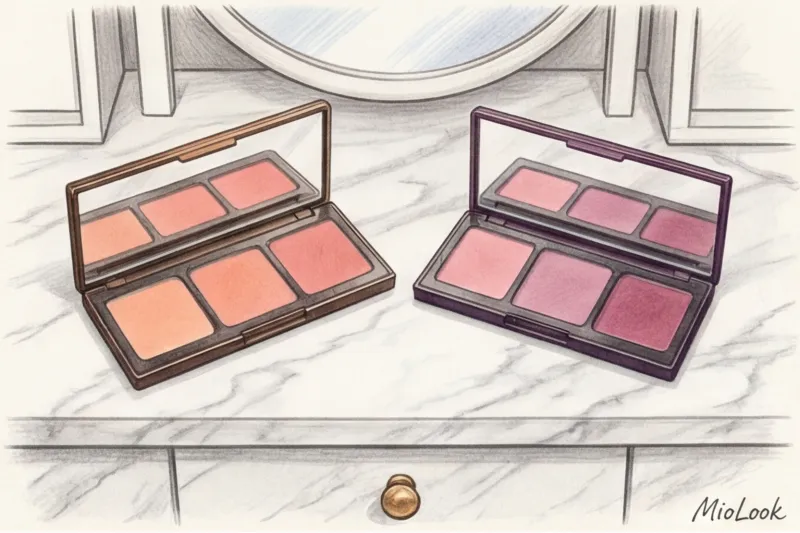
The secret to a proper "refresh" isn't changing the temperature from cold to warm. If you have a cool complexion (Summer or Winter), warm shades will make your face look sallow. The right step is decrease in saturation your own natural shades. We swapped Anna's terracotta for a translucent, cool-pink cream blush, and it literally erased five years from her face in a single minute.
Age-appropriate makeup by color type: 4 basic palettes
Your makeup bag should work in perfect synergy with your closet. When my clients upload their portrait photos to the smart wardrobe MioLook , artificial intelligence immediately detects their natural contrast. Let's figure out how to adapt makeup to your complexion after 40.
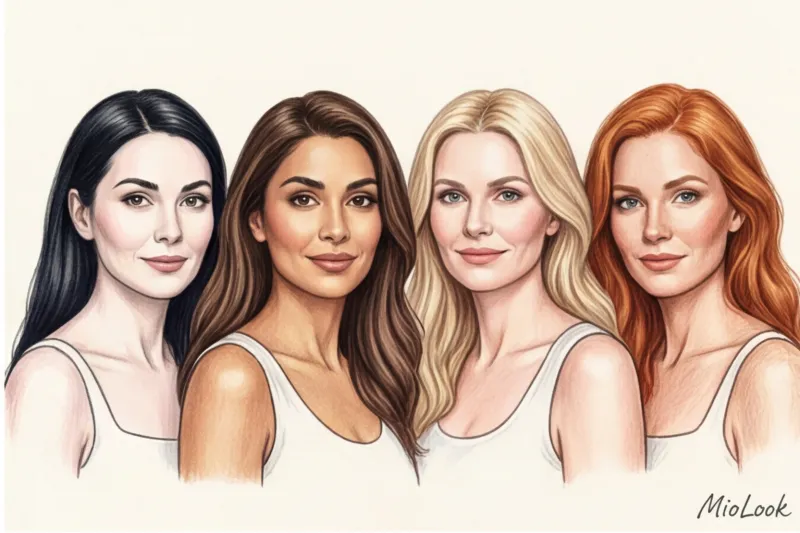
"Winter": softening the contrast without losing the breed
Winter is characterized by high contrast, but after 40, it needs to be subtly toned down. Heavy black eyeliner with a marker creates a heavy look and emphasizes drooping lids. Replace it with a soft, shading (smoky eye) in cool taupe or deep plum shades.
Put away matte burgundy lipsticks—they visually thin lips, which already lose volume with age. Instead, opt for moisturizing berry tints and balms. Porcelain or olive skin in the "Winter" range requires a perfect, dewy glow, not a powdery matte finish.
"Summer": Fighting Dullness and Noble Pastels
The main problem with "Summer" as you age is the risk of blending into the background and looking drab. Your tool is refined pastels: dusty pinks, watermelon, and soft lilac shades for lips and cheeks.
Absolutely avoid auburn-red sculpted eyes! On summer skin tones, they always look like dirty spots. To highlight your cheekbones, use cool taupe eyeshadow. And swap out your hard black eyeliner for a soft graphite or muted blue kohl—it will make the whites of your eyes appear brighter.
Spring: The Return of Natural Glow
"Spring" is that happy palette for which salmon, gold, and apricot shades were created. Your makeup should convey a sense of lightness.
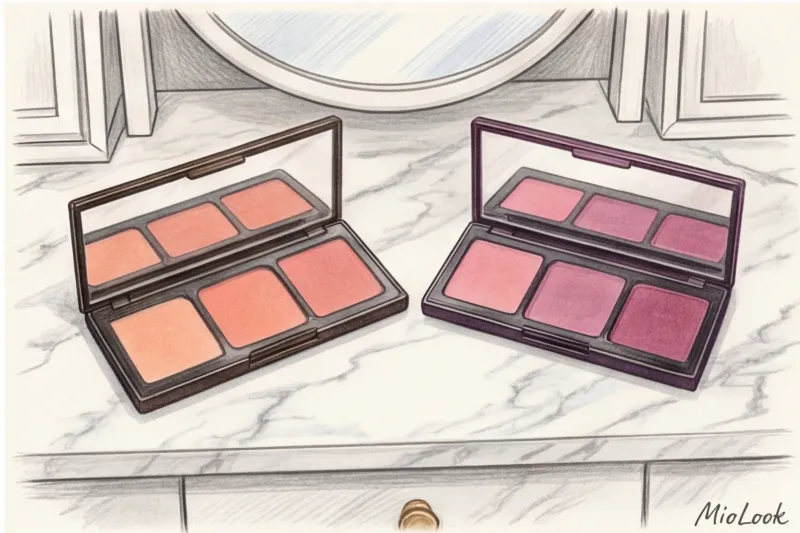
Ditch the heavy, dark contouring a la Kardashian. Instead, try strobing—highlighting the prominent parts of your face with a delicate champagne highlighter. Pay special attention to your eyebrows: forget graphic tattoos; instead, go for powdery, caramel textures that open up your eyes.
Autumn: the prestigious luxury of warm shades
"Autumn" reveals rich textures: copper, bronze, terracotta. But after age 40, these colors should be applied in a translucent layer so they blend into the skin rather than look mask-like.
A common problem for this skin type is age spots that blend in with natural freckles. Don't try to cover them up with a heavy foundation. Use a lightweight CC cream and highlight your eyes with an olive or bronze kohl—this will add incredible depth to your eyes.
Your perfect look starts here
Join thousands of users who look flawless every day with MioLook's intelligent tips.
Get access — €0.99 onceTexture is more important than color: how pigment behaves on aging skin
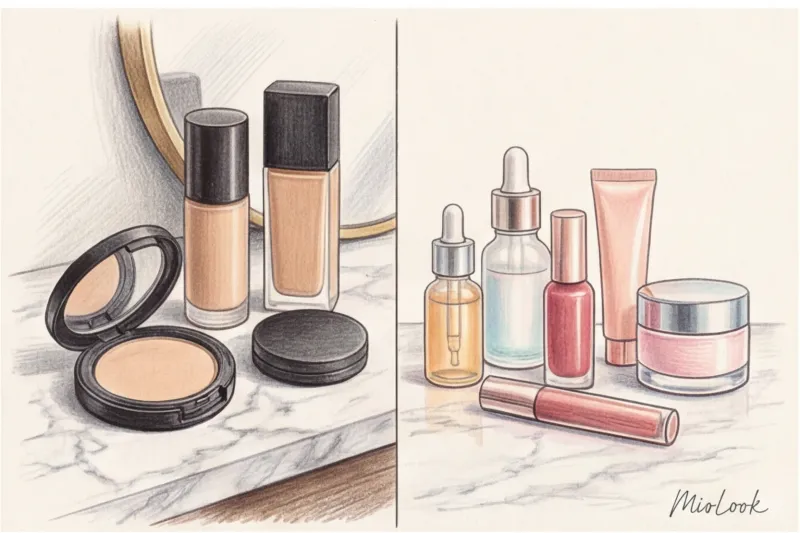
In my practice, I often see the same mistake: a woman chooses the perfect shade but gets the texture wrong. A perfectly colored compact powder will add 10 years to your age simply by settling into the skin's microrelief. According to a report by the analytical agency WGSN (2024), the global trend toward "skinification" of makeup is driving a shift to caring hybrid formulas.
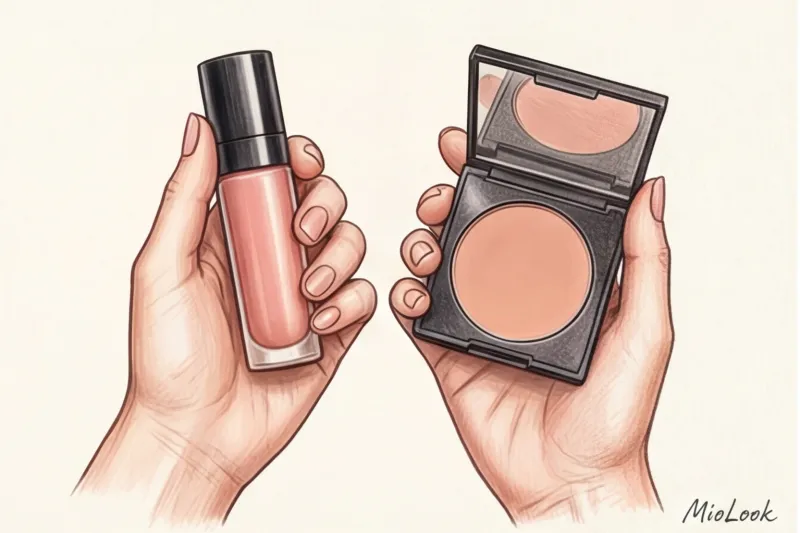
I've personally tested hundreds of jars and can confirm: mass-market cream blushes for about $10 look far more luxurious on mature skin than expensive $50 matte powders from the luxury segment. Cream products blend with the skin's lipid layer, creating a luminous effect.
Another harmful myth: "Shimmer is a no-no after 40, it accentuates wrinkles." It's important to distinguish between the two. Yes, large glitters do act as a magnifying glass for imperfections. But a delicate satin finish is your best friend. Try mixing a drop of a luxurious fluid like Charlotte Tilbury Hollywood Flawless Filter with your base BB cream and applying with a damp sponge, not a brush. You'll be surprised at how smooth and nourished your skin will look.
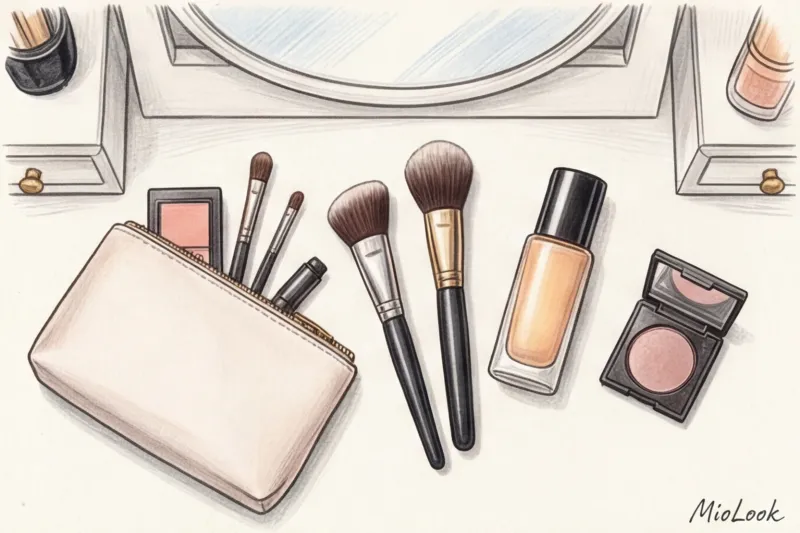
Checklist: 5 steps to refreshing, lifting makeup for every day
Want to see a difference this morning? Try this step-by-step tutorial, based on the "ascending lines" technique adored by celebrity makeup artists like Bobbi Brown:
- Moisturizing primer instead of mattifying one. Forget about mattifying foundations with silicone that make the face look flat. We need a foundation with light-reflecting particles.
- Correction of color nuances, not masking. Light-colored concealer won't hide under-eye circles (it will make them look gray). Use a thin layer of peach or salmon concealer only in the inner corner of the eye to neutralize the dark circles.
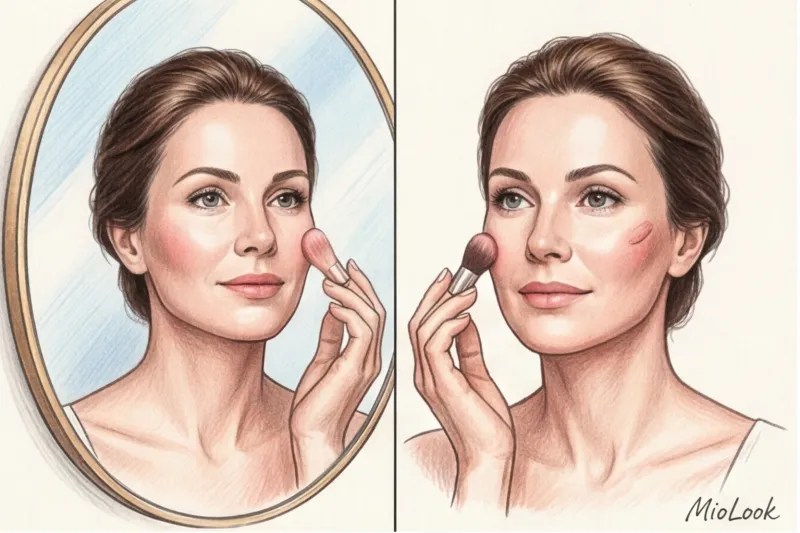
- Lifting application of blush. Don't smile when applying! If you apply blush to the apples of your cheeks while smiling, the color will sink downward as your face relaxes, pulling your cheekbones down with it. Apply cream blush to your cheekbones, blending diagonally toward your temples.
- Filling the inter-eyelash space. Instead of using eyeliner that breaks at the folds of your eyelid, apply a long-lasting gel pencil along the lower lash line of your upper lashes. This will visually double the thickness of your lashes without weighing your eyelids down.
- Moisturizing lipstick or lip oil. Line your lips with a pencil in a tone that matches your natural pigment, going exactly 1 millimeter beyond the outline in the Cupid's bow area, and fill the center with a translucent lip oil.
How to Balance Age-Related Makeup with Your Wardrobe (Stylist Tips)
As a stylist, I always tell my clients: makeup is an accessory in its own right. It doesn't exist separately from your clothes. If you use the capsule selection feature in MioLook , pay attention to the temperature of your outfit.
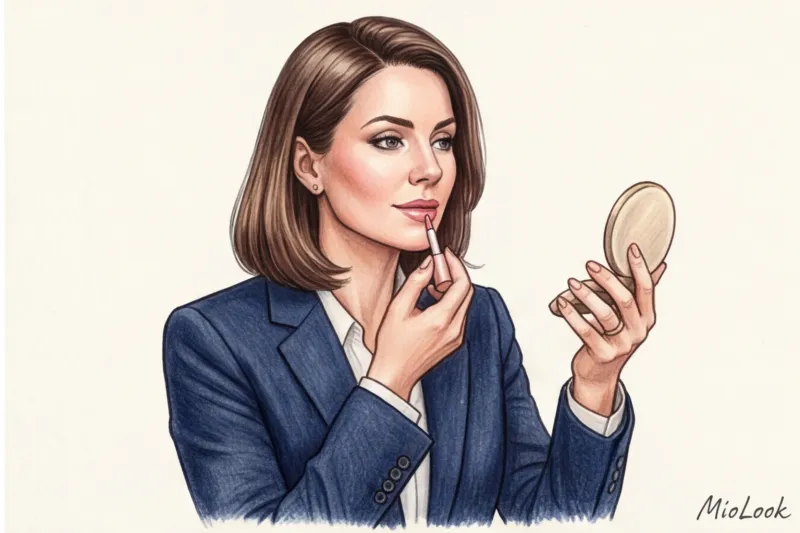
The first rule is uniformity of temperature. If you're wearing a cool, navy-colored business suit, your makeup shouldn't clash with a warm, brick-red blush. Use cool, berry-toned shades, otherwise your face will look out of place.
Second, a balance of accents and status. Precious textures (natural silk, cashmere, fine wool) look best with a nude look—a "no-makeup" makeup look that emphasizes well-groomed, dewy skin.
But there is an important exception here: This tip won't work if you have very low natural contrast (for example, light eyebrows and eyelashes and pale skin) and you're wearing a bright fuchsia jacket. In this case, the garment will simply "eat" your face. You'll need to add a more graphic touch to your face—highlight your eyebrows a bit more and apply a richer lipstick to counter the bright fabric.
Cosmetic bag revision: what to get rid of today
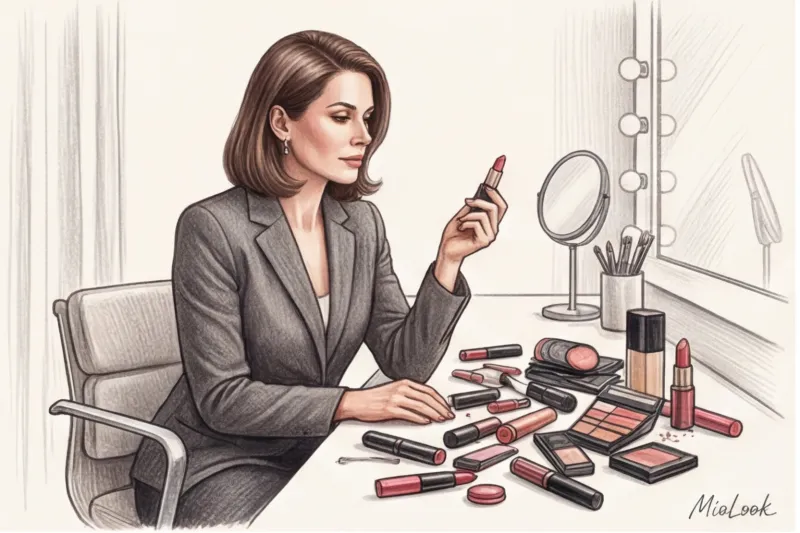
An audit of your makeup bag should be conducted as ruthlessly as a wardrobe review. Keep only those tools that work for you, not against you.
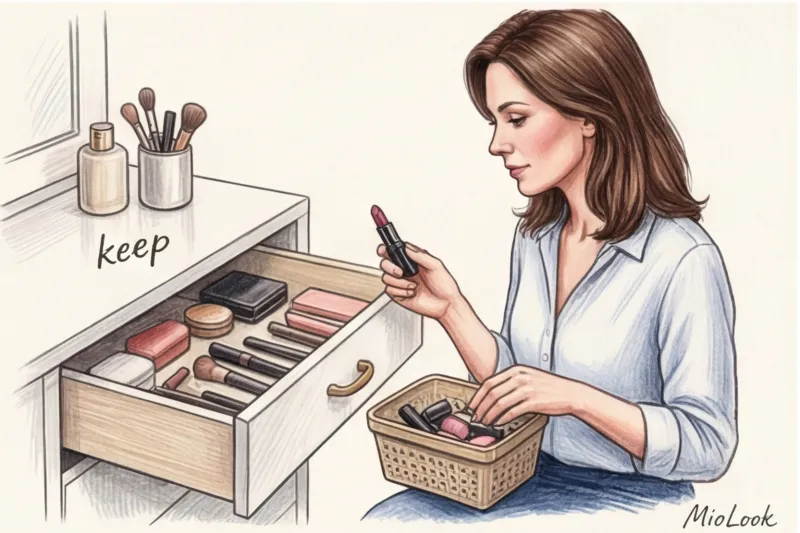
Feel free to throw it in the trash:
- Dense foundations with a matte finish. They freeze on the face like a mask and crack when making facial expressions.
- Powder highlighters with large glitter. Save them for teens and festivals. Cream luminizers are your choice.
- Dark matte lipsticks. Plum, burgundy and dark chocolate in a matte texture make the face look stern and visually lower the corners of the lips.
- Black kajal for the water line. Liner on the lower eyelid with black pencil visually narrows the eye and emphasizes the redness of the whites.
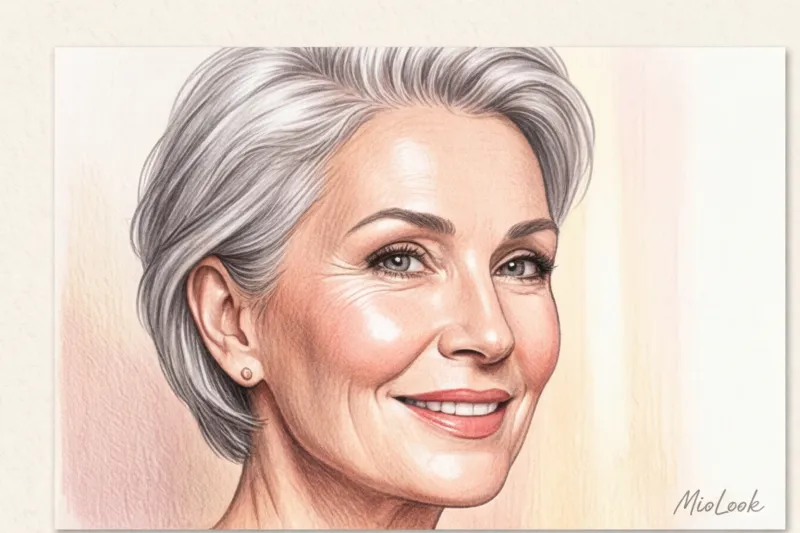
Age-appropriate makeup is the art of delicate touches. We don't conceal age; we restore the glow that time has taken away. Swap dry textures for creamy ones, find your ideal blush color based on your skin tone, and you'll see a rested, confident woman in the mirror who doesn't need to hide behind a layer of makeup.