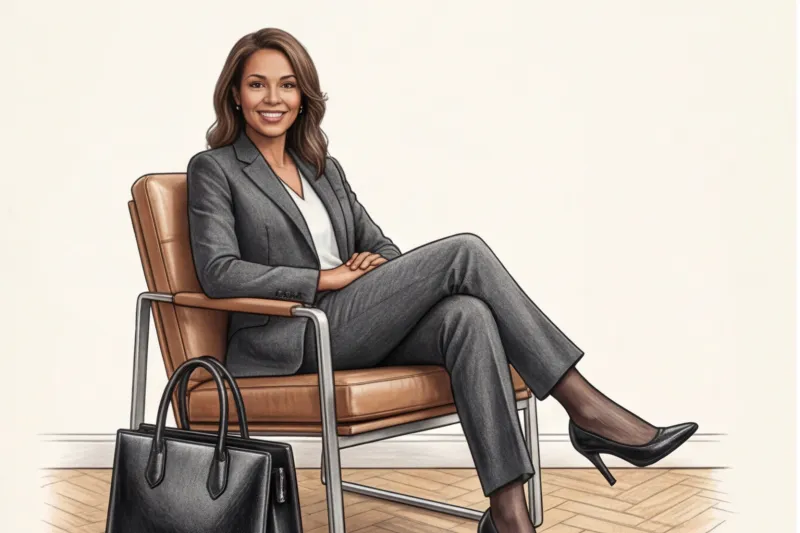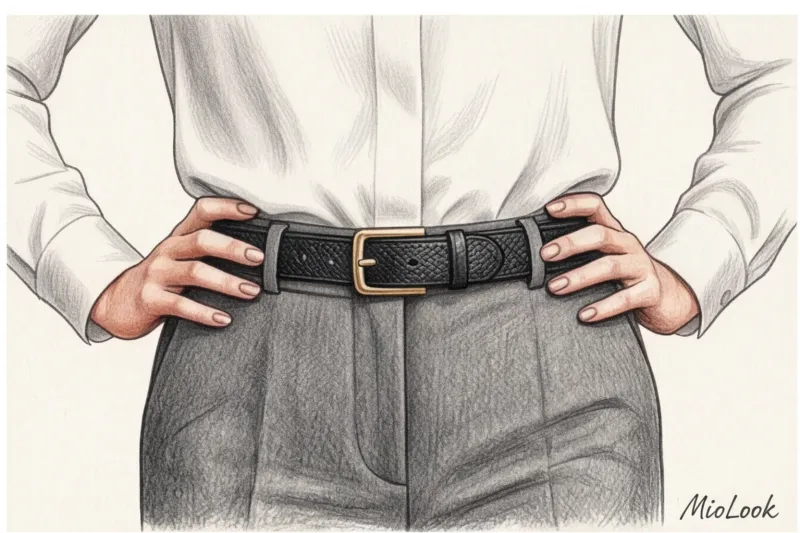
Two years ago, a senior executive at a major fintech company came to me for a consultation. We found her an impeccable, custom-made suit, a luxurious silk blouse, and the right shoes. But during a crucial board meeting, disaster struck: her cheap, mass-market belt buckle started slipping. Every fifteen minutes, she had to discreetly adjust the slipping fabric of her trousers. Instead of focusing on her strategy presentation, she was preoccupied with her waistline. That day, she lost not only her confidence but also an important contract.
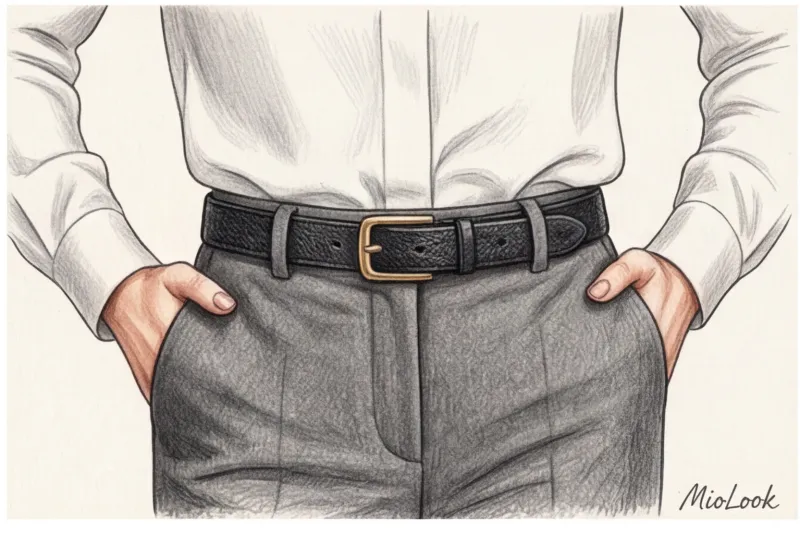
In 12 years of working as a personal stylist, I've learned one hard and fast rule: you can save money on a basic t-shirt, but an expensive women's trouser belt And high-status leather goods are the micro-architecture of your look. They bring your silhouette together and convey your level of standard to others. We've covered how this standard is formed in more detail in our The complete guide to status accessories for women.
Today, I suggest you forget about the banal advice like "pick your bag to match your shoes." We'll talk about tactile quality, the psychology of perception, and how the right details work for you. expert image in the context of high corporate rates.
An Investment in Status: Why an Expensive Women's Belt Changes Everything
Have you ever noticed where your interlocutor's gaze subconsciously falls when assessing your silhouette? According to a WGSN analytical report (2024) on the psychology of corporate dress codes, the waistline acts as a visual "equator." If this equator is crossed by cracked polyurethane, the brain perceives the entire look as cheap, even if you're wearing a two-thousand-euro jacket.
Many clients at this stage searching for your own style resist buying expensive accessories. "Why pay 300 euros for a strip of leather?" they ask. In response, I always provide the calculation Cost-per-wear (cost per exit).
Let's do the math. A $300 premium leather belt you wear three times a week for five years costs you $0.38 per wear. A $30 pressed leather (PU) belt will start to delaminate and lose its shape after just two months. In the long run, "cheap" always costs more, not to mention the reputational costs.
Access to MioLook for €0.99 — one-time payment
A smart AI stylist will select the perfect look based on your wardrobe and suggest which accessories are worth updating.
Get access — €0.99 onceThe Anatomy of a Premium Belt: What a Stylist Looks for When Choosing a Belt
The difference between "looking expensive" and "being expensive" lies in the technologies that aren't mentioned on the price tags. When I walk into a boutique with a client, the first thing I look for is the leather's markings.
Forget about the inscription Genuine Leather In the tannery hierarchy, this is the lowest rung—essentially split leather (the loose bottom layer of the hide), generously coated with polyurethane paint to imitate the texture. A prestigious accessory is always made from Full-grain (grain leather). It retains its natural grain, breathes, and develops a noble patina over time without cracking.
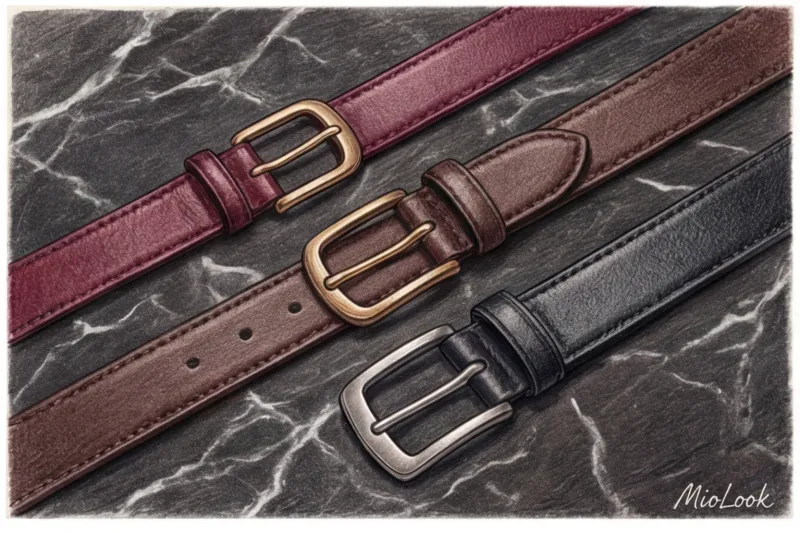
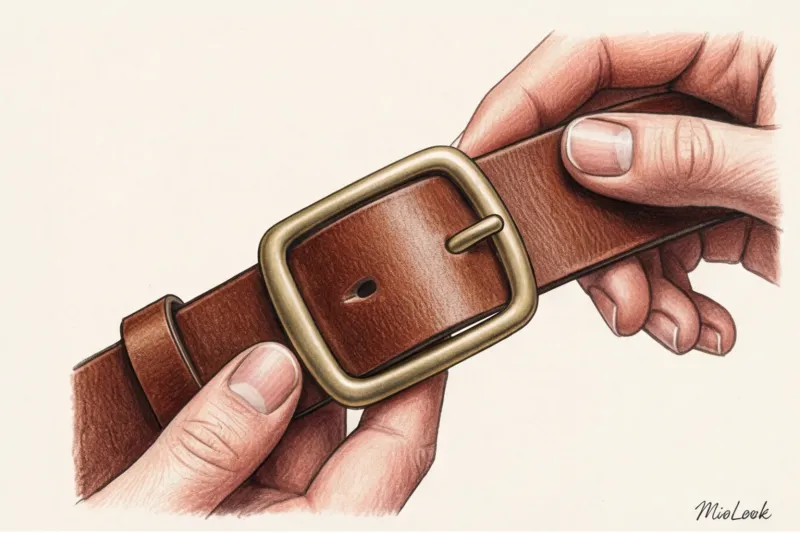
The second quality indicator is the finish of the belt's edge. Mass-market products simply fold the edge over and glue it. Premium products are hand-polished by the craftsman and then coated with 3-5 layers of special paint. Run your finger along the edge of the belt: it should be absolutely smooth, like glass.
Width and Proportions: The Mathematics of Business Style
A belt doesn't exist in a vacuum—it must fit mathematically precisely into the proportions of your clothing. My width cheat sheet looks like this:
- 1–1.5 cm (narrow): Perfect for midi dresses or over thin cardigans. But never Don't put them through the belt loops of classic trousers - they won't hold the heavy wool of the suit and will visually enlarge your belly.
- 2.5–3 cm (gold standard): The exact width that fits perfectly into the belt loops of formal trousers. This is the foundation of a business wardrobe.
- 4+ cm (wide): Accent pieces. Worn over structured jackets or coats to create an hourglass silhouette.
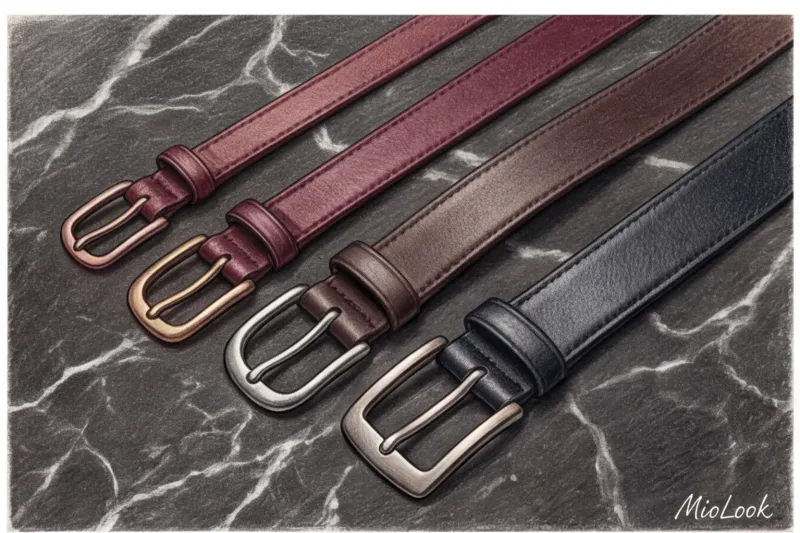
Fittings and the rule of "quiet luxury"
A 2022 Harvard Business Review study examining executive presence found an interesting detail: large, flashy brand logos (like a giant 'H' or 'GG' on the waist) reduce the level of trust in experts in conservative fields such as law, finance, and consulting.
True status is whispered, not shouted. Choose geometric buckles without logos.
Look at the material. Cheap silumin quickly scratches and peels. Look for brass, palladium, or hardware with a PVD (Physical Vapor Deposition) coating—a technology used in Swiss watchmaking that makes the metal resistant to any mechanical damage.
Businesswoman's wallet: an accessory that speaks for you at a business lunch
Imagine this: you're at a business lunch with a potential partner. The conversation went brilliantly, you're wearing a perfect suit. The bill arrives. You open your two-thousand-euro bag and pull out... a bulging, misshapen wallet with frayed corners, with supermarket receipts sticking out. At that moment, the architecture of your image collapses.
A wallet is a litmus test of your attitude toward order and control. For a business capsule, I recommend two form factors:
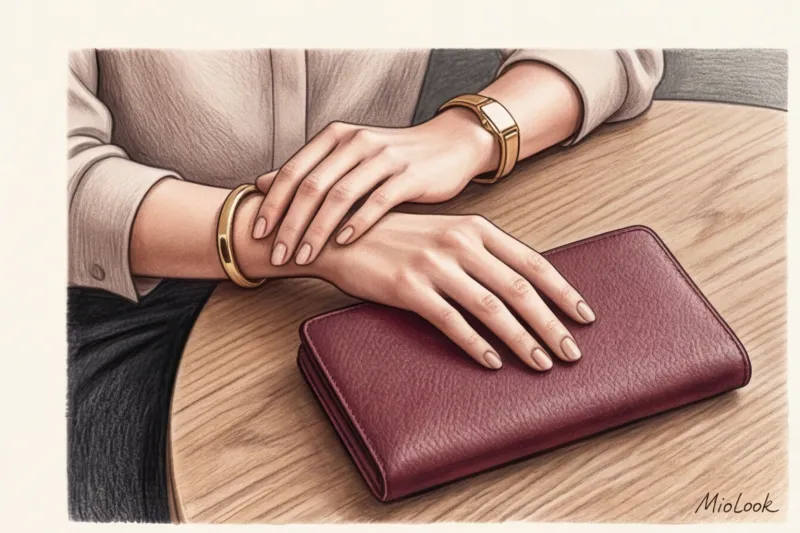
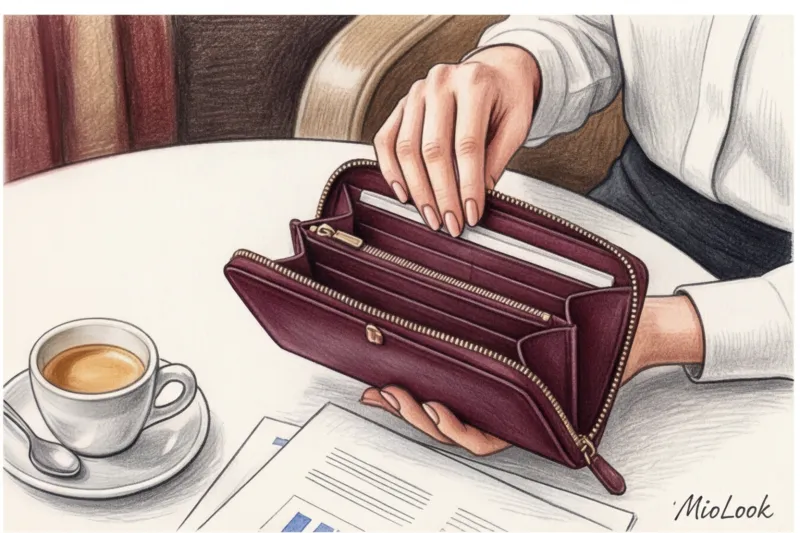
- Classic Long Wallet (Continental): The bills are laid out evenly, the cards are sorted. It should have a rigid structure and hold its shape even when completely empty.
- Compact structured cardholder: For days when you only carry a crossbody bag and a couple of business cards.
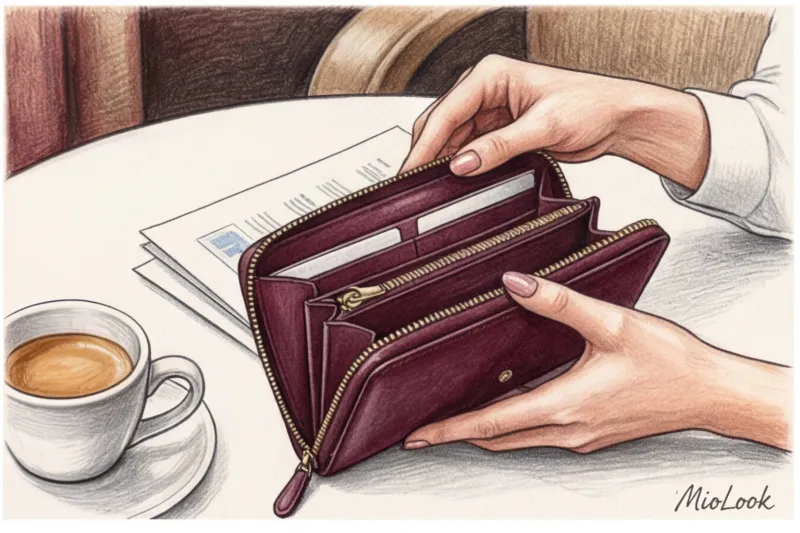
Unlike a basic bag, a purse can and should be vibrant. Deep burgundy, emerald, cobalt—jewel tones not only look luxurious but also make it easy to spot the accessory in the dark depths of a voluminous tote.
Your perfect look starts here
Join thousands of users who look flawless every day with MioLook. Plan your capsule wardrobe in just a few clicks.
Get access — €0.99 onceThe Myth of the Perfect Match: Should You Match Your Belt to Your Shoes?
If you still firmly believe in the "black shoes = black belt = black bag" rule, I have news for you. In 2025, that looks stiff, artificial, and betrays a lack of self-confidence.
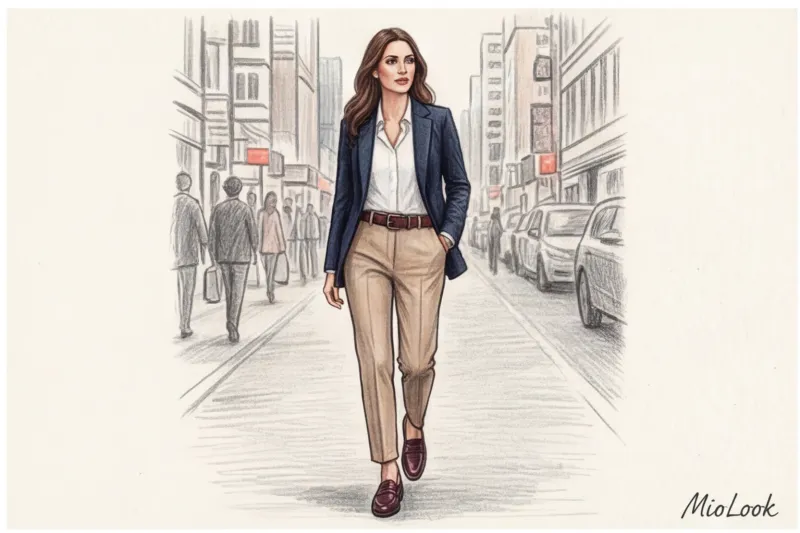
Modern styling is not based on exact color matching, but on matching formalities and temperatures of fittings You could wear navy blue trousers, dark chocolate loafers, and a burgundy belt. Why would this work? Because all three shades have the same depth and richness.
My favorite technique is playing with textures. Try pairing smooth matte leather shoes with a crocodile or lizard-print belt. This creates that intricate layering that people love to admire.
Pre-purchase checklist: how to check quality in a boutique
To avoid falling victim to clever marketing, use my insider algorithm for checking accessories right in the store:
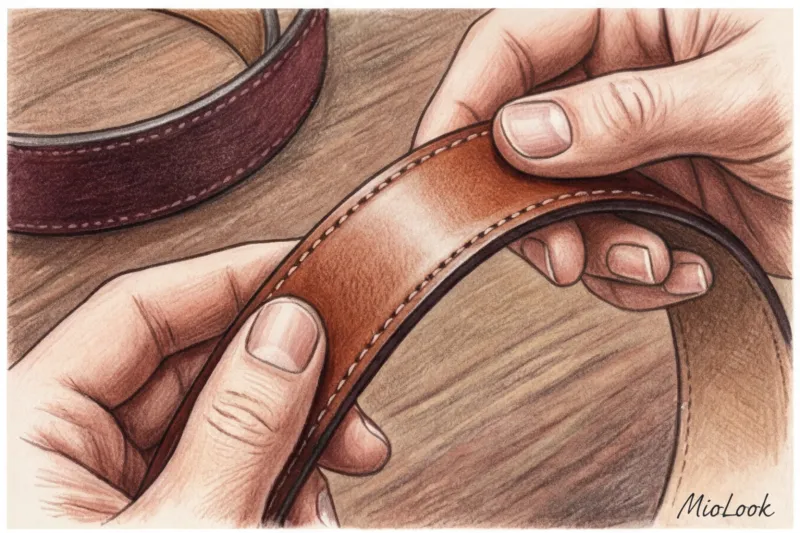
- Flexion test: Bend the belt slightly in half (without creasing). High-quality full-grain leather will form a soft arch and quickly return to its original shape. If fine wrinkles, similar to cellophane, appear, it has a polyurethane coating.
- Search for "French seam" (saddle stitch): When hand-stitching, the threads lie at a slight angle to each other, creating an elegant herringbone pattern. Machine stitching is always perfectly straight.
- Lightning sound: Open and close your wallet. Premium zippers (such as those from Riri or YKK Excella) slide smoothly and produce a dull, expensive sound, not a high-pitched metallic grinding sound.
- Backside Rating: The inside of the belt should be made of velvety nubuck or soft leather to prevent the accessory from slipping on the fabric of the trousers.
To be fair, this checklist doesn't always work. If we're talking about a relaxed summer capsule collection and you're choosing a woven raffia or textile belt, completely different laws of physics and style apply. But for a strict business attire, these four points are essential.
Integration into a business capsule: ready-made formulas for a stylist
Knowing the theory is great, but let's get down to practice. Here are two of my signature formulas that work without fail and are suitable for most body types.
Formula 1: CEO Energy
High-waisted, wide-leg suit pants (pleats are a must) + a 3cm-wide, reptile-textured belt + a tucked-in silk blouse. In this look, the belt acts as a corset, visually elongating the legs.
Formula 2: Complex Monochrome
A light gray wool suit with a matching belt (gray or graphite), but with a contrasting matte black buckle. The lack of color contrast at the waist doesn't cut the figure in half, and the unusual buckle shows an eye for detail.
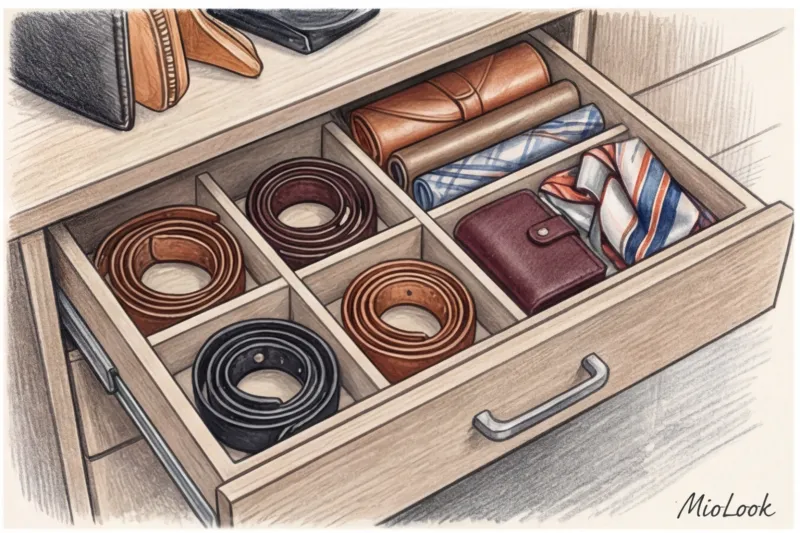
By the way, it is for managing such subtle nuances that I recommend using MioLook app The smart wardrobe feature allows you to digitize all your belts and bags. Artificial intelligence will suggest which trousers in your closet go best with that burgundy belt and remind you of items you haven't worn in a while.
Status accessories aren't just functional items to keep your pants in place and your money safe. They're the punctuation marks in your style. And it's up to you whether you end your look with a vague ellipsis or a confident, expensive exclamation point.