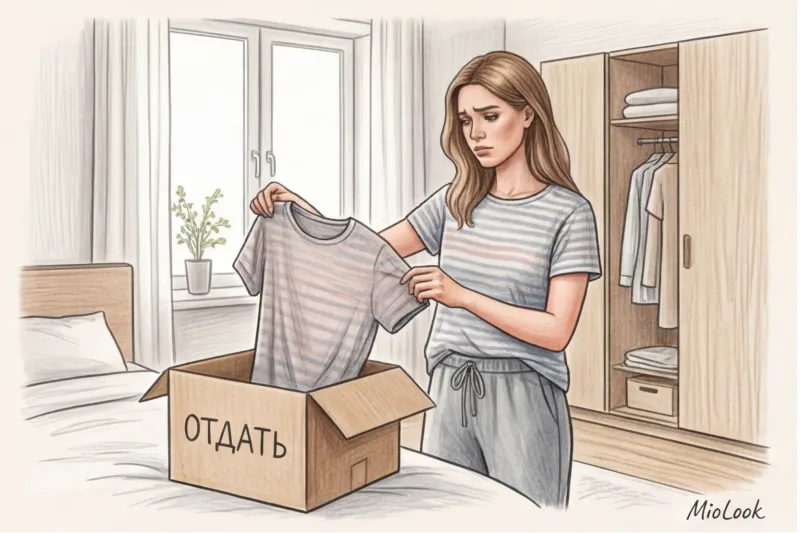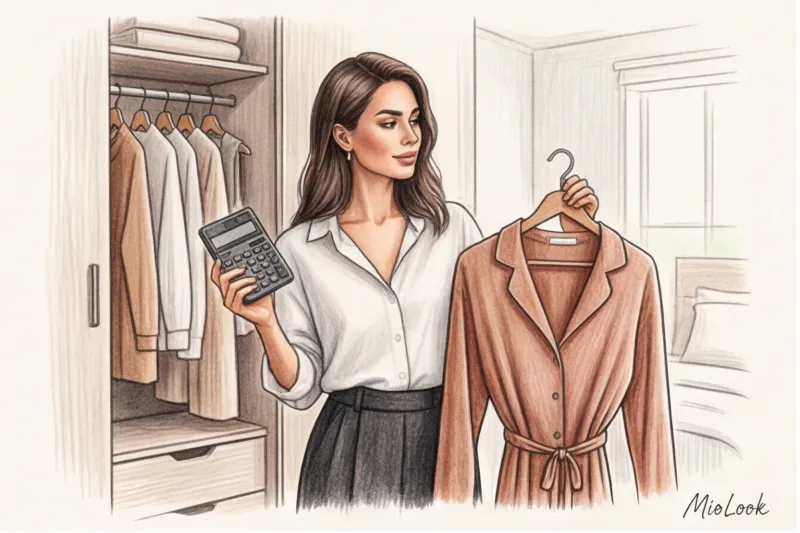
Let's be honest. You open your closet to change after a long day at work, and your hand instinctively reaches for a stretched-out T-shirt with the logo of a 2019 IT conference and sweatpants with the knees stretched out. Sound familiar? Over 12 years of cleaning out wardrobes, I've uncovered a frightening statistic: 9 out of 10 of my clients keep old, worn-out street clothes as "home clothes." We save the best for strangers on the street, and leave the scraps for those closest to us (and ourselves).
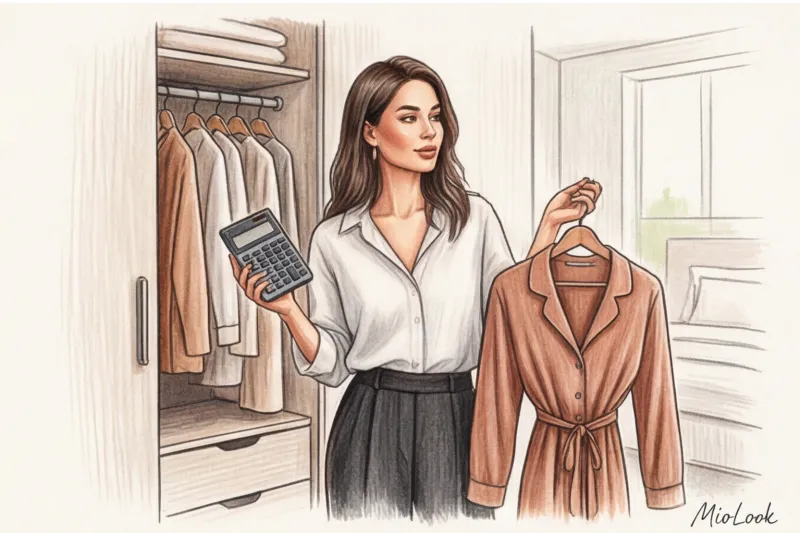
Studying homewear trends We often see unrealistic images on social media. But true home style isn't about marabou feathers with your morning coffee, but rather a well-thought-out wardrobe, technologically advanced fabrics, and self-respect. We discussed the fundamentals in more detail in The Complete Guide to Home Wardrobe: How to Put Together a Stylish Capsule Today, we'll explore what exactly to wear at home this season, based on hard data rather than the unrealistic fantasies of influencers.
Home wardrobe is more important than streetwear: loungewear trends through the lens of mathematics
According to the 2023 Global Time Use Survey, modern city dwellers spend 60% to 70% of their time at home. Meanwhile, their wardrobe budget is split in exactly the opposite direction. We'll easily spend $250 on an evening dress we'll wear twice a year, but we'll skimp on $100 for a quality lounge suit.
Let's count Cost-per-wear (CPW) — cost per wear. This is my favorite metric, which we've built into our analytics algorithms.
- Evening dress: $250 / 2 outings = $125 for one evening.
- Premium modal lounge suit: $100 / 150 days of wear per year = $0.66 (about 0.60 cents!) per day of absolute comfort.
Frankenstein's closet syndrome (the habit of wearing old clothes) literally destroys self-esteem. In 2012, psychologists Adam Galinsky and Hadjo Adam coined the term Enclothed Cognition (embodied cognition). Their research proved that the clothes we wear directly influence our cognitive processes. When you put on a stretched-out T-shirt, your brain receives the signal: "I'm out of shape, I can relax to the point of apathy." By choosing a put-together, aesthetically pleasing look at home, you program yourself for productivity and self-esteem, even when no one is watching.
Your perfect look starts here
Join thousands of users who look flawless every day and control the cost of their wardrobe with MioLook.
Get access — €0.99 onceThe top loungewear trends for 2024/2025: from quiet luxury to smart comfort
The fashion industry has radically changed its approach to the home capsule collection. According to a recent report from the analytical agency WGSN, the category Elevated Loungewear (elevated loungewear) has grown 30% over the past year. The line between home and street is blurring.
Minimalism and a natural palette are the global trend. Complex, loud prints have finally given way to shades of oatmeal, sage, dark chocolate, and graphite. In place of classic terrycloth bathrobes (save them for 15 minutes after your shower), cardigan-robe-style garments made of thick viscose, capes, and knitted ponchos have taken center stage.
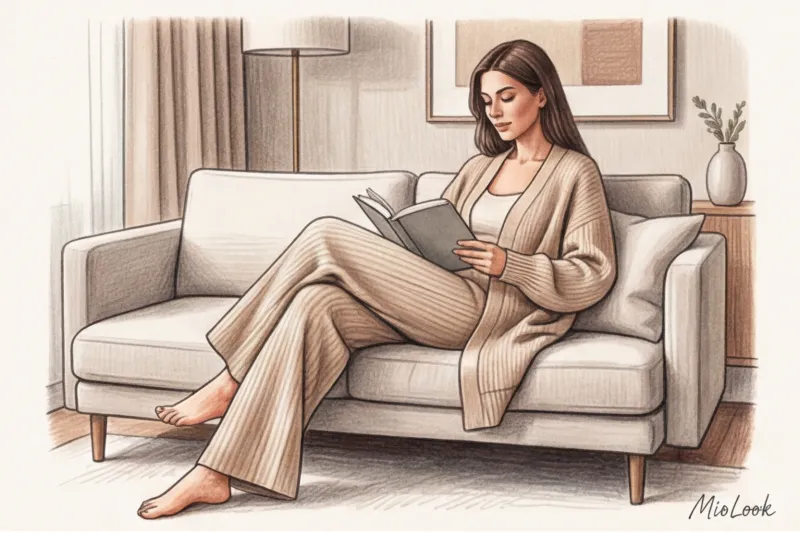
Knitted sets and textured knitting
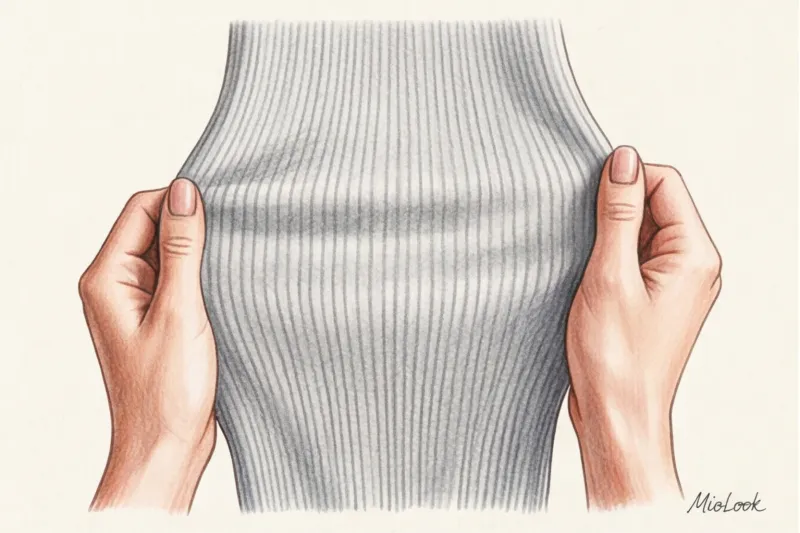
Hooded fleece tracksuits are a thing of the past—they're too hot for cleaning and too uncomfortable for lounging on the couch. They've been replaced by flowing knit palazzo pants and sheer jumpers. Rib knit is the perfect texture of the season. The vertical stripe visually elongates the silhouette, the fabric is virtually wrinkle-free, and looks classy even in budget-friendly brands like Oysho or COS.
Tailored Loungewear
Clean lines, an English collar, mother-of-pearl buttons, and contrasting piping. This trend originated in the 1920s and has stuck around for a long time. The main rule: choose a semi-fitted cut. If you have wide hips, opt for outfits where the shirt ends just below the widest part of your pelvis—this will balance out your proportions.
Anti-trends: What to Give Up Right Now
Beyond the obvious trash (items with stains and holes that won't come out), there are categories worth getting rid of for your own comfort.
"Childish prints with teddy bears, bunnies, and 'Sweet Girl' slogans mercilessly cheapen the image of a grown woman. If you want coziness and softness, convey this through the texture of the fabric (cashmere, bouclé), not through a kindergarten-style design."
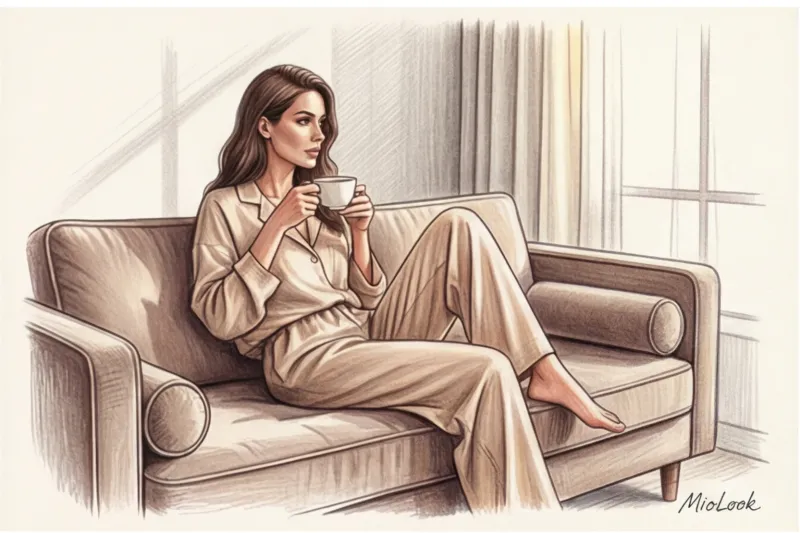
But my main anti-trend, which I mercilessly fight against, is satin and silk pajamas with marabou feathers Instagram has convinced us that this is the pinnacle of aesthetics. As a practicing stylist, I declare: it's the worst choice for real life.
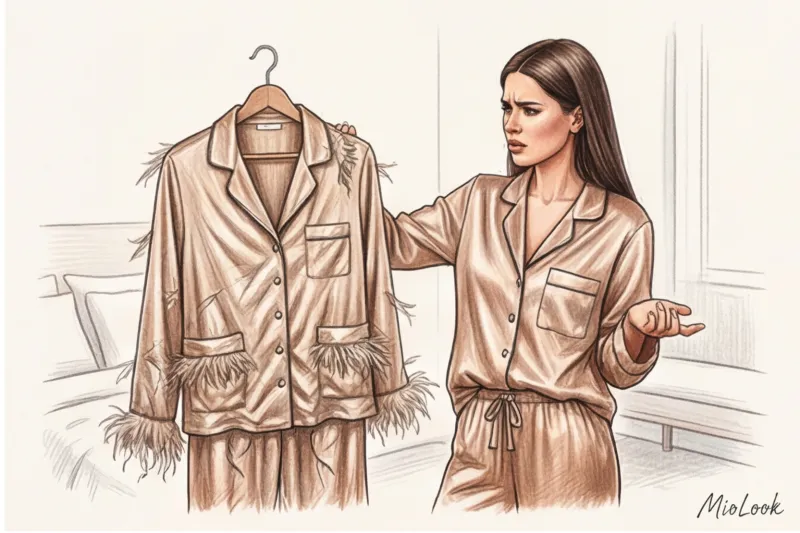
Why is this counterintuitive insight so important? First, natural silk wrinkles horribly. Just 15 minutes of sitting on the couch with a laptop makes you look like you've been sleeping in it for a week. Second, feathers are not machine washable—they must be dry cleaned. Third, if you choose a cheap polyester alternative, you'll get a "greenhouse" effect and static clinging to your feet. True, quiet luxury is about creating things that serve you, not the other way around.
Access to MioLook for €0.99 — one-time payment
A smart AI stylist will analyze your clothes and suggest which anti-trends it's time to get rid of and what's worth buying.
Get access — €0.99 onceZoom-ready: loungewear trends for remote work
When my team and I trained the algorithm for MioLook applications Analyzing remote workers' pods, we discovered a clear pattern: productivity drops when people work in their pajamas. One of my VIP clients (an IT executive) complained about her lack of authority in online meetings until we replaced her hoodie with structured knitwear.
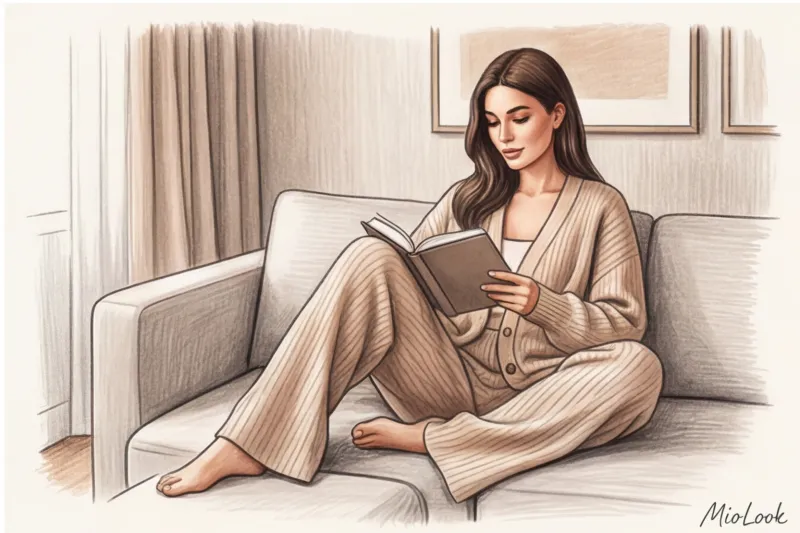
For hybrid work, this applies The "upper half" rule The frame should contain something that holds its shape:
- Polo shirt made of fine merino wool (collar sets the working tone).
- Loose-fitting shirts made from washed linen with a density of 160 g/m² (linen doesn’t look too formal, but brings the look together).
- Plain knit cardigans over basic tops.
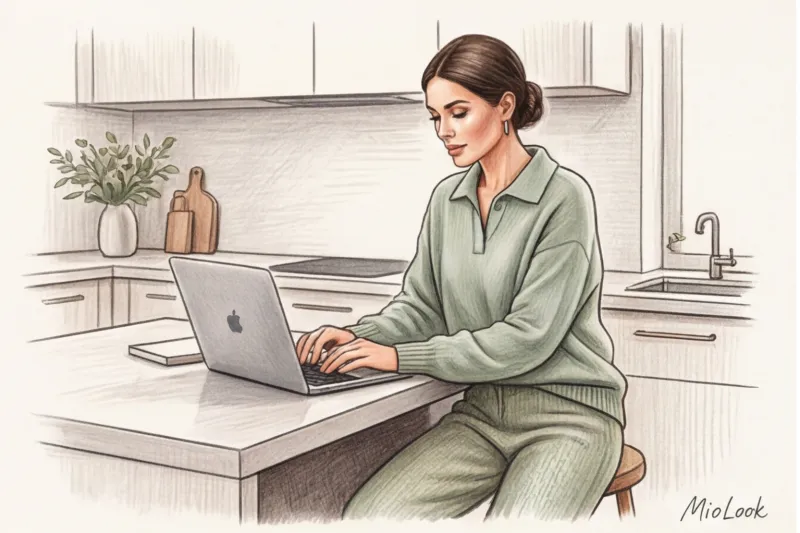
Color tip: Webcams reduce contrast and make faces appear gray. Avoid black (it becomes a flat spot) and pure white (it creates glare). Ideal colors for home calls: emerald, terracotta, rich blue, and warm beige.
Fabrics and Materials: What to Invest in
The fabric composition of homewear is more important than that of outdoor clothing. At home, we sweat while cooking, lying down, and being active.
Forget 100% polyester and acrylic. Even if it seems incredibly soft in the store, after two washes it will be covered in pills, leaving you sweating and electrocuting your loved ones.
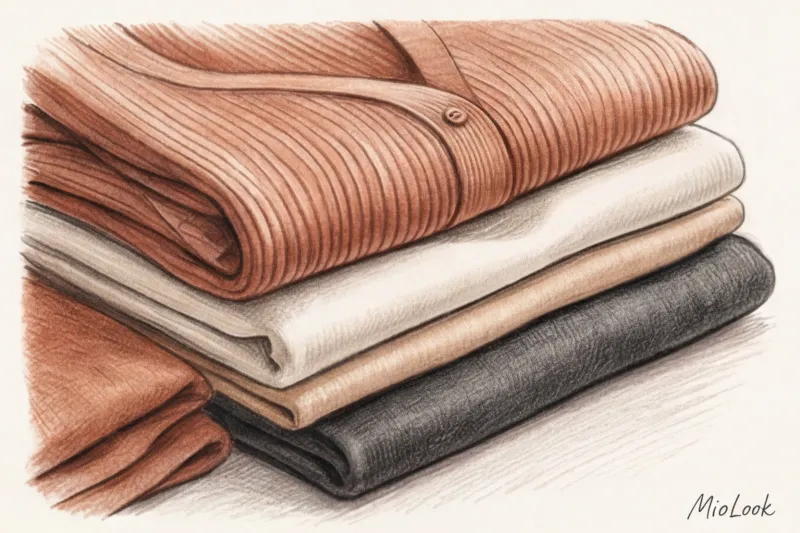
The new kings of home comfort are Tencel, modal, bamboo and viscose Ecovero Why not just cotton? Modal (a modified viscose made from beech wood) is 1.5 times more hygroscopic than cotton. It absorbs moisture, allows the skin to breathe, doesn't fade after 50 washes, and, most importantly, doesn't stretch out at the knees and elbows. For winter, look for a cashmere blend (70% wool/cotton, 30% cashmere)—it provides warmth without excess bulk and is less expensive than 100% cashmere.
Ready to get started?
Try a free plan—no commitments. Digitize your wardrobe and create stylish combinations in just a few clicks.
Get access — €0.99 onceHow to put together a capsule wardrobe at home: a step-by-step guide from a stylist
Home capsule wardrobe It's based on strict mathematical rules. There's no need to buy dozens of items. For a comfortable life with weekly laundry, you'll need exactly 8 items. This is the basic formula I use for my clients:
- 2 bottoms: Joggers made of thick cotton (from 250 g/m²) + loose palazzo trousers made of modal.
- 4 tops: 2 basic T-shirts made of thick cotton + 1 long sleeve + 1 shirt (flannel or linen).
- 1 warm layer: A chunky knit cardigan or zip-up hoodie.
- 1 complete image: A slip dress made of thick viscose or a cozy jumpsuit (for days when you don’t feel like combining anything).
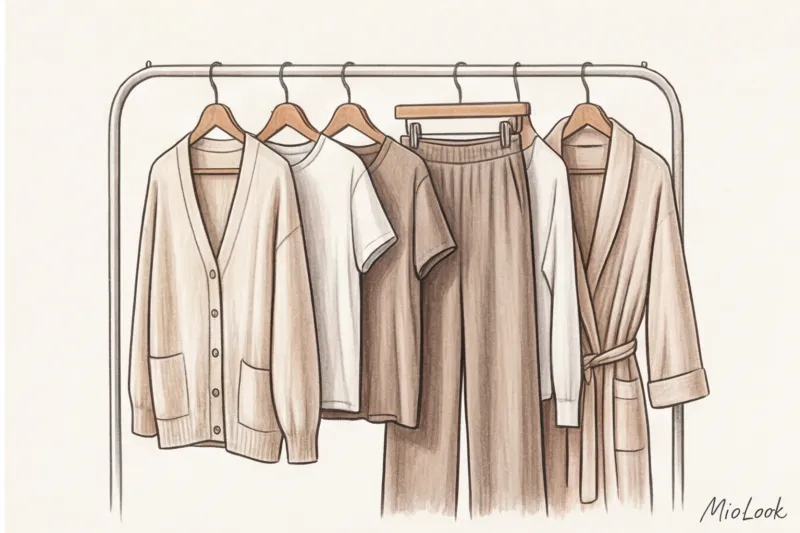
To make it all fit together without looking, use "rule of three shades" Choose one dark base color (such as graphite), one light base color (milky), and one accent color (dusty rose or deep green). This palette allows you to create over 20 combinations of 8 items, completely satisfying the need for variety in your home, balancing on the edge of relaxation and smart casual.
Checklist: A 15-Minute Closet Review
Open your loungewear drawer this evening. No need to try everything on—just ask each item three questions:
- Is it pilled, stained, or out of shape?
- Am I hot/cold in it/is the fabric itchy?
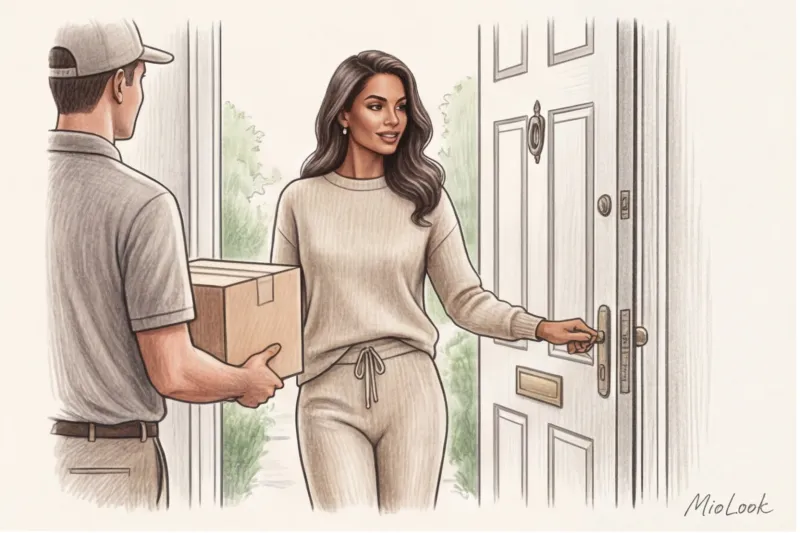
- If the doorbell rings right now, should I go open it or run to change?
The last point is my signature one Unexpected Courier test If a food delivery guy or a neighbor pops in unexpectedly and catches you off guard and makes you feel ashamed of your appearance, that item shouldn't be in your wardrobe. Loungewear should make you feel safe and confident.
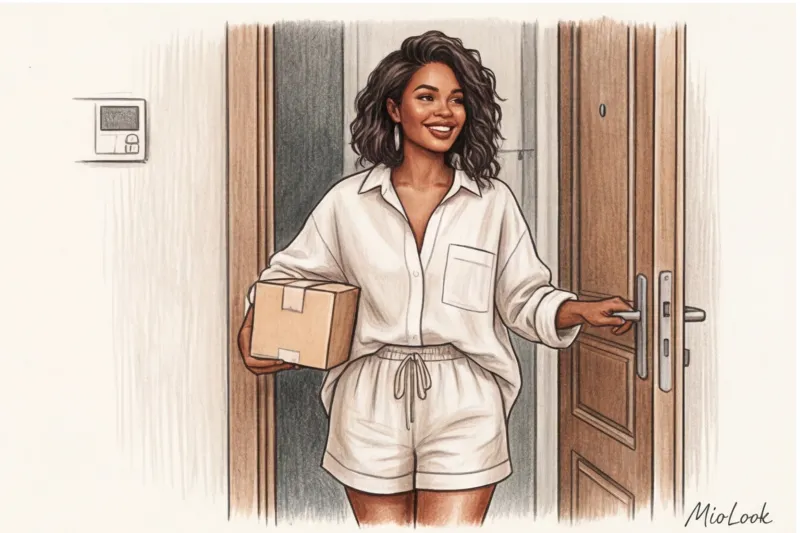
Beautiful home clothes are not a whim or a desire look expensive For some, it's the most honest form of self-love. After all, how we look when no one's watching reflects our true attitude toward our own comfort. Take stock, get rid of the "old T-shirt syndrome," and let technology help you.