I conducted an experiment: I analyzed the wardrobes of 50 of my clients and discovered a paradox. The most expensive evening dresses, bought in a fit of passion for hundreds of euros, were worn exactly once. Meanwhile, mass-market dresses for €40, when styled skillfully, garnered dozens of compliments for years.
When clients ask me, How to choose inexpensive evening dresses To avoid looking "out of your budget," I always suggest forgetting your intuition and taking an engineering approach. The secret to a classy look lies not in the brand on the tag, but in the physics of fabrics, the geometry of the cut, and the proper budget allocation: 20% on the dress itself and 80% on the perfect fit, shoes, and personal care.
We have already discussed in more detail the strategies for preparing for the holidays in our a complete guide to creating the perfect corporate look Today, we'll explore the mechanics of upgrading basic items so your colleagues can be confident you're wearing the latest style.
Why do some inexpensive evening dresses look luxurious while others look cheap?
The mathematics of eveningwear are ruthless. Buying an expensive statement dress for a single occasion is a financial and style disaster. The cost per wear for such an outfit would be astronomical. It's wiser to invest in understated basics, but that's where physics comes into play.
Over 12 years of working as a stylist, I've realized that mass-market clothing isn't defined by design, but by how the material interacts with light. According to a 2023 study by the WGSN Textile Institute, the human eye subconsciously detects the "cheap" sheen of polyester within a split second. A fine fabric (heavy viscose, cupra, high-quality crepe) absorbs some of the light, creating a soft, matte shimmer. Cheap satin, on the other hand, reflects light harshly, glaring under camera flashes and highlighting even the slightest imperfections.
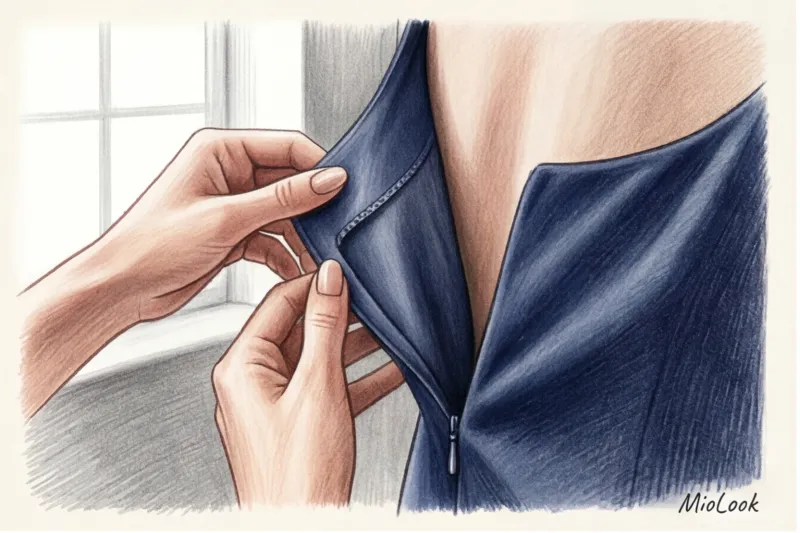
Seam anatomy is the second key factor. Wrinkled side seams, loose threads, and a pulled zipper instantly cheapen the look. Add to this a cheap lining made of 100% static-producing polyester, and within an hour the dress will stick to your legs, completely ruining the intended silhouette.
Stylist's Guide: How to Choose Inexpensive Evening Dresses Without Mistakes
Complex asymmetrical cuts, abundant draping, and corset inserts require the highest level of design skill and dense, expensive fabrics. In the sub-€100 price range, such experiments are doomed to failure.
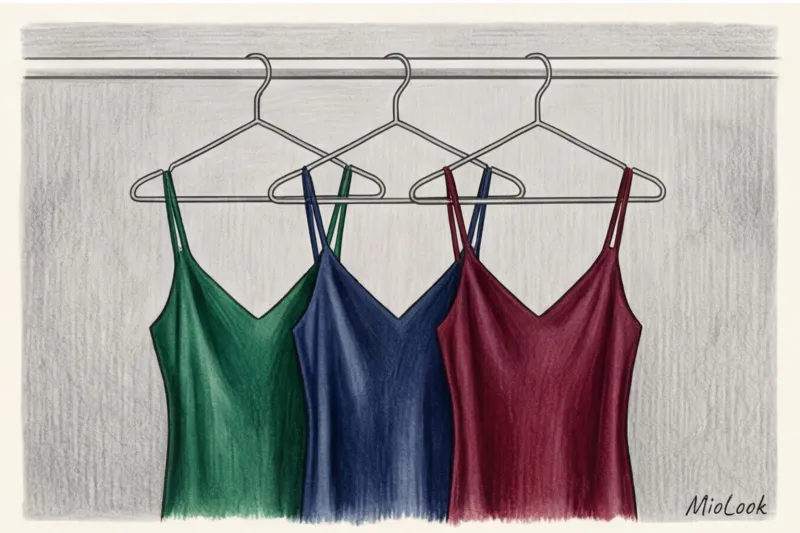
Look for brevity. Your best friend is bias cut (bias cut). This construction technique, popularized by Madeleine Vionnet in the 1920s, allows even inexpensive fabric to flow, softly enveloping the figure without the need for rigid darts. A slip dress cut on the bias always looks several times more expensive than its actual price.
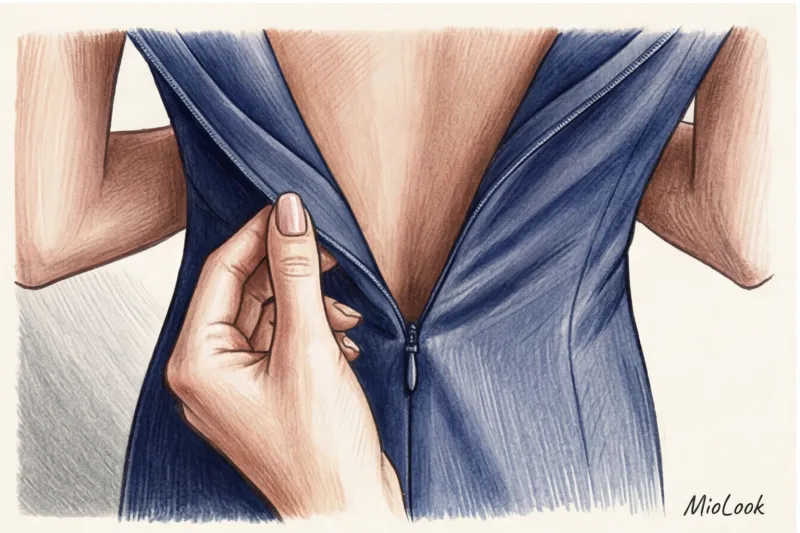
Pay attention to the hardware. A buyer's golden rule: if the hardware is cheap, it should be hidden. Choose styles with concealed zippers that match the fabric and avoid overtly plastic buttons with rhinestones.
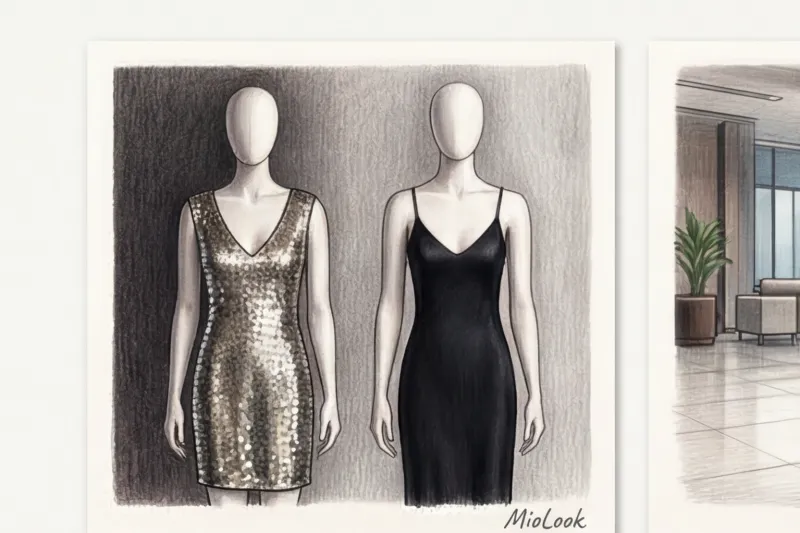
Avoid excess decoration: sequins, lace, and rhinestones
Lace and sequins in the budget segment are always a compromise, visible to the naked eye. Cheap lace is stiff, itchy, and has a flat pattern. Sequins are often sewn on unevenly and fall off even in the fitting room.
"A smooth texture is a blank canvas. A dense, flowing viscose or matte satin from Massimo Dutti will always outshine a heavily embellished polyester dress in the same price range."
Color Strategy: Why Black Isn't Always the Best Choice
There's a myth: "Black always looks elegant and hides imperfections." This is only true for high-quality fabrics. Cheap black textiles are merciless: they quickly collect dust, become staticky, and appear dull and faded under artificial light.
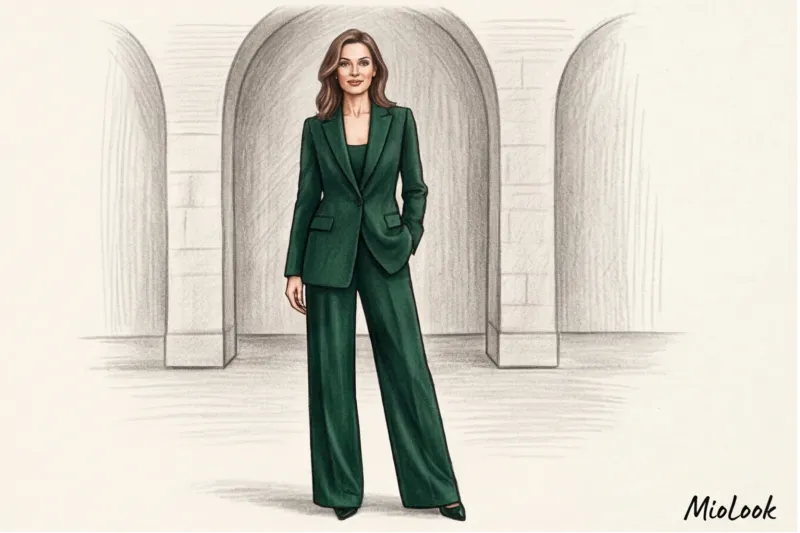
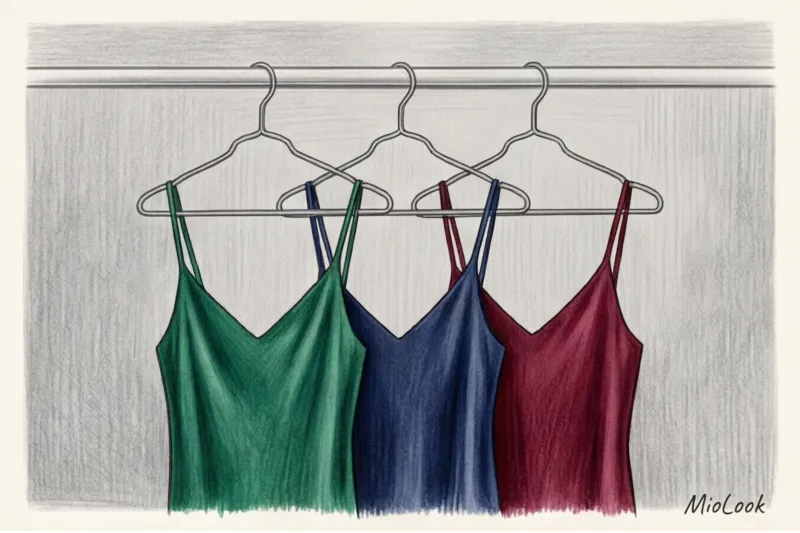
Instead of black, opt for a jewel-toned palette. According to the Pantone Color Institute (2024), deep, rich shades are associated with luxury. Emerald, dark sapphire, burgundy, or dark chocolate are much more effective in mass-market colors, automatically elevating the look.
Your perfect look starts here
Join thousands of users who look flawless every day. Digitize your wardrobe and create stylish capsule collections.
Get access — €0.99 onceThe 80/20 Rule in Holiday Dressing: Where to Spend Your Budget
The High-Low strategy (mixing expensive and affordable) is a favorite technique among fashion insiders. Only 15% of the visual "value" of an outfit depends on the dress itself. The remaining 85% comes from grooming, accessories, and fit.
Last year, I was getting a client ready for a corporate gala dinner. We had a strict budget. We bought a minimalist slip dress from Zara for €40. But we added an architectural wool blazer (which she wears to the office), high-quality leather pumps, and a crisp geometric clutch. At the party, her colleagues decided she was wearing heavy luxury. Why? Because the shoes and bag set the tone.
Don't forget the beauty factor. A fresh, modern hairstyle (no tight curls covered in hairspray), glowing skin, and a neat manicure are more flattering than diamonds. If you're on a budget, save on the dress and book a good hairstylist for a perfect haircut.
Unnoticeable details that give away mass-market products (and how to fix them)
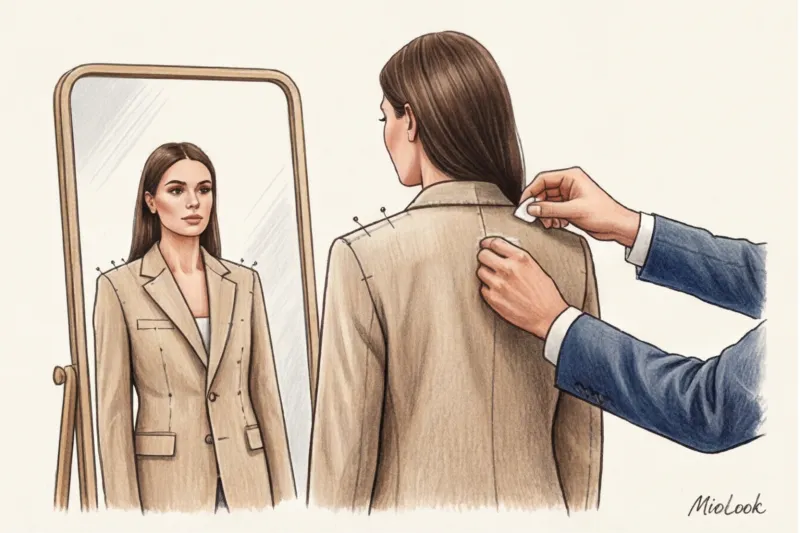
Many people are afraid to buy clothes from inexpensive stores because they "just don't fit right." And that's understandable: mass-market clothes are made for average-sized mannequins. Your secret weapon is a tailor.
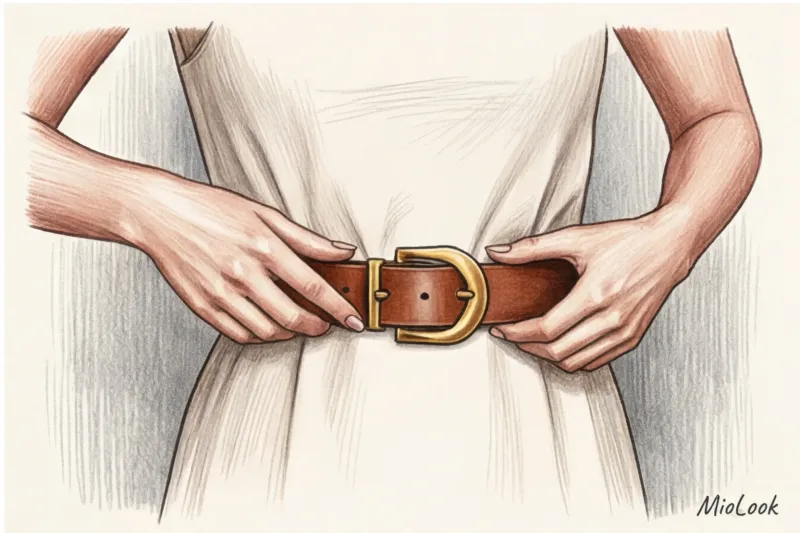
Having a dress altered at a tailor's (adjusting darts, shortening straps, adjusting the length) will cost you approximately €15–€25, but will significantly increase the perceived value of the garment. A €30 dress that fits perfectly looks better than a €300 dress that gathers at the waist.
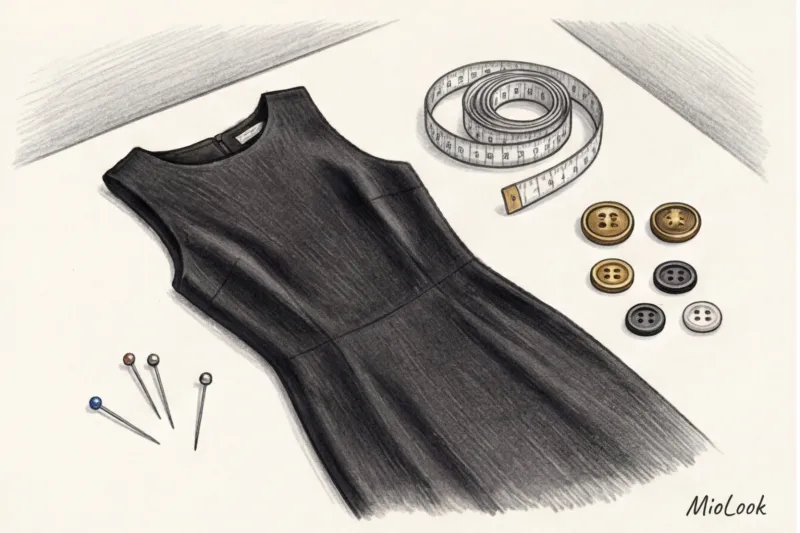
- Replacing buttons. This is a micro-investment that completely transforms a piece. Buy vintage brass, mother-of-pearl, or fabric-covered buttons at a fabric store (these will cost €5-10) and replace the standard plastic ones with them.
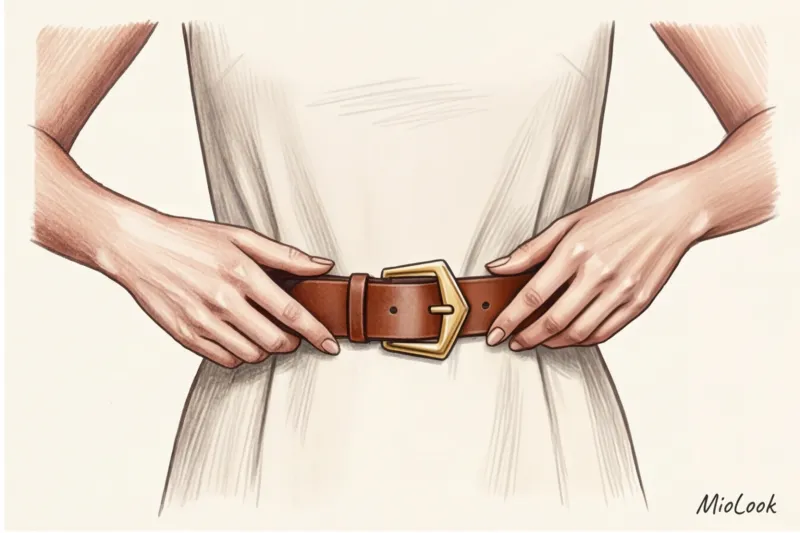
- Removing belt loops. Inexpensive dresses often have thin thread belt loops on the sides and a flimsy belt made of the same fabric. Trim the belt loops with nail scissors. Replace the original fabric belt with a high-quality, structured leather belt.
A smart wardrobe is always at hand
Stop buying one-time purchases. Try MioLook—an AI stylist will help you create dozens of looks with just one dress.
Get access — €0.99 onceDigitizing Your Corporate Wardrobe: How to Avoid Impulse Buying
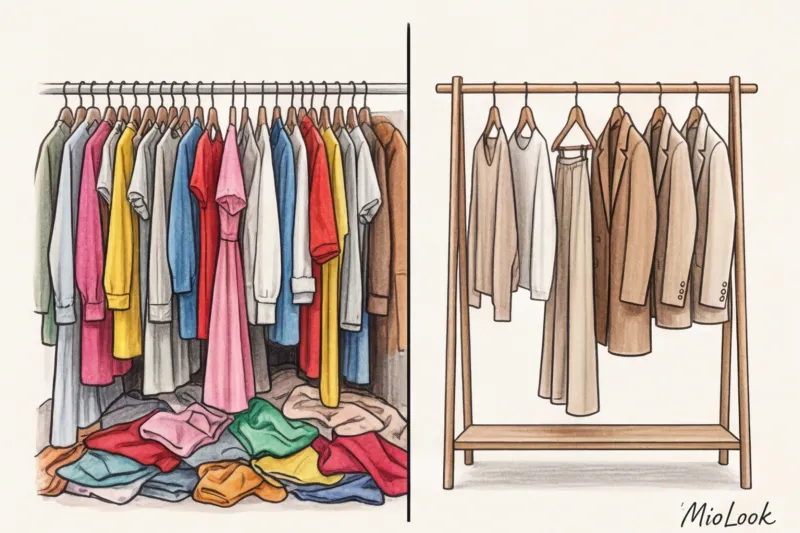
To avoid panicking the week before the big day, I recommend digitizing your holiday capsule wardrobe. A McKinsey study (2024) shows that women wear only 20-30% of the items in their closets, leaving evening dresses hanging for years.
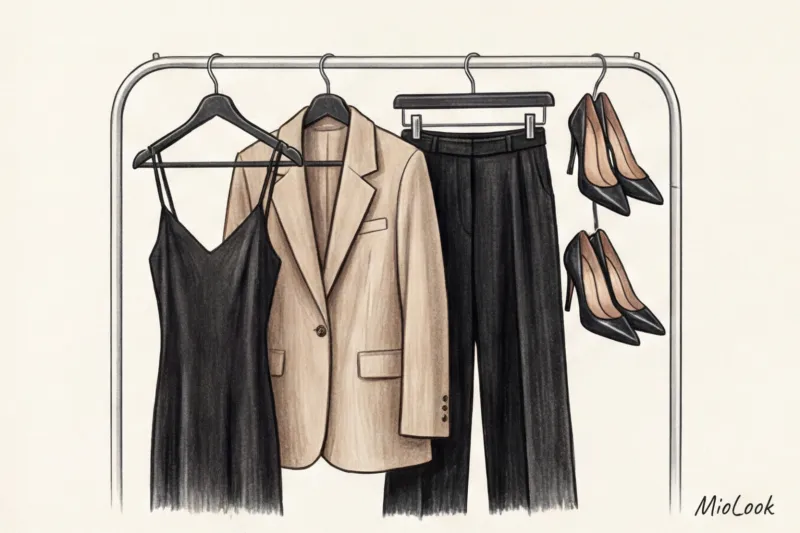
I have long ago transferred my clients to the use of smart wardrobe at MioLook We upload one perfect basic dress in a deep shade and create look formulas in advance.
See how it works:
- For a cocktail party: dress + statement earrings + sandals with thin straps.
- For a formal office reception: the same dress + a voluminous men's-style jacket + closed-toe pumps.
- For a relaxed Friday office party: the same dress + a chunky knit sweater (worn over it) + thigh-high boots.
One simple dress covers 80% of occasions. You pay once and wear it constantly, keeping your Cost Per Wear to a minimum.
Checklist: A stress-free and cost-free corporate party preparation plan
It's important to note: this approach has its limitations. If the invitation specifies a strict dress code of Black Tie or White Tie, mass-market clothing won't save you—the fabric and cut won't pass the etiquette test. Renting a high-status outfit is a better option. However, for cocktail parties, festival casual, or a casual outing to a restaurant, this plan will work flawlessly.
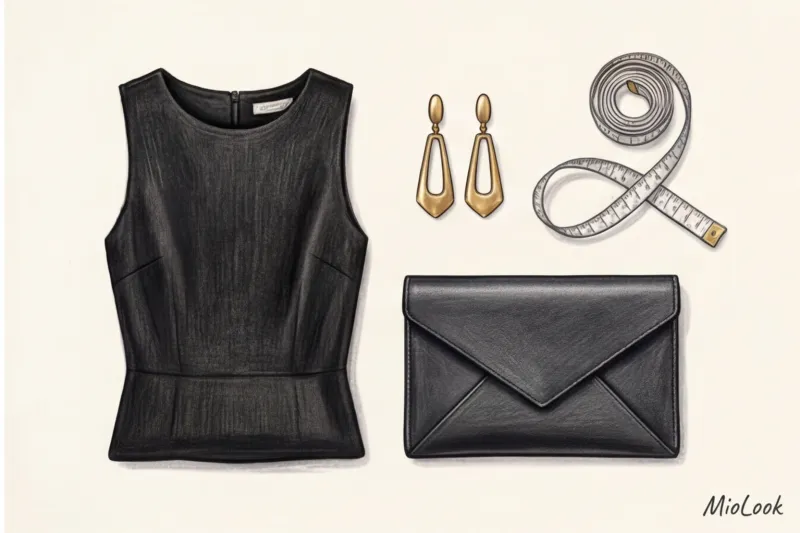
Your Action Plan for the coming days:
- Choose a simple style in a deep, jewel-toned hue (emerald, burgundy, or blue). No polyester lace.
- Squeeze the fabric in your fist for 10 seconds before purchasing. If it's too wrinkled, don't buy it; you'll look unkempt after half an hour of sitting at the table.
- Take your dress to a tailor two weeks before the event. An adjustment is required.
- Focus on one statement piece: a hard minaudière clutch, expensive shoes, or a statement belt.
Don't try to buy the "most elegant" dress in the store. Buy the best backdrop for your appearance and accessories. The perfect evening look isn't a garment, it's an architectural statement, where an inexpensive base merely highlights your ability to master style.