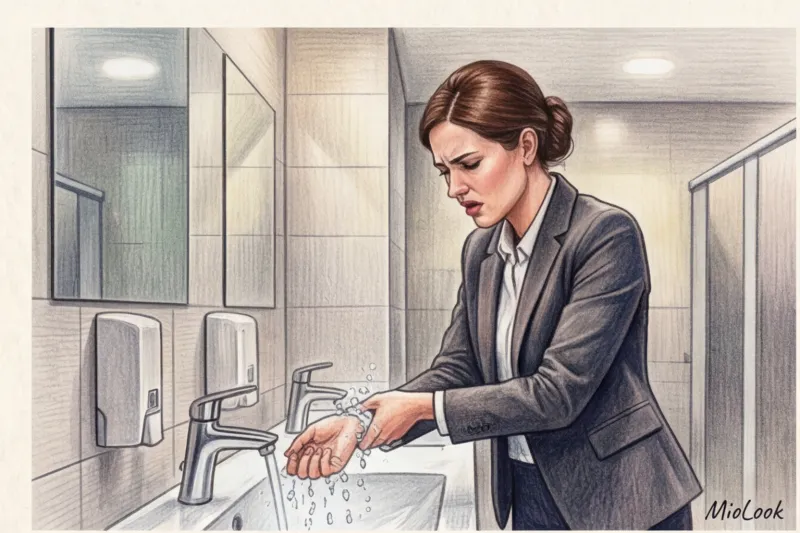
It's 6:30 PM. You've just finished a challenging day at a professional conference, and the evening gala dinner starts at 7:30 PM. There's no time for a full shower or a change of outfit, only 15 minutes in the hotel restroom. One of my clients, a top manager at an IT company, once confessed, "At times like these, I just vigorously scrub my wrists with a wet wipe to remove my morning perfume and then generously douse myself with my evening perfume. I end up smelling like a shelf in a perfume store fell on me."
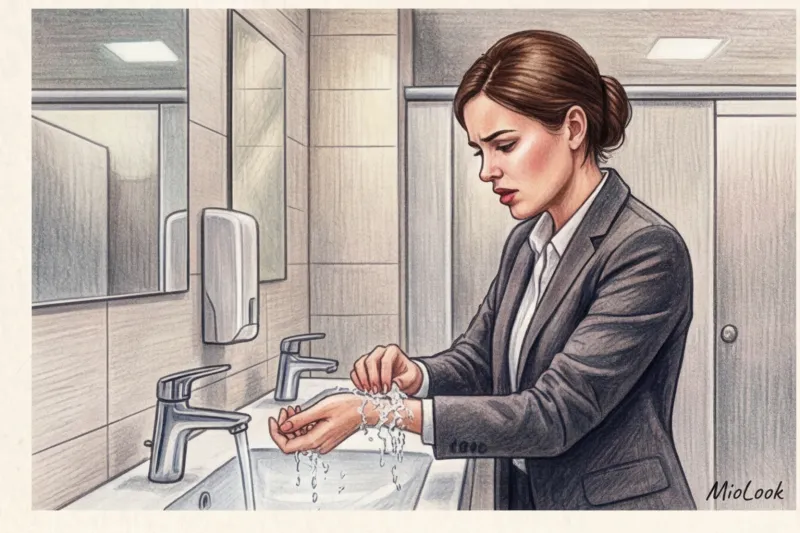
Sound familiar? Preparing speakers for evening events is a frequent task in my styling practice. And the first thing I teach them is that perfume isn't makeup; you can't just "wipe it off" with micellar water. We covered the basics of this process in more detail in our complete guide to Blending perfumes on the skin: the art of layering Today I propose to look at this problem from the perspective of chemistry and textile materials science.
Why You Can't Just Wash Off Your Morning Scent: Skin Chemistry
Have you ever noticed that after trying to wash off your perfume with water and office soap, your favorite evening scent starts to smell like sour metal or dirty musk on your skin? This isn't a coincidence, but rather basic chemistry.
Trying to wash off your morning perfume with a wet wipe or soap and water is the worst thing you can do before applying a new fragrance. According to IFRA (International Fragrance Association, 2023), light citrus and floral essential oils evaporate from our skin within 15–120 minutes. But heavy base notes (musk, amber, patchouli, sandalwood) have a high molecular weight and are highly lipophilic. Simply put, they dissolve in fats, not water.
They literally eat into the lipid layer of your skin. When you scrub your wrist with soap, you don't remove the base of your perfume. You disrupt the natural hydrolipid mantle and dramatically change your skin's pH from its normal slightly acidic (around 5.5) to alkaline (up to 9.0). Any new perfume will react to this acidity "hack" by distorting its composition. And the fragrances contained in wet wipes will conflict with your perfume, creating that very olfactory mess.
Access to MioLook for €0.99 — one-time payment
A smart AI stylist will select the perfect look for any occasion, from the office to a gala dinner.
Get access — €0.99 onceHow to Apply Another Perfume Over an Old One: The "Residue" Rule
Clients often ask me, How to apply another perfume over the old one to make the composition sound rich and harmonious. The main secret lies in understanding a simple fact: by six o'clock in the evening, only the base remains of your morning perfume.
You don't layer a new fragrance over the crisp morning bergamot or delicate peonies—they're long gone. You work exclusively with the "leftovers." Before taking the evening bottle out of your bag, warm your wrist with your breath and listen carefully to your skin. What do you smell? Dry wood? Sweet powder? Animal musk?
"The pyramid rule states: your evening perfume should have a base note that's related to the scent currently residing on your skin. Only then will the transition be seamless."
If you are planning not only to update your perfume, but also to transform your beauty look, I recommend studying our material about Business makeup: rules, instructions, and common mistakes — the principles of transforming a daytime look into an evening one are very similar to those of perfumery.
Successful and unsuccessful combinations of bases
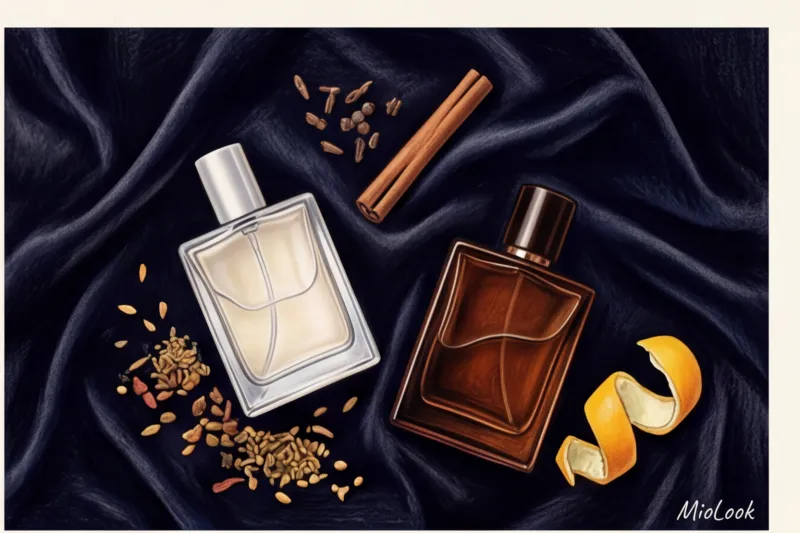
Perfume layering has its tried-and-true formulas and absolute no-nos. Here are a few combinations I regularly test in practice:
- Perfect match: In the morning, you wore a fresh, citrusy kohl (by evening, it left behind a dry, cedar or vetiver base). Feel free to layer on top with rich, oriental spices, cardamom, or warm cinnamon. The wood holds the oriental notes perfectly.
- Elegant transition: Morning aquatics or light green tea leave behind a clean white musk. Over this, evening white flowers (tuberose, jasmine, gardenia) unfold luxuriously, acquiring additional depth.
- Absolute failure: If you've worn a gourmand scent (vanilla, praline, tonka bean) in the morning, never apply a strict leather chypre or bitter galbanum in the evening. The sweetness piercing through the tar and moss will create a nauseating dissonance.
Molecular "Bridges": The Secret to Seamless Layering
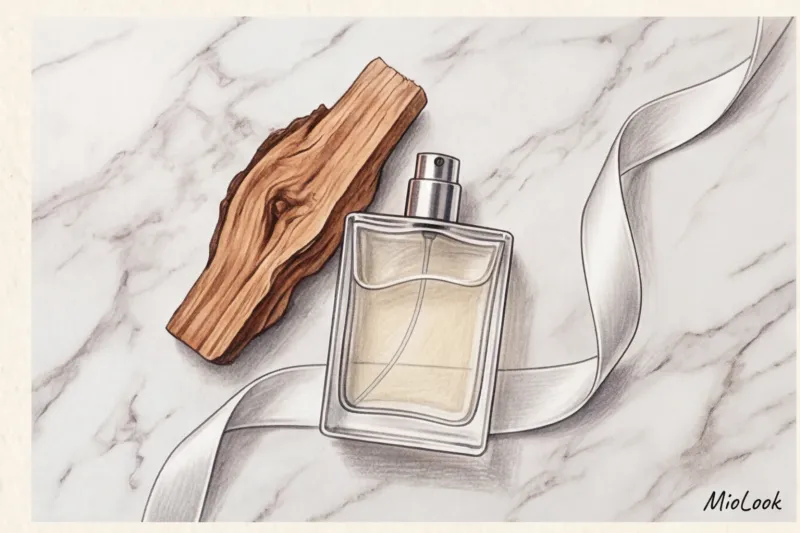
What to do if your morning and evening scents clash and you need a refresh? Fragrance molecules like Iso E Super, Ambroxan, or Cetalox come to the rescue. These synthetic ingredients smell less like specific notes than like cleanliness, warm skin, and fresh air.
Applying a mono-molecular perfume over an existing base acts as a kind of eraser or filter. The molecule "nullifies" the harsh dissonance, imparting volume and diffusion to the old base, making the morning scent smell like an expensive skincare cream. This is the ideal solution for performances on stage , when you need a train that won't choke the audience in the front rows.
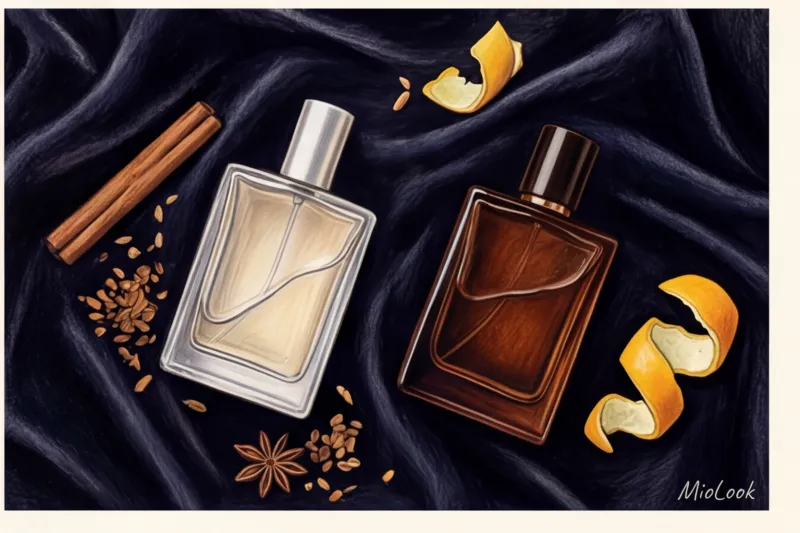
From the perspective of sustainable fashion, which I advocate, this is also a very eco-friendly approach. Instead of keeping 10 different evening fragrances in your office drawer, having one molecular "booster" is enough. It will create dozens of new combinations with your everyday wardrobe.
Your perfect look starts here
Join thousands of users who look flawless every day with the help of smart wardrobe analysis.
Get access — €0.99 onceTextiles as a blank canvas: alternative application areas
I love working with fabrics. After 12 years of studying textiles, I've learned an important rule: if an old perfume base on your neck and wrists is too loud, just leave the skin alone. Use your clothes as a blank canvas.
Research in textile chemistry (specifically, data from the Journal of the Textile Institute for 2022) demonstrates that the sorption properties of natural fibers are fundamentally different from those of synthetics. How can this be applied in practice?
- Wool and cashmere: They absorb oils deep into the fiber structure and retain them for weeks. Applying perfume to them is only recommended if you plan to wear the scent all season long.
- Natural silk: The perfect carrier. Silk absorbs fragrance superficially and releases it very subtly, delicately, as it warms from your body.
- Polyester and acrylic: They practically do not absorb perfume oils, leaving them on the surface. Because of this, the scent evaporates flatly and can have a harsh, chemical-like smell.
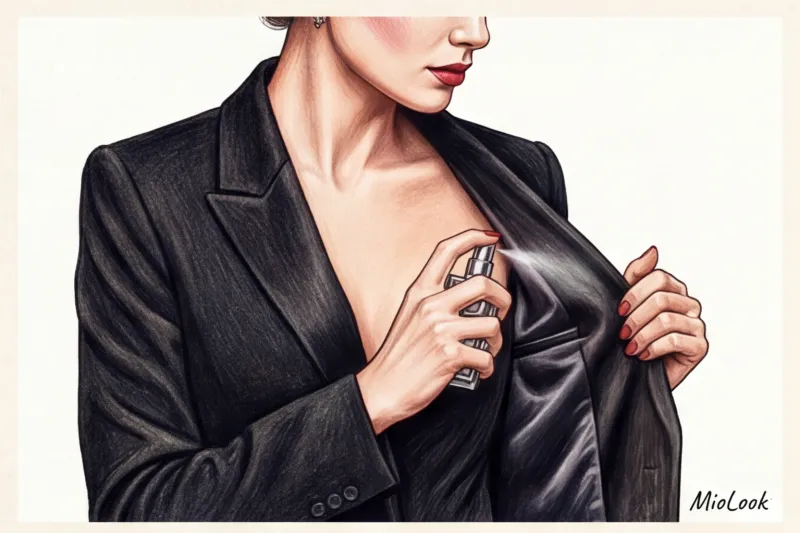
My favorite styling trick for evening wear: spray your new perfume on the silk or viscose lining of your evening tuxedo or jacket. The fabric will isolate the new scent from your skin and the old base. Every time you move, the jacket flaps will open, releasing a pure, unadulterated trail of the new fragrance.
3 Main Mistakes When Changing Your Perfume in the Evening
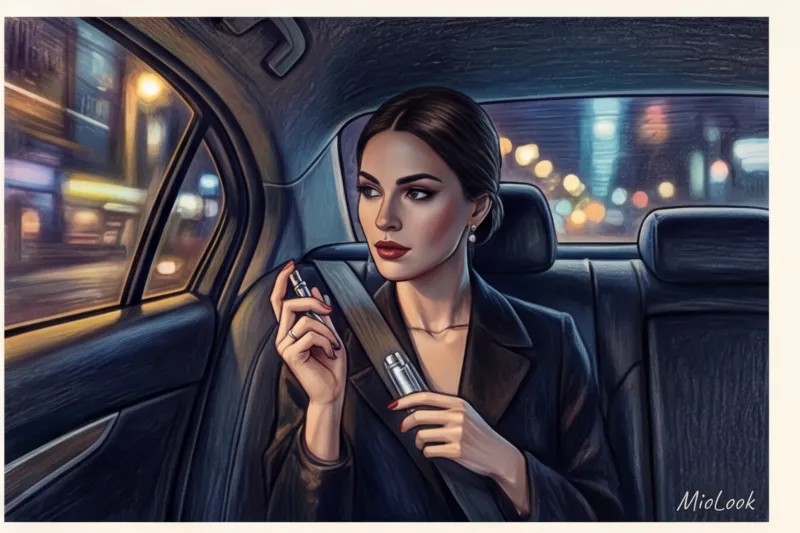
Even with a good grasp of the theory, it's easy to ruin your look with mechanical habits. Here are three mistakes I regularly see my clients make in the rush before events:
- Rubbing your wrists together. Glossy magazines of the 2000s scared us with the idea that we were "breaking molecules." Physics dictates that breaking molecules by rubbing skin is impossible. But friction causes localized heating of the epidermis. The top and middle notes of your new perfume will evaporate three times faster, leaving you with a heavy, lumpy base after just 20 minutes.
- A dense oud application over a sweet gourmand. I have to be honest: layering doesn't always work. If you've applied a thick Extrait de Parfum with oud or rich caramel in the morning, no molecular bridge will save you. Layering heavy on heavy onslaughts a physiological suffocating effect on those around you. In this case, the only solution is a shower.
- Spray onto hair with styling residue. Hair holds fragrance well, but if you used dry shampoo, texturizing spray, or strong-hold hairspray in the morning, their fragrances will clash with the alcohol in your perfume. The result often smells like burnt plastic.
Ready to get started?
Try the MioLook plan for free—no commitments required. Organize your wardrobe and beauty routine in one place.
Get access — €0.99 onceChecklist: Quick Transition from Office to Event
To avoid panicking in the restroom the next time you're at a corporate event or on a date, follow this simple procedure:
- Step 1: Evaluate the lingering scent of your morning scent on your wrist. Warm your skin with your breath—determine which note family dominates (woody, musky, sweet).
- Step 2: Choose a complementary evening perfume (related base) or use a transparent molecule (Iso E Super / Ambroxan) for a fresh effect.
- Step 3: Apply the new fragrance in microdoses. Avoid morning application areas (neck, wrists). The best spots for evening refreshment are the back of the neck (under the hair if it's clean) and the lining of your jacket.
- Step 4: Let the composition settle. Don't go out into the room immediately after spraying. The alcohol needs 10-15 minutes to evaporate, and the oils need to warm up on your skin.
Perfume isn't paint that needs to be washed off with solvent before applying a new layer. It's a story you tell throughout the day. And if you learn to use textiles wisely and understand your skin chemistry, the evening chapter of that story will sound flawless.