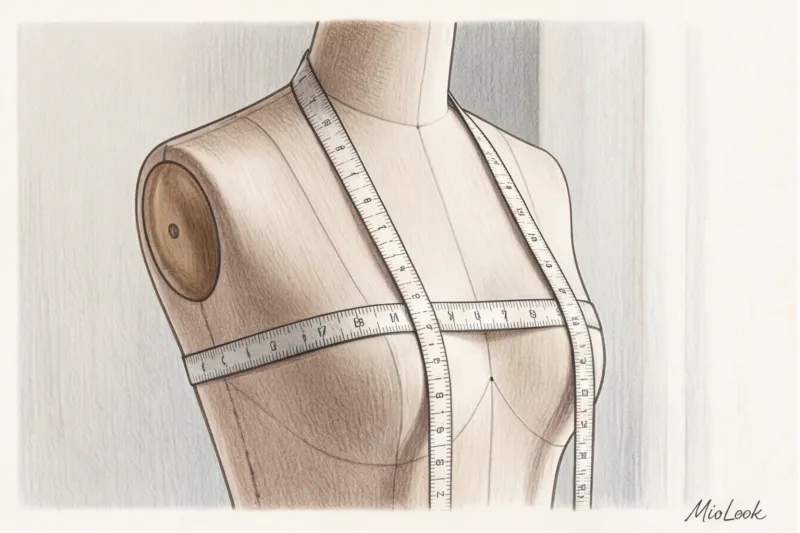
Imagine this: Anna, a 32-year-old IT executive, comes to me for a wardrobe review. She complains of chronic shoulder pain, a slouched posture, and the fact that not a single silk blouse fits her chest. For the past ten years, Anna had been buying size 75D bras from a popular high-street store. When we took her actual measurements and fitted her with the correct 65G, two things happened. First, Anna cried with relief because the weight had lifted. Second, she visibly lost at least 5 kilograms—she suddenly had a slimmer waist.
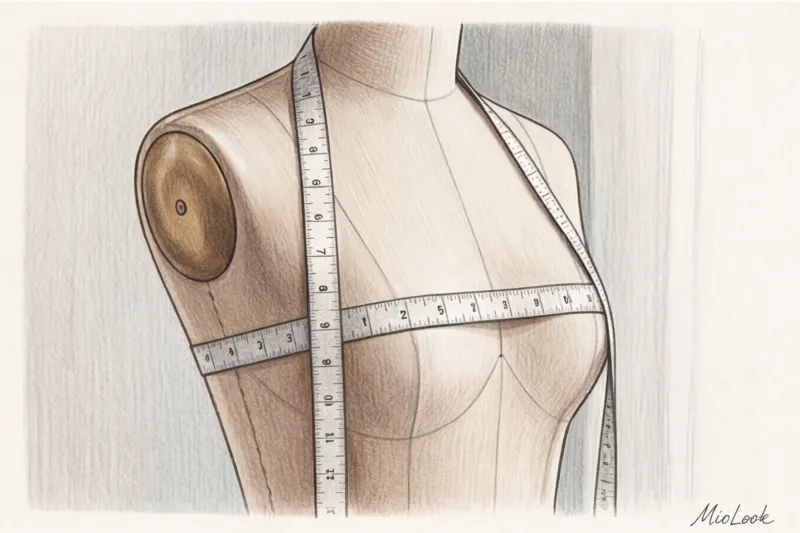
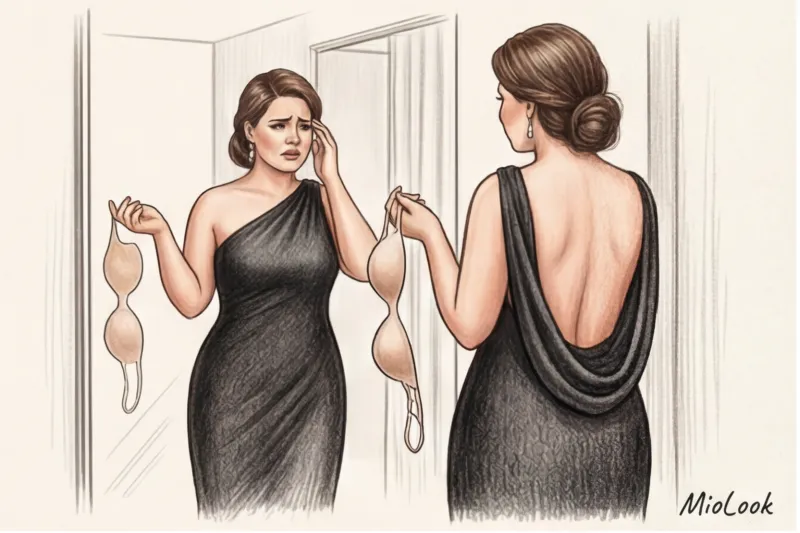
If your eternal search query is - bra small back large cup , you're probably familiar with that feeling of utter hopelessness in the fitting room. Mass-market bras offer you either a band that rides up to your shoulder blades or a cup that divides your bust into four sections.
The foundation of any stylish look is laid long before choosing a jacket. We discussed in more detail how underwear shapes a silhouette in our The complete guide to shapewear for plus-size women But today I want to move away from banal advice and apply an engineering approach to the most complex geometry of the female body: a narrow ribcage and heavy breasts.
Anatomy of the Problem: Why the Perfect Bra Is So Hard to Find
According to British retailer Bravissimo (2023), the standard size range of most stores (from 70A to 85D) covers the needs of only about 30% of women. The remaining 70% wear compromise sizes for years.
Why isn't it profitable for popular brands to produce sizes 65F or 70H? It's pure mathematics and production economics. Creating lingerie with non-standard proportions requires completely different patterns. You can't simply take a size 75C pattern, shorten the waistband, and sew on oversized cups. You need to adjust the angle of the underwire, reinforce the side panels, and shift the balance point.
A large bust on a narrow ribcage obeys the strict laws of physics. The smaller the support surface (your subbust), the more carefully weight distribution must be handled. If your back hurts by the evening, your straps leave deep red marks, and you have to constantly tug your belt down, this isn't just a "personal characteristic." It's a sign that the basic architecture of your wardrobe has collapsed.
The Biggest Seller Myth: Why Sister Sizing Is Your Worst Enemy
Have you ever noticed how sales associates in stores offer you "interchangeable" sizes? "We don't have 65G, but get 75E, the cup is exactly the same!"
It's called sister sizing. And for women with narrow backs, it's the worst style advice you can get. Retailers use it to sell off leftover stock, but the laws of biomechanics can't be fooled.
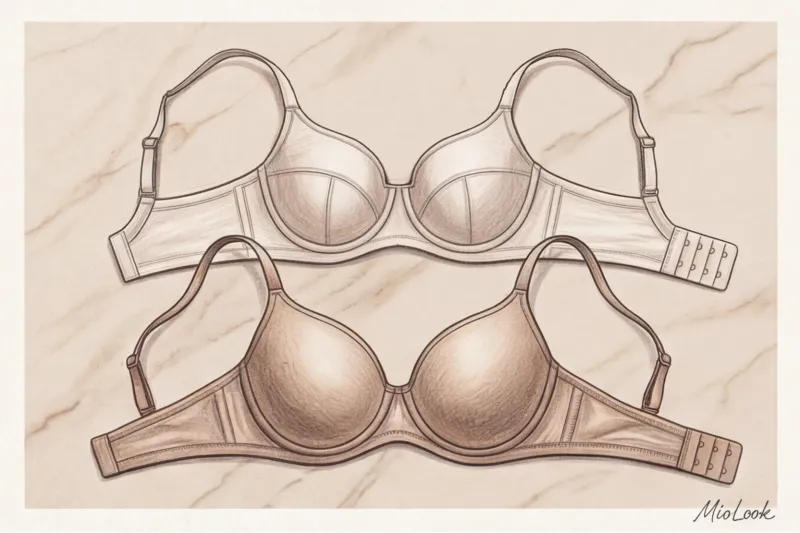
When you replace a 65G with a 75E, the cup size itself is indeed preserved. But you end up with a band that's 10 centimeters wider than your body. What happens next?
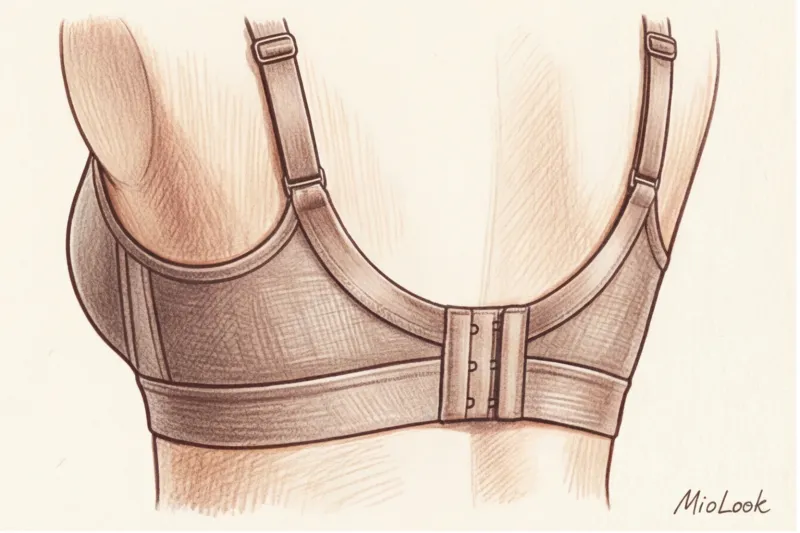
- The belt, which should be an anchor, creeps up the shoulder blades.
- The chest drops down under its own weight.
- 100% of the weight is transferred to thin straps , which dig into your shoulders, causing you to reflexively slouch.
"The golden rule of bra fitting for figures with a large difference between their bust and underbust measurements is: the band size is a constant. It should never be sacrificed for the sake of a proper cup size."
Support Formula: The 80/20 Rule
Proper bra biomechanics operates according to the 80/20 formula. Exactly 80% of the support for heavy breasts should be provided by a tight-fitting band, with only 20% of the load falling on the straps.
In the fitting room, I always do a test with my clients: slide the straps off your shoulders. If your breasts immediately fall onto your stomach and the band jumps up, the bra doesn't fit, even if it costs €200.
Access to MioLook for €0.99 — one-time payment
A smart AI stylist will select the perfect look based on your individual proportions and fit.
Get access — €0.99 onceComfort Engineering: The Architecture of the Right Sconce for Unconventional Proportions
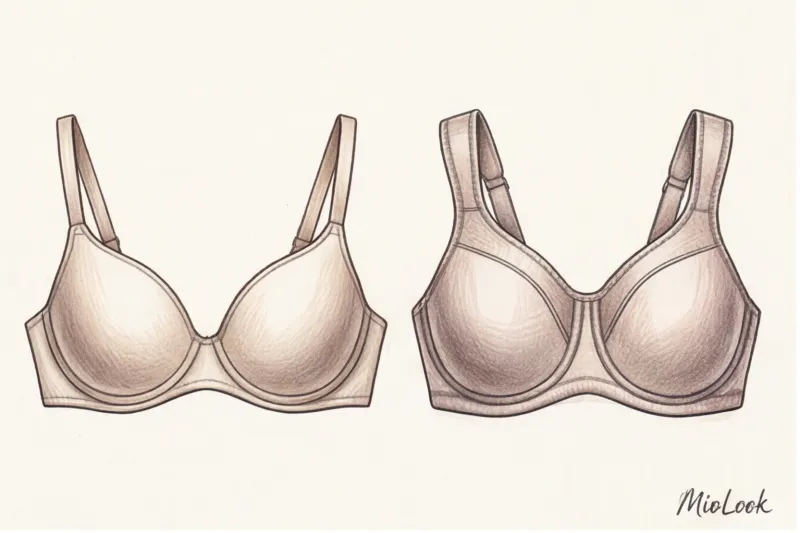
Leave molded cups for those wearing a B cup. A foam cup is a rigid hemisphere that requires your breasts to adjust to it. This doesn't work for larger volumes.
The ideal lingerie for a narrow back is based on the principles of bridge building. What should you look for?
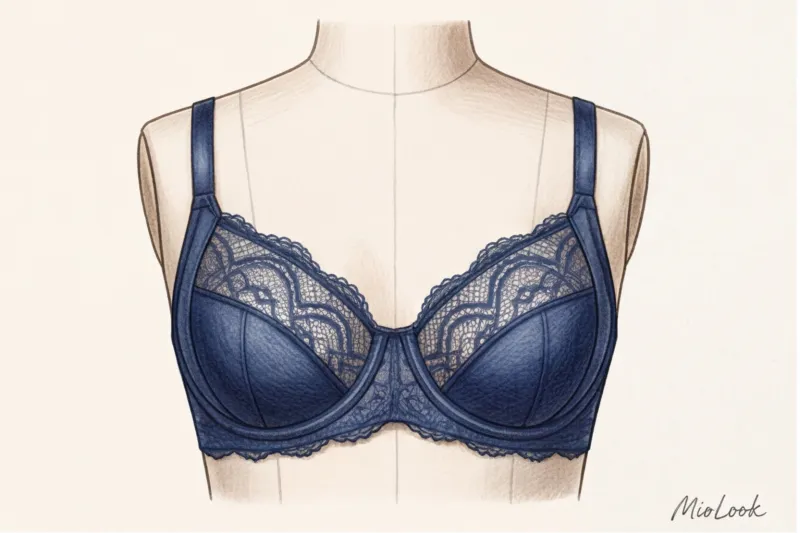
1. Seamed cup made of 3 or 4 parts.
Only seams can create deep projection and direct the breast volume forward, rather than spreading it across the chest. Seams act as reinforcement.
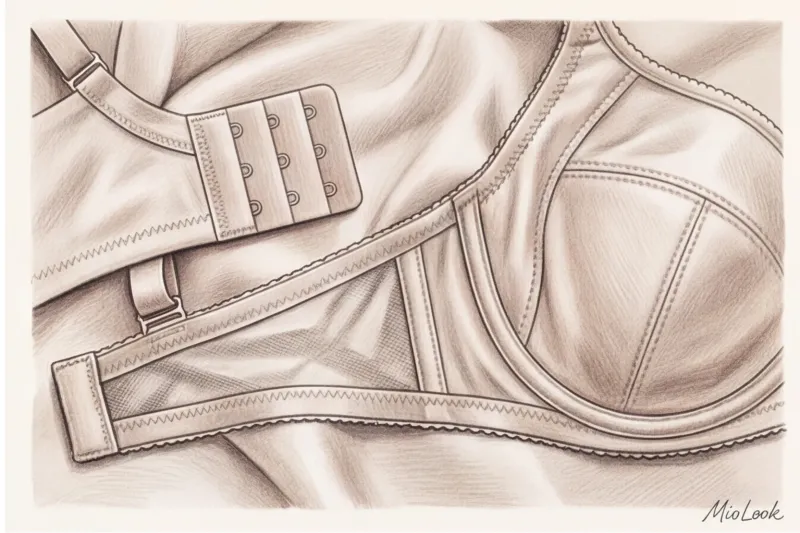
2. Side support.
High-quality models feature an additional side panel. This gathers breast tissue from under the arms and directs it toward the center. This instantly creates a slimmer silhouette, as your arms stop rubbing against your chest while walking.
3. Central jumper (gore).
It should fit snugly, as if glued, on your sternum. If the bridge hangs in the air, the cup is too small, or the underwire is too narrow.
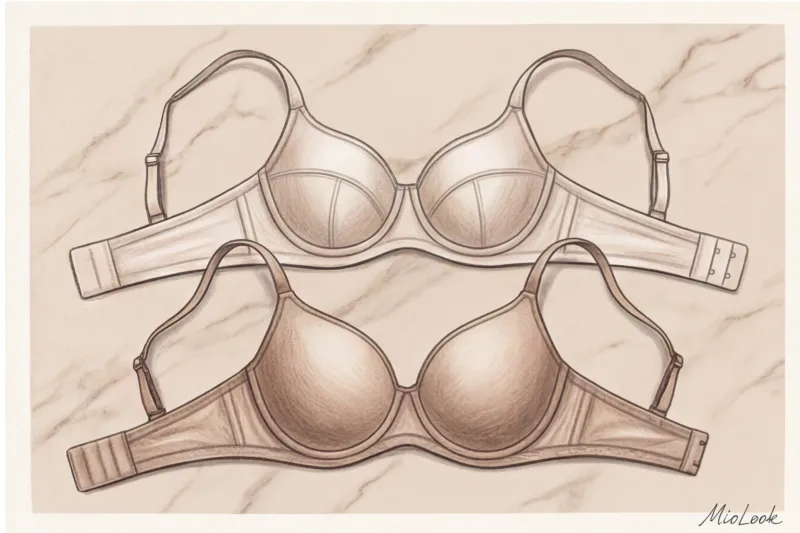
4. Width of bones.
This is the most common problem with mass-market bras. When scaling patterns, they simply use wider underwires. As a result, on a woman with a narrow back, the underwire extends deep into the armpit, chafing the skin. Proper underwires should follow the breast's natural contours (breast root).
Top Brands: Where to Look for a Bra if You Have a Small Back and Large Cups
Forget mass-market fashion. Your path lies in specialized brands (D+ cup size brands), whose sizes start at 60 or 65.
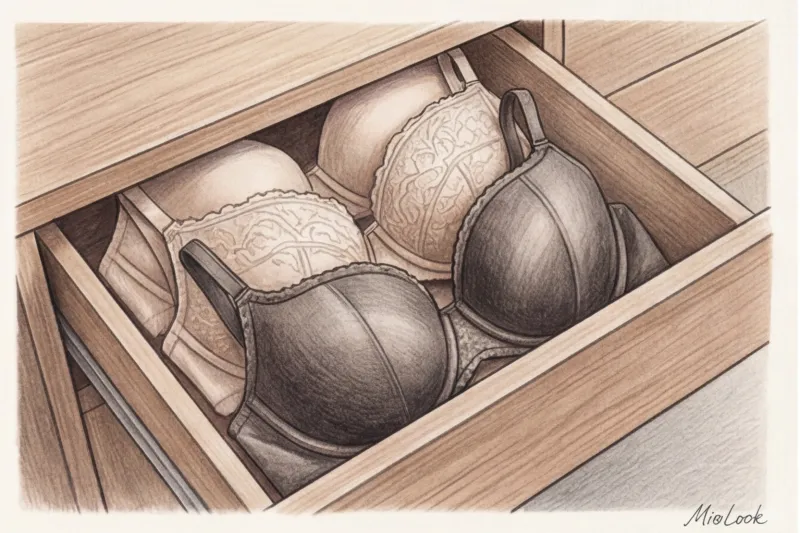
British School (Panache, Freya, Curvy Kate)
British brands are the benchmark for design. According to the London College of Fashion standards, they use very dense materials for waistbands that don't stretch out after a month. Prices typically range from €45–€75.
They're ideal for everyday wear. Models like Panache Envy last for years and provide rock-solid support. However, British-made bras have a unique feature—the underwire is quite wide, which isn't ideal for everyone.
Secret Weapon: Polish Lingerie School (Ewa Michalak, Comexim)
Here's some insider information known only to stylists and bra-fitting enthusiasts: Polish brands are the absolute Holy Grail for women with a narrow back and large cup size.
Their main feature is very narrow yet durable underwire and incredibly deep cup projection. Furthermore, brands like Ewa Michalak offer customization: for €50–€70, the factory will create your desired volume (up to 55) with any cup size, even medium or large. An important caveat: if you have a wide breast base (wide root), Polish narrow underwires may not suit you - they will dig into the breast tissue.
Stylist life hacks: what to do if your perfect size isn't available
In my practice, this often happens: we find the perfect cup, but the band is 3-4 centimeters too loose. What should we do?
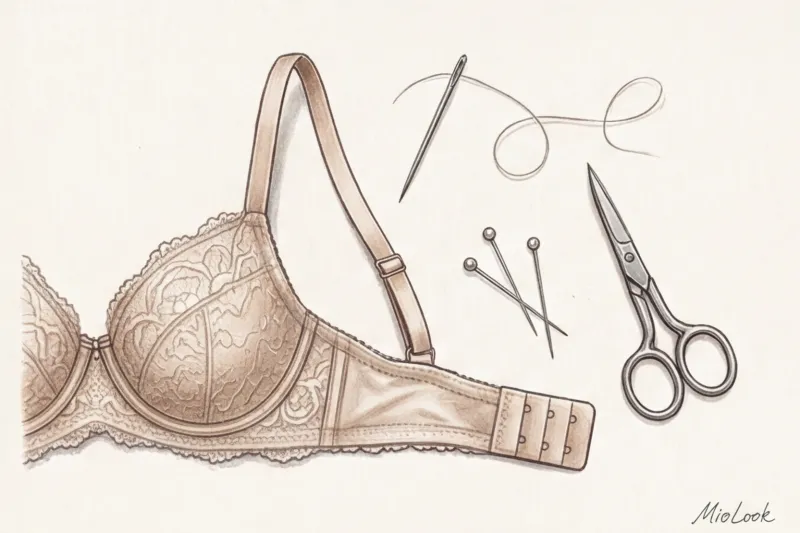
1. Sewing in the belt in the studio.
It's a stylist's secret trick. Buying a €60 bra with the perfect cup size and paying a tailor €10 to professionally shorten the band at the clasp is an investment that pays off a hundredfold. You get a custom fit.
2. Reverse sister sizing.
If you don't have the 65G you need, never buy a 70F. Get a 60H (smaller band, larger cup) and buy a regular fabric extender for €3. I often recommend this trick to my clients. You wear the bra with the extender for the first month. When the tight band inevitably stretches from washing and body heat, you remove the extender and get a perfectly fitting bra. A 70F bra would become a useless, stretched-out rag after a month.
To avoid getting confused between successful and unsuccessful patterns, I recommend digitizing your findings. In the app MioLook My clients create a "Lingerie" category, add photos of tags of successful styles, and make notes (for example, "runs small in the cup" or "perfect with a white shirt"). This saves hours of online shopping.
How the right lingerie changes the fit of your wardrobe
Why are stylists so obsessed with lingerie? Because it's the architectural framework. You can't build a beautiful house (or jacket or dress) on a sagging foundation.

When the bust is poorly shaped on a narrow back, it visually spreads outward and sinks toward the stomach. What do we get? Spreading buttons on office shirts (because the fullest part of the bust is below the blouse's darts) and a complete lack of waist.
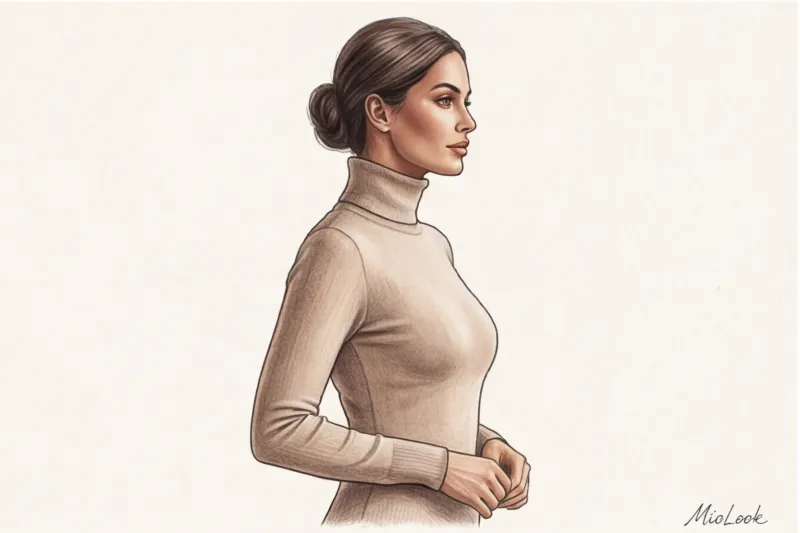
A perfectly fitted bra lifts your breasts to their natural position—right between your shoulder and elbow. Once this happens, the space beneath your breasts opens up. Your torso is visually lengthened, your waist becomes more defined, and you instantly look 1-2 cup sizes slimmer.
Your perfect look starts here
Join thousands of users who look flawless every day with MioLook, creating capsules based on the perfect fit.
Get access — €0.99 onceChecklist: 5 Signs You've Found Your Perfect Bra
Keep this list and refer to it every time you enter the fitting room. There should be no compromises.
- The belt is strictly horizontal. It should be parallel to the floor. Raise your arms up—if the belt has ridden up your back or your chest has fallen out, the band is too big.
- The jumper lies on the sternum. You should not be able to fit a finger between the center part of the bra (gore) and your body.
- The bones bend around, rather than cut into. Run your finger along the outside of the bone. It should rest on your ribs, not on the soft tissue of your chest or armpit.
- Smooth neckline. The fabric of the cup does not wrinkle (a sign that it is too big) and does not cut across the breasts at the top, creating a “four breasts” effect (a sign that it is too small).
- The straps are comfortable. They don't fall off your shoulders or leave red marks. If you take them off, your breasts should stay in place.
The right bra for a non-standard figure isn't a luxury, but a matter of health and basic style. Stop trying to squeeze yourself into the average mass-market standards. Invest time in finding your true size and the right brand with deep cups, and you'll be surprised how much the fit of your favorite clothes will change.