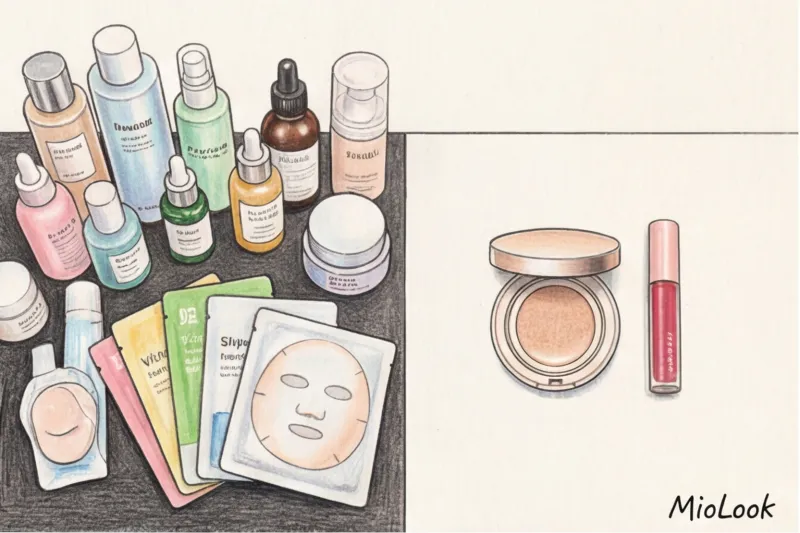
Backstage at Seoul Fashion Week last year, I witnessed a scene that forever changed my approach to makeup. A celebrity stylist for a popular K-pop group spent exactly 40 minutes massaging the singer's face, toning, and layering serums, but only 14 minutes applying makeup. It was then that I realized the most important thing: Korean makeup like idols — this isn't just a collection of cute TikTok beauty tricks. It's a highly complex optical architecture.
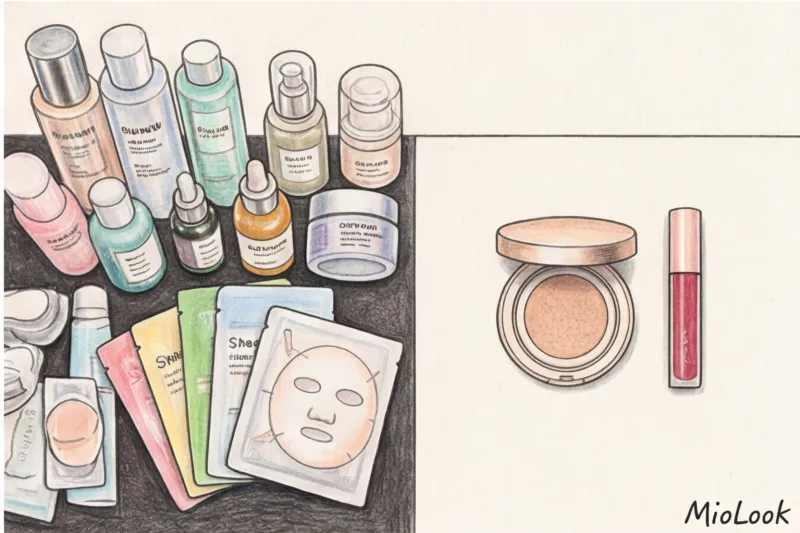
Let's dispel the main myth right away. We in the West are accustomed to thinking of Asian style as "light" and "natural" nude. In reality, idols' stage looks are heavy, multi-layered, tightly set makeup with aggressive, targeted concealing. It doesn't melt under the spotlights and lasts for 12 hours precisely because makeup artists masterfully disguise dense textures as "bare, dewy skin." We discussed in more detail how this phenomenon became part of the global aesthetic in our The Complete Guide to K-Pop Fashion and Street Style And today we'll examine the mechanics of creating this illusory perfection.
Anatomy of an Illusion: Why Korean Idol Makeup Isn't Just "Natural"
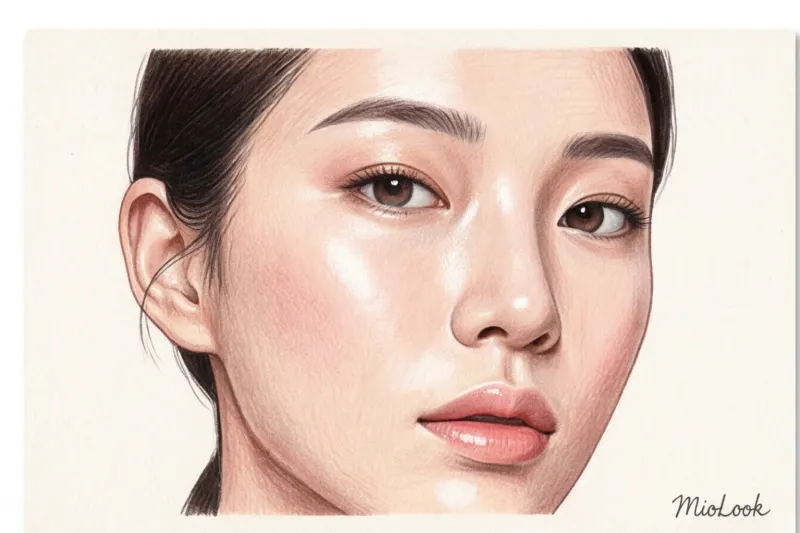
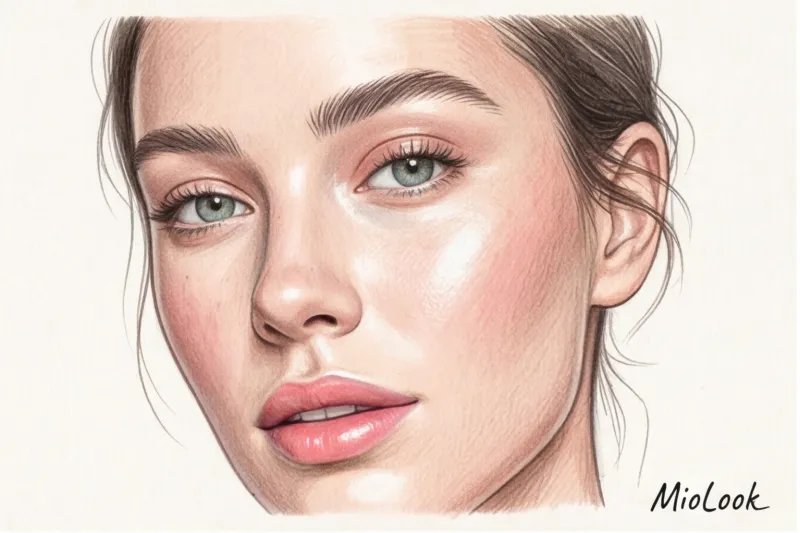
The European approach to skin tone often boils down to color correction: we use a thick cream and blur redness. Korean specialists work differently—they create an architecture of light. According to a large-scale study by the Amorepacific Corporation's R&D center (2023), healthy, young skin refracts light in a unique way, creating an inner glow. This effect, not a matte canvas, is the ultimate goal.
This explains the golden rule of Korean makeup: 80/20. Eighty percent of the time is spent on skincare preparation: exfoliating pads, three layers of toner, and lightweight emulsions. The skin should literally swell with moisture. If you skip this step, even the most expensive foundation will not give you the glass skin effect.
Your perfect look starts here
Join thousands of users who look flawless every day with MioLook.
Get access — €0.99 onceCanvas Preparation: Glass Skin and Metal Spatula Technique
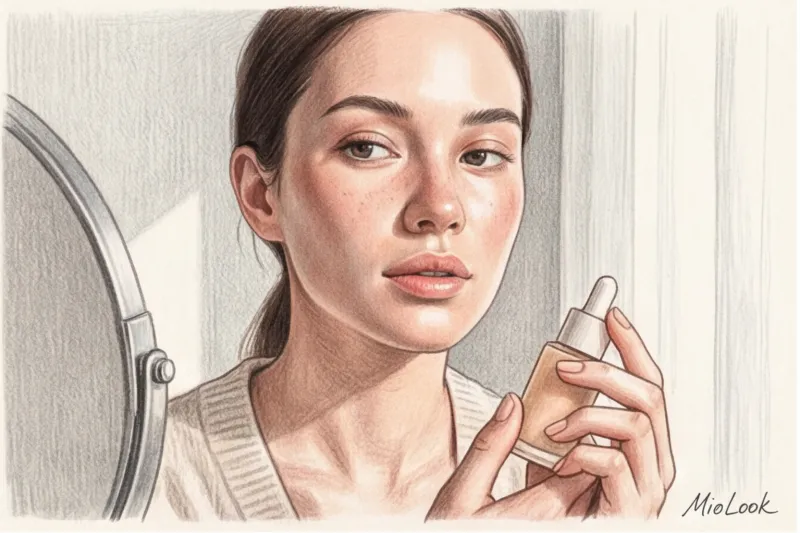
My clients often ask, "Which cushion should I buy to get a face like BLACKPINK?" The truth is, idols almost never wear cushion makeup on stage or on the red carpet. Cushion foundation is ideal for touching up in a taxi, but for a long-lasting "second-skin" effect, makeup artists use liquid foundation and a metal spatula (spatula technique).
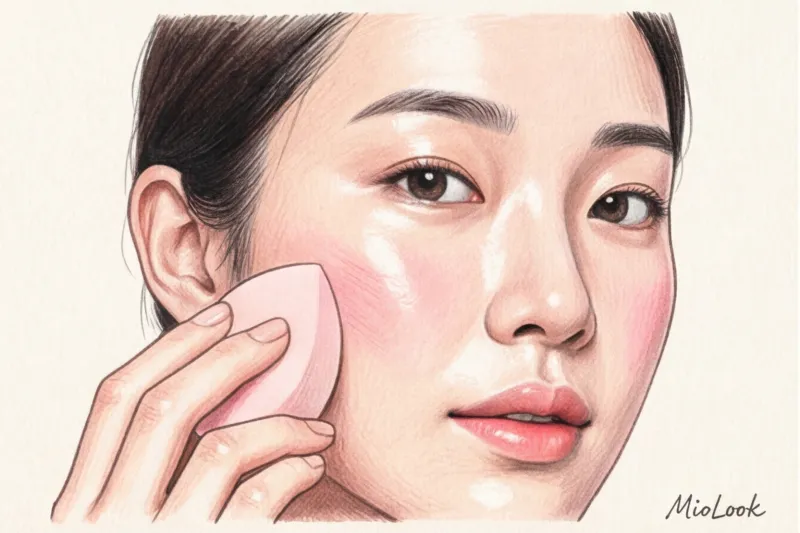
This technique was popularized by the legendary Jung Saem Mool, creator of the Glass Skin concept. The secret is simple: the edge of a metal spatula is dipped into a drop of foundation, then the product is spread over the face in a microscopically thin layer, literally a fraction of a millimeter. The foundation is then tapped in with a damp sponge.
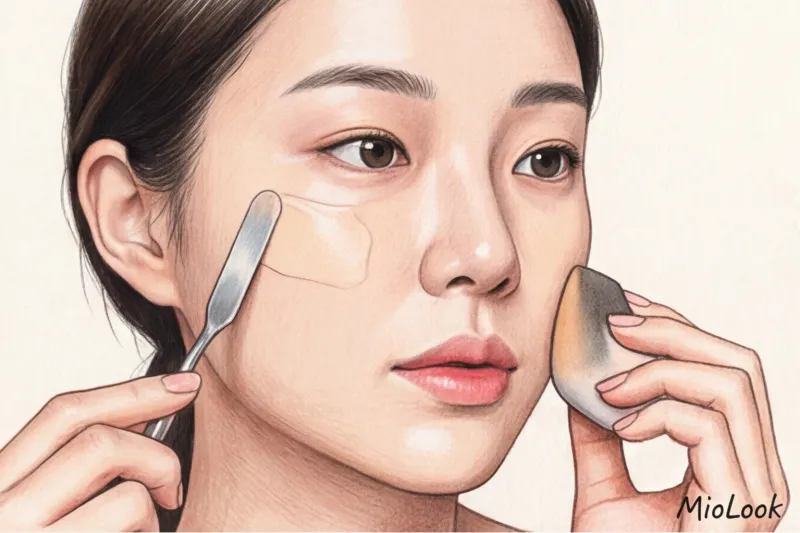
But what about blemishes and dark circles? That's where pinpoint concealing comes in. Instead of applying thick concealer in triangles under the eyes (a throwback to 2016), Korean makeup artists use a tiny flat brush to apply micro-dots of thick concealer directly to the pigmented areas, leaving the rest of the skin translucent.
The Architecture of the Gaze: Aegyo Sal and "Ray-Eyelashes"
Asian facial anatomy is characterized by a flatter contour. To add volume and visually shorten the middle third of the face (which is subconsciously perceived as a marker of youth), the Aegyo Sal accent was developed.
It's important to understand: Aegyo Sal isn't bags under the eyes from lack of sleep. It's the hypertrophied volume of the orbicularis oculi muscle that appears when we genuinely smile. By highlighting this ridge with a matte peach or shimmery shade and drawing a light gray-brown shadow underneath, makeup artists make the eyes appear one and a half times larger.
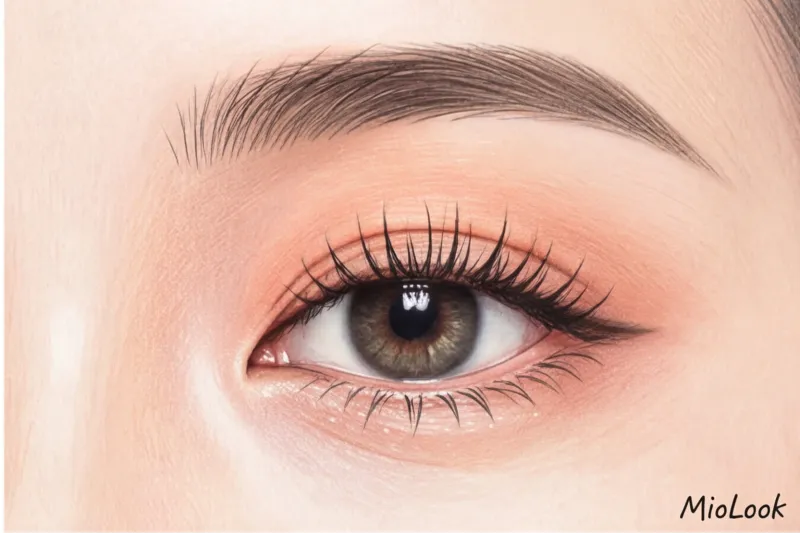
Idol-Style Eyelashes: Tweezing
Forget fluffy Hollywood volume. Korean idol-style makeup calls for a doll-like, graphic look. It's easy to achieve:
- Apply a thick coat of lengthening mascara to your lashes.
- While the mascara is still wet, take a pair of thin metal tweezers.
- Carefully glue 3-4 adjacent eyelashes at the base, stretching them into a single sharp “ray”.
- Pro-secret: In Korea, lash artists lightly heat a wooden stick with a lighter and curl the eyelashes from the roots to create a firm hold.
Face Shape Transformation: Subtle Cool Contouring and Watercolor Blush
Over my 12 years in the fashion industry, I've seen Western contouring a la Kim Kardashian slowly lose ground, giving way to Asian V-shape shading. The main difference is in the color temperature and geometry. Korean contouring is never reddish or warm. It's always a translucent taupe (cool-toned) shade, mimicking a realistic cast shadow.
But the real game-changer is blush. Ever notice how idols' faces seem childishly naive? The secret is undereye blush. Blush isn't applied to the classic "apples" of the cheeks, but much higher—practically blending into the undereye area and sweeping toward the temples. This creates a natural, blushed effect.
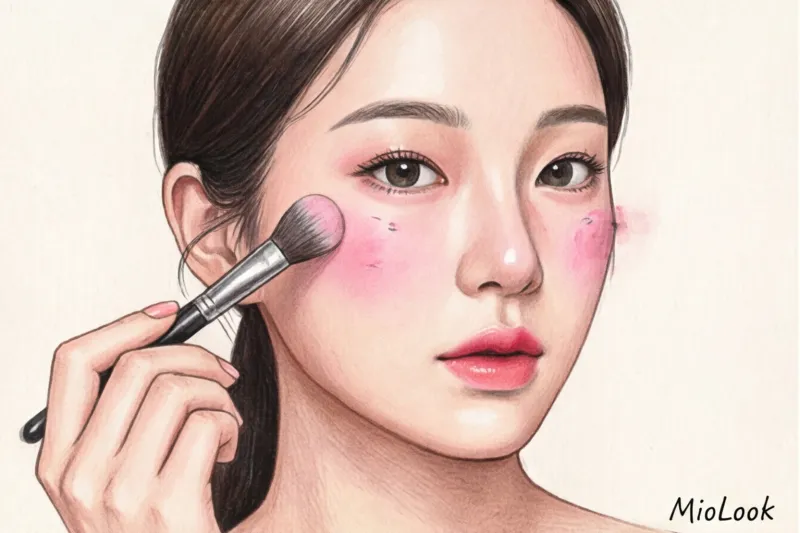
To keep the face moist but not greasy, apply baking powder only to the periphery of the face: the jawline, sides of the nose, and hairline. The center of the face should always reflect the light.
Access to MioLook for €0.99 — one-time payment
A smart AI stylist will analyze your appearance and select the perfect makeup and wardrobe.
Get access — €0.99 onceGradient Lips 2.0: Tanghulu Effect with a Glass Finish
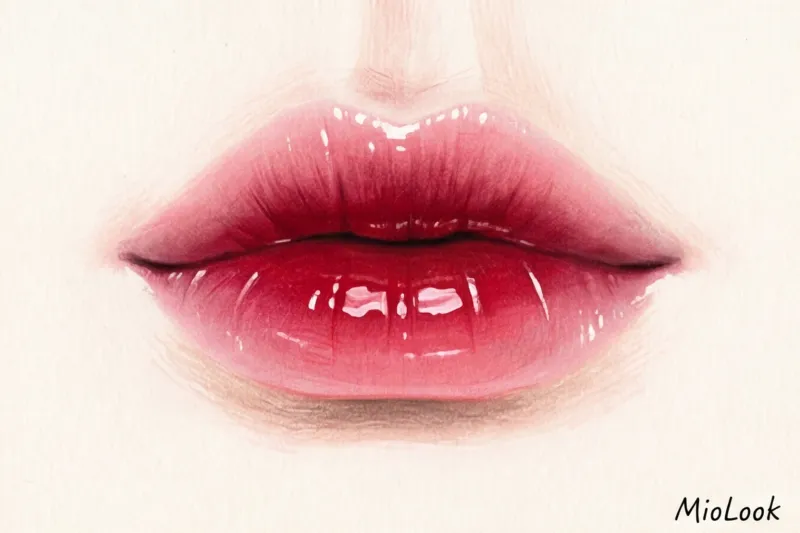
Matte lips with a defined contour are a thing of the past decade. The K-pop industry's current obsession is Tanghulu lips, named after a popular Asian street food: fruit coated in glass sugar.
According to reports from major beauty retailers, sales of super-glossy tints will grow by a staggering 140% between 2023 and 2024. How can this effect be achieved?
- Overlining with a fluffy brush: The lip line is erased with a drop of residual foundation from the sponge. Then, apply a matte nude lipstick with a soft eyeshadow brush, slightly extending beyond the natural lip line. The line should be blurred and plump (blurred edges).
- Color concentrate: A bright berry gel tint is applied to the center of the lips (closer to the mucous membrane).
- Glaze: Apply a generous layer of clear or tinted gloss with an ultra-glossy finish on top. Your lips should look like you just drank a glass of ice water.
Adapting the Trend: How to Recreate Korean Idol Makeup on European Faces
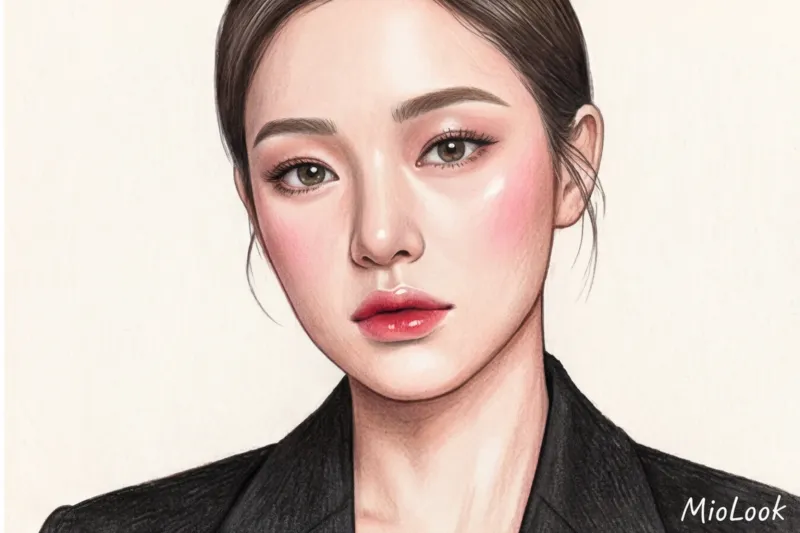
I must add an important caveat here. Blindly copying Asian techniques on Slavic or European faces often leads to the "uncanny valley" effect. We have different bone structures. One of my clients once shaved off half her high-arched eyebrows to create straight Korean brows. The result? On a face with deep-set eyes and a pronounced brow bone, straight brows create a perpetually sad Pierrot effect.
Here are the rules for proper adaptation:
- Brows: Don't ruin your natural arch. Just soften it. Use powder shadows instead of a pencil. Fill in any gaps with a light shade, avoiding harsh angles.
- Aegyo Sal for deep-set eyes: If you naturally have visible dark circles or hollows under your eyes, shimmery glitter on your lower lid will make you look like a tired panda. Matte peach eyeshadow is your solution. It will create the desired effect without accentuating the skin's texture.
- Skin texture: Glass skin looks great on smooth Asian skin. If you have porous, oily European skin, the abundance of shine will highlight every pore. Replace the all-over glow with Cloud skin (cloudy skin): mattify your face with a light translucent powder and add radiance locally with a liquid highlighter on your cheekbones.
Beauty Arsenal Checklist: What to Buy to Create an Idol Look
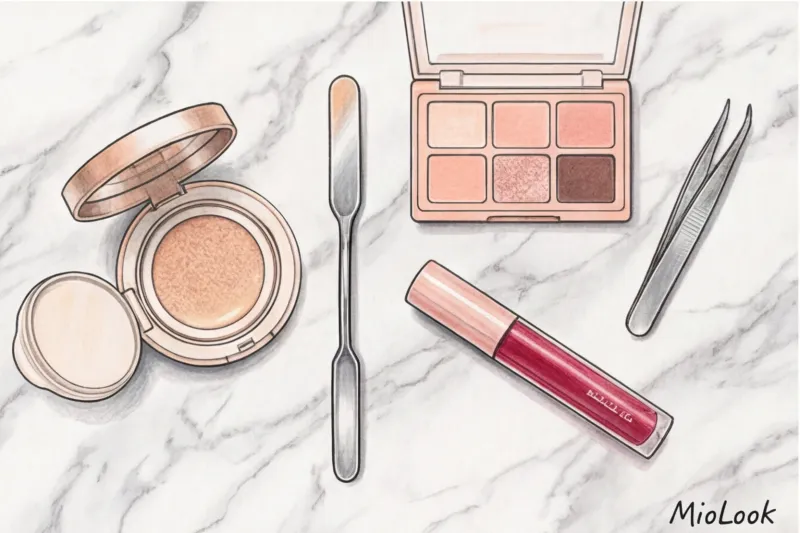
To avoid buying up half the store, here's a minimal and sufficient arsenal for creating a K-pop look at entry-level and mid-range prices:
- Metal makeup spatula: An absolute must-have for the finest tone (price range 10–15 €).
- Gray-brown sculptor: look for shades like "Ash Brown" or "Cool Taupe" (20-30 €).
- Chunky Glitter Eyeshadow Palette: Korean glitters have a unique gel base that shimmers like broken glass, not like metallic foil (25–45 €).
- Gel lip tint: to create that same gradient effect in the center (15–25 €).
- Fine tweezers: for gluing eyelashes (from 5 €).
From what? exactly Avoid: dense matte lipsticks, red and terracotta bronzers, and harsh lipsticks for bold brows. Harsh lines have no place in the Korean aesthetic.
Summary: Rules of the Game in Korean Aesthetics
Korean idol makeup doesn't exist in a vacuum. You can't apply Aegyo Sal, do Tanghulu lips, and then throw on a strict 2010s office sheath suit—the look will fall apart. This look requires support from relaxed clothing: baggy jeans, micro-tops, layering, and the right accessories.
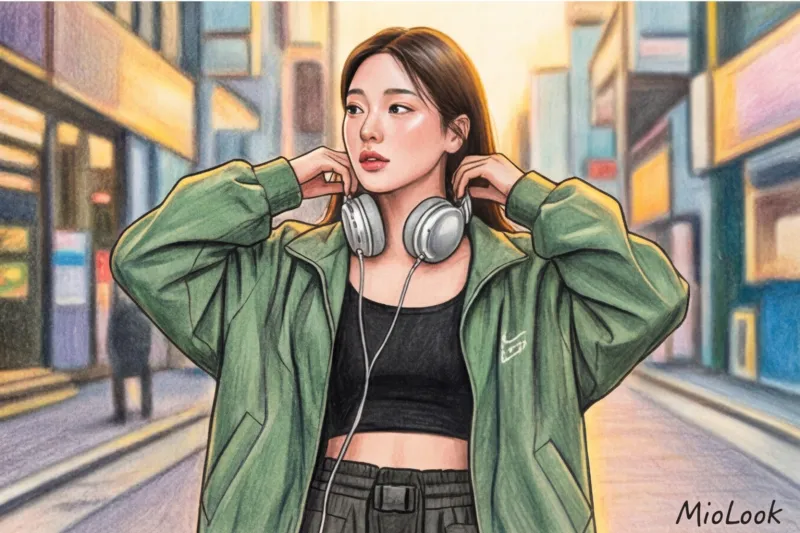
The main thing worth borrowing from Seoul makeup artists is their philosophy. They use makeup not as a tool to harshly conceal facial features, but as a way to imitate health and freshness. Replace density with micro-layers, precise contour with watercolor shading, and a dull matte finish with highlights—and you'll achieve that hypnotic, flawless effect.
Ready to get started?
Try the MioLook free plan—no strings attached. Your pocket AI stylist.
Get access — €0.99 once