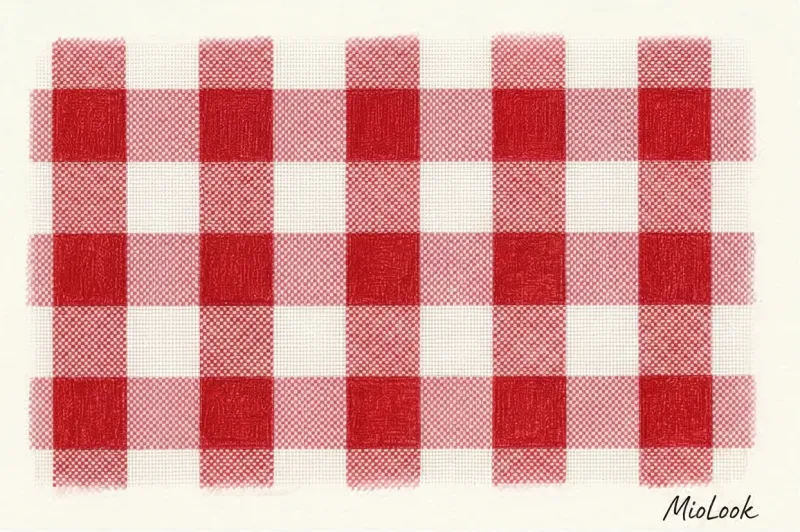
Vichy check is a woven two-color geometric pattern made of equal-sized overlapping squares. The traditional design features a white base crossed with colored threads, creating halftones at the intersections. Brands use this cotton fabric for summer dresses and casual shirts.
What Is the Vichy Check Pattern?
Often referred to as gingham in English-speaking regions, the Vichy check pattern stands out due to its specific manufacturing process. Unlike many modern prints that are simply stamped onto a finished cloth, a genuine Vichy pattern is created through the weaving process itself. Manufacturers use a plain weave technique, interlacing dyed and undyed white threads. This method produces a distinctive geometric grid characterized by strict symmetry.
Because the pattern emerges from the physical crossing of colored yarns, the resulting fabric has no wrong side. The front and back of the material look absolutely identical. This structural integrity makes the fabric highly versatile for garment construction, allowing designers to create unlined summer pieces that look pristine from every angle.
The History Behind the Vichy Pattern
The name originates from the French town of Vichy, located in the central region of the country. During the mid-nineteenth century, local textile mills began mass-producing this specific checkered cotton. Originally, similar woven checks were imported into Europe from Southeast Asia and India, but the French mills standardized the look, cementing the association between the town and the textile.
The pattern achieved legendary status in 1959 thanks to French actress Brigitte Bardot. She chose a custom-made pink and white Vichy check dress for her wedding to Jacques Charrier. Designed by Jacques Esterel, the dress featured a fitted bodice and a full skirt, instantly transforming a fabric previously associated with rustic aprons and children's clothing into a global symbol of effortless French style. Following the wedding, demand for the fabric skyrocketed, securing its permanent place in haute couture and ready-to-wear collections.
Key Characteristics of Vichy Checks
The visual appeal of Vichy checks relies on a specific mathematical precision. The ornament always forms three distinct types of squares. You will see pure white squares where two undyed threads cross, richly colored squares where two dyed threads intersect, and mixed squares where a colored thread crosses a white one. This intersection creates a visual halftone, giving the fabric its signature depth.
The base color remains strictly white, providing a crisp, clean background. Designers most frequently pair this white base with vibrant red, deep navy blue, stark black, or soft pastel pink. The scale of the grid can vary dramatically depending on the garment's intended purpose. While microscopic variations exist, the classic and most recognizable cell size features small squares with sides ranging from two to five millimeters.
| Characteristic | Traditional Specification |
|---|---|
| Primary Material | Lightweight cotton or linen blends |
| Weave Technique | Plain weave (identical on both sides) |
| Base Color | Pure white |
| Classic Contrast Colors | Red, navy blue, black, pink |
| Standard Cell Size | 2 to 5 millimeters |
| Optimal Season | Spring and Summer |
How to Wear Vichy Check Clothing
Integrating this geometric design into a modern wardrobe requires a balance between the garment's inherent retro charm and contemporary silhouettes. The fabric's crisp appearance makes it highly adaptable across different dress codes and personal aesthetics.
Casual Summer Outfits
For a relaxed weekend wardrobe, a blue and white checkered shirt serves as an excellent foundation. You can pair it harmoniously with straight-leg blue jeans for a cohesive, monochromatic undertone. If you prefer a lighter palette, loose white linen trousers make a striking combination with a vibrant checkered top. The breathable nature of the woven cotton ensures comfort during high temperatures, while the geometric grid adds visual interest to otherwise simple outfit formulas.
French Riviera Inspired Looks
To capture the essence of Mediterranean coastal style, opt for A-line dresses or flowing midi skirts featuring a bold red and white grid. These statement pieces require minimal accessorizing. They pair beautifully with neutral, solid-colored tops. To complete the coastal aesthetic, add natural textures through woven straw bags, wide-brimmed hats, and classic wedge espadrilles. This combination channels the exact mid-century elegance that made the fabric famous.
Office and Business Attire
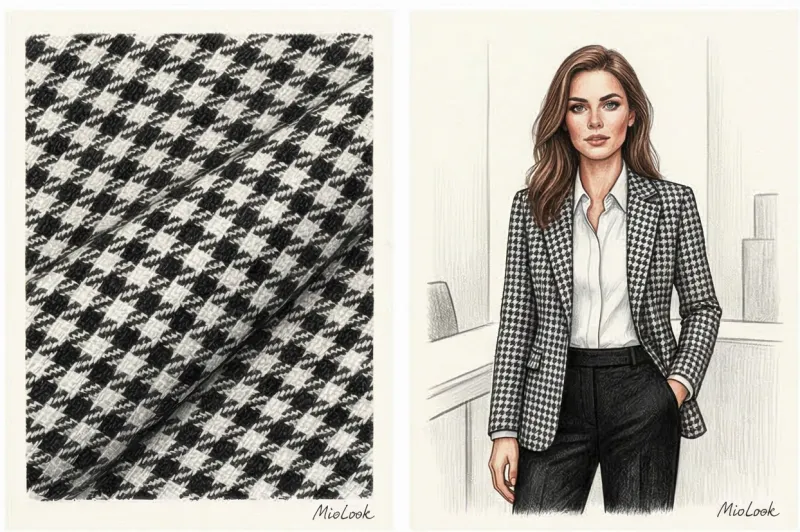
While traditionally viewed as a casual or vacation fabric, micro-checks translate seamlessly into professional environments. Business attire benefits from blouses or sharply structured jackets featuring a microscopic black and white grid. The reduced scale of the pattern reads almost like a solid gray from a distance, maintaining corporate appropriateness. Pair these tailored pieces with black pleated trousers or a classic dark pencil skirt to ground the outfit and maintain a sharp, authoritative silhouette.
Styling Rules for the Vichy Pattern
Vichy is a vibrant, high-contrast pattern that naturally draws the eye. Because it commands attention, styling it correctly prevents the outfit from looking overwhelming or costume-like. The most reliable approach is to use the check as the sole pattern in your ensemble. Let the grid take center stage while keeping the rest of your clothing understated.
Always complement the checkered piece with solid-color garments that echo one of the shades found in the grid. For example, if you wear a navy and white skirt, a solid navy or crisp white blouse will create a perfectly balanced look. Avoid mixing this precise geometric grid with organic, flowing prints like large florals or aggressive animal prints, as the contrasting styles will clash and disrupt the clean, structured aesthetic that makes the fabric so appealing.