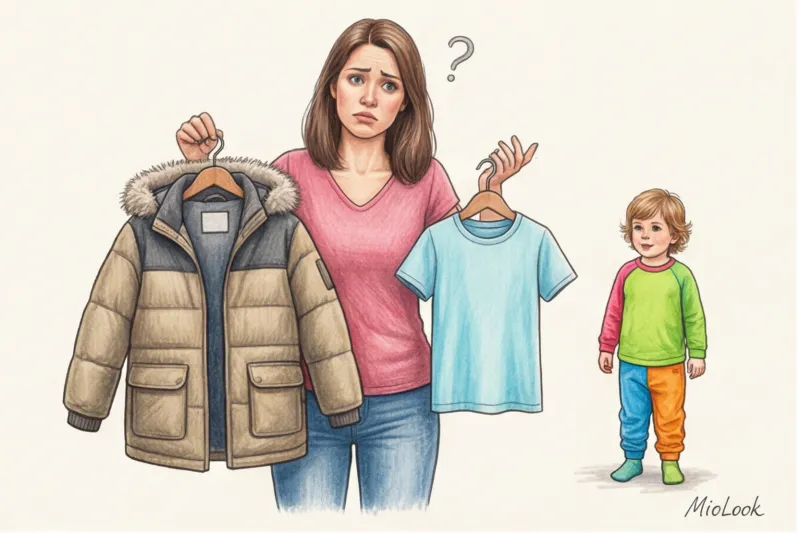
It's 7:30 a.m. You're standing in the hallway, a heavy winter jacket in one hand and a thin windbreaker in the other. It's 5°C (41°F) and blustery, but the forecast says the sun will warm the air to 15°C (59°F) by lunchtime. Meanwhile, your child is refusing to wear a scratchy sweater and is trying to pull a neon green dinosaur t-shirt over a red long-sleeve. Sound familiar? Properly put together. children's wardrobe for spring solves this problem once and for all. We've already covered the basic principles of creating such systems in more detail in our The complete guide to a child's capsule wardrobe , and today we'll talk about the specifics of the most treacherous season.
As a colorist and stylist, I view demi-season children's clothing as more than just protection from dirt and cold. It's a powerful tool for emotional regulation and the development of independence. And no, you don't have to dress your child exclusively in aesthetically pleasing but boring beige to ensure everything coordinates.
Temperature Swings: Why Kids' Spring Wardrobes Drive Parents Crazy
The biggest mistake I see year after year is parents dressing their children "for themselves." We go outside, wrap ourselves in a scarf to keep warm, and automatically add an extra layer to our child. But physiology works differently. Firstly, preschool and elementary school-aged children have a higher metabolic rate than adults. Secondly, their movement patterns outside are radically different from our leisurely strolls.
While you're standing at the playground with a coffee, your child is sprinting, jumping, and climbing. If they're wearing a thick cotton sweatshirt and a non-breathable jacket, they'll sweat instantly. And the slightest breeze when they're walking home with their jacket unzipped will lead to hypothermia.
Randomly buying individual items (even the best quality ones) during the off-season is guaranteed to lead to the "closet full, but nothing to wear" syndrome. You buy a great yellow raincoat, but only skinny jeans go with it, making it uncomfortable to run in, and only a thin T-shirt fits underneath, making you feel cold in the morning.
The solution lies in the mathematics of style—creating an interchangeable capsule of 15–18 items that will cover all temperature scenarios from +5 to +15 °C.
The formula for a demi-season capsule: the mathematics of style without dull beige
Modern mothers often fall into two extremes. The first is "adult" minimalism, where the child is dressed in shades of ecru, mocha, and dusty rose. It's stylish, but often boring for the child. The second extreme is a visual explosion of sequins, acid prints, and cartoon characters, which are physically impossible to combine.
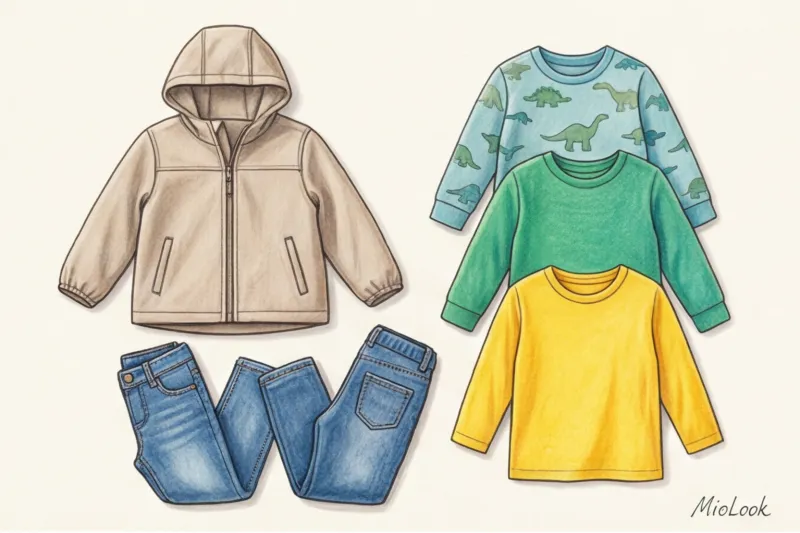
The golden mean is based on the rule of balance: active bottom + neutral top (or vice versa). If we're choosing trousers in a sophisticated mustard or terracotta color, they're paired with a simple long sleeve. If we're choosing basic blue jeans, we can add that favorite dinosaur sweatshirt on top.
The Psychology of Color in Children's Clothing: How to Avoid Morning Tantrums
Last season, I had a client whose five-year-old son was throwing a tantrum every morning while getting ready for kindergarten. We sorted through his closet and found the cause: his clothes were literally screaming at each other. Red striped sweatpants sat next to bright green hoodies and striped T-shirts.
A study by trend forecasting agency WGSN Kids (2024) confirms that an abundance of high-contrast neon colors and clashing patterns in clothing can overload a child's immature nervous system, triggering sensory fatigue before they even leave the house. Visual disharmonies are a common, yet subtle, cause of children's tantrums.
As a colorist, I recommend building a spring palette according to the “3+2” rule:
- 3 basic colors (for example: graphite, denim, camel) - they take up 70% of the wardrobe (outerwear, trousers, shoes).
- 2 accent colors (for example: emerald and ocher, or dusty blue and berry) - for sweatshirts, hats, T-shirts and details.
Your perfect wardrobe starts here.
Join thousands of users who curate flawless looks and organize their capsule wardrobes every day with the help of AI.
Get access — €0.99 onceThe Three-Layer Theory: Dressing Your Baby Like an Onion
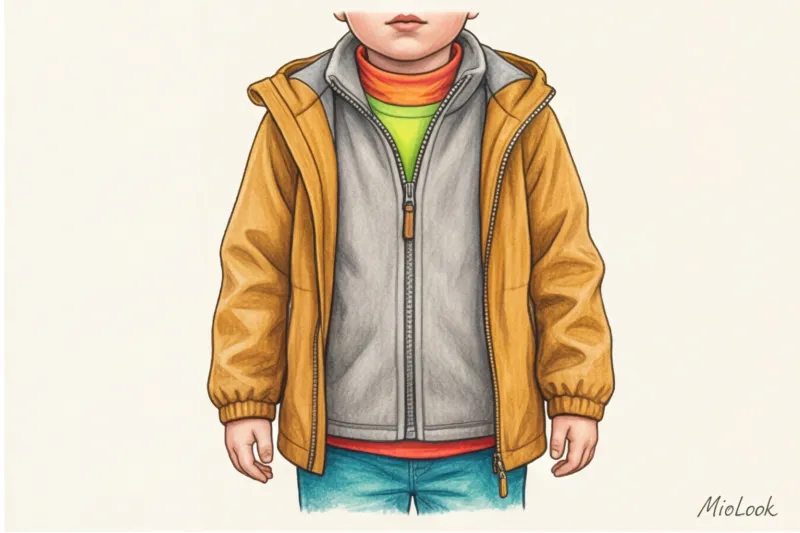
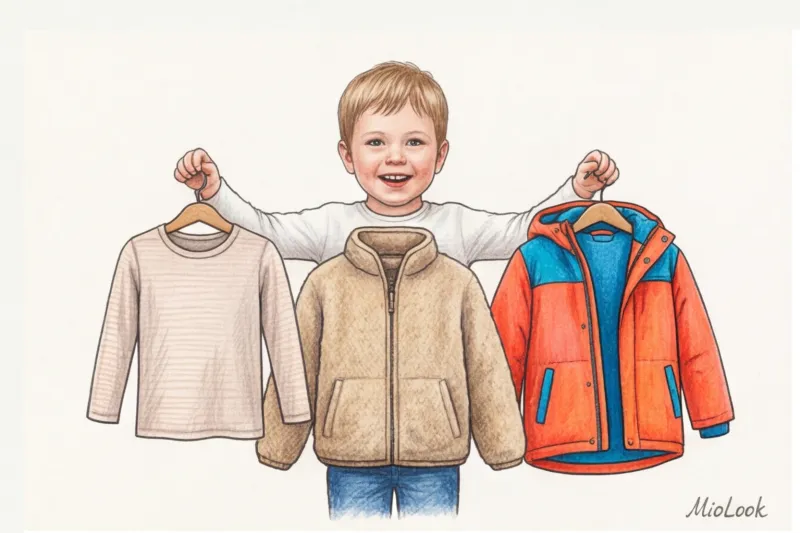
No jumpsuit, even the most expensive one, will work if you wear the wrong layer underneath. Spring weather calls for a technical approach. Forget thick, textured knit sweaters—they restrict movement. Switch to a three-layer system.
1. Base layer (moisture-wicking). Here we encounter the main paradox: 100% cotton in spring is a bad idea for an active child. Cotton absorbs sweat well, but dries extremely slowly. A damp T-shirt under a jacket cools the body 25 times faster than dry air. My choice: thin merino wool thermal underwear (150–180 g/m²) or high-quality blended fabrics. Merino is non-itchy, wicks away moisture well, and maintains a comfortable microclimate.
2. Middle layer (warming). Its purpose is to retain body heat. Fleece (Polartec 100) or thick brushed terry are best for this. The beauty of a midlayer is that it can be removed during the day, when the temperature rises from 5 to 15°C, and stashed in a backpack.
3. Outer layer (protective). These are membrane jackets or softshells. It's important to understand: the membrane itself doesn't provide warmth. It's simply a microporous film that keeps raindrops out but allows moisture to escape from the body. Look for a waterproof rating of 8,000 to 10,000 mm—that's enough for jumping in puddles and sledding down wet slides.
Limitation: This approach is ideal for healthy, active children. However, it does NOT work for children with sensory integrative dysfunction or acute atopic dermatitis—in these cases, the tactile comfort of the softest cotton is more important than the moisture-wicking properties of wool.
The main myth: "I'll buy it for growth, so it'll last through the fall."
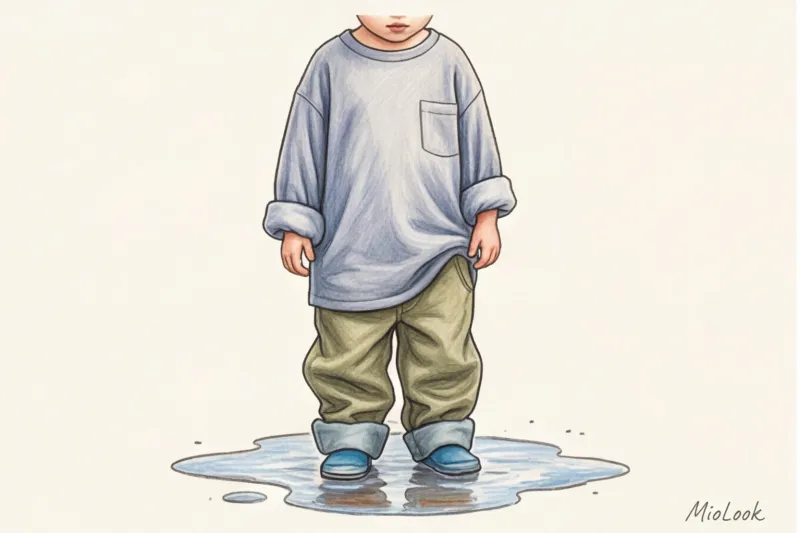
This is the most harmful advice passed down from generation to generation. Buying a jacket or pants two sizes too big isn't about saving money; it's about ruining the garment's functionality.
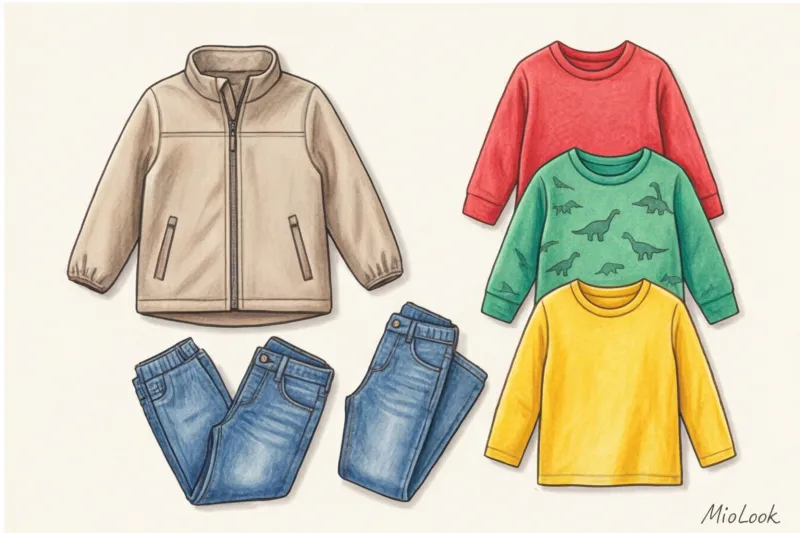
First, the ergonomic proportions are disrupted. The armholes dip downward, preventing the child from raising their arms on the horizontal bar. The knees of the pants end up near the shins, restricting their stride. The child looks unkempt and moves awkwardly, increasing the risk of injury on the court.
Secondly, there's a hidden danger of the wet season. When you roll up long membrane pants, you create a "wicking trap." The inner fabric (often cotton or nylon) instantly absorbs water from puddles, causing it to rise up your legs. The waterproof membrane on the outside becomes useless.
Smart alternative: Look for brands that use "extended size" technology. These garments have a special hidden seam inside the sleeves and legs. As your child grows, you simply unravel this seam, and the garment grows exactly one size (about 3-4 cm), maintaining the perfect fit.
Access to MioLook for €0.99 — one-time payment
A smart AI stylist will choose the perfect look for you and help you create functional capsule wardrobes for the whole family.
Get access — €0.99 onceInvisible Heroes: Footwear and Accessories for the Off-Season
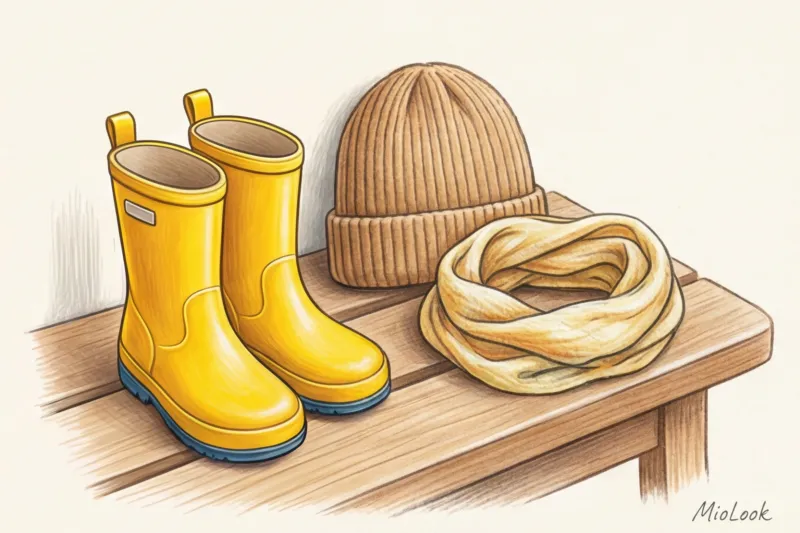
Although Rules for choosing a hat for an adult coat Built on the nuances of facial geometry and texture, children's wardrobes are dominated by utility combined with color accents. A basic demi-season jacket in a practical navy blue or graphite color is easily "revived" with a beanie hat in the color of ripe pumpkin or cobalt.
Instead of long scarves that come undone and pose a snag hazard on playground equipment, choose thick knit snoods. They cover the neck and are easy for children to put on themselves.
As for shoes, in spring you will absolutely need two pairs:
- EVA rubber boots with insulated liner. EVA (ethylene vinyl acetate) is several times lighter than regular rubber and doesn't conduct cold from the ground. Ideal for morning slush.
- Lightweight waterproof boots (trainers with a Gore-Tex membrane or similar). For dry but windy days when boots are already too hot.
Checklist: Putting Together a Kids' Spring Wardrobe (15 Functional Items)
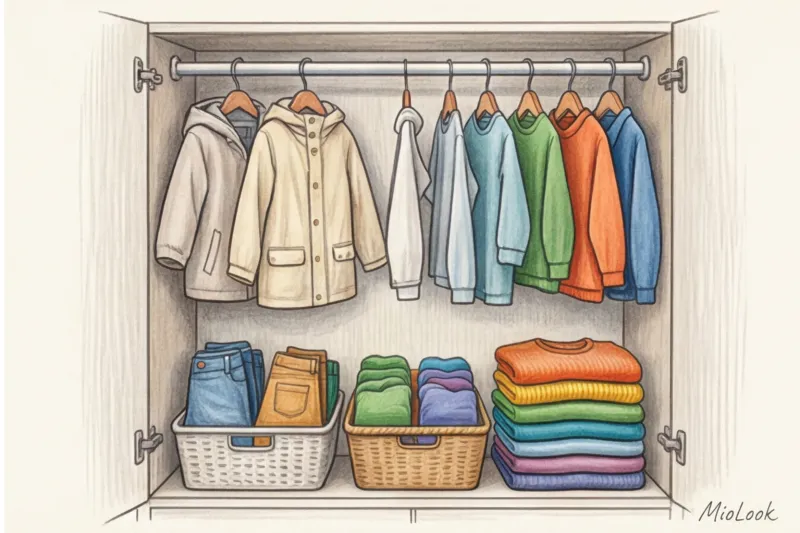
I've created a basic matrix that offers over 30 different combinations. If you're building a capsule wardrobe from scratch at a high-quality mass-market store (Zara, H&M, Uniqlo) or local tech brands, aim for the budget segment of €30-€80 for outerwear and €15-€30 for basics.
Outerwear (2 units):
- Softshell jacket (protection from wind and light rain, insulated with thin fleece).
- A light windbreaker or insulated vest (for sunny days).
Bottom (3-4 units):
- Waterproof trousers without insulation (worn over thermal underwear or thin pants).
- Tight jeans with a straight or loose fit.
- Knitted joggers (2 pairs of different colors).
Tops (5-6 units):
- Thin thermal underwear (long sleeve).
- Long sleeves made of thick cotton (3 pieces: 2 neutral, 1 with an active print).
- Fleece jacket with zip.
- Hoodie or sweatshirt (in an accent color).
Shoes and accessories (4 units): EVA boots, demi-season shoes, a set of a thin beanie hat and a snood.
Child Autonomy: How a Capsule Teaches Children to Dress Independently
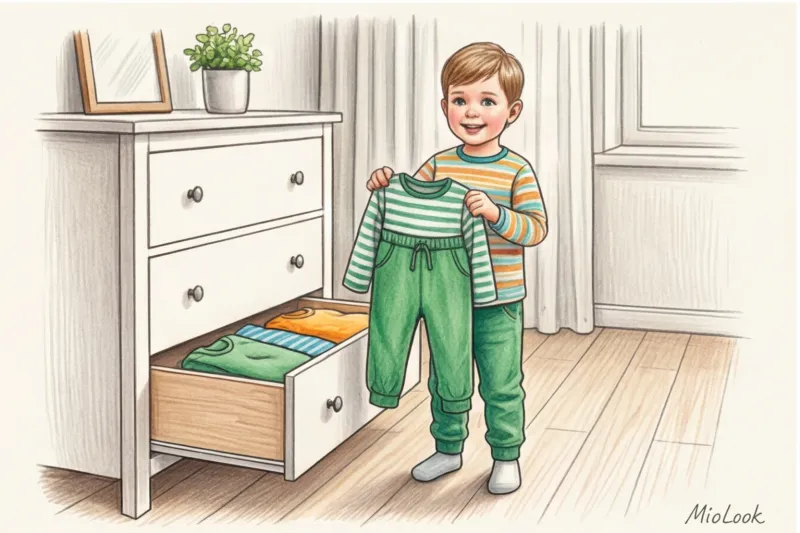
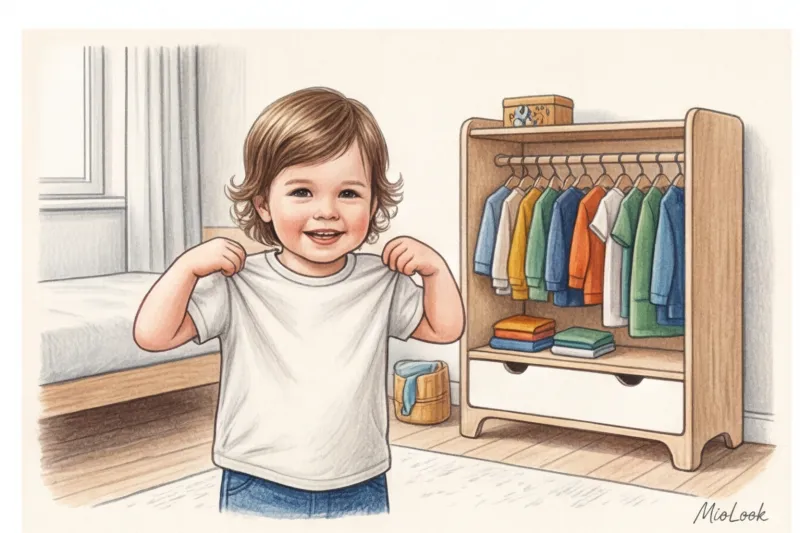
Perhaps the biggest benefit of the capsule method, as noted by my clients, is the dramatic reduction in morning stress. The secret lies in the "eyes closed" rule: if a child's wardrobe is organized in a cohesive color palette, they can literally pull out any T-shirt and any pair of pants with their eyes closed, and they'll match perfectly.
To make this mechanism work, organize the children's section of the closet properly. Put all out-of-season, holiday, and uncomfortable items on the top shelves. Only the 15 items from the spring capsule should remain within the child's reach (at eye and arm level). Store long sleeves and trousers vertically in drawers so the child can see all the items at once, rather than destroying the stacks.
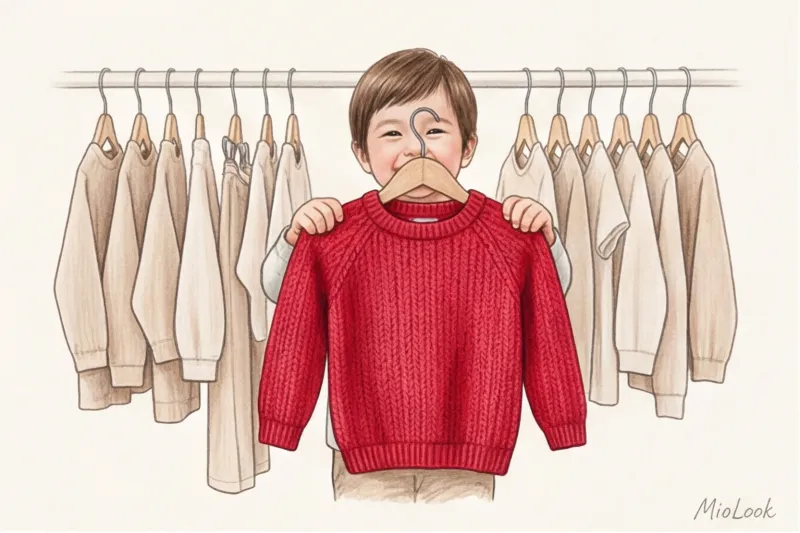
By delegating clothing selection, you kill two birds with one stone. First, you develop decision-making skills and develop taste. Second, your child is much more willing to wear clothes they've chosen "themselves," even if you've carefully orchestrated the choice in advance.
A child's spring/autumn wardrobe shouldn't be a daily headache. Treat it like a construction set: assemble a reliable, functional base, add a few bright elements for a touch of joy, ensure the layers work together—and you'll notice how spring preparations transform from a battlefield into a pleasant morning ritual.