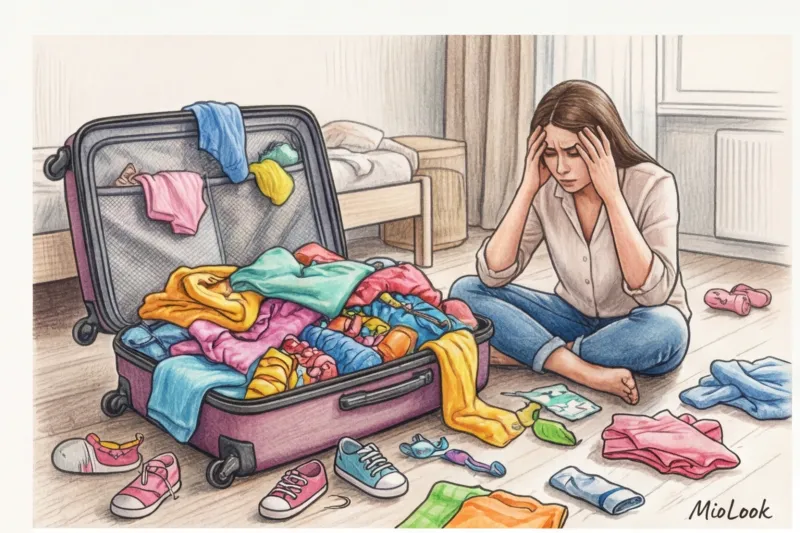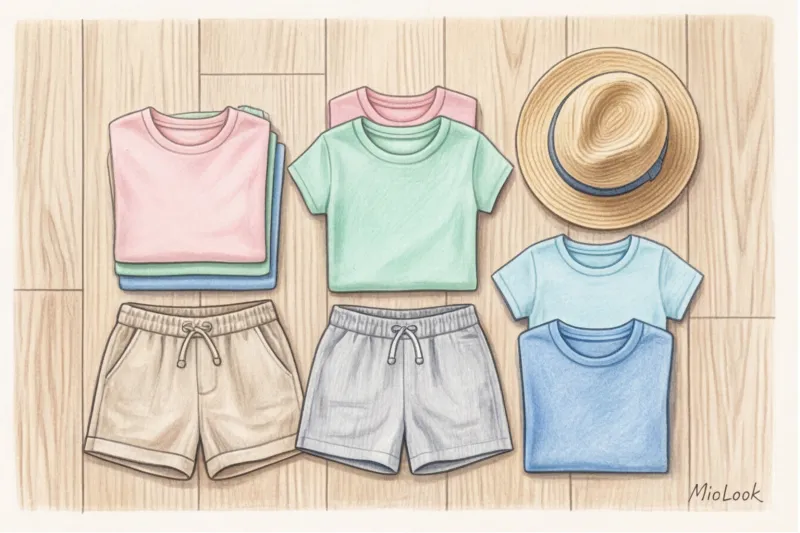
I remember one of my clients, packing for a trip to Dubai with her four-year-old son, proudly showing me a separate suitcase weighing 20 kilograms. "It's got everything from dress shirts to fifteen T-shirts, and it always gets dirty!" she declared. Spoiler alert: half of these items the child never even tried on, and the ones he did wear had to be taken to the hotel's expensive dry cleaner. In my 12 years as a stylist, I've seen this scenario hundreds of times. Parents fall into the trap of anxiety and pack things "just in case."
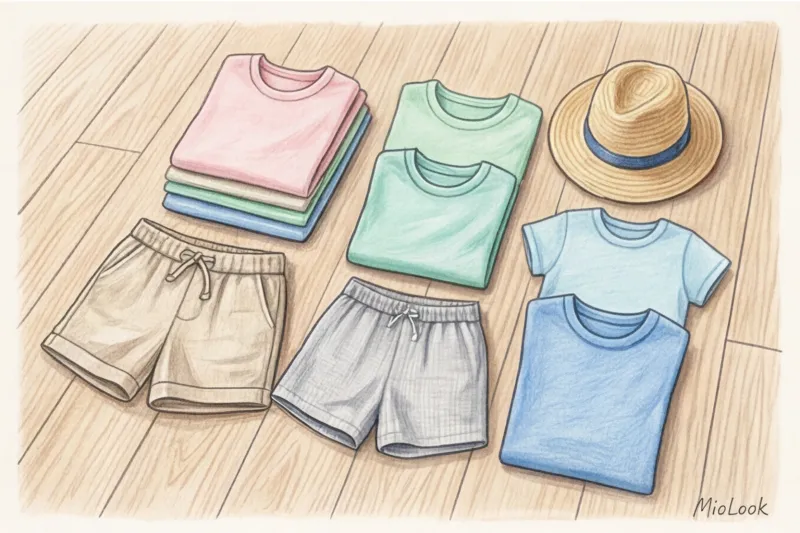
Let's be honest: the myth that you need to pack as many clothes as possible for your child is long outdated. Too many clothes create chaos in the room, overweight at the airport, and unnecessary stress for the mother. Putting together the perfect List of clothes for a child at sea I propose a completely different approach. Instead of thirty random T-shirts, you'll need a smart capsule of 10-12 items made from high-tech fabrics. They can be combined with your eyes closed, they offer UV protection, and they dry in five minutes on a hotel balcony.
Why the standard beach clothing list for children no longer works
The math behind a vacation wardrobe is incredibly simple: 12 well-chosen items give you over 24 combinations. That's enough for a two-week vacation, even with daily chocolate ice cream stains. When that same client and I sorted through her suitcase for her next trip to the Côte d'Azur, we reduced the size of her luggage by 40%. We kept only those pieces that fit together like a construction set.
The main problem with standard online lists is that they ignore the properties of materials. For years, we've been told that 100% thin cotton is the best choice for the beach. In reality, it's the worst thing you can put on your child in the scorching sun. Cotton instantly absorbs sweat, takes a long time to dry, clings to the body, and, worst of all, when wet, acts like a magnifying glass for the sun's rays.
Fabrics and technologies: what really protects from heat and sun
If you think any covering clothing will protect you from sunburn, I have bad news. According to the Skin Cancer Foundation (2023), a regular white cotton T-shirt has a UPF of about 5-7. Now, watch out: as soon as a child swims or sweats in it, this number drops to 3. UV rays penetrate such fabric.
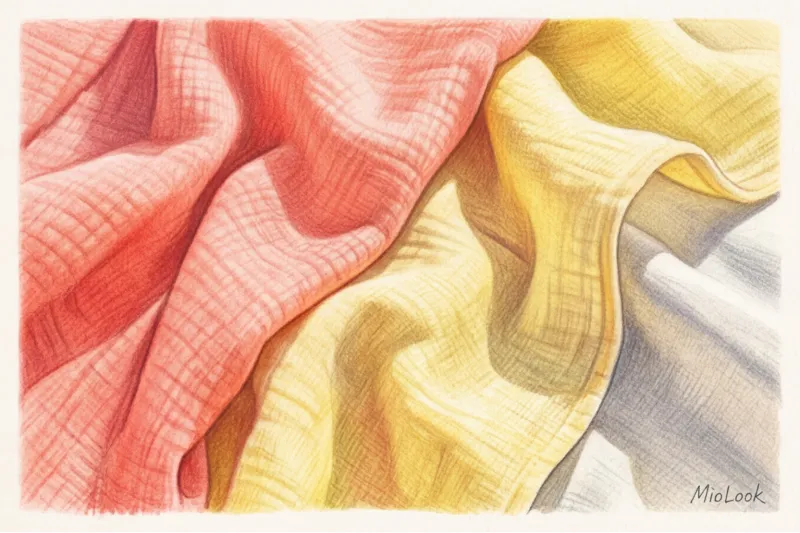
This is why technologically advanced fabrics are now outperforming traditional natural materials on the beach. Textile engineers have long since made significant advances, creating materials that cool the skin and block up to 98% of radiation.
UPF Index: Rashguards and Swimsuits
The UPF (Ultraviolet Protection Factor) indicates how much ultraviolet radiation penetrates a fabric. A UPF 50+ rating means only 1/50th of the rays will reach the skin. For the beach, I highly recommend long-sleeved rashguards. This saves you from having to slather sunscreen on a slippery child every two hours.
"Please note: UPF clothing loses its properties if you wash it with fabric softener or dry it on a hot radiator. The microfibers are destroyed, and the protective barrier disappears."
Muslin, Linen, and Blends: A Material Guide
For everyday wear away from the beach, my absolute favorite is double-weave muslin. It's the perfect fabric for babies: it's loose, breathable, dries instantly, and—invaluable on vacation—it doesn't need ironing. The crinkled texture of muslin isn't sloppy, it's stylish.
Regarding linen, there's a caveat. Pure 100% linen is too stiff for delicate baby skin and restricts movement during active play. Opt for blended options: linen with 30-50% viscose added. This combination preserves the noble appearance of linen but makes the fabric flowing and soft. (By the way, this same principle works great in an adult wardrobe, too; read more about it in our article about Summer business style clothing for women in the heat ).
Access to MioLook for €0.99 — one-time payment
A smart AI stylist will select the perfect look and help you pack a vacation capsule without unnecessary items.
Get access — €0.99 onceKids' Vacation Capsule: The Formula for the Perfect Wardrobe
The secret to a stylish children's suitcase lies in color discipline. Choose two base colors (for example, sand and navy blue), two accent colors (coral and pistachio), and one complex print to tie them all together. This approach will allow your child to retrieve items from the closet themselves in the dark, and they will still match.
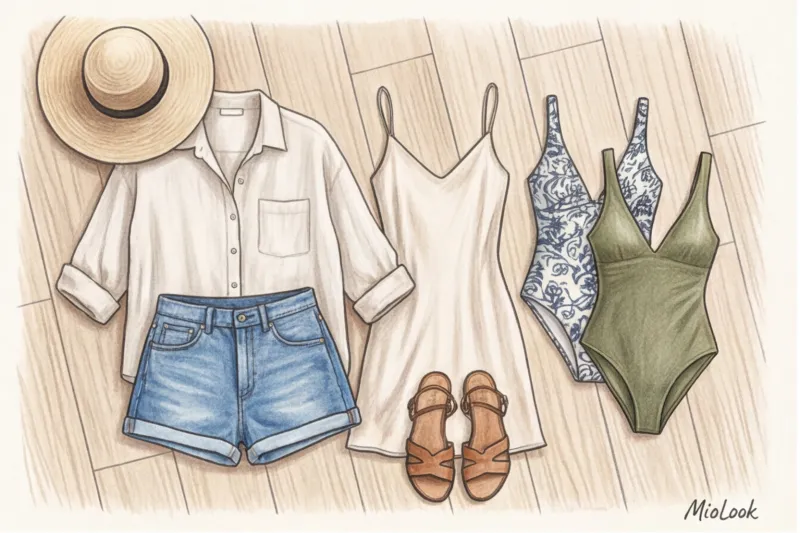
My tried and tested formula for a two-week vacation looks like this: 3 bottoms + 5 tops + 2 warm layers + 2 swimsuits This is the perfect base that's easy to scale. If you want to dive deeper into the mechanics of creating such wardrobes, I recommend checking out our The Complete Guide to Creating a Capsule Wardrobe.
Basic Checklist: Ages 1 to 3 (Toddlers)
At this age, the main purpose of clothing is to allow for crawling, running, and quick diaper changes. Avoid stiff waistbands and complicated back fastenings.

- Muslin rompers (3 pcs.) - replace both shorts and a T-shirt.
- T-shirts with buttons on the shoulder (the wide neckline prevents tears when changing clothes).
- Bloomer shorts with a wide, soft elastic band.
- Panama legionary hat (with a long cape that covers the back of the neck from burns).
Basic Checklist: Ages 4 to 7 (Preschoolers)
A period of peak activity and attempts to dress oneself. No buttons that are difficult to manage.
- Loose microfiber shorts (protect the inner thighs from sand chafing).
- Lightweight shirt dresses or tunics for girls.
- Oversized T-shirts (air must circulate between the fabric and the body).
- Microfiber poncho with a hood - to throw on after the pool to walk to your room.
Basic Checklist: Ages 8 to 12 (Teenagers)
This is where trends come into play. Teenagers want to look like grown-ups, so we leave the children's car prints at home.
- Wide-leg linen trousers with drawstring (unisex).
- Crop tops made of thick cotton or ribbed fabric.
- Short sleeve shirts in Hawaiian or bowling style (worn unbuttoned over tank tops).
- Stylish bucket hats and baseball caps.
Beach Shoes: Foot Health and Safety on the Beach
Footwear is a category where parents often make fatal mistakes, buying cheap rubber flip-flops. Remember: flat flip-flops without heel support force children to reflexively curl their toes to keep the shoe in place. During long excursions, this leads to arch strain and calf pain—as any competent podiatrist will warn.
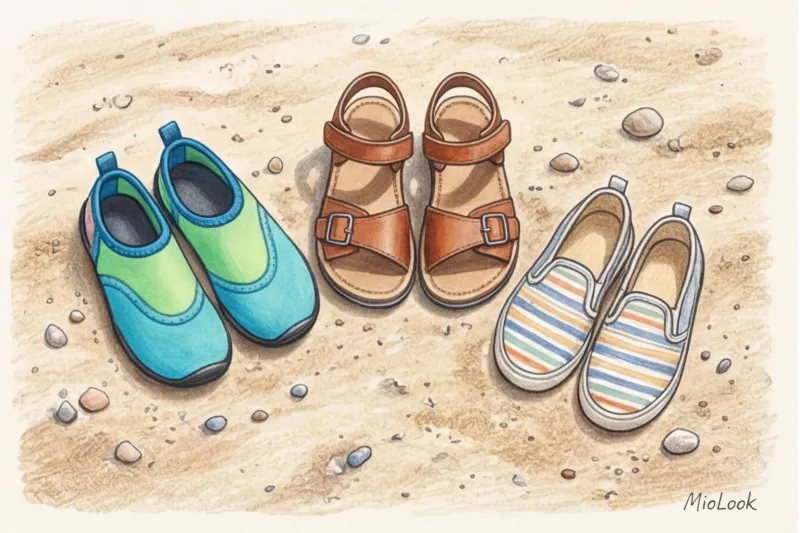
You will need a maximum of three pairs of shoes:
- Aquashoes (corals) A must-have for pebble beaches, protection from the hot sand at midday, and, most importantly, sea urchins and sharp rocks on the seabed. Choose models with a thick rubber sole, not just neoprene socks.
- Sandals with an anatomical insole and ankle support For evening strolls, restaurant visits, and excursions. Leather or high-quality fabric (such as Teva).
- Crocs or EVA clogs They're ideal for pool areas—they don't slip on wet tiles and are easy to clean. However, they're not suitable for city walks due to the greenhouse effect.
Color Palette: Stylist's Secrets for Hiding Stains
Save crisp white for studio family photoshoots. In a real-life vacation, a white T-shirt lasts only until the first peach or slice of pizza. But that doesn't mean you have to dress your child in dull gray or black (which, by the way, attracts heat).
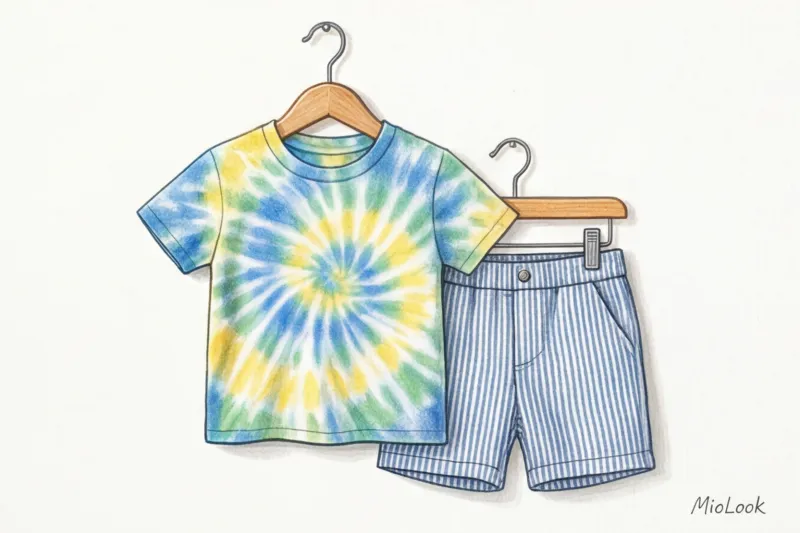
A professional stylist's life hack: use textures and prints that visually "absorb" minor stains. Seersucker fabric, melange yarn, or fine ribbing create an optical illusion where a drop of juice is lost in the texture of the material. (We use a similar principle when choosing clothes for public appearances—I wrote about this in the article.) What fabric doesn't show sweat stains? ).
Tie-dye prints, abstract patterns, or tiny, variegated stripes are absolute hits for a vacation wardrobe. On this fabric, a berry smoothie stain looks like part of the design. Packing four T-shirts with this intricate pattern will save you from having to change your child after every meal.
Your perfect look starts here
Join thousands of users who look flawless every day and save time packing with MioLook.
Get access — €0.99 onceThe main mistakes parents make when preparing for vacation
Even with the perfect capsule, you can ruin your trip if you forget the basic rules of travel. Here's my personal anti-rating of mistakes I regularly discuss with clients:
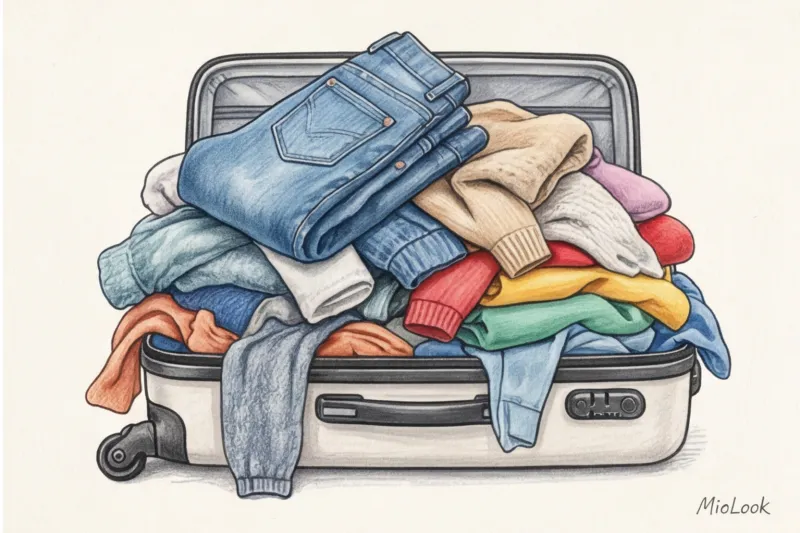
- Mistake 1: Buying brand new shoes before your flight. Never put your child in unworn sandals on the day of departure. Any footwear should be tested at home for at least a couple of days, otherwise, bloody blisters are guaranteed on the first evening.
- Mistake 2: Ignoring warm clothes. "But we're flying in 35°C!" moms tell me. True, but airplanes, airports, taxis, and restaurants have air conditioners set at 18°C. Zip-up hoodies and thin cotton joggers are a must for flights and the evening breeze.
- Mistake 3: Complex designer items. Dresses with sequins, layers of tulle, shirts that require steaming. You won't have the time or desire to look for an iron on vacation.
- Mistake 4: Hats without ties for babies. Straw hats look great on Instagram, but a sea breeze can blow them away in a second. For children under 5, only choose hats that fit securely under the chin.
Results: Packing without stress
To summarize: the focus should always be on the quality and functionality of fabrics, not the quantity of T-shirts. Your ideal beach outfit list for a child is a compact, well-thought-out base, where each item is worth its weight in the suitcase.
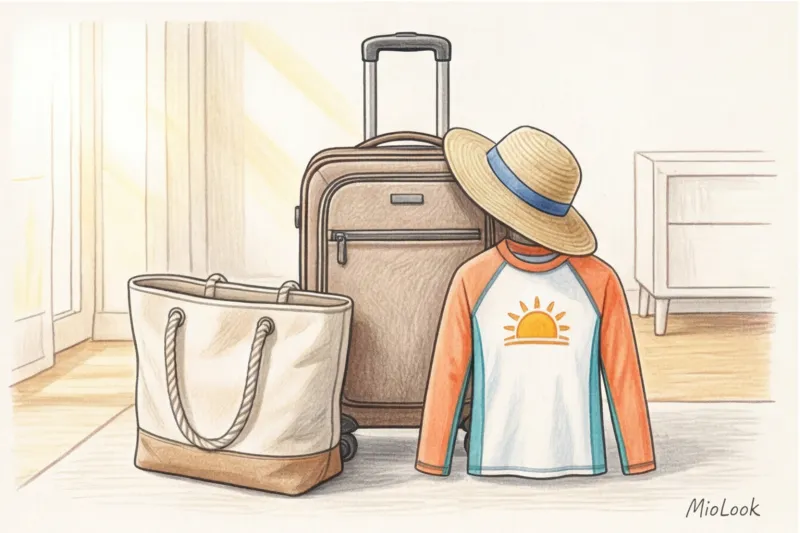
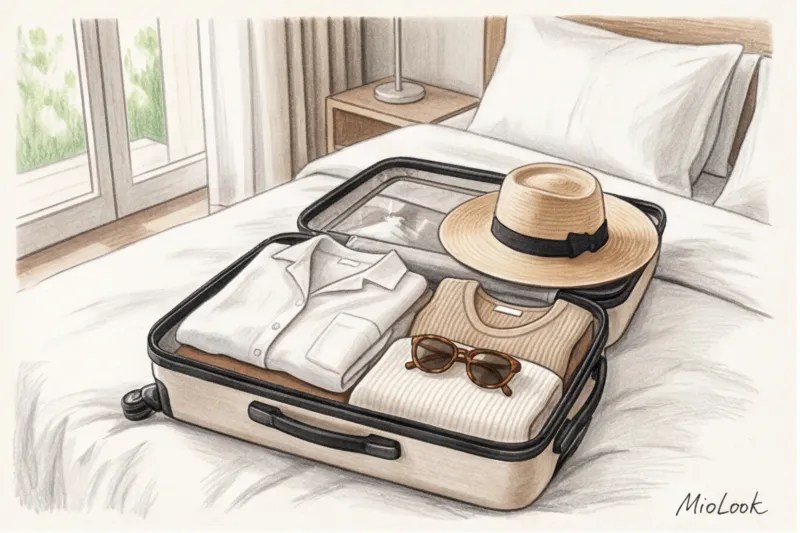
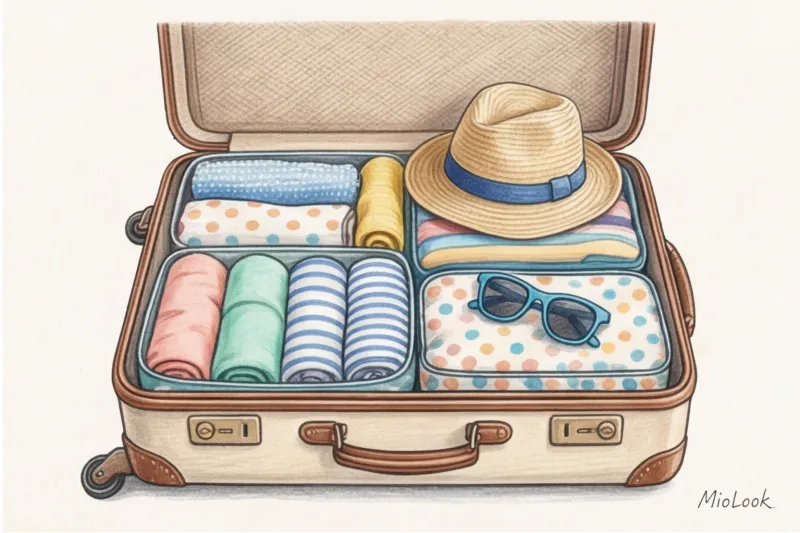
And finally, a practical packing tip that all professional stylists use. Forget about folding clothes in piles. Roll them into tight rolls and divide them into packing cubes. One cube is for shorts and pants, a second for T-shirts, and a third for underwear and swimwear. This not only saves up to 30% of space but also allows you to get to the item you need in a second, without rummaging through your entire suitcase.
Involve your child in packing: offer them a choice between a blue and a green T-shirt from the capsule you've already selected. This will make them feel important, and you'll retain control over their wardrobe. A vacation doesn't start at the airport, but the moment you close your suitcase—make that moment easy.