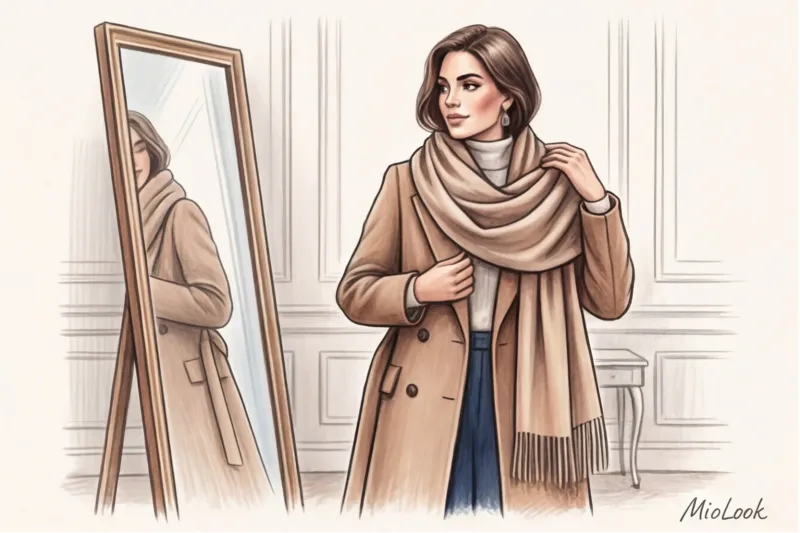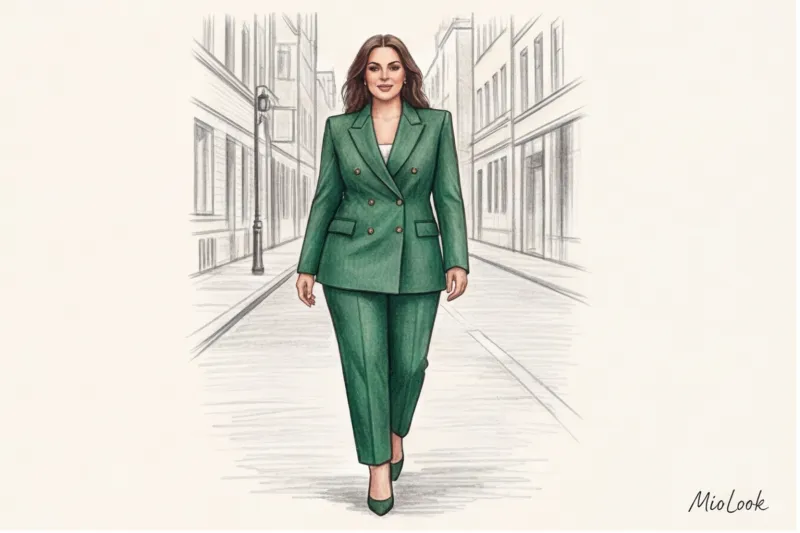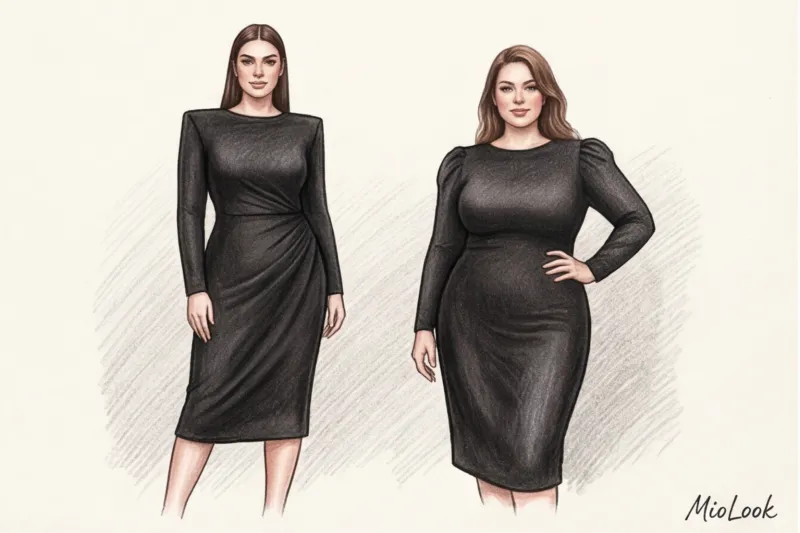
In 12 years as a fashion consultant, I've learned one uncompromising rule: excess weight doesn't change your bone structure. One of my clients, a charming woman of size 52 (XXL), came to me in utter despair. She'd bought dozens of flowing chiffon dresses, fervently believing that her weight had made her a typical Romantic and that she needed to "soften" her curves. The result? The shapeless chiffon made her look bulky and tired. We removed the ruffles and dressed her in a structured, straight-cut, double-breasted coat made of thick camel wool from Max Mara. Instantly, she visually dropped two sizes, grew taller, and acquired a regal stature.
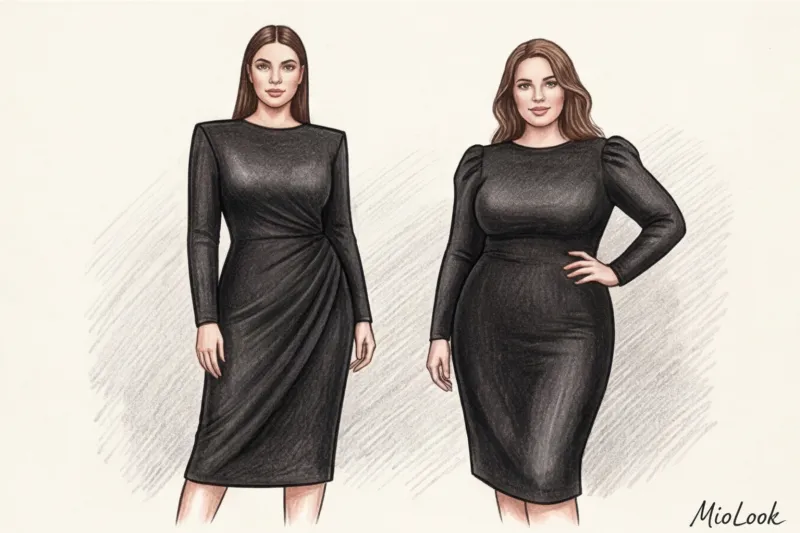
Why did it work? Because underneath the soft fabrics lay a pure Dramatic with a sharp, uncompromising shoulder line. That's why Kibby types when overweight It's not about hiding your body in a case, but about how to cleverly frame the changed volumes on your unchanged frame. We've already discussed the basic architecture of appearance in more detail in our The Complete Guide to Kibbe Types , and today we'll look at the mechanics of changing proportions through the prism of premium styling.
Body architecture: why Kibbe body types don't change with weight gain
David Kibbee's "Metamorphosis" theory (1987) revolutionized the field precisely because it separated the concepts of "skeleton" and "soft tissue distribution." Your bone structure is like a poured concrete foundation. Weight gain only changes the "facade," but the width of your shoulders, the length of your limbs, and the size of your hands remain the same.
According to WGSN's 2024 analysis, over 70% of plus-size women mistakenly identify their body type as "apple" or "pear." This outdated fruit-based system destroys self-esteem: it forces you to focus on flaws (like your stomach or hips) and hide them. Kibbe, on the other hand, teaches you to work with lines. You can't "fatten up" from a Dramatic to a Romantic. Your shoulders won't become sloping if they're naturally square.
This is where the concept comes into play cost-per-wear (price per appearance). Over the years, I've learned that investing in one perfectly tailored jacket that follows your bone structure pays for itself hundreds of times faster than a dozen cheap, mass-market polyester hoodies bought with the sole purpose of hiding your belly.
How Yang-types (Dramatic, Natural) gain weight: hiding the excess in stateliness
Women with a Yang dominant (sharp or wide bones) make the same fatal mistake when gaining weight: they start wrapping themselves in thin, shapeless knitwear. Yet it's precisely the Yang structure that allows you to carry extra weight with incredible grace if you choose the right cut.
- Pure Dramatic (D): Excess weight accumulates primarily in the lower thighs and upper legs. The face, arms, and shoulders remain sculpted for a long time. Your trump card is your height and vertical line. Instead of soft cardigans, choose long vests and thick fabrics that hold their shape.
- Soft Dramatic (SD): Weight shifts to the chest, hips, and upper arms. The face becomes very full, but the frame remains large. You need large drapes on a dense fabric—for example, a wrap dress made of heavy crepe.
- Family Naturals (FN, SN): There's a tendency toward wider bodies. Weight creates a squarer figure, concentrating at the waist and back. The main advantage is a broad, stately shoulder line.
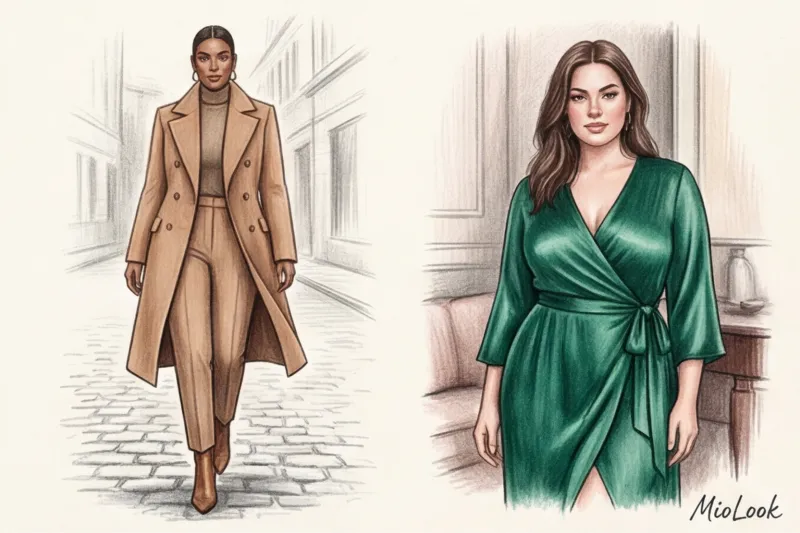
“The worst thing a Natural plus-size woman can do is try to squeeze herself into a tight corset or a fitted jacket that doesn’t fit,” I tell every other client.
One day, a straight woman came to me because she was torturing herself with shapewear. We replaced her tight office dresses with premium, loose-fitting suits (suits made of thick matte linen and heavy silk), and she suddenly realized that smart casual for women can be both prestigious and incredibly comfortable. Freedom of movement is part of the Natural DNA.
Access to MioLook for €0.99 — one-time payment
A smart AI stylist will create the perfect look based on your Kibbe lines and current proportions.
Get access — €0.99 onceMetamorphoses of Yin Types: Romantics and Their Luxurious Forms
While Dramatic types need armor, Romantics (R, TR) are categorically contraindicated. When overweight, Yin types become even more rounded. Their bodies resemble classical Rubens paintings. The main distinguishing feature is a waist that always remains visible compared to full hips and bust, even with significant excess weight.
Why shouldn't plus-size Romantics wear thick tweed or coarse wool? Because stiff fabrics ignore curves and fall in a straight line from the most prominent point (chest or hips). As a result, a woman with a luxurious hourglass figure turns into a rectangular nightstand.
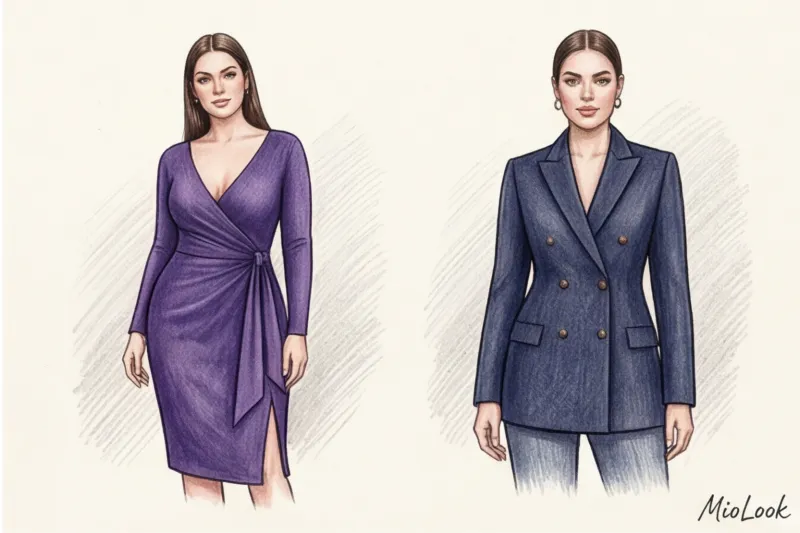
If you're a Romantic, your investments are premium silk, the finest cashmere, and high-quality viscose. Clothes should flow and envelop. Look at the patterns of Italian houses: Dolce & Gabbana masterfully crafts perfect Yin lines. Their sheath dresses in soft lace or silk fit perfectly on sizes 50+ precisely because the fabric harmonizes with the body rather than resists it.
Classics and Gamins: When Excess Weight Hides Your Geometry
Classics and Gaminas are the most difficult to gain weight in terms of visual balance.
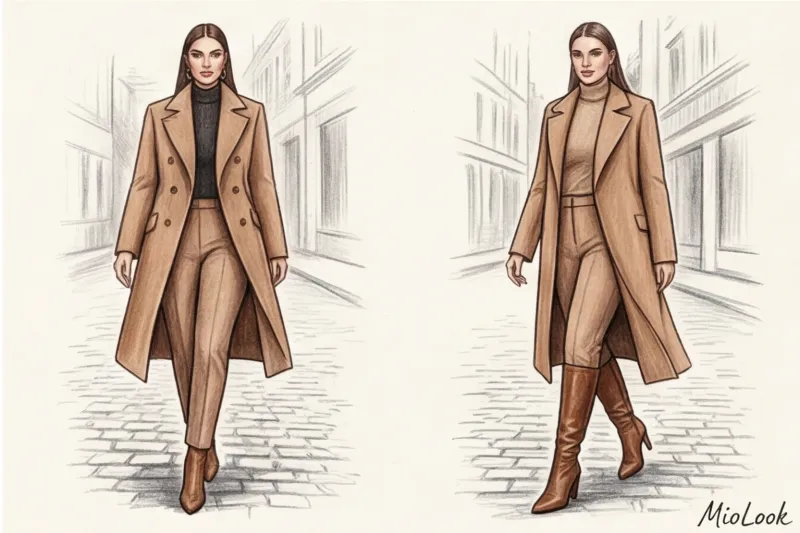
Dramatic Classic (DC) and Soft Classic (SC) They have a superpower—symmetry. Excess weight often settles in patches (at the waist or hips), creating an imbalance and ruining that aristocratic proportion. Your goal is to restore a smooth silhouette with medium-weight fabrics and clean lines without unnecessary detail.
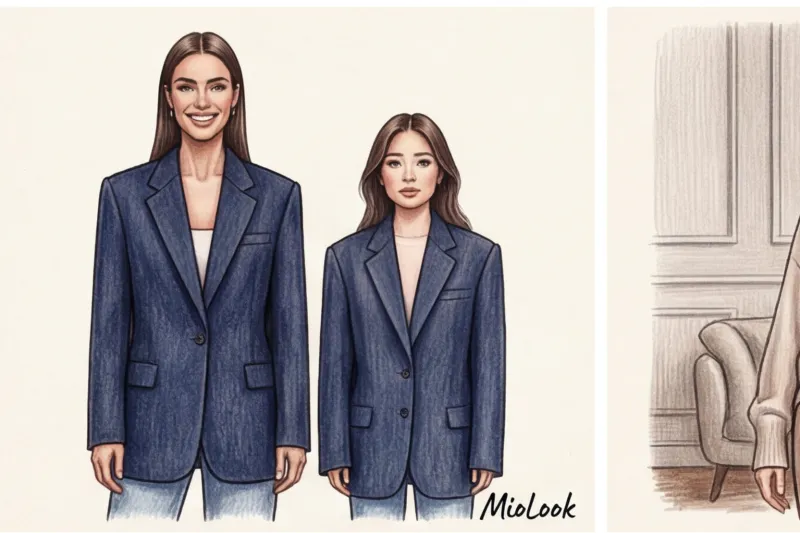
Family Gamines (FG, SG, G) She faces the most insidious illusion. Due to her petite stature and compact bone structure, excess weight instantly makes her figure appear stocky and square. While a tall woman weighing 80 kg (175 lbs) looks stately, Gamine, at the same weight, appears heavy.
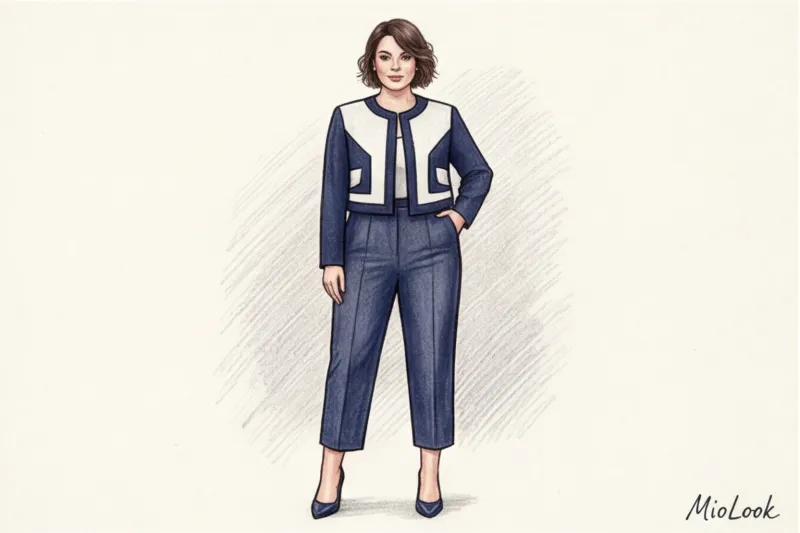
Stylist's Warning (Method Limitation): Plus-size women should definitely avoid long, oversized robe coats or trendy maxi trench coats. What looks effortlessly chic on a tall model will make a petite, curvy woman look like a mushroom. How to restore proportions? Use color blocking, cropped jackets that hit just below the hipbone, V-necklines, and exposed ankles. This is the ideal stylish office wear for women short in stature.
The biggest plus-size mistake: why don't oversized clothes and loose-fitting garments make everyone look fat?
It's time to debunk the biggest myth of the plus-size fashion industry: "Wear oversized clothes to hide your curves." Return statistics from major online retailers are telling: oversized items are returned 65% of the time if they were purchased for a plus-size figure. Why?
Oversized looks natural only on Flamboyant Naturals (FN), whose wide bone structure can support this volume. If you have a sharp Yang (Dramatic) or soft Yin (Romantic) bone structure, shapeless fabrics will make you look three sizes larger.
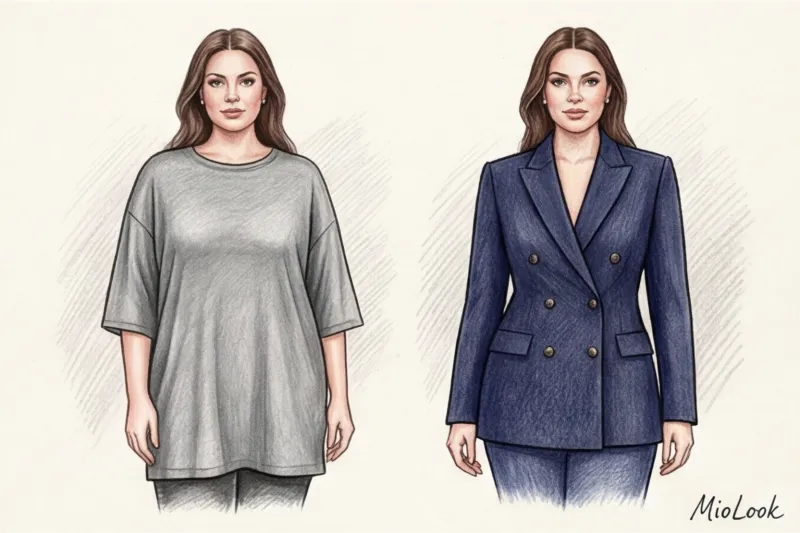
In luxury styling we use The Rule of "Points of Support" Even the loosest silhouette should highlight the narrowest points of your bone structure: wrists, ankles, neck, or shoulder line. If the fabric completely obscures the contours of your body, the look's status instantly vanishes.
Your perfect look starts here
Join thousands of users who look flawless every day with MioLook's intelligent recommendations.
Get access — €0.99 oncePremium Kibbe fabrics for a luxurious plus-size wardrobe
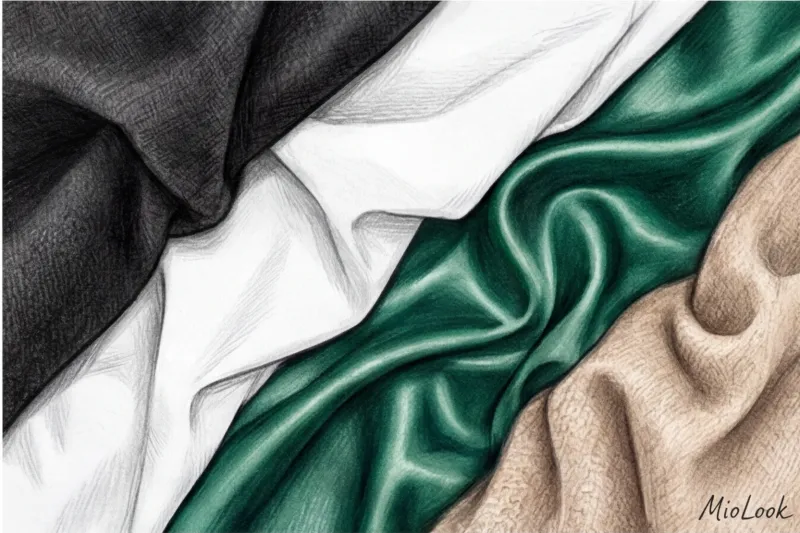
The secret to a luxurious look lies not in the brand, but in the texture. Textile researchers (including McKinsey's reports on consumer perceptions of the premium segment) confirm: matte, dense fabrics absorb light and visually narrow the silhouette, while thin, glossy knits act as a magnifying glass for every fold. Avoid flimsy viscose with a density below 180 g/m².
How to distribute investments in fabrics depending on the type:
- Dramatics: Thick suiting wool (like Loro Piana), heavy gabardine, and thick cotton. They hold their shape and create a tight, corset-like silhouette without actually squeezing the body.
- Straight people: High-density matte linen, chunky cashmere, and suede. Fabrics with a distinct texture that allow freedom of movement but still retain some weight.
- Romantics: Silk crepe de chine, velvet, thin (but high-quality!) jersey. Materials that envelop the forms, creating a fluidity.
- Classics: Raw silk, medium-weight merino wool. Your goal is to create a perfectly clean, smooth, non-glare surface.
Smart Wardrobe: How to Adapt Your Style to Change with MioLook
The biggest mistake when gaining weight is putting your life on hold. Women hide beautiful things and buy temporary gray uniforms, waiting for weight loss. Your body deserves a luxurious finish right now.
If your size has changed, don't get rid of your expensive accessories. A classy, structured bag, a silk Hermès scarf, or quality shoes will still complement your Kibbe lines. Create a "transitional" capsule of 5-7 ideal basic pieces that complement your bone structure.
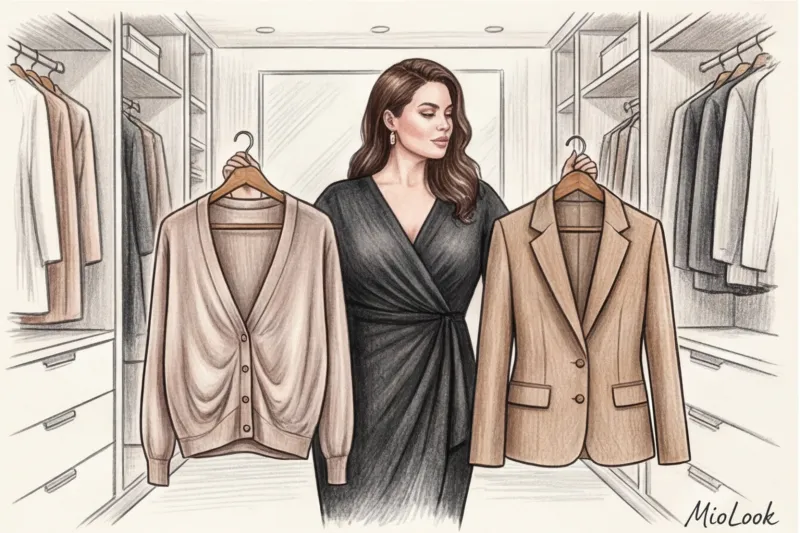
Adapting your digital wardrobe will help MioLook The app's AI functionality allows you to filter items by bone structure and fabric density. Upload your current measurements, and the algorithm will suggest how to combine your existing items to flatter your silhouette, eliminating impulse purchases.
Remember this: excess weight changes the size of your clothes, but it will never rob you of your natural shape. Stop fighting your size—start dressing your bones.