Image architecture: why a "simply beautiful bag" doesn't work equally for everyone
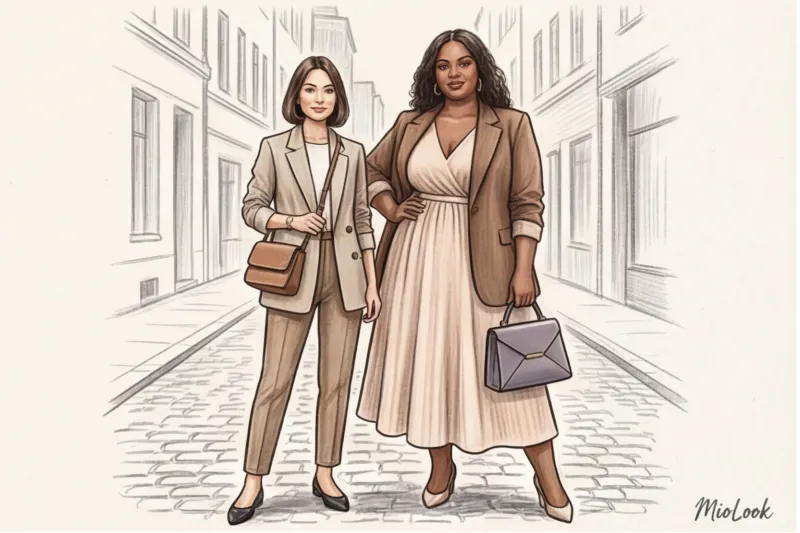
Have you ever noticed this injustice: your friend casually slings a bulky, soft shopping bag over her shoulder and looks like a street style icon, while you pick up the same thing and look like a tired woman carrying potatoes from the market? In 14 years of working as a personal stylist, I've seen this scene hundreds of times. It's not the price of the accessory or even your weight. It's the architecture of your body.
When we talk about Kibbie bags Whether it's shoes or jewelry, we shift our focus from searching for the "perfect trendy piece" to consciously managing scale, geometry, and texture. We discussed the fundamentals of this system in more detail in our complete guide to Kibbe types and finding your own style Shoes and bags aren't just accessories. They're the foundation and roof of your visual façade.
"According to statistics from professional stylists, over 60% of women wear bags that are completely disproportionate to their bone structure. This visually adds 3 to 5 kilograms to their weight or mercilessly cuts their height."
In his iconic book Metamorphosis (1987) David Kibby established a crucial principle: bone structure dictates scale. Your bag should be proportionate to your shoulder width and hip size to maintain the principle of architectural balance (the golden ratio in styling). If you're petite, a huge bag will crush you. If you have a wide bone structure, a micro bag will make you look larger.
Yang types (Dramatic and Natural): Geometry, large scale and texture
Let's start with Yang types, whose bone structure is characterized by a large scale. Dramatic types have sharp angles, an elongated vertical line, and narrow bones. Natural types have blunt angles, broad shoulders, and a strong, solid structure.
I vividly remember a natural client (178 cm tall, with luxuriously broad shoulders) who adored trendy micro bags like tiny Jacquemus. At a fitting, we took a photo from behind. The tiny bag, contrasting with her large, statuesque figure, created an optical illusion: she appeared half as wide as she actually was. As soon as we replaced the micro bag with a voluminous suede hobo bag, the proportions instantly fell into place, restoring her figure's lightness.
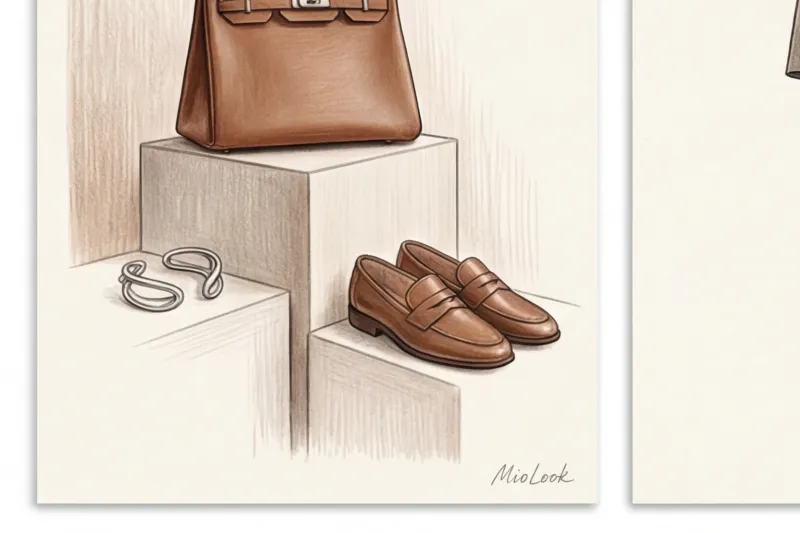
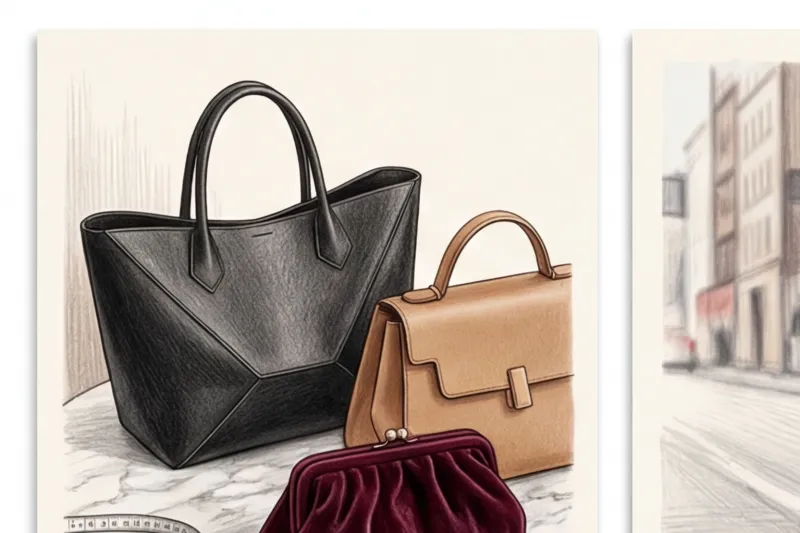
For Dramatikov Ideal accessories are built on a rigid frame. Smooth, dense leather (like calfskin, which holds its shape), pointed toes, and large, architectural jewelry made of smooth metal. Your bag should stand on its own on the table, without collapsing into soft folds.
For Naturals Another magic works: relaxation. Texture is your best friend. Suede, woven leather, matte surfaces. Shoes with a blunt or rounded toe, a stable, chunky heel, or a thick sole are best. Embellishments include natural stones, wood, and forged metal without excessive shine.
Kibbe Bags for Yang Types: From Architectural Totes to Shoppers
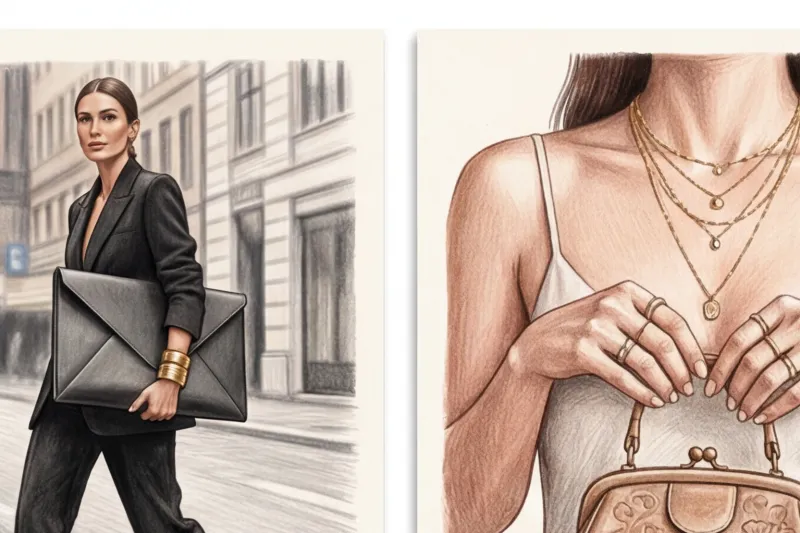
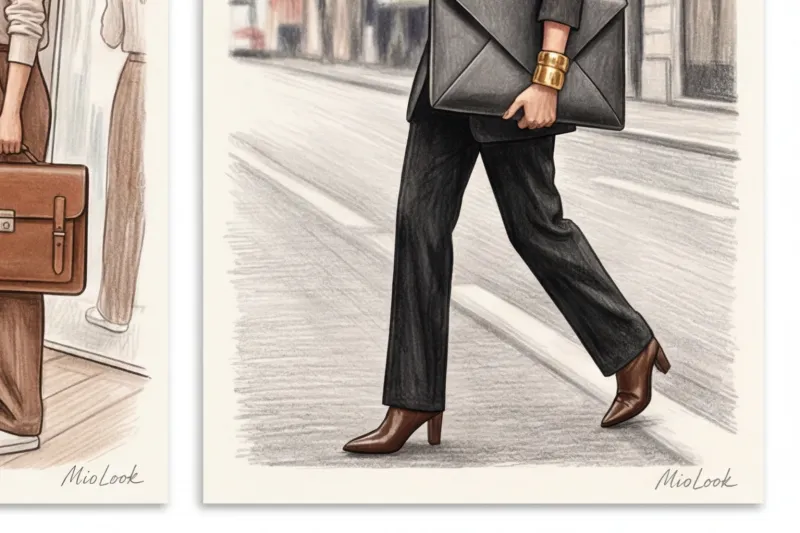
How can modern trends be adapted to these rules? Instead of vintage miniature handbags, Dramatic types should choose trendy rectangular totes with sharp angles. If you need a clutch, opt for a rigid envelope bag.
Naturals, on the other hand, should avoid rigid briefcases, which will clash with their relaxed energy. Your options include voluminous hobo bags, soft shoppers, and backpacks made of high-quality grained leather.
Your perfect look starts here
Join thousands of users who look flawless every day with the help of artificial intelligence.
Get access — €0.99 onceYin Personalities (Romantic and Gamine): Delicacy, Roundness, and Detail
Let's move on to Yin types. Here, delicacy, petite stature, and fine detail reign supreme. Romantics are all about circles, soft fabrics, and feminine curves. Gamines are a clash of Yin and Yang, featuring fine geometry, adolescent energy, and compactness.
The main rule for petite women: a heavy, bulky bag visually pins you to the ground. It makes you appear shorter and wider.
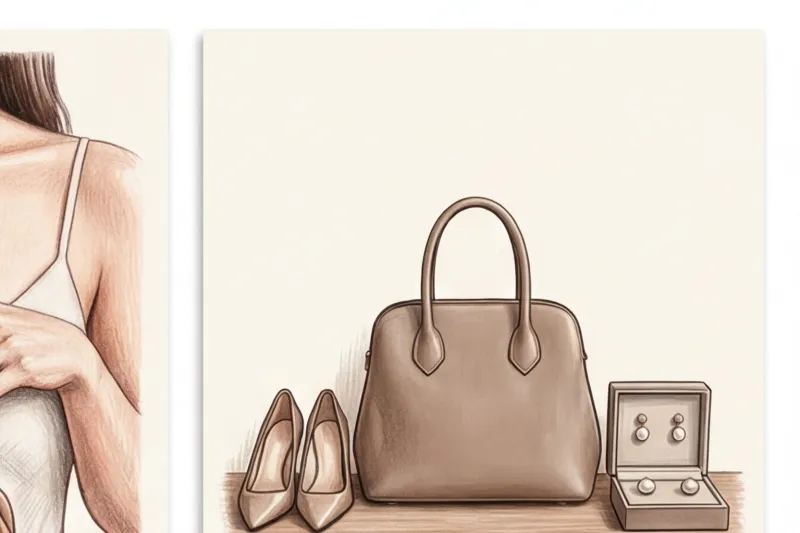
Accessories for Romantics Shoes should follow the curves of their bodies. Choose soft leather, draped details (such as ruched or woven bags), round toes, and elegant kitten heels. Jewelry should be ornate, delicate, and sparkling. Pearls, thin chains, and floral motifs are good choices.
And here it is Gaminam You need rigidity, but in a miniature format. Contrast is your key. Rigid but small shapes, contrasting colors (for example, color blocking), loafers with a small but noticeable sole, patent leather. Embellishments can be playful, unusual geometric shapes, or asymmetrical.
Kibbe Bags for Yin Personalities: Playing with Size
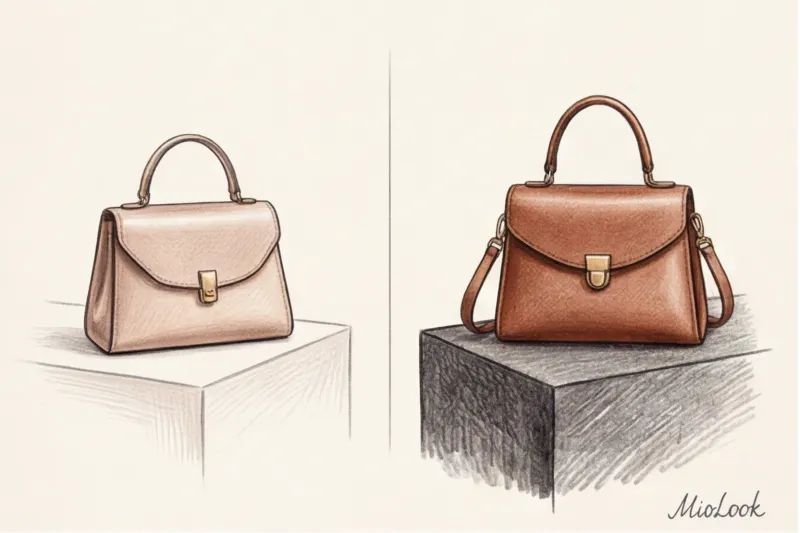
The ideal crossbody size for petite women is no wider than 20-22 centimeters. Anything wider will draw attention to itself. Gamines look incredibly flattering in rigid box bags and small structured satchels. Romantics should consider soft baguette bags and small, duffle-style clutches, which are comfortable to hold.
The Classic Family: Balance, Symmetry, and the Golden Mean
I sincerely sympathize with the Classics in the era of modern fashion. Modern catwalks adore exaggerated extremes: either oversized pieces or micro-pieces that won't even fit a phone. But the Classic's skeletal structure demands absolute symmetry, balance, and moderation.
Any extreme makes the Classic look boring or awkward. Boots that are too chunky look like you borrowed them from your older brother. Too many frills and you look childish.
Choose medium-sized bags with moderate rigidity. They should hold their shape but not have dangerous sharp edges. Shoes should be simple and straightforward: classic pumps, neat almond-toed Chelsea boots, or simple leather sneakers without logos. The same goes for jewelry—the shape should be regular (a perfect circle or oval), without asymmetry.
Where can you find such a "non-boring base"? In the mid- and premium segments, brands like Polène (their iconic smooth yet crisp lines), APC (Half-Moon models), or Massimo Dutti make excellent balanced shapes. This is a great stepping stone to discovering How to look expensive using the secrets of a prestigious wardrobe.
Debunking the myth: Why choosing accessories "100% according to your type" is a bad idea
And now a counterintuitive insight from a practicing stylist, which many Kibbe theorists don't like to share. Trying to pick accessories that perfectly match your type and hit the mark is a mistake.
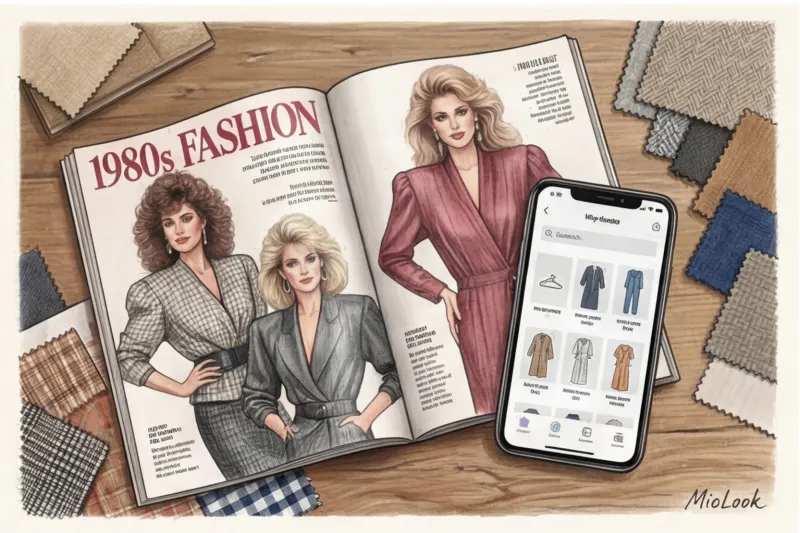
When a Romantic dresses head-to-toe in draped fabric, carries a ruffled bag, and wears shoes with bows, it looks like a 1980s theatrical costume. It ages you. Modern styling is built on eclecticism and the 80/20 rule.
Let 80% of your look match the lines of your body, and 20% (usually shoes or a bag) work in contrast, creating stylistic tension.
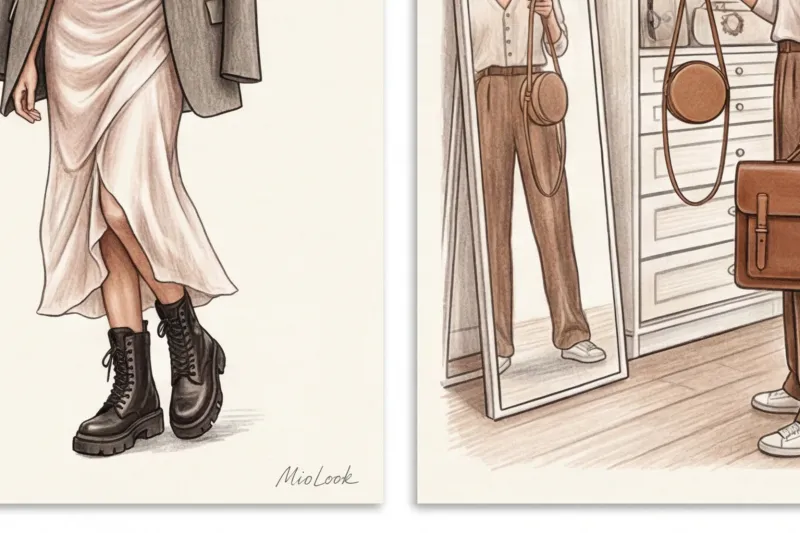
It's called the "clash" method. How does it work in practice? A Romantic wears a delicate, form-fitting silk dress, but instead of elegant sandals, chooses rugged leather Chelsea boots. The shoes ground the overly sweet look. Or a Dramatic, in a tailored pantsuit with perfect creases, carries a soft, shapeless clutch, which downplays the pretentiousness of the suit and makes it appear more relaxed.
Accessories are your legal tool for breaking the rules of your own type without compromising your silhouette.
Ready to get started?
Try MioLook's free plan—no commitments required. Upload your items and let AI create the perfect outfits.
Get access — €0.99 onceStylist Checklist: How to Audit Your Accessories
Enough theory, let's get practical. This evening, take out all your bags and basic shoes. Go through this process I use when reviewing my clients' wardrobes:
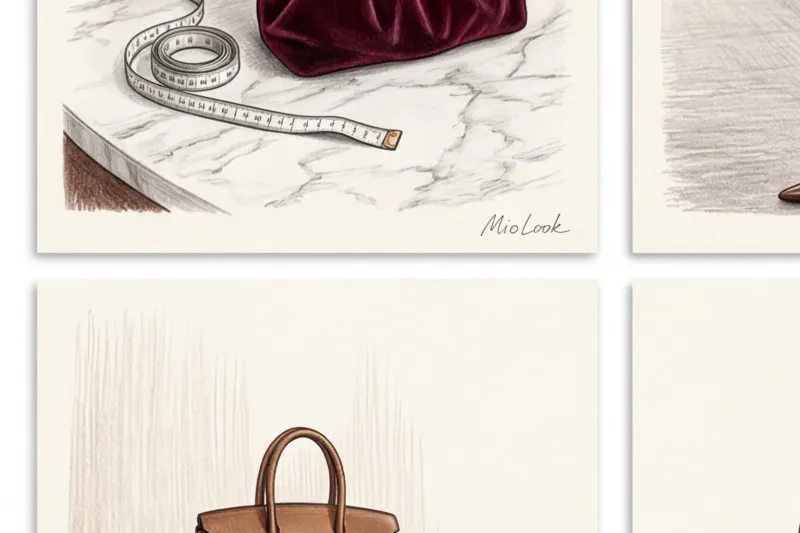
- Let's measure the scale. Position the bag at your hip. If the bag covers more than half of your leg from waist to knee, it's too big. If it's smaller than your outstretched palm, it's a micro bag (save it for evening wear).
- Testing the rigidity. Place your bag or boots on the floor. Does it hold its shape? That's Yang energy. Has it folded up like an accordion? That's Yin energy or a relaxed Natural.
- We evaluate the details. Look at the hardware. Solid, large zippers and minimal stitching suggest scale. Multiple pockets, rivets, tassels, and decorative stitching suggest detail.
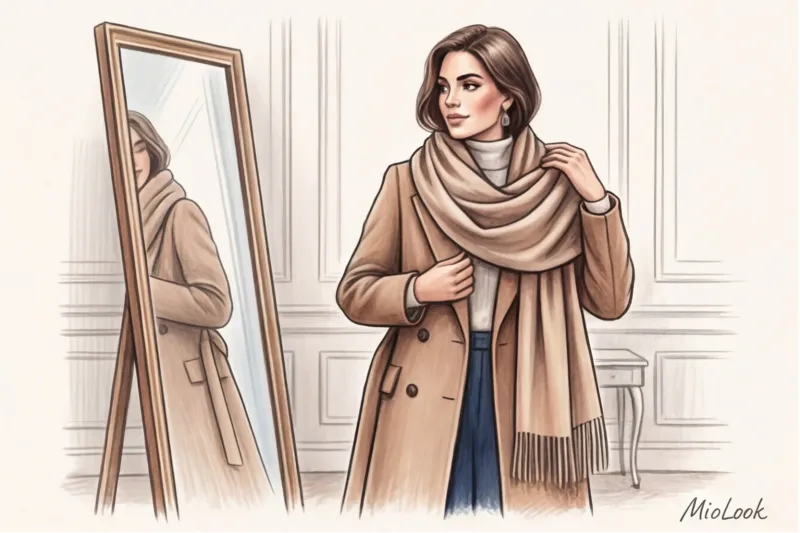
- Experimenting in front of a full-length mirror. This is crucial. Don't judge a bag by looking at it from top to bottom in your hands. Step two meters away from the mirror. How has your silhouette changed? Do you appear shorter? Wider? More proportional?
Summary: Invest in lines, not logos
Knowing your body shape saves you money better than any seasonal sales. You stop buying trends that look amazing on influencers but make you look bulky. When you understand your body shape, even an inexpensive, basic bag with the right fit and size will elevate your look.
This won't work in just one case: if you're using the bag purely for practical purposes (for example, to carry a laptop and gym clothes at the same time). In that case, simply choose a fabric tote bag that matches your outerwear in a neutral color so it blends in and doesn't throw off the proportions.
To make the process of integrating new accessories easier, I recommend digitizing your wardrobe. Use the "smart wardrobe" feature in MioLook When you upload photos of your bags and shoes to the app, artificial intelligence helps you visualize how they pair with your other clothes by color and shape, saving you time every morning.