Do you know how many gorgeous designer pieces have been irreparably ruined by one poorly chosen necklace? In 14 years of working with fabrics, I've seen dozens of snags on premium silk and frayed nap on velvet—all because of the desire to "break up" a closed collar with a long pendant. When we choose jewelry for a closed dress , we often make a fatal mistake: we treat fabric as a blank canvas that urgently needs to be filled with something.
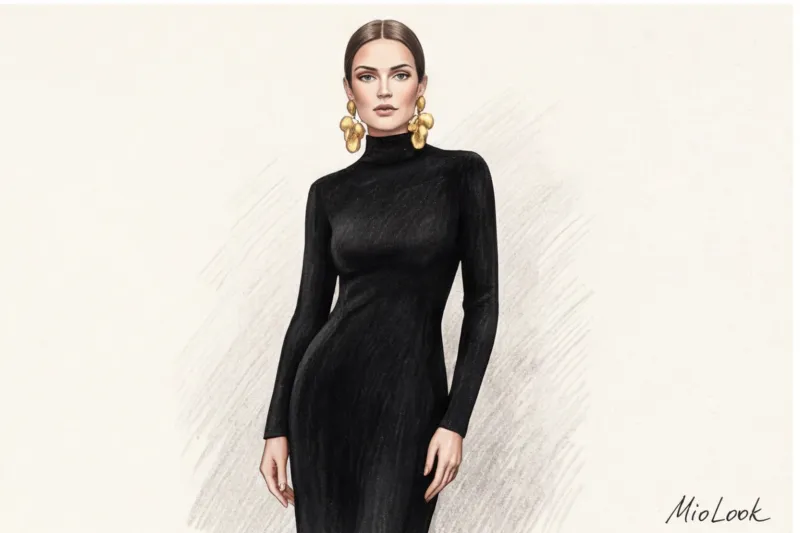
But a high-necked dress isn't a blank canvas. It's an architectural monolith. We discussed the cut and philosophy of such dresses in more detail in our A guide to evening gowns as a symbol of new luxury Today, we'll explore the physics of metal and fabric interaction, break free from outdated styling rules, and learn how to place accents so your look looks expensive and your clothes last for years.
The Architecture of Modesty: Why Jewelry Works Differently with a High-Length Dress
One of my clients, the CEO of a large IT company, was once preparing to speak at a European conference. She was wearing a stunning wool column dress in a deep sapphire shade with a high collar. At the last minute, she pulled out a chunky necklace: "I think there's too much empty fabric here; it needs to break up the silhouette." It's a classic trap.
We removed the necklace, which was mercilessly cutting into her strict shoulder line, and replaced it with a single, sculpted gold ear cuff. The look instantly transformed from "I tried so hard to dress up" to "I own this room."
The secret lies in the 70/30 rule, which determines the visual weight of an outfit. When 70% of your silhouette is covered with smooth, uninterrupted fabric, the remaining 30% of exposed areas (face, hands) automatically become the focus of attention. Adding embellishments on top of the fabric disrupts this balance, creating a Christmas tree effect. Our goal is not to obscure the fabric, but to highlight the exposed areas.
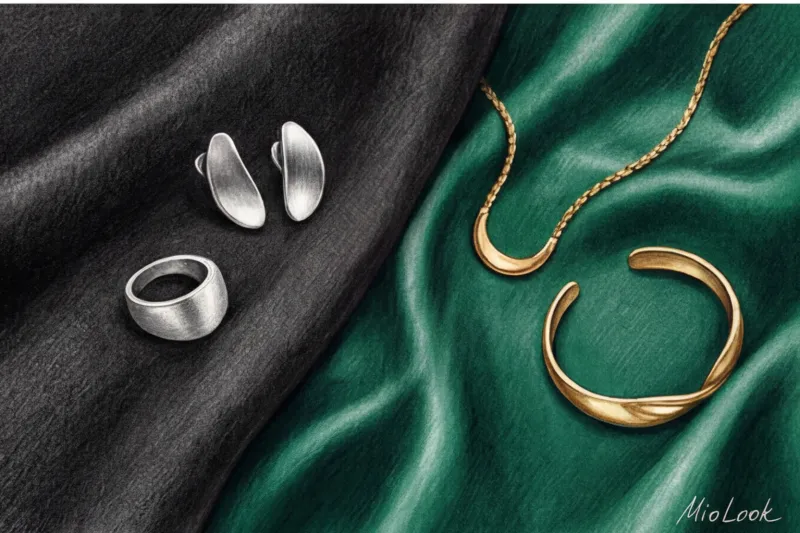
Texture Dictates Shine: The Science of Combining Fabric and Metal
Buying expensive accessories doesn't guarantee good taste if you ignore the laws of light refraction. The surface of your clothing dictates the finish of the metal: matte, glossy, embossed, or patina.
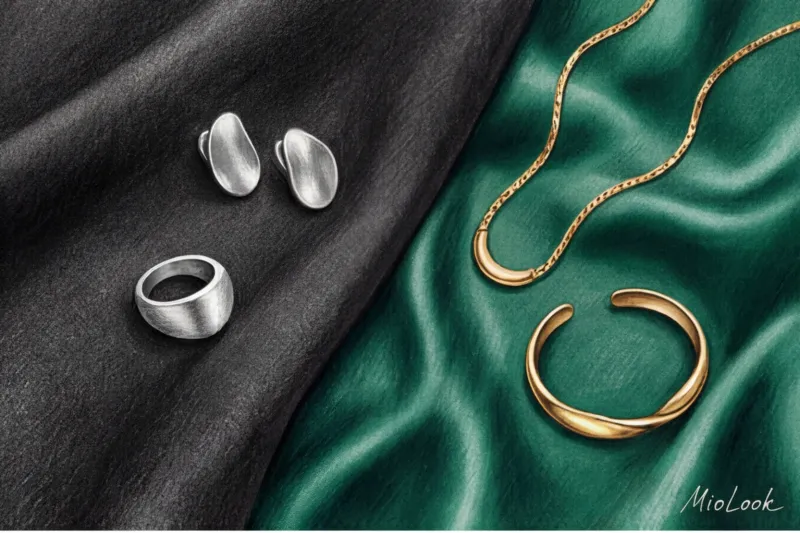
Matte fabrics (wool, crepe, thick cotton)
According to the Pantone Color Institute, dense matte fabrics absorb up to 90% of the light that falls on them. Visually, such a surface appears deep but dull. This is where you need maximum contrast. Polished gold, glossy silver, diamonds, or glass will act as reflectors.
If you are wearing a dress made of heavy crepe (200 g/m² and above), it will easily support a heavy accent brooch weighing 15–20 grams without deforming the shoulder seam.
Glossy and complex textures (silk, velvet)
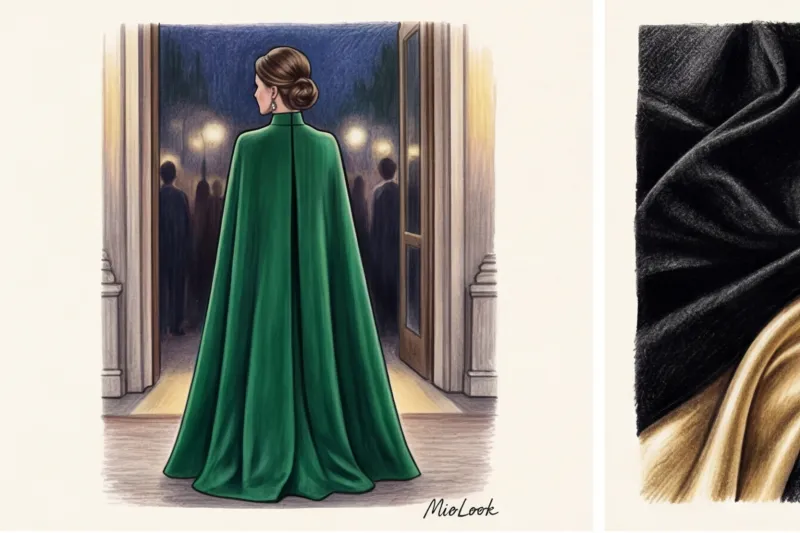
Silk with a density of 19-22 momme and satin already have a high light reflectivity index. Add glossy, sparkling gold to them, and the elements will begin to compete for attention. Brushed (scratched) metal, matte silver, or baroque pearls are ideal companions for silk.
Velvet is even more complicated. The pile of velvet breaks under the pressure of clasps. Never pin brooches to a velvet dress unless you want a permanent bald spot where the pin is.
Not sure which textures are right for you?
Upload a photo of your dress to MioLook, and the algorithm will suggest ideal accessory options based on the fabric texture.
Find a look in MioLookDanger Zone: Why You Should Avoid Necklaces with a Blind Collar
It's time to dispel perhaps the most persistent stylistic myth. For decades, women's magazines have been saying: "The more closed the dress, the longer the pendant should be to elongate the silhouette into a V-shape." This is catastrophically untrue.
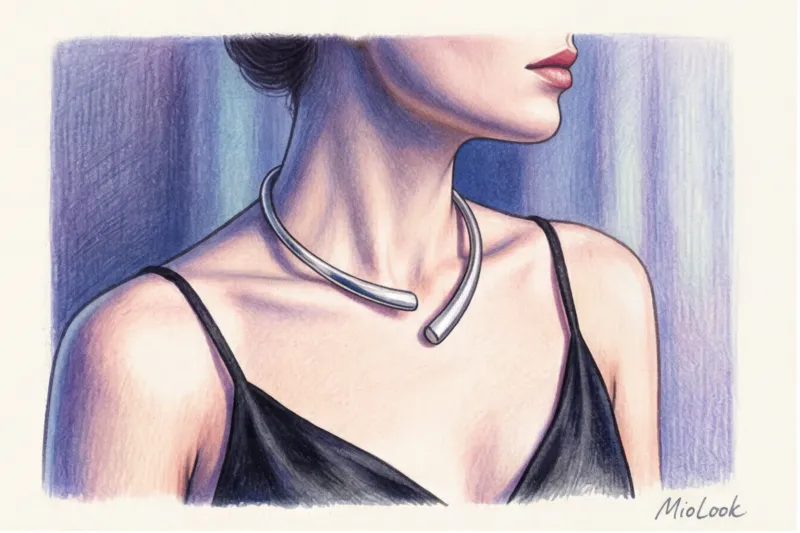
Firstly, designers create mock necks specifically to accentuate the jawline and neck. Cutting this area with a chain destroys the cut's architectural appeal.
Secondly, let's look at the physics of fabric. Silk or viscose threads have extremely low resistance to constant friction (abrasion). A heavy pendant on a long chain, swinging as you walk, acts like sandpaper. In just one evening at a corporate party, a pendant can leave tiny snags and pilling on your chest, turning a €300 dress into something fit only for the dacha. Keep the neck area absolutely clean.
Investing in Accents: Earrings, Cuffs, and Rings as Status Markers
If we remove jewelry from the chest, where does the focus shift? That's right, to the periphery: the face and hands. In the aesthetic of "quiet luxury," it is the quality of these subtle accents that reveals your true status.
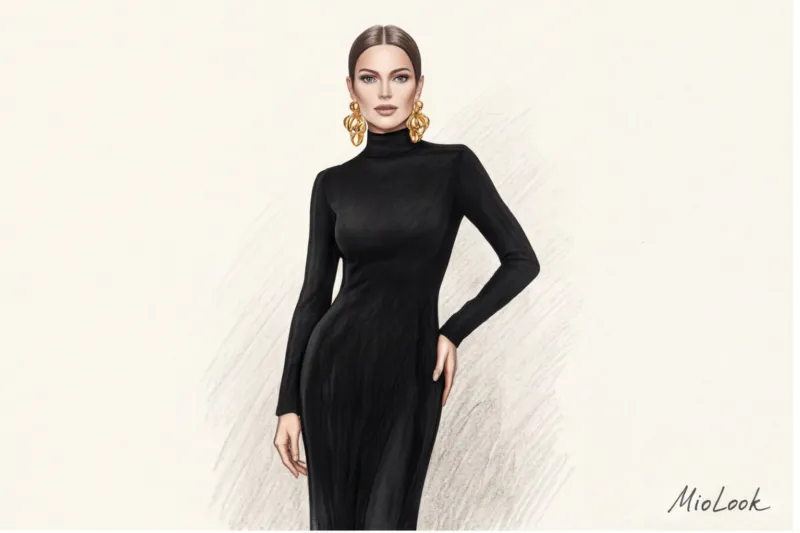
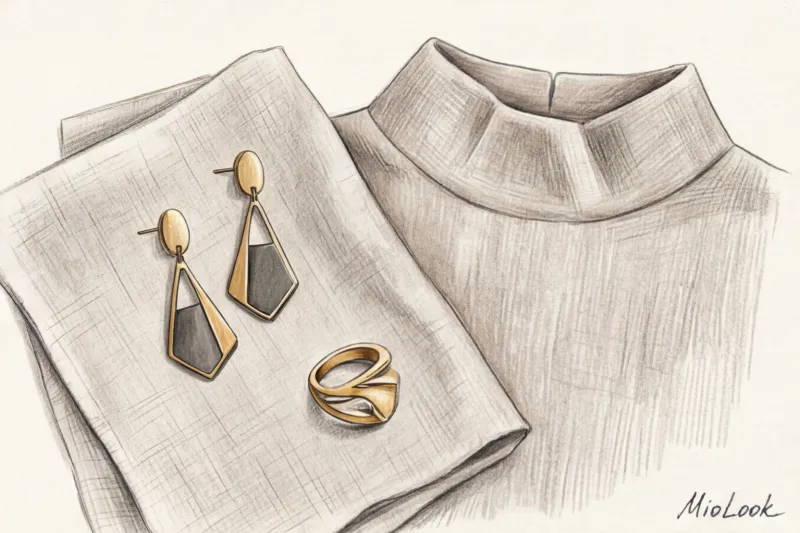
- Sculptural earrings: If your dress has a high neck and long sleeves, large earrings in crushed metal will become the focal point of the composition. They will draw the eye to your eyes during conversation.
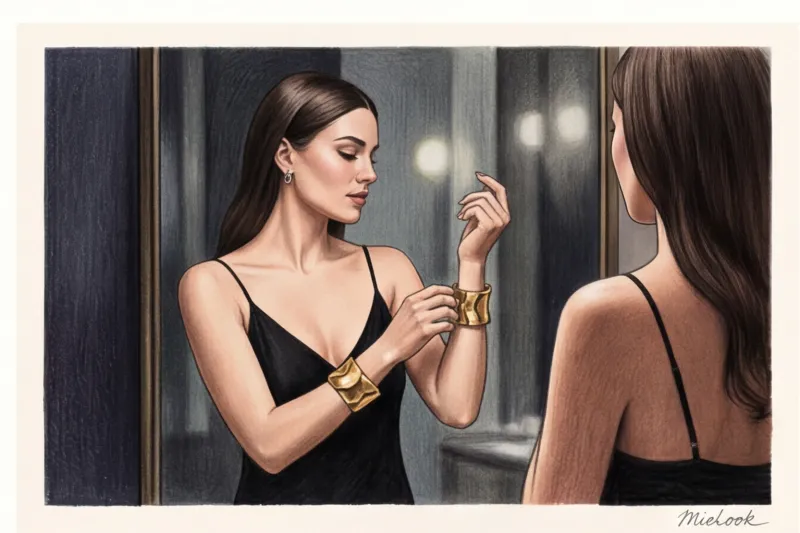
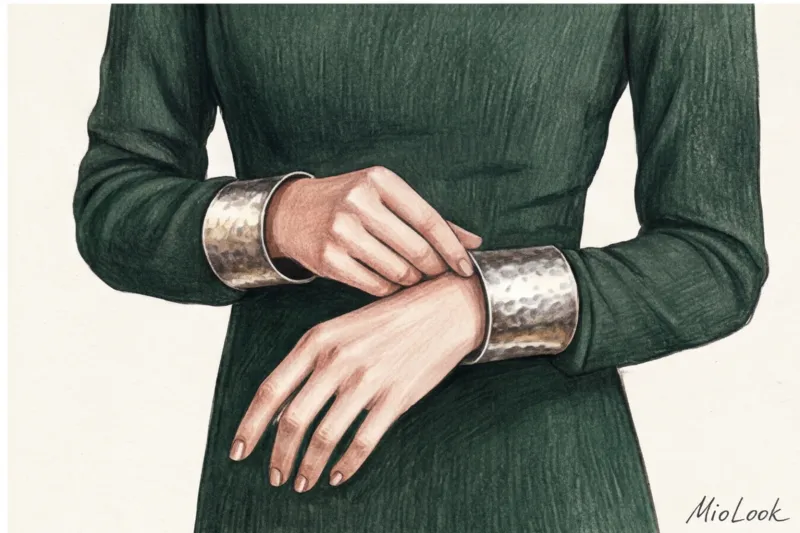
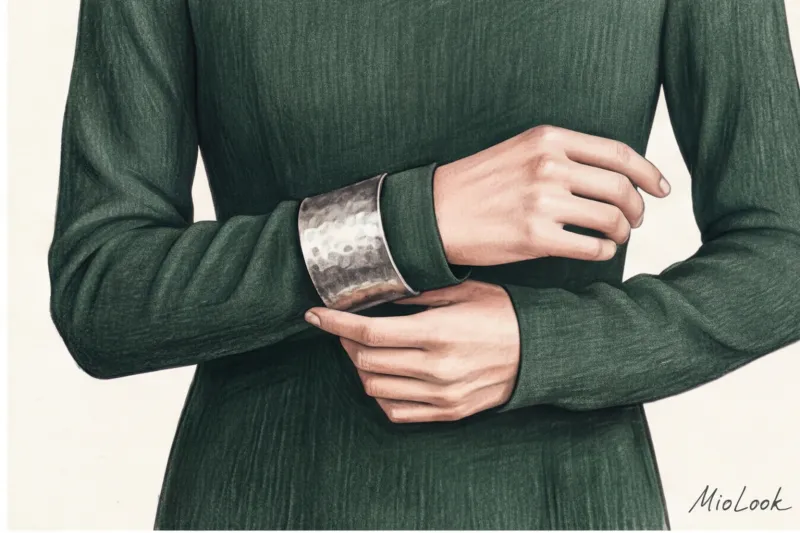
- Over-the-sleeve cuff bracelets: A bold, very aristocratic touch. By wearing a rigid metal cuff directly over a long, fitted sleeve (especially a knit one), you create a powerful visual anchor.
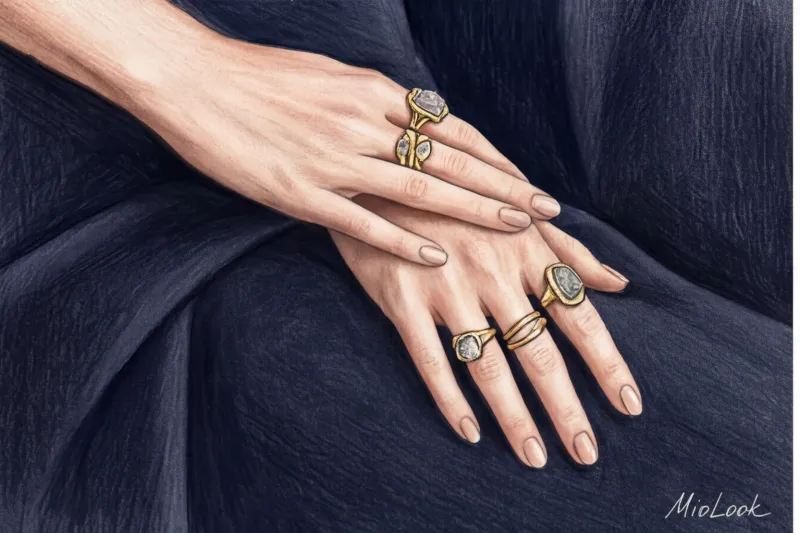
- Cocktail rings: A tool for nonverbal communication. A large ring with a rough stone draws attention to your gestures. By the way, if you're unsure about proportions, I recommend studying How to choose a ring based on the thickness of your fingers and the fullness of your hands.
Sustainable and Ethical Metals: A Conscious Fashion Choice
It's impossible to talk about luxurious minimalism and low-key outfits without ignoring the quality of the materials themselves. Sustainable fashion is no longer a trend, but a basic rule of good taste. McKinsey's "The State of Fashion" report for 2024 highlights that demand for recycled gold and lab-grown diamonds in the premium segment has grown by 35%.
Cheap brass and copper jewelry doesn't just look like it costs €15. It quickly oxidizes when exposed to sweat and perfume. These copper salts embed themselves in the fibers of light-colored fabrics, leaving permanent green or gray stains on the collar of your favorite dress.
When investing in items made from recycled silver, PVD-coated medical steel, or ethically sourced gold (in the €100–€250 range), you're not just paying for the brand. You're paying for the guarantee that the metal will remain inert and won't react chemically with your skin or your expensive clothing.
Your perfect look starts here
Join thousands of users who look flawless every day with MioLook. Create your own virtual jewelry capsule.
Get access — €0.99 onceStylist Checklist: 5 Steps to the Perfect Balance of a Modest Look
Before leaving the house, do a quick checkup using this algorithm. I use it when preparing clients for red carpets, and it's a surefire success:
- Density test: Compare the weight of the jewelry to the weight of the fabric. Thin viscose? Only weightless stud earrings or thin hoops. Thick wool? A chunky cast bracelet is fine.
- One Protagonist Rule: If you've chosen giant chandelier earrings, the most you'll be left with is a thin wedding ring. No exceptions.
- Checking the fittings: Look at the zippers, buttons, or belt buckle on your dress. If there's a large silver zipper gleaming on the back of the dress, the warm brassy gold in your ears will create a visual buzz.
- Motility test: Put on your jewelry and make a couple of sharp arm movements, turning your neck. If the ring's bezel catches on your sleeve, remove it immediately.
- Step back: Move two meters away from the mirror. Up close, you see details; from a distance, you see a silhouette.
I must admit, this checklist does NOT work in one case: If you're specifically going for an avant-garde or camp look (like at the Met Gala), where excess, kitsch, and out-of-proportion are the main artistic intentions. But for elegant everyday wear and classic evening outings, it's a must.

Knowing how to wear a high-necked dress is a litmus test of your personal style. True elegance doesn't overwhelm you with an abundance of details. It manifests itself in an understanding of textures, respect for the architecture of the cut, and the courage to leave empty space where others would rush to hang an unnecessary pendant.