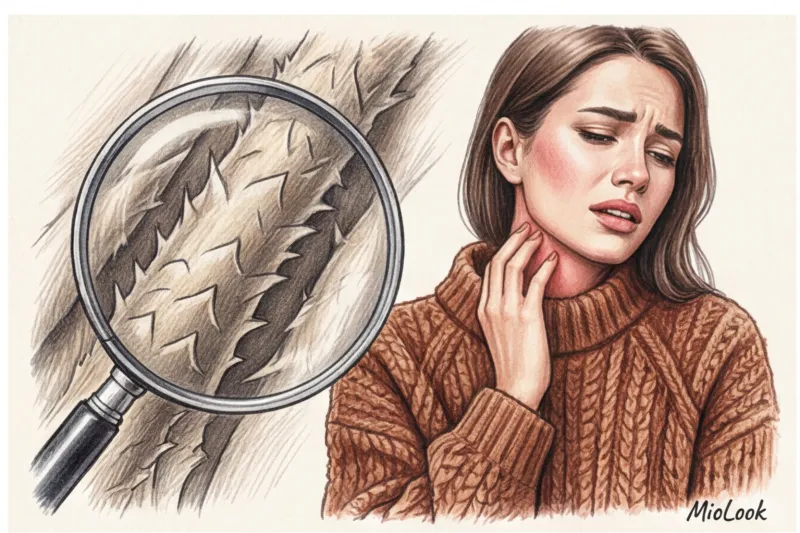
Imagine this: you buy a luxurious, oversized sweater in a trendy chocolate shade. You put it on on a crisp, frosty morning, step out the door, and exactly ten minutes later, all you want to do is rip it off right there in the street. Sound familiar? That feeling of being wrapped in fiberglass can ruin even the most flawless look and completely drain your confidence.
Every fall-winter season, clients ask me the same question: Why is my sweater itchy and what should I do? What if you can't wear it, but you hate to part with a beautiful piece? Spoiler: popular online methods involving freezing won't help here, and can sometimes permanently ruin expensive yarn. We've already covered the basic principles of choosing premium knitwear in our The complete guide to choosing quality cashmere: stylist tips Today, I propose forgetting banal advice and approaching the problem like true experts—dissecting the physics of discomfort and implementing stylistic formulas for layering.
The Anatomy of Discomfort: Why Your Sweater Itches and What to Do First
I had a wonderful client, Anna, in my practice. When we started sorting through her wardrobe, she brought out a huge bag of wool items to donate, declaring, "I've developed an allergy to wool; I can't wear anything but cotton." We began examining the composition of each item, and I realized it wasn't an allergy at all.
Remember this important rule: in 95% of cases, what we mistake for an allergic reaction to wool (redness, itching, small rashes on the neck) is actually a simple mechanical irritation. A true allergy to animal protein is extremely rare. Your skin is simply reacting to micro-scratches. This is directly related to how the skin is structured. The anatomy of the perfect sweater: what determines price and quality The knitting grade, the twist of the yarn, and most importantly, the thickness of the fiber itself determine whether a garment will hug you or attack you.
The 30 Micron Rule: A Scientific Approach to Wardrobe
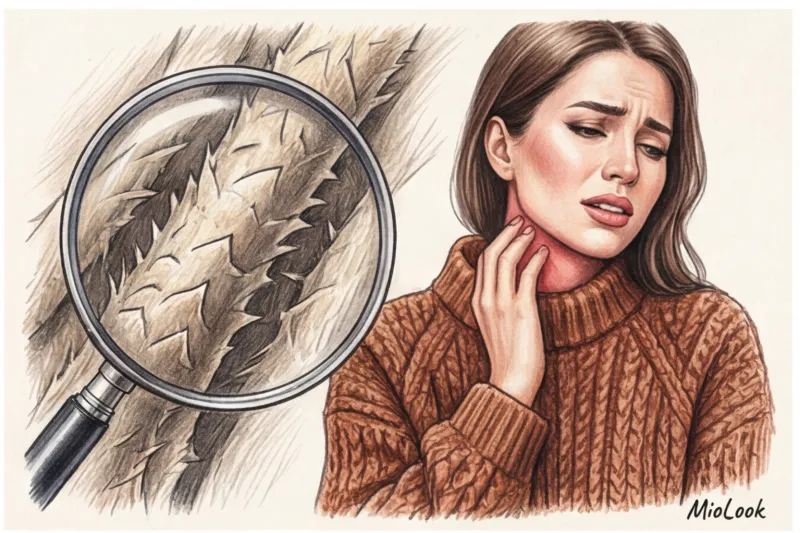
Did you know that under a microscope, wool fiber looks like a palm tree trunk covered in tough scales? These scales are what cling to the nerve endings in our skin.
According to the Cashmere Manufacturers Institute (CCMI) standards, the comfort of a garment can be calculated mathematically. The human skin sensitivity threshold is approximately 30 microns. Anything thicker than this will inevitably cause itching. For comparison:
- The thickness of a human hair is about 75 microns.
- Premium cashmere - 14-15 microns (so it feels like a cloud).
- Merino of the highest quality (Super 120s) - 17.5 microns.
- Coarse sheep wool, often used in budget mass-market products – from 30 to 40 microns.
Fast fashion brands often use short, thick fibers to reduce production costs. These fibers are harder to spin into a smooth yarn, so their ends stick out in all directions, digging into your skin like microscopic needles.
Your perfect look starts here
Join thousands of users who look flawless every day with MioLook. A smart wardrobe is always at your fingertips.
Get access — €0.99 onceMy sweater is itchy: what to do if I've already bought it
The internet is full of advice like "stick your sweater in the freezer overnight" or "wash it with hair conditioner." As a stylist, I'm categorically against such experiments on good clothes. Here's why.
In 2018, I personally decided to test the hair conditioner life hack on an expensive Italian jumper made from a blend of coarse wool and alpaca. Sure, it did become a little softer after drying. But after a couple of hours of wear, I realized the garment had stopped "breathing." I started sweating, and the greenhouse effect instantly intensified the itchiness. The problem is that the silicones in regular hair conditioner coat the strands in a thick film, ruining the key property of natural wool—its hygroscopicity.
Washing an itchy sweater with conditioner doesn't make it soft forever. It merely masks the problem with silicone, disrupting the material's natural thermoregulation.
So what should we do? The only effective chemical method is to use professional detergents with a high lanolin (animal wax) content. Lanolin naturally smooths the hair cuticle without clogging the structure. Important limitation: This method only works on natural wool. If your sweater is 70% acrylic, lanolin won't help.
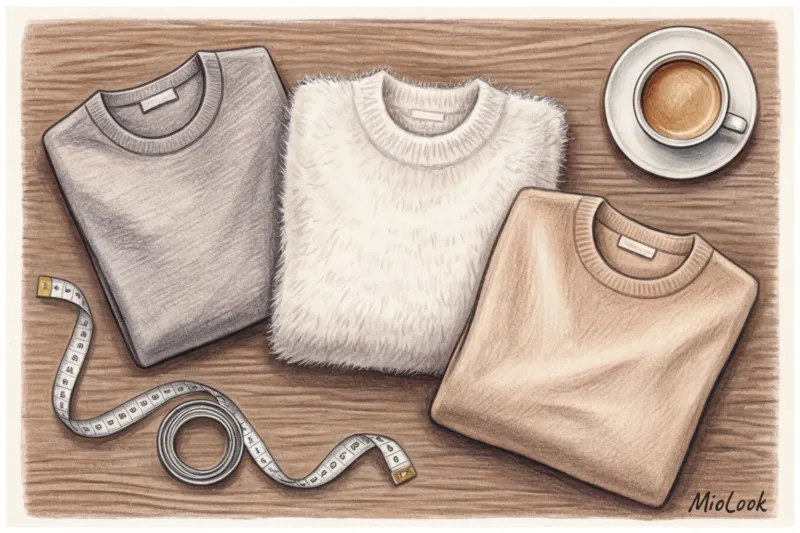
The Art of the First Layer: Stylish Formulas for Salvation
If chemical treatments don't work, we turn to styling. Protecting your skin isn't just about comfort; it's also about creating a complex, textured look.
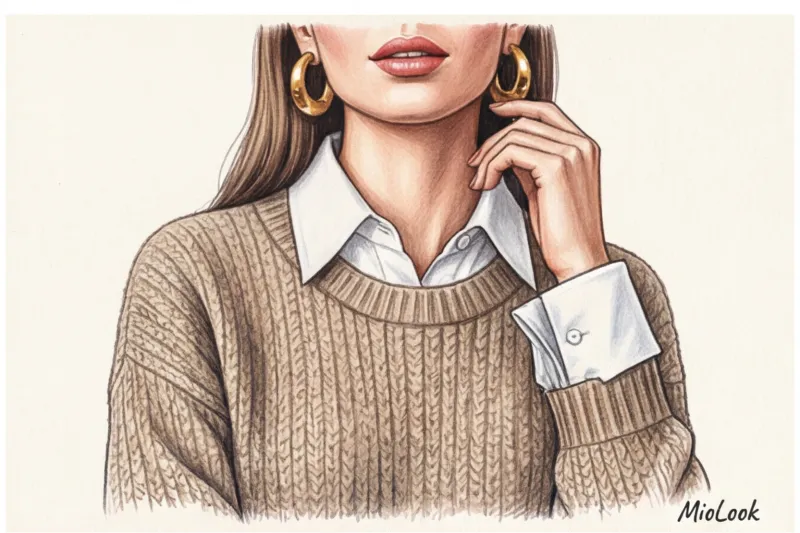
Here are three of my favorite stylistic formulas:
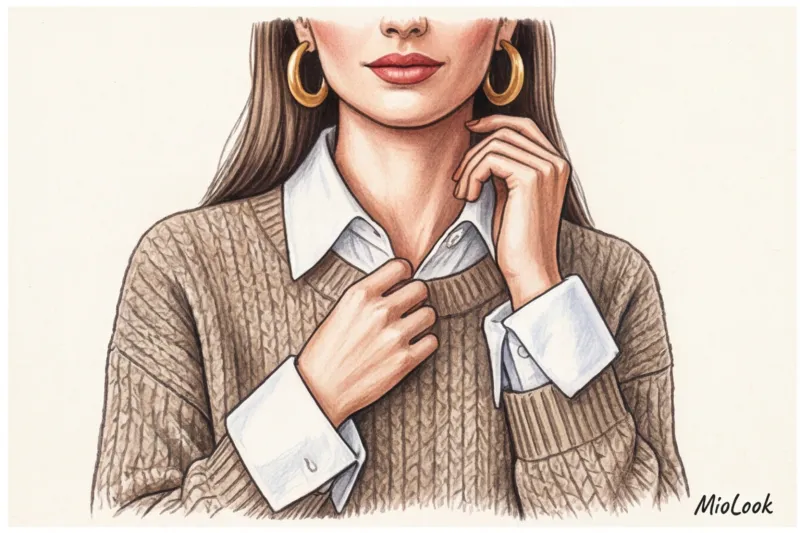
- Preppy formula: Itchy jumper + basic shirt. Choose a shirt made of heavy cotton (at least 180 g/m²) to prevent lint from peeking through the fabric. Unbuttoned cuffs, collar, and hem will not only protect your skin but also create a more put-together look. This is ideal for smart casual dress code.
- Layer dynamics: V-neck + viscose turtleneck. Viscose (especially with 5% elastane) is highly breathable and pleasantly cools the skin. The contrast of a smooth turtleneck and a fluffy, textured sweater always looks luxurious.
- Silk barrier. If your sweater only pricks your neck and collarbone, tie a small silk scarf underneath. It will create an elegant accent and a physical barrier for sensitive areas.
Which Wool to Choose for Sensitive Skin: Investing in Comfort
Knowing how to read labels is a key skill for conscious shopping. Over the course of 12 years of shopping, I've noticed that many manufacturers intentionally disguise coarse wool under pretty names. When choosing winter office wear for women It's important to remember: an itchy cardigan will distract you from work just as much as uncomfortable shoes.
To avoid having to keep track of all the successful finds and compositions in my head, I recommend my clients to take photos of the tags and save them in MioLook This smart AI stylist not only helps you create looks from what you already own, but also analyzes which fabrics work best in your wardrobe.
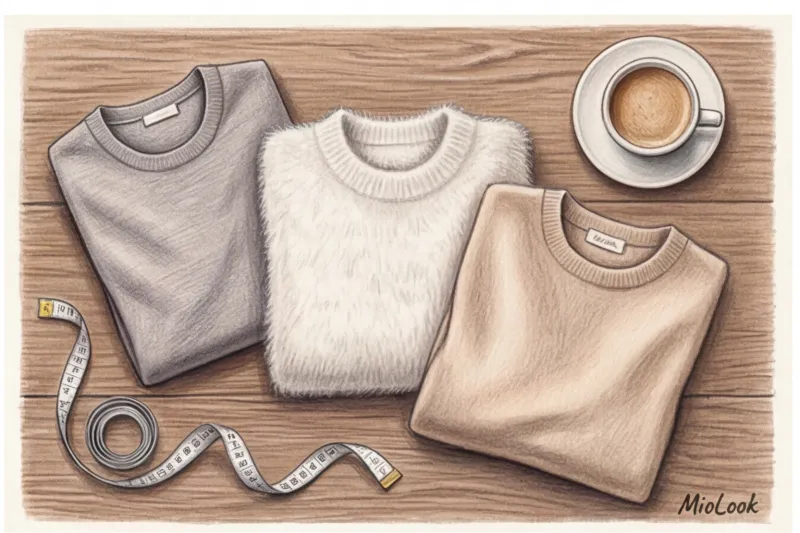
Safe compositions: from merino to cashmere
If you can't stand even the slightest tingling sensation, look for the following words on the labels:
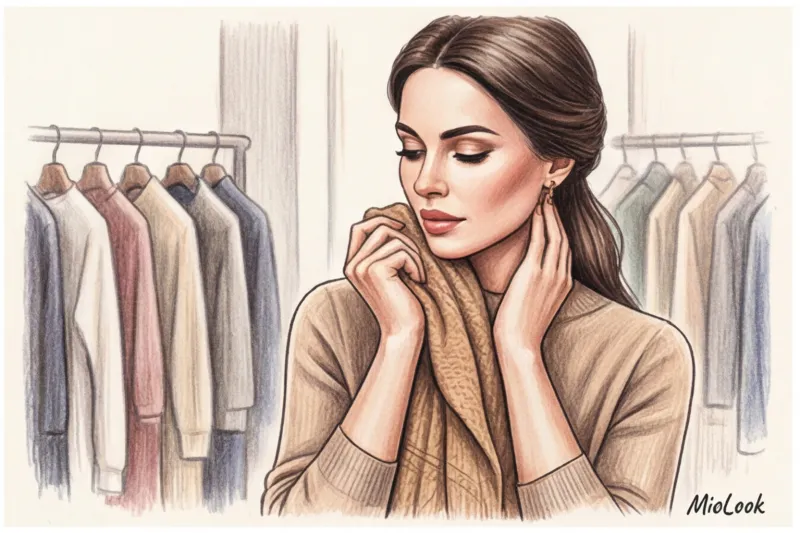
- Merino Extrafine (Extrafine). The gold standard for price and softness. This is Australian Merino wool with a fiber thickness of approximately 19 microns. It is smooth, elastic, and completely non-itchy.
- Cashmere. The king of the winter wardrobe. As we discussed in the hub article, high-quality cashmere never itches.
- Baby Alpaca. Unlike sheep's wool, alpaca wool contains no lanolin and is virtually free of guard hairs. It is seven times warmer than sheep's wool and is hypoallergenic.
- Silk Blends (Silk Blends). Wool in a 70/30 ratio with silk acquires incredible softness and a beautiful, delicate shine.
Red Flags: What to Avoid on a Label
A 2024 study by consulting agency McKinsey found that mass-market brands have increased the percentage of synthetics in their knitwear by 15% over the past three years in an attempt to curb price increases. This is bad news for our skin. What should we avoid?
- The words “100% Wool” or “Pure New Wool” without specifying the breed. If the brand doesn't say "merino," it's just regular, coarse sheep's wool.
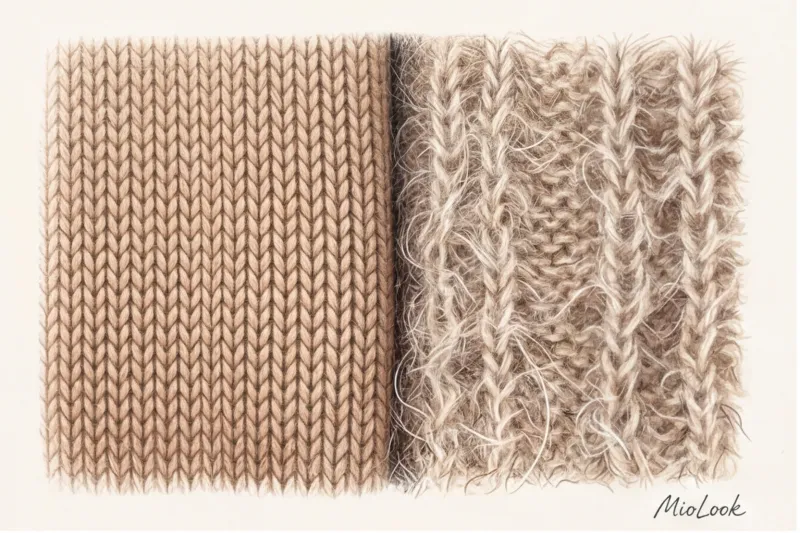
- Mohair (especially large knit). It's beautiful and trendy, but extremely prickly for sensitive skin. The guard hair of Angora goats is very coarse.
- Acrylic + cheap wool. The worst combination. Acrylic (plastic) doesn't allow air to pass through, causing you to sweat, opening your pores, and the rough wool fibers irritate your steamed skin with double the intensity.
Ready to get started?
Try the MioLook plan for free—no commitments required. Organize your wardrobe and create stylish combinations in just a few clicks.
Get access — €0.99 onceStylist Checklist: How to Check a Sweater Before Buying
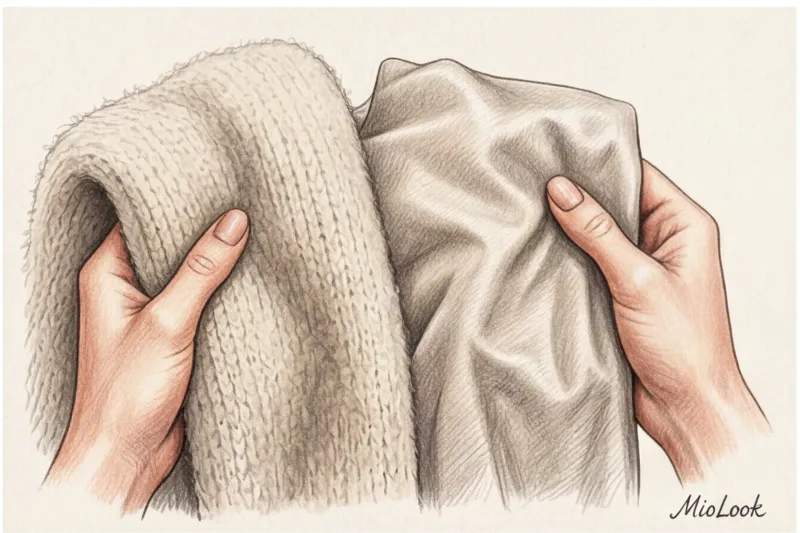
One of the main secrets I share during my shopping guides: never trust the touch of your palms. The skin on our hands (especially the fingertips) is much rougher and less sensitive than the skin on our body. You touch a sweater in the store, it feels nice, but when you put it on at home, it's a nightmare.
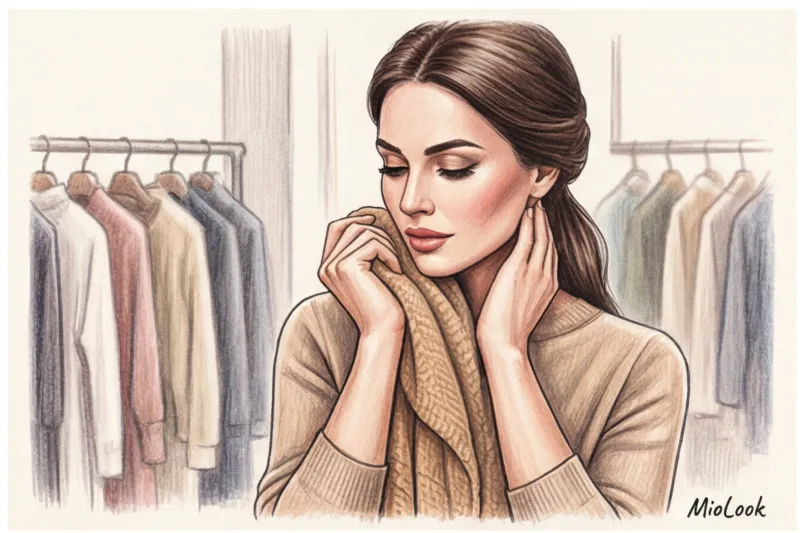
How to test knitwear correctly?
- Clavicle test. In the fitting room, place the garment against your neck, collarbone, or the inside of your elbow. These are the most delicate areas of the body.
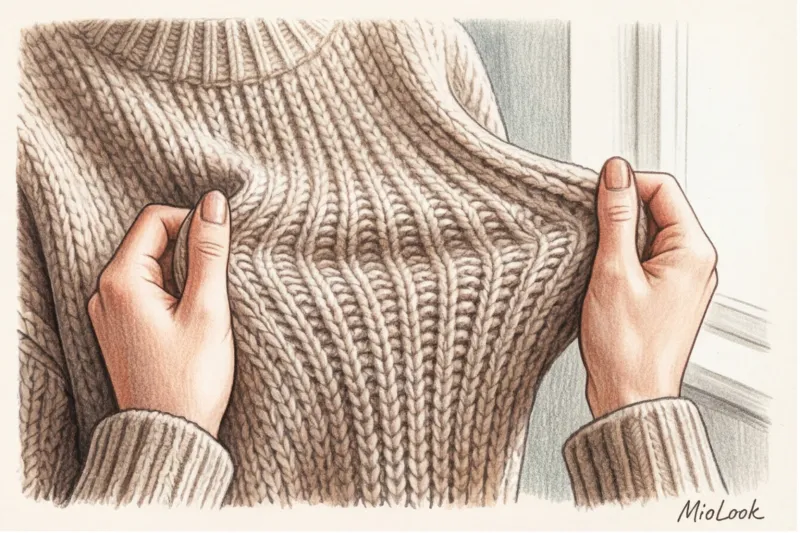
- Thermal test. Put the sweater on directly against your bare skin (or over a thin top) and walk around the store for at least 5-7 minutes. Itching from coarse wool often doesn't appear immediately, but only when the skin warms slightly from friction and body heat.
- Twist density assessment. Remember: "fluffy" doesn't always mean "soft." Yarn that's too loose pills more quickly and tends to lose its shape, while short fiber ends sticking out can cause irritation. Look for a tight, elastic knit.
Of course, this advice doesn't apply if you're buying online. In that case, carefully reading the ingredients and understanding the brand's return policy will save you.
Conclusion: Your comfort is the foundation of confident style
Clothes should serve you, embrace you, and highlight your individuality, not force you to endure discomfort for the sake of beauty. Prickly edges aren't a death sentence for your favorite piece if you know how to layer it wisely.

Sort through your winter knitwear today. Put aside those itchy jumpers and pair them with some "defenders"—basic smooth viscose turtlenecks, heavy cotton shirts, or silk scarves. This investment in your basic wardrobe will pay off handsomely, bringing dozens of problematic sweaters back into use. And next time you're standing in front of the rail at the store, remember the 30-micron rule and trust not the price tag's promises, but the way you feel in the crook of your elbow.