I vividly remember the moment when one of my clients, a top manager at an IT company, nearly burst into tears while sorting through her wardrobe. She'd bought a stunning emerald slip dress at an expensive concept store, worn it exactly once to a presentation, washed it strictly according to the instructions on a delicate cycle, and pulled it out of the washing machine... a tunic that barely covered her hips. The tag proudly proclaimed the simple words "100% viscose."
It's at moments like these that the question I'm asked at every other styling consultation comes up: Is viscose a natural fabric or not? Spoiler: neither. Most people are terrified of the word "artificial," equating it with "synthetic" (read: plastic) polyester. Because of this terminological confusion, we often reject stunning, breathable items in favor of stuffy synthetics, which are simply better disguised by marketers. We've already covered more about brand tricks in our a complete guide to choosing fabrics , but the case with viscose requires a separate, in-depth investigation.
The main paradox: is viscose a natural fabric or not?
Let's settle this issue once and for all. Viscose is artificial fabric made from natural raw materials It sounds like an oxymoron, but behind it lies a brilliant chemical technology patented back in the late 19th century.
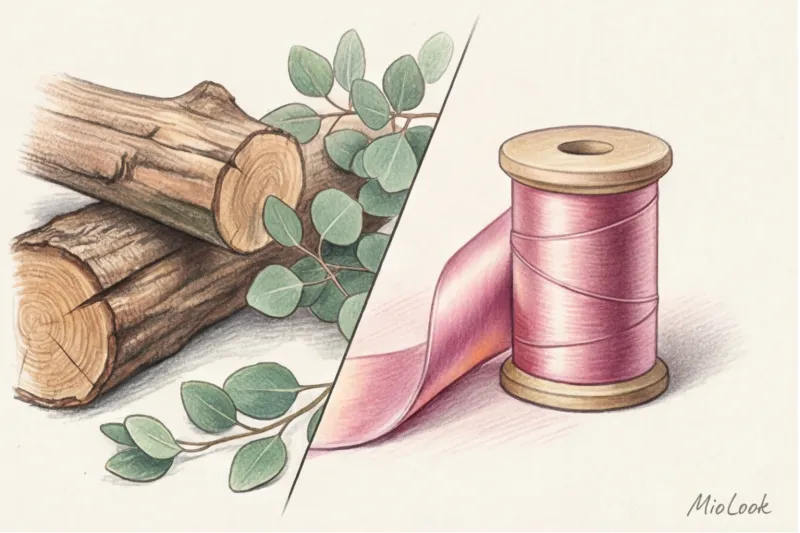
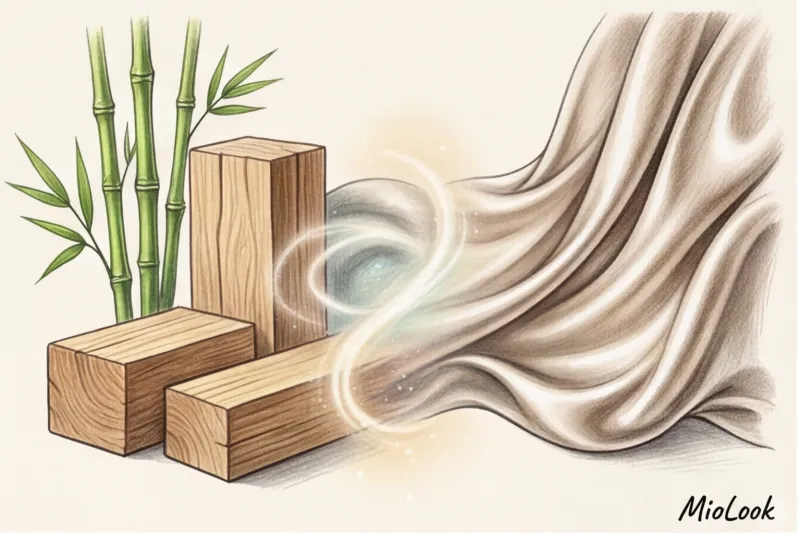
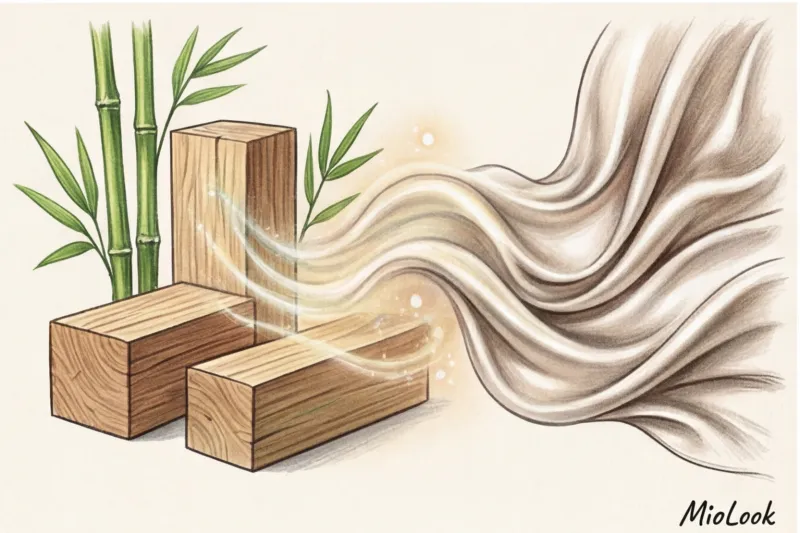
Imagine ordinary spruce chips, beech sawdust, or tough bamboo stalks. Carrying them around is obviously impossible. But if this wood pulp (cellulose) is ground up and dissolved in a special chemical compound to form a thick, viscous liquid (from the Latin viscosus — viscous), and then press this substance through tiny holes into an acid bath—the liquid instantly hardens. This produces the finest, smooth threads, which are then woven into a material that visually and tactilely resembles silk.
Artificial vs. Synthetic: A Conscious Consumer's Dictionary
To stop being afraid of labels, you need to remember one basic rule that I always ask my clients to write down:
- Synthetics (polyester, acrylic, nylon) = oil and plastic. The fibers are synthesized from scratch from polymers that don't occur in nature. They don't absorb moisture and create a greenhouse effect on the skin.
- Artificial fabrics (viscose, acetate, cupro) = nature + laboratory. The source material was created by nature itself (wood, cotton fluff), and humans merely modified its physical state. This is why artificial fabrics "breathe" and feel like cotton or silk on the skin.
Your perfect look starts here
Join thousands of users who look flawless every day with MioLook.
Get access — €0.99 onceMaterial Evolution: Why '100% Viscose' Is a Red Flag
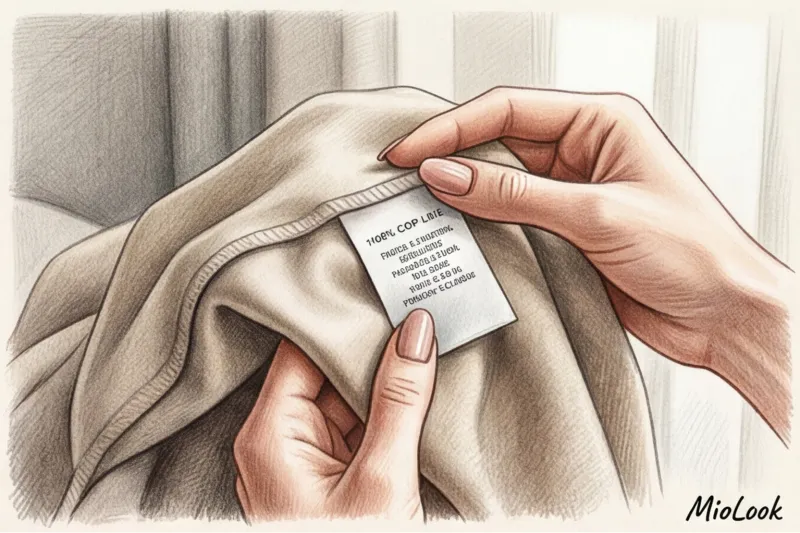
Sounds counterintuitive, right? You'd think 100% viscose would guarantee purity. But over 12 years of wardrobe decluttering, I've thrown out dozens of mass-market items with that label. The problem is that basic, cheap viscose (often labeled as district ) is an extremely unstable material. Without special treatment, it can shrink up to 10% after the first wash and become covered in pilling where the bag rubs.
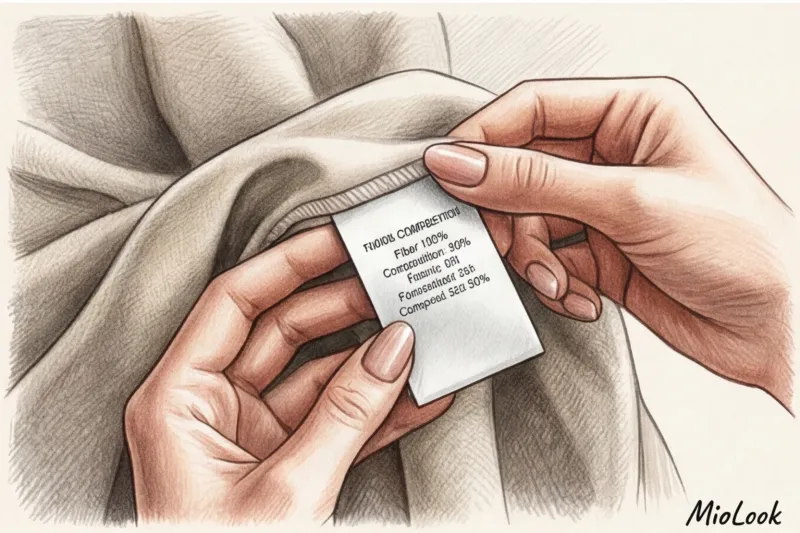
If you want to invest smartly in your wardrobe, look for high-tech viscose derivatives on the tags. This is an evolution of the fabric, where scientists have corrected all the bugs of the first version:
- Modal — a new generation of viscose made exclusively from beech wood. According to textile laboratories, modal shrinks less than 2% (versus 10% for regular viscose) and is virtually pilling-free. Ideal for T-shirts and underwear.
- Tencel and Lyocell (Tencel / Lyocell) Tencel is an elite cellulose fabric made from eucalyptus. The Austrian company Lenzing Group, which holds the patent for Tencel, uses a closed-loop production process: 99% of the solvent is recycled, preventing it from entering the environment. This is the most durable and environmentally friendly version of viscose.
- Cupro — the so-called "vegan silk." It's made from cotton linters (the fluff remaining on the cotton seeds). It has an incredible, heavy flow. If you see jeans for office style , which flow rather than stand still - they definitely contain cupro or lyocell.
The Pros and Cons of Viscose: A Data Analysis of Your Comfort
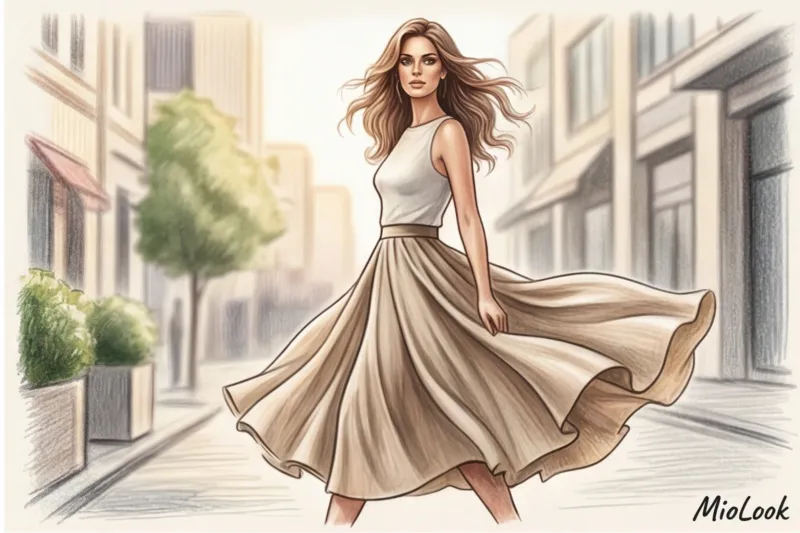
I prefer to rely on numbers rather than abstract "likes/dislikes" sentiments. Let's look at the material's objective characteristics.
Unconditional advantages:
- Hygroscopicity: Viscose absorbs moisture twice as well as cotton. It's the absolute winner in summer heat.
- Antistatic: Unlike polyester, viscose doesn't accumulate static electricity. Your dress won't stick to your tights.
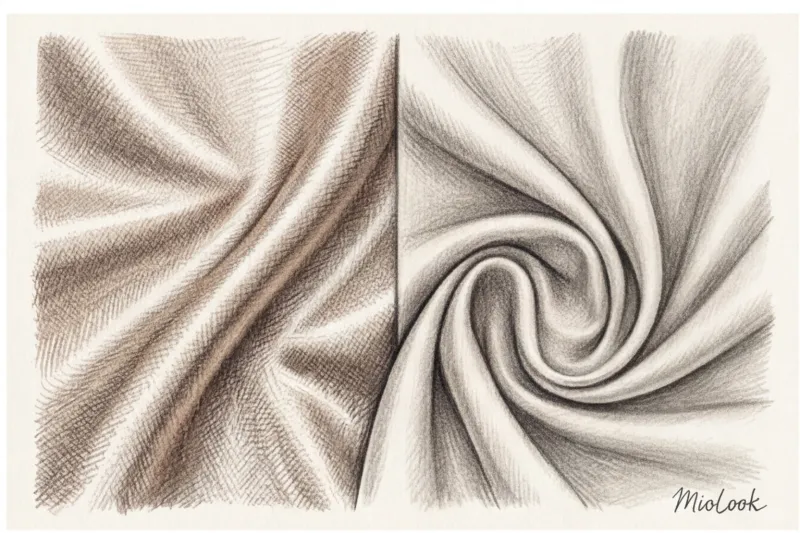
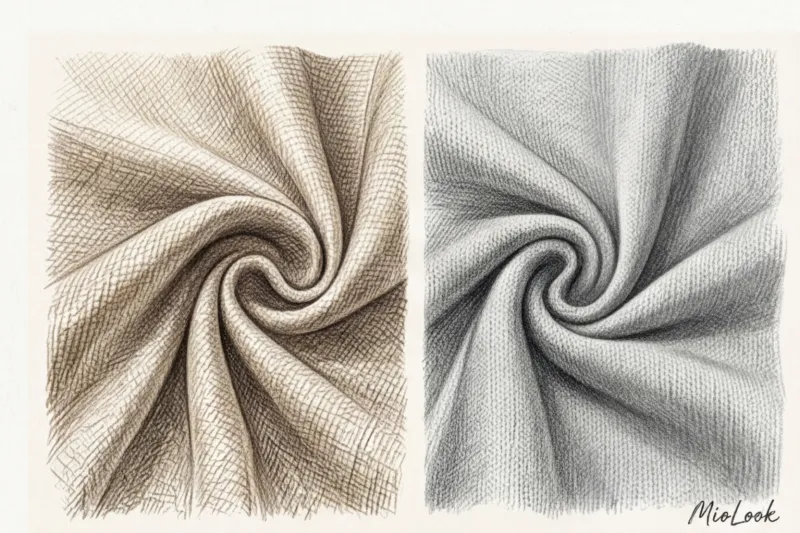
- Drapability: No cotton fabric will form such beautiful, heavy folds (drape effect) as viscose fabric.
But there are also critical disadvantages that manufacturers are silent about:
"The main weakness of standard viscose is its loss of up to 50% strength when wet. According to textile manufacturing standards, the fibers swell in water and become as brittle as paper. This is why machine spinning at 800-1000 rpm literally tears the fabric apart from the inside."
I personally conducted a crash test for one of my lectures: regular wet viscose from the mass market tears with the same force as a wet napkin. Modern brands solve this problem by creating HWM (High Wet Modulus) viscose or adding 5-10% polyester or elastane to the composition. This small synthetic additive acts like rebar in concrete, holding the fibers together.
Care instructions: how to wash viscose so it doesn't shrink two sizes
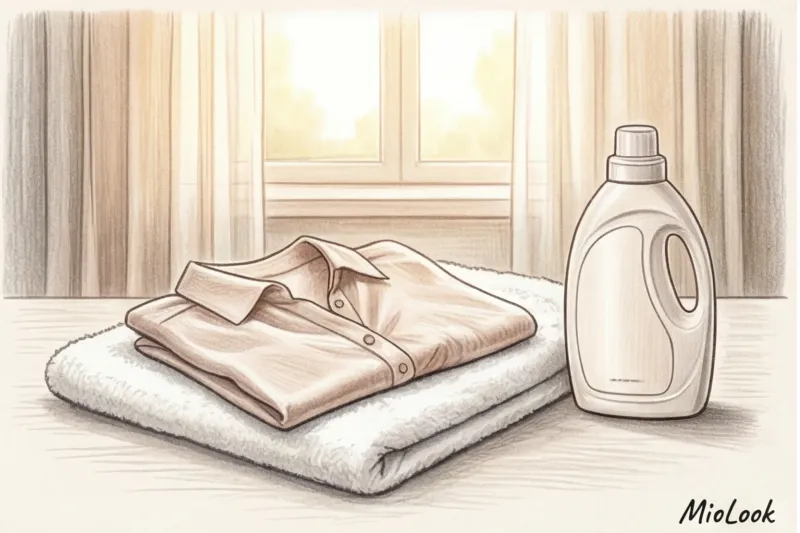
A stylist's golden rule: treat viscose not like indestructible cotton, but like capricious natural silk. If you remember this principle, your pieces will last for years.
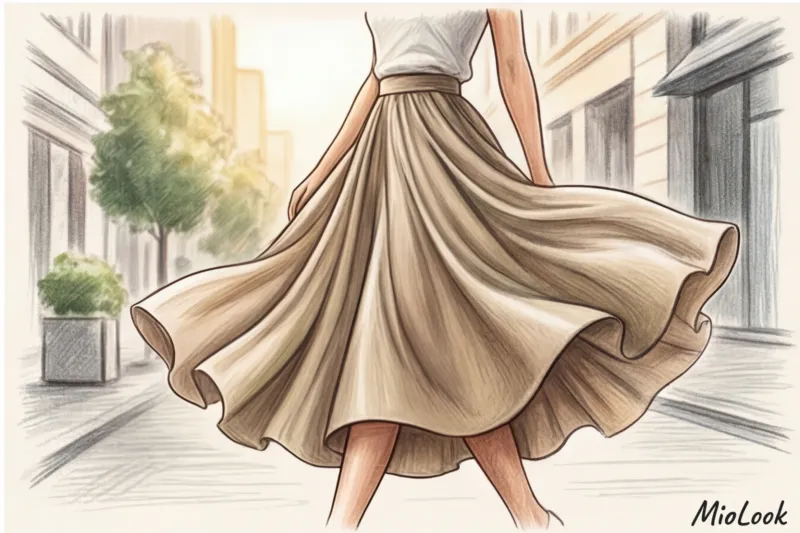
- Temperature conditions: strictly up to 30°C. Hot water causes wood fibers to contract irreversibly.
- No twisting: Remember the 50% strength loss? No manual twisting. Remove from water, place on a terry towel, roll into a roll, and gently press to absorb the moisture.
- Drying: Only hang horizontally (flat dry). If you hang a wet viscose dress on a hanger, the weight of the water will stretch it by 10-15 centimeters, distorting the armholes.
Actionable tip: What to do if an item has shrunk?
There's one effective way to salvage the situation. Lightly dampen the shrunken item with a spray bottle. Turn on the steam setting on your iron and iron the fabric from the inside out, gently but firmly stretching it with your hands in the desired directions. Cellulose fibers are flexible when heated with steam—you can restore 3 to 5 centimeters of lost weight.
Access to MioLook for €0.99 — one-time payment
A smart AI stylist will select the perfect look based on your preferences and wardrobe.
Get access — €0.99 onceViscose in a smart wardrobe: what's worth investing in?
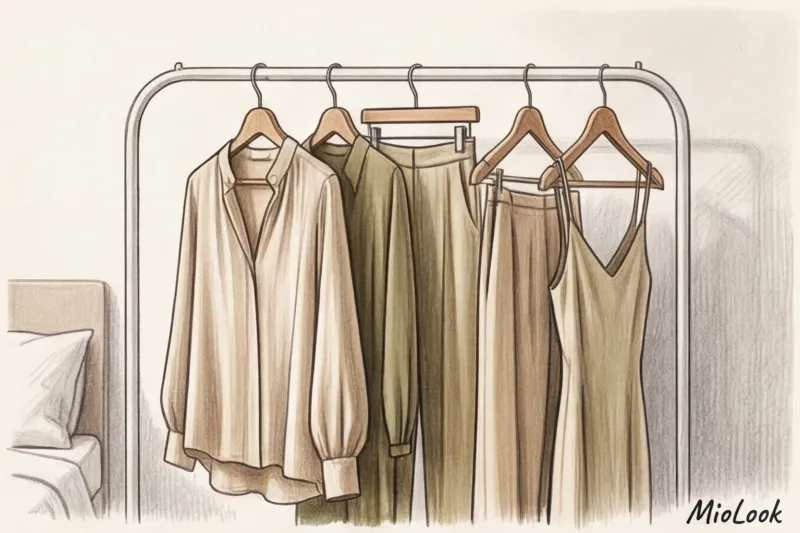
Not all viscose clothing is created equal. Let me clarify right away that when this material It doesn't work: These tight-fitting office pants are made from 100% viscose, no synthetics added. After two hours of sitting at your desk, you're guaranteed to have stretched-out "bubbles" on your knees. This is due to the physics of the fiber, which lacks springback.
But there are categories where viscose fabrics have no equal:
- Summer office capsule: Tencel blouses will keep you warmer in the heat than linen. They look more formal, don't wrinkle as much, and the cooling effect of the eucalyptus fiber works like a personal air conditioner. They're a great base if you're packing Summer business style clothing for women in the heat.
- Slip dresses: Cupro models are visually indistinguishable from natural silk, but cost three times less and do not require regular dry cleaning.
- Outerwear lining: The lining determines the style and comfort of a coat or jacket. Polyester creates a sauna-like effect, while viscose or acetate linings ensure the right microclimate and glide over the base layer.
By the way, digitalizing your wardrobe is a great way to show the real value of your items. When my clients start using the "smart wardrobe" feature in MioLook , they clearly see the metrics Cost Per Wear (cost per outing). A $150 premium lyocell blouse that you wear 50 times a season costs $3 per outing. A $30 cheap viscose top that shrank after the first wash costs $30 per outing. The mathematics of style are inexorable.
Checklist: Test-drive fabrics right in the fitting room
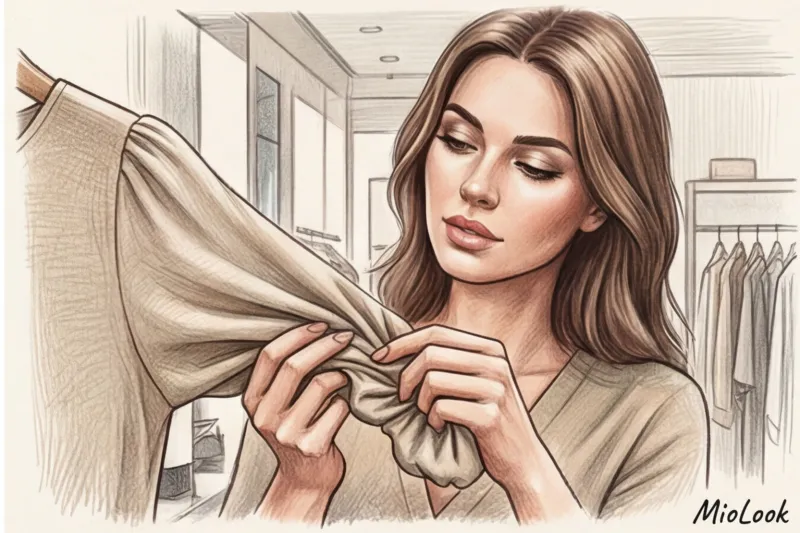
You don't need to carry a chemistry lab to distinguish good viscose from bad. Just perform three quick tests right in the store before you go to the checkout:
- Crash test for crumple: Firmly squeeze the edge of the garment in your fist and hold for 10 seconds. Release and shake. If the fabric has hard, distinct creases, the item will require constant ironing and will wrinkle under the car seat belt. A high-quality blend (for example, viscose and elastane) will straighten out almost instantly.
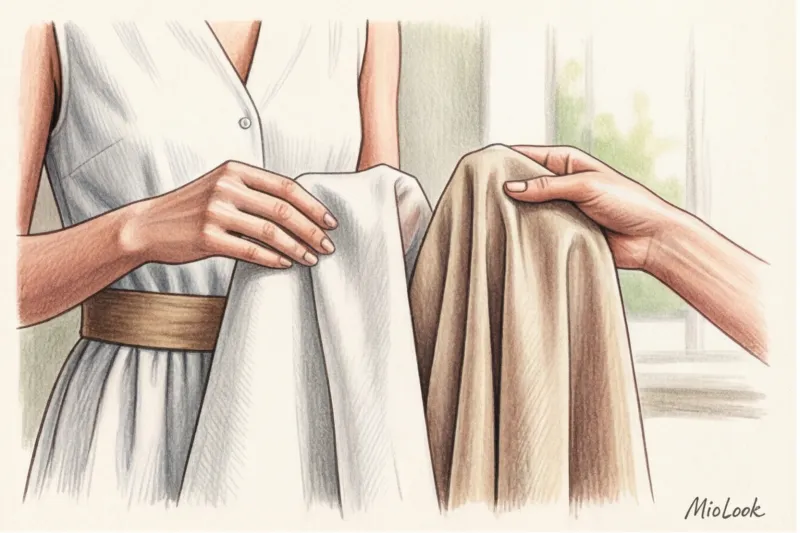
- Drape test: Fold up the hem or sleeve edge. High-quality viscose should be fairly heavy. It falls quickly and smoothly, creating vertical lines. Cheap viscose is lightweight, bulges, and stands up in awkward angles.
- Reading the label with passion: we don't buy into the faceless anymore 100% Viscose We are looking for high-tech keywords: Lyocell, Tencel, Modal, Cupro, EcoVero.
Viscose isn't a compromise between price and quality. It's a high-tech bridge between nature and science. By learning how to choose the right cellulose derivatives and care for them properly, you'll have a wardrobe that looks three times more expensive than it actually is, while maintaining absolute tactile comfort.