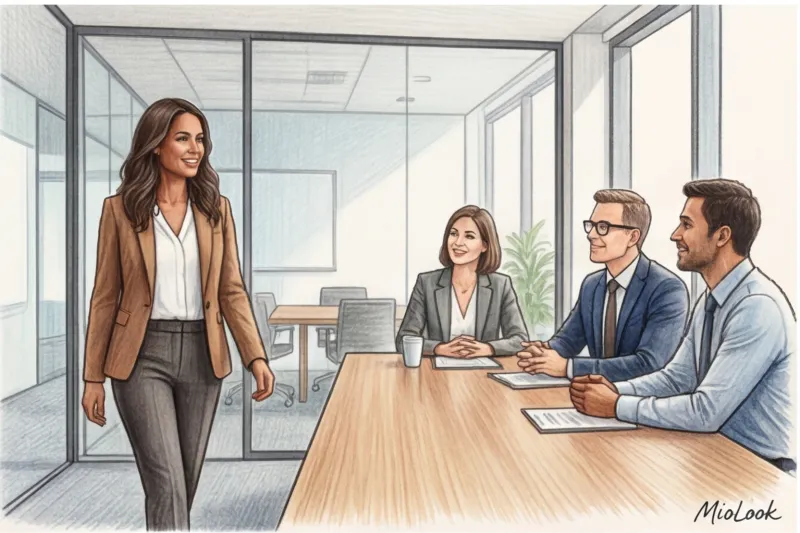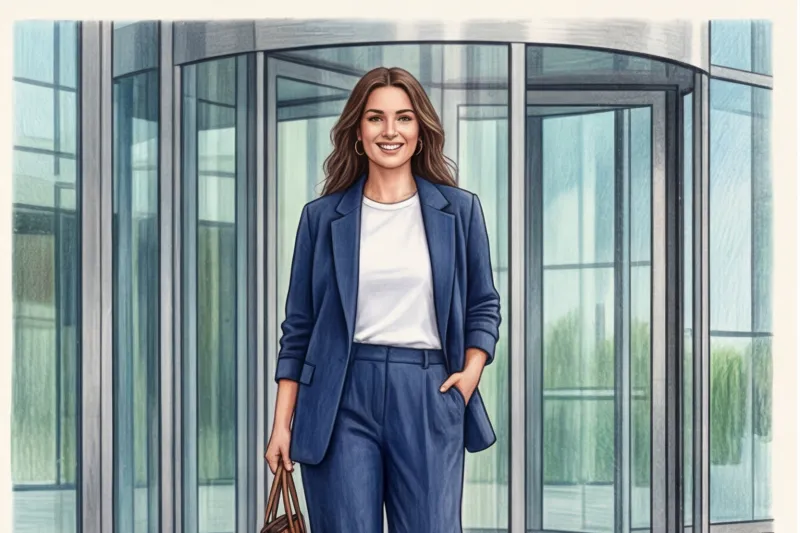
Three years ago, a client came to me—a brilliant marketer with an impressive portfolio. She had stellar performance in a test assignment at a promising IT startup, but after the final interview, she was rejected. The HR manager's response was, "She's too rigid; we're afraid she won't fit into our corporate culture." When we began to investigate, it turned out that she had arrived at the meeting with the guys in a hoodie and sneakers wearing a formal black three-piece bank suit and a white button-down shirt. Her clothes had created an invisible wall even before she could say "Hello."
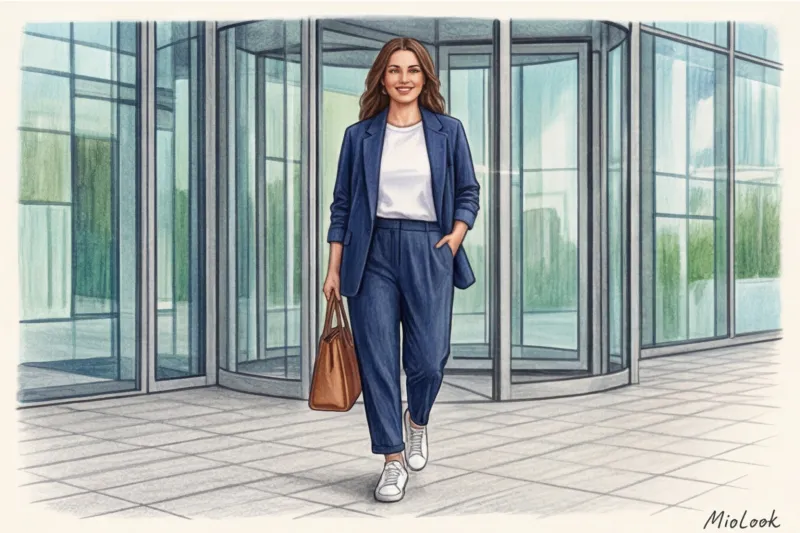
This case perfectly illustrates the main problem of modern recruiting. Today, the question of How should a girl dress for a job interview? , is no longer limited to buying a boring office suit. Clothing has become a powerful tool for nonverbal communication. You can convey flexibility, creativity, an analytical mindset, or... uncertainty and conservatism. We've covered how the boundaries of formality are changing in the modern world in our comprehensive guide: Business Dress Code for Women: From Formal to Casual In this article, I'll share specific formulas that will help you secure that coveted offer.
The Straight-A Student Syndrome: Why the "Black Bottom, White Top" Rule No Longer Works
Let's be honest: the classic "white shirt and black pencil skirt" combo is the worst choice for 80% of modern interviews. Unless you're applying for a government protocol job, this look will work against you. It conjures up images of a school exam, a service uniform, or an intern so terrified of making a mistake that they choose the safest (and most boring) path.
Recruiting agency data from 2024 shows that 65% of hiring managers make a decision about a candidate's "culture fit" within the first seven seconds of meeting them. While your brain is still formulating your greeting, the recruiter has already considered your silhouette, fabric texture, and color scheme. A stark black-and-white contrast is subconsciously interpreted as distance and inflexibility.
But clothing influences more than just who looks at you. In 2012, Northwestern University researchers H. Adam and A. Galinsky published a breakthrough paper, coining the term Enclothed Cognition (embodied cognition). They've proven that clothing literally changes our cognitive processes. If you wear a stiff, uncomfortable jacket that makes you feel out of place, your cortisol (the stress hormone) levels will physically increase. You'll start talking faster, fidgeting, and becoming confused. Therefore, stylish yet comfortable clothing is your personal bulletproof vest for an interview.
Access to MioLook for €0.99 — one-time payment
A smart AI stylist will find the perfect look for your next interview.
Get access — €0.99 onceThe main rule: how a girl should dress for an interview depending on the field
Forget about one-size-fits-all advice. What gets you a job at a law firm is guaranteed to ruin your interview at a creative agency. The basic formula for success is: Dress one level more formally than is customary in the company every day..
How do you find out what's customary there? Do a little research. Find the company on LinkedIn or look at corporate event photos on their social media. Pay attention to what the employees in the background are wearing (not just the management in staged photos). If everyone is wearing jeans and T-shirts, you're in the smart casual category. If they're wearing suits and ties, you're in the business casual category.
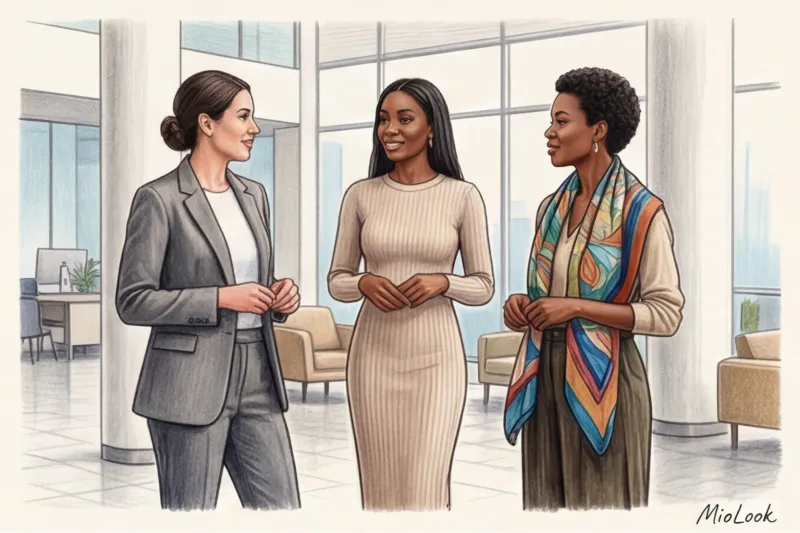
Conservative spheres (banks, law, public sector)
Business formal and strict business casual reign supreme here. Your goal is to convey reliability, respect for rules, and subordination. Choose structured jackets (with defined shoulders) and skirts that fall exactly to mid-knee or just below.
The best colors for a conservative environment are deep navy, graphite, and cool beige. Avoid bright prints. Speaking of brands, excellent patterns for such situations can be found at Massimo Dutti or 12 Storeez (in their classic lines). Invest in quality fabric: suiting wool with 2-5% elastane will hold its shape and won't wrinkle in a taxi.
Modern Business and IT (Tech, Marketing, Management)
Smart casual is ideal for these areas—a balance between relaxed and composed. You should look as if you're ready to sit down at your laptop and tackle a challenging task, but you should also respect your conversation partner.
A great technique: combining a structured top (for example, a straight-cut blazer) with casual bottoms. However, there is an important limitation here: This trick doesn't work if you're wearing ripped, distressed, or overly skinny jeans. Jeans should be thick, solid-colored (navy, black, or ecru), and straight-leg. Texture plays a huge role: thick knits, high-quality cotton. It's best to swap stilettos for classy loafers (COS or & Other Stories always have excellent basic styles).
Creative Professions (Design, Media, Fashion)
In the creative industry, your clothes are part of your portfolio. They demonstrate your keen eye, understanding of proportions, and awareness of current trends. A classic gray suit would seem dull and uninspired.
Use accent details: complex asymmetrical cuts, monochrome looks in unusual shades (for example, a total look in dark chocolate), and interesting geometric accessories. But be careful: avoid being overly outrageous. Your clothes shouldn't overpower you or distract from your professional skills. You're selling your brain, not performing at Fashion Week.
The Psychology of Color: What Your Outfit Says to Your HR Manager
Color is the first signal the human eye detects. By choosing a palette for an interview, we literally program how we'll be perceived. According to research on the psychology of color in corporate environments, different shades evoke very specific associations.
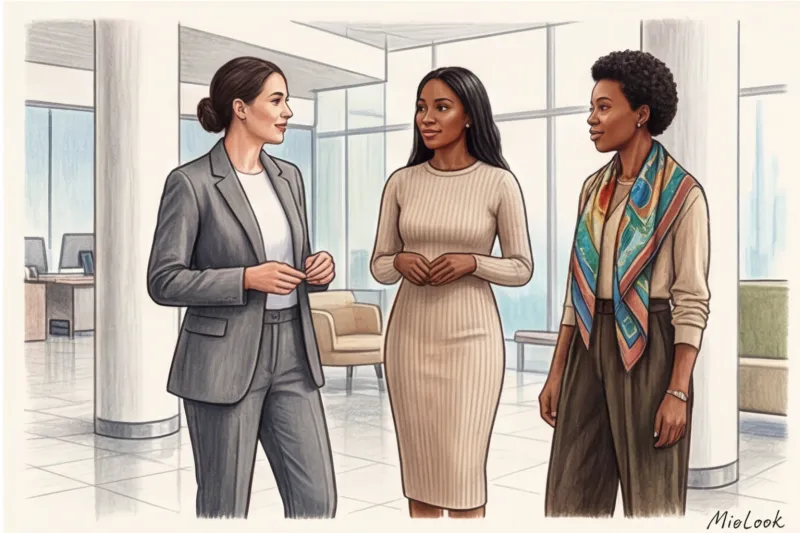
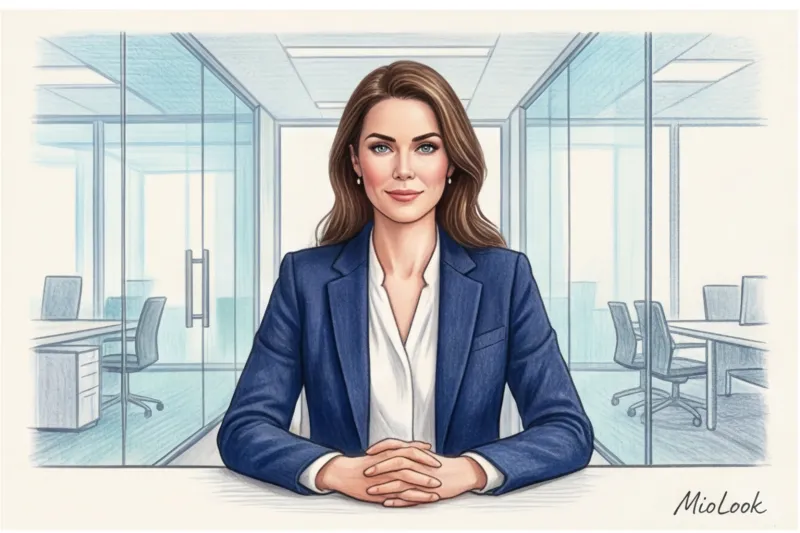
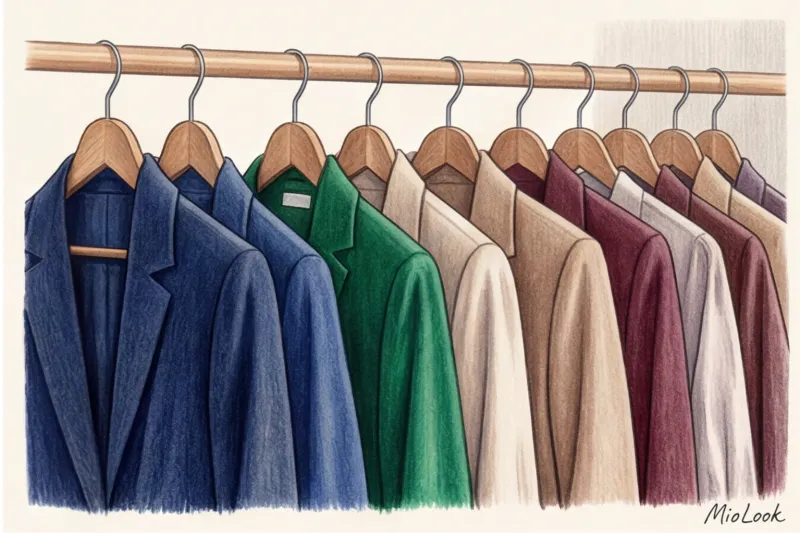
- Deep blue (Navy) — is the absolute champion. It's the color of trust, logic, calm, and teamwork. If you're unsure what to wear, choose a dark blue suit or jacket. In my experience, this color ensures maximum trust 90% of the time.
- Emerald and olive — convey calmness, but also hint at creativity and out-of-the-box thinking. An excellent choice for marketers and PR specialists.
- Gray and beige — the colors of analysts, financiers, and IT specialists. They speak of reliability and structured thinking.
What should you avoid? Bright red near the face is subconsciously interpreted as aggression and dominance. Unless you're applying for a crisis management position, red is best reserved for accessories. I also don't recommend pure black near the face. Firstly, it creates distance. Secondly, black casts harsh shadows on the face, highlighting signs of fatigue and lack of sleep (which is common before an interview). If you want to use dark shades, choose them based on your contrast ratio, as we discussed in the article. 12 Color Types of Appearance: A Guide to Choosing a Palette.
Mistakes That Cost You an Offer: A Stylist's Checklist
Over 12 years of working as a stylist, I've developed a mandatory fitting step before important events, which I call the "sit-down test." Most women assess their look standing in front of a mirror. But at an interview, you'll be sitting! Sit down in front of a mirror right now and check the following points.
Wrinkle-prone fabrics. If your suit is made of 100% viscose or thin linen, after just 15 minutes of waiting in the reception area, your trousers will develop creases resembling an accordion. You'll look unkempt. Choose blended fabrics or heavy cotton (at least 180 g/m²).
"Noisy" decorations. Have you ever noticed how annoying it is when someone constantly jingles their bracelets while gesturing or typing on a laptop? Chunky metal bracelets clanging on the table can unsettle even the most calm recruiter. Leave behind minimalist stud earrings and watches.
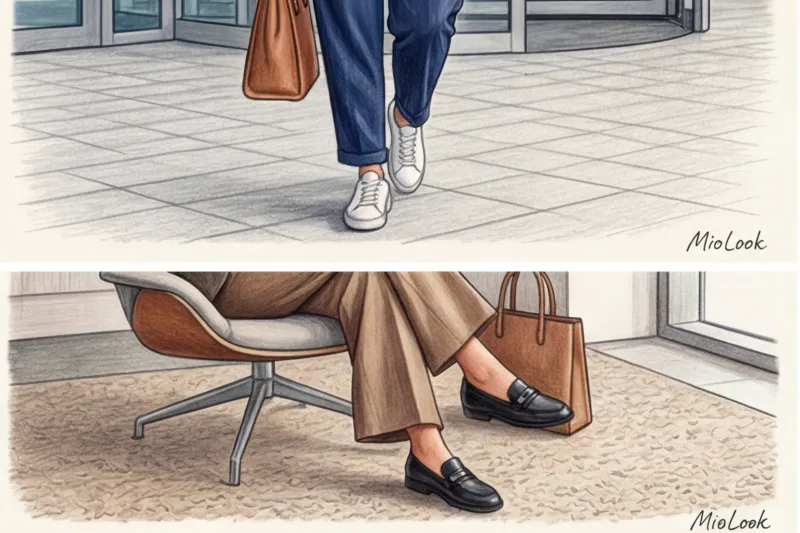
Uncomfortable shoes. I often see women wearing new shoes to interviews. This is a fatal mistake. The micro-pain in your feet instantly changes your facial expression. A tense crease appears between your brows, and your tone becomes harsher. The recruiter might think you're reacting negatively to their questions, when in fact, you're just experiencing heel pain.
Treacherous cutouts. Use the "three-finger" rule: the neckline of your blouse shouldn't drop lower than three finger widths from your collarbone. Check to see if your shirt spreads across your chest when you take a deep breath, and if your skirt rides up too high when you cross your legs.
Your perfect look starts here
Join thousands of users who look flawless every day with MioLook.
Get access — €0.99 onceReady-made formulas from the mass market: creating a status image
You don't have to spend a fortune on luxury brands to look like a high-end professional. The key is the right cut, thick textures, and trendy silhouettes. Here are three foolproof formulas that are easy to find in European mass-market clothing.
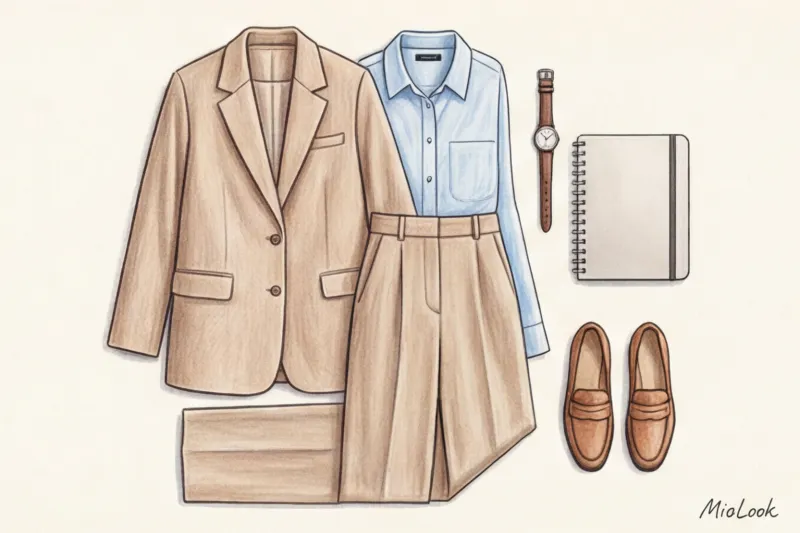
- Formula 1: Relaxed pantsuit + basic T-shirt made of thick cotton + loafers.
Ideal for IT and modern business. The suit shouldn't be too tight—there should be some air between you and the fabric. The T-shirt should be thick and have a well-shaped round neckline. - Formula 2: A-line midi dress + structured jacket + kitten heels.
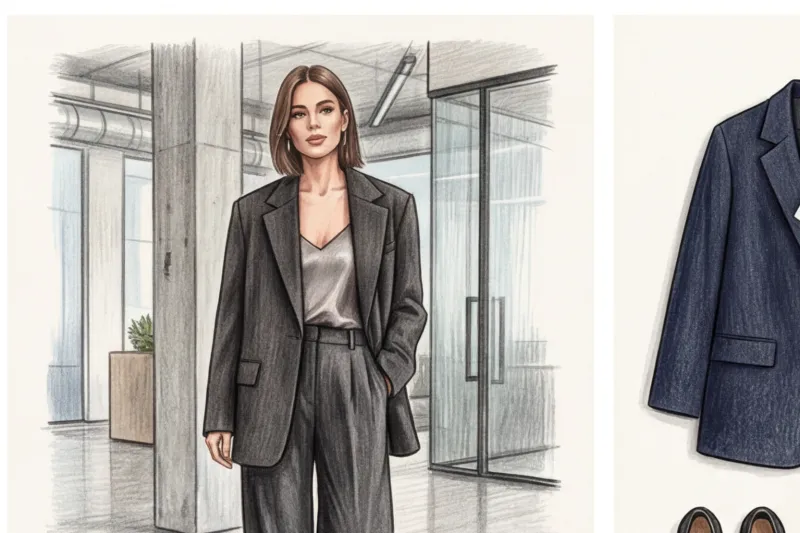
A great option for those who prefer a feminine style but want to maintain a business-like edge. A jacket will pull the look together and add just the right amount of toughness. - Formula 3: Wide-leg trousers with pleats + cashmere or merino jumper + minimalist jewelry.
The most comfortable, yet still classy option. It's made possible by the luxurious texture of wool.
"It's not the brand that makes a garment look expensive, but how it holds its shape and fits your figure. A tailored, heavy-duty, blended jacket for 100 euros will always outshine a wrinkled, luxury jacket for 1,000 euros."
Speaking of specific brands: be wary of basic jackets from Zara. They often have a 100% polyester lining, which acts as a greenhouse—you'll get very hot in stressful situations. It's better to consider H&M's Premium line (they often feature excellent wool blends) or COS. Yes, COS is a bit more expensive, but their architectural cut and quality fabric (value for money) will allow you to wear this jacket for at least five years.
Online interview (Zoom/Skype): specifics of the personnel
Since the pandemic, about 70% of initial interviews have moved online. And here, too, come some rather tricky rules. The "half-length portrait" rule applies: all attention is focused on your face, shoulders, and décolleté. Your top must be flawless.
The main enemies of online interviews are pinstripes, ribbed prints, and houndstooth prints. On camera, these prints create a "moiré effect"—an optical illusion that makes the fabric appear to ripple and flutter, causing physical dizziness in the interviewee. Choose only solid colors.
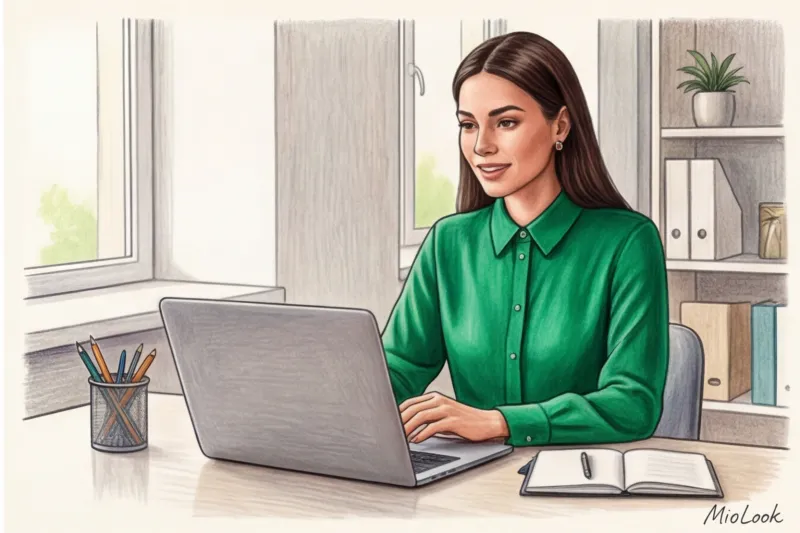
Consider the lighting from your monitor. The cool light from your screen makes pale pastel shades (light beige, pale pink) visually blend with your skin. You risk looking naked. Opt for rich colors like emerald, sapphire, and terracotta.
And last but not least: never sit in your pajama pants, even if you're sure you won't have to get up. Back to the concept. Enclothed Cognition You can't fool your brain: if you're half-dressed in your pajamas, your speech, posture, and concentration will be relaxed. Dress fully, including your shoes (at least loafers instead of slippers).
Action plan 24 hours before the interview
The morning before an interview is the time to review your accomplishments, not frantically search for clean tights. Prepare everything the night before.
- Check the weather. There's nothing worse than arriving at a meeting sweaty from a sweater that's too warm or with your teeth chattering from the cold. Think about your layers.
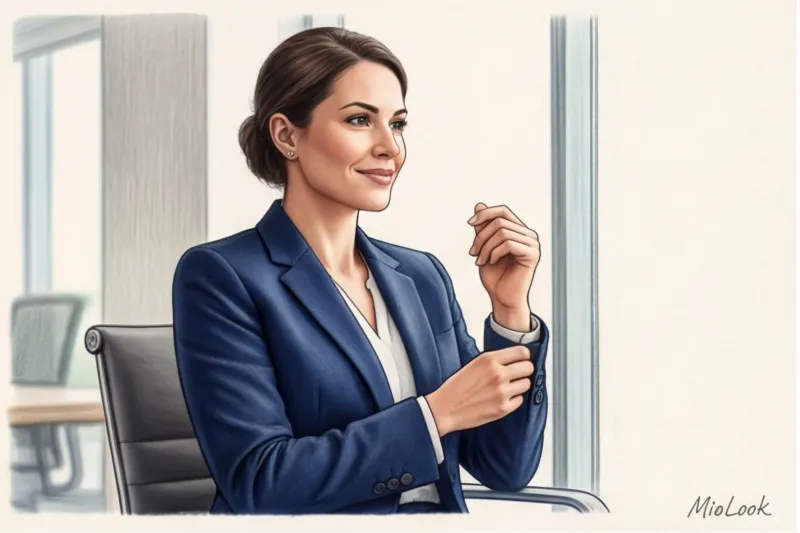
- Prepare your things. Steam the jacket (an iron can leave marks on the fabric; a handheld steamer is your best friend). Go over it with a lint roller. Check that all the buttons are secure.
- Pack your bag. It should be rigid enough to accommodate a printed A4 resume (without folding it), a notepad, a pen, a bottle of water and a spare pair of nylon tights (if you're wearing a skirt, a run may appear at the very last second).
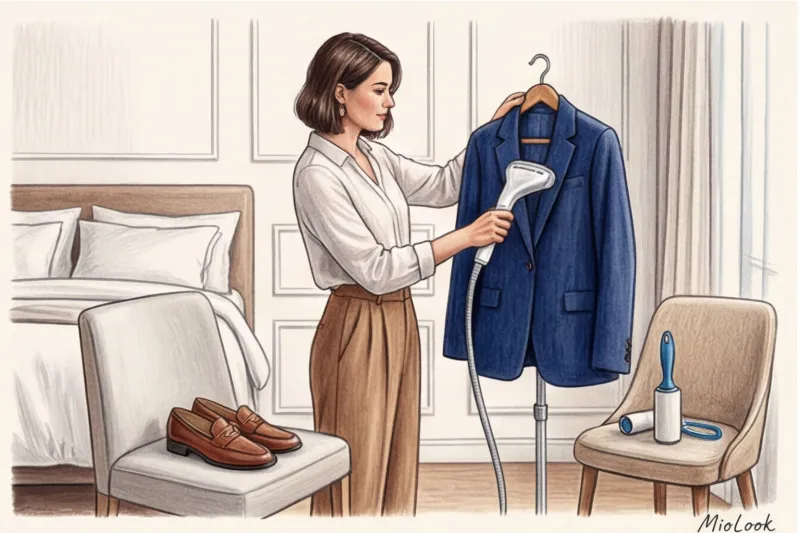
By the way, in order not to waste time wondering “does this jacket go with these trousers?”, I recommend using MioLook app You can upload your business items in advance, and a smart algorithm will help you create the perfect look, taking colors and proportions into account. It works like your own personal stylist.
Clothes won't get you the job, but they can ensure you're heard. View your appearance not as a tedious chore, but as a strategic impression management tool. Choose an outfit that makes you feel like an expert, prepare it the night before, and during the interview itself, allow yourself to forget about your appearance and focus entirely on your professional achievements.