Clients often come to me with the same question: "Emily, I look too tough. People are afraid to approach me, and my subordinates don't ask unnecessary questions." I particularly vividly remember Anna, the HR director of a large IT company. During interviews, candidates were withdrawn, nervous, and gave monosyllabic answers. We analyzed her wardrobe: black structured jackets, peak lapels, contrasting white shirts. A classic Ruler archetype, literally screaming, "I'm in charge here, and you're being interrogated."
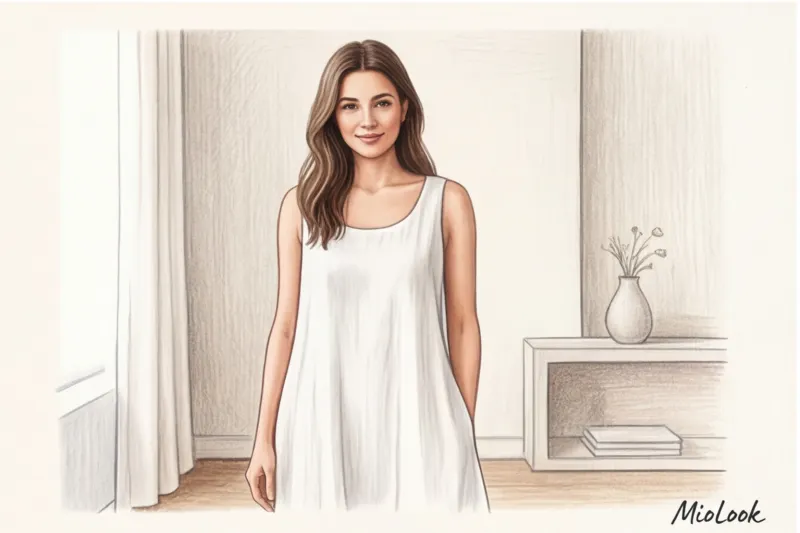
I proposed an experiment: to implement child archetype in clothing style , but without a single ruffle, floral print, or pink bow. We simply replaced rigid shapes with soft tailoring, and black with shades of ecru and sage. The result? A month later, Anna noted that interviews became 40% warmer, and candidates were more willing to share real-life case studies. We wrote more about how clothing influences impressions in our a complete guide to archetypes in style and expertise.
What is the Child (Innocent) archetype in clothing style and why does your brand need it?
Carol Pearson's system of 12 archetypes is often perceived as something esoteric, but for me, as a stylist, it's a purely utilitarian branding tool. The Child archetype (also known as the Simple or Innocent) isn't about age. It's about conveying optimism, honesty, openness, and ease.
Have you noticed how the tone of a conversation changes when the person you're talking to is wearing something soft and light? A 2023 study by the WGSN trend bureau found that people wearing light, natural colors are perceived as 35% more open to conversation within the first seven seconds of a meeting. Our brains interpret the absence of sharp edges and dark colors as a visual shortcut: "This person is safe, trustworthy, and has nothing to hide."
"The Innocent archetype is ideal for psychologists, HR specialists, pediatricians, coaches, and anyone whose work is based on empathy and reducing anxiety in clients."
But there's an important caveat here. This doesn't work if you have a strict corporate dress code at the Business Best level (for example, in investment banking or government). There, being too relaxed can be perceived as lacking a backbone. If you work in a modern environment, this archetype will become your secret weapon. If you haven't yet decided on your base, check out our A guide to finding your personal style.
Anatomy of Style: What the Child Archetype Looks Like in Modern Clothing
In my experience, the biggest mistake when creating this look is trying to buy "cute" items. In reality, we create the Simple-minded look not through specific wardrobe items, but through their physical characteristics: eschewing complex, restrictive designs in favor of total comfort.
Fabrics and textures: a focus on naturalness
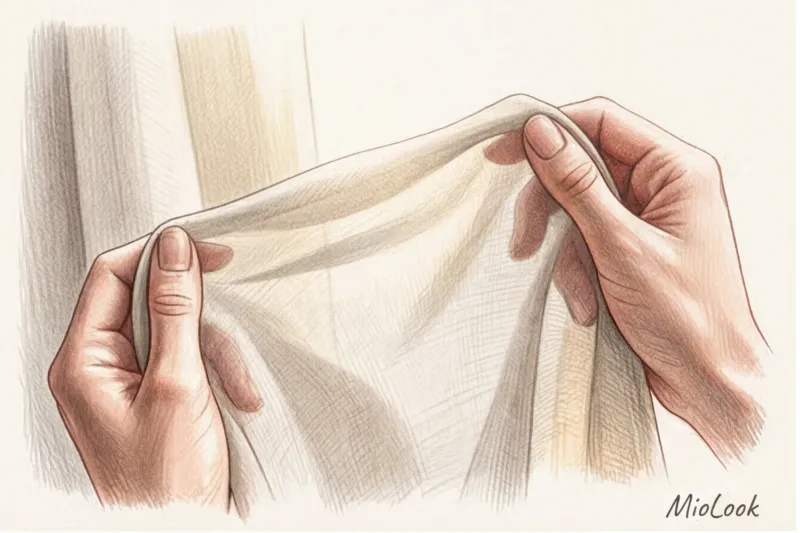
Clothes should look and feel like you want to touch them. No stiff polyester, squeaky synthetics, or shiny leather.
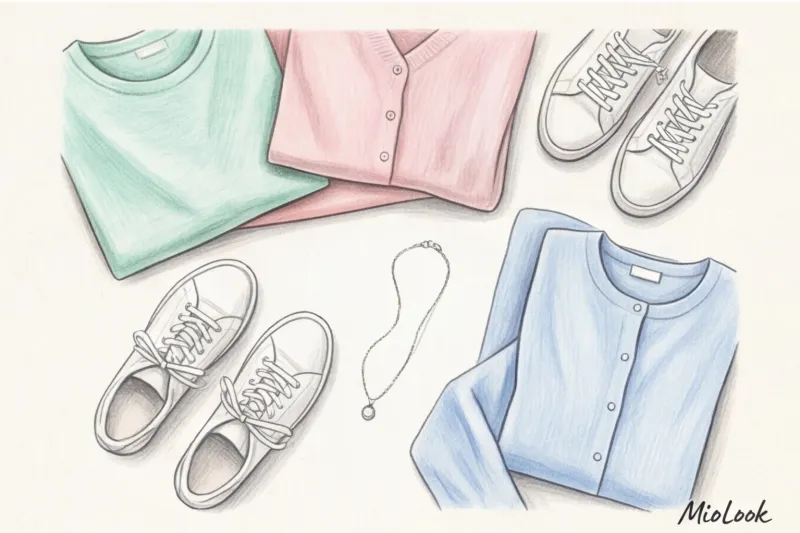
- Cotton: Choose a thick one (from 180 g/m²) so that the item keeps its shape but remains soft.
- Linen and muslin: Their slight wrinkles convey a relaxed attitude and a rejection of perfectionism.
- Knitwear: cashmere, merino, blended yarn with added silk.
Palette: light and air
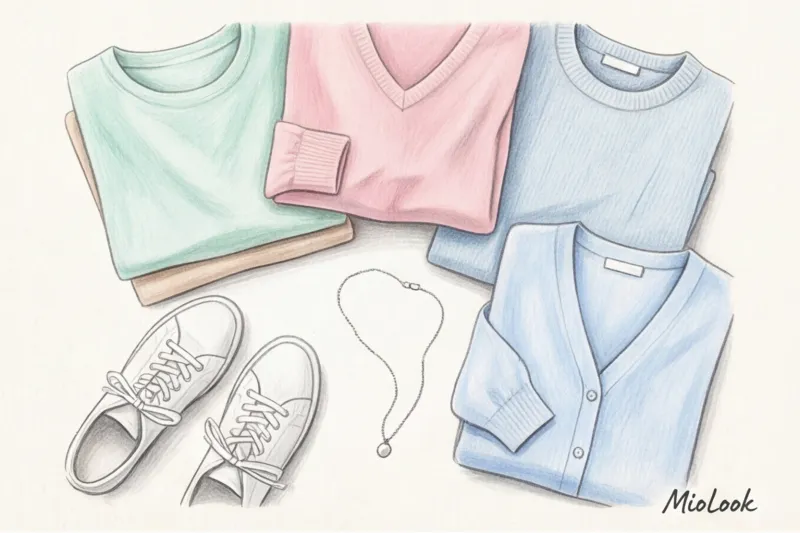
Color is the fastest way to activate the desired archetype. According to the Pantone Color Institute, pastel colors physiologically reduce stress levels in the viewer.
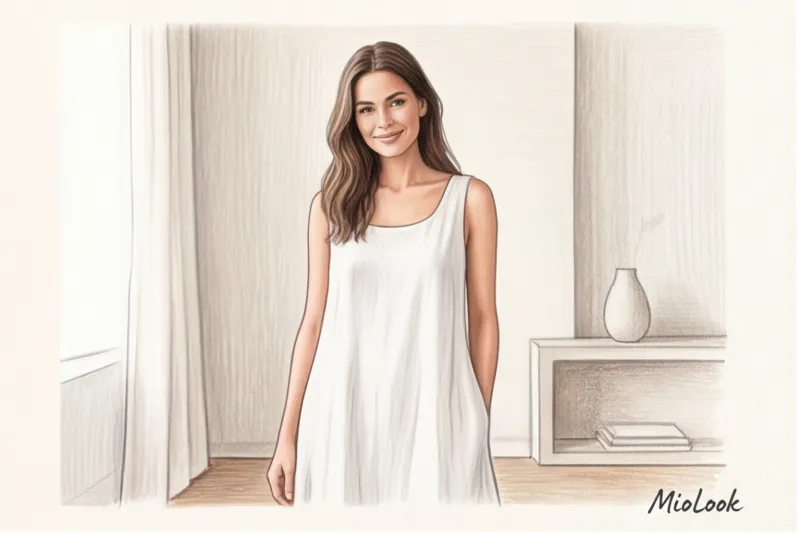
The Simple-minded base is built on a predominance of light shades: milky, ecru, warm beige, and oatmeal. Accents are added through pastel shades: soft blue, mint, and powder. The main rule is to avoid sharp contrasts. No aggressive black-and-white color blocking. If you need a darker color for the bottom, choose graphite, taupe, or deep chocolate.
Cut and details: freedom of movement
Forget about stiff shoulder pads, corset inserts, and tight, breathable fits. Silhouettes should be loose, flowing, or semi-fitted. A-line silhouettes, dropped shoulders, and soft tailoring are recommended. Hardware should be minimal: buttons that match the fabric, hidden zippers, and no studs or bulky metal buckles.
Your perfect look starts here
Join thousands of users who look flawless every day with MioLook.
Get access — €0.99 onceThe Main Myth: Why the Child Archetype Isn't Infantile
Let's be honest. When I mention the phrase "Child archetype," nine out of ten clients turn pale and say, "Emily, I'm 35 years old, I won't be wearing Peter Pan collar dresses or T-shirts with bears on them." And they're absolutely right!
This is the biggest misconception in style. You don't need naive romanticism to convey openness. Want counterintuitive insight? Scandinavian minimalism is 100% the Child archetype in an adult, intellectual interpretation.
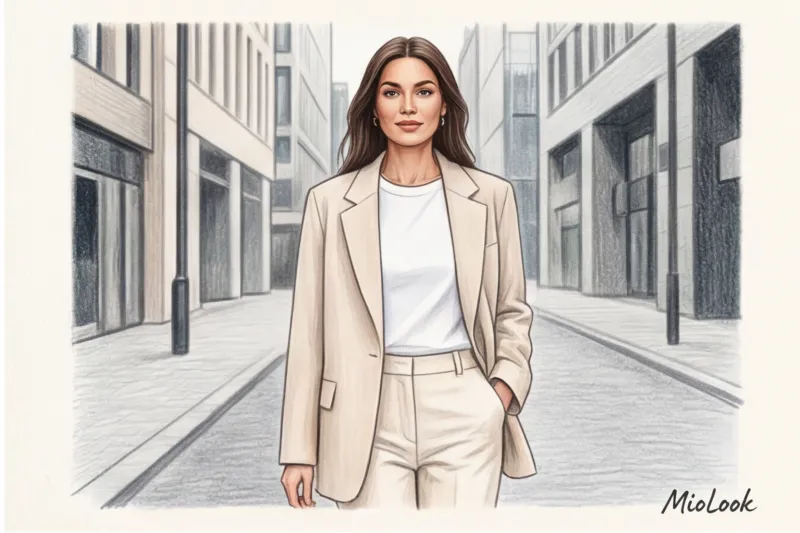
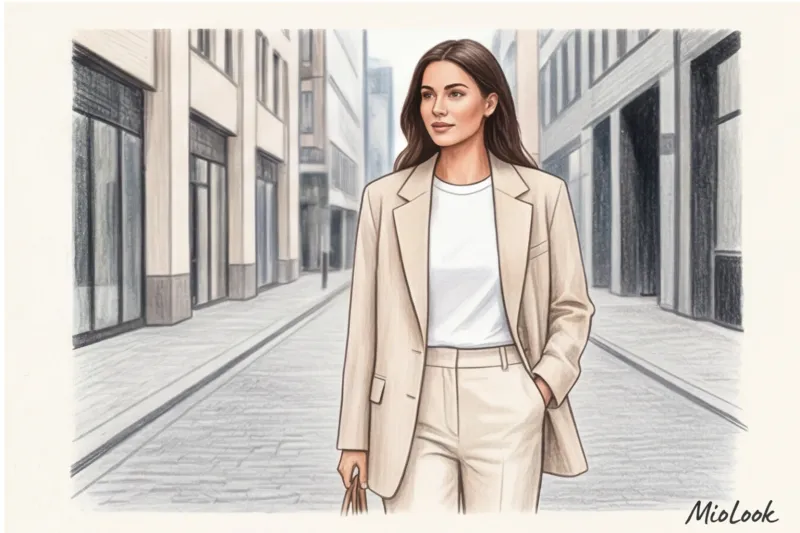
Take a look at the collections of brands like COS, Arket, or Massimo Dutti. Clean lines, organic cotton, basic white tees, straight-leg light-wash jeans, and comfortable sneakers. This is the image of a person who doesn't need to prove anything with complicated cuts or logos. They are honest, simple, and open to the world. A basic white tee with beige pleated trousers will convey your sincerity far more than a floral print dress.
How to incorporate the Child archetype into your business wardrobe (without losing credibility)
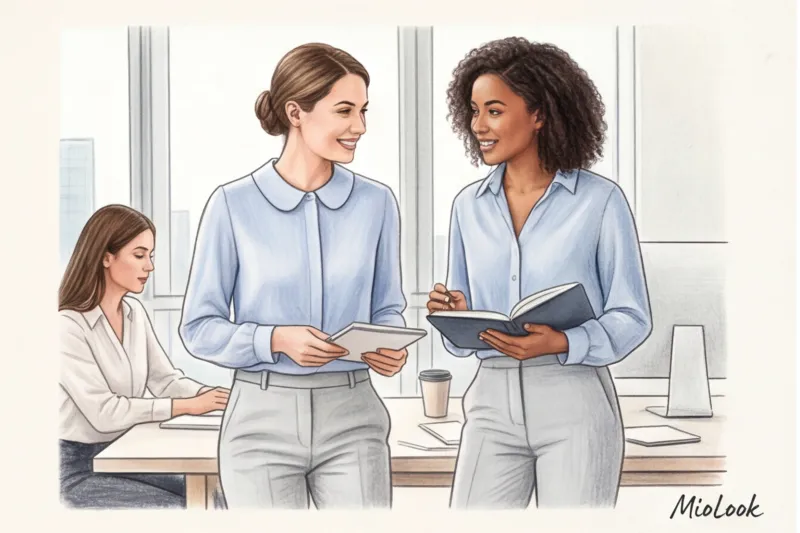
Integrating the Simpleton into the office is a balancing act. We need to maintain professionalism while toning down the formality. The secret lies in alternating textures while maintaining a businesslike silhouette.
For example, instead of a classic stiff wool suit jacket, wear a tightly knit cardigan that holds its shape or an unstructured blazer. Swap a crisp white shirt for a cream-colored silk blouse or a thin cashmere jumper. And the easiest way is to wear light-colored shoes. Beige loafers or minimalist white sneakers instantly make the look friendlier than black stiletto pumps.
Smart Casual Office Look Formulas
To save you the headache in the morning, I've put together three foolproof formulas that work for Friday dress codes or offices with relaxed rules:
- Formula 1: A loose-fitting trouser suit in a cream or sand color, paired with a basic white T-shirt and white leather sneakers. Perfect for meetings with creative teams.
- Formula 2: A-line midi skirt made of thick viscose + thin jumper in a pastel shade (for example, dusty blue) + suede loafers.
- Formula 3: A midi-length shirt dress made of thick cotton + a thin caramel-colored leather belt + minimalist stud earrings.
Access to MioLook for €0.99 — one-time payment
A smart AI stylist will select the perfect look for the office and meetings.
Get access — €0.99 onceSmart Wardrobe: How to Manage Light-Colored Items with the MioLook App
I'm always honest with my readers: a light-colored wardrobe has one huge downside. Items require frequent washing, quickly lose their shape, and wear out. I tracked my "light capsule" for six months and realized that constant mirror fittings (when you try on a white silk blouse, realize it doesn't go with your pants, and take it off) critically shorten the lifespan of delicate fabrics.
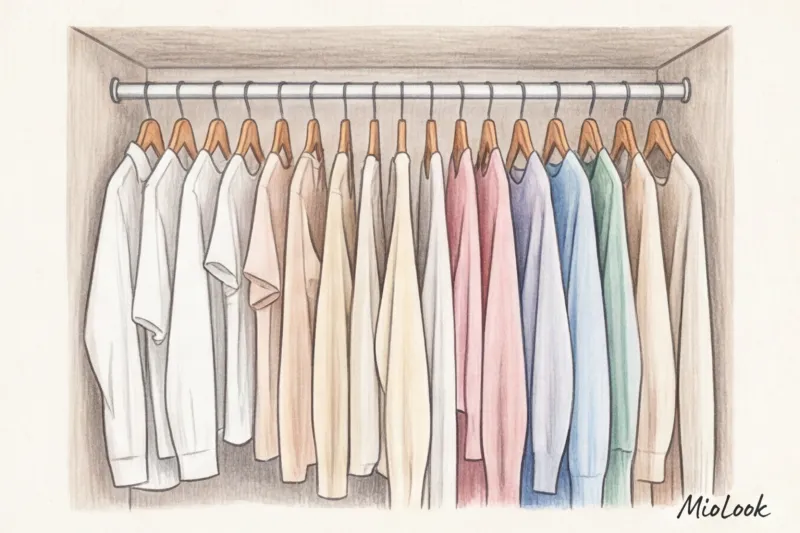
That's why I use Simpleton's wardrobe management MioLook The idea is that you take a photo of your light-colored items once, upload them to the app, and then create your looks in the virtual fitting room. You don't end up with foundation staining your collars during endless morning changes.
What's more, you can create a separate "Trust/Innocent" capsule in the app. When you have a difficult conversation with a coworker or a meeting with an anxious client, simply open this capsule on your phone and select a ready-made, tried-and-true look. And the Cost Per Wear tracking feature will show you whether it's worth investing in expensive white cashmere or whether high-quality cotton is better.
Checklist: 5 Steps to Adding the Child Archetype to Your Style
Ready to give it a try? No need to rush to the store and buy half the aisle. Start small—here's a practical action plan you can implement right this evening in front of your closet.
- Step 1: Conduct a micro-audit. Put away the 20% most “stiff” items: leather leggings, jackets with sharp shoulders, shirts with stiff collars.
- Step 2: Add light to the face. Find three basic items in your wardrobe that are white, off-white, or beige (a T-shirt, a long sleeve, a turtleneck) and place them in the most visible place.
- Step 3: Change your shoes. Replace one pair of formal black shoes with comfortable light-colored loafers, brogues, or neat sneakers.
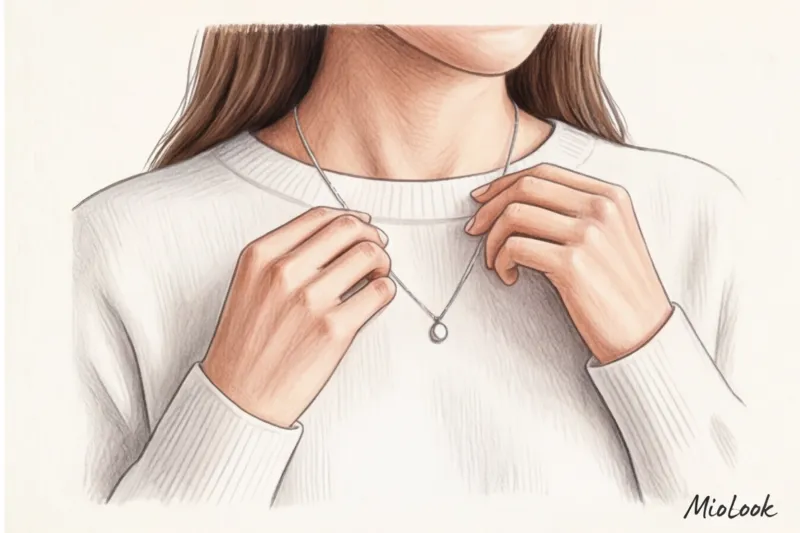
- Step 4: Simplify accessories. Avoid chunky chains, large stones, and geometric patterns in favor of thin chains, small pearls, or no jewelry at all.
- Step 5: Digitize the result. Collect 3-4 new light images and save them in MioLook to reinforce the habit of choosing softness over armor.
The Child archetype teaches us one important thing: true confidence doesn't require rigid boundaries and dark colors. Sometimes the strongest position in negotiations is to allow yourself to be open, relaxed, and authentic. Try incorporating a light palette next workweek, and you'll be surprised how much easier it becomes to negotiate with people.