I remember standing a few years ago in the midst of the buzzing workshop of a family-owned shoe factory near Milan. The air was thick with the almost tangible scent of expensive leather, glue, and hot wax. An old master was showing me the intricate construction of the Goodyear Welt stitching and uttered a phrase that forever changed my approach to styling: "A woman in high heels demands admiration, but a woman in good Oxfords demands respect.".
Conventional wisdom dictates that femininity means heels, thin straps, and delicate lasts. But after 14 years as a personal stylist, I've learned otherwise. Nothing accentuates the fragility of a woman's silhouette like well-chosen, authentically masculine shoes. We've already discussed global footwear macrotrends in more detail in our The complete guide to shoe trends: stylish styles for a modern look Today, we'll cover the basics: how to wear formal shoes so they work for you, not against you.
Investing in the Basics: Why Men's Shoes Make a Woman's Look More Expensive
Let's be honest: microtrends come and go. Last season, everyone was crazy about puffy clogs, this season, it's fishnet ballet flats. But classic masculine shoes aren't about fashion; they're about style and a long-term investment in your wardrobe.
The Italian school of styling has an unspoken rule of contrast. Its essence is simple: to make an outfit more sensual, add an element of formality. Classic menswear shoes provide the perfect base for this technique. They ground flowing silk skirts, tame the aggressiveness of leather trousers, and add a touch of class to simple straight-leg jeans.
"Shoes define who you are. You can wear a basic white T-shirt for €10 and vintage jeans, but if you're wearing high-quality leather brogues, the whole look automatically elevates to the premium segment."
Besides, it's pure math. According to brand statistics, classic penny loafers assembled using Blake Construction or Goodyear Welt (with a stitched sole) last, on average, 4-5 times longer than ultra-fashionable glued-on options with foam soles. A one-time investment of €200-€350 covers your mid-season essentials for years to come.
Understanding the terms: loafers, oxfords, derbies, and brogues
Before integrating these styles into your wardrobe, let's clarify who's who. Often, mass-market stores confuse the names, making it difficult to create the right silhouette.
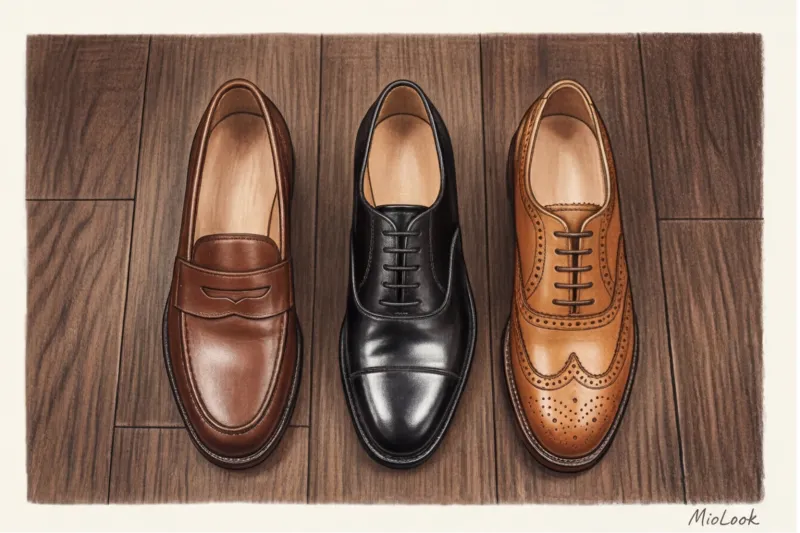
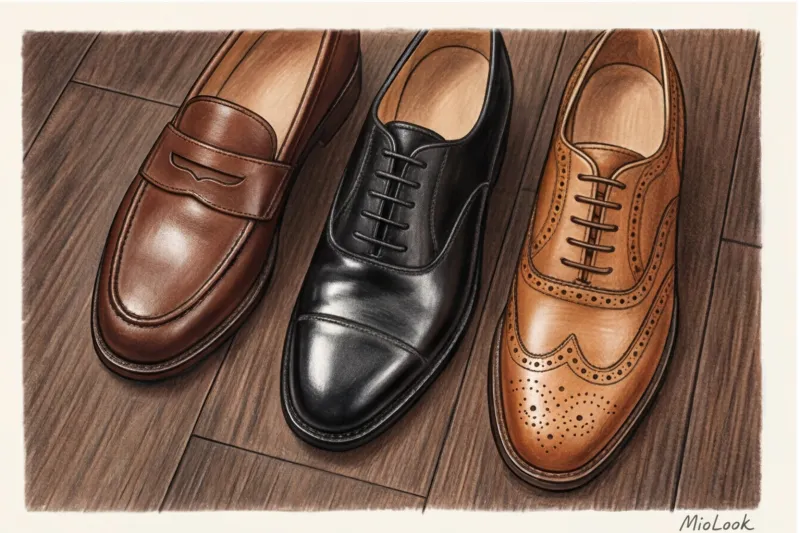
- Oxfords — shoes with closed lacing. That is, the side parts (the uppers) are sewn on under front part (vamp). This is the most formal and formal type of shoe.
- Derby - shoes with open lacing. The side parts are sewn on on top front part.
- Brogues Brogues aren't a specific type of shoe, but a decorative feature (perforations, holes). Both Oxfords and Derbies can be brogues. The more perforations, the less formal the shoe.
- Loafers — slip-on shoes with a stiff sole and a small heel. A balance of relaxed and classy.
Advice from practice: If you have a high instep (a common problem among my clients), don't even try wearing formal Oxfords. Closed lacing simply won't provide the necessary volume, and you'll suffer. Derbies are your ideal choice. Open lacing allows you to adjust the width, ensuring your feet will be comfortable all day.
Tired of racking your brains over combinations?
Upload photos of your clothes to MioLook, and a smart AI stylist will instantly suggest dozens of stylish looks for every day.
Get access — €0.99 onceWomen's Loafers: What to Wear and How to Avoid the "Schoolgirl" Effect
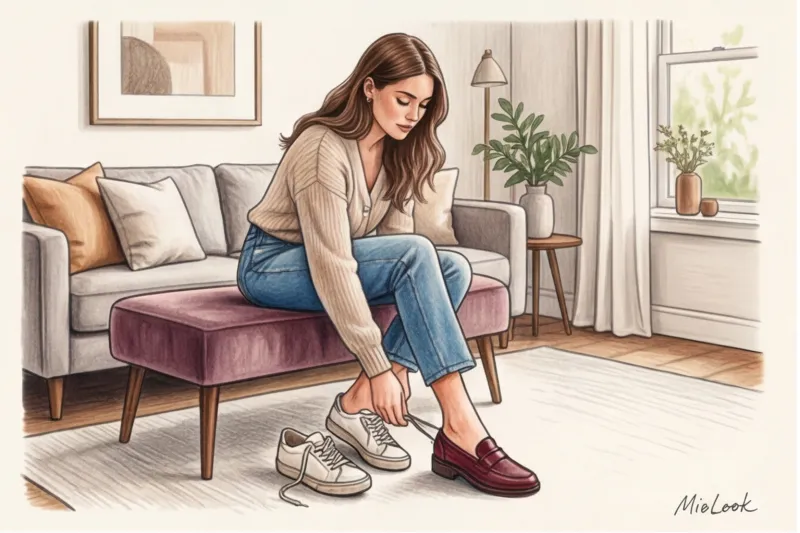
When clients ask me, "Olena, what should I wear with these classic women's loafers to avoid looking like a straight-A student?" I always have one answer: avoid literal pairings. If you wear loafers with a pleated skirt, a white shirt, and a vest, you'll end up with a preppy-style costume. It's cute, but not always appropriate for a grown woman.
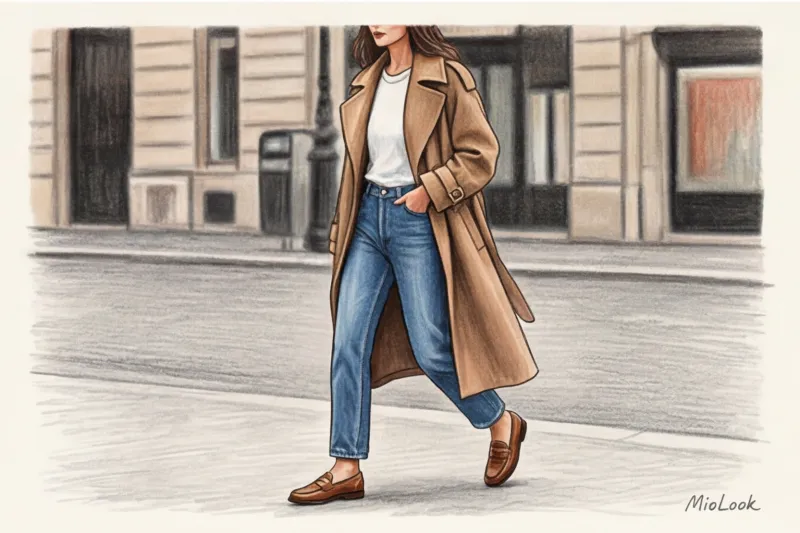
Here are three surefire formulas I use for my executive clients:
- Radical contrast of textures: Smooth leather loafers + a flowing silk midi slip skirt + an oversized chunky knit sweater. The shoes pull the look together, preventing it from becoming too lingerie-inspired.
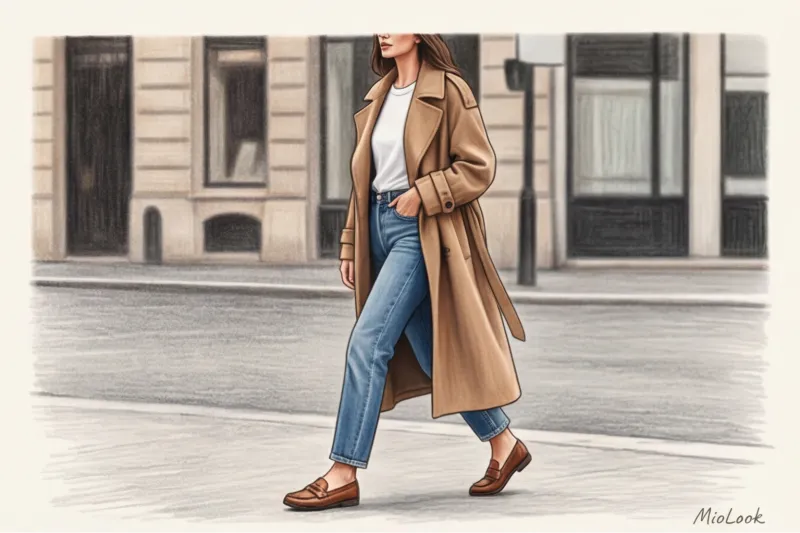
- Sophisticated smart casual: Straight-leg jeans made of heavy denim (not skinny!) + a white T-shirt + a structured, oversized men's jacket. Loafers add a touch of smartness.
- Summer adaptation: Bermuda shorts in suiting fabric, just above the knee, an unbuttoned linen shirt, and penny loafers. This is a great alternative to those boring sandals.
The most frequently asked question: how to style socks and tights
Here I want to make a bold statement and break with outdated conventions. For many years, it was believed that formal shoes should be worn on bare feet, using so-called "invisible insoles." Forget it.
A silicone ankle that peeks out from under a loafer or slips under your heel mid-workday is a stylistic failure and physical torture (eight out of 10 of my clients complained of bloody blisters because of it). Today, a bare ankle in cold weather looks ridiculous. The era of conscious hosiery styling has arrived.
How to do it right:
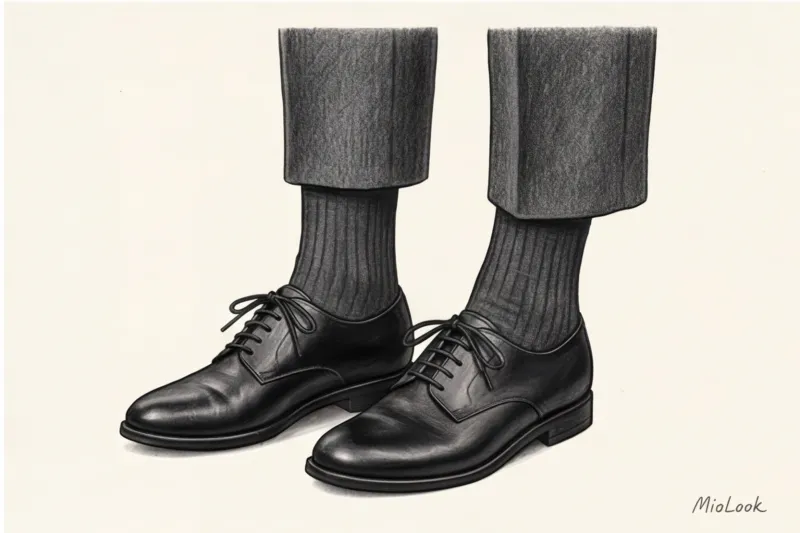
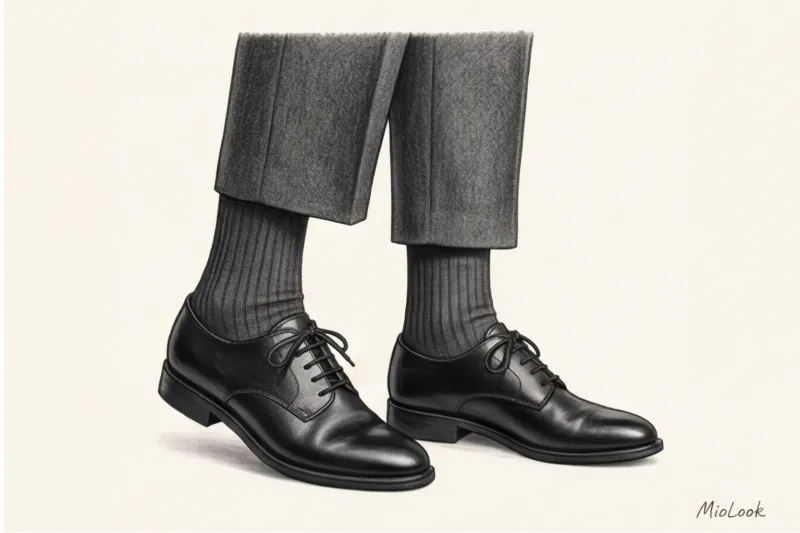
- Ribbed thigh high socks. Choose fine wool, cashmere, or mercerized cotton. Ideally, the sock should match the color of the shoes (to create a vertical line) or the color of the trousers.
- White socks. Yes, it's a trend, but a dangerous one. White socks with black loafers and cropped pants can make you look like a Michael Jackson cosplayer. To avoid this, choose ecru or off-white white socks and pair them with a light-colored top (like a cream-colored sweater).
- Tights. Black masculine shoes work beautifully with thick black ribbed tights (60 den and up). However, thin nude nylon tights (20 den) paired with heavy brogues are a no-no. The difference in textures is too disharmonious.
Silhouette architecture and the "ankle rule"
Have you ever noticed that sometimes, when you put on trendy brogues, you look in the mirror and see that your feet are a size 11? This is due to a lack of proportion.
Men's footwear is chunky and closed. If you wear skinny ankle-length pants, the boot will look like a giant boat against a slender leg. To avoid this, balance the volume. Heavy footwear requires a voluminous top (like an oversized jacket) and the correct width of trousers.
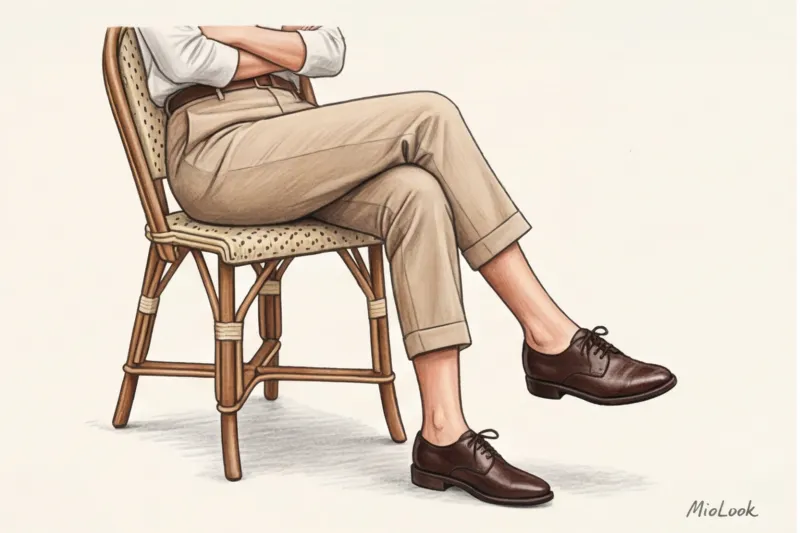
In my practice I use ankle rule Opening 2-3 centimeters of leg at the narrowest part visually lengthens the silhouette by 5-7% and lightens the look. My favorite tailor and I always hem straight-leg trousers exactly 2-3 cm above the ankle. This is the ideal cropped length for a flat fit.
But there is an important limitation here: This advice doesn't work for all body types. If you have very full calves or contrasting lower legs, cropped pants can visually shorten your height. In this case, I recommend choosing full-length pants (puddle pants) that fall in a soft crease right at the toe of your shoe.
3 Fatal Mistakes When Buying Men's Shoes
According to global trend forecasting agency WGSN's 2024 forecast, fashion has made a definitive shift toward "quiet luxury" and authentic silhouettes. However, stores are still full of wardrobe-destroying styles.
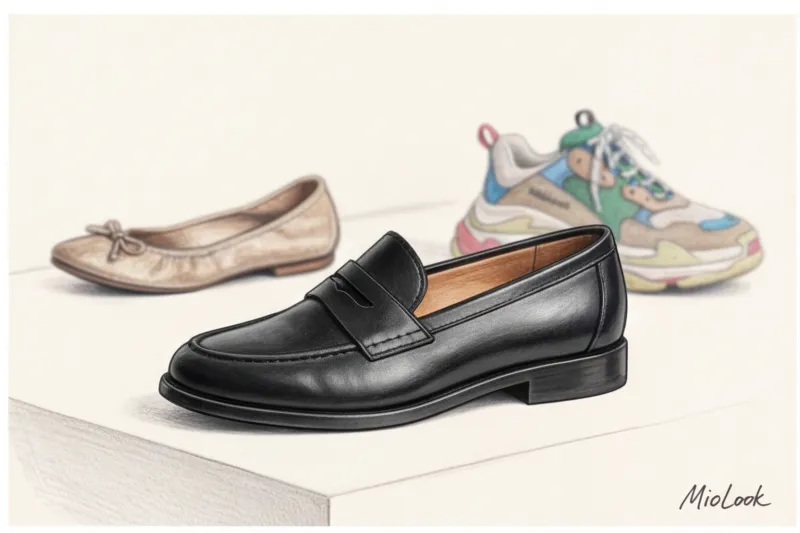
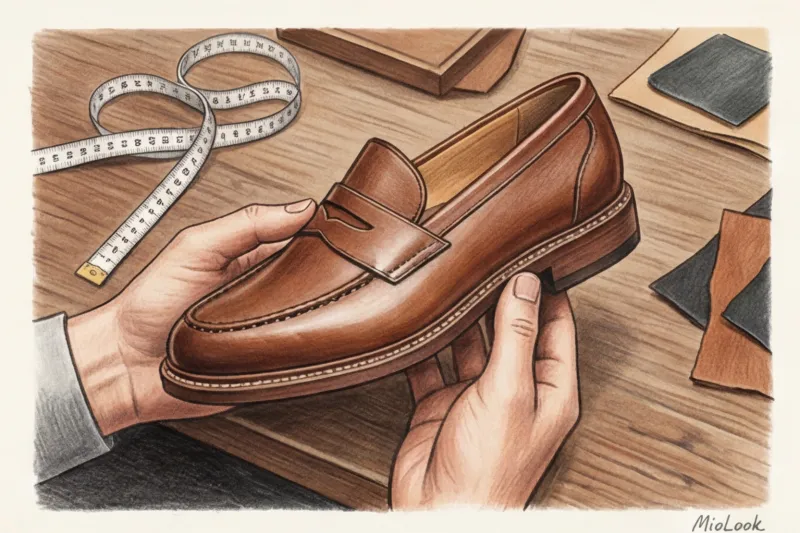
- Mistake 1: Buying "feminine" oxfords. Mass-market manufacturers often try to make men's shoes look "cuter": adding bows and rhinestones, making the toe overly round, or putting the shoe on a thin sole. This looks cheap. If you're buying brogues or loafers, choose an authentic, formal men's style.
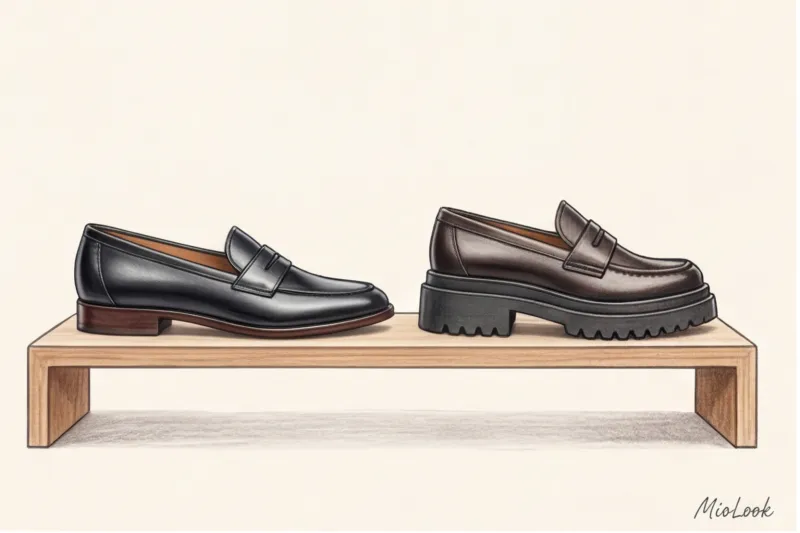
- Error 2: Hypertrophied tractor sole. A practical example: a petite client, 158 cm tall, came to see me. She was wearing chunky brogues with 5-cm wide soles, thinking they would add height. The effect was the opposite—the shoes made her lower body heavier and made her look squat. We replaced them with simple loafers with a classic leather sole and a small welt, and her proportions instantly elongated. Oversized "tractor" soles are a fading microtrend.
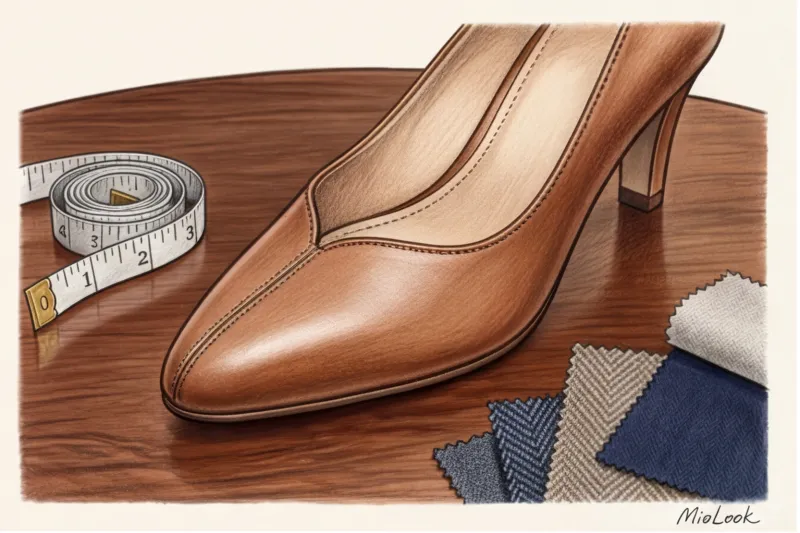
- Error 3: Hard patent leather. Often found in the under-€50 price range. Low-quality patent leather (with a polyurethane coating) doesn't breathe, doesn't conform to the shape of the foot, and, worst of all, quickly splits at the creases. Opt for matte smooth leather or thick suede.
Organize your smart wardrobe
Stop buying duplicates and pieces you can't wear with anything. MioLook will help you digitize your closet and create the perfect capsule wardrobe with your new shoes.
Get access — €0.99 once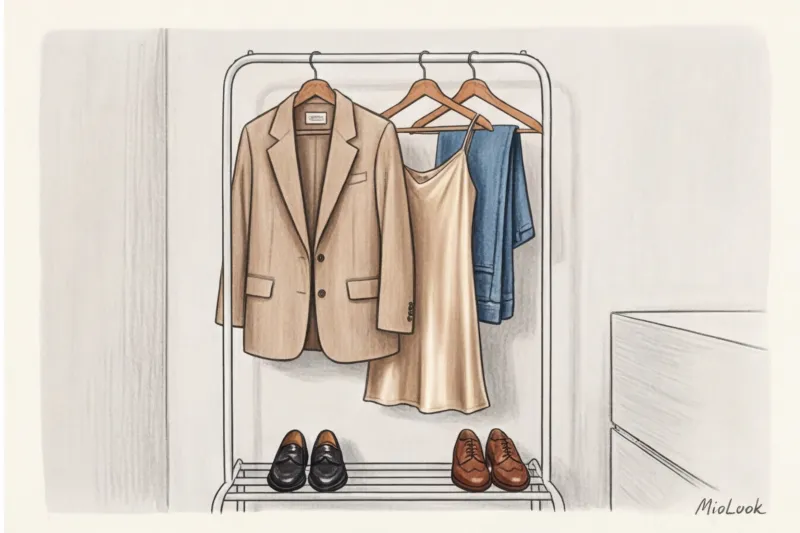
Checklist: Integrating Loafers and Oxfords into Your Capsule
If you're ready to add a touch of intellectual chic to your wardrobe, here's a simple step-by-step guide you can follow today:
- Step 1: Start with the base. If this is your first pair, avoid colored or patent leather models. Buy classic black or deep chocolate (dark chocolate) penny loafers.
- Step 2: Conduct a sock audit. Get rid of invisible marks. Buy 2-3 pairs of high-quality ribbed socks (cotton/wool blend with 5-10% elastane to prevent slipping) that match your new shoes.
- Step 3: Check the length of the pants. Wear your favorite basic trousers with new shoes. If they bunch up at the ankle, take them to a tailor. Trousers should either show the ankle or be a confident full-length.
- Step 4: Play with contrast. Take your lightest, flowing dress out of your closet and try it on with sturdy, masculine boots and a mannish jacket. See how it changes the mood of your outfit.
Fashion is the language we use to communicate with the world without words. And sometimes a pair of tailored men's shoes, worn with perfect heels, can convey a lot more about your confidence than the highest heels. Don't be afraid to ground your looks—it's this balance that creates truly luxurious and modern style.