Every time a new season of the series about an American woman in Paris airs, sales of red berets in mass-market stores soar by 40%. And every time, the streets are filled with girls looking like they've just escaped from a theater production. Have you ever noticed how one seemingly classic accessory can instantly transform a modern look into a dated cliché?
Over the years of working as a stylist, I've realized the main thing: a beret is a magnificent, architectural wardrobe element. But that, What to wear with a beret Today, it's radically different from the rules of ten years ago. If you're building a winter wardrobe from scratch, we've covered wardrobe architecture in more detail in our The complete guide to essential hats and scarves In this article, I'll show you how to transform a beret from a "tourist souvenir" into a tool for creating a classy, modern, and slightly daring look.
Why the beret has become a complex accessory (and how to avoid the "costume party" effect)
The biggest mistake I see every fall is trying to literally replicate so-called "Parisian chic." It's counterintuitive, but if you wear a beret, a striped shirt, a classic beige trench coat, and red lipstick, you won't look French. You'll look like an animator.
In styling, there's a golden rule of juxtaposition. The more romantic, historical, or naive an accessory is, the rougher, more voluminous, and more modern the clothing that accompanies it should be.
To look stylish in 2024, the beret needs to be decisively steered away from the French cliché and toward masculinity, oversize, and minimalism.
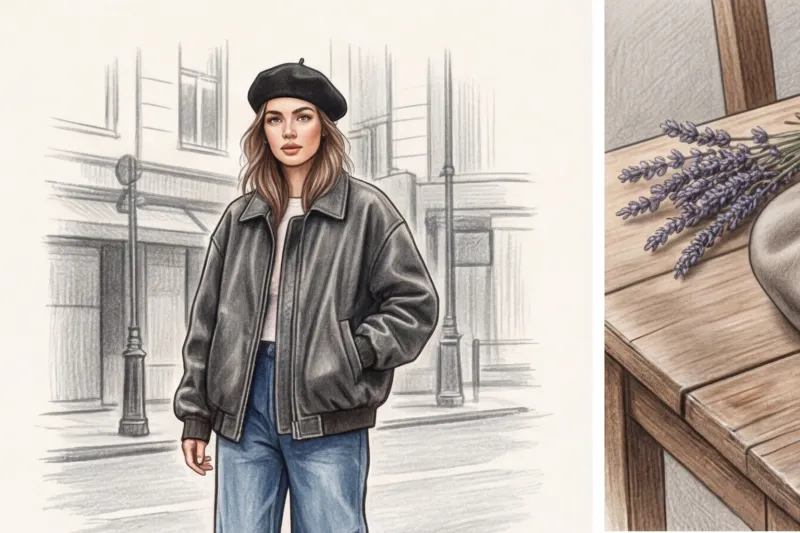
Contemporary fashion is built on hybridity. The beret no longer requires elegant pumps and fitted coats. Its best friends today are distressed leather, men's jackets with broad shoulders, and chunky boots.
Your perfect look starts here
Join thousands of users who look flawless every day with MioLook. Our smart AI stylist will help you style a beret with your current wardrobe.
Get access — €0.99 onceMaterial Matters: How Texture in the Portrait Zone Reveals Your Status
The head area (the space from the chest to the crown of the head) is the main focus of attention when communicating. Skimping on items that are right next to your face is the worst investment decision for your wardrobe.
I often explain the concept of Cost-per-Wear to my clients. A high-quality 100% wool beret will cost you around €60-€90. With proper care, you'll wear it at least 150 times over several seasons. Your cost-per-wear will be around €0.40. A cheap acrylic beret for €15 will lose its appearance after three rains and become covered in pilling, and its cost-per-wear will be €5. Which is more economical?
Let's turn to textile science. According to standards The Woolmark Company To create high-quality molded hats, wool must undergo a dense felting process. Combed wool can retain up to 30% of its own weight in moisture, while remaining completely dry to the touch and maintaining warmth. Acrylic, on the other hand, not only creates a greenhouse effect but also causes strong static electricity in the hair.
Furthermore, reports from sustainable fashion institutes (such as WGSN's 2023 data) clearly indicate that microplastics from cheap synthetic accessories can easily transfer to facial skin when rubbed, causing irritation. Acrylic near the face is always a bad idea.
Checklist: 4 Signs of a Quality Beret When Buying
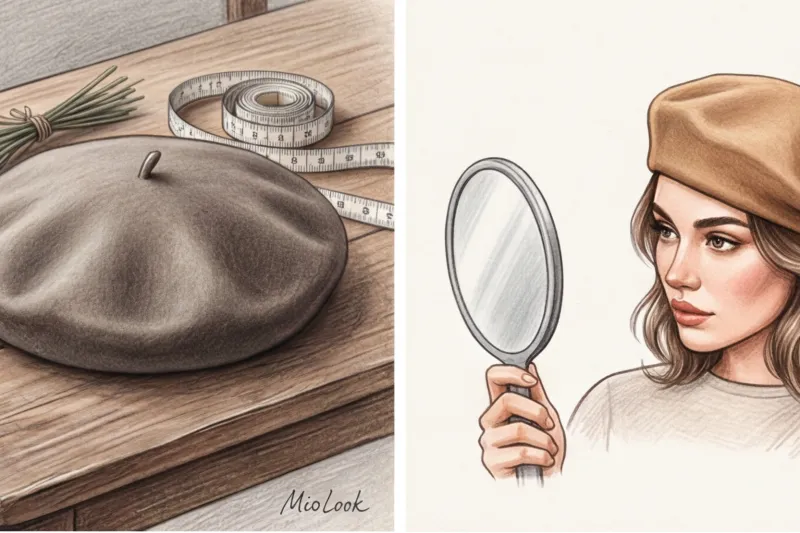
- Density test (architectural): Place the beret on the table. High-quality felt should hold its mushroom or circle shape, not droop like a pancake.
- Edge treatment: Look for models with an inner leather (or faux leather) lining, or a tightly felted seamless headband. There shouldn't be any threads sticking out.
- Compound: Strictly no less than 80% wool (ideally merino or dense sheep's wool). The remaining 20% can be polyamide for wear resistance, but acrylic is not allowed.
- No synthetic shine: Take the item out into the daylight. Wool absorbs light, creating a deep matte finish. Synthetics will have a cheap sheen.
Architecture on the face: how to properly fit a beret
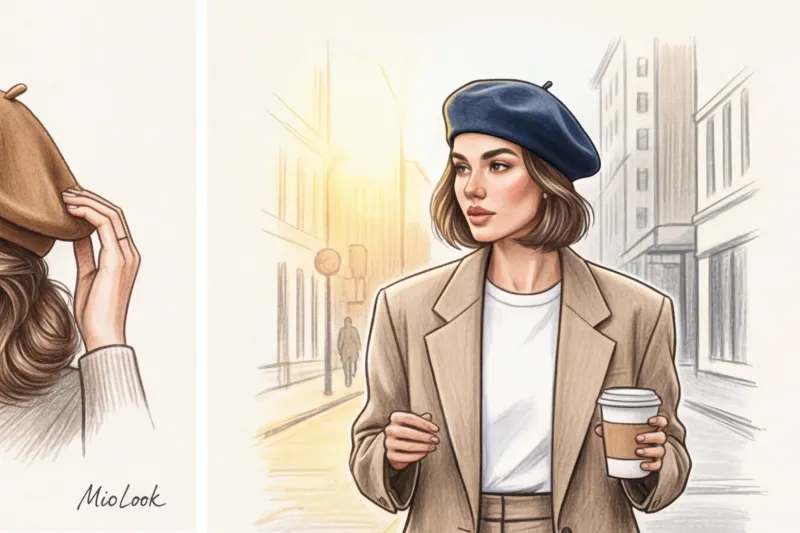
A beret isn't just a hat; it's a tool for shaping the face. You can play with diagonals, volume, and asymmetry. An important limitation: a beret pulled down deep across the forehead, strictly in the center (like a bathing cap), visually weighs down the lower jaw and is unflattering for almost everyone.
When shooting for brands, my fellow stylists and I use a secret trick that I highly recommend implementing. To ensure your beret stays perfectly at that "casual" angle and doesn't slip in the wind, use two bobby pins.
How to do it: Put on the beret and find the perfect position. Then, from the inside, right through the inner headband (catching a bit of felt and your hair), pin two bobby pins crosswise at the back of your head. This will secure the geometric shape all day long.
Three current planting methods today:
- Shifted to the back of the head (halo effect): Opens up the hairline. Ideal for girls with bangs or loose front strands.
- Asymmetrical side landing: Creates a diagonal line that perfectly elongates a round or square face.
- Straight "mushroom": Works only with very thick felt berets. The beret sits flat but high, not touching the eyebrows.
How to Wear a Beret: 4 Unconventional Formulas for a Modern Wardrobe
According to McKinsey's "State of Fashion 2024" report, the key trend of the decade is a hybrid wardrobe, blurring the boundaries between business, evening, and casual styles. The beret fits perfectly into this concept, as long as the proportions are balanced: a fitted headdress always requires volume.
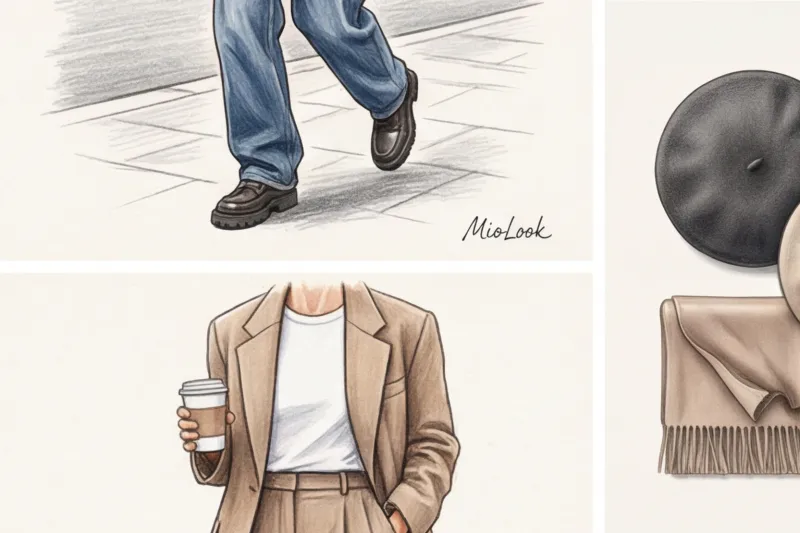
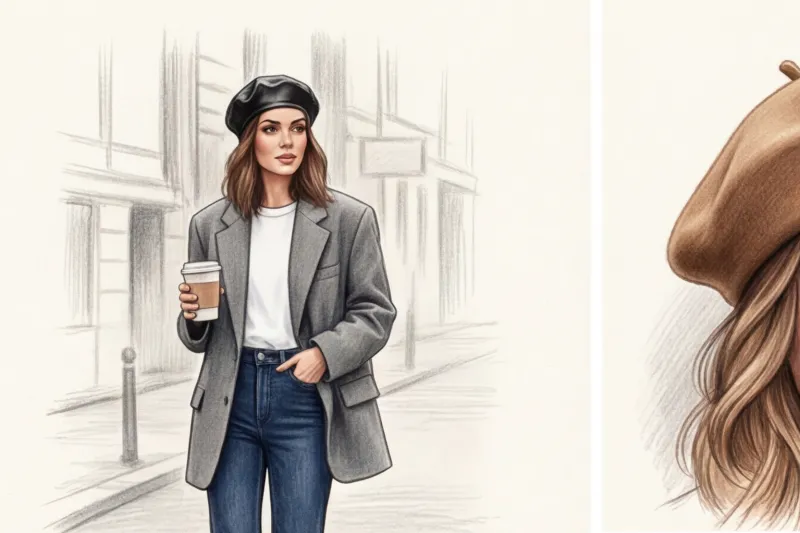
Formula 1: With a masculine oversized jacket
My favorite combination. Take a "manly" jacket with exaggeratedly wide shoulders (you can find excellent options in thick wool in the €100-€250 range). Add a basic white T-shirt made of heavy cotton (from 180 g/m²) and wide palazzo jeans. A wool beret here is the perfect element that brings together the relaxed look and adds a smart edge. If you're unsure what shoes to choose, check out our article about stylish looks with rough boots.
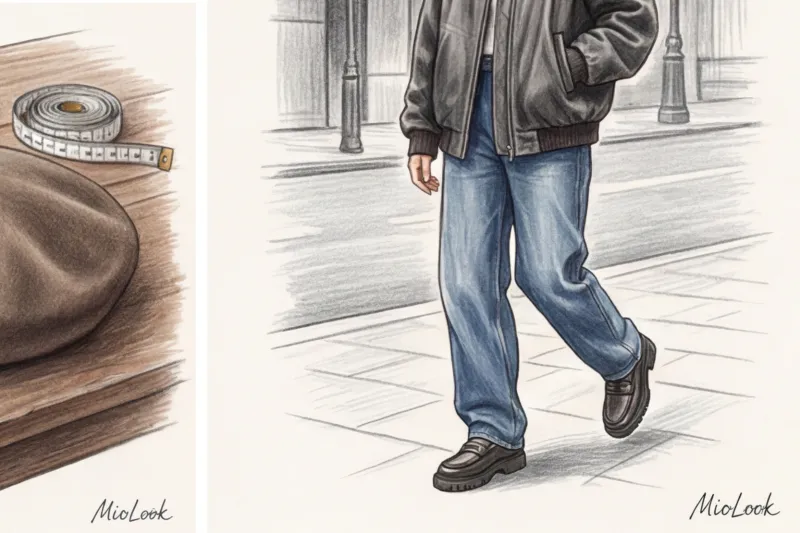
Formula 2: With a leather jacket or vintage bomber
This is a play on grunge aesthetics. Rough, heavy, worn leather instantly neutralizes the naivety of the beret. Imagine: a voluminous vintage biker jacket, ripped women's jeans A well-cut jacket and a neat black beret will give you the look of a rock star on a weekend getaway, not a Parisian student. We've collected more ideas for similar mixes in our guide to layering with a leather jacket.
Formula 3: Monochrome Minimalism with Chunky Knitwear
The "quiet luxury" aesthetic is built on the interplay of textures within a single color. Try pairing a tone-on-tone beret with a chunky knit sweater.
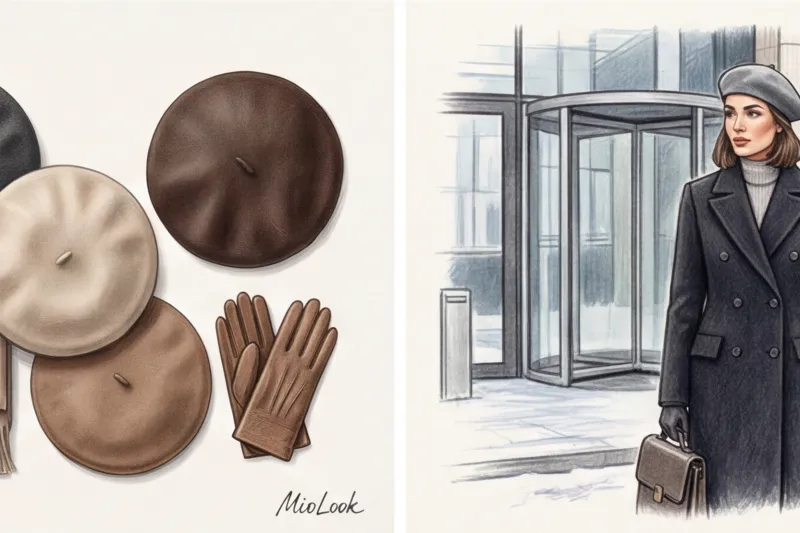
The smooth, dense felt of a beret will contrast luxuriously with the fuzzy cashmere, mohair, or angora of your sweater. The main rule: avoid mixing cool and warm undertones of the same color in a monochrome look.
Ready to get started?
Try MioLook's free plan—no commitments required. Upload your items, and the AI will suggest dozens of stylish combinations with your favorite beret.
Get access — €0.99 onceColor Palette: How to Choose a Beret Shade
While studying color, I came to a conclusion that upsets many: deep, pure black doesn't flatter everyone. This is especially true for women over 30. Black felt absorbs light and casts harsh shadows on the face, highlighting nasolabial folds, signs of fatigue, and dark circles under the eyes.
If you want a dark base color, consider this elegant alternative:
- Graphite (Charcoal): It looks softer than black but retains the same versatility.
- Dark chocolate (Espresso): One of the most prestigious shades of recent seasons.
- Milk oats (Oatmeal): A cool beige-gray color that literally illuminates the skin from within, acting like Photoshop.
If you're using your beret as a color accent, avoid flashy scarlet in favor of sophisticated tones like deep burgundy, emerald, or navy. They look much more expensive.
A beret for a business dress code: a stylish solution for winter trips
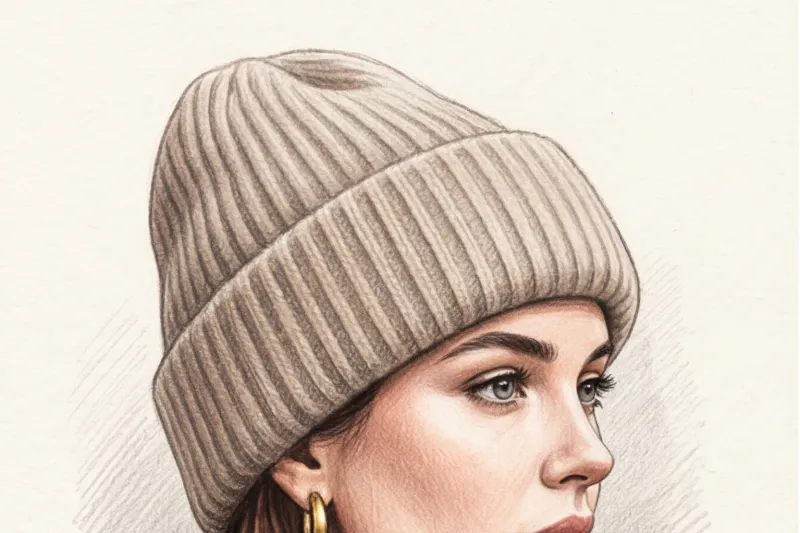
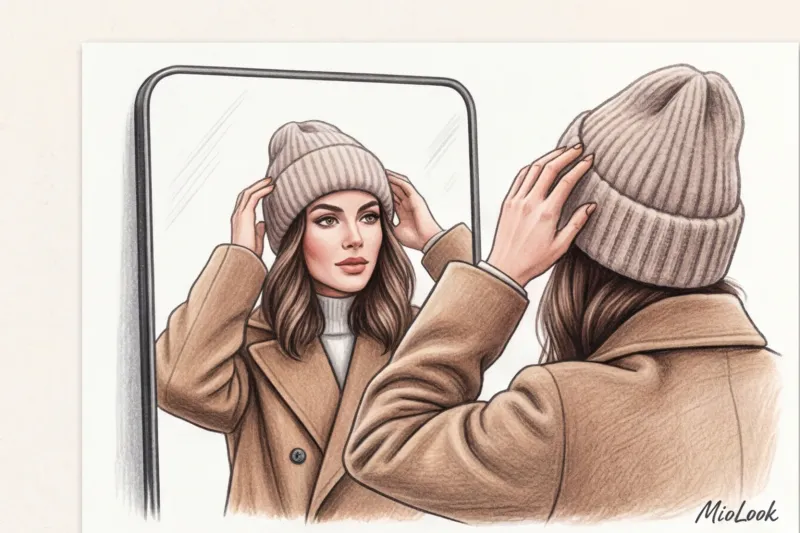
One of my clients' frequent concerns is how to get to the office in winter without ruining their hair or looking polished. A ribbed beanie instantly softens the formality of a sharp double-breasted coat, adding a sporty touch.
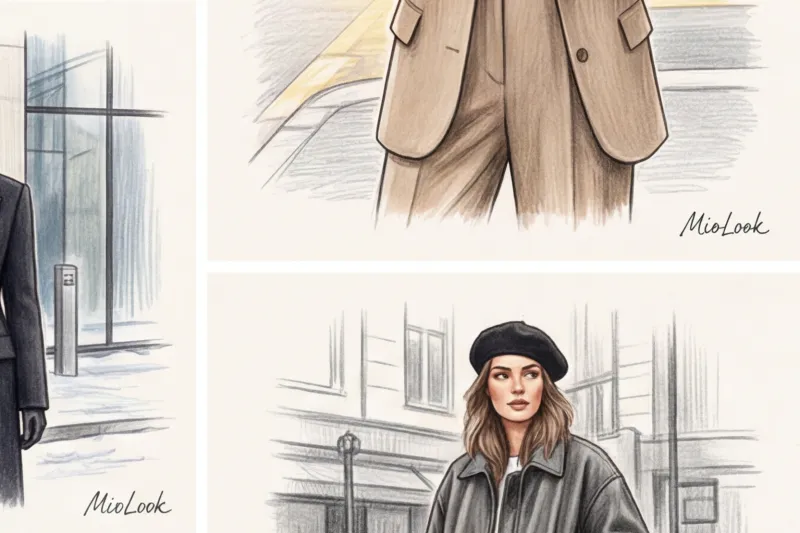
In my experience, when I suggested to a top manager client (who regularly holds high-level meetings) that she replace her winter knit hat with a molded felt beret, her look instantly came together. The beret retains its geometric shape and complements the lapels perfectly. classic outerwear.
An important point of etiquette: Historically, women might wear hats indoors. However, berets are now considered more of an everyday headwear item. Thicker outdoor hats are best removed in the office, keeping them as outerwear only.
Caring for a Wool Beret: A Sustainable Approach to Wardrobe
An eco-friendly wardrobe isn't just about buying eco-labels. It's also about caring for them. Buy less often, wear them longer.
A felt beret should never be machine washed, even on a delicate cycle. The wool will shrink and the beret will become permanently misshapen.
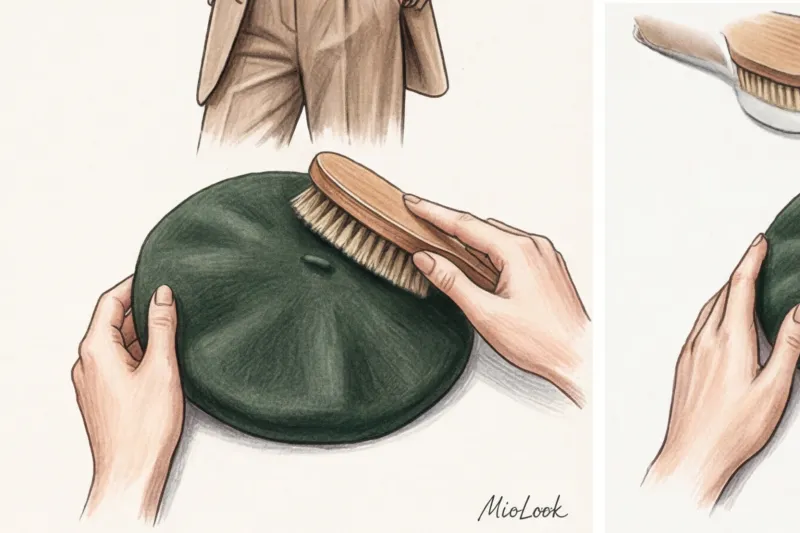
Three rules of durability:
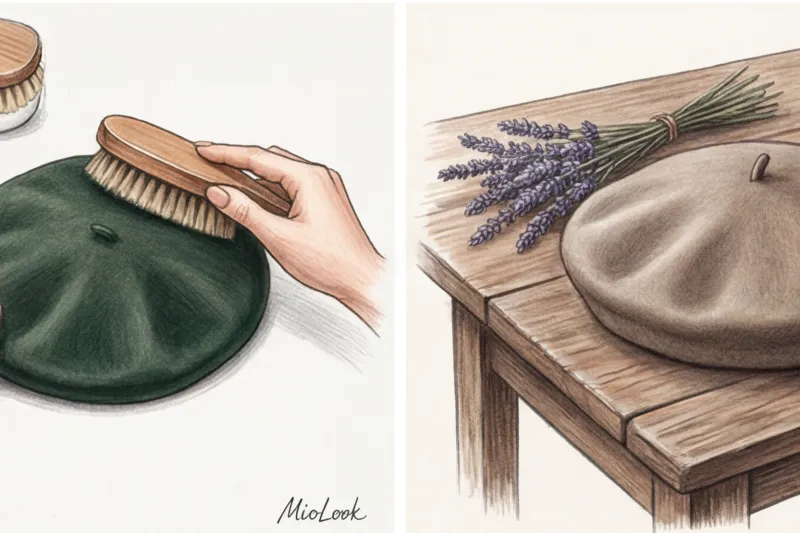
- Dry cleaning: Buy a clothes brush with natural bristles (around €15–20). Once a week, brush your beret in the direction of the nap. This will remove dust and restore shine.
- Drying: If you get caught in the snow, shake off the moisture when you get home and lay your beret flat on a dry towel away from radiators. No hair dryers!
- Storage: During the off-season, store your beret flat on a shelf or in a cardboard box to avoid it being crushed by other items. To protect against moths, use natural cedar balls instead of toxic mothballs.
Integrating a beret into your wardrobe is a great test of your stylistic boldness. Stop thinking of it as a prop for a romantic photoshoot. Treat it as an architectural accessory that thrives on contrasts, dense textures, and masculine silhouettes. Find your perfect angle, choose a deep shade, and you'll see how even the simplest jeans and jacket take on new, prestigious connotations.