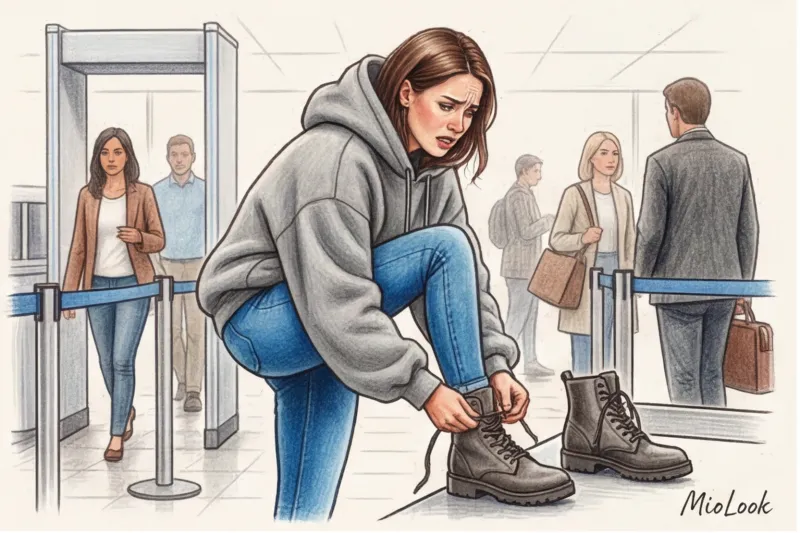
My first 12-hour flight to Tokyo was a disaster. As a budding stylist, I thought a pair of chunky vintage Levi's jeans and a striking crop top would be a great idea for the airport. Four hours into the flight, the stiff denim was mercilessly digging into my stomach, and even a skimpy airplane blanket couldn't keep the air conditioning out. Since then, my approach to travel wardrobe has changed dramatically.
Over 12 years of working as a personal shopper, I have developed the perfect formula for What to wear on a plane And no, this isn't just some clichéd "put on a tracksuit" advice. One of my clients, a top IT manager, recently wrote to me from Heathrow: "Katarzyna, I just got upgraded to business class for free! They said my look is perfect for their premium cabin." But she was simply wearing wide knitted trousers and a cashmere cardigan.
The secret lies in the "Smart Travel" concept—how to use premium knitwear and the right silhouettes from European mass-market fashion to look like you've been upgraded to business class while still enjoying the comfort of your favorite pajamas.
What to Wear on a Plane: Why Hoodies and Jeans Are a Bad Idea
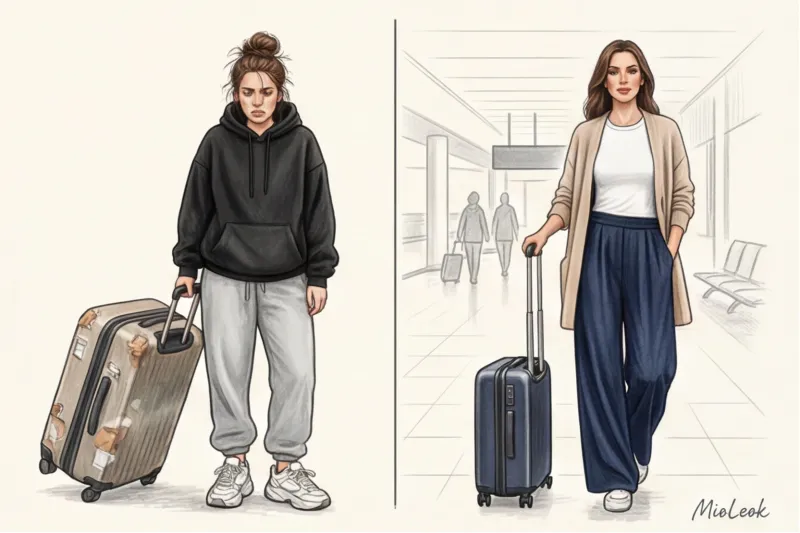
Let's debunk the biggest myth about the "perfect" airport look. Walk into any European terminal and you'll see hundreds of girls in skinny leggings and oversized hoodies. It's counterintuitive, but it's worst choice for a flight.
Why? Firstly, thick leggings (unless they're special compression hosiery) squeeze your legs unevenly, impairing circulation in the pelvic area and knees. Secondly, a bulky hoodie made of thick fleece will become your main problem when the cabin temperature changes. And it changes constantly: from the hot gate during boarding to the icy air conditioning on the flight deck (cabin temperatures often fluctuate between 18°C and 24°C during a single flight). If you get hot, a bulky hoodie will take up half your carry-on baggage.
"The ideal airplane look is a balance between the relaxed feel of pajamas and the polished elegance of a business suit. Every piece should work for you, not against you, in a confined space."
Stiff denim is another traveler's enemy. When sitting at a 90-degree angle for long periods, the waistband of jeans presses on internal organs, causing bloating and discomfort. Leave your jeans in your suitcase.
The Three-Layer Rule for Flying: Comfort in All Temperatures
Layering is the key secret of experienced travelers. But it's important to avoid the "cabbage" effect and maintain a slim silhouette. Always wear three thin layers instead of one thick one.
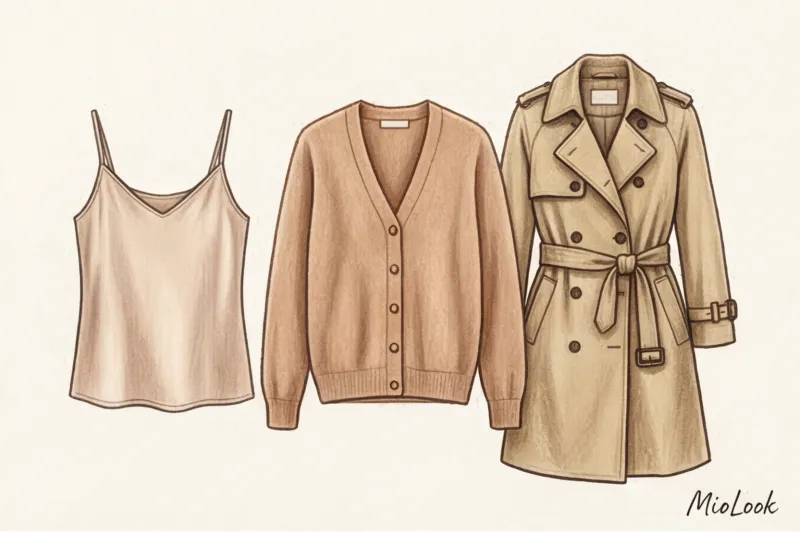
In my experience, basic T-shirts from COS or & Other Stories perform much better than cheap mass-market ones. They hold their shape, aren't see-through, and look presentable, even if you've slept in them for eight hours, curled up.
Base layer: breathable fabrics against dry air
Did you know that humidity in an airplane cabin drops to 10-15%? That's drier than the Sahara Desert. According to textile research (2023), polyester behaves unpredictably in these conditions: it doesn't wick away moisture, causing you to sweat, and then instantly cools down under the air conditioning, leaving you cold.
For a base layer (T-shirt, long sleeve, or tank top), choose Tencel (lyocell), modal, or high-quality cotton with 5% elastane. Tencel has excellent hygroscopic properties—it absorbs moisture and allows the skin to breathe, which is critical in dry air.
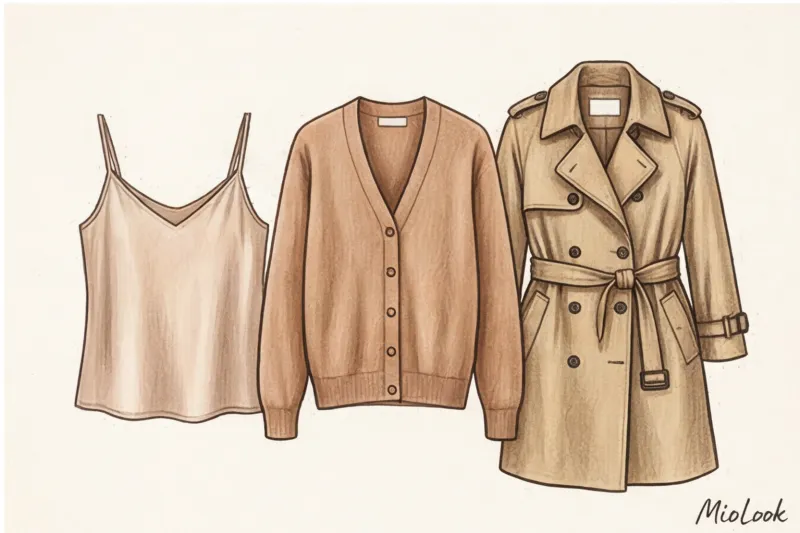
Warming and outer layers: cardigans and trench coats
Swap your bulky hoodie for a thin cashmere or merino cardigan. Merino wool has unique thermoregulation properties: it keeps you cool in a warm airport and warm on a cold plane. Plus, a thin cardigan can be easily rolled up and stowed in your bag.
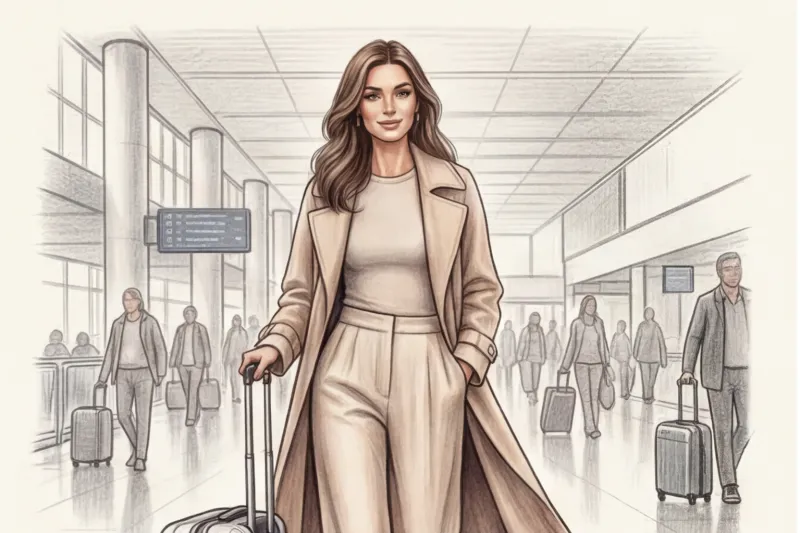
A classic trench coat or lightweight robe coat works perfectly as a top layer. Made from a dense cotton blend, it's virtually wrinkle-resistant, instantly elevates the look, and fits easily on the overhead compartment.
Your perfect look starts here
Tired of wondering what to wear on your trip? Join thousands of users who look flawless every day with our smart wardrobe.
Get access — €0.99 onceThe Perfect Bottom: What Should a Woman Wear on a Plane to Avoid Puffiness?
Choosing pants for a flight is not only a matter of style but also of health. According to the World Health Organization (WHO), long flights (more than four hours) significantly increase the risk of deep vein thrombosis (DVT). Blood pools in the legs, and any tight clothing around the groin or knees exacerbates the situation.
What can replace jeans and leggings?
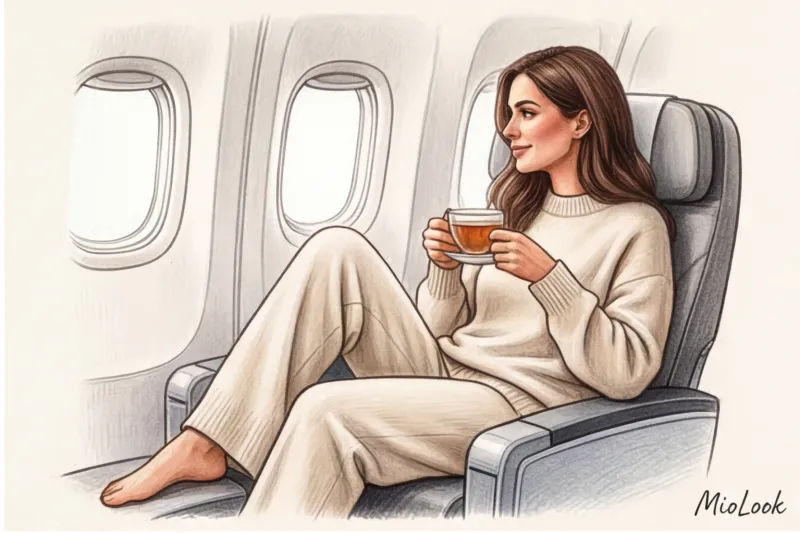
- Wide-leg knitted trousers: A perfect investment for your travel wardrobe. For example, these wool-cashmere blend trousers from Massimo Dutti look expensive but feel just like sweatpants at home.
- Drawstring pants: Styles made of soft viscose or flowing crepe won't squeeze your waist after a plane lunch.
- Wool blend joggers: Choose models without tight elastic bands at the ankles.
What about dresses and skirts? It's debatable. On the one hand, they don't put pressure on your waist. On the other, your bare legs will be touching the seat (which isn't very hygienic), and you risk getting cold. If you really want to fly in a dress, choose knit midi dresses or bias-cut dresses paired with thick tights.
Fair Limit: Light-colored, wide-leg knit pants are a bad idea if you're flying with small children or are prone to spilling coffee during turbulence. In such cases, choose camel, navy, or graphite shades.
What shoes to choose for the airport and plane
Foot swelling increases by 1-2 shoe sizes on flights longer than 4 hours. Have you ever noticed that your favorite sneakers, the ones you so briskly strode into check-in, turn into nothing but a pair of slouchy boots by the end of the flight?
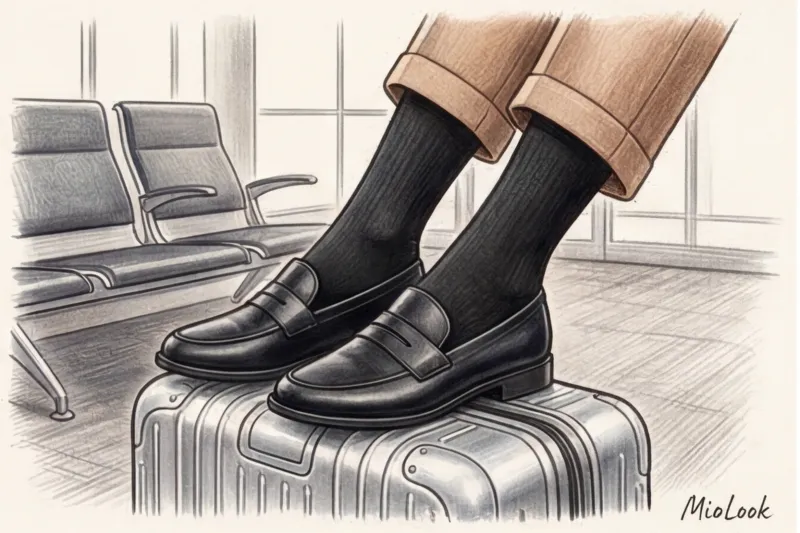
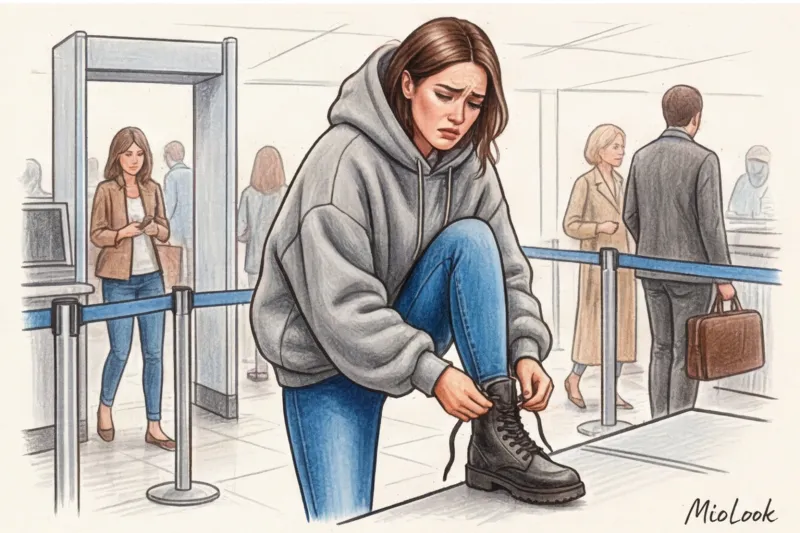
Airplane shoes should meet two criteria: adaptability to the size of your foot and ease of removal at security. Shoes with complicated lacing will make you nervous (and hold up the line) at security.
My choice of stylist: Leather or suede loafers with a soft heel (babouche style). You can wear them as regular shoes at the airport, and then simply fold the heel over the top and use them as slippers on the plane. Slip-ons and soft Chelsea boots also work great.
And please, no open toes. Flying in sandals or flip-flops is not only a violation of unspoken travel etiquette but also a surefire way to get hypothermia. Furthermore, open-toe footwear is unsafe in the event of an emergency evacuation.
In-flight accessories: status, health, and nothing extra
Accessories on the plane should be strictly functional. Leave complex, multi-layered necklaces and jingling bracelets at home—they'll only add to your troubles at the metal detector, and rings can dig painfully into your fingers if you're swollen.
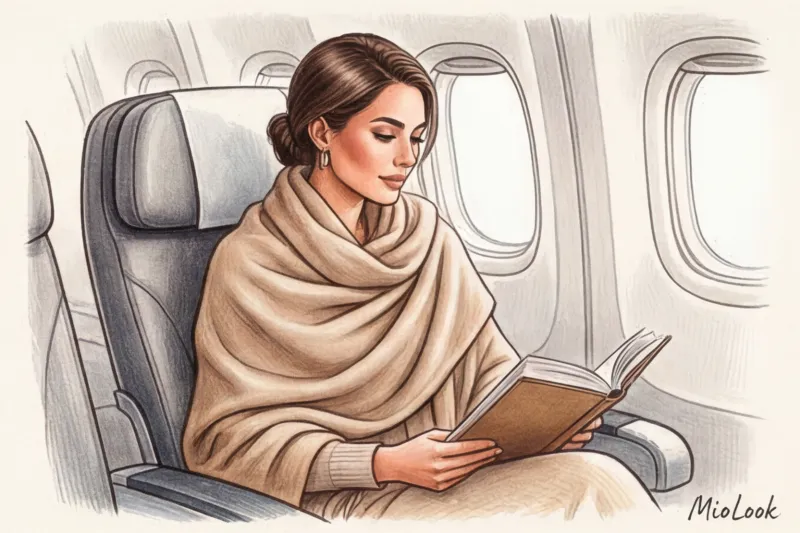
What you really need to take with you:
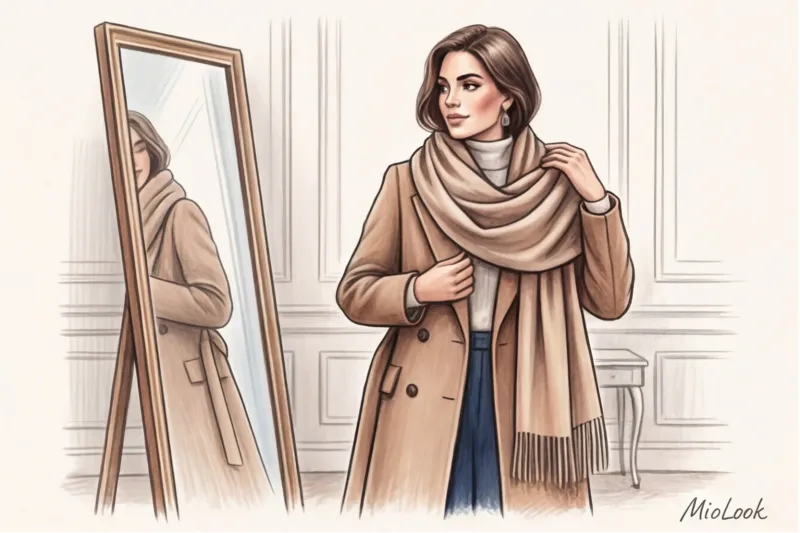
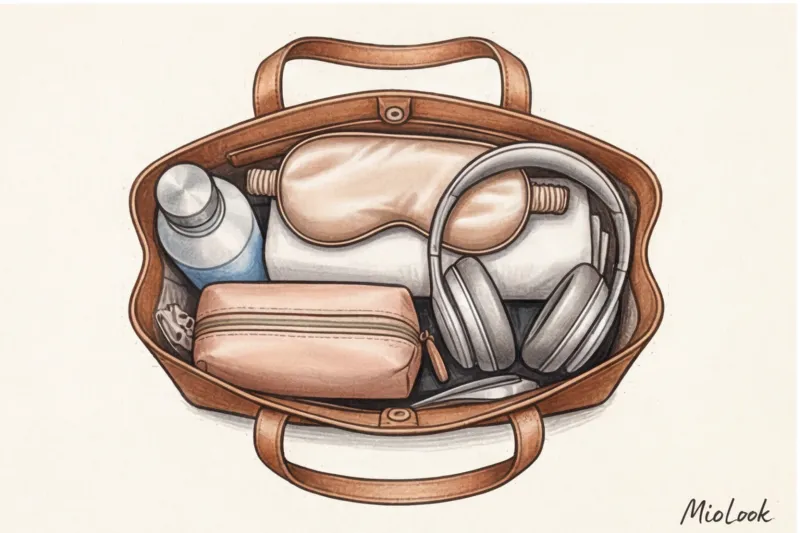
- Pashmina or wide scarf. It's a status accessory that instantly elevates your look. On a plane, it doubles as a luxurious blanket or lumbar pillow. It's much more hygienic than using communal blankets, which aren't washed after every flight.
- Compression stockings. A must-have for flights longer than four hours. Medical fact: Class 1 compression hosiery (18-21 mmHg) physically pushes blood upward, preventing it from pooling. Modern brands make them stylish—black sleek knee-highs look great with loafers and cropped trousers.
By the way, in order not to forget the necessary accessories when getting ready, I recommend my clients to collect the capsules in advance. MioLook — there you can visualize the whole look, including the bag and scarf.
Ready-made formulas: comfortable and stylish looks for flying
Flight-ready items shouldn't sit idle in your suitcase upon arrival. A practical approach is to ensure your travel outfit can be easily combined with the rest of your wardrobe during your trip.
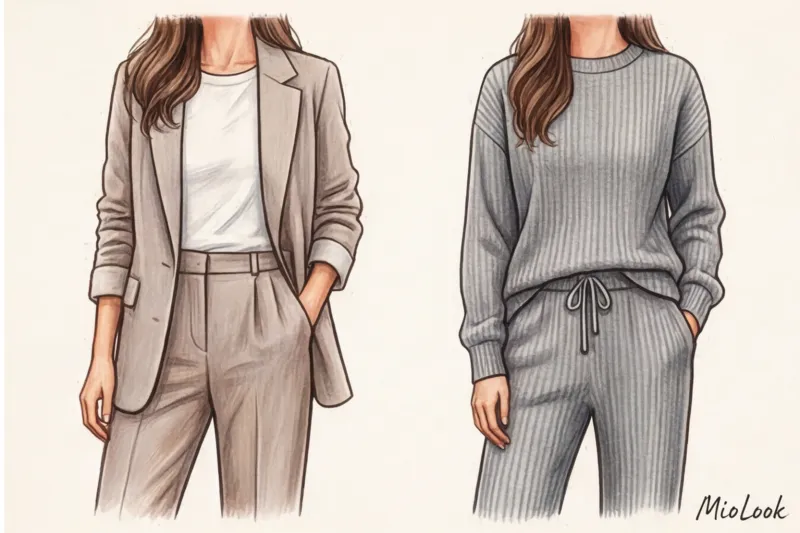
For short flights and business trips (up to 4 hours)
If you need to step off the plane and be at a meeting in an hour, choose elegant comfort. We discussed how to create an executive wardrobe for warmer weather in more detail in the article about summer business style for women.
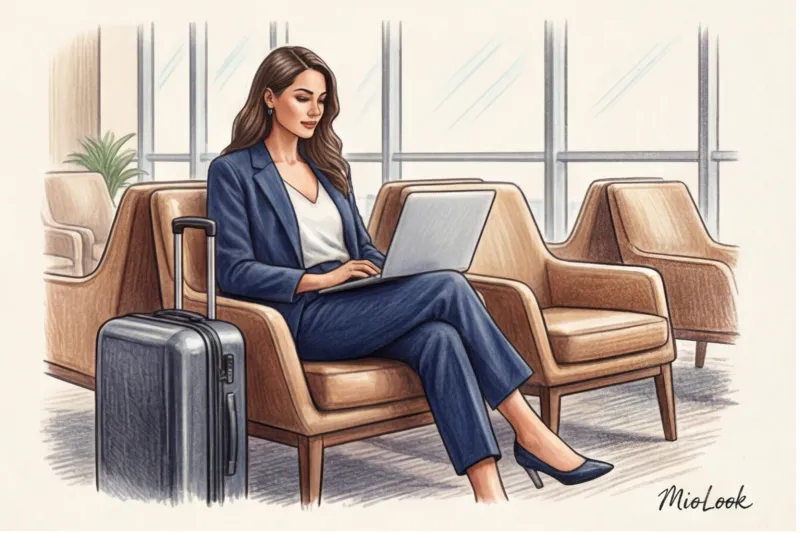
Formula: Palazzo pants in a wrinkle-resistant fabric (elasticated at the back of the waistband only) + a basic silk top + a long, loose blazer in a linen or wool blend + loafers.
It's best to remove your blazer and carefully place it in the overhead compartment during the flight. Just put it on before landing, touch up your makeup, and you're ready to negotiate.
For long flights and holidays (8 hours and more)
Transatlantic flights require maximum smoothness. Texture comes to the fore here.
Formula: A premium knit suit (wide-leg trousers + a loose V-neck jumper) + a basic cotton T-shirt underneath + a voluminous cashmere scarf + soft urban sneakers (like New Balance 327s or classic Reeboks).
Access to MioLook for €0.99 — one-time payment
A smart AI stylist will create the perfect look for your next trip using your own clothes.
Get access — €0.99 onceChecklist: 5 Things You Should Never Wear on a Plane
As a stylist, I've seen many fashion mistakes at airports. Here's my strict, well-reasoned list of what to leave at home if you value your comfort.
- Overalls. Imagine: turbulence, a tiny airplane toilet, and you have to practically undress to go to the bathroom. Jumpsuits look great in photos, but they're a nightmare in the sky.
- Items made from 100% linen. Linen is great for vacation, but after an hour in a plane seat, you'll emerge incredibly wrinkled. Choose linen with added viscose.
- High-heeled shoes. In addition to the fact that your feet will swell, stiletto heels are strictly prohibited during an emergency evacuation via an inflatable slide (they can tear it).
- Light-colored trousers. White or cream jeans will collect all the airport dust, and one awkward movement from your neighbor with tomato juice will ruin your mood for the entire vacation.
- Intricate lacing and lots of metal. Corsets, belts with massive buckles, boots with dozens of eyelets—all of this will make you sweat during security checks and interfere with the metal detector frames.
When planning your next trip, remember: your comfort is the foundation of your confidence. Choose soft textures, smart layering, and don't forget about foot health. Let your style work for you from the moment you step into the terminal until you step out of the gate at your destination.