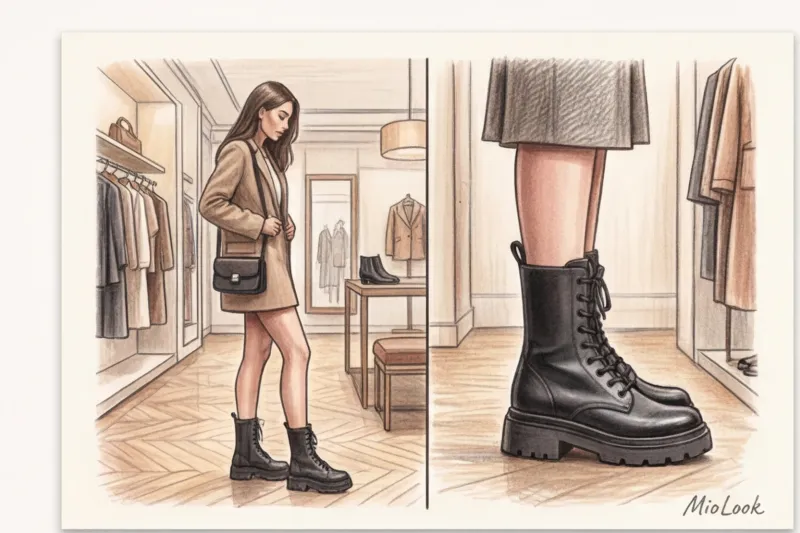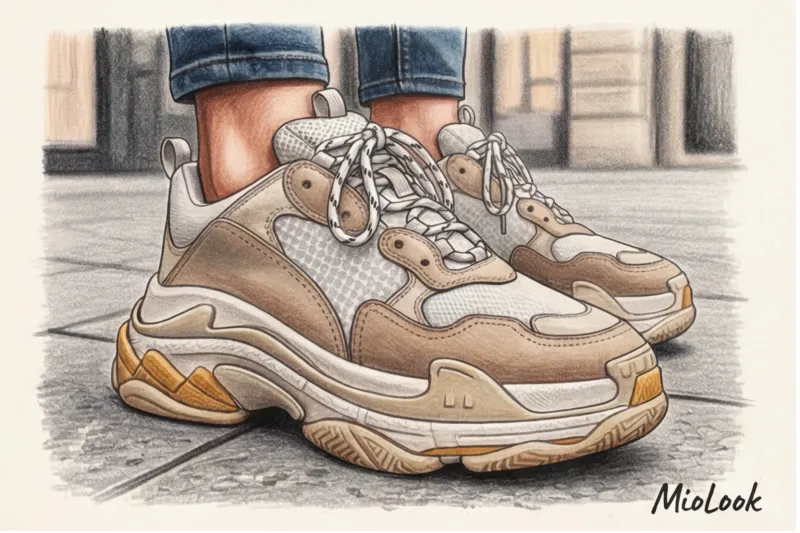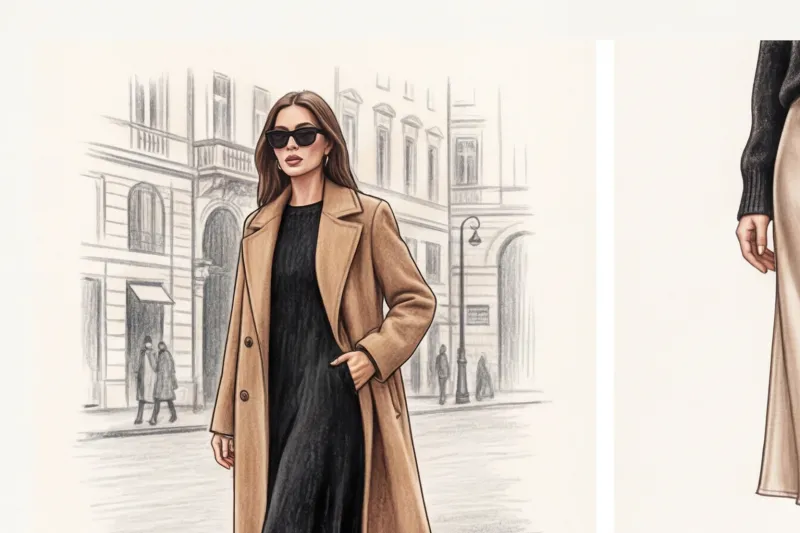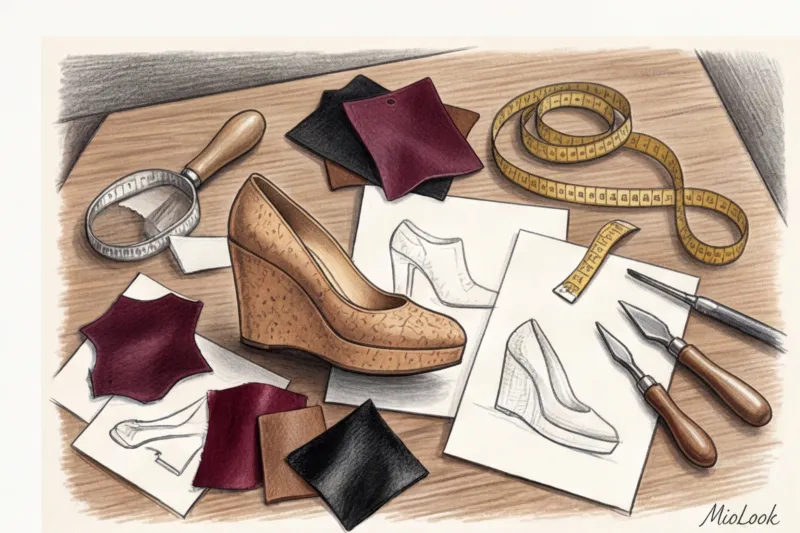
September, Paris, the cobblestones of the Marais district. Year after year, I observe the same scene at Fashion Week: glossy editors effortlessly run 10-15 kilometers a day between shows, while visually appearing model-sized. Their secret is never classic stilettos. The foundation of their wardrobe for such marathons is well-balanced, chunky footwear. We wrote more about the global trends in the industry in our The complete guide to shoe trends , but today I want to look at the most architectural of them.
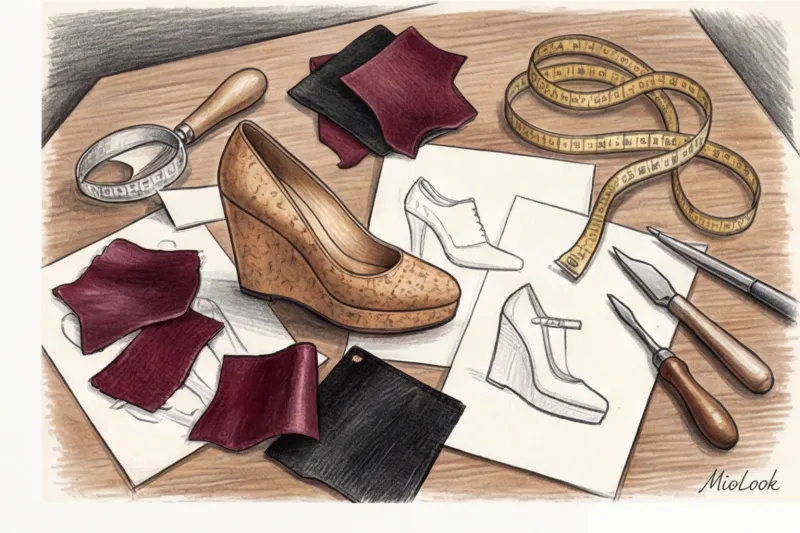
When we talk about platforms and wedges, many instinctively recall the Y2K aesthetic of TikTok or Spice Girls music videos. But let's put those associations aside. As a stylist, I view the chunky sole not as a passing fad, but as the "architectural foundation" of a mature, prestigious wardrobe. And if you're wondering what to wear with platform shoes to look elegant, not childish, we'll have to turn to the rules of Italian shoemaking and the laws of sculptural proportions.
From Ferragamo to the 2000s: The Evolution of Platforms and Wedges
Chunky shoes aren't a millennial invention. The history of the modern platform and wedge heel dates back to 1936, and it wasn't born of good fortune, but rather due to severe shortages. Due to economic sanctions against Italy, the legendary Salvatore Ferragamo couldn't afford steel for his arch supports. The ingenious shoemaker found a solution: he glued together pieces of Sardinian cork, creating the world's first orthopedically correct wedge heel.
This forced measure gave the world a silhouette that has endured for decades: from '70s glam rock (hello, David Bowie) to the intellectual minimalism of Prada in the '90s. According to Vogue Runway's 2024 Fashion Trends report, we're witnessing a significant shift: the microtrend for doll-like "Bratz" shoes has transformed into a macrotrend for sculptural bulk.
"The difference between a €40 mass-market shoe and a designer investment starting at €300 isn't the logo, but the balance of volumes. A cheap platform looks like a brick strapped to the foot. An expensive one looks like a precise architectural object," notes fashion historian Valerie Steele.
That's why today we're talking about a long-term investment in a silhouette, not about buying a pair of hoof-like shoes for one season.
Your perfect look starts here
Join thousands of users who look flawless every day with a smart AI stylist.
Get access — €0.99 onceSilhouette Architecture: How Chunky Shoes Change Body Proportions
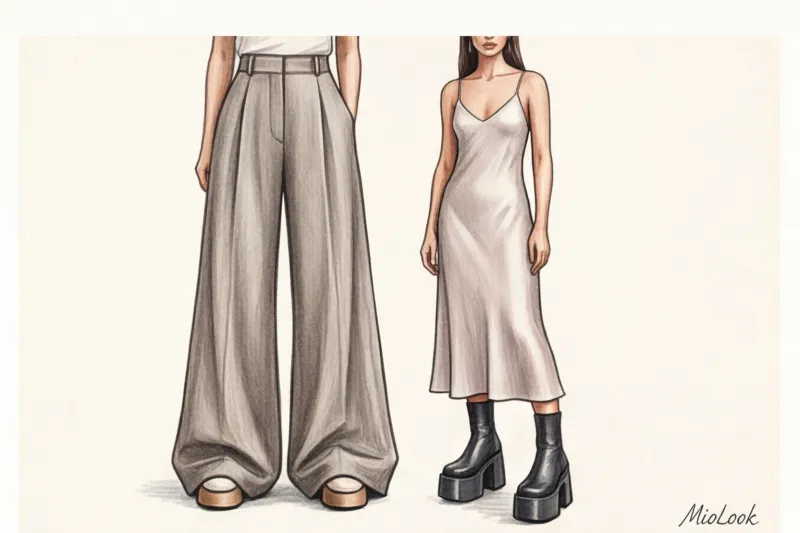
Over 12 years of working in fitting rooms, I've encountered the same misconception hundreds of times. Clients believe that any platform automatically makes their legs look longer. This is a dangerous myth. In fact, if you wear chunky boots with skinny jeans, you'll get the "Mickey Mouse effect." Heavy heels will visually cut off your height, and your feet will appear disproportionately large. This rule doesn't work for creating a slim silhouette.
Real elongation works only through the laws of physics and visual illusions:
- The rule of counterbalance: If you're adding heft to your bottom with a chunky sole, you need to balance it out with a layered top. Oversized jackets with accentuated shoulders or chunky sweaters work perfectly.
- Law of the Invisible Line: Extremely long trousers that almost completely cover your shoes (leaving only the toe) create the illusion of endless legs, as the eye cannot see where your heel ends and the platform begins.
Moreover, switching from a thin stiletto heel to a stable platform instantly changes your body language. Your posture becomes more confident, your stride firmer. You stop balancing and start making a statement.
Platform Shoes: What to Wear with Them in Casual and Business Attire
To make abstract rules a daily routine, let's explore how to wear platform shoes in real life. We'll leave theatrical looks aside and focus on elegant everyday wear, where texture and proportions play a key role.
Hidden Height: Wide Legs and Maxi Lengths
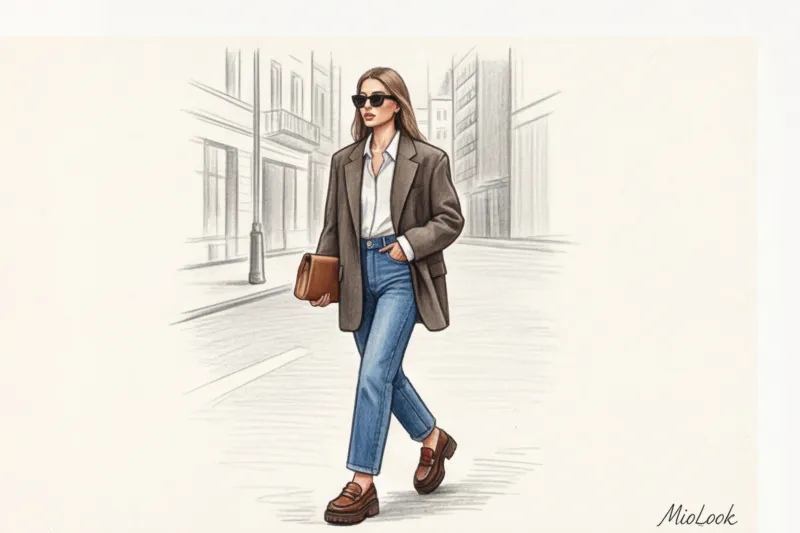
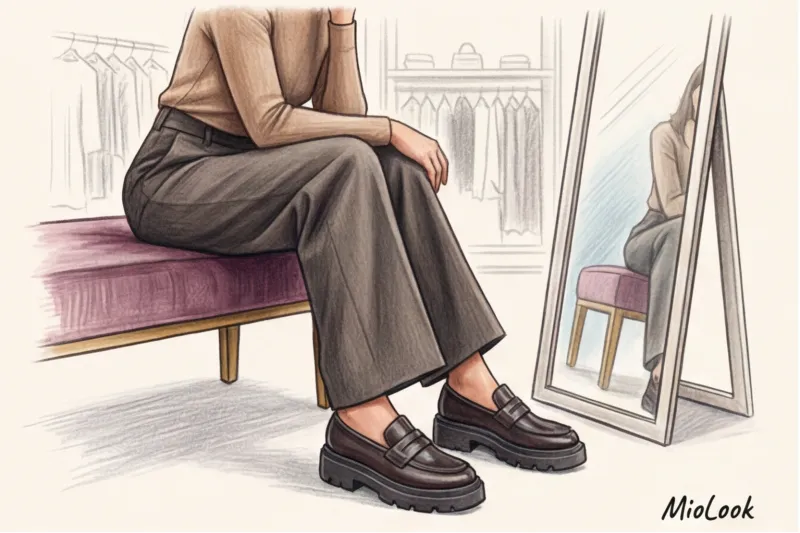
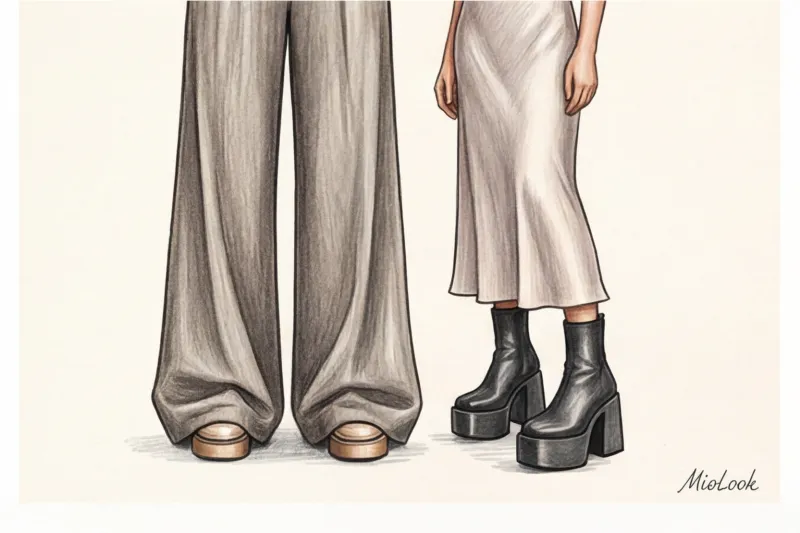
This is my favorite formula, which I recommend to every client under 165 cm. Take palazzo pants or wide-leg jeans and pair them with loafers or ankle boots with thick soles. The key here is the correct leg length. It should end exactly 1-1.5 cm from the floor.
Pay attention to the fabrics. Choose flowing wool with a weight of at least 250 g/m² (for suit pants) or heavy denim (at least 12 oz). Thin viscose will cling unattractively to the bulky toe of a shoe, while heavier fabrics will create a graceful fold.
Intelligent contrast: a massive sole and light textures
Nothing emphasizes fragility like a rough frame. Try pairing heavy boots with a flowing slip dress in thick silk (look for 19-22 momme). This technique exploits the contrast in texture.
If you prefer a mini length, platforms can make your look too vulgar if you don't find the right balance. Opaque tights (80 denier and above) and a high-coverage, voluminous top will elevate your look. For preppy style enthusiasts, platform Mary Janes paired with high-quality ribbed cotton knee-highs are the perfect choice.
Office Platform: Strict Dress Code and Smart Casual
For a business environment (if you don't have a strict glass heel rule), flatforms are ideal—oxfords, brogues, and loafers with a uniform, thick sole without aggressive tread. They fit perfectly into smart casual style for women.
The masculinity of a classic pantsuit is perfectly supported by the solidity of these shoes. But there's a strict no-no: forget about hidden wedges in sneakers (those same sneakers from 2012) and styles with extreme, bulky toe boxes. They look out of place in the office.
Access to MioLook for €0.99 — one-time payment
A smart AI stylist will analyze your items and suggest the perfect combinations for your new pair on the platform.
Start sorting out your wardrobeThe Wedge Heel Is Back: How to Avoid Looking Stuck in the 2010s
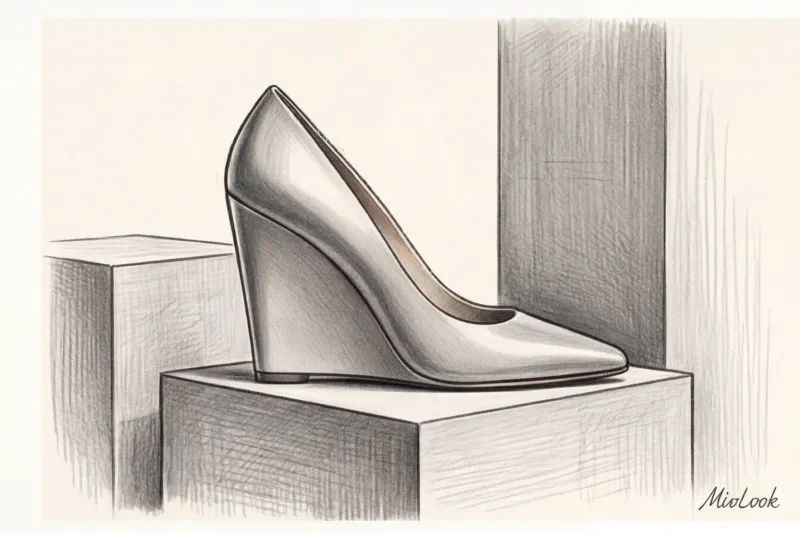
The wedge has made a triumphant comeback, but many are afraid to wear it for fear of looking outdated. The anatomy of the modern wedge has changed radically. Look at the collections of Bottega Veneta or Amina Muaddi – today they feature sculptural, monolithic shapes, and sharp architectural lines.
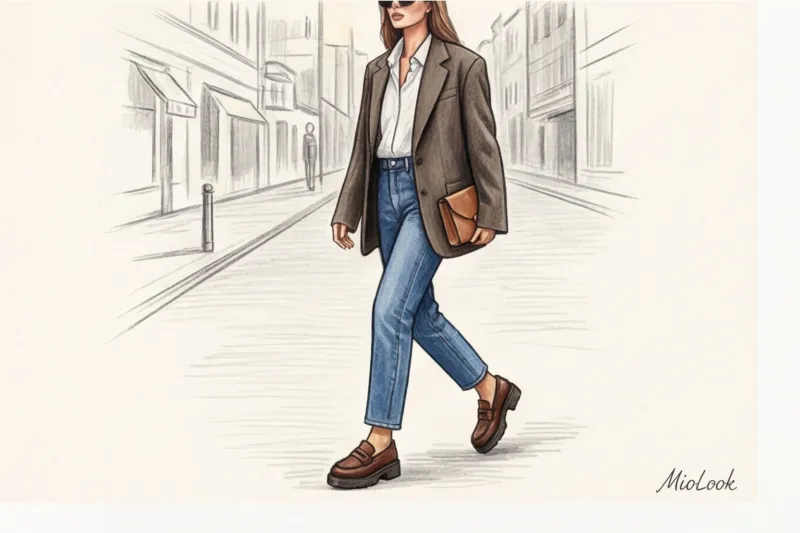
What should you permanently throw away if you don't want to add 10 years to your appearance?
- Cork wedge with perforation and abundant decor;
- Open toe (peep-toe) combined with a hidden platform underneath;
- Textile espadrilles with a disproportionately high jute wedge for the city (save them for the beach).
The materials of the new era include smooth leather, patent leather, clear acrylic, and cast matte rubber. These futuristic pairs are best worn with minimalist column dresses and straight-cut midi skirts. The shoes here act as art objects.
Safety Tips: How to Choose Comfortable Shoes Without Harming Your Feet
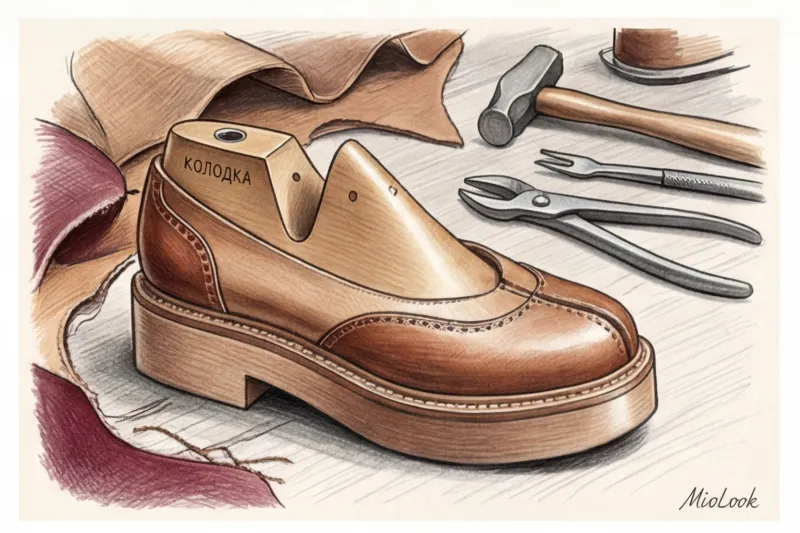
Several years ago, I visited a shoe factory in the Italian Marche region, where the craftsmen explained to me the key secret to comfort. It's called "pitch"—the angle of your foot within the shoe last. Why are shoes with a 4-cm platform and a 12-cm heel often more comfortable than classic 8-cm pumps? Because the actual drop (the so-called pitch) is only 8 cm.
According to orthopedists, for anatomical comfort, the difference between the toe box and heel height should not exceed 7-8 cm. Anything higher places enormous strain on the metatarsal bones.
The second critical factor is weight. Always consider the weight of the shoe before purchasing. Look for a sole made of microporous rubber or EVA foam. According to manufacturers, EVA weighs 40% less than traditional solid rubber. A platform that's too heavy won't flex as you walk, which can lead to ankle strain. And remember: the higher the platform, the more secure the ankle support should be (laces, tight straps).
Checklist: 5 Rules for Investing in Chunky Shoes
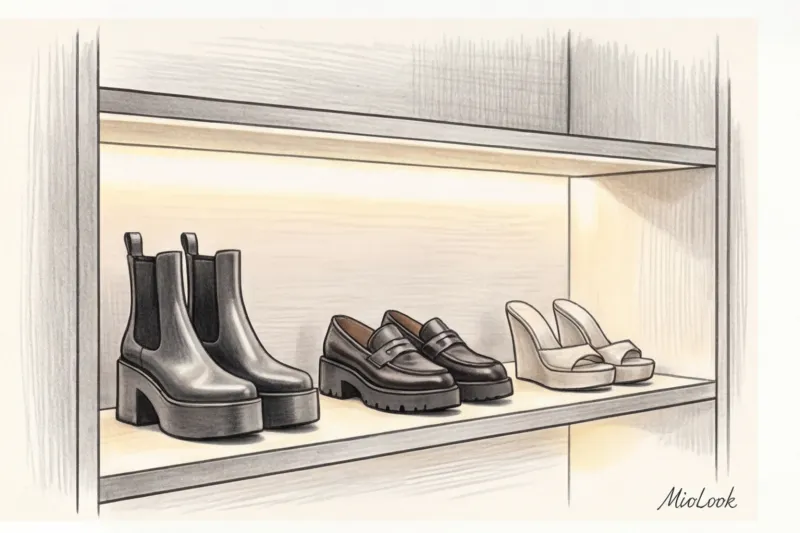
Before you take a pair to the checkout (especially if its price goes beyond the budget segment of €50-100 and approaches the premium €300-600), run it through my personal checklist:
- Five images test. Can you create 5 different outfits with this pair right now, without buying any new items? (The digitizing feature in MioLook ).
- Expensive palette. Black, deep burgundy (cherry red) or chocolate platforms always look more prestigious and expensive than models in flashy neon shades.
- Clean lines. Avoid excessive embellishments. Rhinestones, logos, and studs on chunky lasts cheapen the look and reduce the shoe's lifespan to just one season.
- Full-length check. Never judge a platform by looking in a small foot mirror. Step back three meters and examine the proportions of the entire silhouette.
- Synchronization with the body. Platforms require a straight back. If the shoes are so heavy that you start slouching and shuffling, they're not for you.
Integrating chunky shoes into your adult wardrobe isn't about chasing youth trends. It's about consciously embracing your body's architecture. Choose minimalist shapes, maintain a balance of volume between the top and bottom, and then platforms will become your most reliable (literally) stylistic tool, giving you not only those coveted inches of height but also uncompromising confidence in every step.