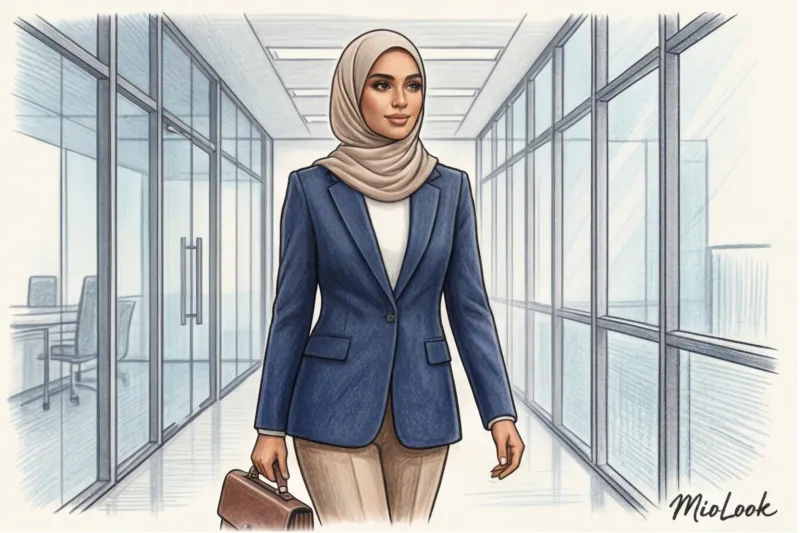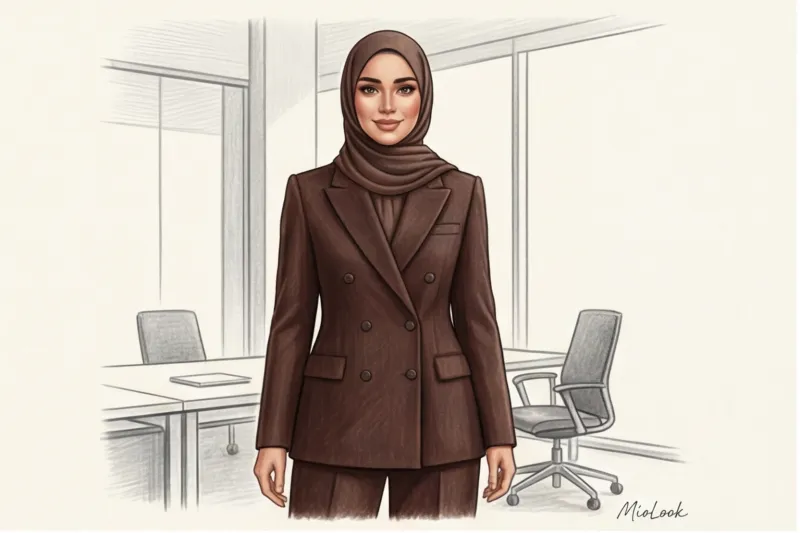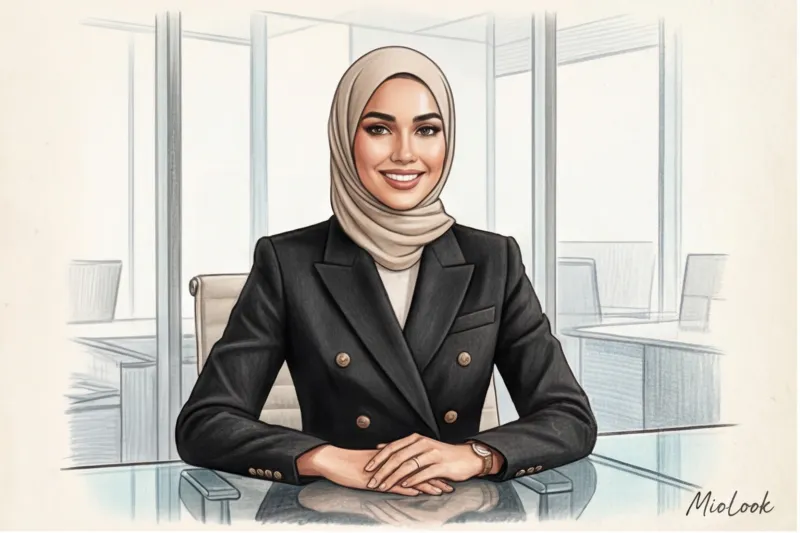
I still remember the moment at Modest Fashion Week in Dubai when a model walked the runway in a crisp, tailored three-piece suit and a perfectly sleek hijab that matched the fabric exactly. The look exuded so much power, confidence, and architectural purity that the room literally fell silent. No flowing chiffon ponytails, no rhinestones, or complicated knots—only pure geometry.
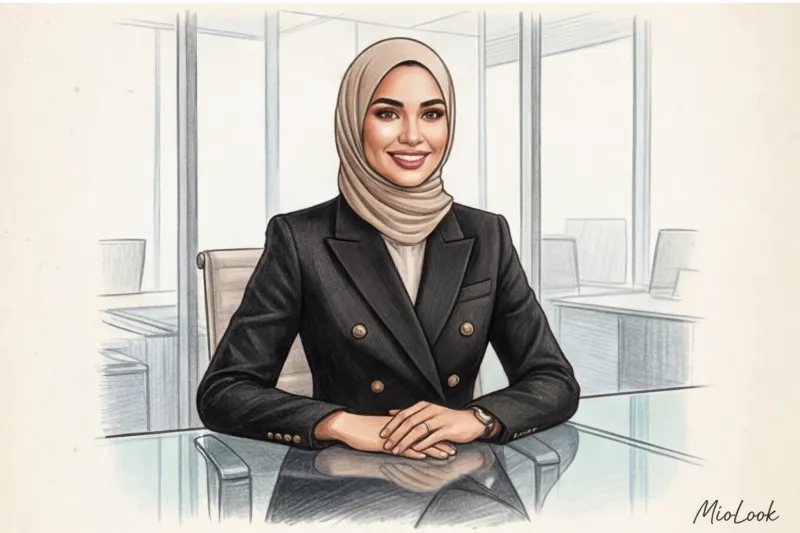
Many of my clients who are building a career in Europe constantly ask, How to wear a hijab to work To look classy and professional without violating the corporate dress code. Spoiler: you don't need to learn how to twist a scarf ten different ways. You just need the right fabric and an understanding of business suit proportions.
We've already covered integrating closed-toe clothing into office style in more detail in our complete guide: Business attire for Muslim women: stylish looks Today, we'll talk exclusively about the portrait zone—the very place where your partners look during negotiations.
How to Wear a Hijab to Work: From Stereotypes to Corporate Power Dressing
Forget about perceiving the headscarf solely as a religious attribute. In the realities of international corporations, the hijab is a powerful tool of Corporate Power Dressing. According to the State of the Global Islamic Economy Report 2023, demand for professional modest clothing has grown by 34%, and brands are finally beginning to adapt their designs to the needs of businesswomen.
The main rule of office style is the absence of visual noise. The architecture of a classic jacket, with its crisp shoulder line and English collar, demands a minimalist finish. If you're wearing a clearly structured blazer, your pocket square should complement it rather than compete for attention. The fewer details in the portrait area, the more your interlocutor will focus on your words, not your clothes.
The Biggest Mistake: Why Voluminous Hairstyles and Pins Ruin a Business Image
The voluminous, multi-folded hijab (the so-called "waterfall style"), popular on social media, is a total anti-trend for the office. Excessive volume around the neckline disrupts the suit's design, clashes with the lapels, and makes the look visually untidy.
"Visible safety pins and complex fabric piles are subconsciously perceived by others as fussiness and insecurity. A sleek silhouette directly correlates with the perception of your status."
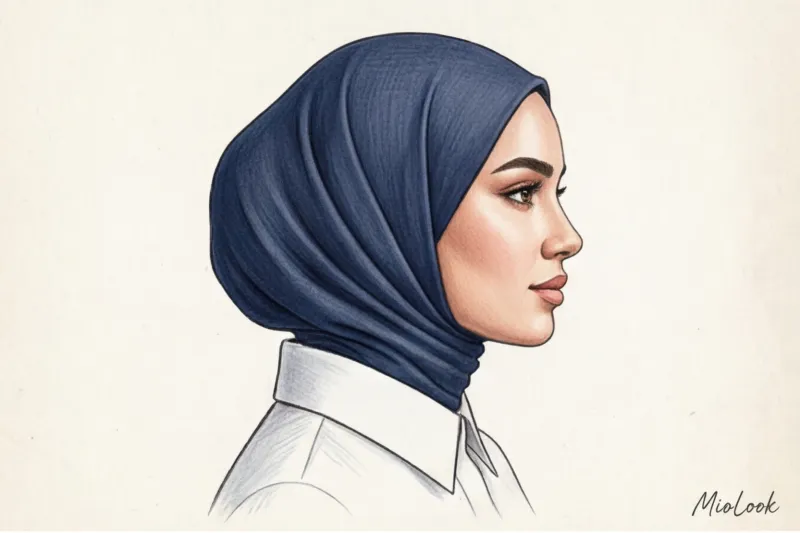
I had a revealing case in my practice. A senior lawyer from Frankfurt approached me: her wardrobe consisted of expensive suits, but she constantly wore voluminous chiffon scarves pinned with numerous pins. We simply replaced this slicked-back volume with a sleek, premium modal style, tucking the ends under her jacket. A month later, she admitted that her partners began to perceive her differently—her appearance had become more rigid and composed, and the softness that had been a hindrance in court had disappeared.
Access to MioLook for €0.99 — one-time payment
A smart AI stylist will select the perfect business look and help you integrate the hijab into your wardrobe.
Get access — €0.99 onceIdeal Fabrics for an Office Scarf: A Stylist's Checklist
Business Professional dress codes are merciless when it comes to cheap textures. Polyester and shiny, "samovar" satin are strictly off-limits. Not only do they cheapen the look, but they also create a greenhouse effect in offices with artificial ventilation.
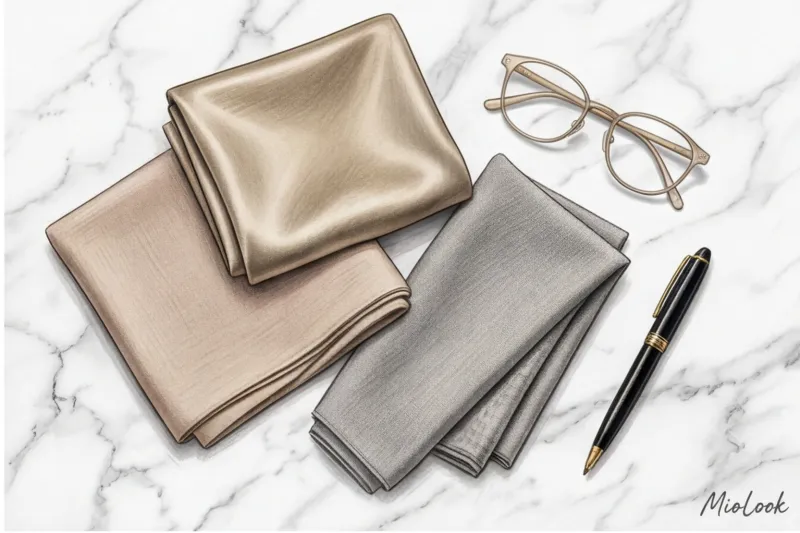
Premium Modal: A breathable everyday base layer
Modal (especially with added cotton or viscose) is your best investment for an 8-hour workday. It has a luxurious matte finish, fits perfectly, and doesn't slip through your hair. Tests show that 100% viscose or modal is 40% more comfortable in air-conditioned rooms than any synthetic material. A quality modal scarf costs between €20 and €40. Excellent basic options can often be found at Uniqlo or COS.
Thick silk and crepe: status for negotiations and meetings
For days with a board meeting or an important presentation, reach for a thick, structured silk. Unlike fine chiffon, it holds its shape, doesn't flutter in the slightest draft, and elegantly reflects light. Crepe chiffon is the perfect compromise: it has a grainy, matte texture and doesn't slip, but looks more formal than cotton. A good silk scarf will cost around €100–€150 but will serve you faithfully for five years or more.
3 Smart Ways to Wear a Hijab for the Office Without Adding Excess Bulk
No magic, just the geometry and physics of fabric. The choice of styling method is always dictated by the collar shape of your blouse or jacket.
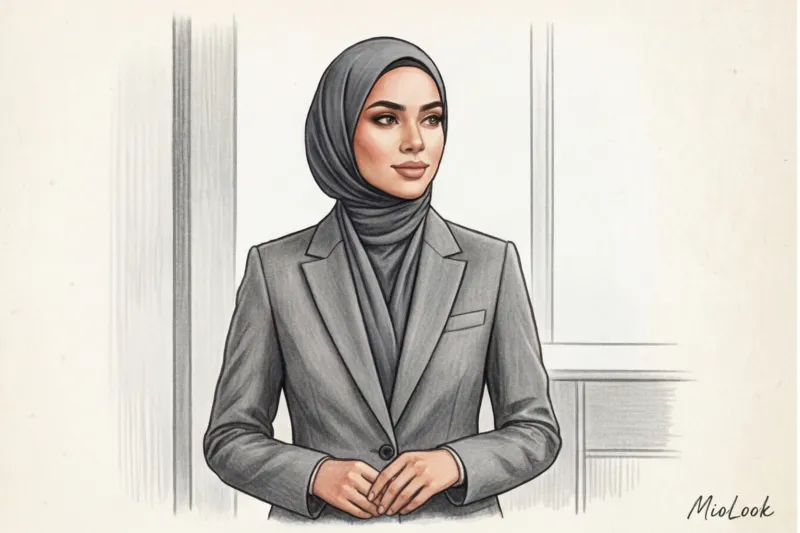
The Sleek Wrap (A sleek classic under a blazer)
The most formal and "expensive" method. The scarf is wrapped tightly around the head, with both ends neatly tucked under the jacket or shirt. This is the ideal solution for double-breasted suits, as the scarf fabric doesn't obscure the buttons, lapels, or waistline. It requires a high-quality undercap (bonnet) to prevent the scarf from slipping when turning the head.
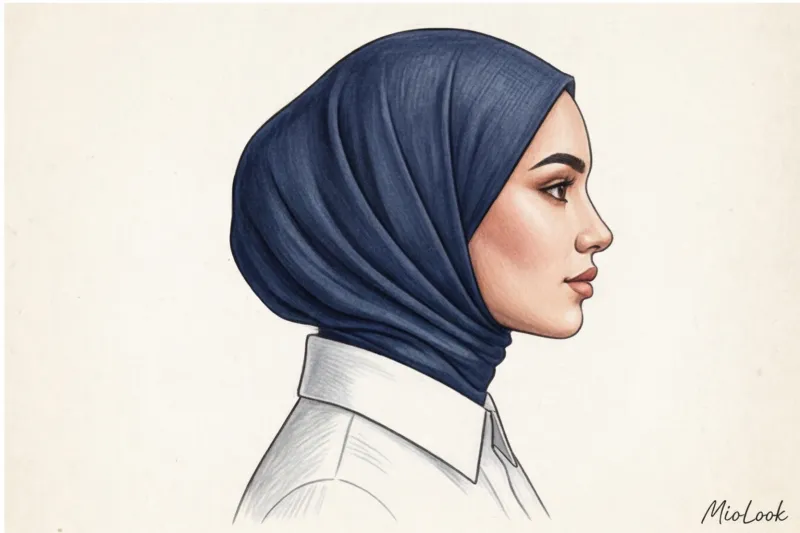
The Clean Drape
One end of the scarf remains in front, and the other is draped over the opposite shoulder without being firmly secured. This technique creates an additional vertical line, visually elongating the figure. It works great in business casual styles, paired with relaxed, thick wool cardigans or shirt dresses.
Turban-style (Strict turban)
The ends of the scarf are tucked back, completely exposing the neck. Important: this style requires wearing turtlenecks or shirts with high, stiff collars, buttoned up. This is a favorite technique in creative industries (IT, architectural firms, media).
Limitation: I always warn my clients that a turban doesn't always conform to the rules of conservative formal. If you work in an investment bank or a government court, it's better to stick with a classic sleek wrap.
Ready to digitize your wardrobe?
Use MioLook's smart wardrobe feature to plan suit and scarf combinations in advance.
Get access — €0.99 onceColor palette: integration into a business capsule wardrobe
The pinnacle of corporate style is the Monochrome rule. A hijab, matched tone-on-tone to a suit, looks supremely classy. This technique is often used by stylists in The Row or COS lookbooks to emphasize the luxury of minimalism.
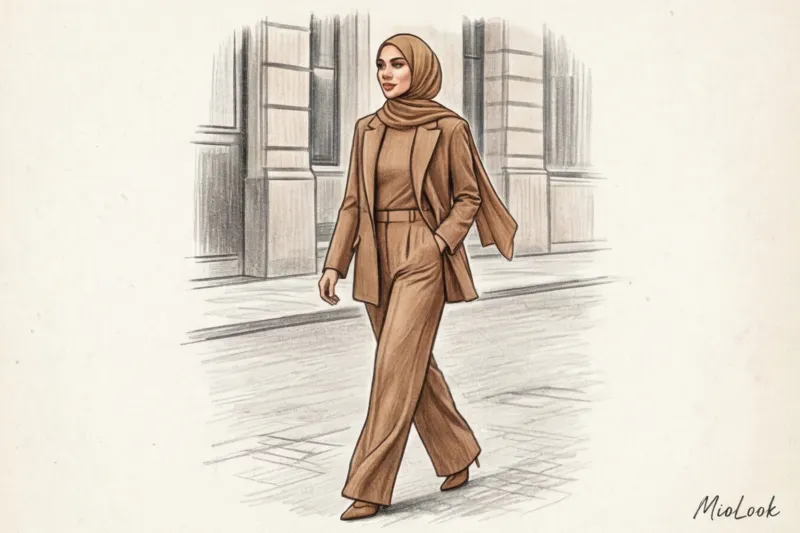
Over the years of working as a personal shopper, I've discovered a golden life hack: buy a scarf with your suit. Brands like Massimo Dutti or & Other Stories often feature scarves, thin stoles, and basic long sleeves in the same color lot as the suit fabric. Achieving a 100% color match when shopping at different stores is practically impossible.
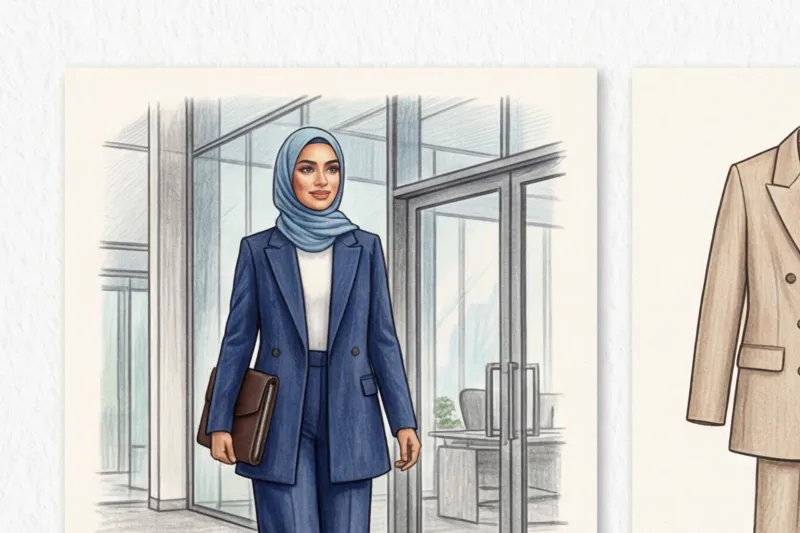
If monochrome seems boring, try contrasting basic combinations: deep navy with taupe, graphite with cool beige, or camel with black. As for prints, avoid large floral patterns in the office. Stick to micro-geometric prints (such as pinstripes or tiny houndstooth) or subtle monograms.
Technical background: why magnets and bonnets are more important than the scarf itself
As a stylist, I always start assembling a modest capsule wardrobe for my clients not with purchasing silk, but with purchasing a high-quality technical base. Without the right foundation, even the most expensive Hermès scarf will slip sideways after two hours of intense computer work.
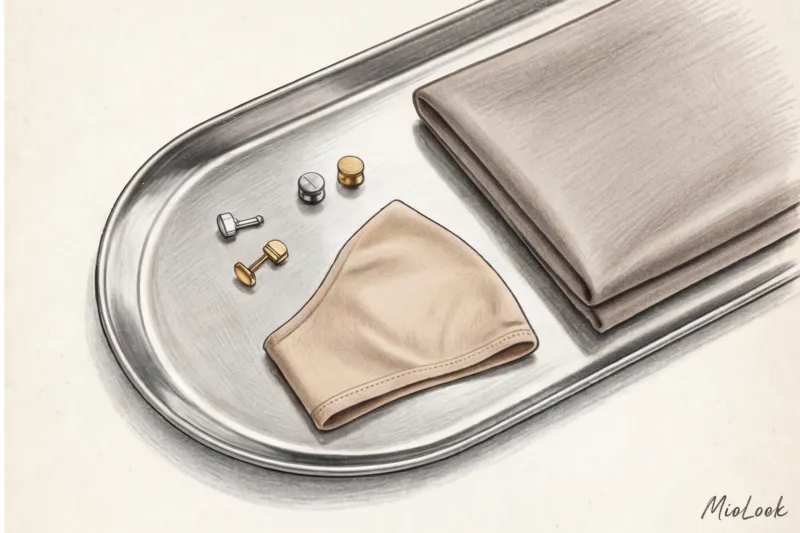
Forget safety pins. Firstly, they leave tiny snags and ruin the delicate silk. Secondly, exposed metal looks unsightly. Invest in strong neodymium hijab magnets. They come in shades that match your main jewelry (gold, silver, matte black) and hold the fabric securely in place, remaining virtually invisible.
The second element is the undercap. Avoid cheap synthetics, which can cause headaches. Look for seamless bamboo or cotton models. The undercap's color should either blend with the scarf's color or closely match your skin tone, otherwise you'll end up with an unsightly "bandage effect" on your forehead, which distorts the proportions of your face.
Checklist: Putting together a basic set of scarves for the office
An office hijab capsule shouldn't take up half your closet. To cover 100% of your workweek needs, you'll need just a few quality items. If you're just starting to build your business wardrobe, here's your shopping plan (total budget: approximately €150-€200):
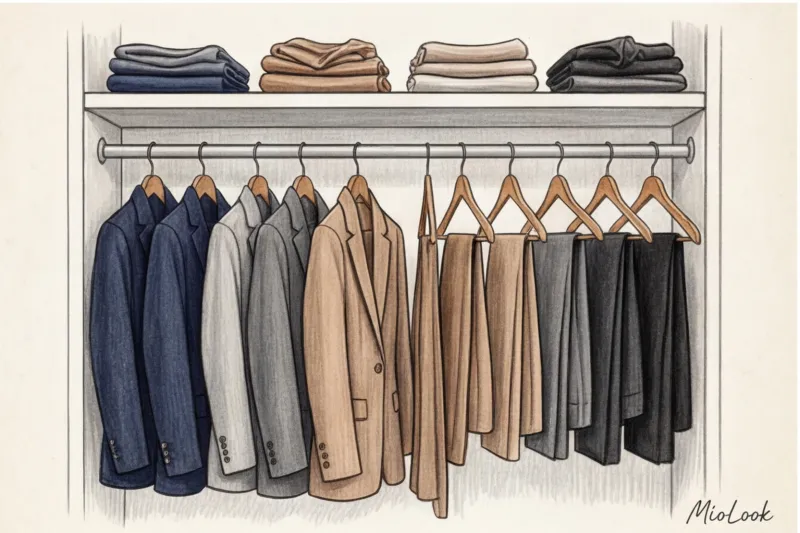
- 3 matte modal/cotton scarves in basic shades: black, milky (not snow-white!), and complex neutral colors (taupe or cool camel).
- 1 thick silk or crepe scarf for special occasions, presentations and corporate dinners.
- Set of magnets (minimum two pairs: gold and silver).
- 2 seamless undercaps (one black, one nude to match skin color).
Wearing a hijab in the office should be your armor, an element of strength and confidence, not a source of constant worry about slipping fabric or protruding pins. Choose thick, matte textures, tuck the ends under your jacket lapels, and remember: in the corporate world, a sleek design always trumps excessive embellishment.