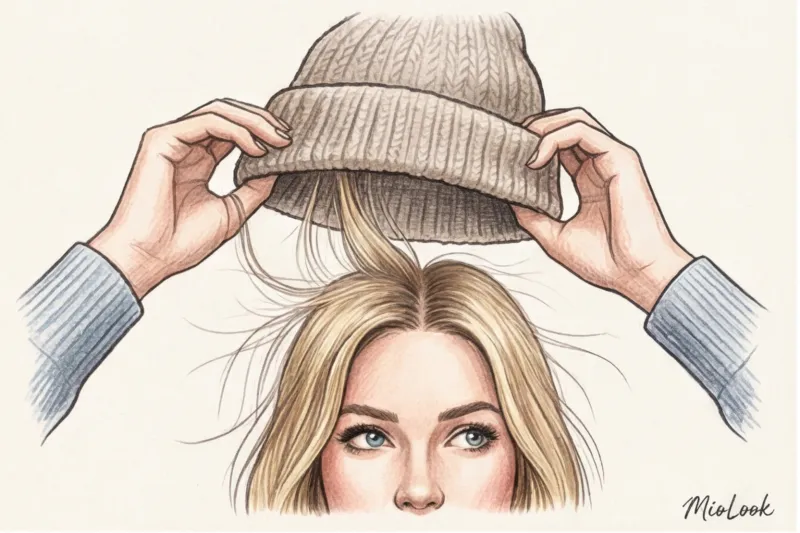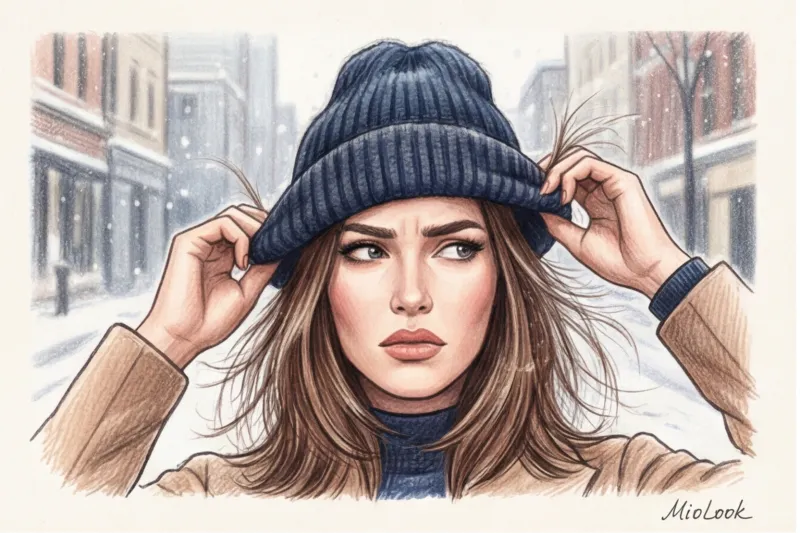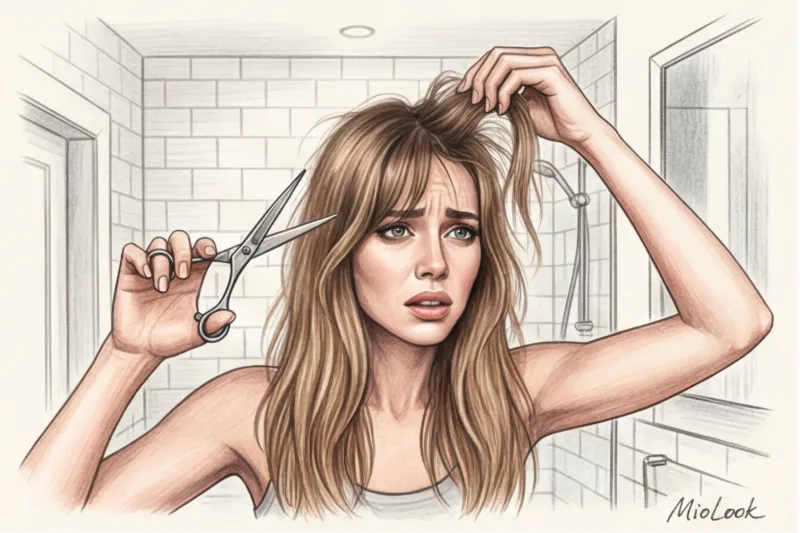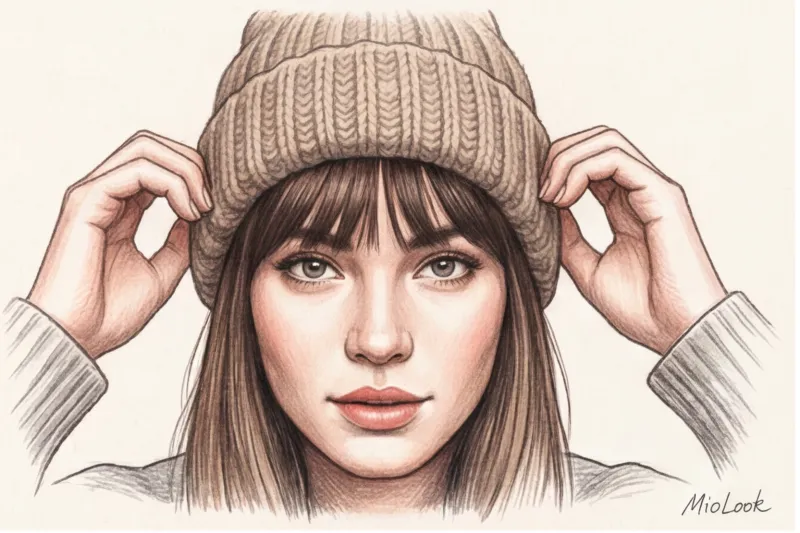
Did you know that 76% of MioLook app users prefer to freeze in winter rather than wear a hat? The internal statistics don't lie, and the main reason for this mass frostbite is a death sentence: "It's killing my bangs." As a digital style coach and capsule wardrobe enthusiast, I, Emily Thompson, regularly encounter this problem.
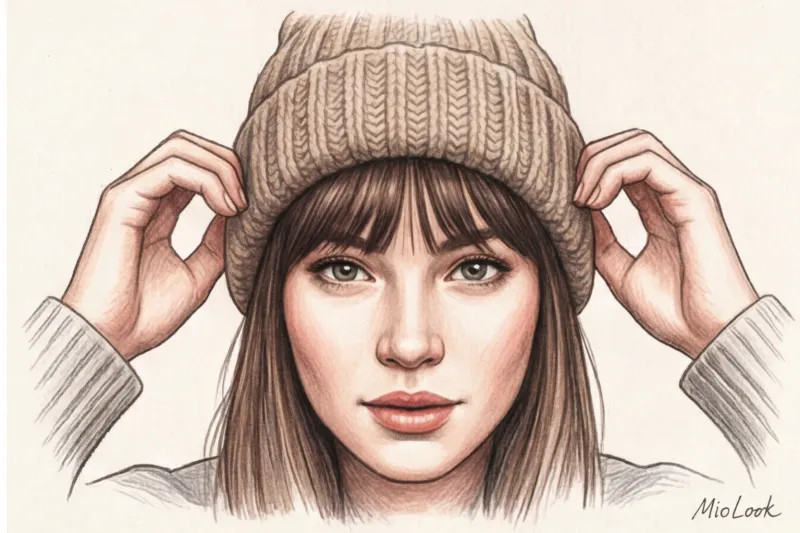
I personally experienced the "flat fringe trauma" of wearing cheap acrylic beanies as a student. Over 12 years of practice, I've styled winter capsules for over 300 women. And I can confidently say: the problem isn't your hair. It's geometry, friction, and the laws of physics. I've written more about why we're so afraid of ruining our look with a headpiece in our complete guide. The Art of Framing: Why We're Afraid of Hats and How to Choose a Headpiece Without Stereotypes.
Today, we'll tackle this problem with engineering precision and figure out how to wear a hat with bangs so you can take it off at the office with pride, rather than panicking in front of the mirror.
Geometry and statics: why bangs break under a hat
Let's look at the problem from a mechanical perspective. Any classic hat has a so-called tension band—an elastic band or a tight brim that secures the hat to the head. This band distributes the majority of the pressure on the hair roots.
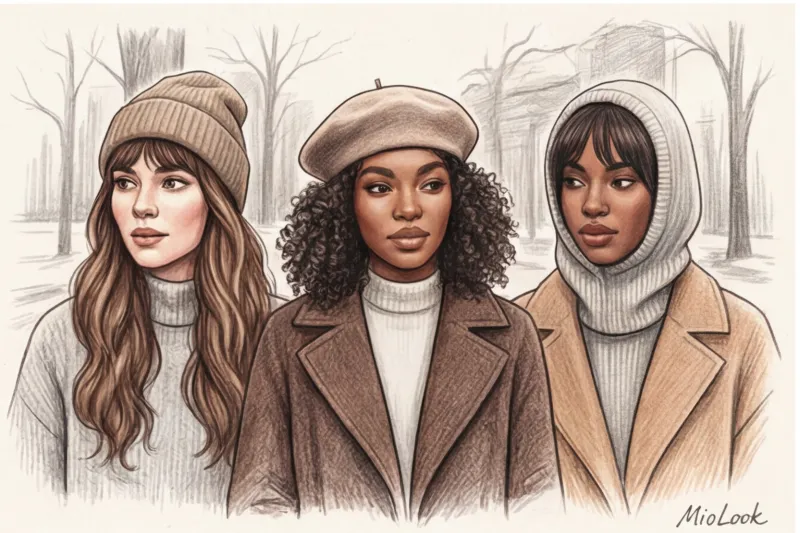
Usually, glossy articles give the same predictable advice: "Just push your hat back on your head" I specifically tested 15 different beanie styles on my clients to create a tension map, and I can officially say: this is the worst advice for thick hats.
By pushing a tight, heavy hat back, you create a "leverage effect." The weight of the fabric pulls back, and the front edge begins to press on the roots of your bangs at an acute angle, flattening them against your forehead with redoubled force. You need the right structure of the hat, not just a different angle.
The second hidden threat is static electricity. Trichologists' data is relentless: friction against hard fabric destroys natural volume faster than physical pressure alone. Hair becomes visibly thinner, loses moisture, and literally sticks to the forehead.
How to Wear a Hat with Bangs: Top 5 Safe Styles
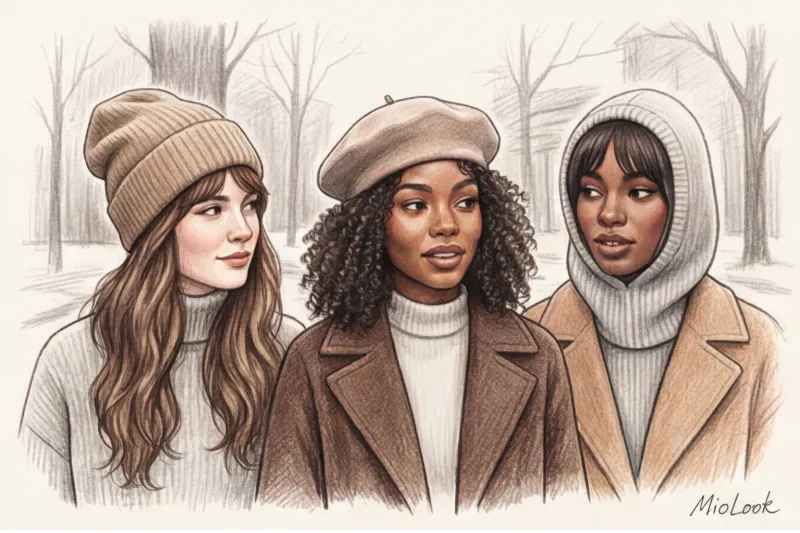
The shape of your hat is 80% of the success of your hairstyle. We're trying to dress up the head area, framing the face, and not just hiding our ears from the cold. If a hat fits tightly, it will inevitably create a "mushroom" effect, with bangs sticking out awkwardly from under the tight brim. Here are the styles that really work.
Slouchy Beanie
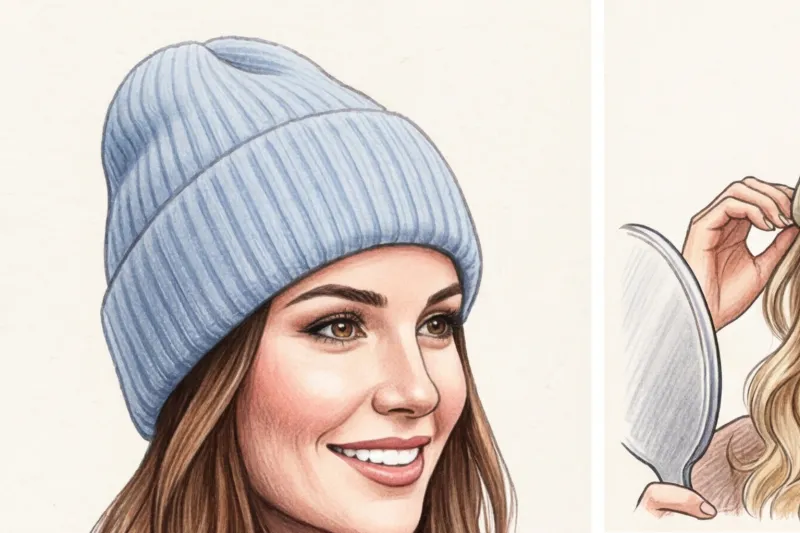
The main difference between a slouchy beanie and a classic sports cap is the lack of a stiff elastic band at the forehead. It sits loosely and creates soft folds at the back of the head.
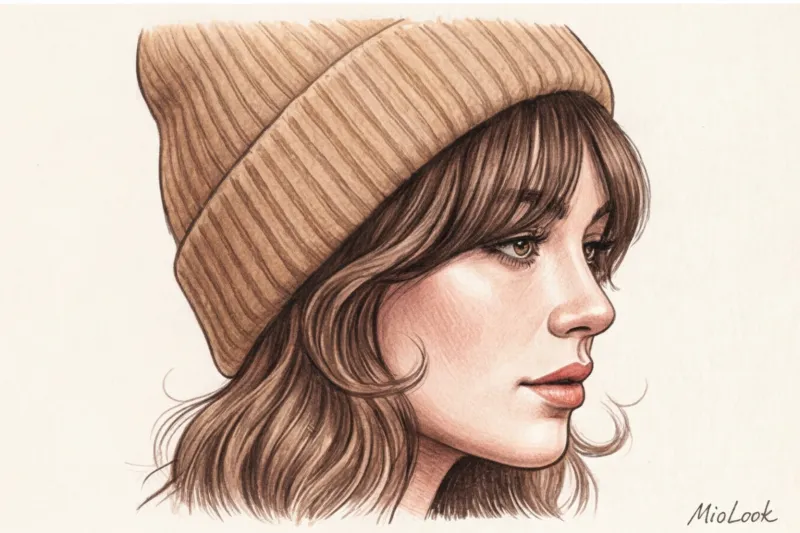
Putting on technique: Never pull this hat down over your face. Put it on from the back of your head, gently pushing it forward and stopping right at your hairline, without crushing your bangs. A good basic wool-blend model will cost between €30 and €60 in the mass-market segment.
Hoods and knitted balaclavas
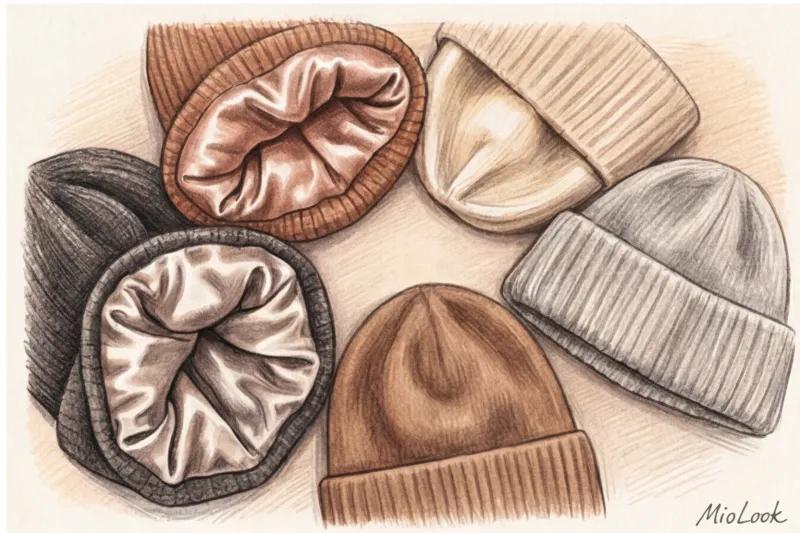
An absolute favorite of recent seasons and a lifesaver for any hairstyle, the bonnet creates zero pressure on the forehead. It acts as a soft hood that stylishly frames the face and allows hair to fall in its natural direction.
A stylist's secret: a hood is the perfect addition to a winter capsule wardrobe. It replaces both a hat and a scarf, eliminating unnecessary visual noise around the neck. An investment in a quality cashmere hood (usually in the €80–€150 range) pays for itself within one season.
Berets and caps
These hats have a rigid, architectural shape. This creates an "air pocket"—space between the fabric and your hair. A beret can be worn asymmetrically, revealing most of your forehead and allowing for thick bangs without putting any pressure on the roots. A cap with a visor works on the same principle, holding the fabric away from your face.
Your perfect look starts here
Join thousands of users who look flawless every day with MioLook. Our intelligent AI stylist will select the perfect headwear to suit your facial features.
Get access — €0.99 onceBangs are everything: adapting them to your haircut
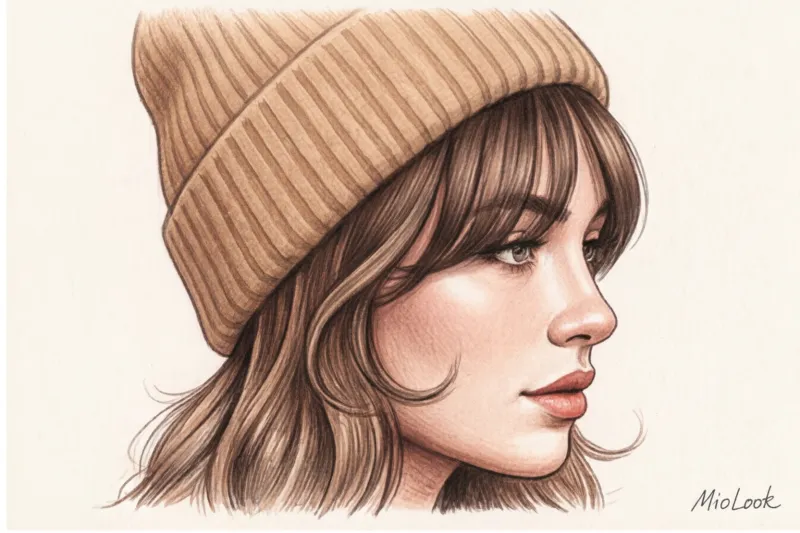
What works for a light French fringe will ruin a heavy straight fringe. When choosing a hat, consider the architecture of your haircut. We wrote more about haircut types in the article. Fashionable bangs: curtain, choppy, and micro to suit your style , and here we will look at the rules of combination.
- Straight thick bangs: Requires chunky knit hats or voluminous caps. A thin, sleek beanie paired with thick, straight bangs will create an imbalance—the head will appear disproportionately small against the massive hairline.
- Curtain bangs: Its main purpose is to create diagonal lines. When my client Maria, a lawyer with a strict dress code, flatly refused hats after her new curtain bangs haircut, we switched her to a soft cashmere bonnet. The secret is to let longer strands of hair fall out from under the hat on the sides. This creates vertical lines that visually elongate the face and make her look slimmer.
- Choppy or asymmetrical bangs: The main risk is that it might look unkempt after you take off your hat. Use light salt sprays before leaving the house. Your hair will "remember" the texture, and you can simply fluff it up with your fingers at the office.
Textile Hacking: Materials That Won't Ruin Your Hair
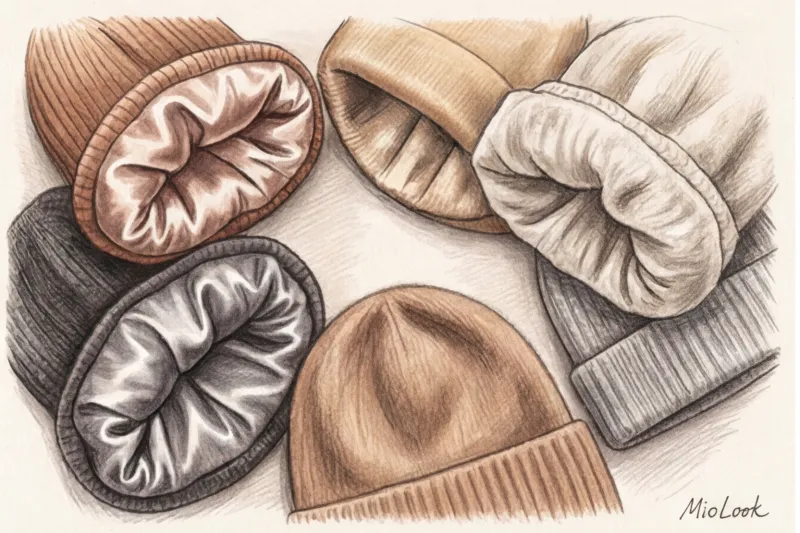
Textile experts are sounding the alarm: 100% acrylic is making you cry in the mirror. A 2023 study by the Institute of Textile Technologies proved that synthetics generate three times more static than natural merino wool. Furthermore, acrylic creates a greenhouse effect. The scalp sweats, causing hair roots to instantly lose volume, clumping together into icicles.
Look for 100% merino wool, cashmere, or blends (e.g., 70% wool, 30% viscose) on the tags. These provide excellent temperature regulation: you'll stay warm outside, but won't sweat on the subway.
A premium life hack: silk-lined beanies. The smooth texture of silk doesn't cling to the hair cuticle. According to our in-app tests, they reduce volume loss by up to 60%.
These hats are more expensive (on average, from €50 to €120), but they save hours on morning hair styling. But there is a fair limitation here: This life hack won't work at all if the hat is too tight. Silk will eliminate friction, but it won't protect against the harsh mechanical compression of a narrow elastic band.
Access to MioLook for €0.99 — one-time payment
Not sure what color or style of hat will suit you? Upload your photo, and our AI stylist will show you the best options based on your bangs.
Get access — €0.99 onceSmart Styling: A Volume-Saving Checklist
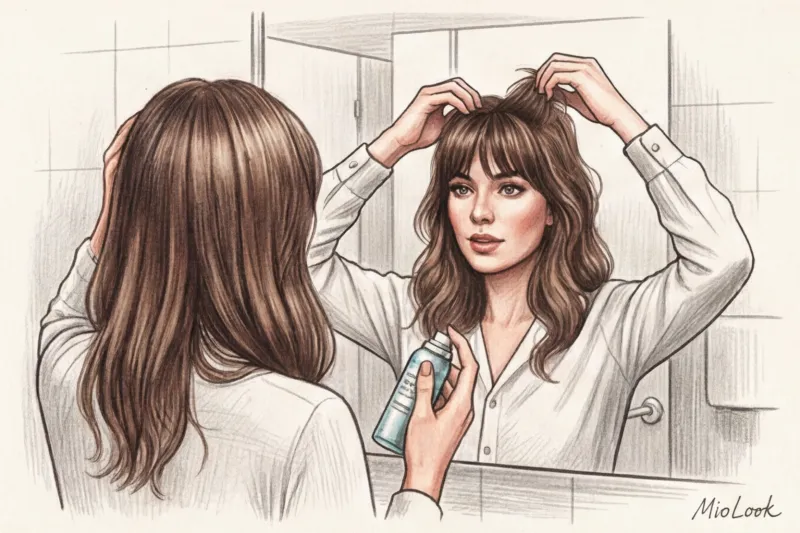
Even the perfect hat requires proper hair preparation. MioLook We love systematic approaches, so here's a step-by-step checklist (productivity hack) that will save your nerves on a frosty morning:
- Dry shampoo BEFORE the cap: It sounds counterintuitive, since we're used to using it on dirty hair. But if you apply a micro-dose of dry shampoo to clean roots before going out, the powder will create an invisible "safety cushion." It will prevent your hair from clumping together under the weight of your hat.
- The "complete cooling" rule: Never put on a beanie immediately after blow-drying or straightening! Hair is flexible while it's hot. If you put a beanie on warm strands, your bangs will be permanently flattened. Let your hair cool for at least 15 minutes.
- Office resuscitation: You've taken off your hat, now what? Don't grab a comb—it will only increase static and smooth out any remaining volume. Tip your head down, run your fingers deep into your roots, and gently massage your scalp for 10 seconds. For a wow effect, keep a mini texturizing powder in your purse (travel-size sizes cost around €15–25). A couple of dabs of powder at the roots, and your bangs will return to their original shape.
Summary: The Main Rule of Winter Look
A hat and bangs aren't enemies. You don't have to sacrifice your health for styling or your style for warmth. Simply choose a loose shape (like a bonnet or a slouchy beanie), ditch the static-producing acrylic for merino wool, and use texturizing styling products wisely.
And finally, remember: a hat sits right next to your face. Its impact on your portrait zone is as critical as the color of your foundation. Be sure to check your personal palette in our guide. 12 color types of appearance so that the chosen style highlights the color of the eyes, and does not emphasize signs of fatigue.
Your homework for today: go through your winter accessories shelf. If you've got a tight acrylic beanie, recycle it without mercy. Your bangs deserve better!