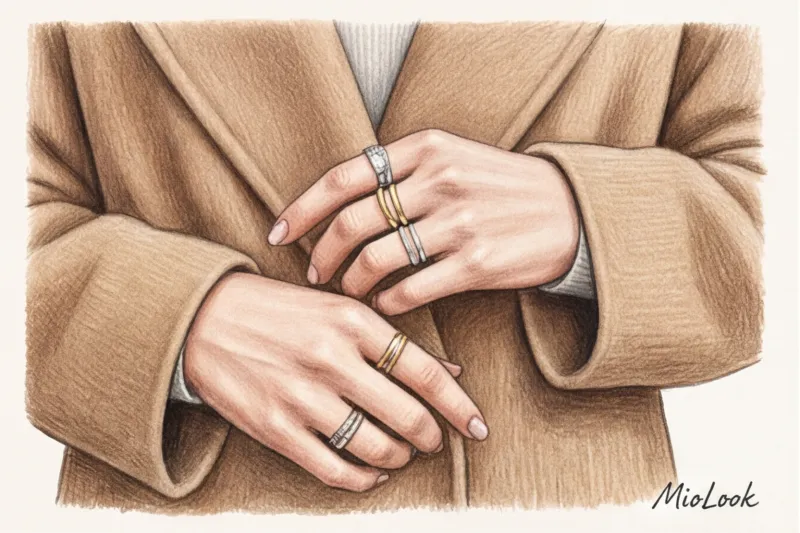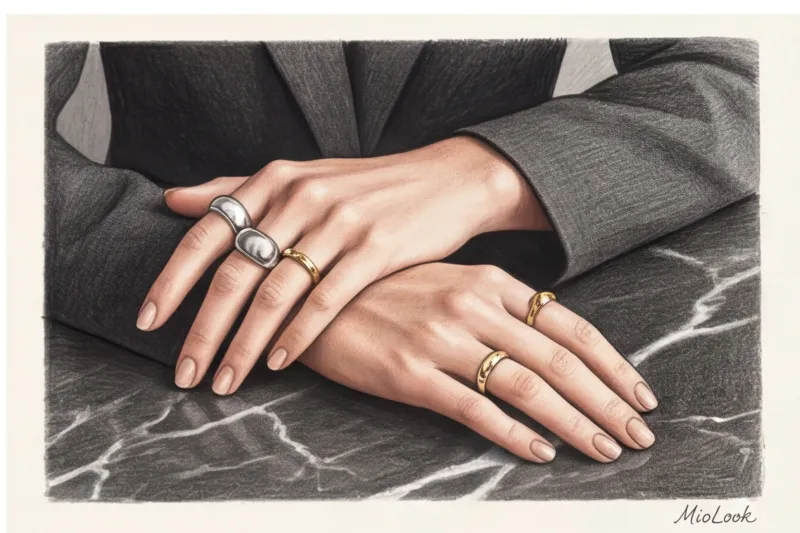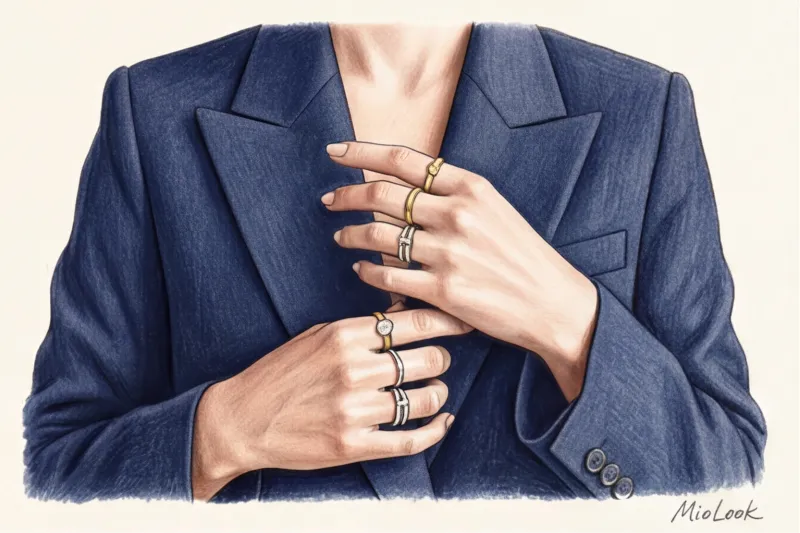
Have you ever noticed how micro-scratches and scuffs suddenly appear on your favorite gold ring, even though you take it off before washing dishes? Often, the culprit isn't the harsh environment, but a nearby silver ring on the same finger. Glossy magazines have been telling us for years: "Mix metals, don't be afraid to experiment!" But they forget to mention the laws of physics. Mindlessly layering different alloys not only creates visual noise but also literally destroys your jewelry.
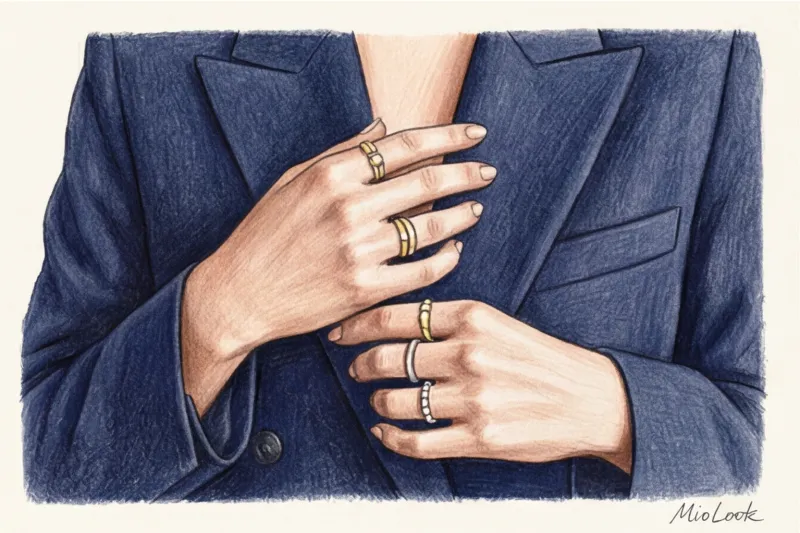
Today, the question of how to wear gold and silver has moved from the realm of strict taboo to the realm of stylistic mathematics. We've covered the role of accessories in more detail in our The complete guide to a basic jewelry wardrobe In this article, we'll explore the mechanics of combining metals. I'll show you how to pair the contents of your jewelry box using the Mohs scale, the 80/20 rule, and image architecture.
Debunking the Myth: Why the "One Metal Only" Rule Is Hopelessly Outdated
For decades, wearing only one metal was less a matter of aesthetics than a social marker. In the conservative society of the turn of the century, a formal gold or platinum set (necklace, earrings, bracelet, and ring all in the same design) clearly demonstrated a family's status and financial well-being. Mixing was perceived as an attempt to "wear all the best at once" due to a lack of funds for a complete set.
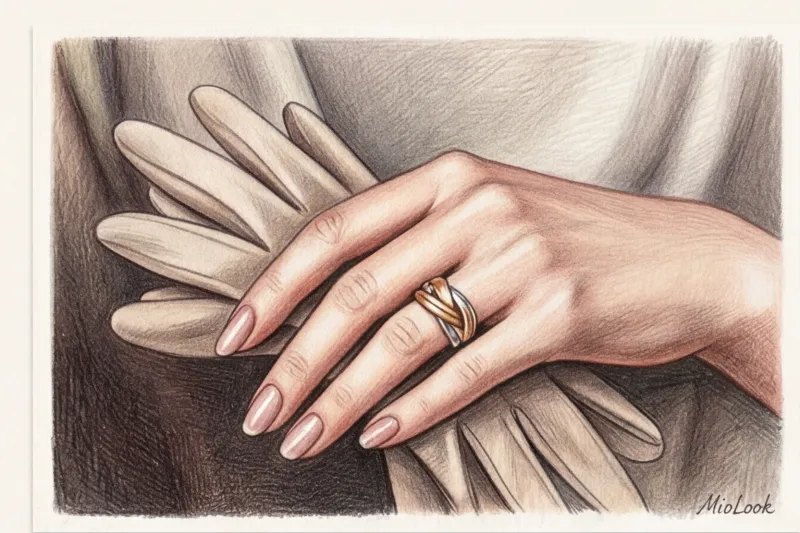
A turning point occurred in 1924, when Louis Cartier, at the request of Jean Cocteau, created the iconic Trinity ring. Three intertwined hoops of yellow, white, and rose gold forever legitimized the idea of mixed metals in high society. Jewelry fashion has come a long way since then. According to a 2024 report by the analytical agency WGSN, the trend toward "personalized eclecticism" has finally supplanted the fashion for ready-made sets. Today, the rejection of strict sets creates a more lively, dynamic, and less "stressed" look.
Wearing the perfect single-metal ensemble these days is like matching your shoes exactly to your bag: it's possible, but it betrays a lack of stylistic imagination. The ability to masterfully mix the warm glow of gold with the coolness of steel or silver demonstrates high stylistic intelligence and self-confidence.
Metallurgy and Durability: What the Glossy Magazines Don't Tell You
The popular advice on social media, "Just wear all your favorite rings of different metals on one hand," is deeply flawed and dangerous for your investments. This is where physics comes into play, specifically the Mohs scale of mineral hardness.
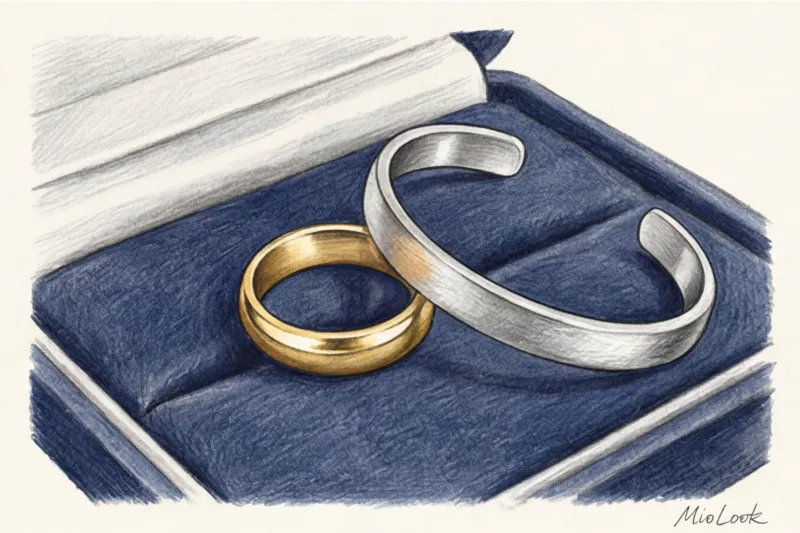
Let's look at the numbers. The hardness of classic 18-karat gold (750 fineness) is only 2.5–3 on the Mohs scale—it's a very soft alloy. Sterling silver (925 fineness) itself has a similar hardness, but modern brands almost always coat it with rhodium to protect it from tarnishing. Rhodium, however, can reach a hardness of up to 6. What happens when you put rhodium-plated silver next to an expensive gold ring? With every movement of your hand, the harder metal acts as an abrasive, leaving micro-scratches on the soft gold and wearing away the polish.
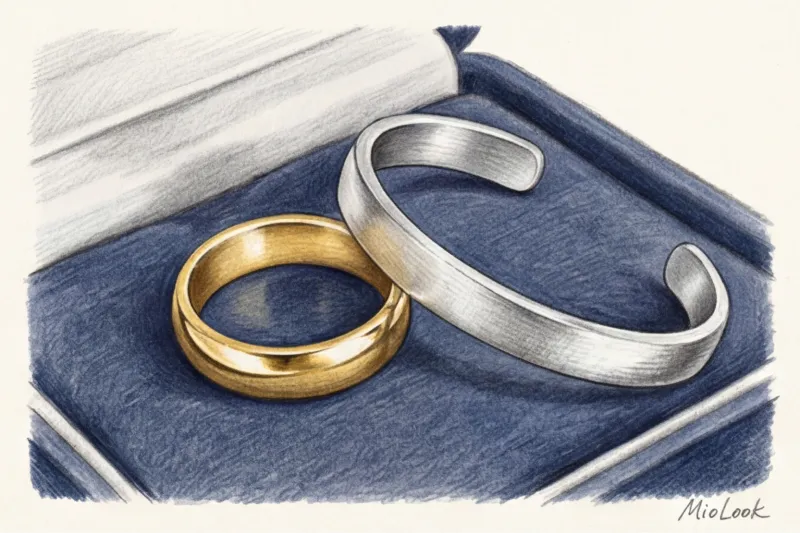
Over my 12 years of working as a stylist, I've seen the same scenario over and over again: a client buys a trendy gold-plated necklace (vermeil) for €150-200 and wears it tightly with a chunky silver chain. Within a month, there's no trace of the gold plating left in the areas of friction. The difference between solid alloys and gold-plated gold is colossal: while solid gold simply loses its luster, gold-plated gold will peel off down to the base metal.
"The main rule for long-lasting styling: metals of different hardness should not rub against each other. Separate them into zones or use spacers made of neutral materials."
Access to MioLook for €0.99 — one-time payment
A smart AI stylist will select the perfect look based on your jewelry and wardrobe.
Get access — €0.99 onceHow to Wear Gold and Silver: 3 Formulas for Impeccable Style
If we abandon mindless layering, how then can we create complex combinations? There are clear formulas for proportions that work flawlessly and integrate into any business capsule wardrobes.
The 80/20 Rule: The Secret to Perfect Balance
The most common mistake beginners make is trying to split the metals evenly. A 50/50 ratio looks like you couldn't decide what to wear and ended up wearing everything at once. The human eye loves a clear hierarchy. To create a harmonious look, use an 80/20 ratio, where one metal acts as the background (base) and the other as the accent.
How do you choose the dominant 80%? Look to the hardware on your clothing (buttons, buckles, zippers) or your skin tone. If you're wearing a jacket with chunky brass buttons, choose 80% of your jewelry in a warm gold tone, while a delicate silver ring or thin chain makes up the remaining 20% to add depth to your look.
The Bridge Piece: Your Stylistic Lifesaver
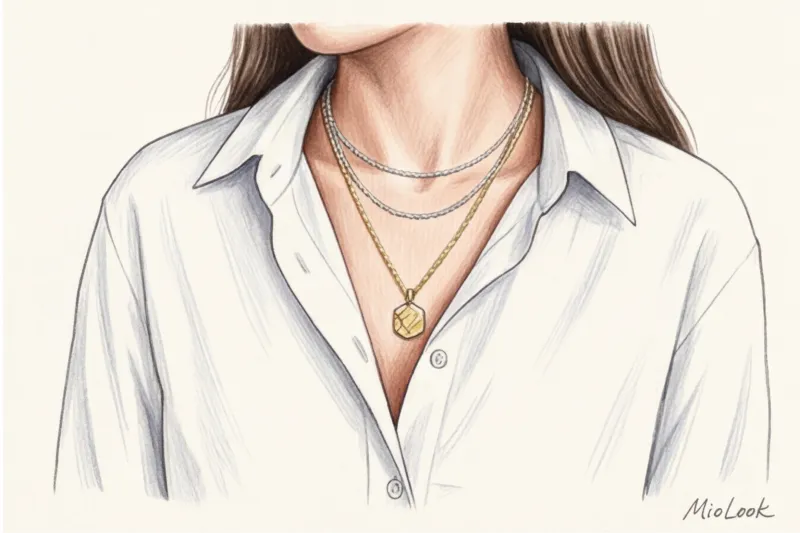
Bimetallic jewelry (made from two metals at once) is an absolute must-have for those who want to freely mix and match the contents of their jewelry box. Wearing one such piece legitimizes any mix of metals in the rest of your look. It acts as a "bridge" that visually connects disparate elements.
One of my clients, a top manager at an IT corporation, faced a typical problem. She was proud of her high-status platinum watch, but she had inherited stunning vintage yellow gold earrings from her grandmother that she really wanted to wear every day. Together, they looked out of place. The solution was simple: we added expert image A simple two-tone ring (gold and white gold). This small element, costing around €250, instantly ties together the watch's platinum and the earrings' yellow gold, creating a cohesive composition.
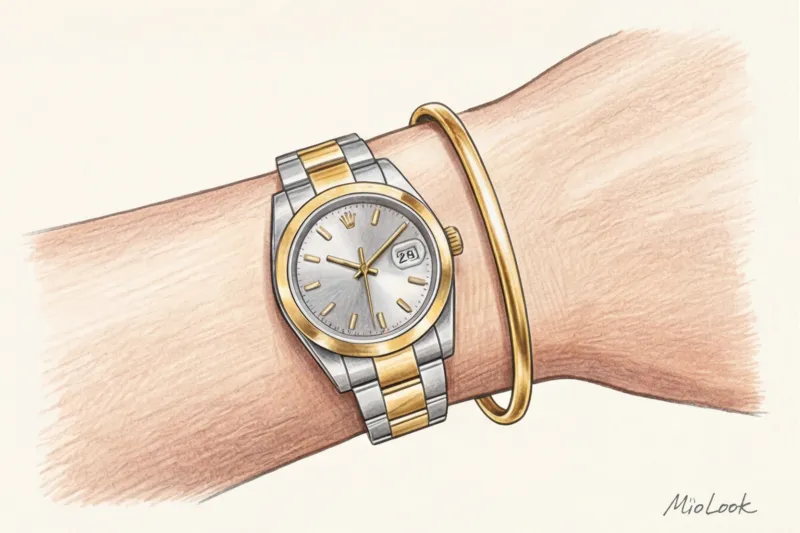
Unification through form and texture
If you wear different metals, they should share a common stylistic DNA. The secret to an elegant combination lies in matching textures. Silver and gold look great together if both pieces have a glossy polished finish, or, conversely, both are matte (brushed).
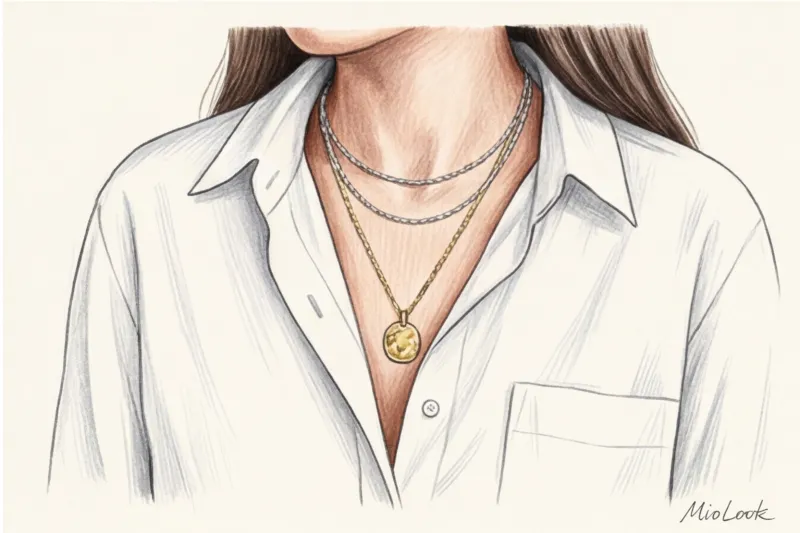
But here's when it doesn't work: never mix smooth, mirror-polished silver with hammered (hammered) yellow gold in a boho style. The difference in temperature between the metals, coupled with the clash of textures and styles (minimalism versus ethnic), will create a sloppy look.
Zoning: the art of distributing accents
To avoid physical friction between metals and visual chaos, stylists use the triangle method. You distribute metals across three main anatomical zones: the face/ears, the décolleté, and the wrists/hands. For example, you might choose gold earrings and a necklace (forming the top half of the look), and on your wrist, wear a steel watch paired with a silver bracelet, separated by a leather strap.
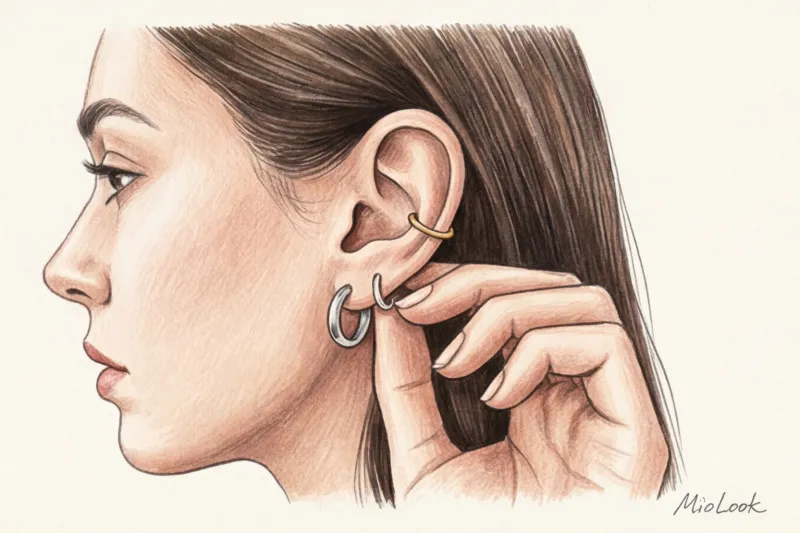
When layering necklaces, it's crucial to alternate the length and thickness of your chains. If you want to wear both gold and silver chains at the same time, make sure there's at least a 4-5 centimeter difference in length between them. This will prevent them from tangling and scratching each other. For rings, spacers made of neutral materials—ceramic, enamel, or a solid row of small diamonds/cubic zirconia—are an excellent solution. These will physically prevent the two different metals from rubbing against each other. To avoid racking your brain over combinations every morning, I recommend digitizing your accessories—a perfect option is MioLook's virtual wardrobe feature , where you can assemble ready-made sets in advance.
Rookie mistakes: what instantly cheapens an image
Even knowing the basic rules, it's easy to slip up on the nuances. In my experience, three mistakes are the most detrimental to a look:
- A combination of darkened (oxidized) silver with bright yellow gold. Oxidized silver has a vintage, grunge feel and a blackish sheen. Paired with shimmering 18-karat yellow gold, it looks less stylish and more dirty. Gold requires pure, rhodium-plated silver.
- Ignoring fittings on clothing. If your bag has a chunky chrome chain, your jacket has silver zippers, and you're wearing a chunky gold necklace, the look falls apart. Hardware is a valuable part of the jewelry ensemble. Consider it when calculating the 80/20 ratio.
- Mixing more than two shades. White silver, classic yellow gold, and copper-toned rose gold worn together transform you into a jewelry store window display. Limit yourself to two shades per look.
Your perfect look starts here
Join thousands of users who look flawless every day with MioLook.
Get access — €0.99 onceChecklist: Integrating Mixed Metals into Your Basic Jewelry Wardrobe
It's best to transition to wearing different metals freely gradually. Don't buy dozens of new pieces at once. Take inventory of your current jewelry box and identify those pieces you've stopped wearing simply because they "don't match" your favorite everyday watch or wedding ring.
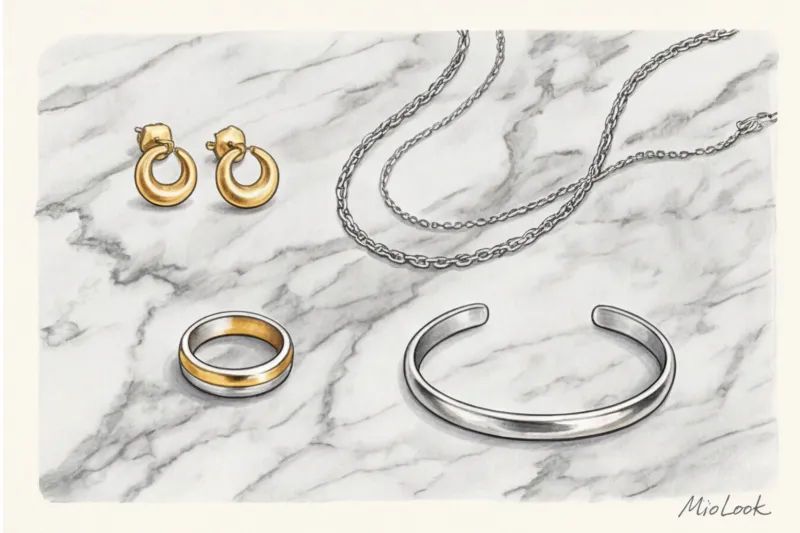
- Buy a connecting link. Start with a quality bimetallic ring or earrings in the €80–€150 range. This small investment will literally unlock the rest of your jewelry box.
- Synchronize styles. Select jewelry with strict geometric patterns (basic business style) and place them separately from romantic floral motifs. Mixing metals is only safe within the same style group.
- Keep your distance. Check your favorite bracelets for friction. If you wear a hard silver bangle next to a soft gold one, don't be surprised if scratches quickly develop. Separate them into different hands.
Mixing gold and silver isn't a chaotic rebellion against the rules, but a subtle play with textures, proportions, and the laws of physics. Use a bridge piece, maintain an 80/20 balance, and protect the soft alloys from aggressive friction. Remember: a truly prestigious look is built not on a strict color match, but on a thoughtful harmony of details.