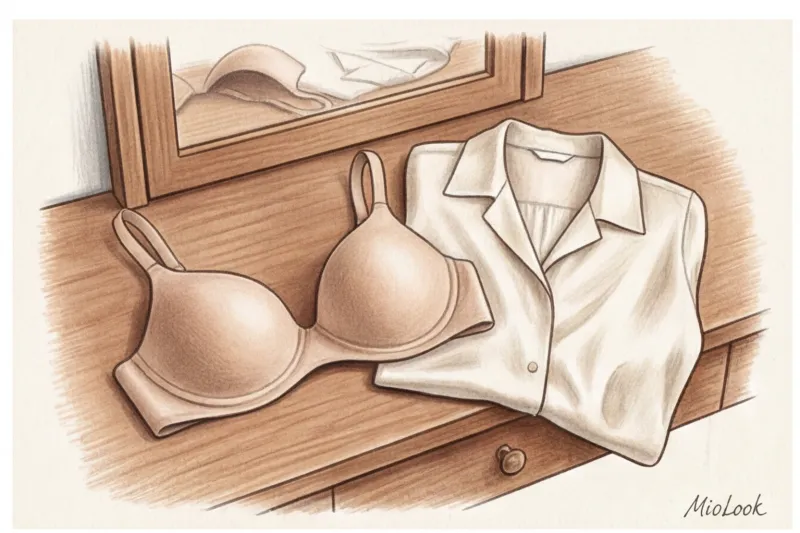
A couple of years ago, a client with a stunning figure came to me for a wardrobe review. She had one problem: her favorite silk blouse had become lumpy. We started investigating, and the cause turned out to be hidden from view. She was wearing a gorgeous €150 Chantelle basic bra that fit perfectly. But she regularly washed it in the washing machine at 60 degrees Celsius along with her bed linens. Over the course of several months, the hot water had literally "cooked" the elastane. The cups were deformed, the smooth edge became wavy, and this broken architecture of the bra showed through the delicate silk.
Most of the advice is about How to wash underwear , come down to basic hygiene. But as a stylist with 14 years of experience, I see this issue differently. Lingerie care isn't just about cleanliness. It's about preserving the structure of your garments so they continue to properly shape your silhouette. We've covered the foundation of your look in more detail in our A guide to a basic lingerie wardrobe.
Why We Lose Underwear So Quickly (And It's Not About Brand Quality)
A good bra is the most complex piece of engineering in your closet. A quality bra consists of 35–40 individual components: underwires of varying degrees of flexibility, molded foam, microfiber, elastane side panels, hooks, rings, and adjusters. This entire system works together to lift the breasts, relieve back strain, and create a smooth silhouette.
The biggest mistake I see in 80% of my clients is treating basic underwear as a consumable. We're willing to dry clean a wool coat, but throw intricate lace in the dryer with jeans. The result? Even premium underwear loses its supportive properties after three months.
To ensure your clothes fit perfectly, you need to start thinking of your underwear as an investment. And this investment is protected by proper washing.
How to wash underwear: golden rules that will preserve the frame
The first rule taught in textile materials science courses: sort not only by color but also by weight. Never wash delicate mesh or lace with heavy terry towels or jeans. When wet, heavy fabrics will mercilessly stretch the delicate fibers as the drum rotates.
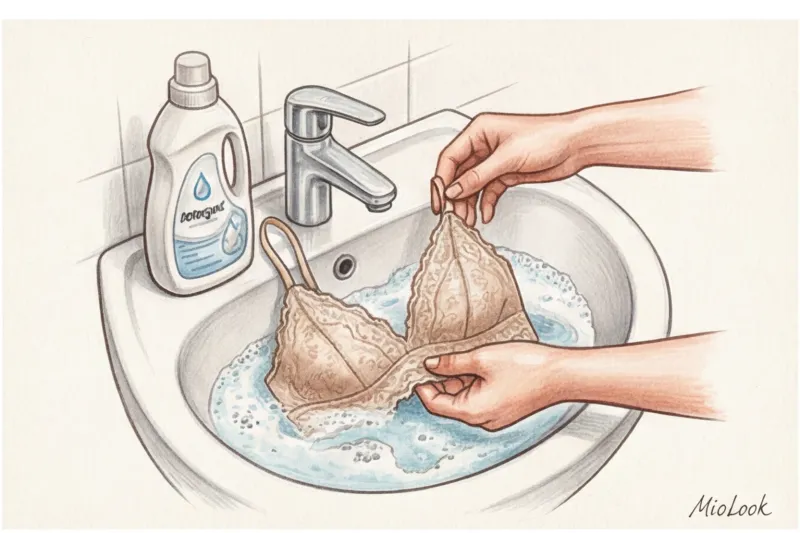
Second, and perhaps most important: forget about granular washing powders , when it comes to delicate fabrics. According to the Textile Care Training Institute, undissolved powder crystals act like sandpaper on microfiber and silk. Furthermore, the enzymes that are effective at removing stains from cotton T-shirts literally "eat" the protein fibers of natural silk and weaken synthetic lace.
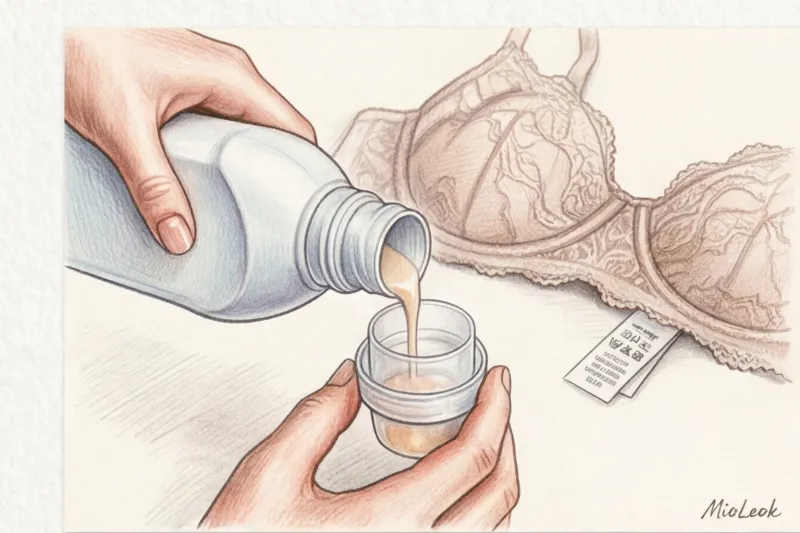
Use only liquid gels for delicate washing. They gently remove sebum without damaging the structure of the fibers.
Your perfect look starts here
Join thousands of users who look flawless every day with the smart AI stylist MioLook.
Get access — €0.99 onceHand washing: when is it really necessary?
I'm a realist and understand that hand-washing all laundry in 2024 is a utopia. But there are three categories of items that a washing machine will inevitably destroy:
- Bras with a dense, heavy push-up (the foam becomes deformed and bunches up).
- Products made of natural silk (slips, tops).
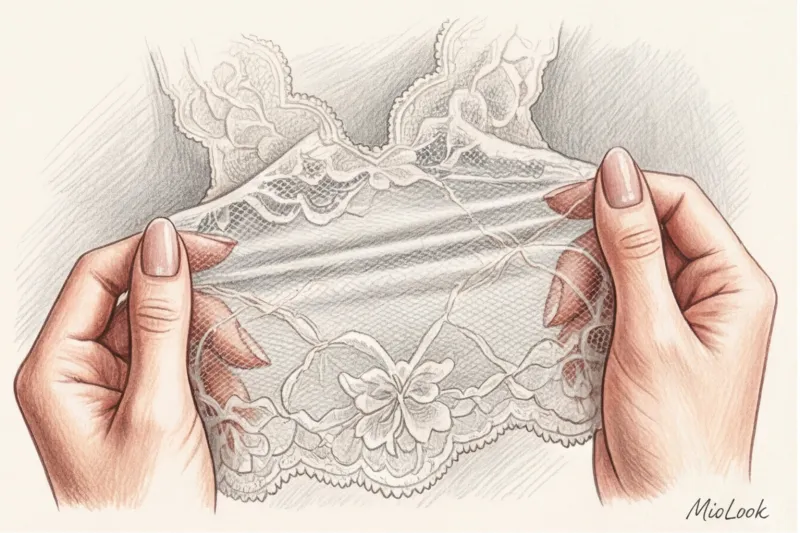
- Finest French Chantilly lace or hand-embroidered elements.
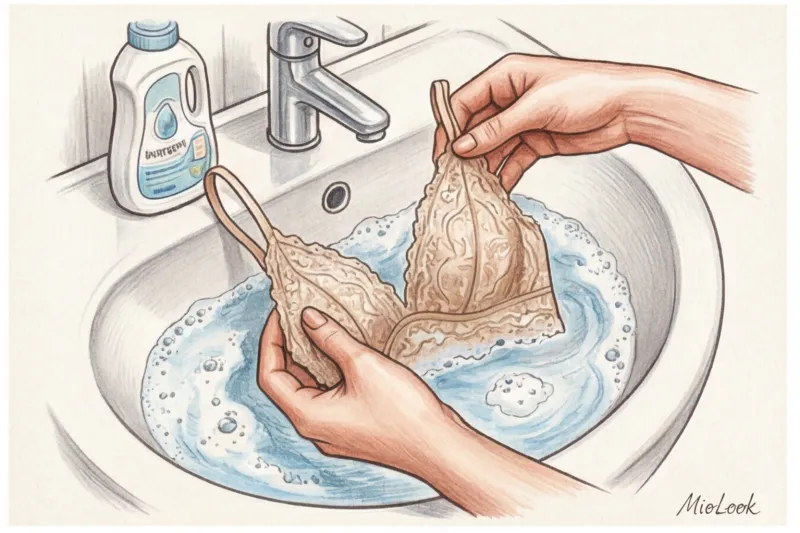
Proper hand washing technique eliminates harsh scrubbing. Fill a basin with lukewarm water (up to 30°C), dilute the liquid detergent, and simply soak the laundry for 15 minutes. Stains on the laundry (mainly sebum and sweat) will dissolve easily without physical effort. Gently squeeze the item in the water with your hands and rinse thoroughly.
Machine wash without harm: instructions for busy people
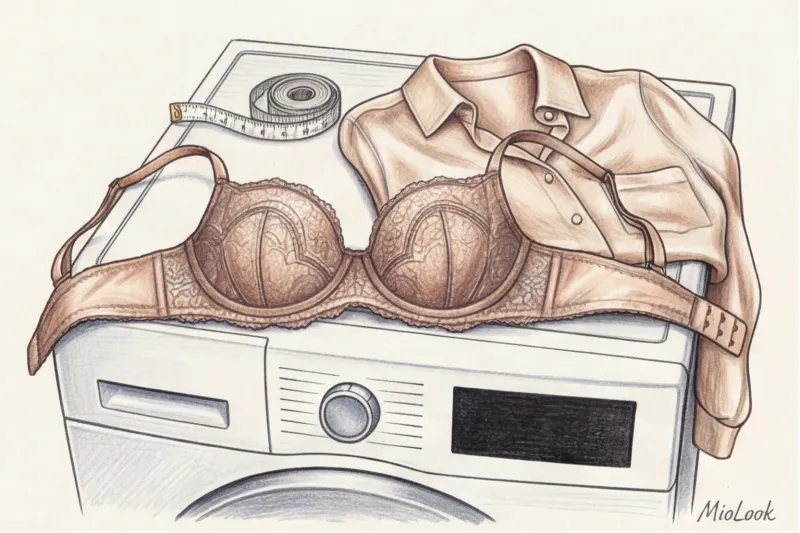
For basic microfiber or heavy lace lingerie, machine washing is acceptable as long as strict safety protocols are followed.
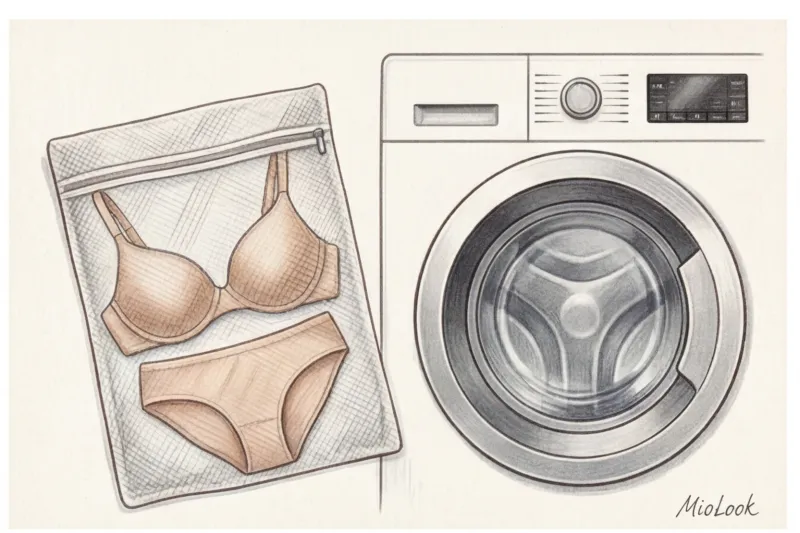
First, invest in the right laundry bags. They shouldn't be those flimsy, €2 supermarket mesh bags with large holes. Look for thick, multi-layered bags that hold their shape (they often resemble cylinders with a plastic frame). These isolate the pits and prevent them from getting caught in the drum.
Secondly, always fasten the hooks on your bra before washing it. An unfastened hook is a harpoon that will snag the rest of your underwear in a matter of minutes.
Third, only load the drum halfway. Items need room to move freely to minimize friction.
The main enemies of elastane: temperature, spinning, and aggressive chemicals
Here we come to the most persistent and harmful myth, passed down to us from our grandmothers: "To keep laundry hygienically clean, you need to wash it in hot water." This is absolutely untrue for modern fabrics.
Yes, cotton medical panties can be boiled. However, 95% of modern women's underwear contains elastane (spandex, Lycra)—it's what provides that perfect fit. According to technical recommendations from Lycra fiber manufacturers, elastane begins to irreversibly degrade, lose elasticity, and thin out when exposed to temperatures above 30-40°C.
Hot water literally "cooks" these rubber threads. They become brittle, crack, and the edge of the garment becomes unsightly. Modern laundry detergents contain surfactants that effectively break down bacteria and grease at temperatures as low as 30 degrees Celsius. You don't need boiling water.
Another invisible shrink killer is fabric softener. It coats the fibers of fabric with an invisible silicone film to make them soft. But this film is detrimental to elastane: it deprives it of its ability to stretch and return to its original shape. The underwear becomes permanently stretched.
Finally, spin. If you're washing your clothes in a washing machine, set the spin speed to the lowest setting (no more than 400-600). High speeds can twist the underwires and permanently damage molded cups.
How to Dry Underwear Properly (Spoiler: Forget the Radiator)
If you want your expensive set to last longer than a couple of months, rule number one: a firm no to tumble drying. Extreme heat will destroy elastane within 3-4 cycles.
Drying on hot radiators (this locally melts synthetics) and in direct sunlight (burns out pigment, especially on black and colored linens) is also prohibited.
Many women hang wet bras by the straps on a regular drying rack. This is a huge mistake. The weight of the wet fabric and dense foam causes the straps to stretch, forcing you to constantly adjust the adjusters until they run out.
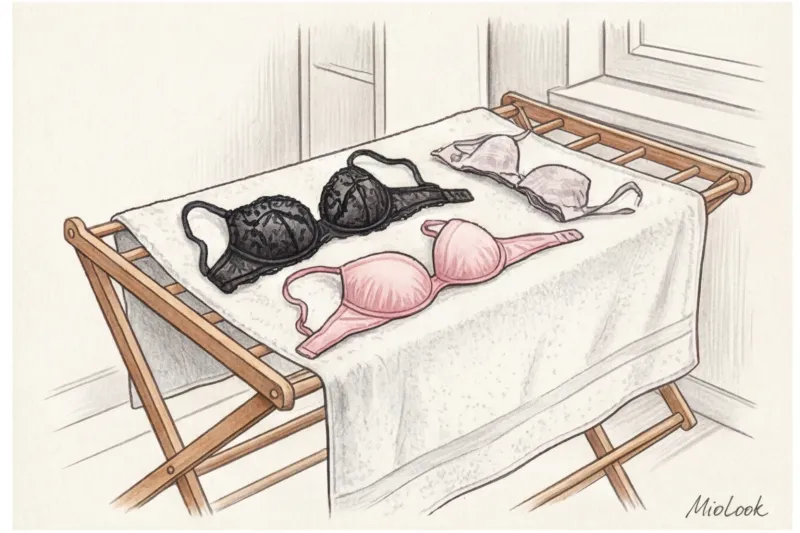
Pro stylist tip: Remove the wet bra, lay it out on a clean, dry terry towel, roll it into a roll, and press gently. The towel will absorb excess water. Then, lay the bra horizontally on a drying rack (or hang it over a bar, centered between the cups).
Ready to digitize your wardrobe?
Organize your closet and create capsules in just a few clicks with the convenient MioLook app.
Get access — €0.99 onceOrganization and storage: to prevent cups from breaking and lace from tearing
Over the years of cleaning out closets, I've seen hundreds of closets. The typical scene: bras piled high on a deep shelf, straps tangled with tights, and to get to the right one, you have to pull out the whole mess. This not only ruins your clothes but also takes away your morning nerves.
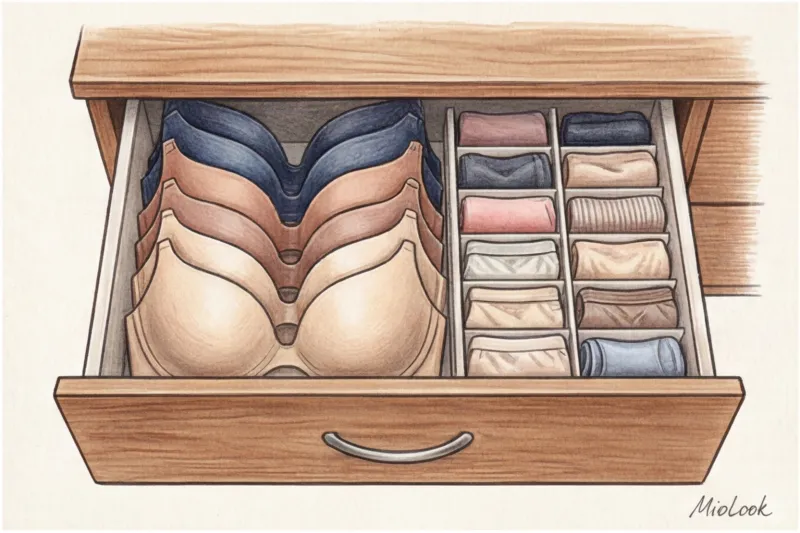
Lingerie should be stored in shallow dresser drawers, not on shelves. Use organizers, but choose fabric dividers over rigid plastic ones, which can snag lace. Scented sachets (such as lavender or cedar) in your lingerie drawer are not only a nice touch but also practical: the light scent transfers to the fabric, creating a feeling of freshness all day long.
By the way, when your basic capsule wardrobe (including lingerie) is properly organized and digitized, creating looks becomes much easier. My clients often use MioLook to control your wardrobe - so you always know what items you have and what to combine them with.
How to fold full-cup bras
The most common way women fold bras is by turning one cup inside out and tucking it inside the other to save space. Please stop doing this.
Turning the bra inside out permanently damages the structure of the molded foam. A crease forms in the center of the cup, which will eventually bulge unsightly under tight clothing. The only reliable method is the "matryoshka" (or "spoon") bra. Leave the bras in their natural unfolded position and simply nest them, one inside the other, fastening the hooks first to prevent them from snagging on the lace of the adjacent bra.
Panty Storage: The KonMari Method vs. the Classic Way
Stacking them on top of each other doesn't work—underwear always gets forgotten. The best option is vertical storage, following the Marie Kondo method. Fold panties into neat rolls or "pockets" (folding the edges toward the center and tucking them in with elastic). Arrange them in the organizer compartments by color or style. This way, you can see your entire underwear capsule at a glance.
Checklist: Signs it's time to say goodbye to your underwear
Lingerie doesn't last forever. According to manufacturer statistics, a quality bra (in the €50–€120 price range) will last 100–120 wears with proper care. If you rotate between 3–4 favorite styles, their lifespan will be about a year.
How do you know when something is time to go to the trash (even if it's still pretty good)?
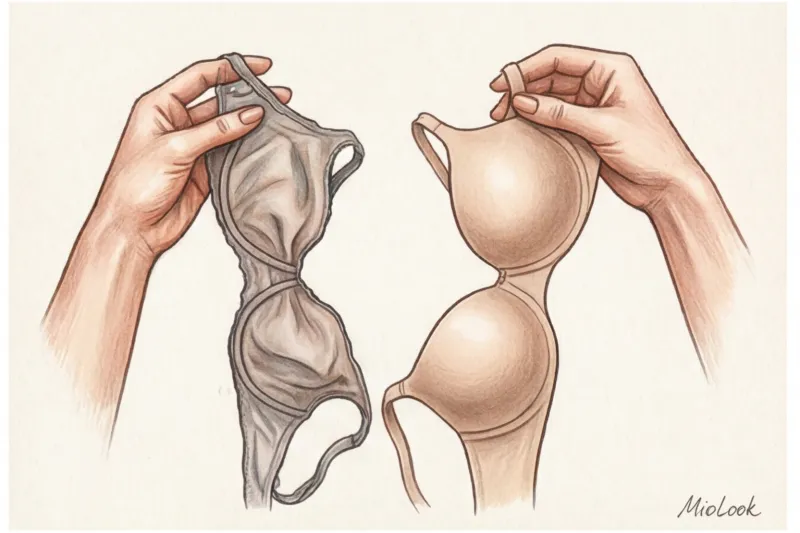
- Stretched waist. If you fasten your bra on the tightest row of hooks, but the back band still slides up your back toward your shoulder blades throughout the day, it's not supporting your breasts. All the strain has shifted to your shoulders.
- Wavy edges. Once the elastic starts to ripple, it means the elastane has burst inside the fabric. This cannot be repaired.
- Deformed cup. If the top edge of the cup begins to move away from the chest or dents appear in the foam, this will ruin the fit of any top.
- Loss of color. Grayish white or faded, rusty black underwear. Sure, no one sees it. But you know what you're wearing. It directly impacts your confidence and posture.
Bottom line: Invest in care as you would in buying
Let's summarize the main rules that will save you hundreds of euros on the purchase of new underwear: temperature no higher than 30 degrees, only liquid detergents, a thick machine wash bag, avoiding fabric softeners, and drying horizontally away from radiators.
Lingerie is the foundation of your look. You can buy a luxurious cashmere sweater or a perfectly tailored jacket, but if you wear a stretched, misshapen bra underneath, the overall geometric shape of your silhouette will be ruined. Taking care of your lingerie is a way to show respect for yourself through the details hidden from view. Take care of your foundation, and it will reward you with the impeccable fit of your favorite pieces.