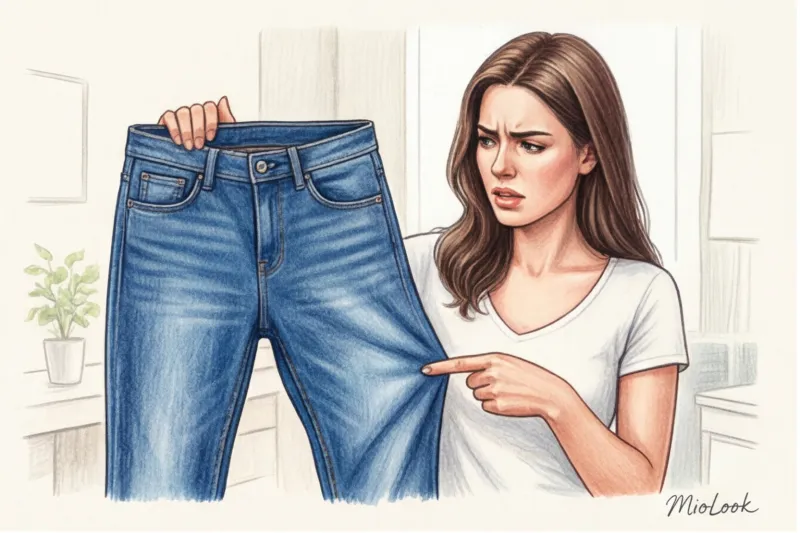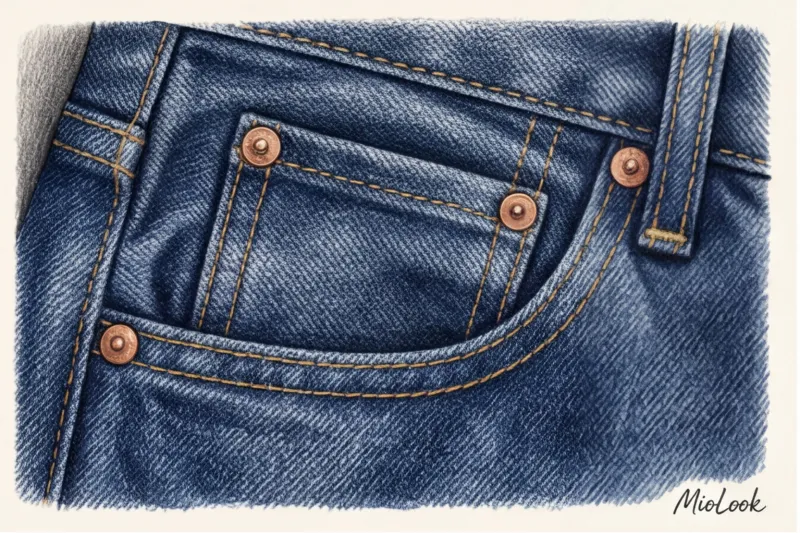
I once had a tearful client bring me a pair of ruined Brunello Cucinelli jeans for €850. The luxurious, sculpted denim, which had been a perfect fit, had been reduced to a shapeless rag after just two washes. The cause was simple: the standard 40-degree cycle and dry laundry detergent with harsh enzymes. This story is a classic illustration of how ignorance of basic textile physics can ruin your wardrobe investments.
I often say that quality denim is the foundation of your style. We covered this in more detail in our The complete guide to a basic denim wardrobe But buying the right pair is only 20% of the success. The other 80% depends on how you take care of them.
Instead of trivial advice from the internet, today I offer you a professional "restoration" approach. We'll look at How to properly wash jeans in a washing machine , why washing them after three wears is a crime against the fabric, and what care protocols premium Japanese denim collectors use.
The Architecture of Denim: Why Frequent Washing Ruins Your Investment
Think of a good pair of jeans as a sculptural framework. Heavyweight cotton (12 to 15 ounces per square yard) has a unique ability to "memorize" your body's anatomy. It visually shapes your figure, flatters your silhouette, and creates beautiful lines.
Water and mechanical friction are the main enemies of this architecture. The difference in maintenance depends directly on the composition:
- 100% cotton (including raw denim and selvedge): Requires minimal contact with water. Factories like Kurabo and Momotaro insist on the "10 wears" rule (or better yet, 30) before an item goes into the washing machine for the first time.
- Denim with elastane (usually 2-5%): More vulnerable to temperature changes. Elastic threads literally "boil" in hot water and burst, creating those unsightly ripples on your thighs.
Every wash irreversibly erases the unique pattern of your jeans. Those natural creases in the crotch area (whiskers) and honeycombs under the knees (honeycombs) take months to form. The machine's aggressive drum simply washes out the indigo dye evenly across the entire surface, stripping the garment of its character and leaving it flat.
Optimize your wardrobe
Try MioLook for free: A smart AI stylist will help you create the perfect everyday look and create the perfect capsule wardrobe.
Get access — €0.99 onceHow to Machine Wash Jeans: A Step-by-Step Guide
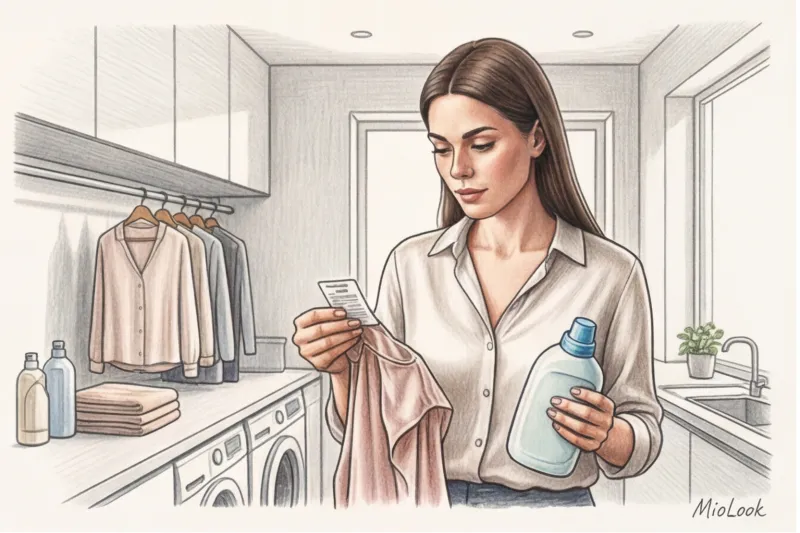
Let's be honest: washing denim is a last resort. It should only be done when the fabric is truly dirty or has lost its freshness to the point where airing it out won't do the trick. If that's the case, here's some strict instructions from a stylist who doesn't tolerate compromises in garment care.
Preparation: backing, buttons and hardware protection
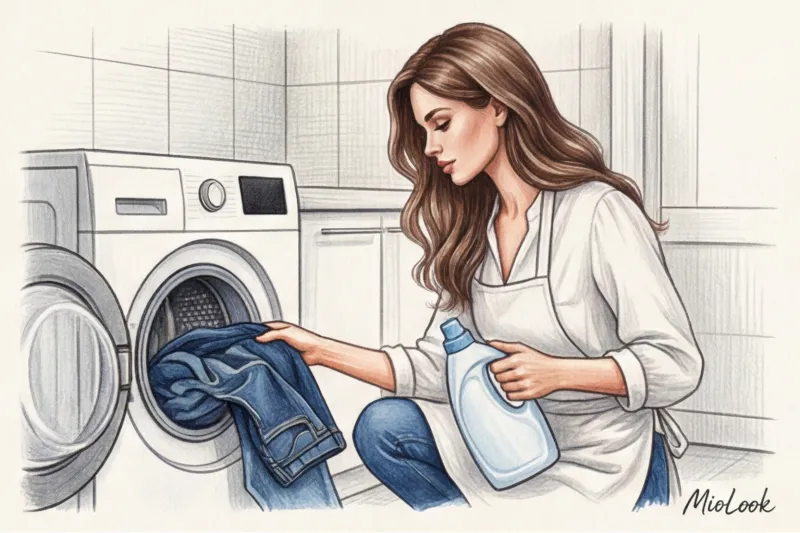
The most common request from my clients is how to avoid unsightly white streaks along the legs. These streaks are caused by the right side of the fabric rubbing against the drum. Therefore, the first and absolutely unbreakable rule: jeans are always turned inside out.
Next, the hardware. Close the zipper all the way and button it. An open metal zipper acts like a saw in the drum, damaging not only adjacent items but also the denim itself. Sorting is also critical. Never wash light blue vintage denim with dark blue indigo. Indigo dye is inherently unstable (which is why jeans fade so beautifully), and it will inevitably release pigment into the water.
Temperature and Conditions: Saving Elastane from Dying
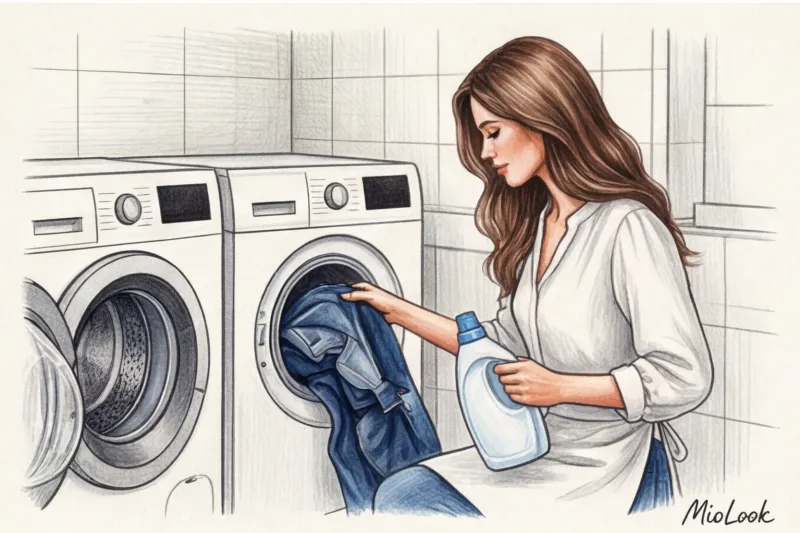
According to textile engineers at the Japanese factory Kurabo (2023), when washed in water hotter than 30°C, elastane fibers lose up to 15% of their elasticity in a single cycle. This is a catastrophic figure.
Remember the ideal protocol: strictly 30 degrees and a maximum spin speed of 400–600 rpm. Anything above 600 rpm leaves micro-creases in dense cotton that are impossible to remove without damaging the structure.
Forget about the standard "Cotton" cycle on your machine—it's too long and intense. Choose "Delicate Wash," "Hand Wash," or a short cycle (no more than 30-40 minutes).
Denim Chemistry: Why Regular Powder Is the Enemy of Color
Dry laundry detergents are an absolute nightmare for dark fabrics. Their granules often don't fully dissolve in cool water, acting as an abrasive. They leave micro-scratches on damp fabrics and aggressively wash out color thanks to bleaching enzymes.
Use only liquid laundry detergents for dark fabrics or specialized denim shampoos. And here's another secret: never use fabric softener If your jeans contain at least 1% elastane, the conditioner coats the fibers with a silicone film, which prevents the stretch threads from returning to their original state. The jeans will become soft, but will lose their shape permanently.
Your perfect look starts here
Join thousands of users who look flawless every day and manage their wardrobe investments wisely with MioLook.
Get access — €0.99 onceShape Destroyers: Drying and Ironing Premium Cotton
While machine washing at high temperatures damages denim, tumble drying kills it. The hot air in the dryer literally "bakes" the elastane, making it brittle. This causes jeans to shrink and become blistered at the knees.
The only proper way to dry jeans is flat. Lay them out on a dry terry towel or a special drying rack away from direct sunlight. If you hang heavy, wet denim (especially 14 ounces or more) on a traditional clothesline by the waistband, the weight of the water will cause it to stretch out, ruining its original proportions.
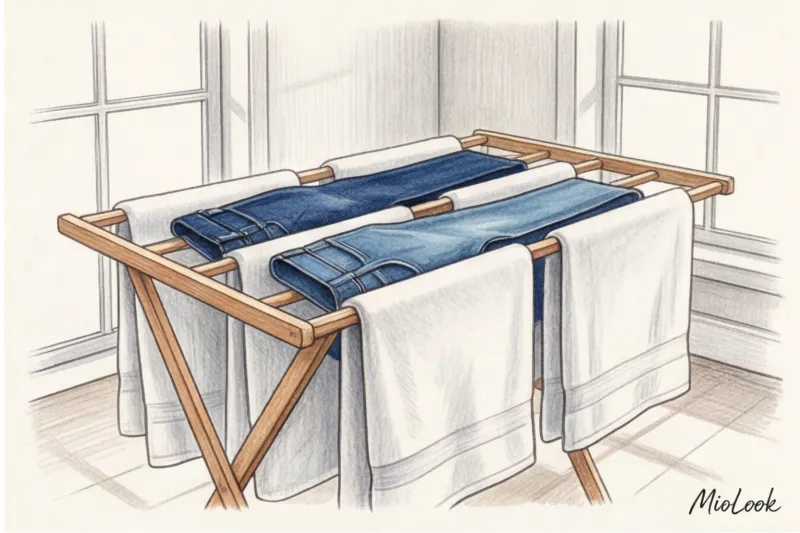
Drying clothes on a radiator is another no-no. Localized overheating causes uneven shrinkage: a pant leg placed on the radiator may become a couple of centimeters shorter than the other.
Do jeans need to be ironed? My answer: absolutely not. Ironing flattens the twill weave. Put them on slightly damp (about 5% residual moisture), and the fabric will naturally conform to your figure, achieving the perfect anatomical shape.
The Freezer Myth and Secrets to Refreshing Without Washing
Let's dispel one of the most persistent internet myths: freezing jeans in the freezer supposedly kills bacteria and eliminates odor. According to microbiologists (including research from the Smithsonian Institution), the temperature in a home freezer (-18°C) doesn't kill the bacteria that feed on skin cells and sweat. It merely puts them into a state of suspended animation. As soon as you put on cold jeans and warm them with your body heat, the bacteria will "wake up," and the odor will return within an hour.
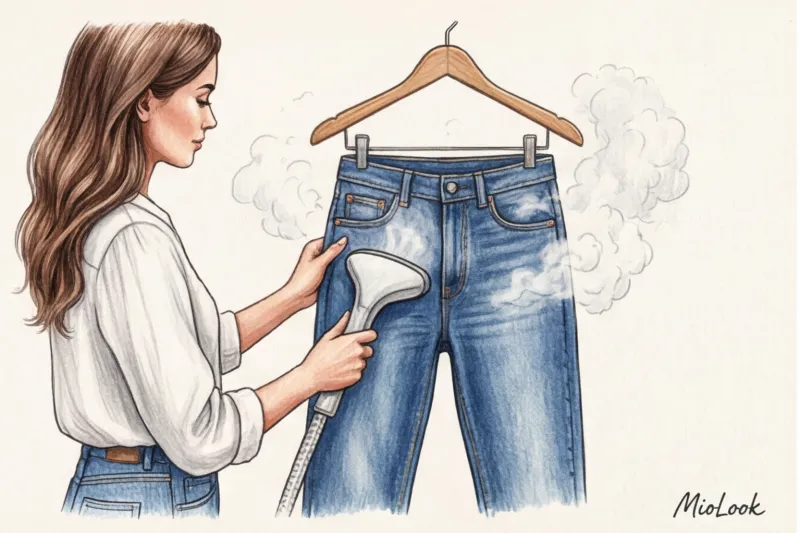
What to do instead? Backstage stylists at fashion shows have their own secret: steaming. Hot steam at around 100°C actually kills germs, instantly refreshes fabric, and, most importantly, restores stretched knees to their original shape without a single drop of laundry detergent.
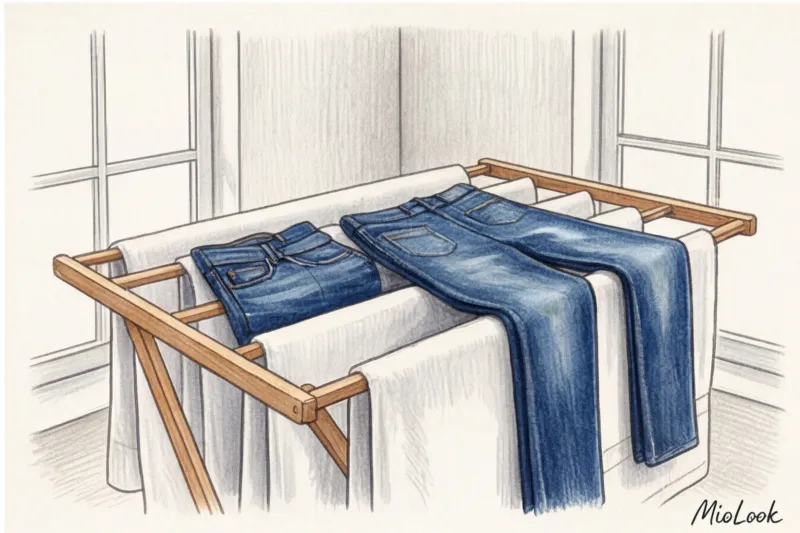
Between wears, use antibacterial textile sprays containing alcohol or essential oils (such as lavender or tea tree). And for expensive Japanese selvedge, the best method is old-fashioned airing in the fresh air in the shade for 24 hours.
Spot-Fixing: How to Remove Stained Jeans Without Throwing Them in the Washing Machine
Imagine this: you bought the perfect pair of jeans for €200, wore them a second time, and spilled coffee on your thigh. Your hand automatically reaches out to throw them in the washing machine. Stop. A local problem requires a local solution.
The "first hour rule" applies here. If you notice a stain, do not rub it with a napkin under any circumstances. Aggressive rubbing will dislodge the unstable indigo dye from the fibers, leaving a whitish bald spot where the coffee stain once was, which will be impossible to touch up.
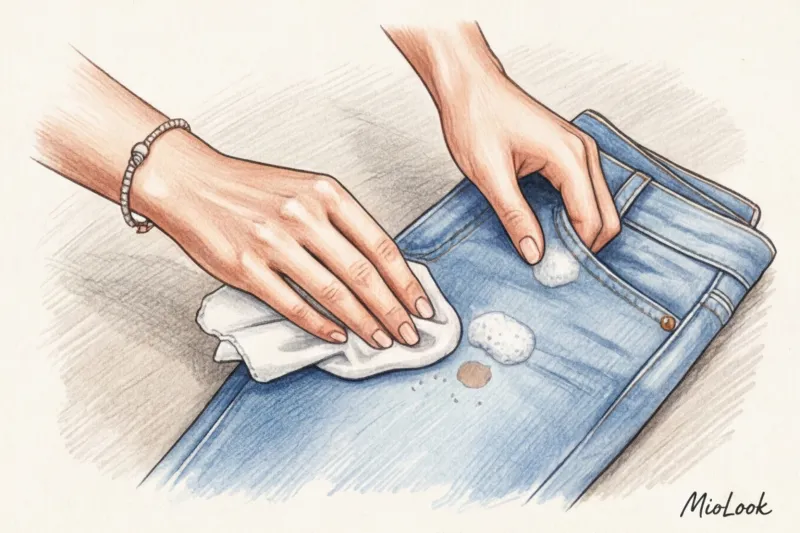
Use the "blotting" technique. Take a soft cotton cloth, apply a small amount of micellar water (yes, the same kind you use to remove makeup—it's great for dissolving light stains) or mild baby soap, and gently blot the stain using downward motions, transferring the dirt from the denim to the cloth.
Of course, it is worth mentioning an important limitation: This advice does NOT work for stubborn grease stains (such as machine oil or thick restaurant sauce). Micellar water will not dissolve heavy grease—in such exceptional cases, it's best to entrust the item to a professional wet cleaner.
A Stylist's Checklist: A Denim Capsule Care Calendar
To transform denim care from a chaotic process into a clear system, I created a calendar for my clients that is integrated into the app. MioLook to track your wardrobe. Here's what it looks like in real life:
- After each wear: Don't throw your jeans on a chair. Inspect them for stains and hang them on the balcony or near an open window to air for 10-12 hours.
- Once a month (or after 5-7 wears): Hand steam treatment from the inside to disinfect and restore the shape of the knees and buttocks area.
- Once every 3-6 months: Machine wash delicately according to protocol (30°C, 400 rpm, inside out, liquid gel).
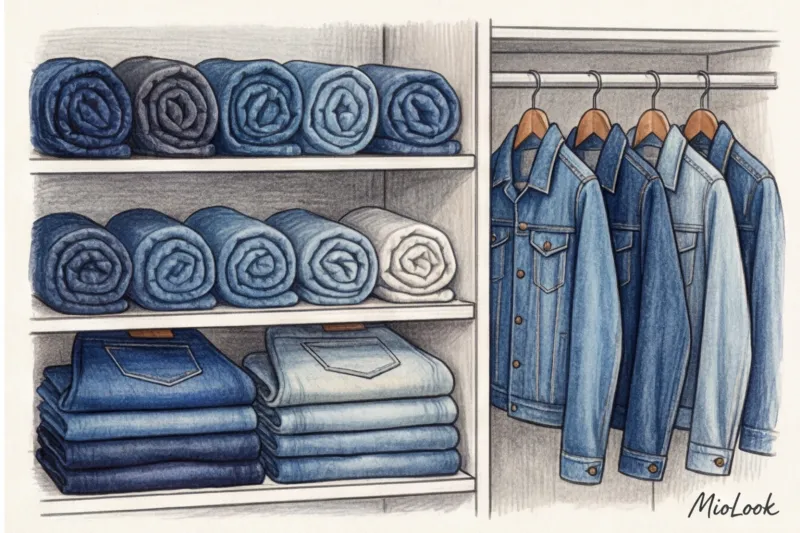
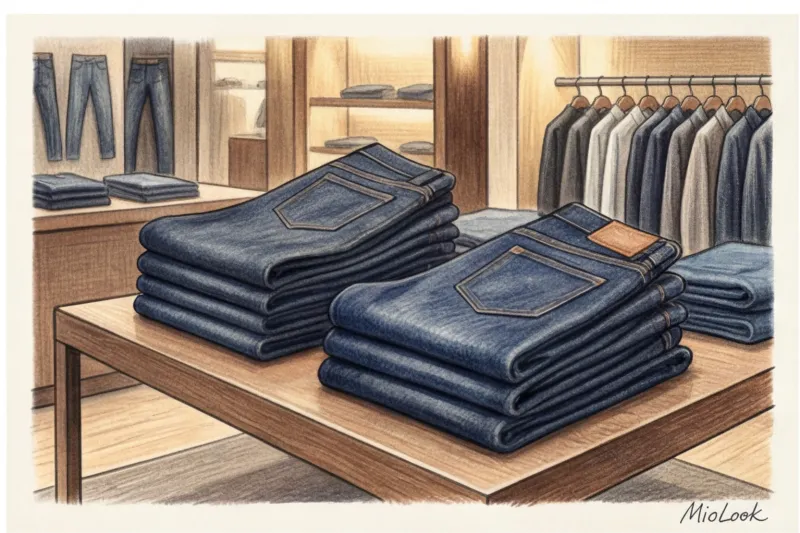
And finally, proper storage. Avoid folding jeans in a classic pile with the fold right down the middle of the leg—over time, a crease and a light streak will form there. Premium denim is best rolled tightly (like rollers) and stored in a drawer or hung in a closet by the back belt loops using special S-shaped hooks.
Proper care isn't a boring housewife's chore, but smart investment management. Change your approach to washing just one item of clothing, and your favorite jeans will reward you with a perfect fit for years to come.